

A dinghy tied to a dock. A jon boat sliding into a quiet creek. A kayak strapped to a car roof. Small boats offer an accessible way to enjoy the water, whether you want to fish, explore, paddle, or spend time with family.
But the label covers a wide range of hulls, each built for a different kind of outing.
Here’s how to tell them apart and pick one that fits how you’ll use it.
What Actually Counts as a Small Boat?
There is no single length cutoff that applies to every boat described as “small.”
For this guide, the core range is under 16 feet, with selected recreational models up to 26 feet included when their size, use, and trailering needs still fit the category.
|
Category |
Typical Length |
Common Use |
|---|---|---|
|
Micro/car-topper |
Under 12 ft |
Solo paddling, light utility |
|
Mid-range |
12-20 ft |
Fishing, day cruising, utility |
|
Upper range |
20-26 ft |
Small groups, suitable coastal outings |
Small Boat Types Worth Knowing
Small boats fall into eight broad groups.
Some categories overlap because boats can be classified by their hull material, design, or intended use. The descriptions below focus on what distinguishes each type.
1. Flat-Hull Utility Boats
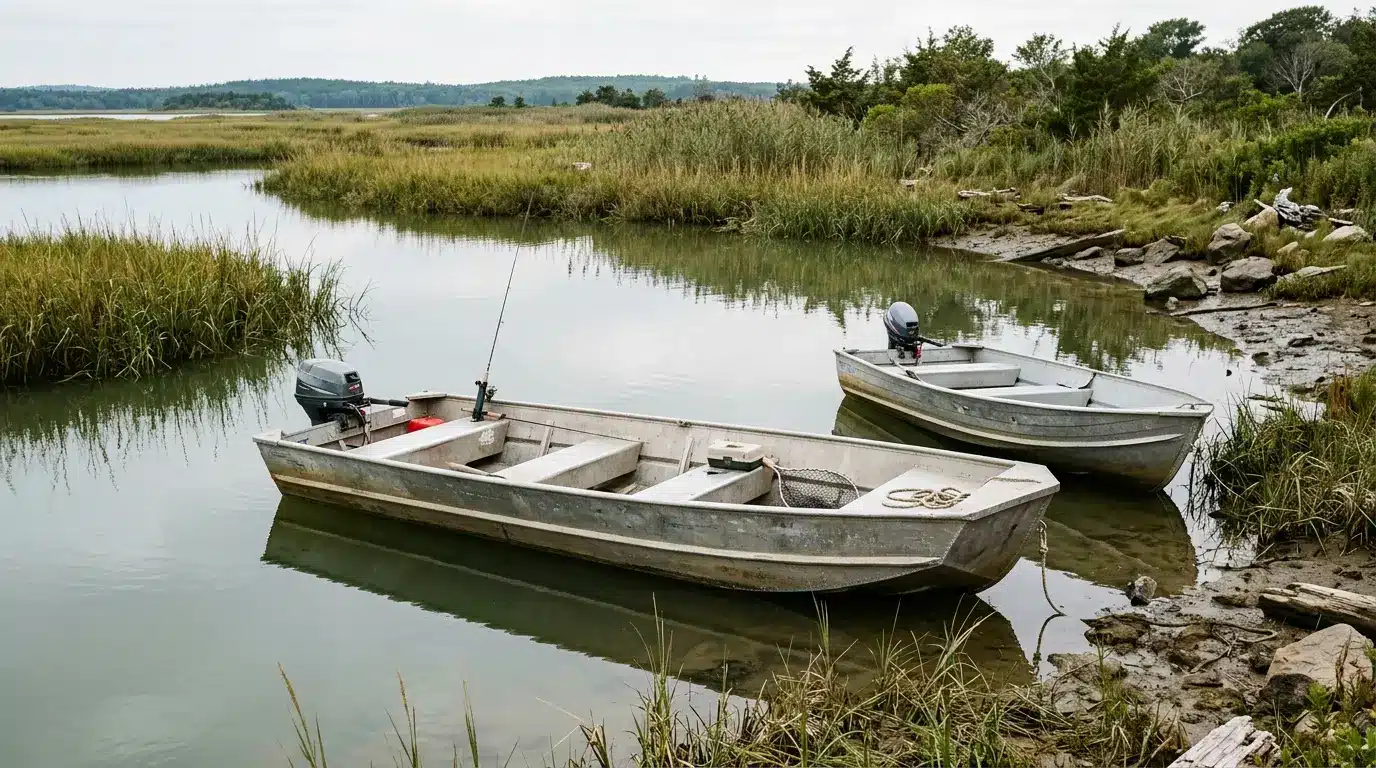
Jon boats have a flat bottom, squared bow, and open layout that make them useful for fishing, hunting, and light utility work in calm, shallow waters.
Skiffs are a broader group of small, open boats often used for inshore fishing and general utility. Unlike the specific flat-bottom design associated with many jon boats, skiffs can have different hull shapes and materials.
Both types keep moving parts to a minimum, making maintenance mostly DIY. Anyone new to boat ownership benefits from knowing the parts of a boat before buying either one.
2. Rigid-Hull Open Boats
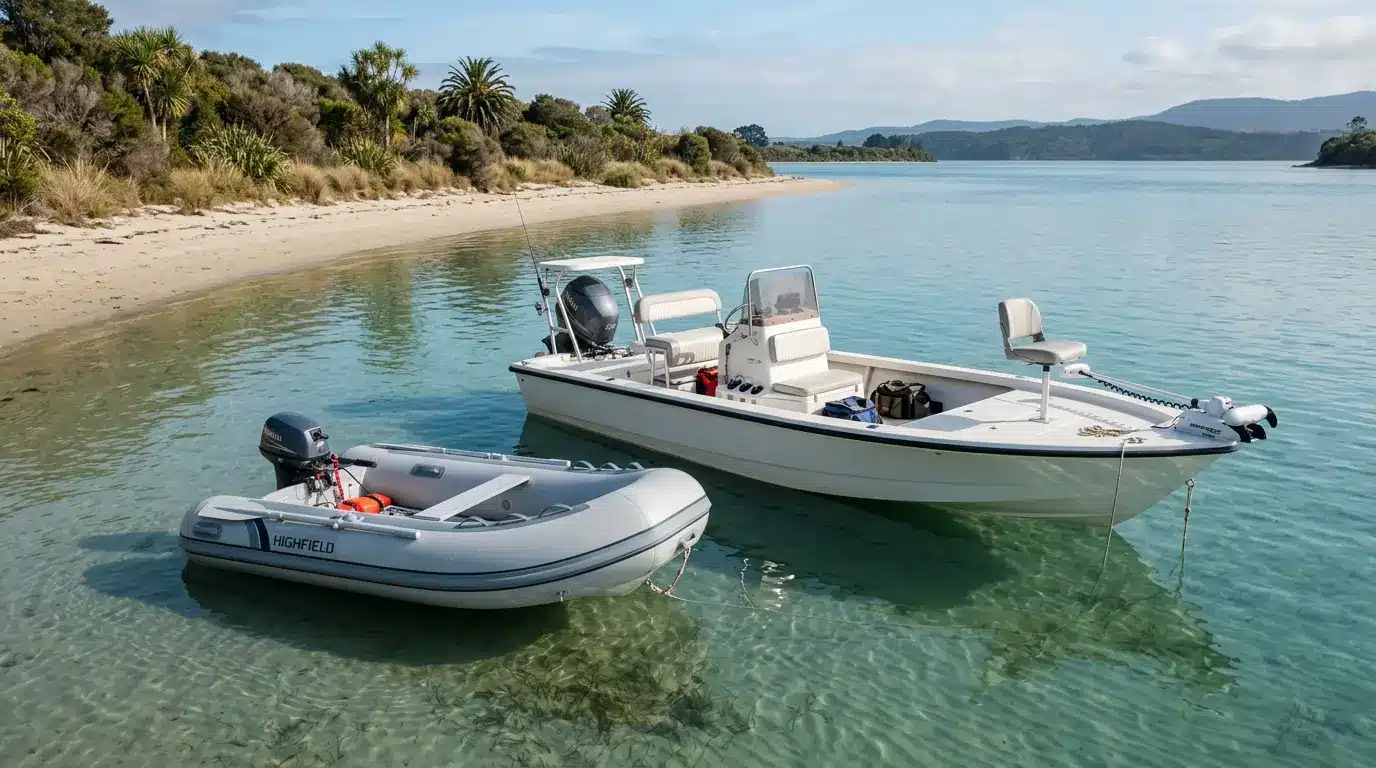
Dinghies are generally compact boats, often under 15 feet, with 8 feet being a common size. They can be rowed, powered by an outboard, or rigged for sailing, and often serve as tenders for larger boats.
Bay boats are larger open fishing boats, commonly around 18 to 26 feet, designed primarily for inshore waters such as bays and flats. Their ability to handle chop depends on the hull design and weather conditions.
3. Inflatable and Packable Hulls
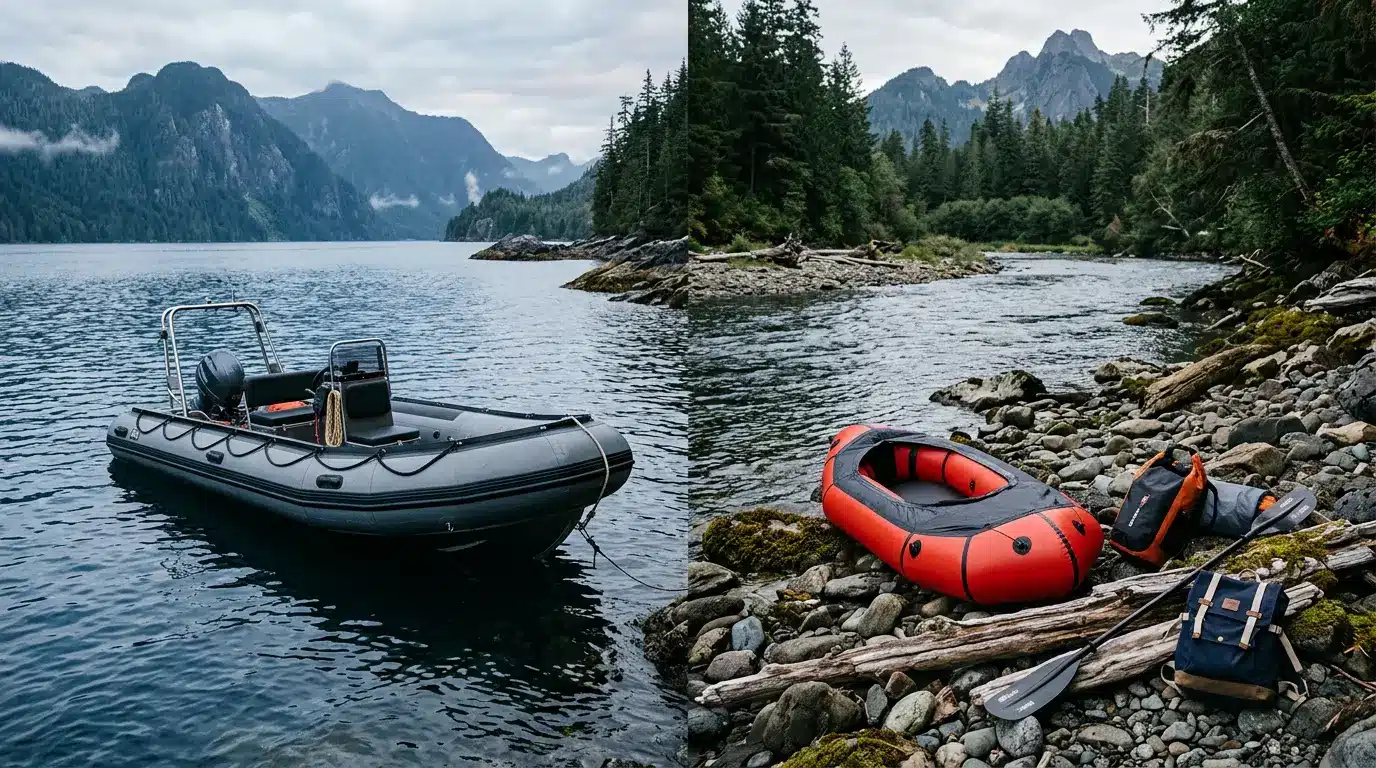
Rigid inflatable boats (RIBs) pair a solid hull with an inflatable collar. This construction combines a more rigid running surface with the buoyancy of inflatable tubes, and RIBs are used in recreational, rescue, and commercial settings.
Fully inflatable boats have air-filled floors or hull structures and can be deflated for storage and transport. Common materials include PVC and Hypalon, although construction and durability vary by model.
Buyers weighing this category against paddle craft often end up comparing the best inflatable kayaks before deciding.
Packrafts are a particularly portable type of inflatable craft. Their lightweight construction makes them useful for reaching remote lakes and rivers, especially when a trip involves hiking as well as paddling.
4. Aluminum Fishing Hulls
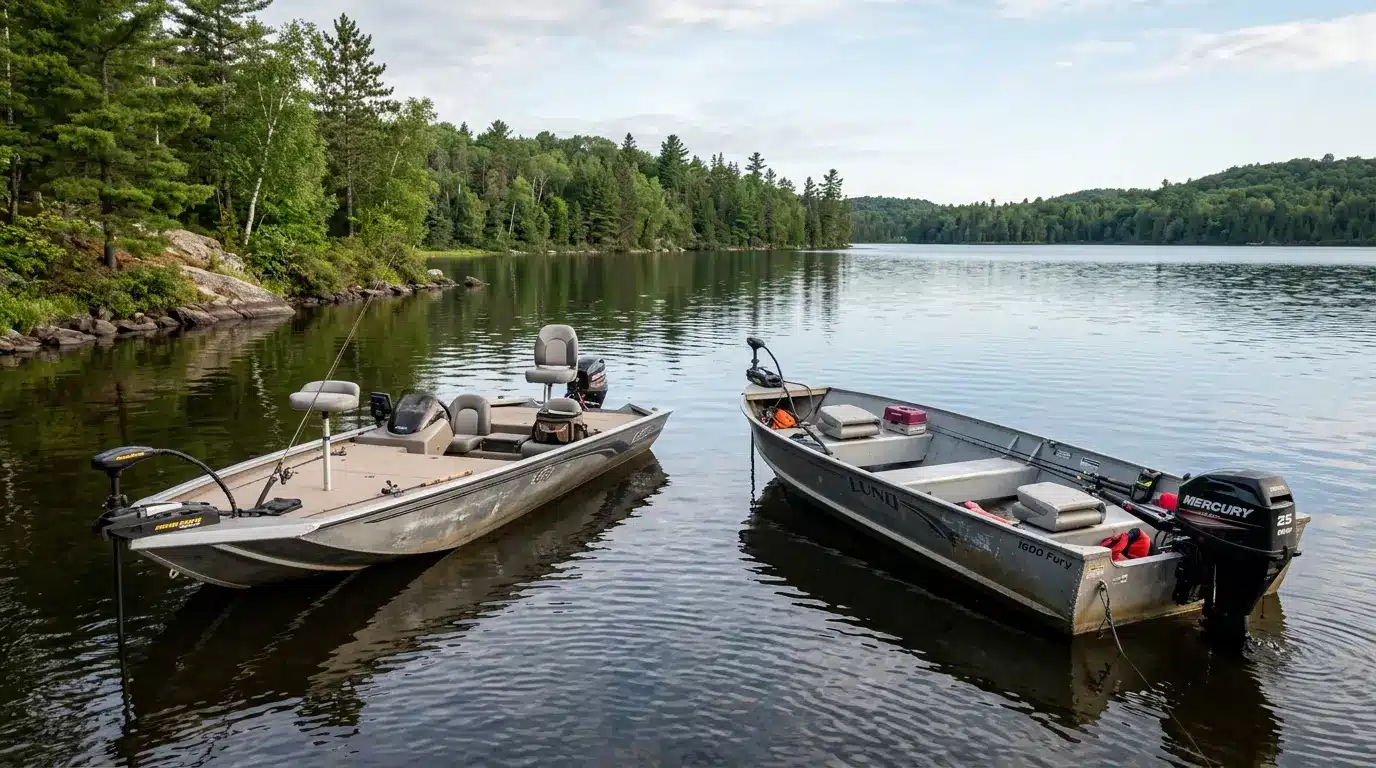
Aluminum fishing boats are valued for their relatively light weight, durability, and range of layouts. They include utility boats, deep-V fishing models, and other designs, so their handling and performance depend on the hull shape rather than the material alone.
Bass boats are a more specialized fishing design. They typically feature low-profile hulls, raised casting decks, fishing-focused storage, and layouts designed for anglers targeting bass. Many are fiberglass, while aluminum versions are also available.
These boats can suit anglers moving from a canoe or basic utility boat to a purpose-built fishing setup.
5. Multi-Purpose Runabouts
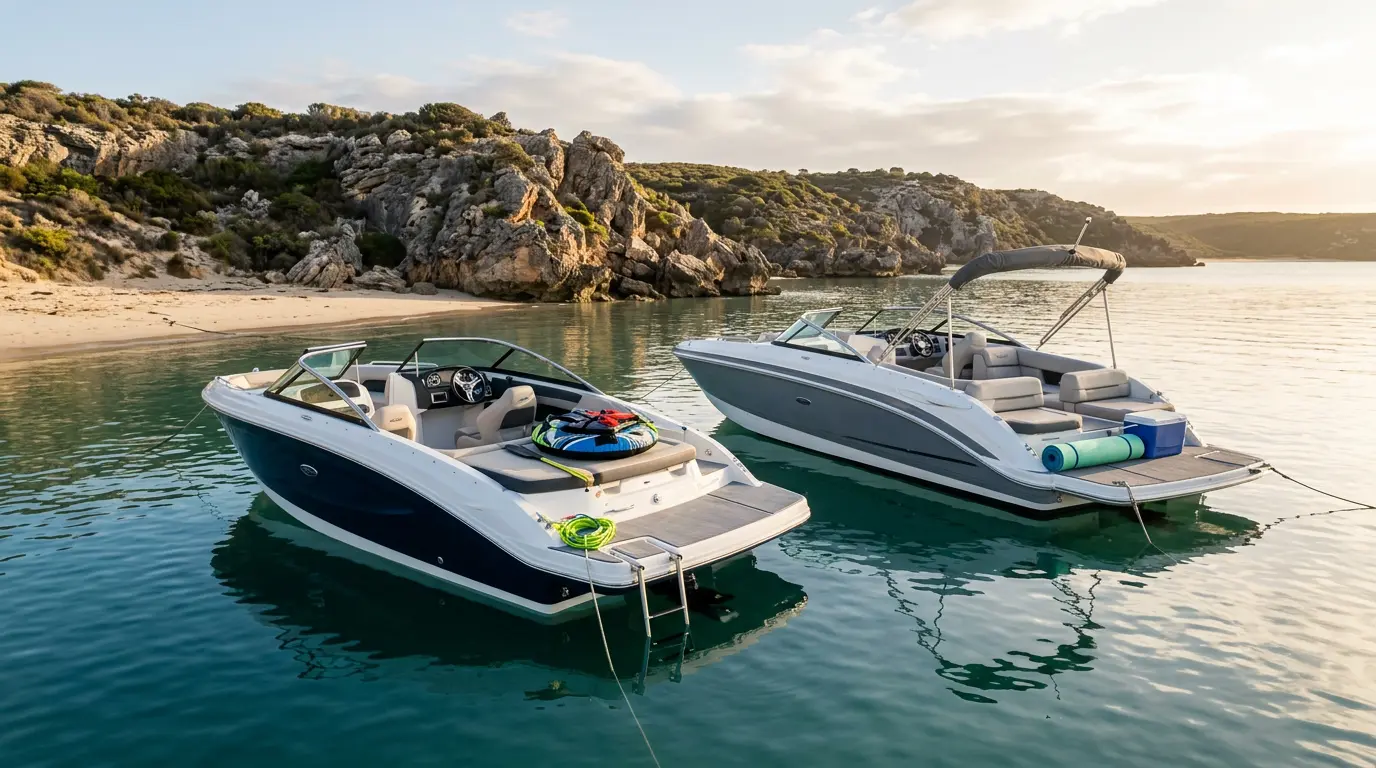
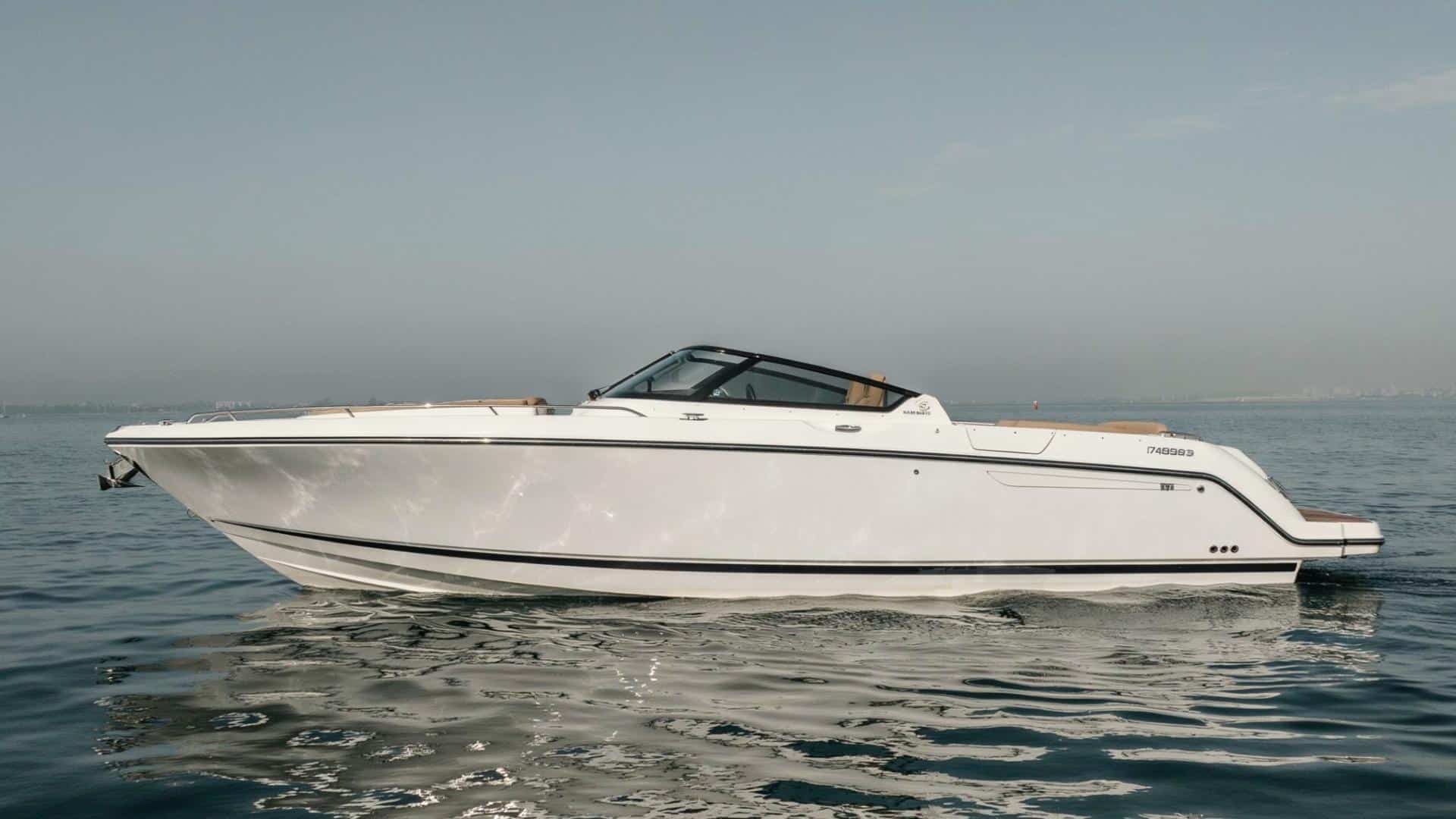
Bowriders keep an open bow seating area on a compact hull, built for swimming, tubing, and day trips with the whole family.
Deck boats use a broad beam and an open layout to provide more deck space and seating. Although both can be used for family recreation, deck boats generally prioritize passenger space, while bowriders often have a more pointed bow and sportier profile..
Both work well on lakes and calm coastal water for groups that want one boat that covers a bit of everything. Compare builders in a list of the best boat brands before you buy.
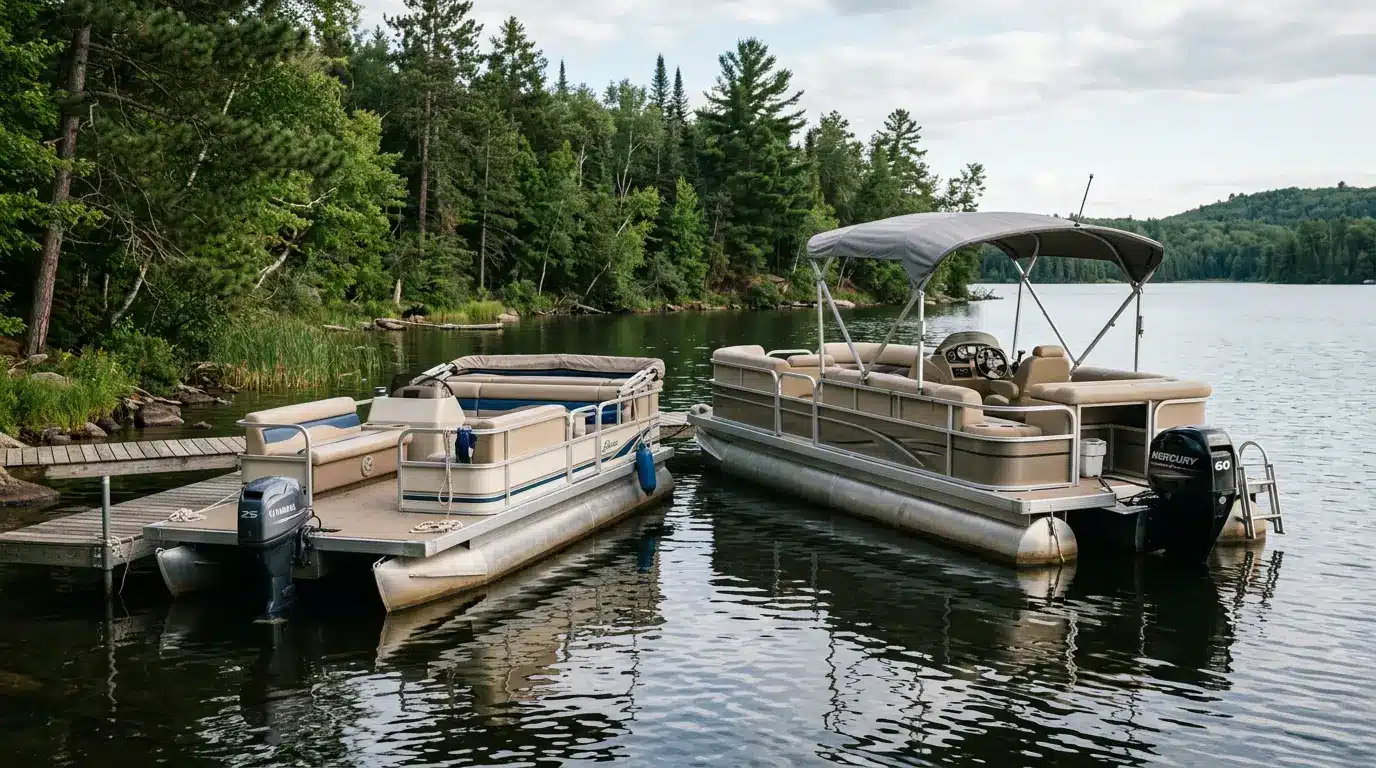
6. Pontoon and Tri-Toon Minis
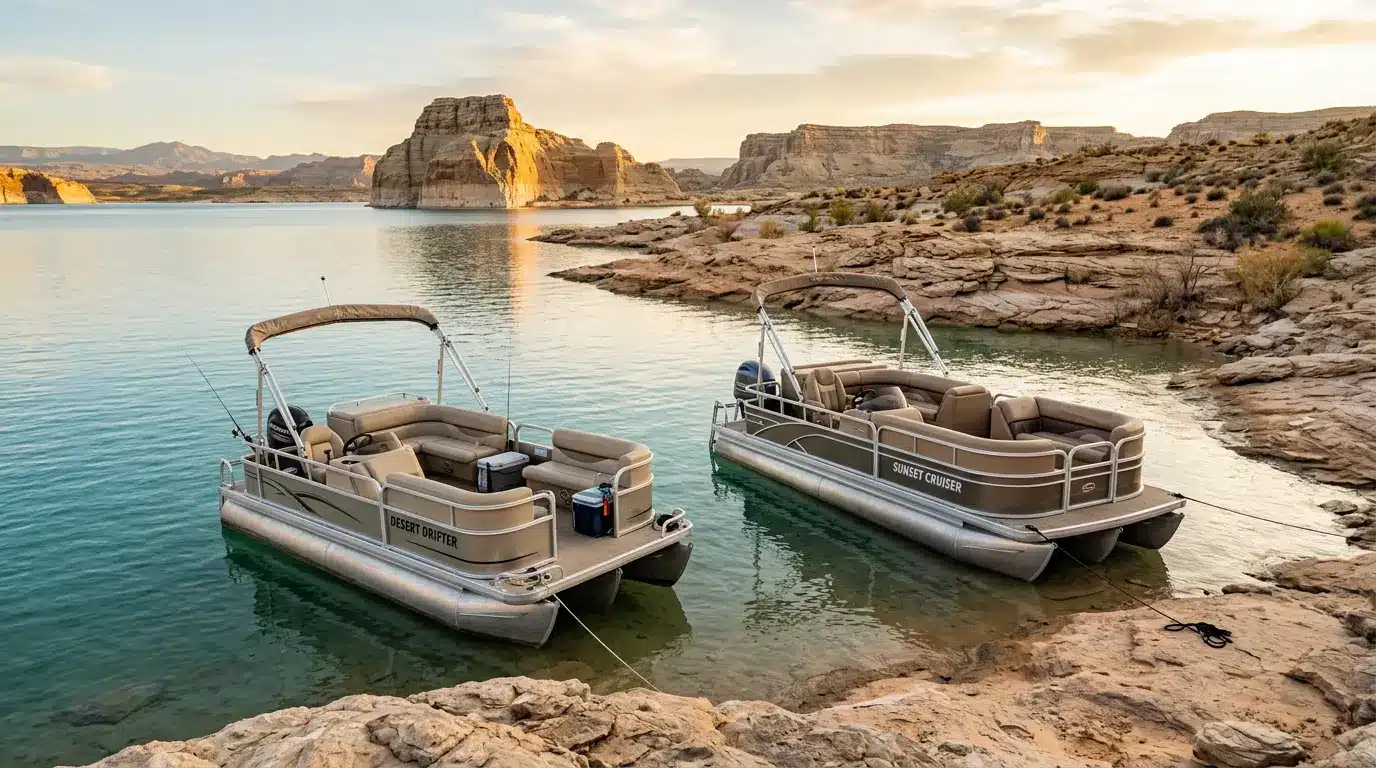
Compact pontoon boats use two flotation tubes beneath a deck, while tri-toons use three. Their wide layouts provide room for seating, fishing, and relaxed cruising.
They handle calm lakes far better than open, choppy water, making them a solid pick for relaxed days close to shore. Buyers who want that layout in a larger size will find plenty of pontoon boats for every budget worth comparing.
7. Human-Powered Craft
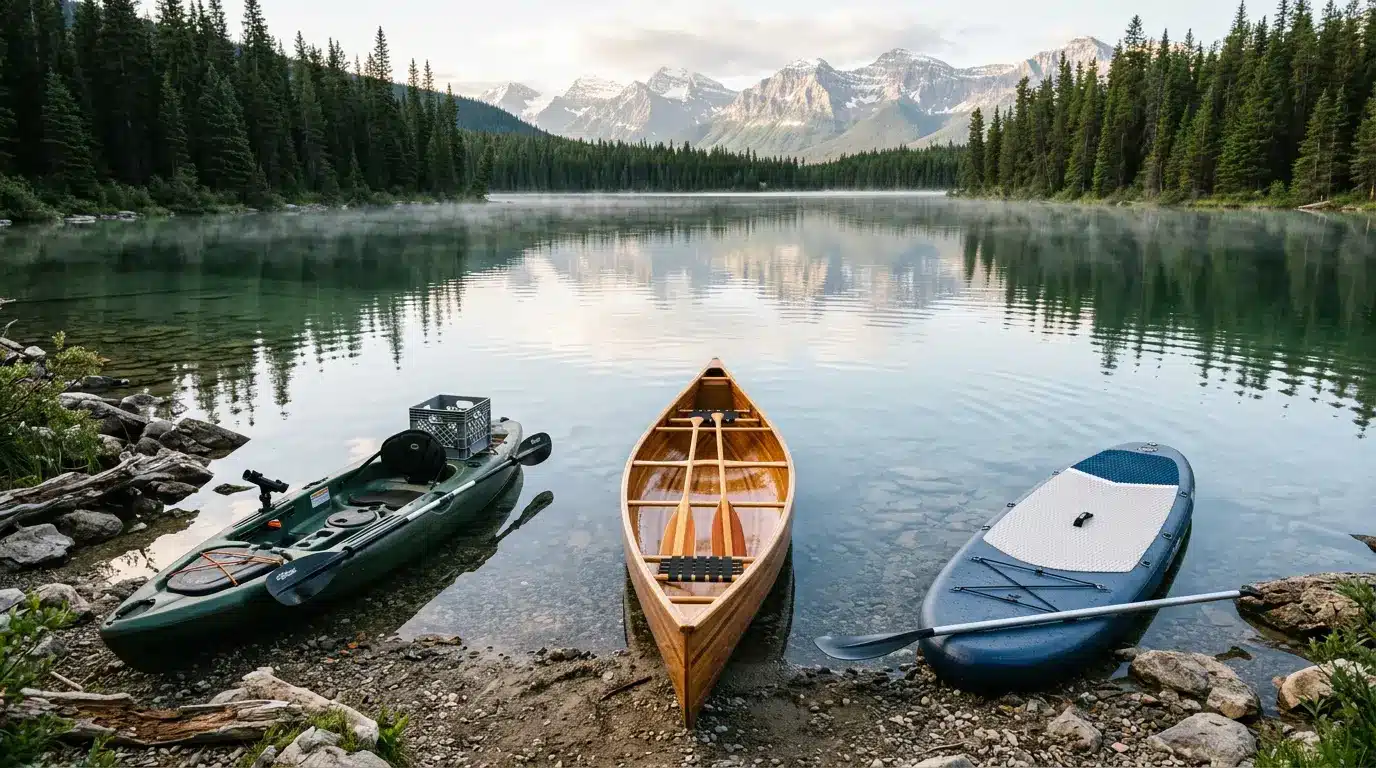
Canoes and kayaks use paddles rather than motors, although some models also have pedal or electric propulsion. Their designs vary by activity, with recreational, touring, whitewater, and fishing models available.
First-time buyers narrowing things down often start with the best recreational kayaks before moving on to touring or fishing models.
Paddleboards provide a stand-up option and are relatively easy to store compared with many motorized boats. These craft are often a practical starting point for people who want to explore local waterways without buying a motorized vessel.
8. High-Performance Small Hulls
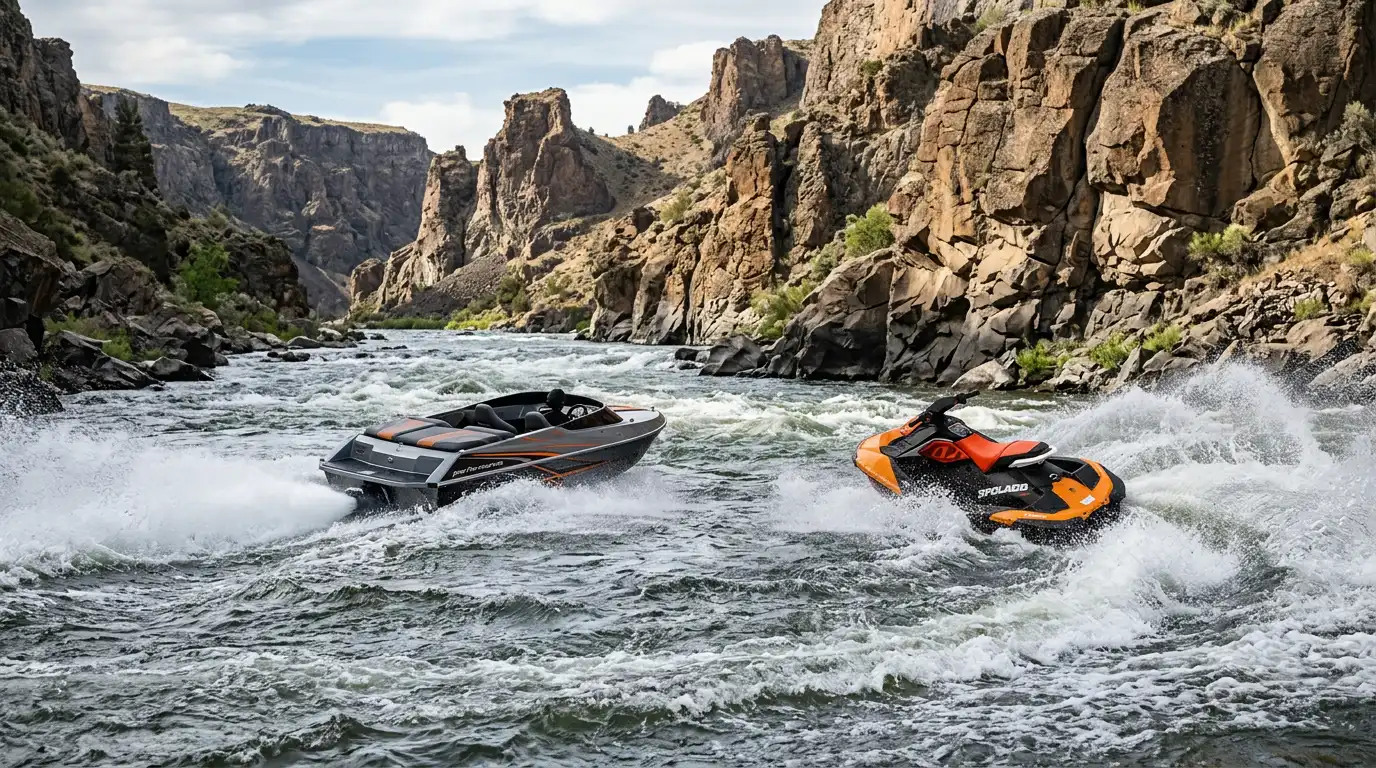
Jet boats use a water-jet propulsion system instead of a conventional exposed propeller. Water is drawn into the propulsion unit and expelled through a nozzle to generate thrust. Some models are designed for shallow-water use, but operating depth and safe conditions depend on the specific design.
Both types are built for speed over comfort, and understanding how each is classified on the water matters, since personal watercraft are considered Class A inboard boats by the Coast Guard, with extra rules in many states.
Specs That Change How a Small Boat Feels on the Water
Two boats with near-identical dimensions can still handle differently once they’re on the water.
Hull shape, loading, propulsion, and operating conditions all affect performance, so compare the specifications in the context of how you plan to use the boat.
|
Spec |
What Changes for You |
Beginner-Friendly Range |
|---|---|---|
|
Hull material |
Weight, repair cost, ride feel |
Compare aluminum, fiberglass, and inflatable construction based on use, maintenance, and storage. |
|
Draft depth |
Where the boat is allowed to go |
A shallower draft can help with access to creeks and flats, but check actual loaded draft and local water depth. |
|
Beam width |
How stable it feels standing up |
Compare beam alongside hull shape and intended activity; width alone does not determine stability. |
|
Horsepower rating |
Top speed and towing pull |
Stay within the manufacturer’s maximum rating and match the engine to the boat’s intended use. |
|
Passenger/weight capacity |
Legal limit and comfort onboard |
Check the capacity plate or manufacturer’s rating, including weight limits. Do not rely on seat count alone. |
|
Storage space needed |
Where it lives when not in use |
Check packed dimensions, roof-rack limits, trailer requirements, and the towing vehicle’s capacity. |
Once these numbers make sense on paper, the real test is matching them to how the boat will actually get used.
How to Pick the Right Small Boat for Your Needs
Start with where you will launch. These six questions narrow the choice fast.
-
What water will it see most often: lake, river, coastal, or marsh?
-
Is it mainly for fishing, cruising, watersports, or utility work?
-
How many people will typically be onboard?
-
Is there a vehicle capable of towing, or is car-topping the better fit?
-
What’s the realistic storage setup: garage, driveway, or marina?
-
What’s the total budget, including motorand trailer?
Buying Considerations: New, Used, and Ongoing Costs
The sticker price on a small boat is rarely the full cost of ownership.
-
Decide between new (often includes a warranty and the latest equipment) and used (usually lower upfront cost, but condition varies).
-
Inspect the hull, engine, steering, electrical systems, and trailer before buying used. Consider a qualified marine surveyor or mechanic for a professional inspection.
-
Add up every extra cost: registration fees, insurance, storage, launch fees where applicable, fuel, motor maintenance, winterizing or off season storage, and a trailer if one isn’t included.
-
Check your state’s registration and titling rules. Requirements differ by state and may depend on whether the boat has a motor, its length, and the type of craft. NASBLA, the group for state boating officials, keeps a directory of state boating agencies if you are not sure where yours falls.
Ready to choose? Narrow the list to two boat types, then see each one in person or take a test ride before you commit.
Frequently Asked Questions
1. Can One Person Operate a Small Boat?
Yes, many small boats are designed for solo operation. However, handling depends on hull design, engine power, weather conditions, and the operator’s boating experience.
2. Do Small Boats Hold Their Value?
Well-maintained small boats can retain reasonable resale value. Popular models, reliable engines, documented maintenance, and good hull condition generally make them easier to sell.
3. What Safety Equipment Should Every Small Boat Carry?
Each person needs a Coast Guard approved life jacket. Boats 16 feet or longer also need a throwable device, except canoes and kayaks. See the Boater’s Guide for more.
4. Can Small Boats Be Used in Saltwater?
Yes, several small boats handle saltwater conditions. However, choose corrosion-resistant materials, rinse equipment after use, and check whether the hull suits coastal conditions.



One Response