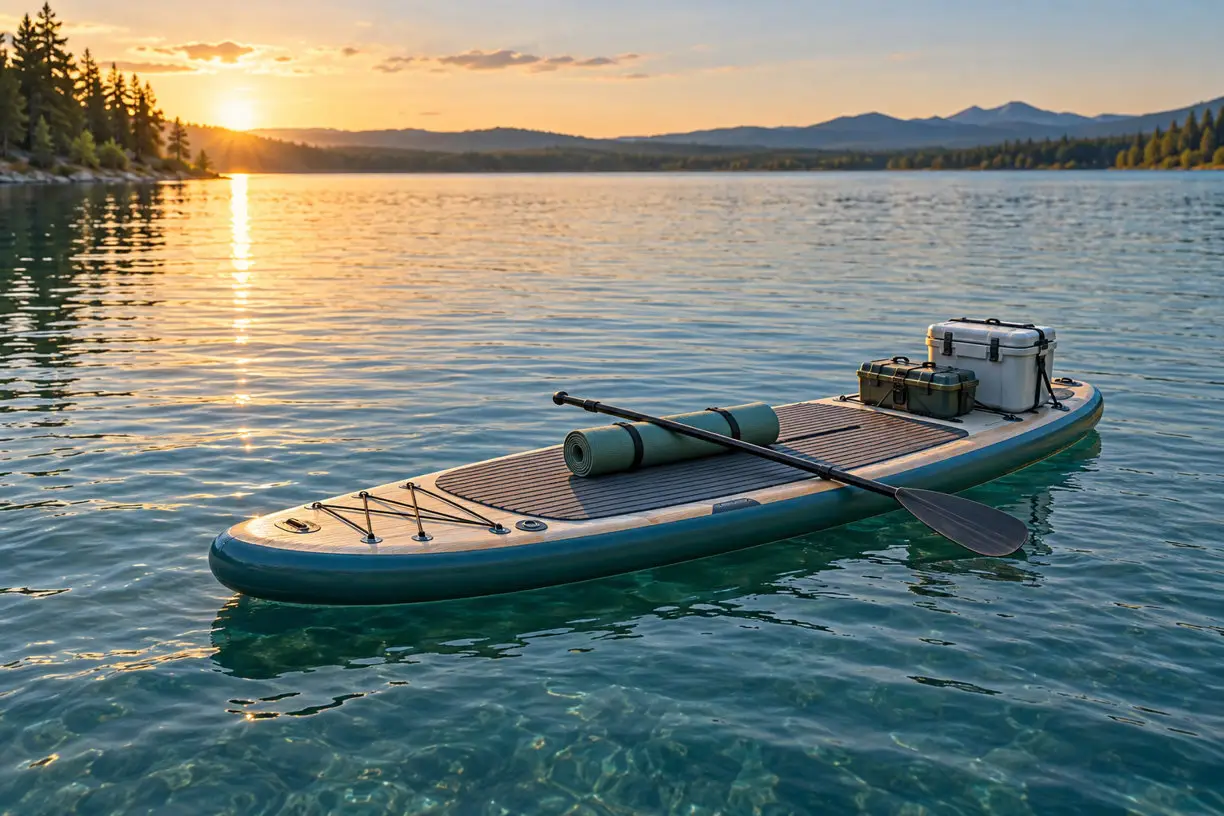
Choosing a stable paddle board is crucial if you plan to use it for fishing or yoga, where sudden movements and uneven loads test your balance in ways that casual paddling doesn’t. Understanding how board design, weight limits, and on-water conditions combine to affect stability can help you select the right platform for both focused casts and mindful movements on the water.
If you have ever tried yoga or landed a fish on a board that wobbles, you know that not all boards are equally suited for these activities. Unlike recreational touring, fishing and yoga demand both initial steadiness (primary stability) and the ability to recover from tilts or shifts (secondary stability). Boards with the right design elements can create a predictable and supportive experience even when the water or wind changes, giving you the confidence to enjoy SUP in new and challenging ways.
How Board Dimensions Influence Stability
Width is the single biggest contributor to how steady a stand up paddle board feels, particularly when you’re standing still, twisting, or reaching out. Boards around 32 inches wide or more often feel secure for many adults, making them a common choice for yoga and fishing. For example, a 34-inch wide board allows a paddler to move into Warrior Pose or side-cast without the rail tipping unpredictably, while a narrower board would require constant micro-adjustments.
Length affects how the board handles in “side chop” (small waves from the side) and influences how smoothly it glides. Longer boards often glide with less effort but can sometimes feel tippy if their design is too narrow. Shorter boards, if wide enough, may feel more planted, but will be slower to move across the water. Anglers often prefer a slightly longer board (11 feet or more) as it offers extra storage space for gear and more glide when moving between fishing spots, while yoga practitioners may choose shorter lengths for easier maneuverability during paddle-outs and transitions.
Thickness and, by extension, total board volume determine how much weight your board will float comfortably. Thicker boards generally have more volume, supporting heavier users or additional gear. For example, a board that is 6 inches thick with high volume is suitable for a paddler who brings a large cooler and tackle. However, very thick boards can feel less connected to the water, sometimes making lighter paddlers feel perched rather than grounded.
Deck, Rails, and Tail Shape
A flat or slightly domed deck allows your feet to have even pressure distribution, a small but important factor for endurance during fishing sessions or yoga holds. Comfort matters when you’re standing or moving outside typical paddling stances. Paddlers practicing yoga will benefit from a flat deck when flowing from Downward Dog to plank, minimizing fatigue from uneven footing during long sessions.
Rails, the edges where deck and hull meet, can be sharp or rounded. Hard edges let the board catch as it tilts, which some experienced paddlers find responsive, but rounded rails are more forgiving if you shift weight unexpectedly, which is ideal for yoga or when landing an active fish. For instance, when a fish suddenly tugs on the line, rounded rails help prevent capsizing.
Board noses and tails play a role: a squared-off tail creates a more stable feel during motion and when shifting your weight, which benefits both casting and action postures in yoga. If you need to pivot while changing from standing to kneeling or transitioning from a Warrior II pose to Tree pose, a squared tail helps maintain equilibrium. Tapered tails favor speed and straight tracking but sacrifice some platform stability, which is usually less important for these activities.
Managing Weight: Capacity and Loading Setup
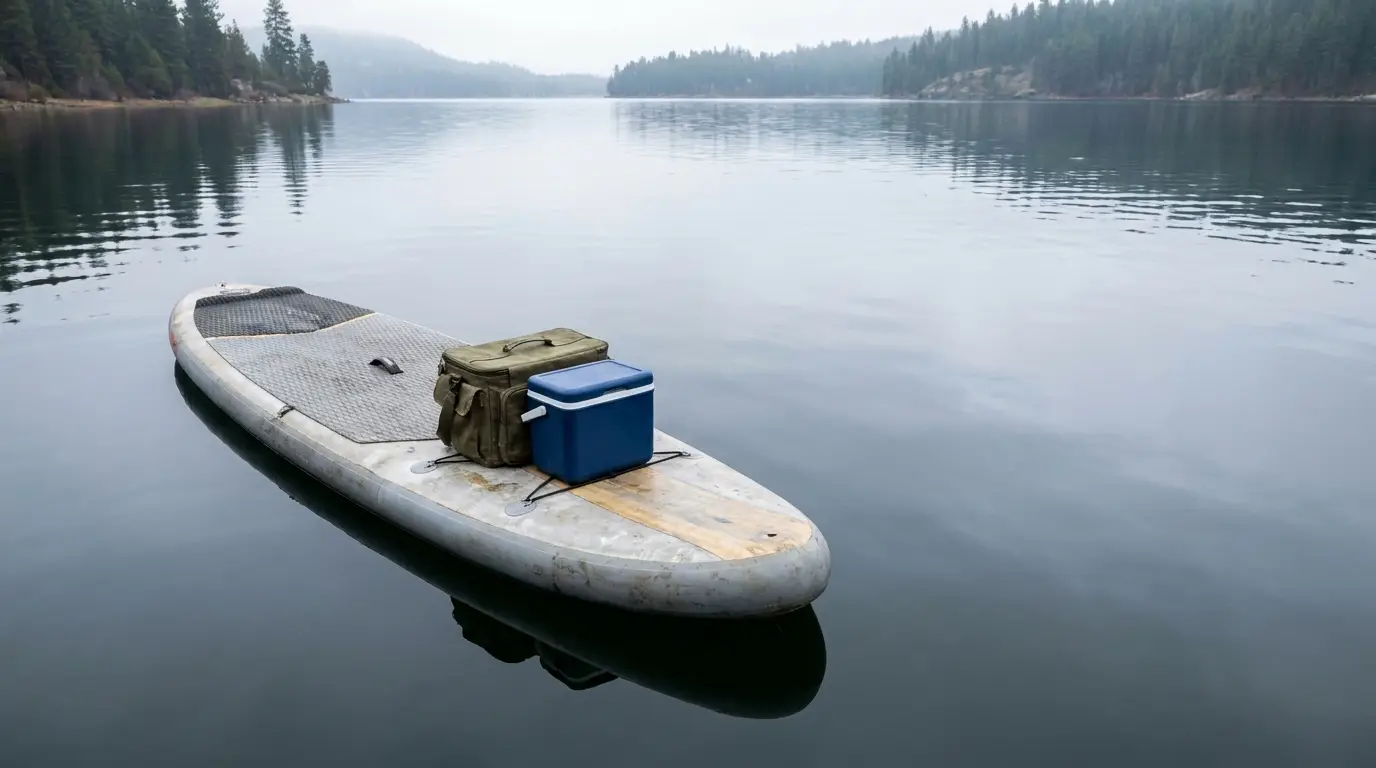
Pay attention to the total weight on your board, not just your body weight, but everything you bring along. For fishing, this might include a cooler, tackle crate, dry bag, extra rods, and sometimes even an anchor or fish finder.
For yoga, a water bottle and small pack are typical. If you approach a board’s maximum rated capacity, you’ll notice reduced stability and sluggish performance as the board sits lower in the water.
As with any small craft, keep gear low and centered, balance the load evenly fore and aft and side to side, and secure loose items so they cannot shift. Too much gear on one end may also cause the board to tilt or “plow” in waves, making both yoga transitions and reeling in fish more difficult.
Let’s look at some common setups:
- Minimalist yoga: One person and a water bottle, well below board capacity. Allows free movement and easier practice of standing and balance poses without distraction.
- Casual fishing: Paddler with a light tackle crate and small cooler, comfortably below the rated capacity. Offers a good balance of stability and maneuverability, easy to switch from paddling to casting and back.
- Loaded fishing trip: Larger paddler with a full crate, large cooler, and multiple rods, close to the stated maximum capacity. Extra gear near capacity can make balance moves less reliable, especially when turning or reaching for tackle; careful placement and securing of items is crucial.
Deck Layout, Stance, and Gear Attachment
A broad, well-textured standing area makes it easier for you to shift between stances, kneel, or practice yoga poses without distractions. Boards with generous traction patterns and minimal protruding hardware create a safer, more inviting platform. For instance, a wide traction pad allows yogis to lay outstretched during Savasana, or for anglers to kneel comfortably when tying lines or organizing lures.
Consider where tie-down points and handles are placed. Unevenly loaded straps or concentrated weight on one side will make the board want to lean or wobble even before you move. For fishing, mounting a cooler and tackle box evenly in the center can prevent tipping, while yoga enthusiasts will benefit from clear deck space free of strap interference. For those using carry handles as balance aids during transitions, make sure placement fits your movement needs rather than just the requirements of carrying the board ashore.
When comparing SUP Boards, it becomes clear that some designs feature wider, softer deck pads, extra tie-downs, and central gear mounts, which are particularly beneficial for stability while transitioning through yoga poses or actively fishing. These optimized boards allow for easier adjustment between activities, making them preferable for those regularly switching from casting to stretching routines.
Fin Setup and Real-World Balance
The configuration and depth of your fins influence how often you need to correct your course; fewer side-to-side corrections mean less risk of losing your balance. A larger center fin usually helps beginners track straight, but for fishing in weedy areas or shallow spots, a shallower or split fin may prevent snagging while still providing stability during slow drifts.
If you ever need to quickly turn the board (step-back turns), the fin setup will affect how predictable or squirrelly the pivot feels; boards aimed at yoga or fishing generally keep these maneuvers straightforward. For example, a tri-fin setup may be best for straight tracking during paddling to a fishing hole, while a removable single fin can benefit yoga practitioners who sometimes paddle in very shallow areas or near docks.
Adapting to Changing Conditions
Wind, boat wakes, current, and even cold water can significantly alter how a board feels under your feet. Adopting a lower or wider stance lowers your center of gravity and increases control.
For instance, anglers crossing a boat wake can widen their stance and slightly bend their knees to maintain stability, while yogis may kneel to keep balanced during an unexpected gust. When water conditions shift, many experienced paddlers kneel for transitions, using deck space to ride out waves or reposition without having to step off the board.
Balancing Priorities: Fishing versus Yoga
If your main goal is fishing, look for a board that can comfortably carry both you and your gear, and that allows for smooth movement while landing fish, retrieving lures, or standing for long periods.
Features like flush-mount rod holders and reinforced tie-down areas are helpful. For yoga, a wide, stable, soft-decked board is more important than speed or gear storage. Extra-wide boards or board-specific yoga models provide the best support for balance-intensive poses or transitions between standing and sitting.
For readers comparing a larger, stability-focused option, the Megalodon paddle board is another example to weigh against your normal fishing or yoga needs. Some boards are designed to perform reasonably well for both activities, but expect a few compromises: a do-it-all board may not excel at heavy gear-carrying or be the absolute softest platform for yoga, yet it will let you confidently use your board for both pursuits.
Checklist of Stability Factors
- Prioritize width (around 32 inches or more suits many paddlers)
- Consider thickness and volume and don’t exceed capacity
- Look for a comfortable deck layout and traction pattern
- Examine fin configuration for tracking and stability needs
- Assess tie-downs and hardware placement for your activities
- Adapt stance and loading to conditions when on the water