
Skateboarding traces its roots to California, sometime between the late 1940s and early 1950s.
When was skateboarding invented, exactly? Nobody can pin down the year, and the story shifts depending on who you ask.
Surfers wanted something to do when the waves went flat, so they nailed roller skate wheels onto wooden planks and called the result sidewalk surfing.
No single person invented the skateboard. Multiple groups probably hit on the same idea around the same time, and nobody kept records.
What started as a backyard experiment grew into a billion-dollar global sport with Olympic status.
This post walks through the full history of skateboarding, from those first crude wooden boards to the innovations, milestones, and cultural moments that shaped a worldwide movement.
When Was Skateboarding Invented?
Skateboarding didn’t pop up overnight with some grand announcement. It grew with time. Kids in California started attaching roller skate wheels to wooden planks sometime between the late 1940s and early 1950s.
They called them “sidewalk surfers” back then. Different sources point to different origins.
Some trace it to surfers who needed something to ride when the ocean went flat. Others point to crate scooters that kids stripped of their handles and turned into makeshift boards.
The reality? Multiple groups probably came up with similar ideas around the same time, and nobody kept great records. So, when was skateboarding invented? Around 1950, give or take a few years.
How Skateboarding Evolved: A Decade-by-Decade Breakdown

Skateboarding didn’t stay the same for long. Once kids figured out they could ride wooden boards with wheels, everything changed fast. Each decade brought new tricks, better gear, and different crowds.
1. 1940s–1950s: The Beginning
You’re looking at the raw origin story here. Surfers in California wanted to practice when the ocean went flat, so they built makeshift boards using wooden crates or planks. They’d rip wheels off roller skates and nail them on.
No fancy designs. No safety gear. Just wood, metal wheels, and a lot of scraped knees. These early versions were clunky and hard to control, but they worked well enough to get kids hooked.
2. 1960s: First Boom in Popularity
Skateboarding exploded during this decade. Manufacturers started making actual skateboards you could buy in stores, and surf shops jumped on the trend.
The first competitions happened in 1963, when Makaha founder Larry Stevenson sponsored a contest at Pier Avenue Junior High in Hermosa Beach, California.
The first magazine dedicated entirely to skateboarding, The Quarterly Skateboarder, launched in 1964. Skate teams formed, and companies hired riders to show off tricks. But then the wheels fell off, literally. Clay wheels were dangerous, and by 1965, the craze died down when injuries piled up, and interest faded.
3. 1970s: Major Innovation Era
This decade saved skateboarding. Frank Nasworthy introduced urethane wheels around 1972–1973, and riders could finally carve turns without slipping out. Skate parks opened across America, and vertical riding took off.
The Z-Boys, a crew of young skaters from Venice Beach, started riding drained backyard swimming pools during California’s 1976 drought.
Led by Tony Alva and Jay Adams, they brought an aggressive surf-inspired style that created vert skating as we know it.
Vans, already a Southern California staple since 1966, became the unofficial shoe of skateboarding during this era. Independent Trucks launched in 1978 and quickly became one of the most trusted truck brands in the sport.
4. 1980s–1990s: Culture and Street Style Growth
Skateboarding moved from parks to city streets. Rodney Mullen invented the kickflip and dozens of other technical tricks that are still standard today. Vert riding stayed popular, but street skating became dominant.
Punk rock and hip-hop mixed into skate culture, and brands like Powell Peralta and Santa Cruz became household names. Video games like Tony Hawk’s Pro Skater in 1999 brought skating into living rooms worldwide and introduced millions to the sport.
5. 2000s–Present: Global Sport & Olympics
Skateboarding went mainstream but kept its rebellious edge. It spread to every continent, and skate parks popped up in cities everywhere. The biggest moment? Tokyo 2020 added skateboarding to the Olympic Games.
Young riders from Japan, Brazil, and Australia competed alongside American pros. Social media turned amateur skaters into stars overnight.
So there you have it. Skateboarding went from homemade toys to Olympic competition in about seventy years. Each generation added something new, but the core stayed the same: kids on boards, pushing boundaries.
Key Innovations That Shaped Modern Skateboarding
Skateboarding wouldn’t exist as you know it without a few game-changing inventions. People kept tinkering with designs, materials, and shapes until they got it right.
| Innovation | Year | What Changed |
|---|---|---|
| Urethane Wheels | 1972 | Clay and metal wheels were terrible. Frank Nasworthy’s urethane wheels gave you actual grip and smooth rides. You could finally carve turns without slipping out. |
| Kicktail Design | early 1960s | Larry Stevenson added an upward curve to the back of the boards. This lets you pop the nose up, do tricks, and maneuver tight spaces. Basic but brilliant. |
| Concave Deck Shape | Late 1970s | Flat boards were hard to control. Adding curves to the deck gave your feet something to grip against. Made flip tricks and skating bowls way easier. |
| Double Kicktail | 1980s | Why stop at one kicktail? Adding curves to both ends opened up street skating. Rodney Mullen used this to invent most of the modern tricks you see today. |
| Ollie Technique | 1978 & 1982 | Alan Gelfand invented the ollie on vert ramps in 1978. Rodney Mullen then adapted it for flat ground in 1982. This one move became the foundation for almost every trick. |
Modern skateboards owe everything to these tweaks. Without them, you’d still be riding glorified wooden planks with grocery cart wheels.
Who Invented Skateboarding?
Nobody owns this one. You can’t point to a single person and say they invented skateboarding. It happened in different places at once.
California surfers get most of the credit, but kids in other states were doing similar things around the same time. Bill Richards and his son Mark started making boards in the late forties.
Larry Stevenson later invented the kicktail in 1963 and founded Makaha Skateboards. But honestly? Thousands of nameless kids who strapped wheels to wood deserve just as much recognition.
Skateboarding Culture: Magazines, Film, and Music
Skateboarding’s rise had as much to do with media as it did with board design. The first magazine dedicated entirely to the sport, The Quarterly Skateboarder, launched in 1964.
By the mid-1970s, Skateboarder Magazine was documenting the Z-Boys and the new wave of vert skating.
Then, in 1981, Thrasher Magazine arrived with a street-focused, punk-rock identity and the slogan “Skate and Destroy,” changing how skate culture saw itself.
The 1983 Powell Peralta Bones Brigade Video Show changed how skateboarding spread globally.
Directed by Stacy Peralta and sold as VHS tapes, these videos introduced Tony Hawk, Rodney Mullen, and the larger skate world to anyone who got their hands on a copy. Before YouTube, skate videos were how tricks traveled from one city to the next.
Music was always part of it. Punk rock in the 1980s and hip-hop in the 1990s found a natural home in skateboarding’s outsider identity.
The culture became something you wore, listened to, and lived, not just a sport you played. That overlap between skateboarding and music is still visible today in the brands, aesthetics, and artists that credit skateboarding as a foundational part of who they are.
Major Milestones in Skateboarding History
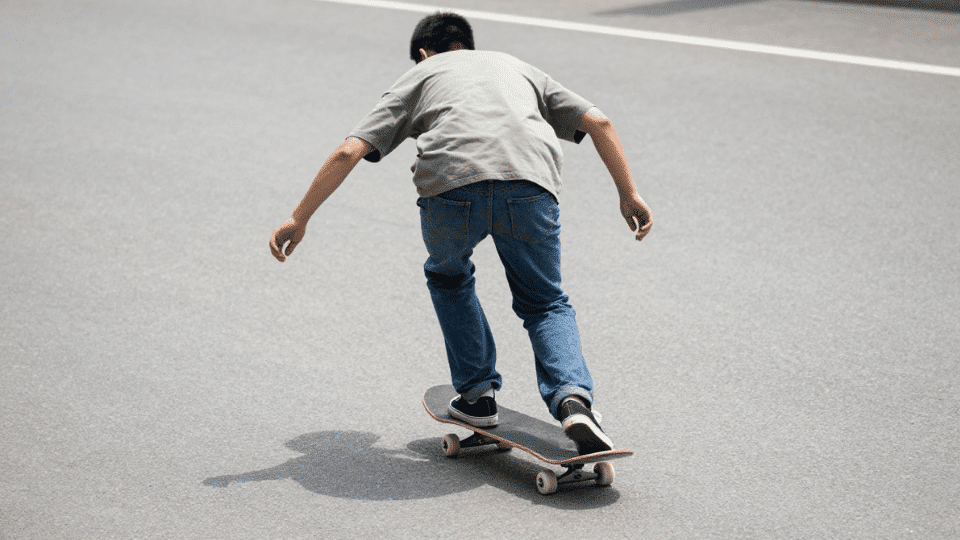
Skateboarding hit some serious turning points over the years. These moments changed everything, from how boards were made to who was riding them. Let’s break down the big ones.
- Commercial skateboard (1959): Roller Derby released one of the earliest mass-produced skateboards with improved handling. No more DIY-only projects.
- First skate contest(1963): Makaha held the first skateboard competition in Hermosa Beach, California, formalizing the sport for the first time.
- First skateboarding magazine(1964): The Quarterly Skateboarder launched, giving the sport its own media voice for the first time.
- Carlsbad Skatepark, California(1976): Gave riders a real place to practice. Parks started popping up everywhere after that.
- Tony Hawk lands the 900(1999): He nailed two and a half spins at the X Games. People thought it was impossible until he did it.
- Olympics debut(2021): Tokyo added skateboarding to the Games. Kids competed on the world’s biggest sports stage.
These moments built skateboarding into what you see today. Each one pushed things forward and brought in new riders.
Why Skateboarding Became So Popular
Skateboarding caught on because it was cheap and rebellious. You didn’t need a team, a coach, or expensive memberships. Just a board and some pavement. Plus, it’s surprisingly good exercise that builds balance, coordination, and endurance.
Then surf culture made it look cool, and suddenly everyone wanted in. Punk rock and hip-hop adopted skating as part of their identity in the eighties and nineties. Skate videos spread tricks worldwide.
Video games like Tony Hawk’s Pro Skater brought it into homes everywhere. The 2005 film Lords of Dogtown introduced the Z-Boys story to a mainstream audience and sparked renewed interest in skateboarding’s roots.
Today, social media lets anyone share their skating instantly. It’s accessible, creative, and lets you express yourself without following anyone’s rules.
The Bottom Line
The answer to when was skateboarding invented lands somewhere in the mid-twentieth century, but the date is almost beside the point.
Skateboarding grew from scraps of wood and old roller skate wheels into a global sport with Olympic recognition because riders kept finding new things to do on a board.
Urethane wheels, the kicktail, the ollie, street skating, and social media each opened a new chapter.
The DIY spirit that started it all is still going strong. If you want to be part of it, all you need is a board and some pavement.
Frequently Asked Questions
Which Country Banned Skateboarding From 1978 To 1989?
Norway banned skateboarding during this time. The government said it was unsafe and could cause injuries. The ban lasted until 1989, when skateboarding became legal again.
What Was Skateboarding First Known As?
Skateboarding was first called “sidewalk surfing.” Surfers used it on land when there were no waves. It copied the feeling of surfing on the streets.
Who’s Richer, Rob Dyrdek Or Tony Hawk?
Estimates often place Rob Dyrdek’s net worth higher due to business ventures, TV shows, and brand investments.