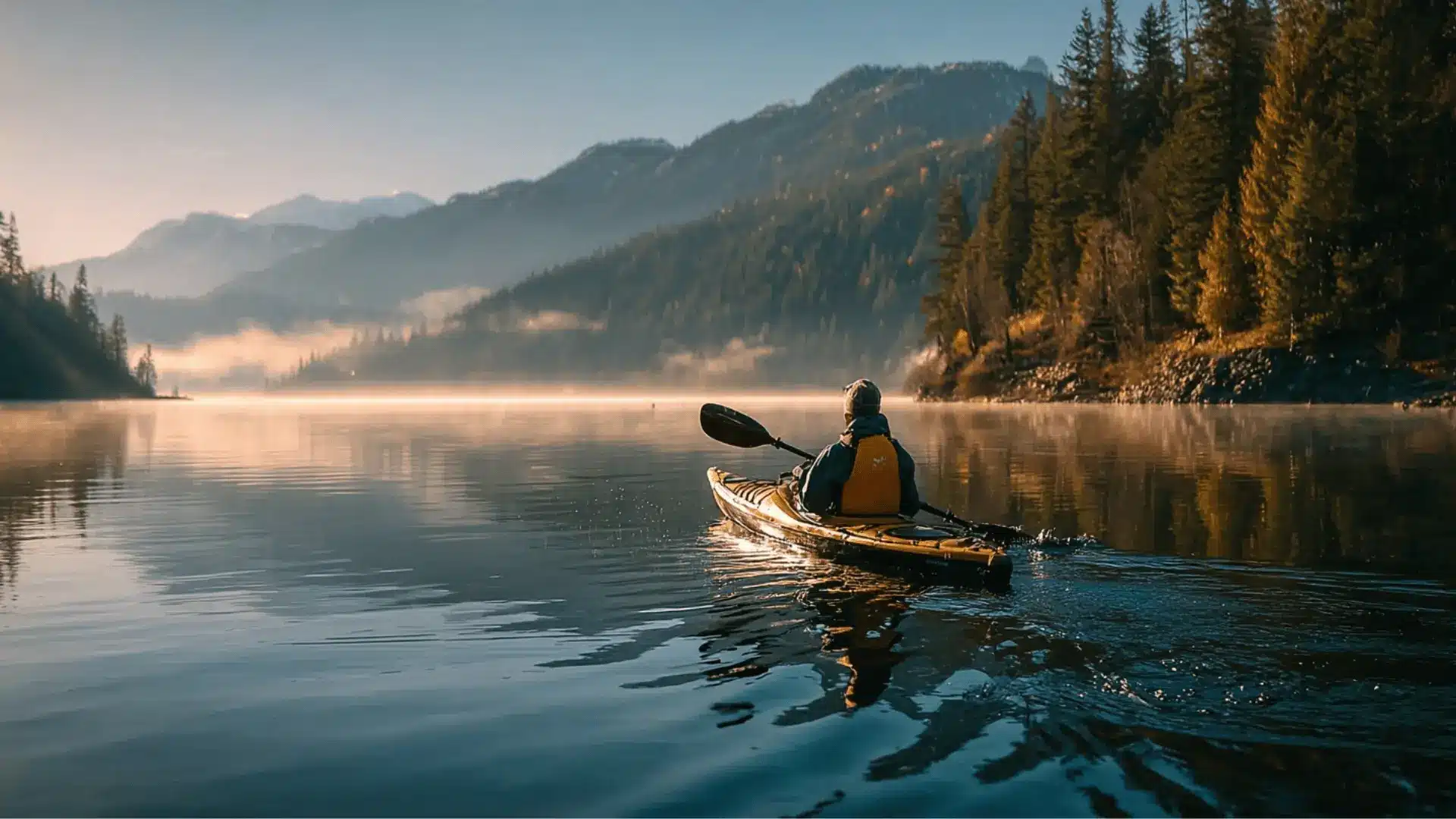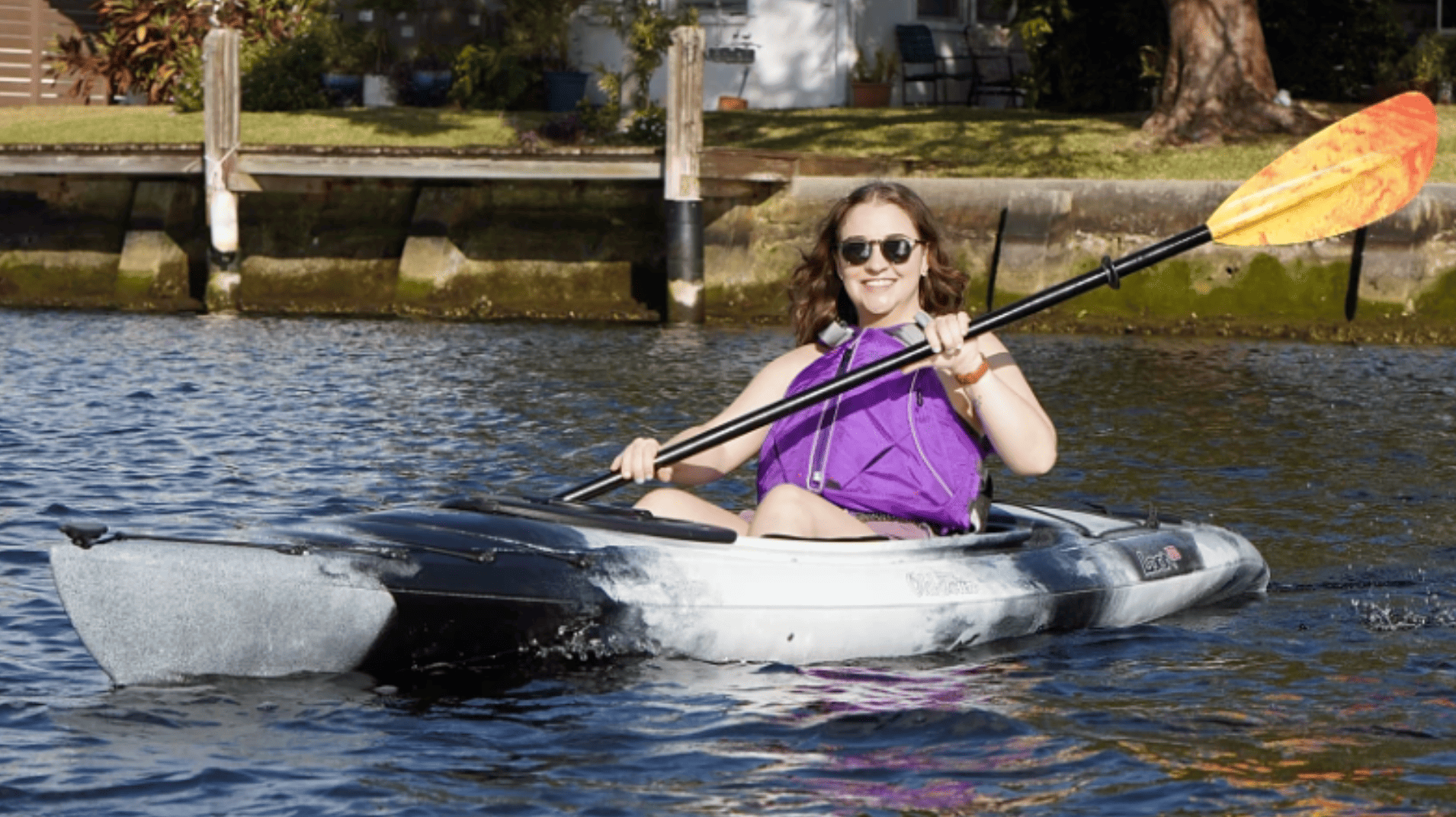
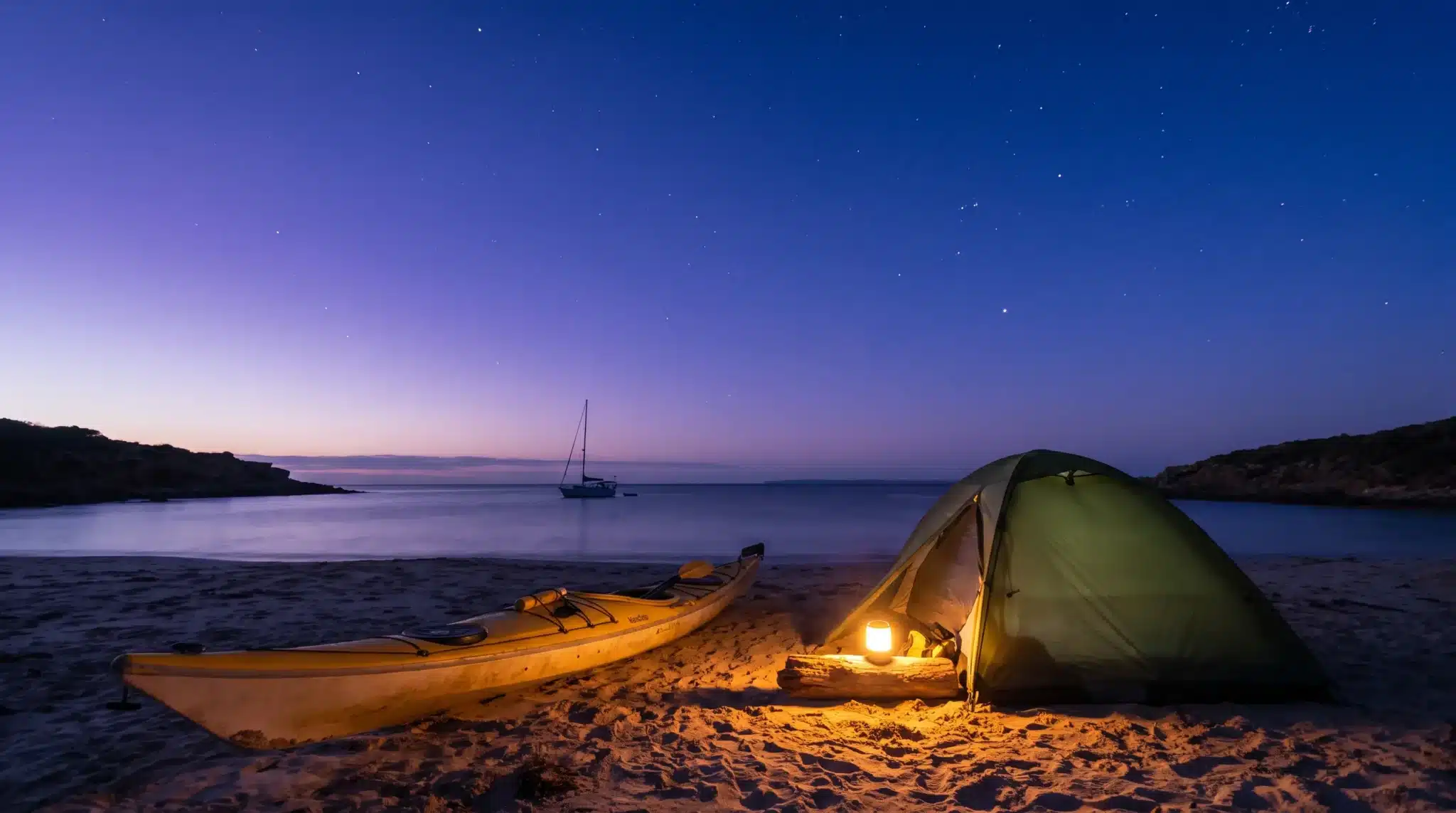
On a multi-day paddle the evening starts early. You want the boat up the beach and the tent pitched while there’s still light to see the tide line, and once that’s done there can be ten hours of dark before it’s safe to launch again. The same goes for a sailboat or a small cruiser on the hook in a cove: navigation stops with the light, and what you do until you’re tired enough to sleep is mostly decided by what you pack and how much battery you have. Here are the ideas we come back to most, grouped by how much power and signal they need.
First, the Twenty Minutes of Chores
Anchor light if you’re afloat. A vessel under 50 meters may show a single all-round white light at anchor, and a vessel under 7 meters anchored well clear of any channel isn’t required to show one at all, though we hang one anyway. Kayak on the beach: pull it above the wrack line, tie it off, and put the paddle where you’ll find it in the dark. If you’re paddling after dark rather than camping, our night kayaking guide covers lights and visibility; this piece assumes you’ve stopped for the night.
Then look at the battery, whether that’s a power bank in a dry bag or a house bank under a bunk. Flooded and AGM batteries shouldn’t run below about half their capacity if you want them to last; lithium iron phosphate can go far deeper, which is what you’re paying for. Write the reading down; you’ll be budgeting from it.
Ideas That Need a Phone, a Charge and a Little Signal
Coverage along the US coasts, going by what cruisers report, runs to somewhere between five and ten nautical miles offshore and further with an antenna, so a coastal campsite or a marina anchorage will often have full bars. What it may not have is data to spare. Verizon’s unlimited plans, for one, cap hotspot use at a set allowance and slow it to as little as 600 kbps afterward, and an hour of HD video costs around 3 gigabytes on Netflix’s own numbers. Three evenings of streaming can eat a month.
1. Downloaded audio. Spotify Premium lets you take albums, playlists and podcasts offline, and even the free tier lets you download podcasts; Apple Podcasts does the same. Build the playlist at home, shanties included if the crew insists, rather than trying to stream it from a bay with one bar.
2. E-books. Load the reader before you leave the put-in. A paperback works too, and survives a capsize better than a reader does.
3. Casual browser and demo games. An episode of anything costs a gigabyte or more. Twenty minutes on demo games or playing online slots uses a small fraction of that, as does a solitaire app or any other browser game that isn’t pulling video, and none of them need more than one bar.
4. A stargazing app. Stellarium Plus works without a connection, with a reduced catalog of about two million stars, so install it before you lose signal and you can put names to what’s overhead.
Ideas That Need Real Power, and What They Cost
5. A film, if you’ve brought the watt-hours. A phone charge takes 10 to 15 watt-hours; a laptop can take up to 100, and a tablet sits in between. A 20,000 mAh power bank holds about 74 watt-hours on paper and less after conversion losses, enough for a week of phone charges or most of one laptop film, so decide before you leave which of those you want.
6. Satellite internet, on a timer. Starlink’s Mini draws 25 to 40 watts on average, so a four-hour evening online costs more than the phone, the reading light and the speaker put together. On a sailboat with solar, treat the panel’s sticker rating as optimistic: Practical Sailor’s measurements put peak output at about 60 percent of nameplate on a sunny day and the daylight average nearer 40 percent, so a 100-watt panel behaves like a 40-watt panel across the daylight hours. Check the weather and the messages, then shut the terminal down.
Ideas That Need No Power at All
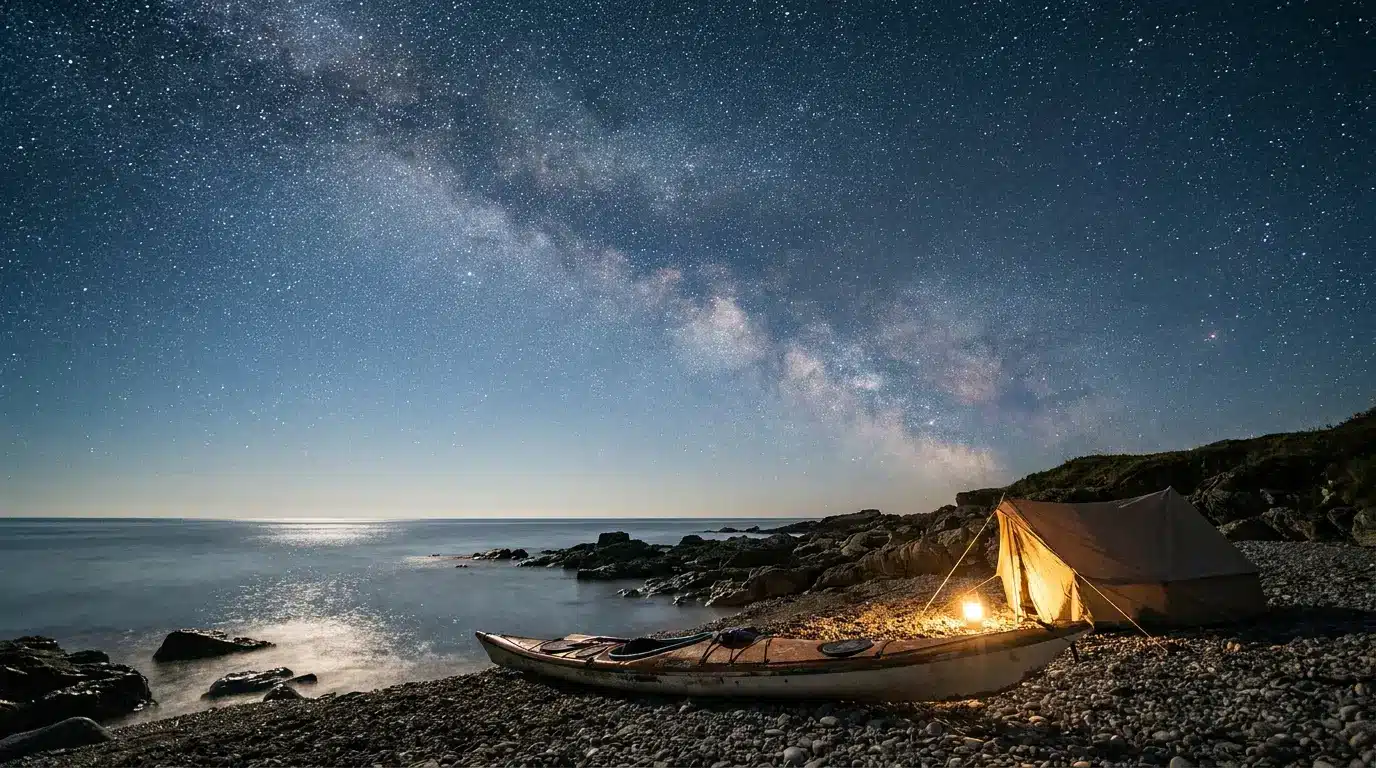
7. The sky. Campsites on the water are dark in a way towns never are, and this fall is a good one to be out. Saturn reaches opposition on October 4, as bright and close as it gets all year and up from dusk to dawn. The Harvest Moon is September 26. The Orionids peak on the morning of October 23, thinned by moonlight this year but still worth a look from a sleeping bag.
8. The trip log. Ten minutes by headlamp, every night, or the days run together by the time you’re home. Distance, wind, what worked, what you’d pack differently.
9. The maintenance log. The one job that gets done better in camp than anywhere else, because the thing that broke is right there in front of you. A valve that’s weeping, a seam that’s started to lift, the hatch strap that let go.
10. The beach at low water. If the tide is going out, a slow walk of the tide line with a headlamp turns up crabs, the odd octopus in a pool and whatever the day’s wind brought in. Keep to the wet sand and you’ll know exactly where you are relative to the boat.
11. Cards and small board games. A standard deck in a zip bag, or one of the magnetic travel sets that fits in a day hatch and doesn’t mind a wet table. Anyone who has done an expedition knows how much of it is spent sitting down.
Most nights we end up somewhere around the log, a podcast and the sky, with the phone in airplane mode and the battery reading written down. Do the chores first, though. Check the boat again before you sleep, and check it once more if the wind gets up.