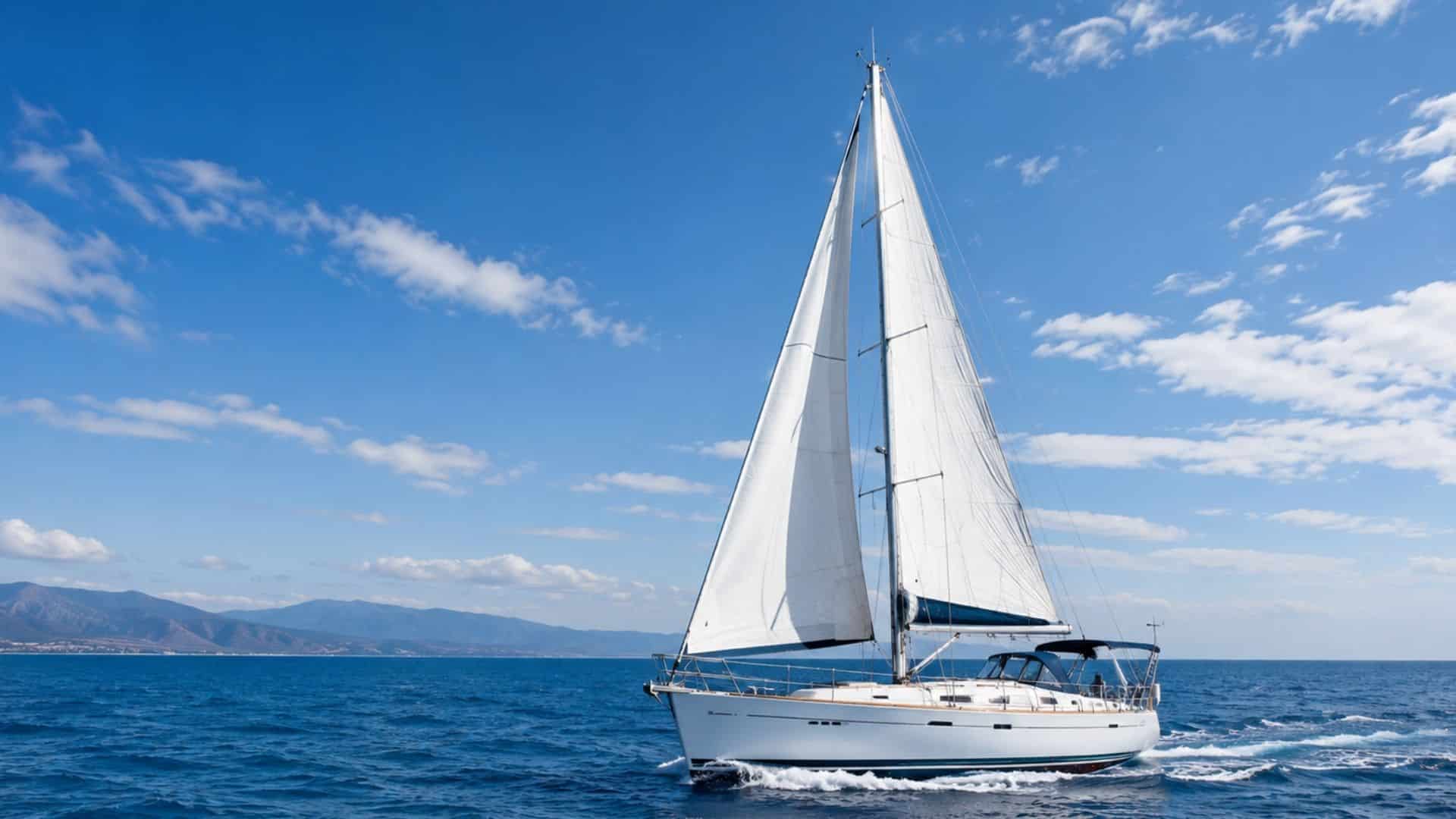
I watched a sailboat do this once and couldn’t figure out what I was looking at.
It was cutting forward at an angle where the wind should’ve been shoving it backward, or at least stopping it cold.
Somebody on the dock told me it was called beating, like that explained anything.
It’s not a trick. It’s a keel doing most of the quiet work while a sail turns wind into lift instead of just getting pushed around by it.
Once that clicks, a lot of the rest of sailing stops being a mystery. This is the part where I try to explain it the way I wish someone had explained it to me.
What is Wind Sailing?
Wind sailing, stripped down, is just using moving air to shove a boat somewhere. That’s the whole idea.
Where it gets interesting is that the wind doesn’t have to come from behind you.
Off the side works. Even a sharp angle toward the bow works, as long as the sail’s shaped right and the boat has something underwater fighting back against it.
I spent my first season assuming a sail worked like a parachute, catching wind and getting pushed. It’s closer to an airplane wing turned sideways.
Lift, not push. Small distinction on paper. Changes everything about how you set the thing.
How a Boat Actually Sails Into the Wind
This is the part that used to bother me, because it looks impossible from the shore.
A flat sheet of wind pushing on a flat sail should just shove the boat backward, and for centuries that’s basically all boats could do.
Two things fix that.
- The sail isn’t flat; it’s curved, and wind moving across that curve creates a pressure difference, higher on one side and lower on the other, the same way an airplane wing generates lift.
- This is the part people miss; there’s a keel or centerboard underwater doing the opposite job. The wind pushes the boat sideways through the sail, and the keel resists that sideways push through the water. If you want to see how this fits with every part of a sailboat, from the hull to the rigging, it helps to see the whole system laid out at once.
Squeeze something between two forces pointed in different directions and it doesn’t go sideways. It squirts forward.
That’s basically what a sailboat is doing every time it makes headway upwind.
Take the keel away and none of this works. You’d just get shoved wherever the wind wanted to shove you, sideways included.
Points of Sail and Sail Trim
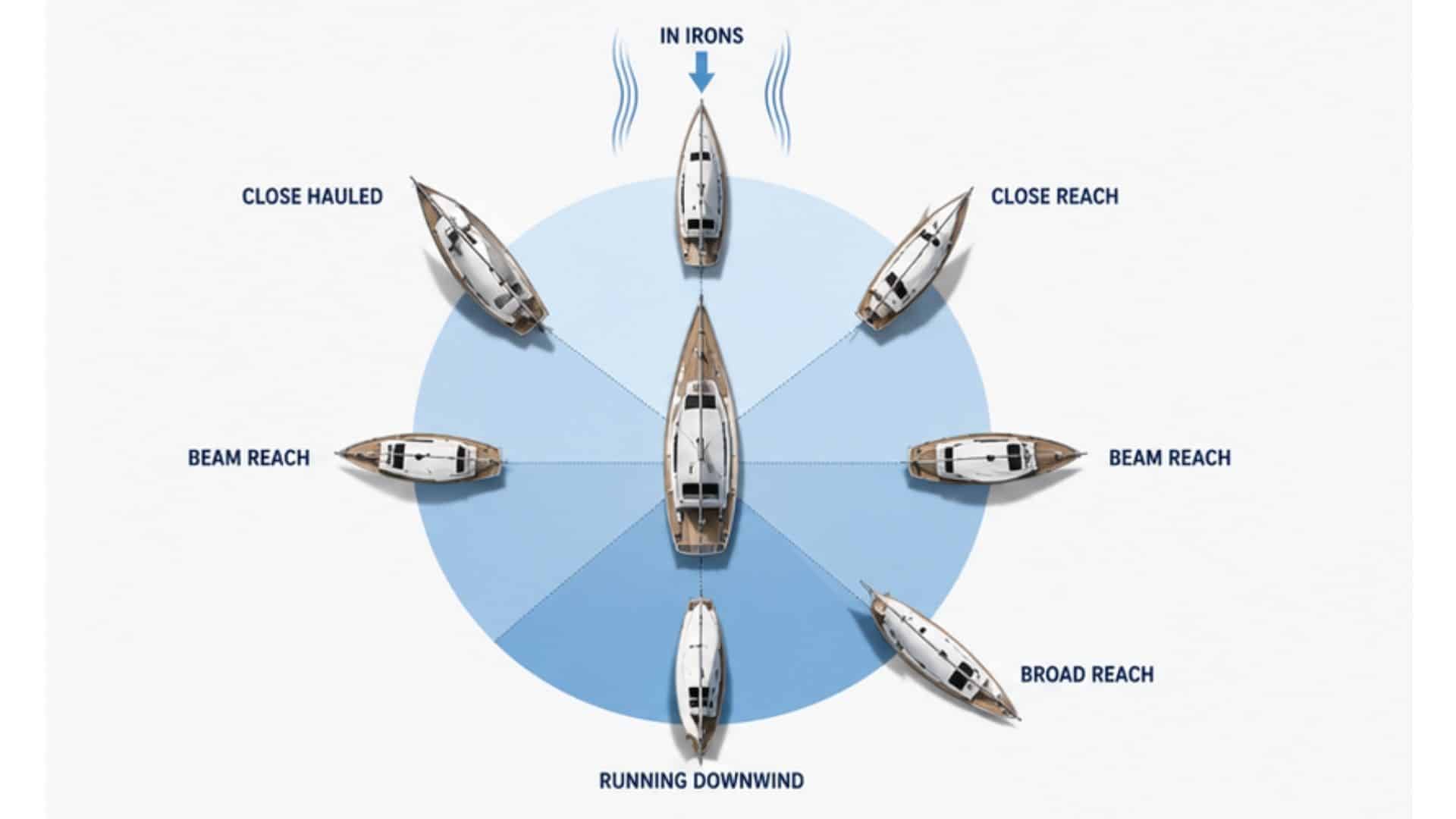
Points of sail describe your boat’s direction relative to the wind, and each one asks for a different sail position.
| Point of Sail | Angle to Wind | Sail Trim |
|---|---|---|
| In Irons (No-Go Zone) | 0-45 degrees | Sails luff, no forward power |
| Close Hauled | 45 degrees | Sails pulled in tight |
| Close Reach | 45-75 degrees | Sails eased out partway |
| Beam Reach | 90 degrees | Sails let out about halfway |
| Broad Reach | 120-150 degrees | Sails eased out further |
| Running Downwind | 180 degrees | Sails let all the way out |
Sailing gets easier once you understand how each point affects your boat’s movement and how to adjust the sails accordingly.
1. In Irons and Into the Wind
Point your bow straight at the wind and the sail just flaps. Luffing, they call it.
Keep pointing there, and you’ll stall out completely, dead in the water, sails slapping around uselessly until you fix it. There’s no way around this zone.
Every points-of-sail diagram shows it because every boat has it.
2. Close Hauled
This is as tight to the wind as you can point, right around 45 degrees off it.
Sails pulled in hard. It’s how you claw your way upwind when there’s no other option, and it’s also the point of sail that takes the most concentration to hold.
Drift a few degrees too far, and you’re luffing before you notice.
3. Close Reach
Ease off close hauled, and you’re on a close reach, somewhere between 45 and 75 degrees off the wind.
Still angled toward it, but forgiving in a way close hauled isn’t.
I like this one for long stretches where I’m not trying to prove anything, just cover distance without babysitting the sail every ten seconds.
4. Beam Reach
Wind hits you straight from the side here, roughly 90 degrees off the bow.
Fastest point of sail, easiest one too, and it’s usually where I tell someone new to just sit for a while and get a feel for things before we start doing anything complicated.
The boat tends to feel balanced here, making it a comfortable point of sail for learning how trim affects speed.
5. Broad Reach
Wind’s coming from behind and off to one side now, somewhere around 120 to 150 degrees.
Sails let out further. Good speed, and it doesn’t demand the constant fiddling that running downwind does.
It’s a good middle ground between the control of a reach and the looser sail handling needed when running downwind.
6. Running Downwind
Running downwind means the wind sits directly behind you and the sails are let all the way out. It looks like the easy point of sail from shore.
Out on the water, you still need to stay alert for an accidental gybe, when the boom swings hard across the boat with no warning at all.
True Wind vs Apparent Wind
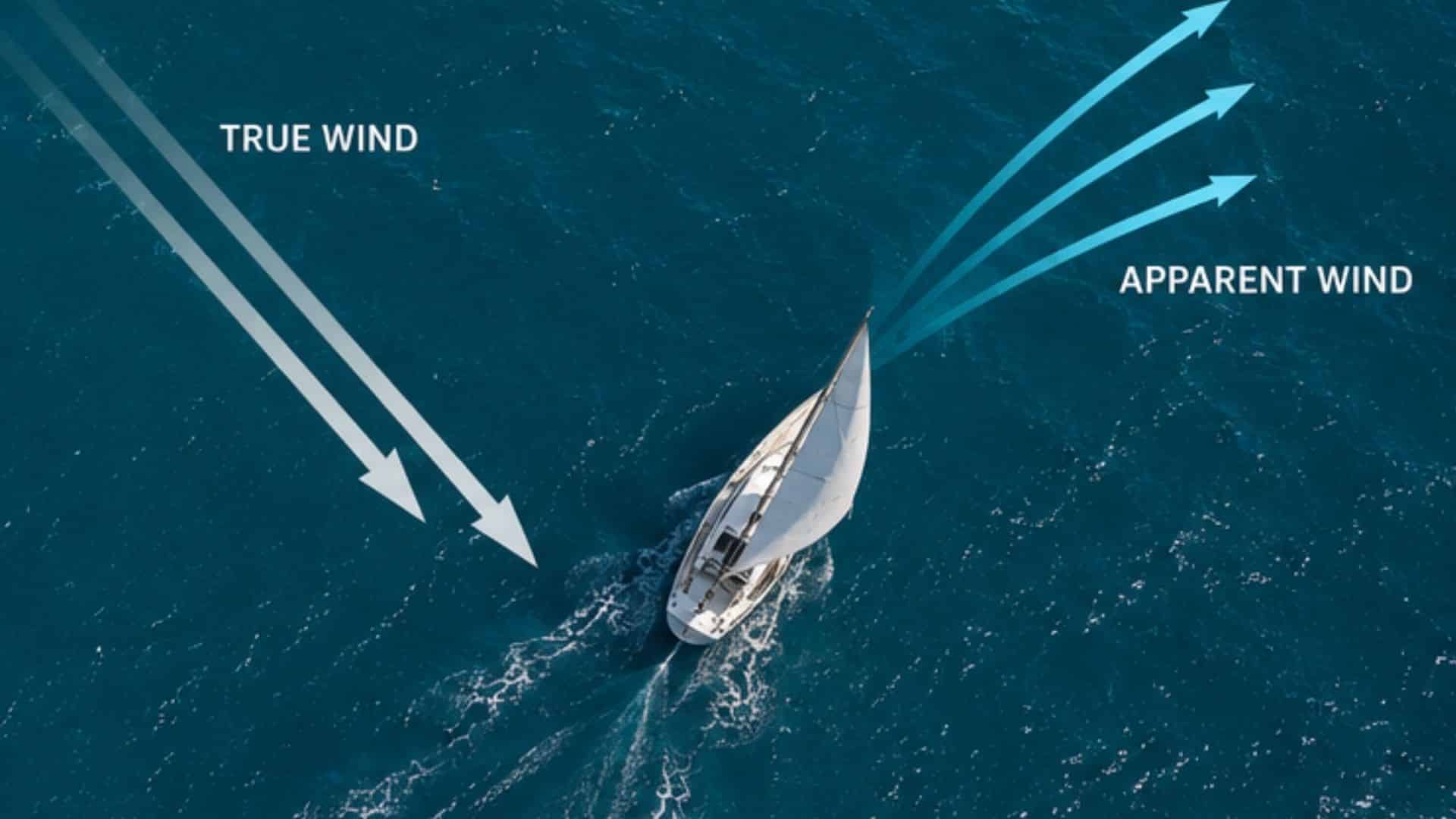
True wind is just what’s blowing over the water. Stand still on a dock and whatever you feel is true wind, full stop.
The second you’re moving, that changes. Stick your hand out a car window on a still day, and you’ll feel a strong breeze that isn’t really there; it’s just your own speed creating wind against your hand.
A boat does the same thing. What you actually feel on deck is apparent wind, and it’s the true wind blended with the wind your own boat speed creates.
| Elements | True Wind | Apparent Wind |
|---|---|---|
| What it is | Wind blowing over the water | Wind felt while the boat is moving |
| Changes with speed? | No | Yes, constantly |
| Used for | Weather, course planning | Trimming the sails |
Here’s the part worth remembering: apparent wind always feels like it’s coming from further forward than the true wind actually is.
It also shifts strength depending on where you’re pointed. Sail upwind, and the apparent wind gets stronger than the true wind.
Sail downwind, and it eases off and feels lighter than what’s actually blowing. That’s why a boat can feel like it’s flying on a beam reach and then feel almost lazy once you turn and run with the wind, even though the true wind never changed.
How to Sail Into the Wind
You can’t point a boat straight into the wind and expect it to go anywhere, so the workaround is to angle off it and switch sides by tacking.
- Tacking: Tacking’s a zig-zag. The bow crosses through the wind, the sails swap sides, and if you time it right, you barely lose any speed.
- Timing: If you time it wrong, the boat stalls out mid-turn and you’re starting from nothing.
- Trim: Trim is just how tight or loose the sails sit for whatever angle you’re at.
- Balance: Balance is leaning your weight and adjusting tension so the boat doesn’t fight you. Some heel is normal and actually helps you hold speed.
- Heel: It only becomes a problem once it’s steep enough to lose control.
- Course correction: Course correction is small and constant because the wind never actually holds still, no matter how steady it looks.
The thing nobody tells beginners: drag isn’t just about the sails. A dirty hull costs you speed just as much as bad trim does, and so does extra weight you didn’t need to bring aboard.
Reading Wind Without Any Instruments
You don’t always need a wind meter to figure out what the wind is doing. A few simple signs around you can give you a good idea.
Water ripples are one of the easiest ways to spot wind direction. Watch how they move across the surface to get a rough idea of where the wind is coming from.
Flags and smoke can also point you toward the wind’s direction, especially when you’re close to shore.
Darker patches of water can indicate stronger wind moving across the surface.
Whitecaps usually start appearing around 12 to 13 knots, which is also when smaller boats may begin feeling overpowered.
If you can’t spot any other clues, slack sails can help. Let them loosen for a few seconds, and they’ll settle in the direction the wind is coming from.
Wind Terminology Every Sailor Should Know
These come up constantly once you’re on the water.
| Term | Meaning |
|---|---|
| Windward | Direction the wind comes from |
| Leeward | Direction away from the wind |
| Headwind | Wind coming toward the boat |
| Tailwind | Wind pushing from behind |
| Gust | Short increase in wind speed |
| Lull | Temporary decrease in wind speed |
| Wind Shift | Change in wind direction |
| Lift | Wind change that lets a boat point closer to its destination |
| Header | Wind change that pushes a boat off its course |
Knowing them ahead of time saves you from asking mid-maneuver.
Sailing Wind Speeds Explained
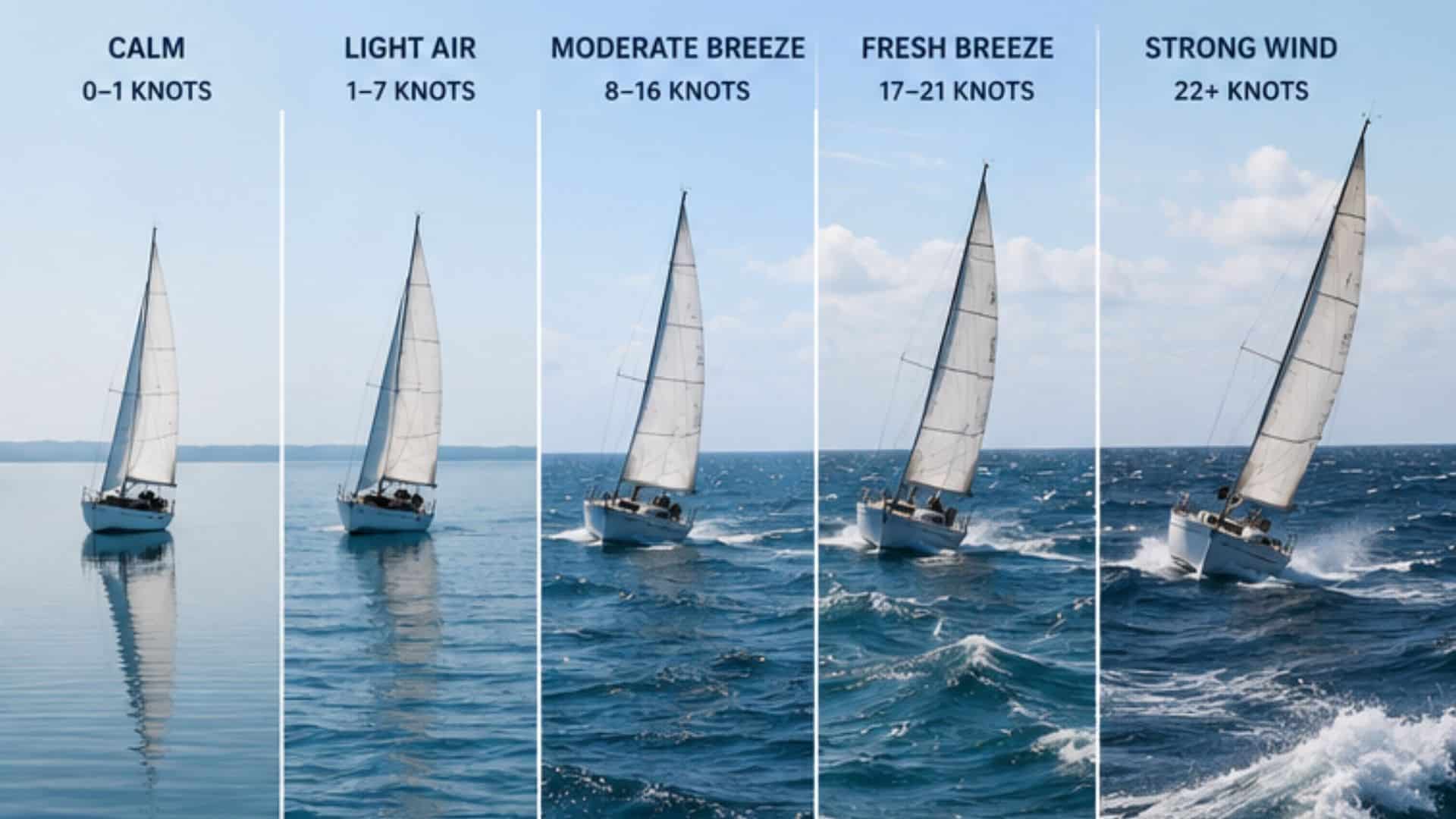
Direction is only half of it. Speed changes everything about how a day on the water feels, and there’s no single ideal number.
It depends on your boat, your skill, and honestly what kind of day you’re in the mood for.
| Wind Speed | Beaufort Force | What It Feels Like |
|---|---|---|
| Under 6 knots | Force 1-2 | Light air, boat feels sluggish |
| 7-10 knots | Force 3 | Gentle breeze, easiest range for beginners |
| 11-16 knots | Force 4 | Moderate breeze, sweet spot for most recreational sailors |
| 17-21 knots | Force 5 | Fresh breeze, start thinking about reefing |
| 22-33 knots | Force 6-7 | Strong wind, experienced sailors only |
There’s a reason sailors take wind speed seriously, and it’s not just comfort. Wind force doesn’t rise in a straight line with speed; it rises with the square of it.
Go from a lazy 4 knots to 16, and the force on your rig is up sixteen times over.
That’s the whole reason reefing exists: cut your sail area in half, and you cut the force on the boat in half right along with it.
If you’re still learning, most beginner-friendly ranges top out around 15 to 18 knots. Past that, gusts start overpowering small boats fast, and it’s a good point to head in rather than push through it.
- Light Wind Sailing: In light wind, the boat feels sluggish, and keeping the sails full takes real focus. Reducing drag and keeping the sail shape clean helps you catch what little power is out there instead of wasting it.
- Moderate Wind Sailing: This is the range most recreational sailors keep coming back to. It’s a good mix of speed and control, and the handling stays predictable enough that you can relax into it instead of correcting every few seconds.
- Strong Wind Sailing: It asks for quicker adjustments and closer attention, because the boat can overpower you fast if you fall a step behind. Reefing matters here, and conditions can shift again before you’ve fully settled into the last change.
How to Read Wind Before Sailing
Before you head out, get in the habit of checking the wind.
- Check Wind Direction: Flags, ripples on the water, wind indicators, or a quick forecast will get your bearings before you set off.
- Watch for Changes as You Go: Wind speed and direction shift mid-trip more than beginners expect. Staying aware of local patterns lets you adjust before conditions catch you off guard.
It takes a minute and saves you a lot of guessing once you’re already on the water.
Final Thoughts
This felt like too much to hold onto the first time I heard it explained, too. Everyone starts exactly where you are.
Trim, wind direction, points of sail: once those three start clicking, they click fast. Pick one thing next time you’re out.
Just one point of sail. Get good at noticing what changes when you nail it, and the rest comes easier than you’d think. Once the fundamentals settle in, taking your first solo sail is really just a matter of putting all of this together, one step at a time.
Frequently Asked Questions
What’s the Difference Between Tacking and Jibing (Gybing)?
Tacking’s the bow crossing the wind, upwind. Jibing’s the stern crossing it, downwind, and it’s the riskier of the two; that boom can swing across hard and fast if you’re not ready for it.
How Much Wind Do You Actually Need to Start Sailing?
Five to seven knots gets most boats moving with any purpose. Small dinghies can sometimes limp along on less. Go lighter than that, and you’re drifting, not sailing.
What Does “Heeling” Mean, and Is It Dangerous?
It’s the tilt you feel when wind hits the sails. Normal, expected, and it actually helps you hold speed in moderation. Only becomes a problem once it’s steep enough that you lose control.
What Is “Sailing by the Lee”? Why Is It Risky?
Wind crossing the same side as your boom instead of the opposite side, while you’re running downwind. Unstable. One bad gust and you’ve got an uncontrolled jibe on your hands with zero warning.
What’s a “Preventer,” and When Do Sailors Use One?
A line rigged to hold the boom in place so it can’t swing without warning. Most people rig one running downwind in stronger wind, exactly when an accidental jibe would hurt the most.