Spending more on a lithium trolling motor battery might feel like a big step, but the payoff can be huge for anglers who fish often.
Lithium batteries weigh far less than lead-acid batteries, last longer, and maintain steady power even when the charge runs low.
That means more hours on the water, less strain when loading your boat, and fewer trips to buy a new battery every couple of years.
Below you will find real numbers, honest comparisons, and feedback straight from boaters who made the switch, so you can figure out if lithium is worth it for your setup.
What Is a Lithium Trolling Motor Battery?
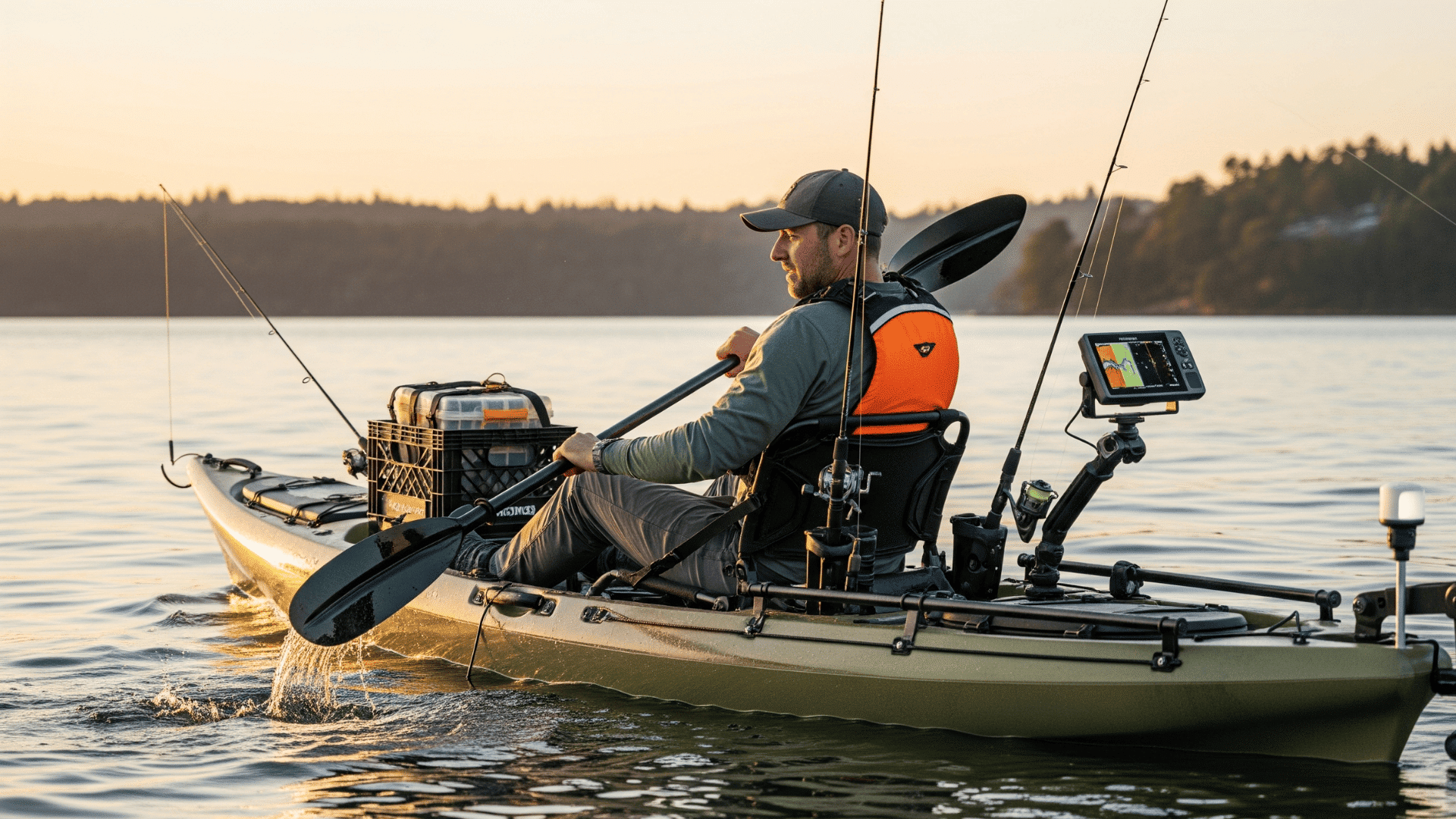
Most anglers start thinking about power once they get serious about picking the right motor for their kayak, and the battery is where that decision really begins.
Most lithium trolling motor batteries use a type of chemistry called lithium iron phosphate, or LiFePO4 for short. This chemistry is the safest form of lithium battery and is built to handle the slow, steady drain a trolling motor requires.
A LiFePO4 battery stores power in its cells and releases it at a steady rate. Unlike lead-acid batteries, it does not lose power quickly as it drains. This is one reason anglers are switching over.
Every good lithium battery has a Battery Management System, or BMS—this small computer inside the battery monitors for problems such as overcharging, overheating, and short circuits.
It shuts the battery down before damage happens. This is one of the biggest safety upgrades over older lead-acid batteries.
Why are Boaters Switching to Lithium Batteries?
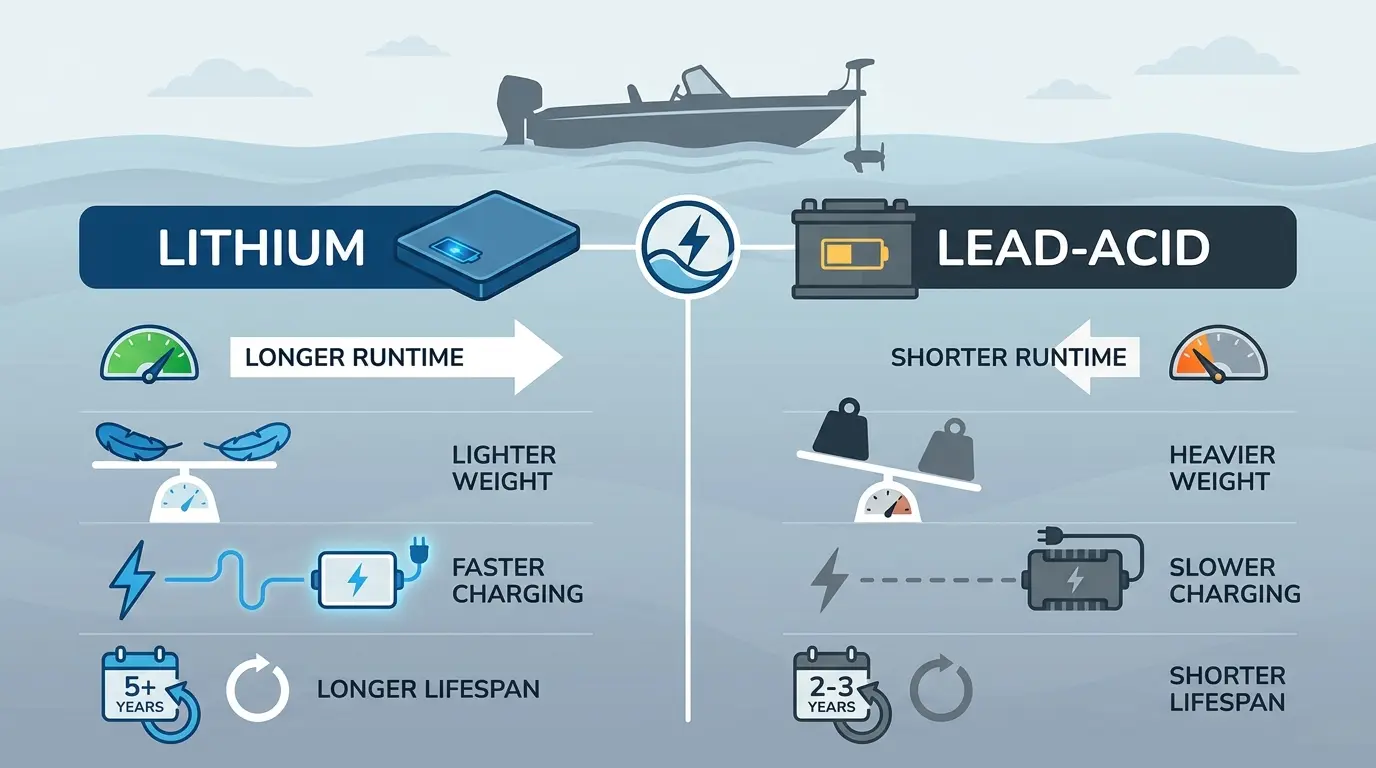
More anglers are replacing lead-acid batteries with lithium because they last longer, weigh less, and perform better on the water.
Longer Runtime: A 100Ah lithium battery delivers much more usable power than a 100Ah lead-acid battery because it can safely discharge to 80–90% of its capacity. It also maintains steady voltage, so your trolling motor keeps running at full power until the battery is nearly empty.
Lighter Weight: Lithium batteries are about 50–60% lighter than comparable lead-acid batteries. A 100Ah lithium battery weighs around 30–35 pounds, while a lead-acid version weighs 60–70 pounds, making boats easier to handle and batteries easier to carry.
Faster Charging: Lithium batteries support higher charging rates, allowing them to recharge in just a few hours rather than overnight. This is ideal if you fish on back-to-back days.
Longer Lifespan: A quality LiFePO4 battery typically lasts 2,000–5,000 charge cycles, compared to about 300–500 cycles for lead-acid batteries. That means fewer replacements and lower long-term costs.
Are Lithium Trolling Motor Batteries Worth the Extra Cost?
This is the question most anglers ask before upgrading to lithium. If you’re still weighing your options, comparing battery choices can help you decide whether the extra cost is worth paying.
The right pick depends on how often you fish, how long you’re on the water, and your overall budget. For some boaters, lithium batteries quickly pay for themselves, while others may not see the same value.
When Lithium Batteries Make Sense
Lithium batteries are a smart investment if you want longer runtime, faster charging, and less maintenance. They provide the greatest benefits to anglers who regularly rely on their trolling motors.
- Frequent anglers who fish several times a month
- Tournament fishermen who need reliable power all day
- Anyone who spends long days on the water without shore power
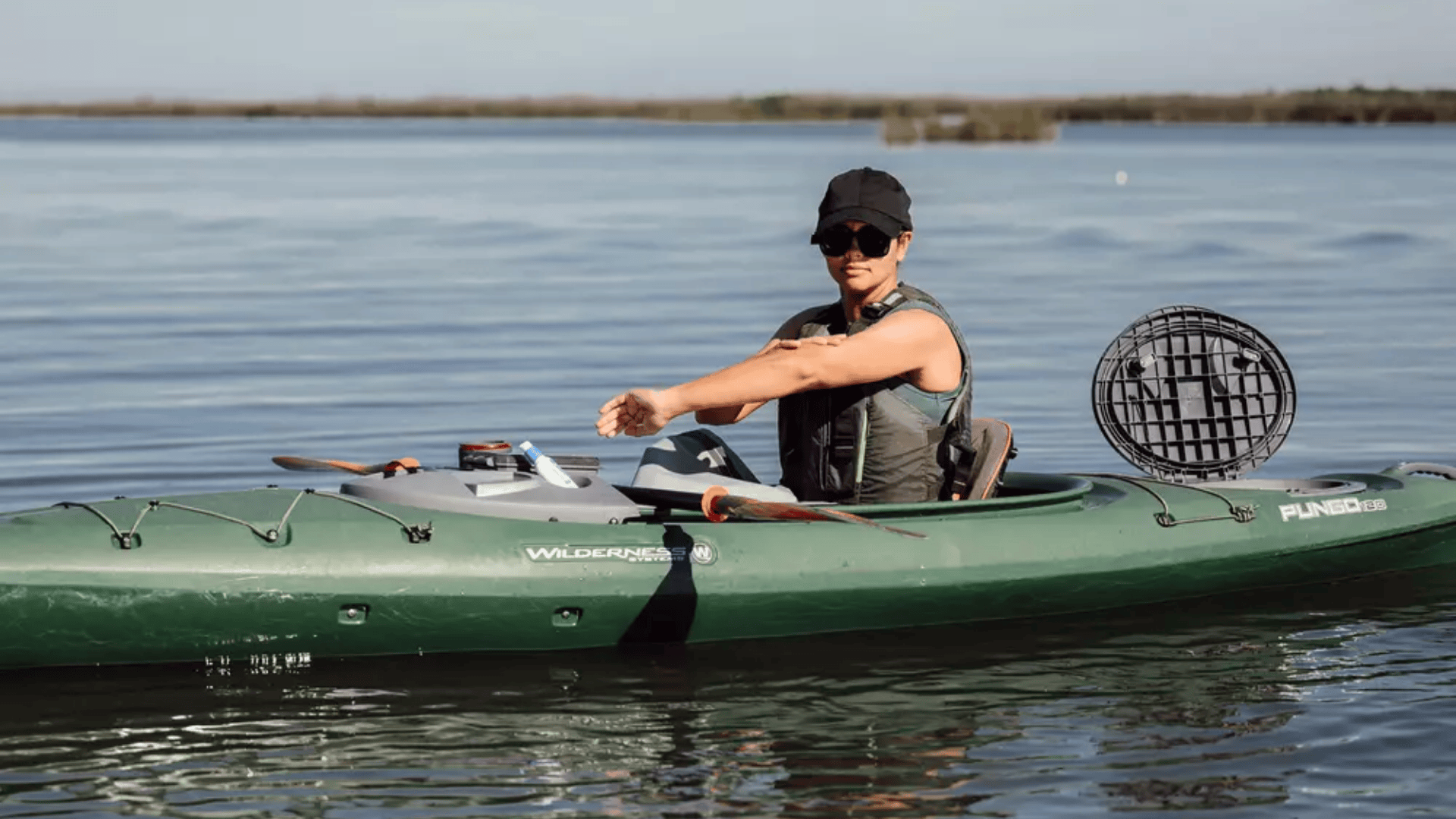
- Owners of smaller boats or kayaks, where weight savings matter most, including boards built for motor mounts, tend to notice the difference the most.
When a Lead-Acid Battery May Still Work
Lead-acid batteries can still be a practical option if your fishing trips are short or infrequent. They cost less upfront and may be enough for basic recreational use.
- Occasional anglers who fish only a few times a year
- Boaters on a tight budget
- Short trips where battery life is not pushed to the limit
Long-Term Cost Comparison
The purchase price only tells part of the story. Looking at lifespan and replacement costs gives a better picture of the true value.
| Battery Type | Initial Cost | Lifespan | Maintenance |
|---|---|---|---|
| Lead Acid | Lower | Shorter (2 to 3 years) | Higher |
| AGM | Medium | Moderate (2 to 3 years) | Low |
| Lithium LiFePO4 | Higher | Longer (8 to 10+ years) | Very Low |
A quality 100 Ah LiFePO4 battery typically costs between $200 and $400. A comparable lead-acid or AGM battery costs around $80 to $150.
Lithium batteries cost more upfront, but if you keep your boat and fish often, you will likely replace a lead-acid battery three or four times before your lithium battery needs replacing.
Lithium vs Lead-Acid Trolling Motor Batteries
Both battery types can power a trolling motor, but they perform very differently. Here’s how they compare side by side.
| Feature | Lithium | Lead Acid |
|---|---|---|
| Weight | Much lighter | Heavier |
| Runtime | Longer, steady power | Shorter, power drops as it drains |
| Charging Speed | Faster | Slower |
| Lifespan | 2,000 to 5,000 cycles | 300 to 500 cycles |
| Maintenance | Very low | Higher |
| Cost | Higher upfront | Lower upfront |
For anglers who fish often or run bigger motors, lithium wins in almost every category except starting price. For casual boaters who fish a handful of times a year, lead-acid can still get the job done at a lower cost.
How to Choose the Right Lithium Battery for Your Trolling Motor
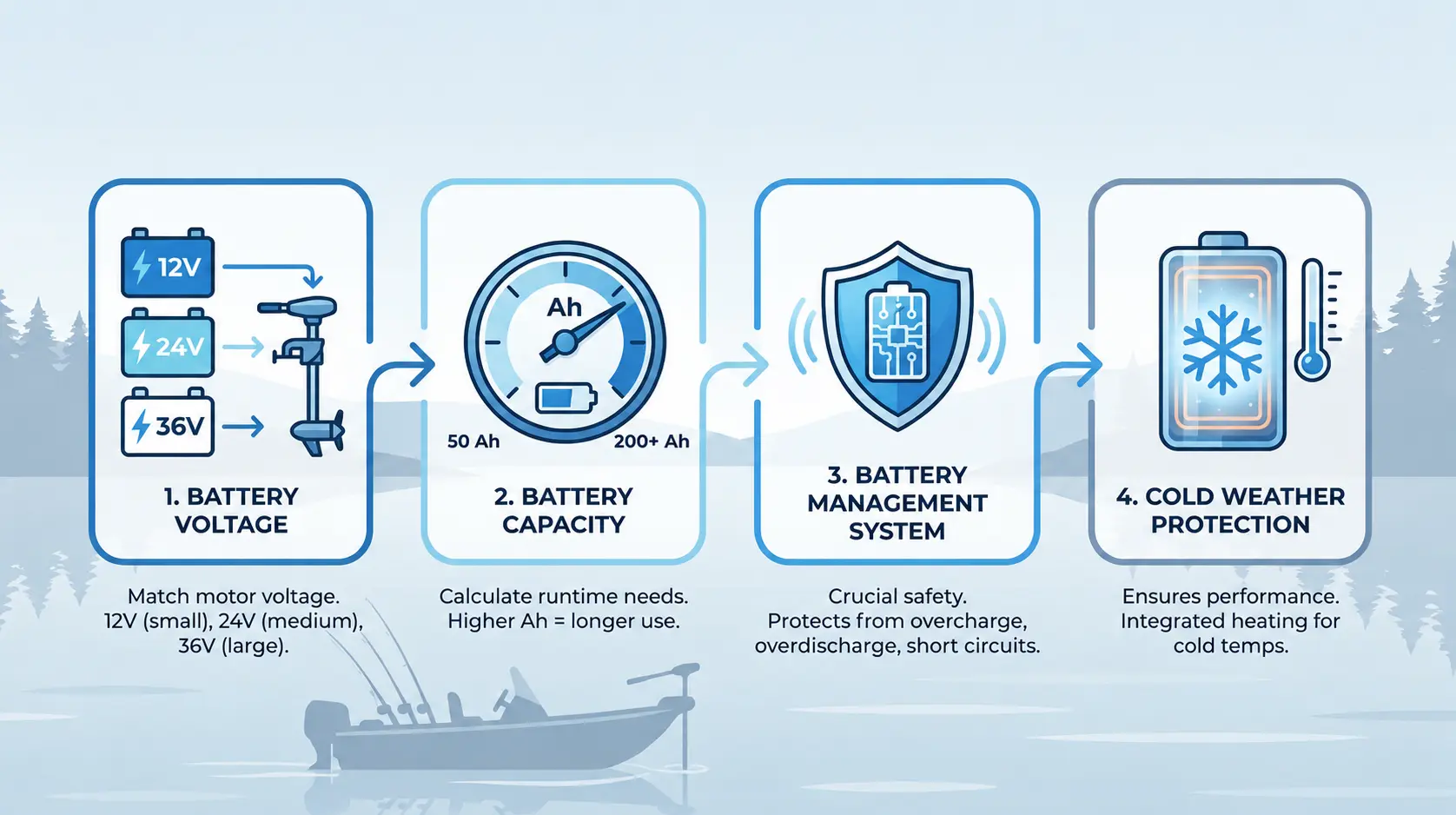
Choosing the right battery is about more than just buying the biggest one available. Matching the battery to your trolling motor and fishing style will give you the best performance and runtime.
1. Match Battery Voltage With Your Motor
Trolling motors come in 12V, 24V, and 36V setups, and once you add one to your kayak, it helps to know the rules around motorized kayaks in your state before you head out.
Lithium batteries are available as single units in each of these voltages, so you may only need one battery where a lead-acid setup would need two or three wired together. This reduces wiring and weight.
2. Choose the Right Amp-Hour Capacity
Common lithium battery sizes include 50 Ah, 75 Ah, 100 Ah, and 120 Ah or higher. To pick the right size, think about:
- The size of your boat
- Your motor’s thrust rating
- How many hours do you typically fish
- How often do you run the motor at higher speeds
A simple way to estimate runtime is to divide the battery’s amp-hour rating by your motor’s amp draw at the speed you use most.
3. Check Battery Management System Features
A quality Battery Management System (BMS) helps protect the battery and extend its lifespan. Look for a model that includes the essential safety features below.
- Overcharge protection
- Over-discharge protection
- Temperature protection
- Short circuit protection
These features protect your investment and keep the battery safe for years of use.
4. Consider Cold Weather Performance
Lithium batteries should not be charged below freezing, since this can cause permanent damage to the cells.
Many modern batteries include a low-temperature cutoff in the BMS that stops charging automatically in cold weather.
Some higher-end models even include a built-in heater that warms the battery before charging. If you fish in cold conditions, this feature is worth looking for.
Best Lithium Trolling Motor Batteries
Choosing a quality lithium battery is just as important as picking the right capacity. A reliable battery delivers consistent power, lasts for years, and includes safety features that protect your investment.
Here are some of the best lithium trolling motor batteries trusted by anglers for their performance, reliability, and value.
1. LiTime 12V 100Ah TM LiFePO4 Battery: A well-rounded choice for most anglers, this battery offers Bluetooth monitoring, a built-in 100A BMS, low-temperature charging protection, and up to 4,000+ charge cycles. It works well with fishing kayaks, jon boats, and small bass boats.
2. Dakota Lithium 12V 100Ah Deep Cycle Battery: Dakota Lithium is known for its premium build quality and long lifespan. It’s an excellent option for anglers who fish frequently and want dependable performance season after season.
3. Redodo 12V 100Ah LiFePO4 Battery: This battery delivers solid runtime and reliable performance at a more affordable price. It’s a great choice for recreational anglers looking to switch to lithium without spending a premium.
4. LOSSIGY 12V 100Ah LiFePO4 Battery: Designed for deep-cycle use, this battery provides steady power, a built-in BMS, and good overall value. It’s suitable for trolling motors on small to mid-sized fishing boats.
5. EcoFlow 12V 100Ah Lithium Trolling Motor Battery: Built with EV-grade LiFePO4 cells, this battery features IP65 water resistance, low-temperature charging protection, and a long cycle life. It’s ideal for anglers who want premium features and durability.
Quick Comparison
Compare the key features side by side to see how each battery stacks up. This makes it easier to choose the best option for your boat and fishing style.
| Battery | Best For | Key Feature |
|---|---|---|
| LiTime 12V 100Ah TM | Most anglers | Bluetooth monitoring and 100A BMS |
| Dakota Lithium 12V 100Ah | Frequent anglers | Premium build quality and long lifespan |
| Redodo 12V 100Ah | Budget buyers | Excellent value for the price |
| LOSSIGY 12V 100Ah | Everyday fishing | Reliable deep-cycle performance |
| EcoFlow 12V 100Ah | Heavy use | IP65 protection and EV-grade cells |
These batteries cover a range of budgets and fishing styles. Compare their features with your boat, motor, and typical fishing trips to find the one that best fits your needs.
How Long Does a Lithium Battery Run a Trolling Motor?
Battery runtime varies from one setup to another. Knowing what affects runtime makes it easier to choose the right battery size for your fishing trips. Runtime depends on several factors, not just battery capacity. The biggest ones include:
- Your motor’s thrust rating
- The speed setting you use
- Battery capacity
- Total boat weight
- Wind and current conditions
As a general guide, a 100 Ah lithium battery can power a 55-pound-thrust trolling motor for about 5 to 6 hours at a moderate cruising speed. Larger motors or higher speeds will draw more power and reduce runtime.
| Boat Type | Battery Size | Estimated Runtime (Moderate Use) | Recommended Battery Size |
|---|---|---|---|
| Fishing kayak | 50Ah | 2–3 hours | 50Ah–100Ah |
| Small jon boat | 100Ah | 5–6 hours | 100Ah |
| Bass boat | 150Ah | 7–9 hours | 100Ah–200Ah |
| Larger fishing boat | 200Ah+ (or multiple batteries) | 9+ hours* | Multiple battery setup |
Important Note: Actual runtime varies depending on motor power, speed, boat weight, and water conditions.
Choosing the right battery size gives you enough runtime without carrying unnecessary weight. When in doubt, it’s usually better to have a little extra capacity than to run out of power before the day is over.
Real Boater Opinions About Lithium Trolling Motor Batteries
Real anglers have been sharing their experiences with lithium batteries for years. Their comments provide a clear picture of the benefits and trade-offs and whether the higher price is worth paying.
“Switched to lithium and wouldn’t go back. The weight savings alone made a huge difference loading my boat.” Reddit
“A single 36V lithium battery cleaned up my wiring and gave me plenty of runtime for a full day.” Reddit
“Lithium batteries last much longer than lead-acid and need almost no maintenance, but they’re a bigger upfront investment.” Quora
“Buy a quality battery with a good BMS. That’s not the place to save money.” Quora
Most anglers who switch to lithium say the lighter weight, steady power, and longer lifespan make the extra cost worthwhile. The biggest concern remains the higher purchase price, but many believe it pays for itself over the years with regular use.
How to Maintain a Lithium Trolling Motor Battery
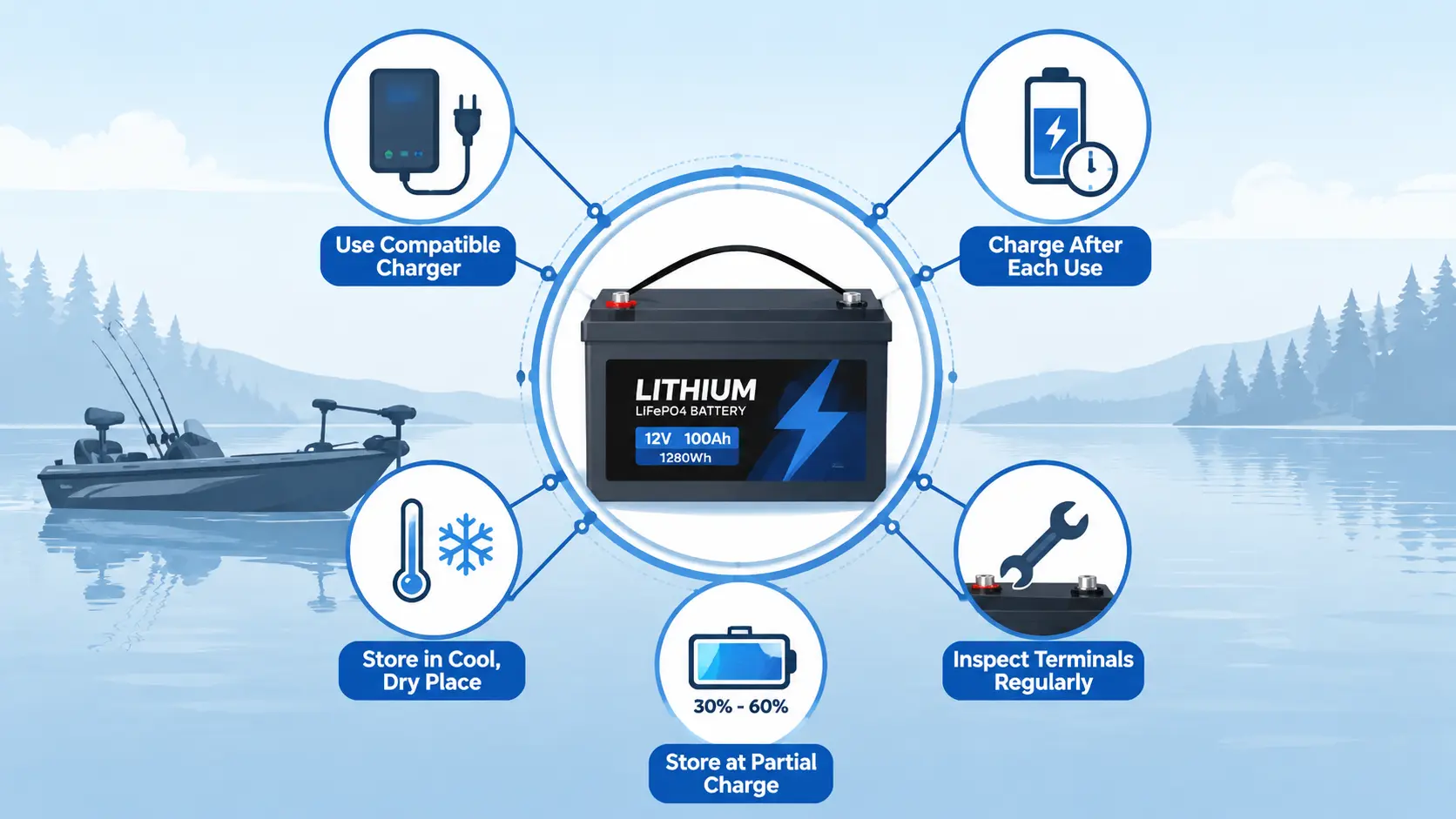
A few simple maintenance habits can help your battery last for many years. Most lithium batteries require very little upkeep, but proper charging and storage still matter.
- Use a lithium-compatible charger: Chargers designed for lead-acid batteries may not charge lithium batteries correctly.
- Recharge after every trip: Avoid leaving the battery deeply discharged for long periods, as this can shorten its lifespan.
- Store it in a cool, dry place: Keep the battery away from excessive heat and avoid charging it below freezing unless it has low-temperature protection.
- Inspect the terminals regularly: Clean off any corrosion and make sure the connections stay tight, especially if you boat in saltwater.
- Store at a partial charge during the offseason: Around 50–70% charge is ideal for long-term winter storage.
Inspect the terminals regularly and clean off any corrosion, since keeping your gear secure while you fish also means checking connections before they become a problem on the water.
Good maintenance helps your battery deliver consistent performance season after season. A few minutes of care can add years to its service life.
Common Mistakes to Avoid
Buying the wrong battery can lead to poor performance or unnecessary expense. One of the most common mistakes is choosing the wrong voltage for your trolling motor or buying a battery with too little capacity for the way you fish.
Many boaters also overlook whether their existing charger is compatible with lithium batteries, which can cause charging problems.
Another mistake is buying a cheap, unknown brand without a reliable Battery Management System (BMS), as this affects both safety and battery life.
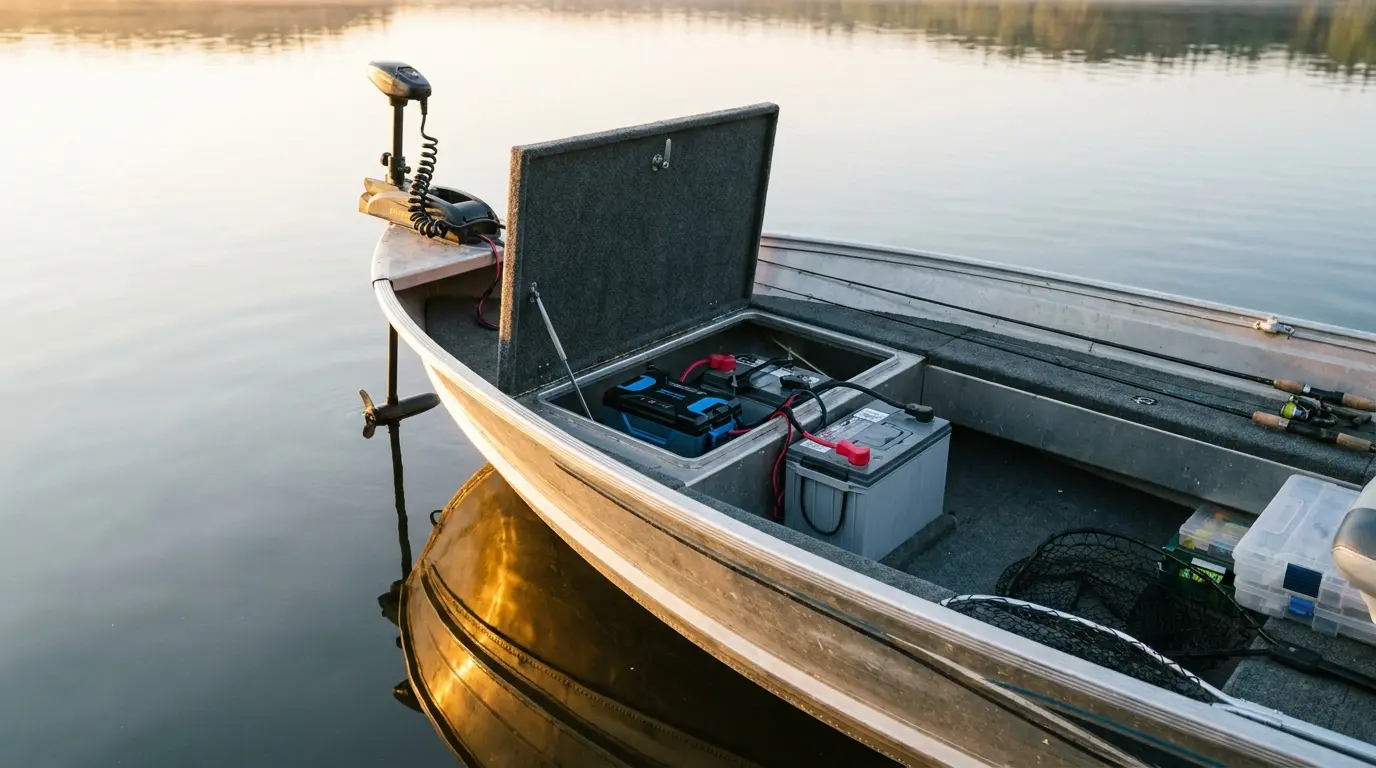
Before ordering, always measure your battery compartment to make sure the new battery fits properly, since rigging your kayak with the right gear from the start saves you from returns and wasted money.
Final Thoughts
Choosing between lithium and lead-acid comes down to how often you fish and what you expect from your boat.
Lithium batteries cost more at first, but they repay that cost with longer runtime, lighter weight, and years of steady use.
Lead-acid still works well for casual anglers who fish a few times a season and want to save money upfront.
Think about your fishing habits, your boat size, and how much weight savings matters to you. Once you match those needs to the right battery type, you will get more power, more reliability, and more time enjoying the water.
Frequently Asked Questions
Are Lithium Batteries Better for Trolling Motors?
For most anglers who fish often, yes. They offer more usable power, less weight, and a much longer lifespan than lead-acid batteries. Occasional boaters may not need to spend the extra money.
How Many Years Does a Lithium Trolling Motor Battery Last?
A quality LiFePO4 battery can last 8 to 10 years or more, depending on the brand and how well it is maintained.
Can I Replace My Lead-Acid Trolling Motor Battery with A Lithium Battery?
In most cases, yes. Most modern trolling motors work fine with lithium batteries. Just make sure the voltage matches and check that your charger is rated for lithium.
What Size Lithium Battery Do I Need for a 24 V Trolling Motor?
Many boaters pair two 100Ah batteries in series for a 24V, 70 to 100 pound thrust motor. Larger motors may require 200 Ah or more.