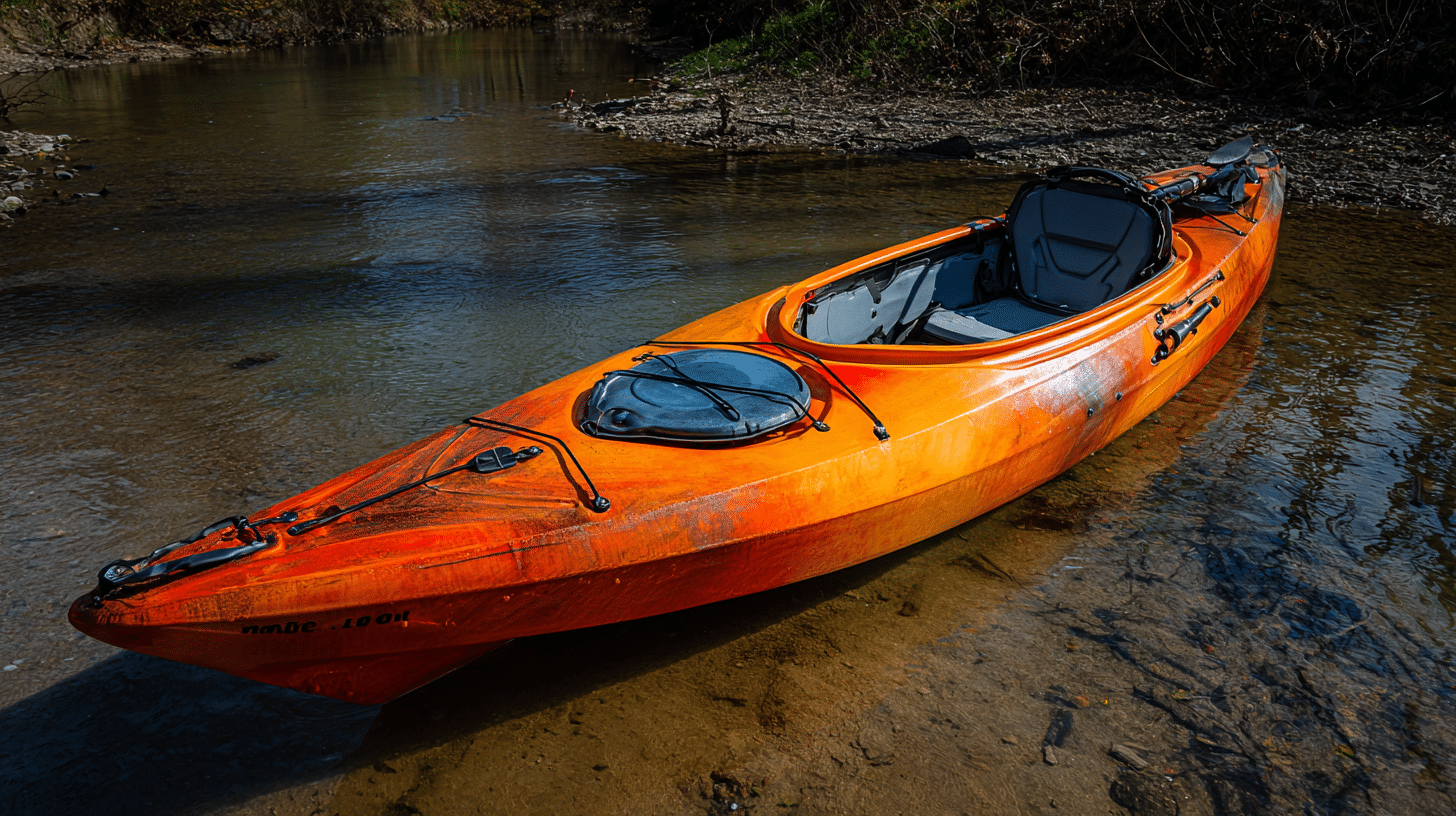
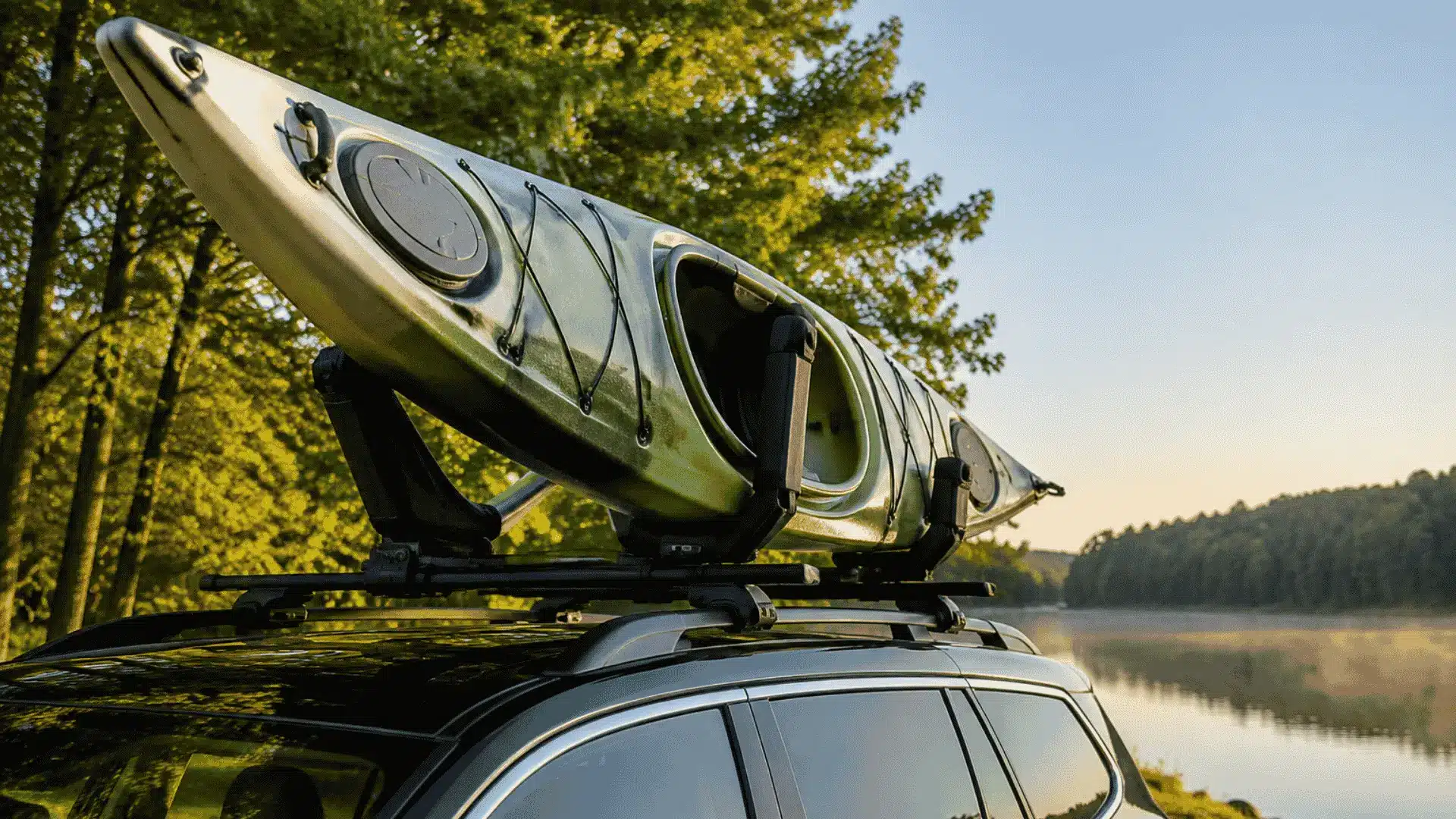
Getting your kayak to the water safely starts with choosing the right kayak rack. The wrong rack can scratch your hull, damage your roof, or even risk losing your boat on the highway.
A reliable kayak roof rack, like premium Thule systems with gas-assist lift technology, makes loading effortless, while budget-friendly J-cradles and inflatable racks work for cars without crossbars.
For home storage, a well-designed kayak storage rack keeps your boat safe, organized, and ready for your next paddle.
From vehicles to garages, these top-rated racks provide secure, convenient solutions that make transporting and storing your kayak easier and worry-free.
Understanding Kayak Racks and Their Benefits
A kayak rack is a specially designed system for safely transporting or storing your kayak.
Transport racks attach to roof crossbars or hitch receivers, while storage racks mount on walls, ceilings, or floors at home.
Both protect your kayak’s hull, keeping it in shape and ready to paddle. Without a proper rack, kayaks can suffer permanent hull warping from unsupported surfaces, cause scratches to your vehicle’s roof, or even become a highway hazard if not secured correctly.
Investing in a reliable kayak rack for your car or truck ensures your kayak stays protected, your vehicle remains safe, and every trip starts with peace of mind.
Transport Racks vs. Storage Racks: What’s the Difference?
To make it easier to compare, here’s a quick overview of the key differences between transport racks and storage racks :
| Feature | Transport Rack | Storage Rack |
|---|---|---|
| Purpose | Carry a kayak on a vehicle | Store the kayak at home/garage |
| Mounting | Roof crossbars or hitch | Wall, ceiling, floor |
| Key concern | Road vibration, wind drag, straps | Hull support, space efficiency |
| Top brands | Thule, Yakima, Malone, Rhino Rack | Malone, RAD Sportz, Suspenz |
Choosing Between Transport and Storage Kayak Racks
Choosing the right kayak rack ensures safe transport, protects your kayak, and keeps it accessible for every paddling adventure.
Vehicle Transport Racks
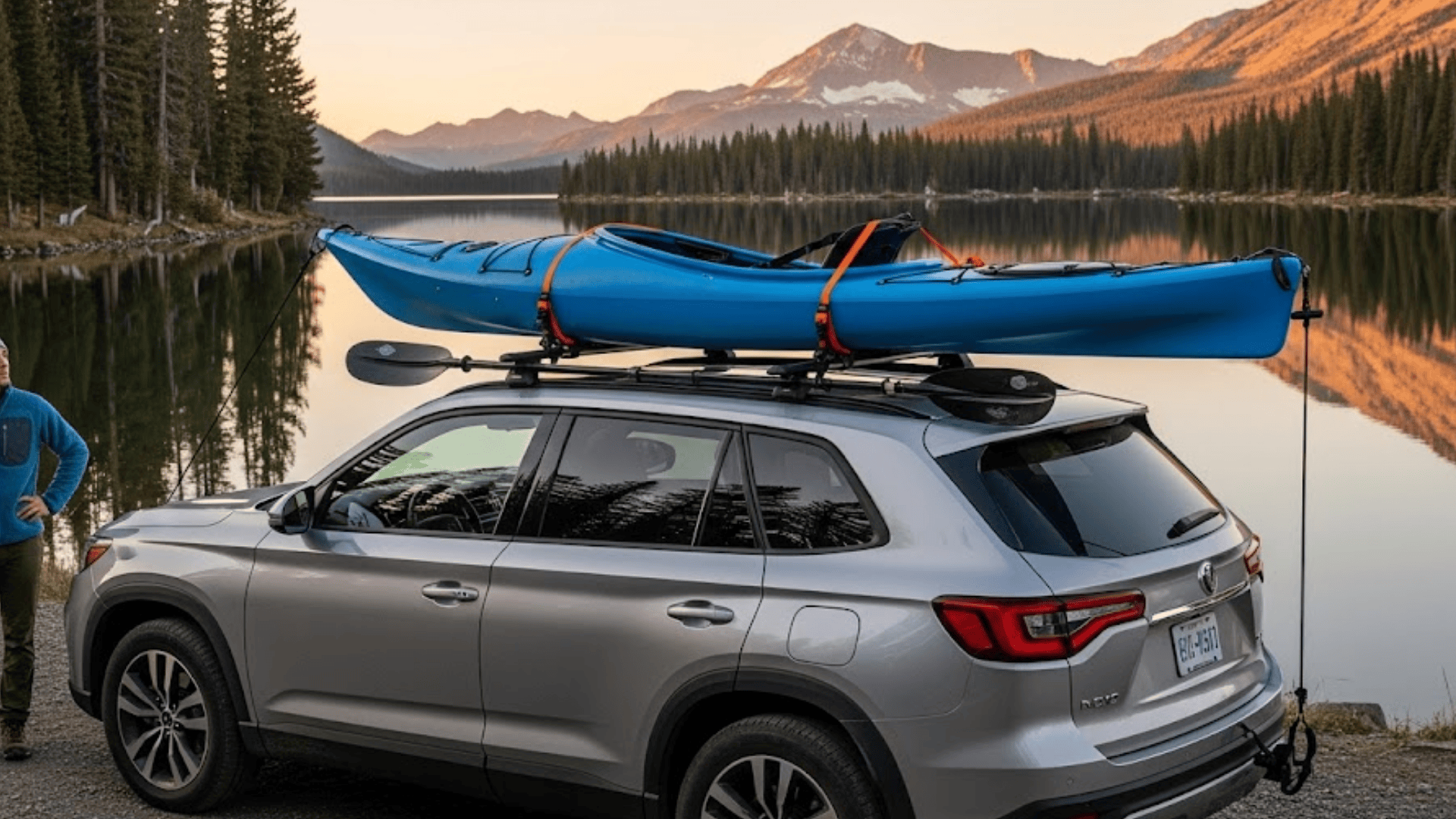
- Roof-Mounted J-Cradles: The most popular type for car transport. The kayak rides on its side in a J-shaped cradle, saving horizontal roof space and allowing two boats to be stacked.
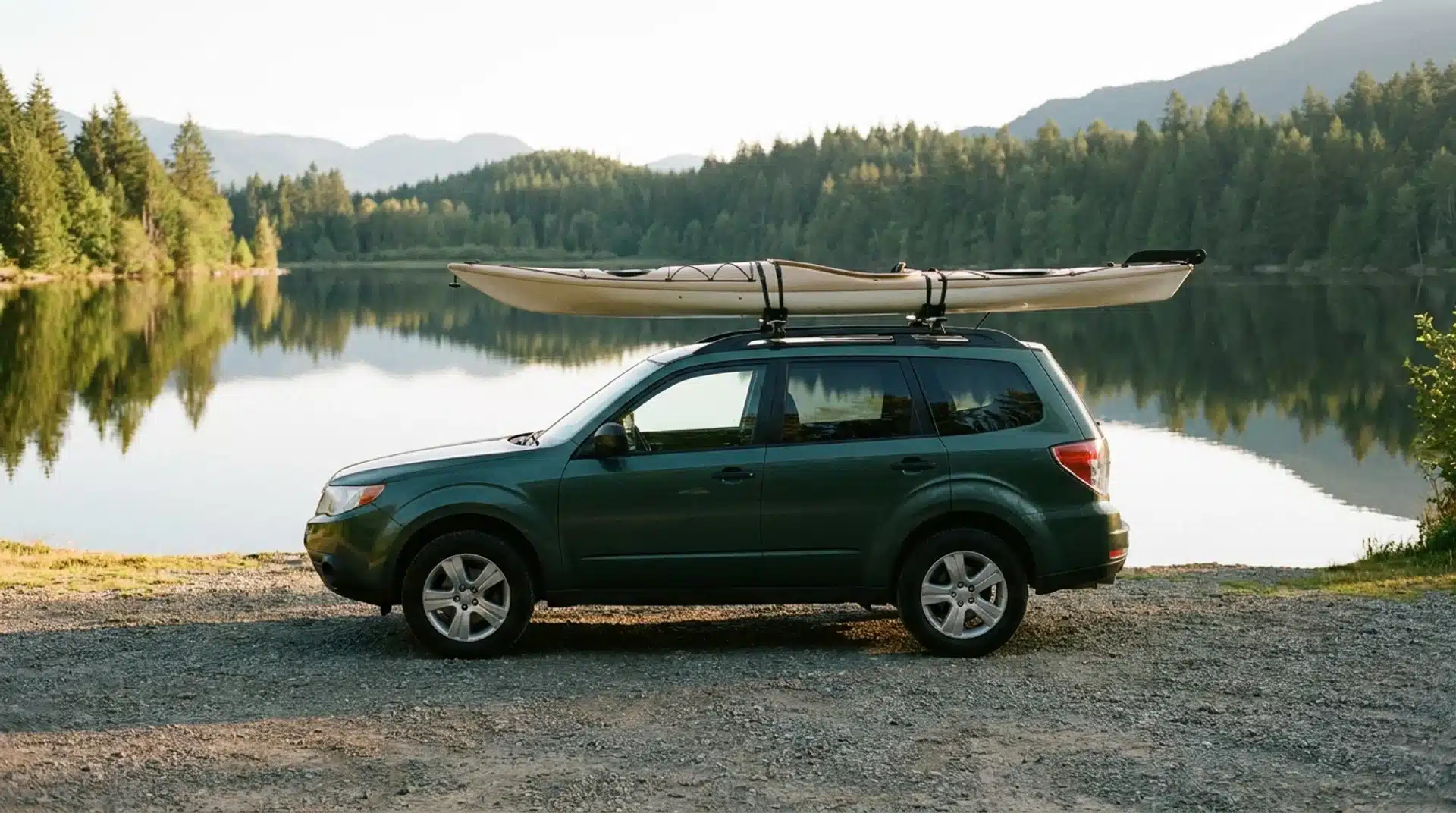
- Saddle Systems: Four-point cradles that hold the kayak flat on its hull. These are the gentlest options for wide or delicate hulls and are especially good for sit-on-top fishing kayaks.
- Stacker Bars: A single vertical post that holds two or more kayaks upright on their sides. Maximizes capacity but requires more strapping work.
- Foam Soft Pads / Inflatable Racks: Temporary, crossbar-free options. Great for occasional users or vehicles without roof rails.
- Hitch-Mounted Racks: Mount to the 2″ hitch receiver at the back of your SUV or truck. These eliminate the height challenge entirely and work well for heavier kayaks.
Pickup owners will find that hauling a kayak in a truck involves a different set of trade-offs around bed length, cab overhang, and tailgate access that a standard roof setup simply doesn’t account for.
Home Storage Racks
- Wall-Mounted Racks: The most common home storage solution. Stores the kayak horizontally against the wall, typically with padded arms. Saves floor space.
- Ceiling Hoist Systems: Suspend the kayak overhead using pulleys. Ideal for garages with high ceilings.
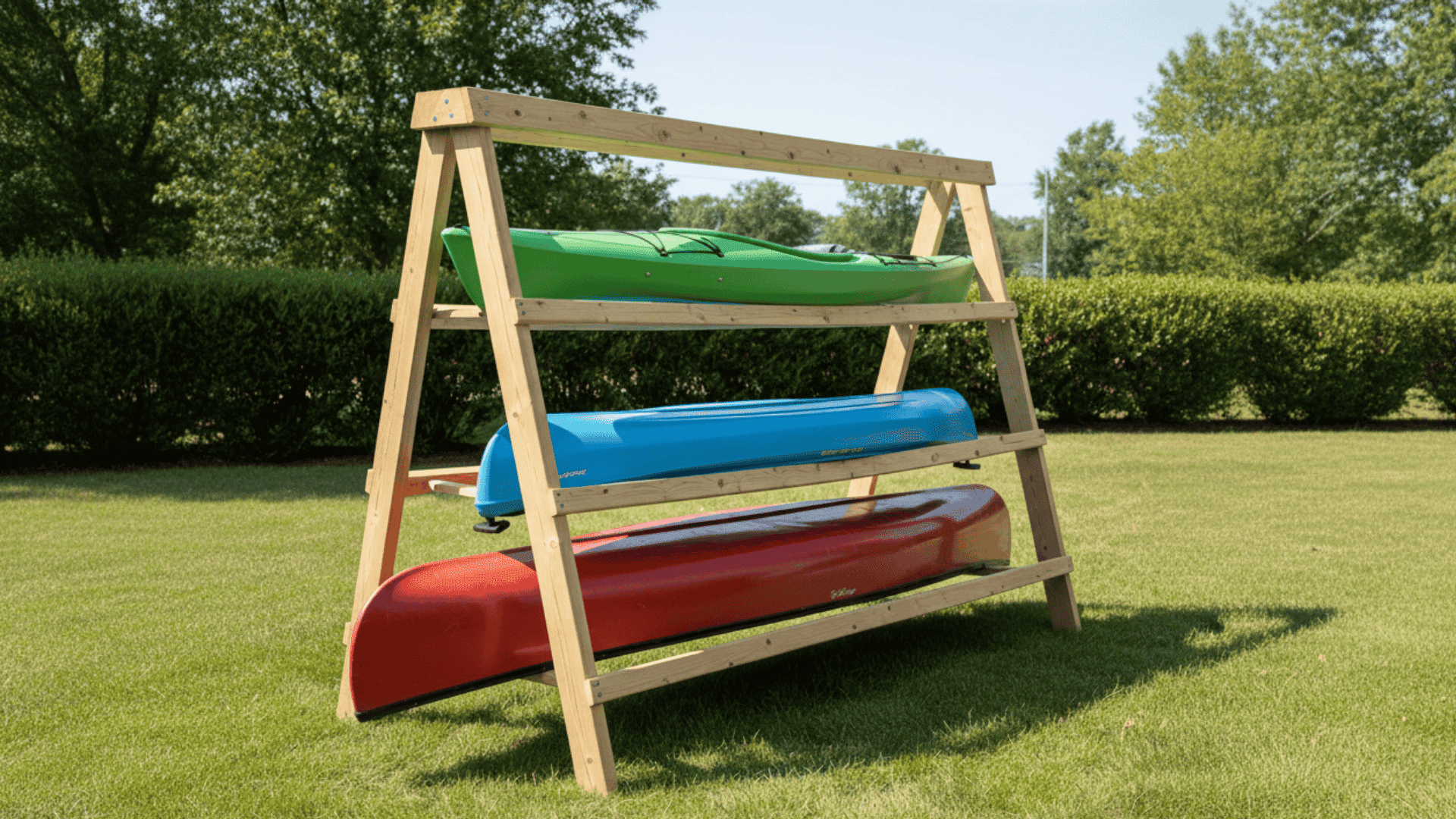
- Freestanding Racks: No mounting required. Perfect for renters or those who want portability. Usually holds 2–4 kayaks.
Selecting the right rack type ensures your kayak stays protected, organized, and ready for transport or storage whenever needed.
Our Top Picks SummaryBest overall kayak roof rack: Yakima JayLow Best for SUVs and tall vehicles: Thule Hullavator Pro Best budget kayak rack for car: TMS J-Bar Best for multiple kayaks: Malone FoldAway 5 Best for rear-loading: Malone SS Combo Best no-crossbar option: HandiRack |
Lift-Assist & Premium Transport Racks
These top-tier racks use gas-assist struts to eliminate overhead lifting, making solo kayak loading effortless, even on tall SUVs and minivans.
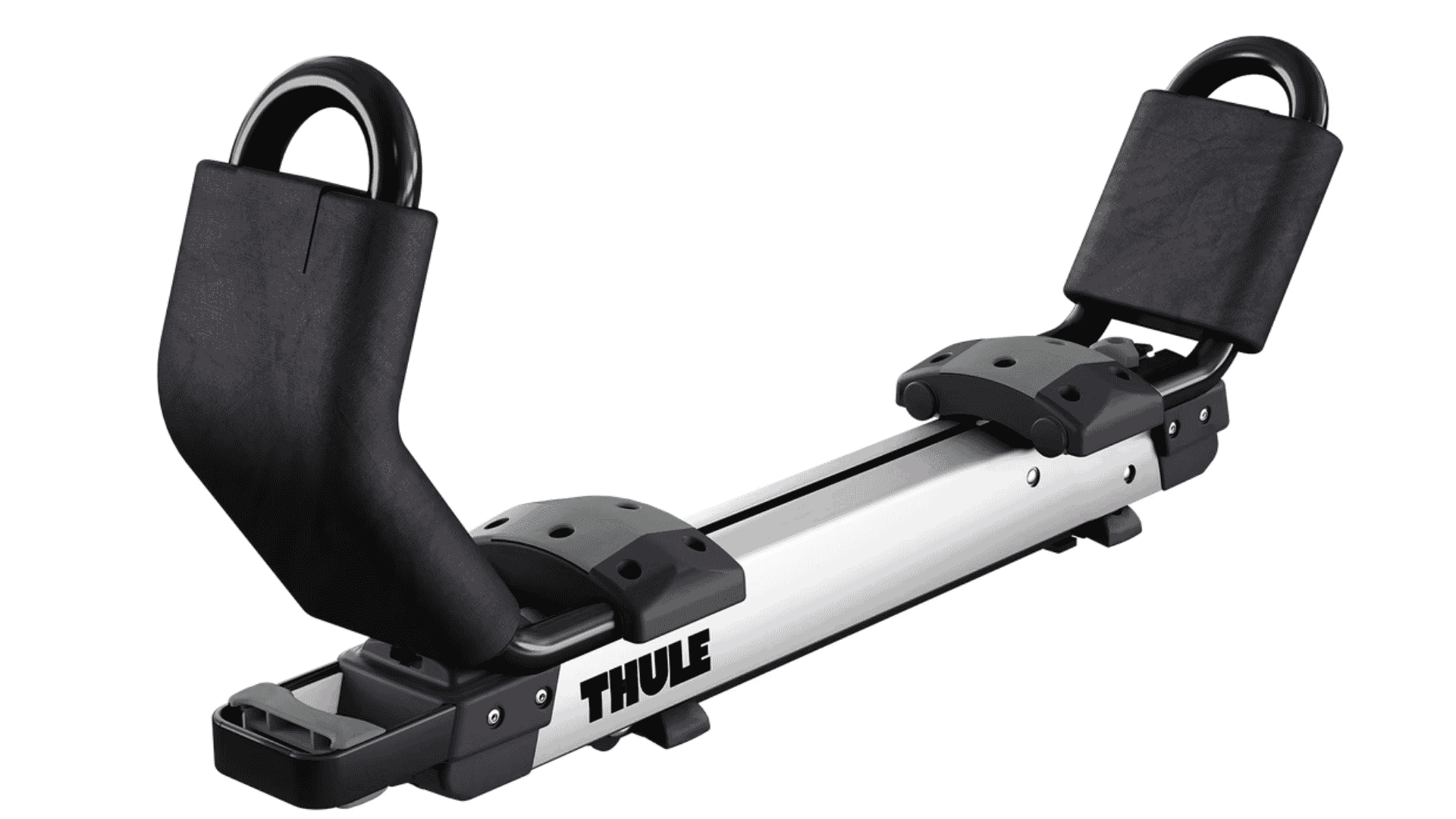
1. Thule Hullavator Pro: Best Kayak Rack for Tall Vehicles
| Type | Best For | Weight Capacity | Price Range |
|---|---|---|---|
| Gas-assist lift saddle system | SUVs, minivans, solo paddlers | 75 lbs (kayak max) / 40 lbs lift | $700–$900 |
The Thule Hullavator Pro features gas-assist struts that lower the kayak up to 40 inches to waist height, absorbing up to 40 lbs of the kayak’s weight for easy solo loading. Padded, rotating cradles support various hull shapes, while the one-key locking system secures the rack to crossbars.
Perfect for tall vehicles, it reduces strain, protects your kayak, and ensures safe transport, though the SUV roof rack fit goes deeper than lift capacity alone, with crossbar compatibility and roof load limits worth checking before you buy.
| Pros | Cons |
|---|---|
| Waist-height loading via gas-assist struts, no overhead lifting | Heavy (~39 lbs per pair) |
| Rotating padded cradles protect the hull | Supports one kayak per side |
| One-key locking system | Premium price |
Pro Tip: Compatible with: WingBar, WingBar Evo, WingBar Edge, SquareBar Evo, ProBar Evo, Xsporter Pro, TracRac Truck/Van
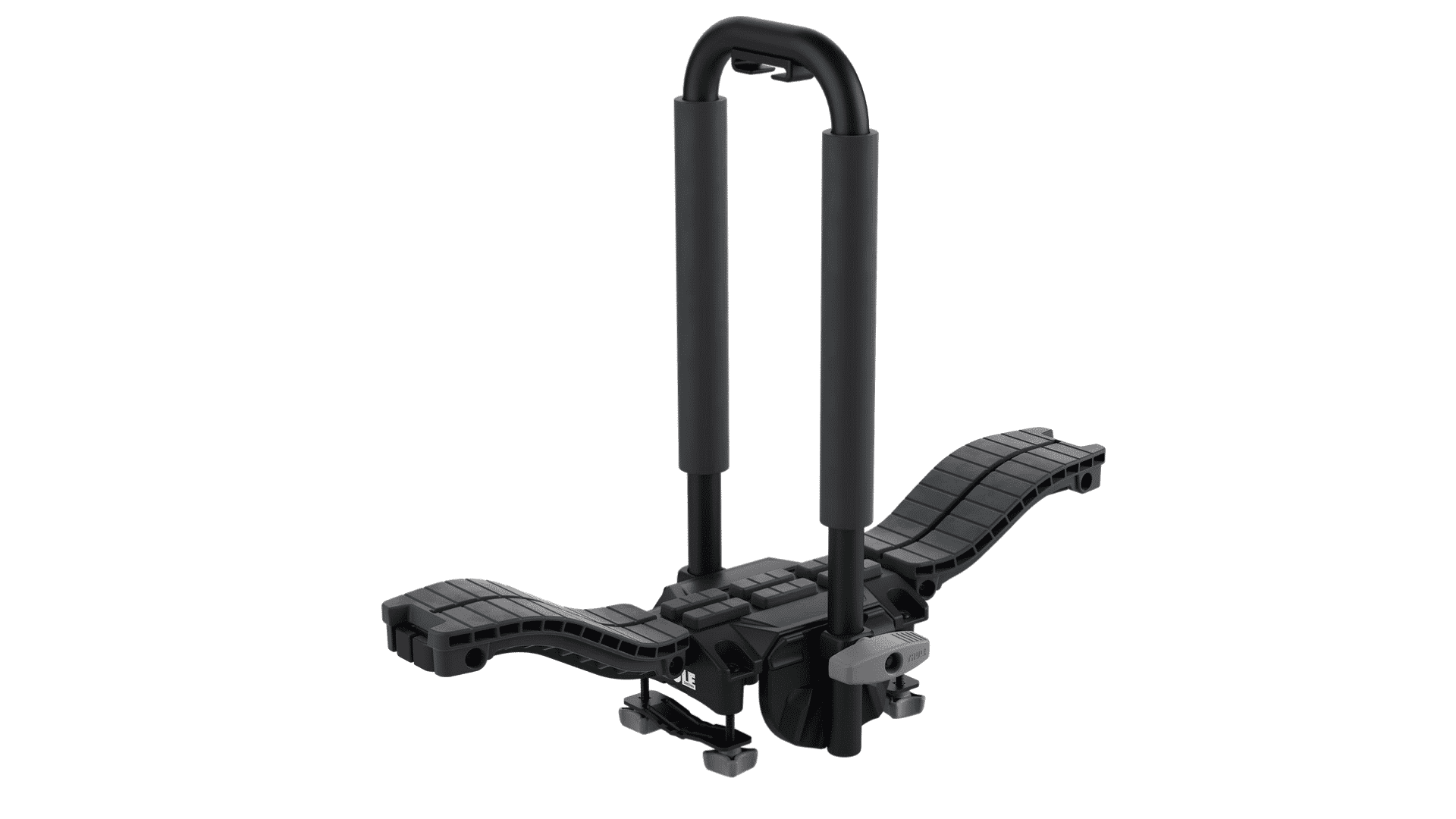
2. Thule Compass Kayak Rack: Most Versatile J-Cradle
| Type | Best For | Weight Capacity | Price Range |
|---|---|---|---|
| J-cradle / saddle hybrid | Versatile loading, various kayak sizes | Up to 130 lbs | $300–$350 |
The Thule Compass offers a flexible J-cradle system that can convert to a saddle-style setup for stacking two kayaks. Wide rubber pads protect hulls, distributing weight evenly to prevent pressure points.
The T-slot mounting locks securely to crossbars, providing a stable, versatile solution for paddlers with multiple boats or variable roof setups.
| Pros | Cons |
|---|---|
| Converts J-cradle to saddle | Requires an adapter for non-Thule bars |
| Wide rubber pads protect the hull | Slightly higher price |
| Stacks two kayaks efficiently | Bulkier than single-position racks when stacking two kayaks |
Pro Tip: Compatible with Thule T-slot bars; adapters needed for round/square bars.
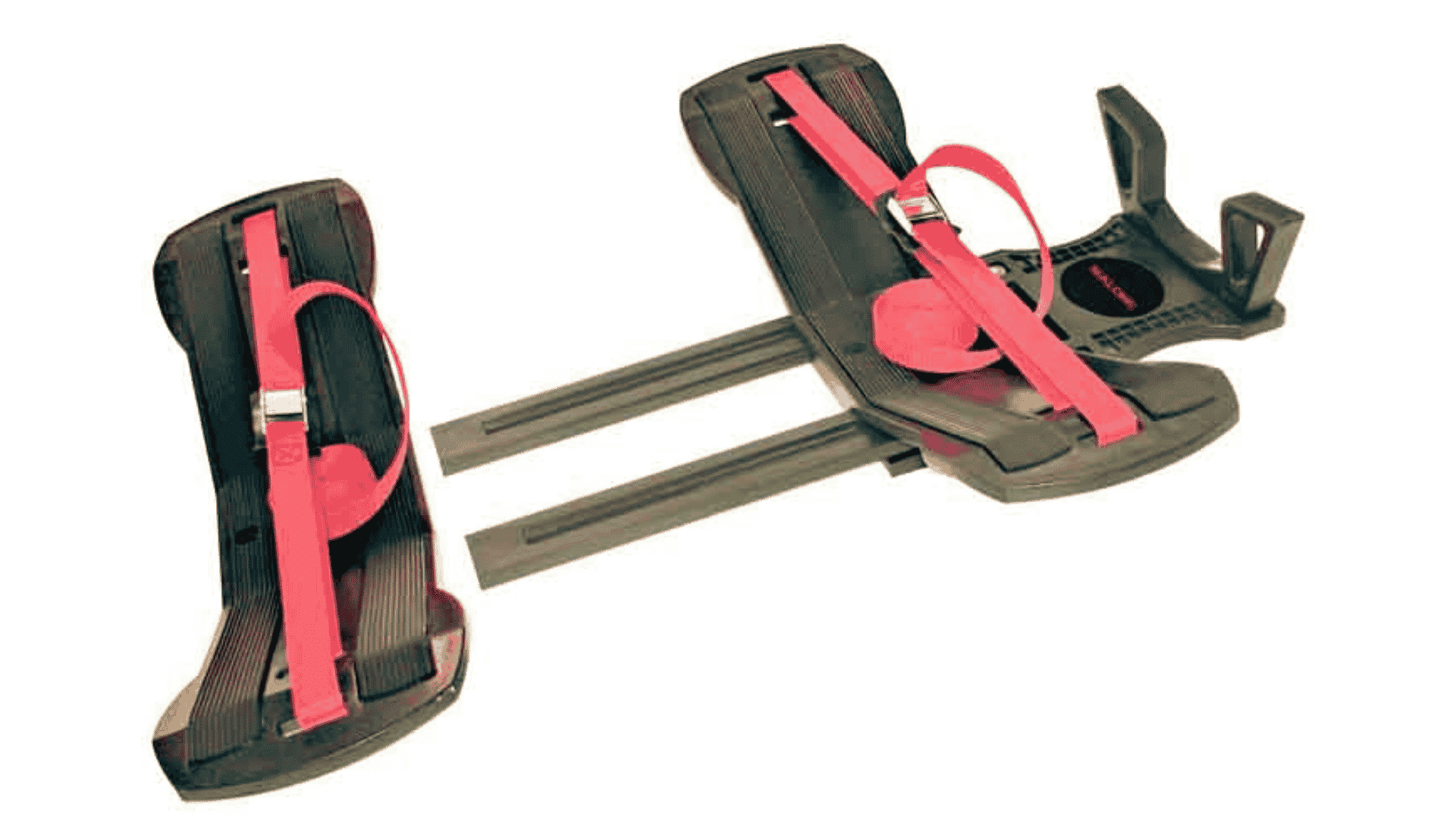
3. Malone SS Combo (SeaWing + Stinger Load Assist): Best Rear-Loading System
| Type | Best For | Weight Capacity | Price Range |
|---|---|---|---|
| Wing saddle + rear load assist combo | Rear loading, wide kayaks | Kayaks up to 32″ wide | $200–$250 |
The Malone SS Combo combines SeaWing wing cradles with a Stinger load-assist arm for waist-height rear loading. It distributes hull weight across a wide surface, protecting soft kayaks from warping.
Lightweight and affordable, it works well for solo paddlers or wider boats, offering easy loading without the premium price of hydraulic systems.
| Pros | Cons |
|---|---|
| Waist-height rear loading | Limited to kayaks ≤32″ wide |
| Even hull weight distribution | Not a full gas-assist lift system |
| Lightweight and affordable | The rear-loading position may be awkward on longer vehicles |
Pro Tip: Pairs well with Malone Telos XL Load Assist for extended reach.
J-Cradles & Stackers
The most popular roof rack style, J-cradles and stackers, hold one or two kayaks securely while saving valuable roof space.
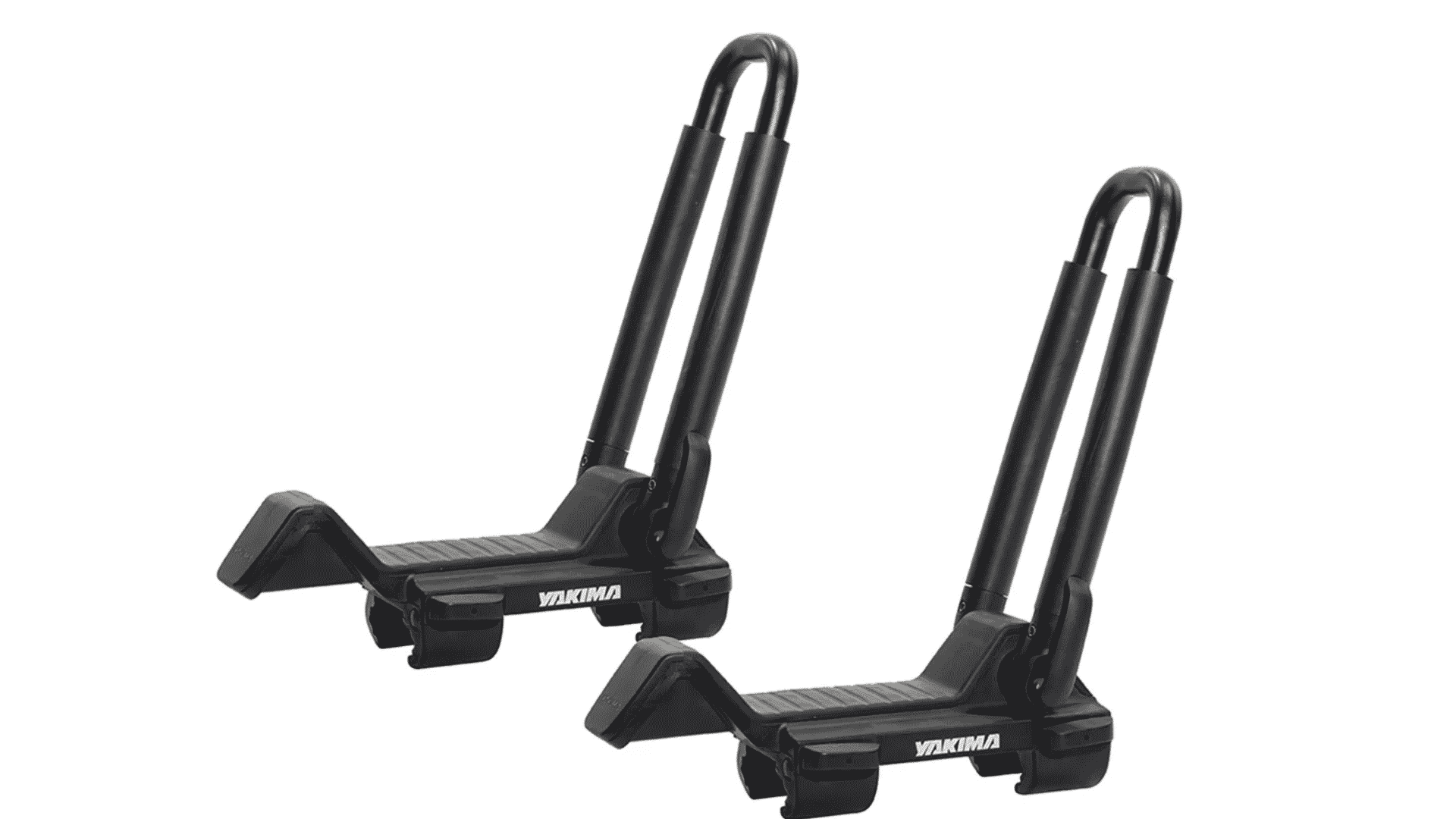
4. Yakima JayLow: Best Overall Kayak Roof Rack
| Type | Best For | Weight Capacity | Price Range |
|---|---|---|---|
| J-cradle / stacker hybrid | Single or dual kayak transport | 80 lbs (single), 110 lbs (two) | $175–$200 |
The Yakima JayLow is a versatile J-cradle and stacker rack for one or two kayaks. It includes padded ramps for easy side-loading and folds flat to reduce wind drag.
The HoodAnchor supports vehicles without dedicated tie-down points, making it a reliable, durable, and convenient option for all-around kayak transport.
| Pros | Cons |
|---|---|
| Can carry one or two kayaks | Minor wind noise at highway speeds |
| Padded ramps protect the hull | Requires a minimum of 24 inches between crossbars |
| Folds flat to reduce drag | No built-in locking system, SKS locks sold separately |
Pro Tip: Integrates with Yakima accessories using SKS locks.
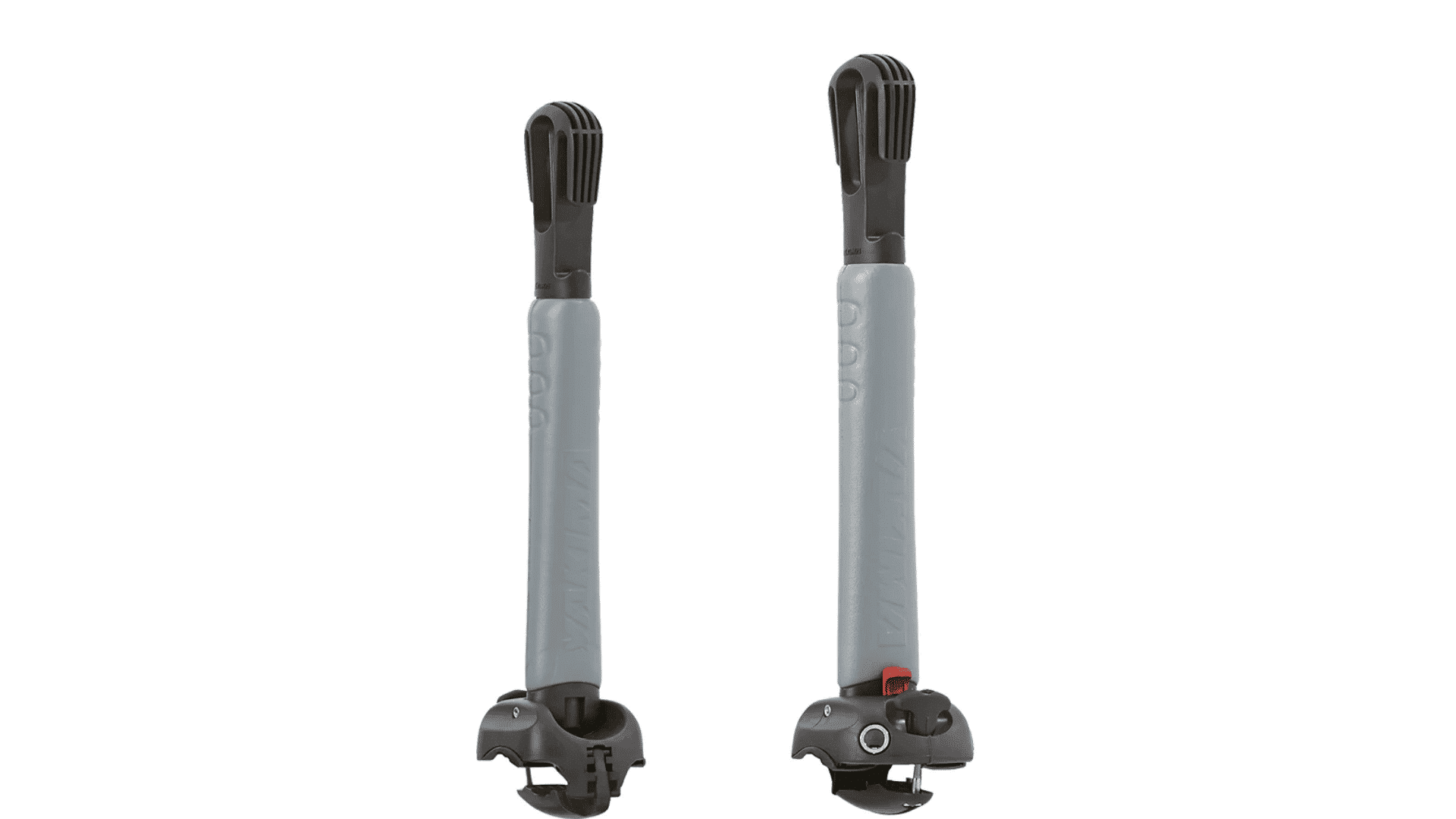
5. Yakima BigStack: Best for Carrying Multiple Kayaks
| Type | Best For | Weight Capacity | Price Range |
|---|---|---|---|
| Stacker | Two or more kayaks | 110 lbs combined | $150–$180 |
The Yakima BigStack stacker holds multiple kayaks vertically, saving roof space. Steel tube frame with HullGuard padding protects hulls, and included tie-down straps secure the load.
It folds flat for storage and is ideal for transporting two kayaks efficiently while maintaining hull protection and minimizing wind drag.
| Pros | Cons |
|---|---|
| Holds two or more kayaks | Requires crossbar padding for wide kayaks |
| Padded protection | Not ideal for irregular hulls |
| Folds flat | Minor setup complexity |
Pro Tip: Works best with kayaks with uniform hull profiles for stability.
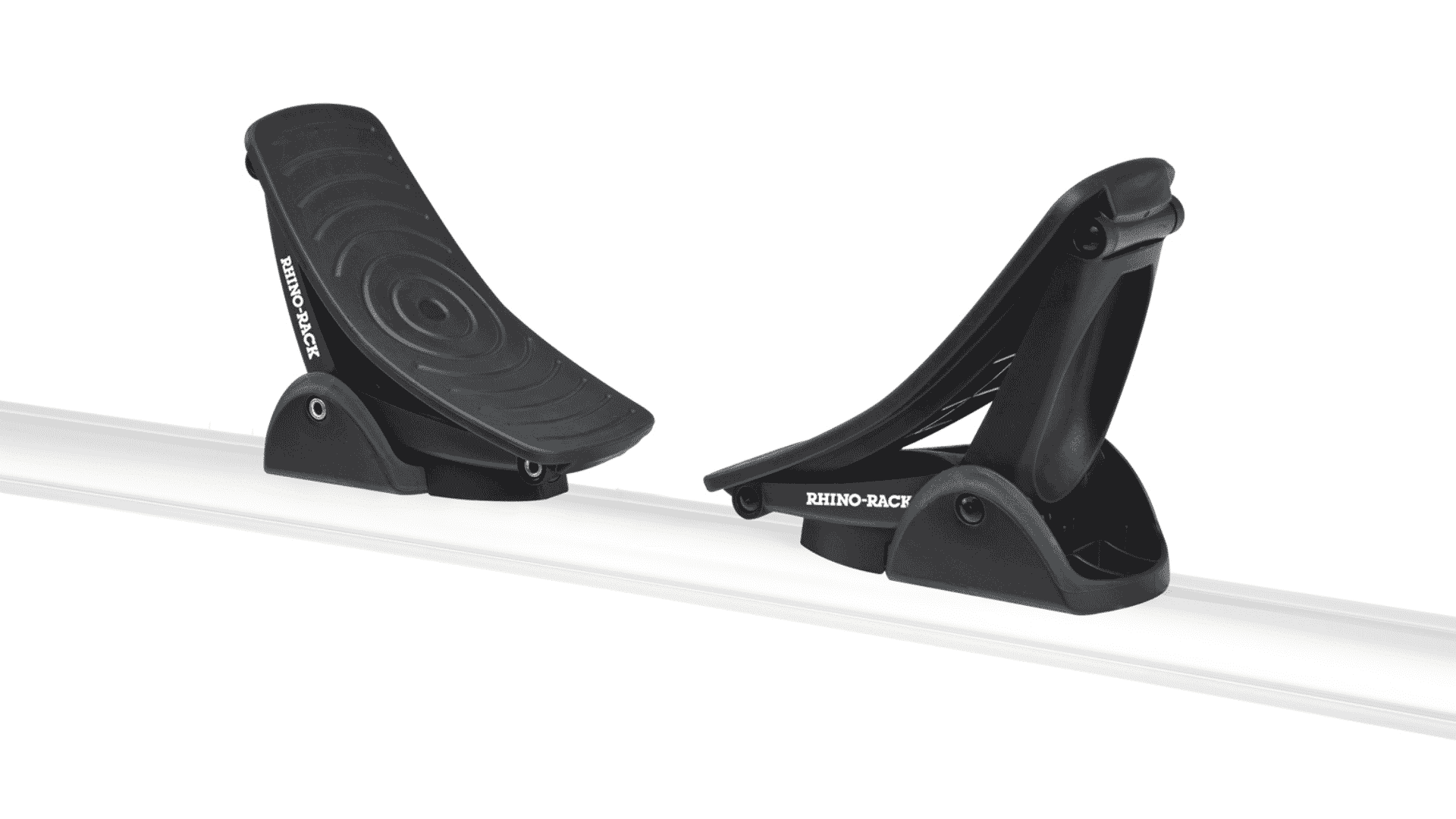
6. Rhino Rack Nautic 580: Best for Tandem Kayaks
| Type | Best For | Weight Capacity | Price Range |
|---|---|---|---|
| Side-loading J-cradle | Tandem kayaks, wide boats | Varies by crossbar | $180–$220 |
The Rhino Rack Nautic 580 is a side-loading kayak carrier for tandem or wide kayaks. Adjustable cradle arms fit a range of hull widths and feature padded contact points for protection.
Universal crossbar compatibility makes it suitable for most vehicles. It includes padded straps and a paddle holder for convenience during transport.
| Pros | Cons |
|---|---|
| Adjustable for wide/tandem kayaks | Weight capacity depends on the crossbar system |
| Padded protection | Slightly heavier than lightweight racks |
| Universal crossbar fit | Minor learning curve for setup |
Pro Tip: Includes paddle holder and straps, making it convenient for longer trips.
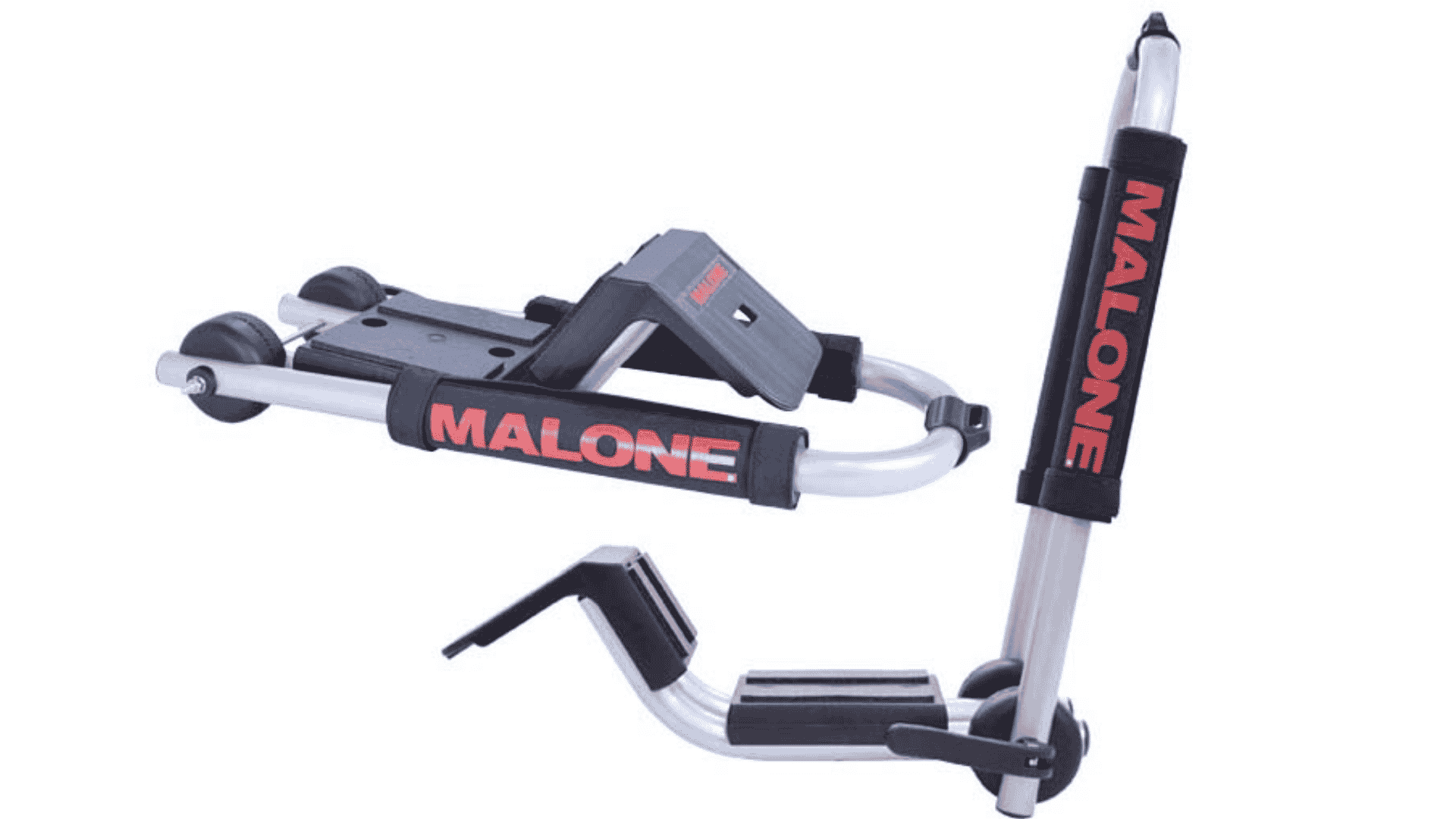
7. Malone Downloader J-Style: Best Budget J-Cradle
| Type | Best For | Weight Capacity | Price Range |
|---|---|---|---|
| J-cradle | Budget-conscious paddlers | 75 lbs | $80–$100 |
The Malone Downloader J-Cradle features a fold-down design for easier side-loading. Thick padding protects hulls, and an inclined front ramp allows solo loading.
Affordable at under $100, it works with most crossbars and provides reliable J-cradle functionality comparable to higher-priced racks, making it ideal for occasional or budget-conscious paddlers.
| Pros | Cons |
|---|---|
| Affordable | Limited to one kayak |
| Fold-down side loading | Minimal load-assist functionality |
| Thick padded arms | Basic crossbar attachment only |
Pro Tip: Pair with Malone Telos Load Assist Module for enhanced rear-loading ease.
Universal, Roof & No-Crossbar Options
Ideal for vehicles without existing crossbars or rails, these versatile racks mount in minutes and work across almost every car, SUV, and truck.
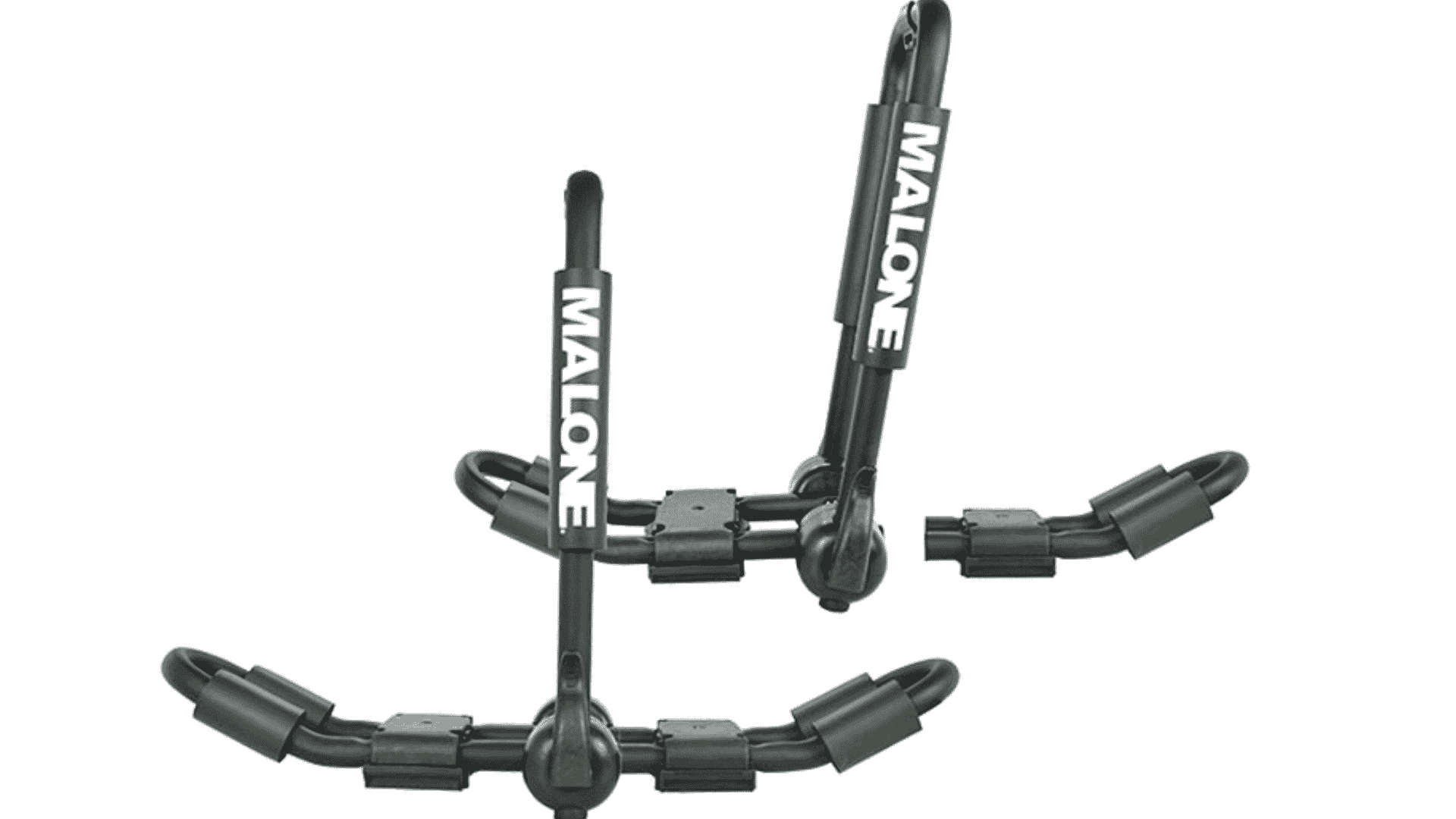
8. Malone FoldAway 5: Best Multi-Watercraft Rack
| Type | Best For | Weight Capacity | Price Range |
|---|---|---|---|
| Folding multi-boat carrier | Mixed watercraft households | 3 kayaks/canoes | $250–$300 |
The Malone FoldAway 5 can carry up to 3 watercraft, including kayaks, SUPs, and canoes. Independent folding arms allow for flexible arrangement and fold flat when not in use.
Easy to install and weather-resistant, it’s ideal for families or groups with multiple boats, providing secure transport without permanently removing the boats from the vehicle.
| Pros | Cons |
|---|---|
| Carries multiple watercraft | No built-in lock |
| Folding arms save space | Slightly bulky when loaded |
| Easy installation | Requires some roof space |
Pro Tip: Ideal for households with a variety of watercraft, combining versatility and cost efficiency.
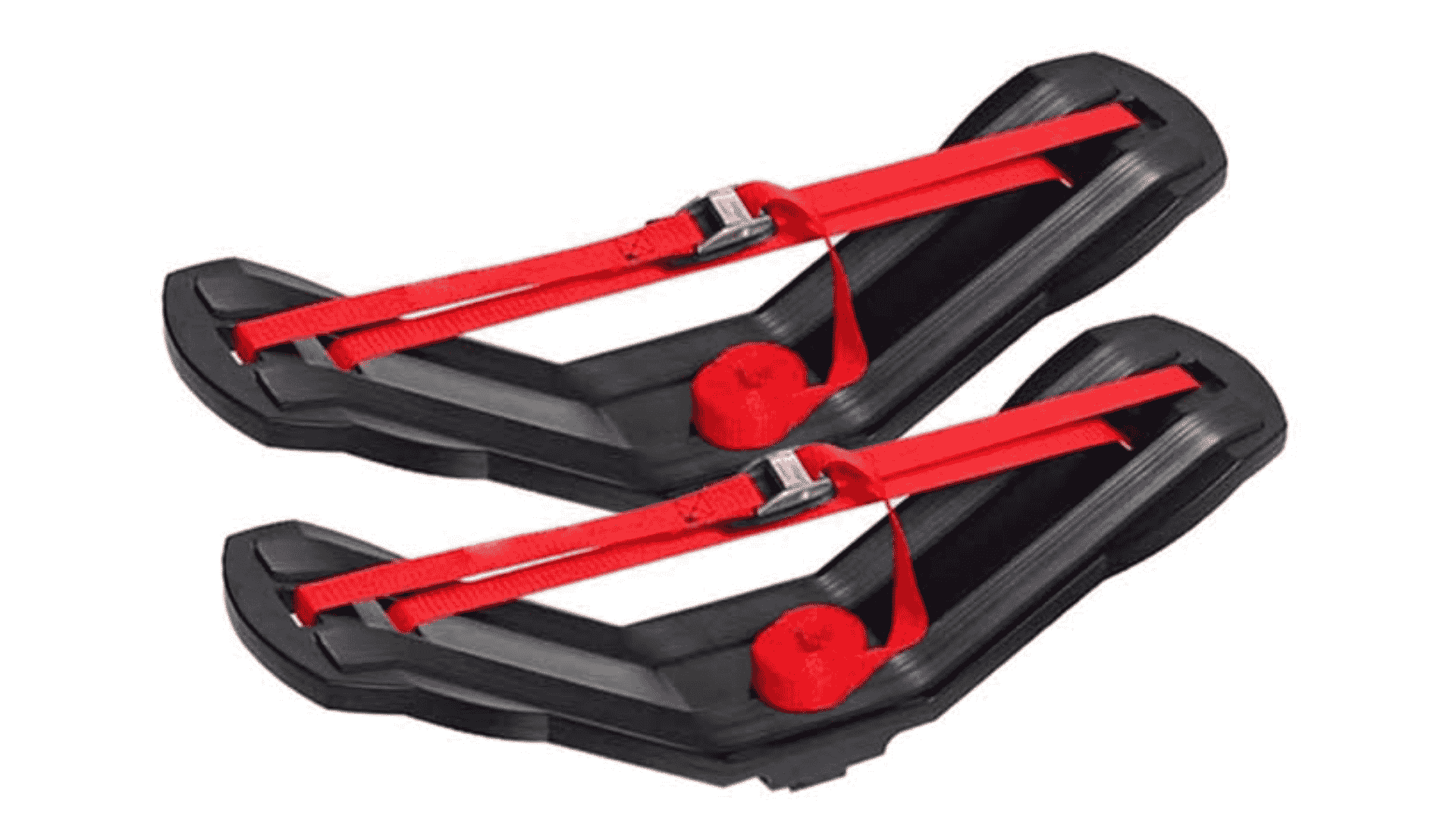
9. Malone SeaWing Kayak Carrier: Best All-Around Saddle System
| Type | Best For | Weight Capacity | Price Range |
|---|---|---|---|
| Wing saddle | Everyday transport, various hull types | Up to 32″ wide kayaks | $100–$130 |
The Malone SeaWing distributes hull weight evenly to prevent warping. Its Jawz brackets attach to most crossbars, and installation takes under 10 minutes.
A simple, reliable solution for paddlers who want no-fuss kayak transport. Ideal for single or occasional paddlers seeking safe and consistent support.
| Pros | Cons |
|---|---|
| Even hull weight distribution | Limited to kayaks ≤32″ wide |
| Quick and easy installation | Not suitable for very wide kayaks |
| Compatible with most crossbars | No load-assist feature, manual lifting required |
Pro Tip: Can be purchased standalone or paired with the SS Combo for rear-loading.
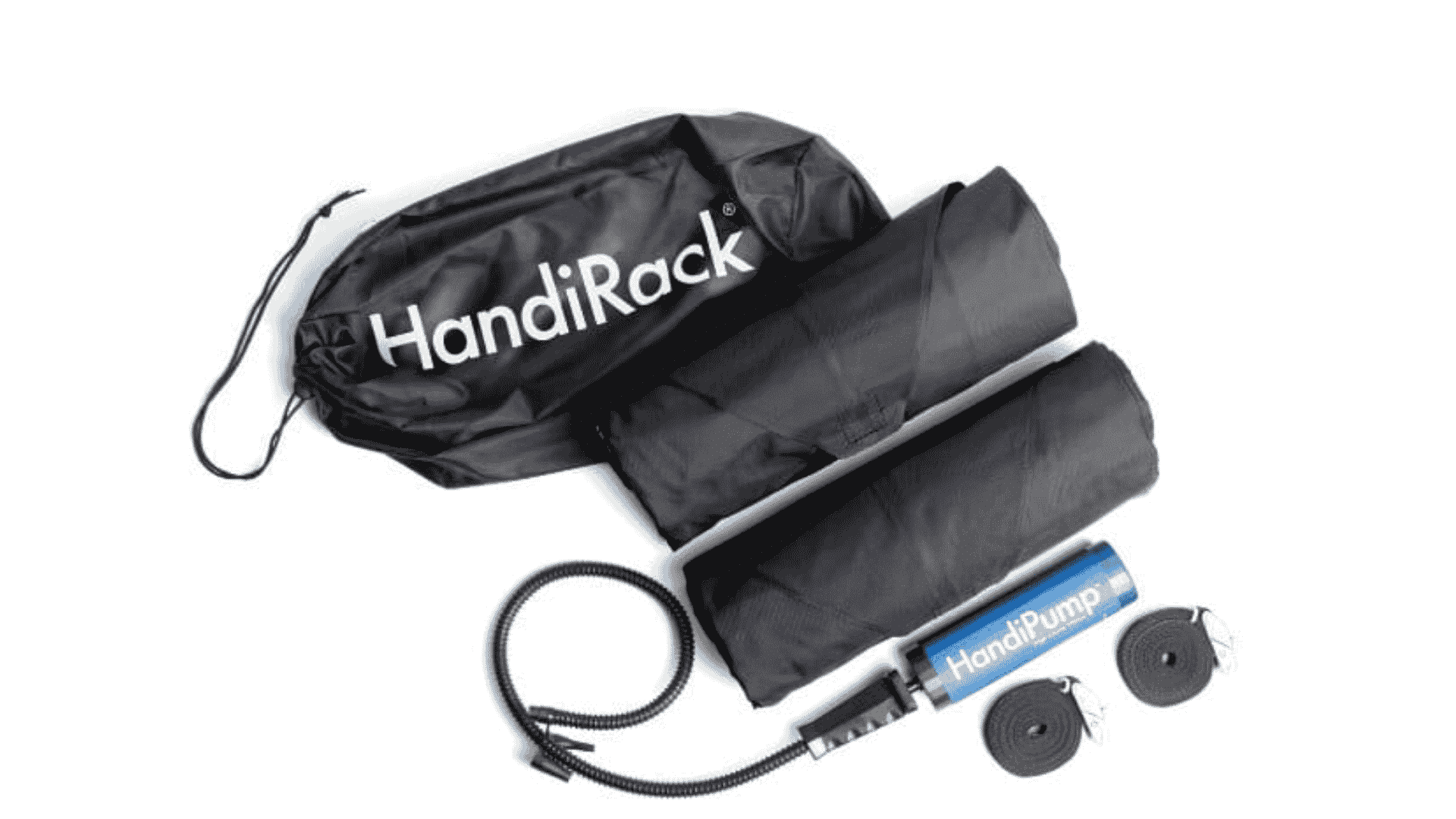
10. HandiRack Universal Inflatable Roof Rack System: Best No-Crossbar Option
| Type | Best For | Weight Capacity | Price Range |
|---|---|---|---|
| Inflatable soft rack | Occasional use, vehicles without roof rails | Up to 175-180 lbs | $60–$80 |
The HandiRack uses inflatable tubes through the car doors to create a padded, secure roof surface. Quick setup takes only five minutes. Perfect for occasional paddlers or vehicles without crossbars.
The inflatable design protects the kayak while remaining portable and adaptable to multiple roof types.
| Pros | Cons |
|---|---|
| No crossbars needed | Water may run into the vehicle from the straps |
| Portable and quick setup | Requires re-inflation before long trips |
| Inflatable padded support | Slightly less secure than permanent racks |
Pro Tip: Re-inflate before each trip; heat can soften air chambers over time.
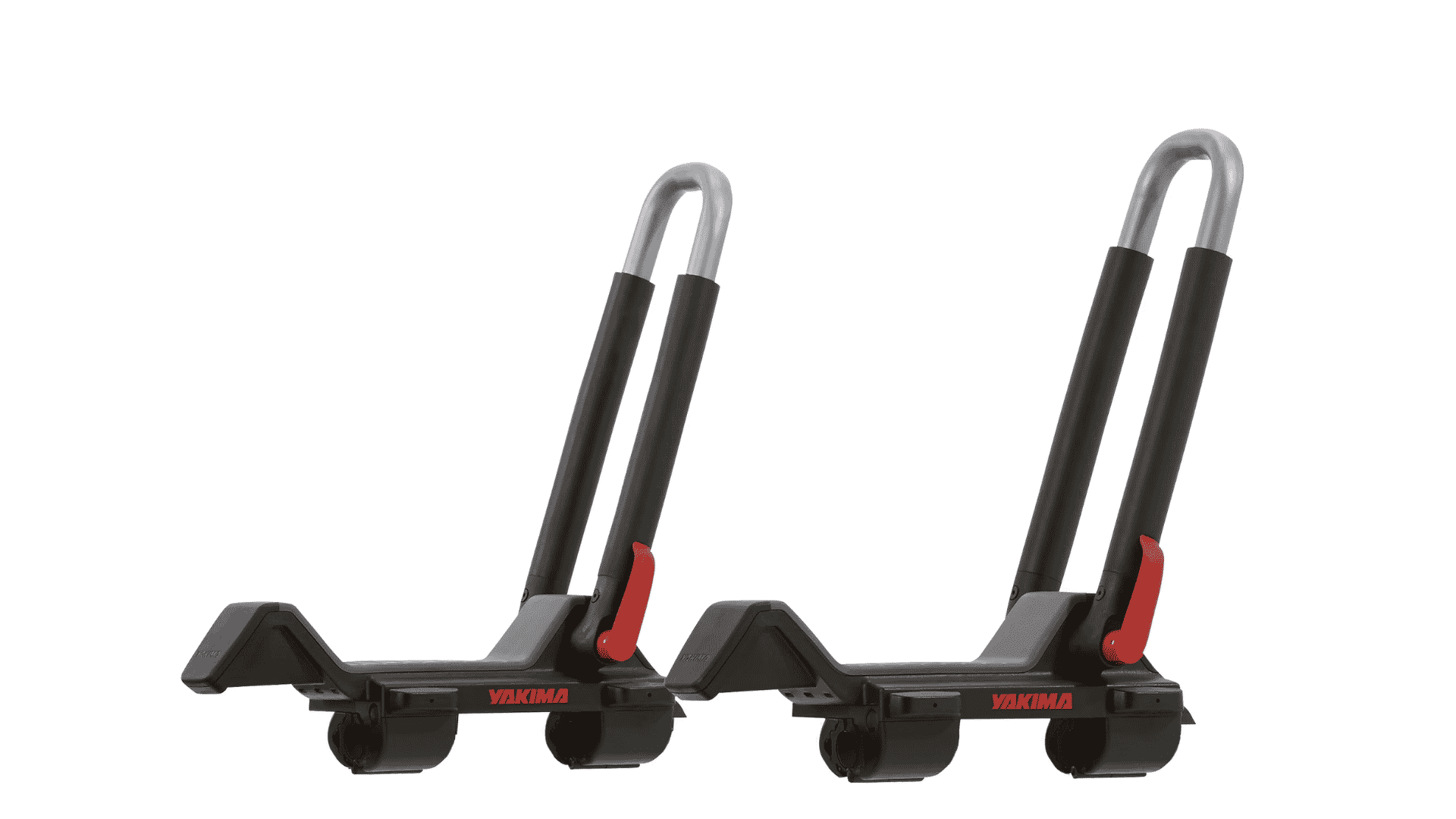
11. Yakima Rooftop Mounted Kayak Rack: Most Versatile Yakima System
| Type | Best For | Weight Capacity | Price Range |
|---|---|---|---|
| J-cradle / stacker | Single or dual kayaks | 80 lbs (single), 110 lbs (two) | $170–$200 |
Yakima’s rooftop system accommodates one kayak in J-cradle mode or two in stacker mode. Padded cradles secure hulls, and included straps make installation simple.
Cradles fold flat to reduce wind drag, providing a versatile option for daily drivers who want the rack always installed.
| Pros | Cons |
|---|---|
| Versatile single or dual kayak | Minor wind noise at highway speeds |
| Padded cradles protect the hull | Requires proper strap setup |
| Cradles fold flat | Slightly heavier than minimal racks |
Pro Tip: Compatible with SKS locks for integration with other Yakima accessories.
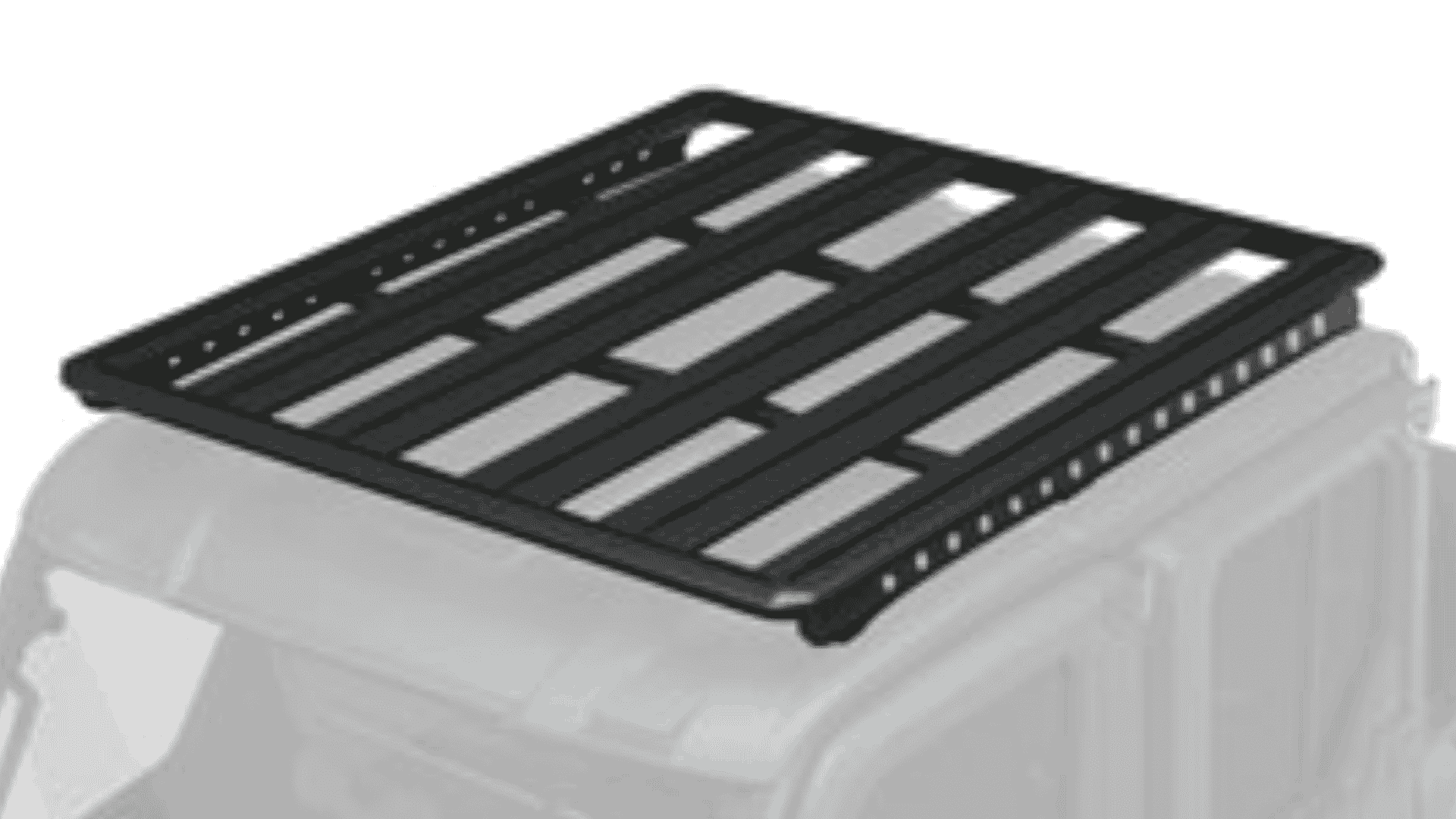
12. Rhino Rack Complete Roof Rack Kit: Best Full System Bundle
| Type | Best For | Weight Capacity | Price Range |
|---|---|---|---|
| Complete roof rack + kayak carrier | Vehicles without crossbars | Varies by system | $1100–$1300 |
Rhino Rack’s Complete Kit bundles crossbars and a kayak carrier in one purchase. Aerodynamically shaped bars reduce wind drag and noise.
Ideal for vehicles without pre-existing rails, this kit provides all the essentials for secure kayak transport with minimal compatibility concerns.
| Pros | Cons |
|---|---|
| All-in-one kit | Weight varies by base system |
| Aerodynamic bars reduce drag | Slightly higher initial cost |
| Compatible with most vehicles | Bulkier to store when not in use |
Pro Tip: Best starter solution for vehicles without existing crossbars or roof rails.
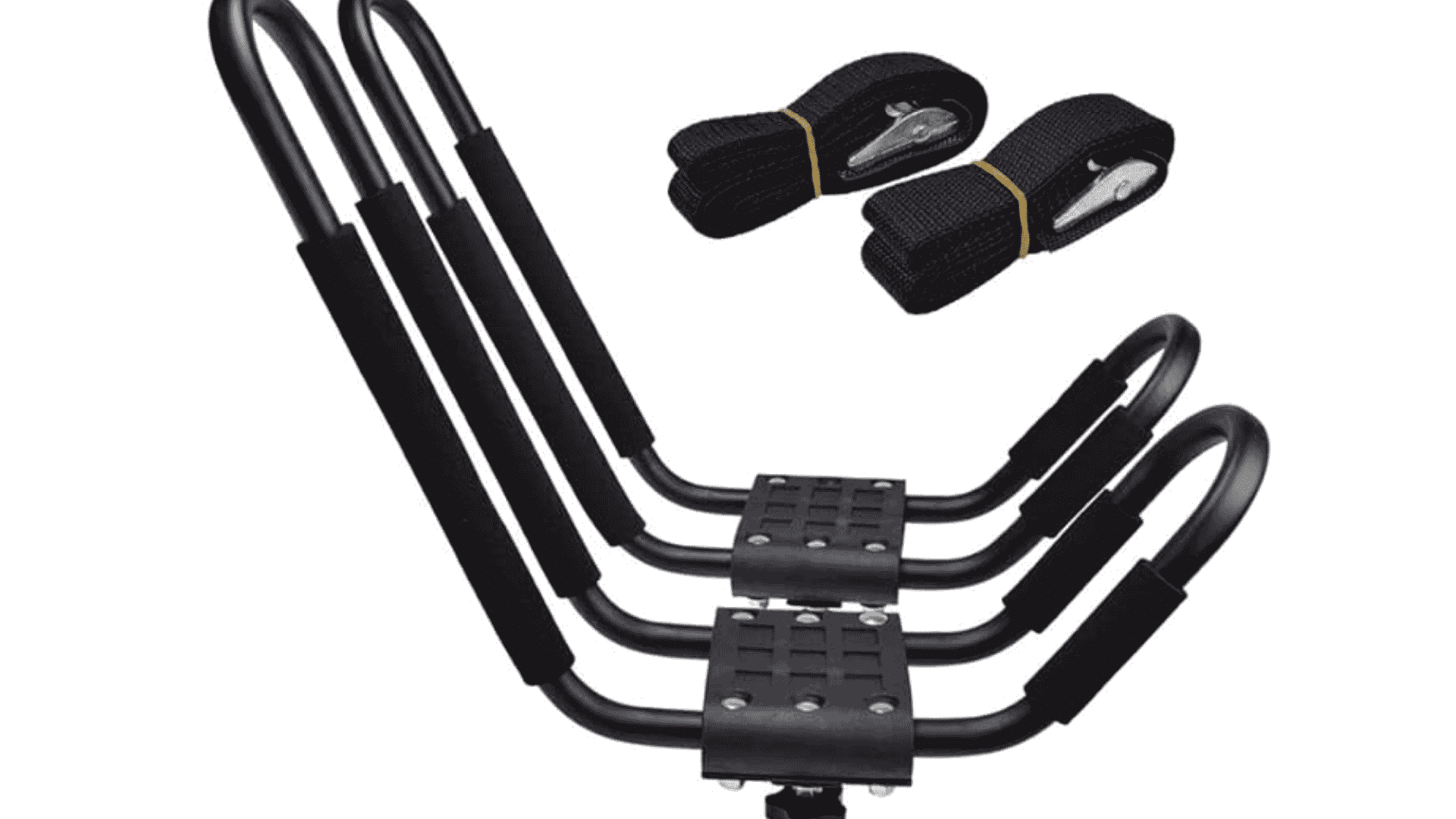
13. TMS J-Bar Kayak Rack: Best Budget Rack Under $65
| Type | Best For | Weight Capacity | Price Range |
|---|---|---|---|
| J-bar | Budget paddlers, light kayaks | 75 lbs | $35–$65 |
The TMS J-Bar is an entry-level J-cradle with thick padded arms. Universal mounting hardware fits most crossbars.
It supports kayaks up to 36″ wide and 75 lbs, making it ideal for occasional paddlers or those seeking a cost-effective solution without advanced features.
| Pros | Cons |
|---|---|
| Affordable entry-level | Limited advanced features |
| Thick padded arms protect the hull | Minimal load-assist functionality |
| Universal mounting | Straps and hardware feel less premium at this price point |
Pro Tip: Well-suited for longer sea or touring kayaks, where the 36″ width provides extra flexibility.
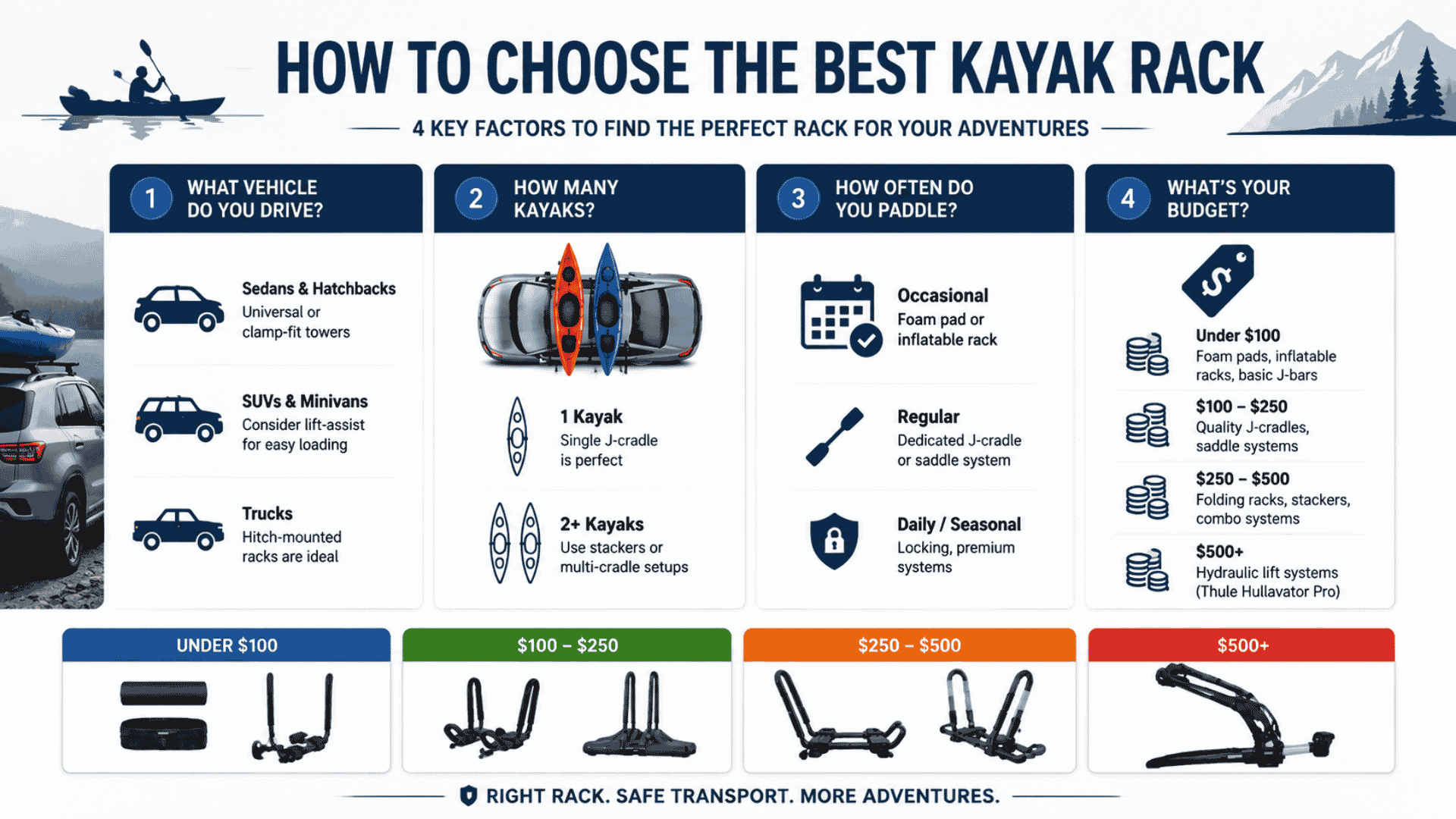
Kayak Rack Installation & Safety Tips
Proper installation and safety practices protect your kayak, vehicle, and others on the road, making every trip safe and stress-free.
- Use cam straps instead of ratchet straps to prevent hull deformation.
- Always run bow and stern tie-down lines to keep the kayak from shifting.
- Use padded cradles or foam blocks between the kayak and crossbars to protect your roof.
- Inspect cradle padding at the start of each season to prevent scratches.
- Torque all rack hardware to spec using a torque wrench at least once per season.
- Confirm bow and stern lines are taut with no slack before driving.
- Rock the kayak gently side-to-side and fore-aft to ensure it is secure. Technique matters just as much as your setup; solo roof loading has a few non-obvious steps that protect both your back and your hull.
- Drive slowly for the first mile and recheck all connections.
- Recheck all tie-downs at every fuel stop on long trips.
- Be aware that square-bar roof racks reduce fuel efficiency by ~10%, and a fully loaded kayak can increase this to 20–25%.
- Aerodynamic crossbars like Thule Wingbar or Yakima JetStream can significantly reduce drag.
Following these tips ensures your kayak stays secure, your vehicle remains protected, and every journey is safe and efficient.
Home Kayak Storage Solutions
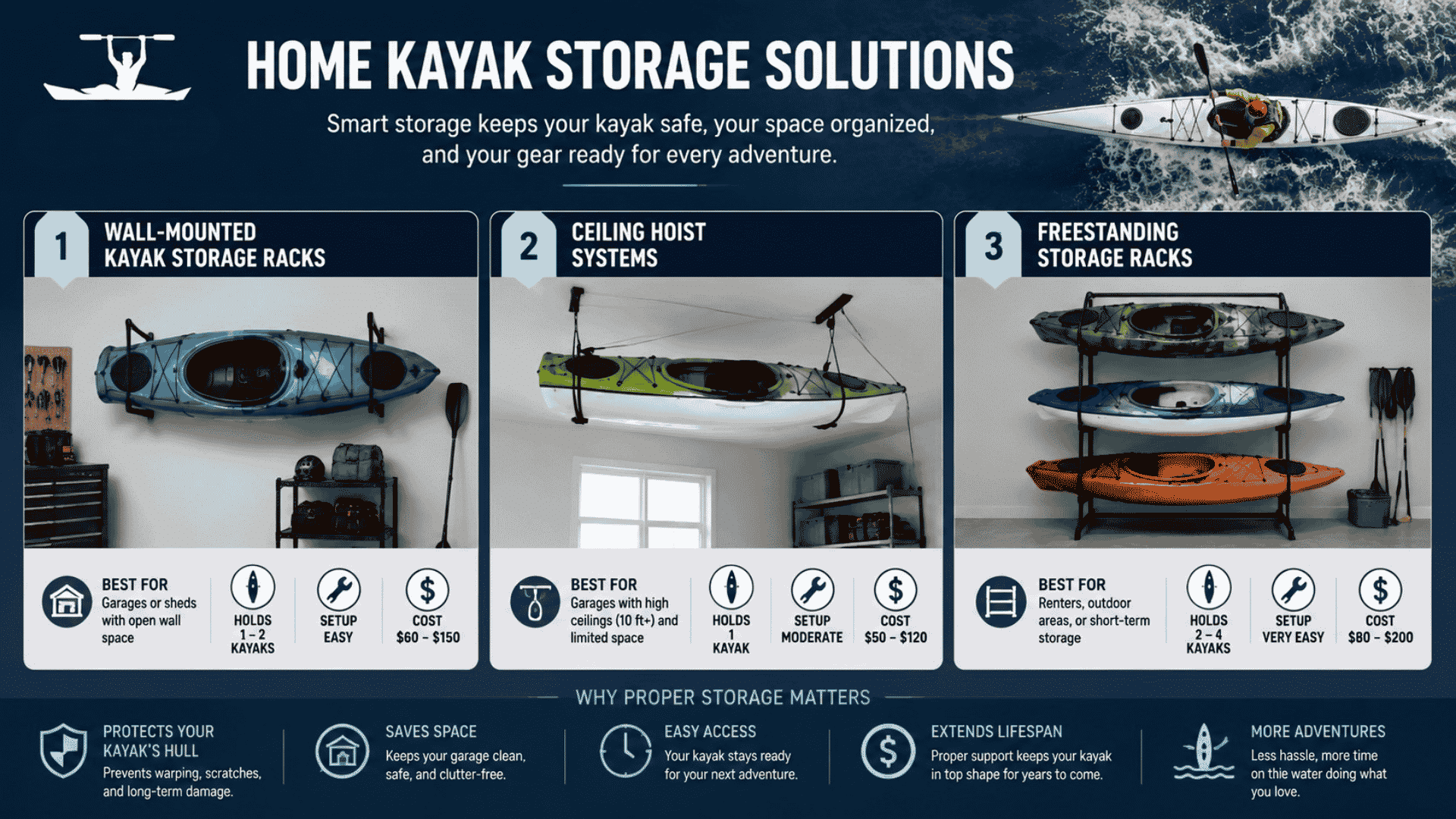
Proper storage protects your kayak, keeps it organized, and maximizes garage space, ensuring your boat stays safe and ready to use.
Wall-Mounted Kayak Storage Racks
Wall mounts are the most popular option, keeping kayaks off the floor and away from moisture. Padded arms support the hull at two or more points, protecting delicate surfaces.
Most systems hold one or two boats per set, making them ideal for garages or sheds with standard ceiling heights and open wall space.
Ceiling Hoist Systems
Ceiling hoists use a rope-and-pulley mechanism to raise kayaks overhead, saving floor and wall space. Modern systems support up to 125 lbs and often include locking cleats for safety.
They are suitable for garages with high ceilings (10 ft+) and limited wall or floor space, making them easy for one person to operate.
Freestanding Storage Racks
Freestanding racks require no wall drilling and hold two to four kayaks horizontally or on their sides.
They usually feature steel frames with foam padding and are portable, making them perfect for renters, outdoor storage areas, or seasonal use. They provide good hull protection while keeping kayaks accessible.
Making Your Decision
A great kayak rack elevates every paddle, making transport effortless and keeping your kayak protected.
Even if it’s a Thule lift-assist system for tall vehicles, a versatile kayak roof rack for weekend trips, or a sturdy kayak storage rack for your garage, the right choice enhances convenience, safety, and enjoyment.
Secure your gear, load it with confidence, and get on the water faster.
Invest in a quality kayak rack today and transform every outing into a smooth, worry-free adventure. Strap in, paddle out, and make every trip count.
Frequently Asked Questions
Can I Leave My Kayak Rack Installed When Not in Use?
Yes, you can leave a kayak rack installed if you paddle frequently, but removing it improves fuel economy, reduces wind noise, and prolongs hardware life if trips are weeks apart.
How Far Apart Should Kayak Racks Be on My Roof?
For optimal stability, space kayak rack cradles as far apart as your roof and crossbar system allows while keeping the kayak supported near its center and ends.
Do Kayak Roof Racks Fit All Crossbar Types?
Most kayak racks adjust to fit round, square, and aero crossbars, but compatibility varies by brand and model. Some require adapters for factory rails or specific bar profiles.
How Should I Tie Down a Kayak to a Roof Rack for Transport?
Use two cam straps over the hull, plus bow and stern lines attached to secure vehicle points. Tighten snugly and recheck after a short drive to prevent shifting.