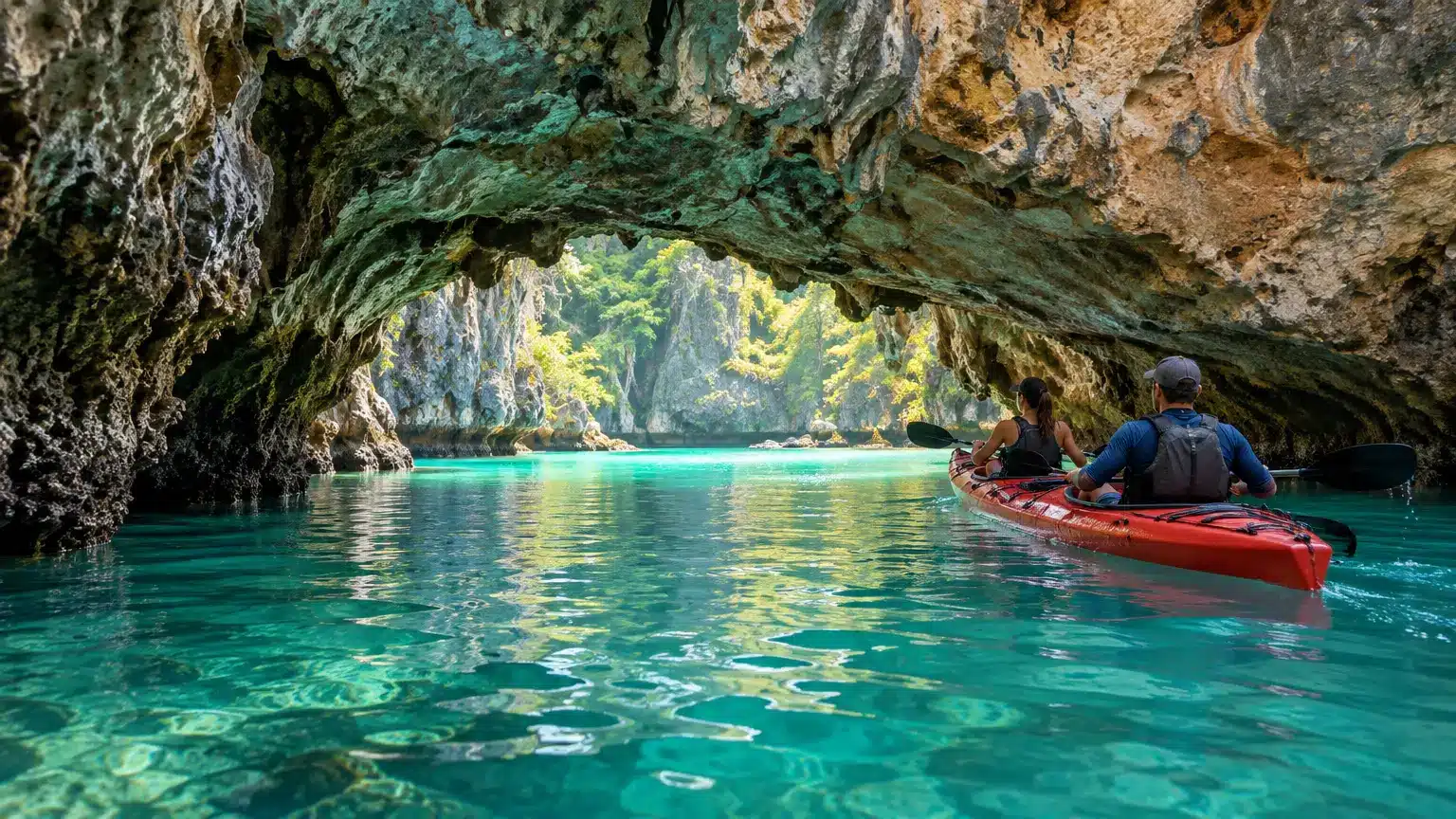

With thousands of islands, winding rivers, mangrove forests, limestone lagoons, and sheltered coastal waters, the Philippines is practically designed for kayaking.
While surfing, diving, and island hopping tend to dominate the country’s outdoor tourism scene, kayaking offers something different: a slower, more intentional, and more intimate way to explore the water.
Filipino kayaking culture has also grown alongside the country’s broader appreciation for outdoor recreation and ecotourism.
From guided mangrove trips to casual paddles through famous lagoons, kayaking can be both an adventure and a way to experience local ecosystems without the noise of a motorboat.
Here are some of the best places to try it.
El Nido, Palawan
Few places in the Philippines are as closely associated with kayaking as El Nido. Its towering limestone formations and turquoise lagoons create the kind of scenery that makes even a reasonably competent paddler feel like they have accidentally wandered into a nature documentary.
The Big Lagoon is one of the most recognizable kayaking destinations in the area. Its broad, calm waters are surrounded by dramatic karst cliffs, making the paddle as much about sightseeing as exercise.
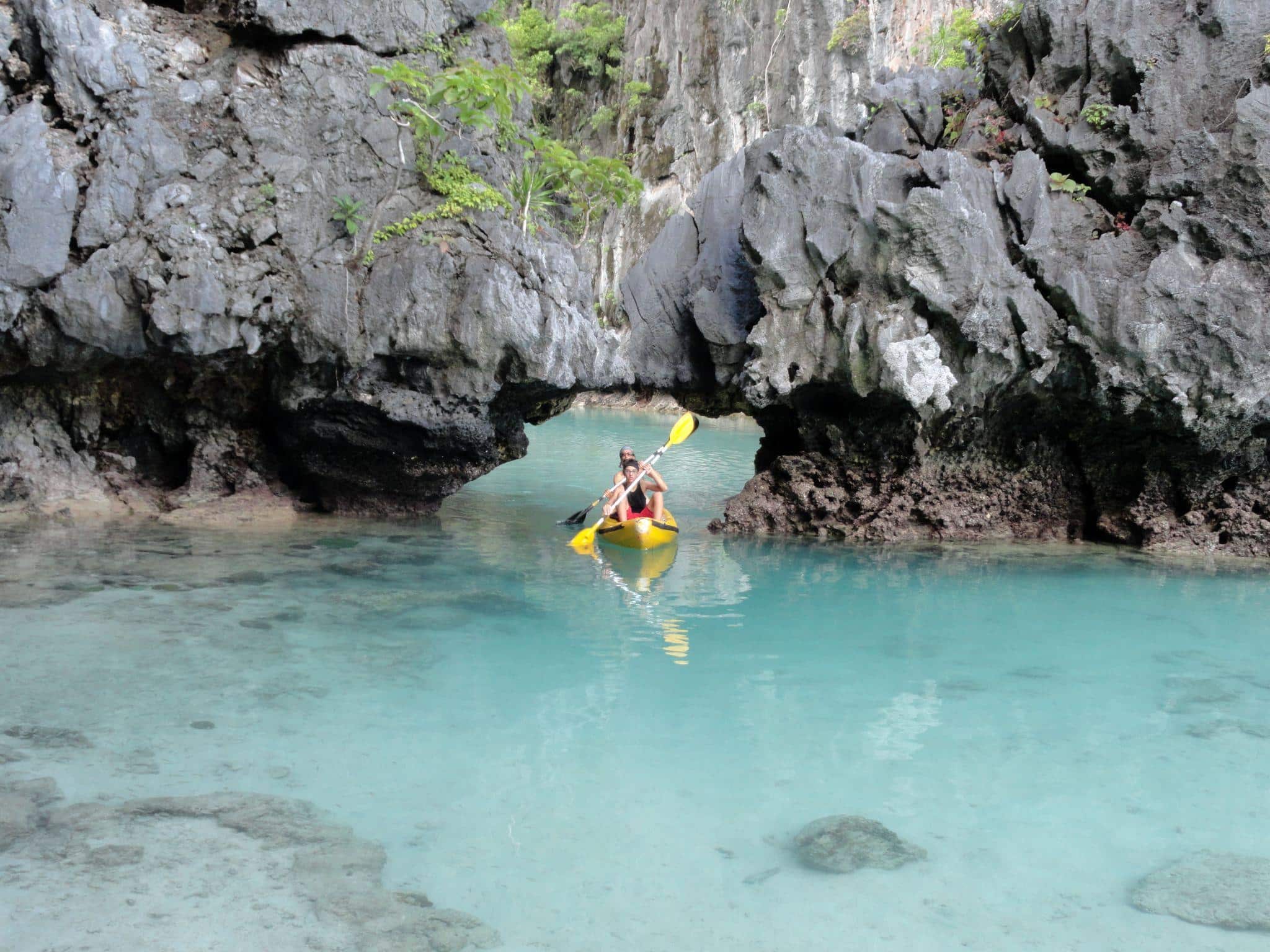
The nearby Small Lagoon offers a more enclosed experience, with a narrower entrance and dramatic rock formations.
Kayaking here is generally part of organized island-hopping tours, so visitors should pay attention to weather, tides, safety instructions, and local regulations.
Coron, Palawan
Coron provides another excellent setting for paddlers, particularly around its famous lagoons and lakes. Twin Lagoon, in particular, combines kayaking, swimming, and exploration, while the area’s dramatic limestone scenery gives a different flavor from what El Nido offers.
The waters around Coron can also be deeper and more exposed than they appear in photographs.
A life vest and awareness of changing conditions are therefore more important than pretending your holiday has turned you into an Olympic kayaker overnight.
Abatan River, Bohol
For a quieter and more nature-focused experience, head inland to Bohol’s Abatan River.
The area is known for kayaking through mangrove corridors, where paddlers can observe the river ecosystem at a much slower pace.
Local kayaking operators have also developed trips that incorporate environmental education and wildlife observation. Bohol’s provincial tourism information highlights kayaking and paddling activities alongside its mangrove and river attractions.
Some trips continue into the evening for firefly viewing. Paddling through mangroves after sunset, with fireflies glowing above the river, is about as far removed from a noisy city evening as you can get.
It also demonstrates an important aspect of modern Philippine kayaking culture: outdoor recreation increasingly overlaps with conservation and community-based tourism.
Panglao, Bohol
Panglao is better known for beaches, diving, and island-hopping, but its coastline is also suitable for recreational kayaking. Coastal paddling gives visitors an alternative perspective of the island, particularly when conditions are calm.
Unlike a typical motorized tour, kayaking puts you directly in control of the pace. You can spend more time observing shallow coastal areas, rock formations, and marine life rather than simply passing them on the way to the next attraction. Local operators currently offer guided coastal discovery trips around Panglao.
Maasin River, Siargao
Siargao may be synonymous with surfing, but its inland waterways offer a completely different side of the island.
The Maasin River runs through a lush, palm-lined landscape and provides opportunities for peaceful paddling. Instead of chasing waves, kayakers can follow the river at a relaxed pace and take in the surrounding vegetation.
This contrast reflects the wider outdoor culture developing in Siargao. The island’s tourism identity has expanded beyond surfing to include nature trips, inland adventures, and quieter ways of experiencing its environment.
Sugba Lagoon, Siargao
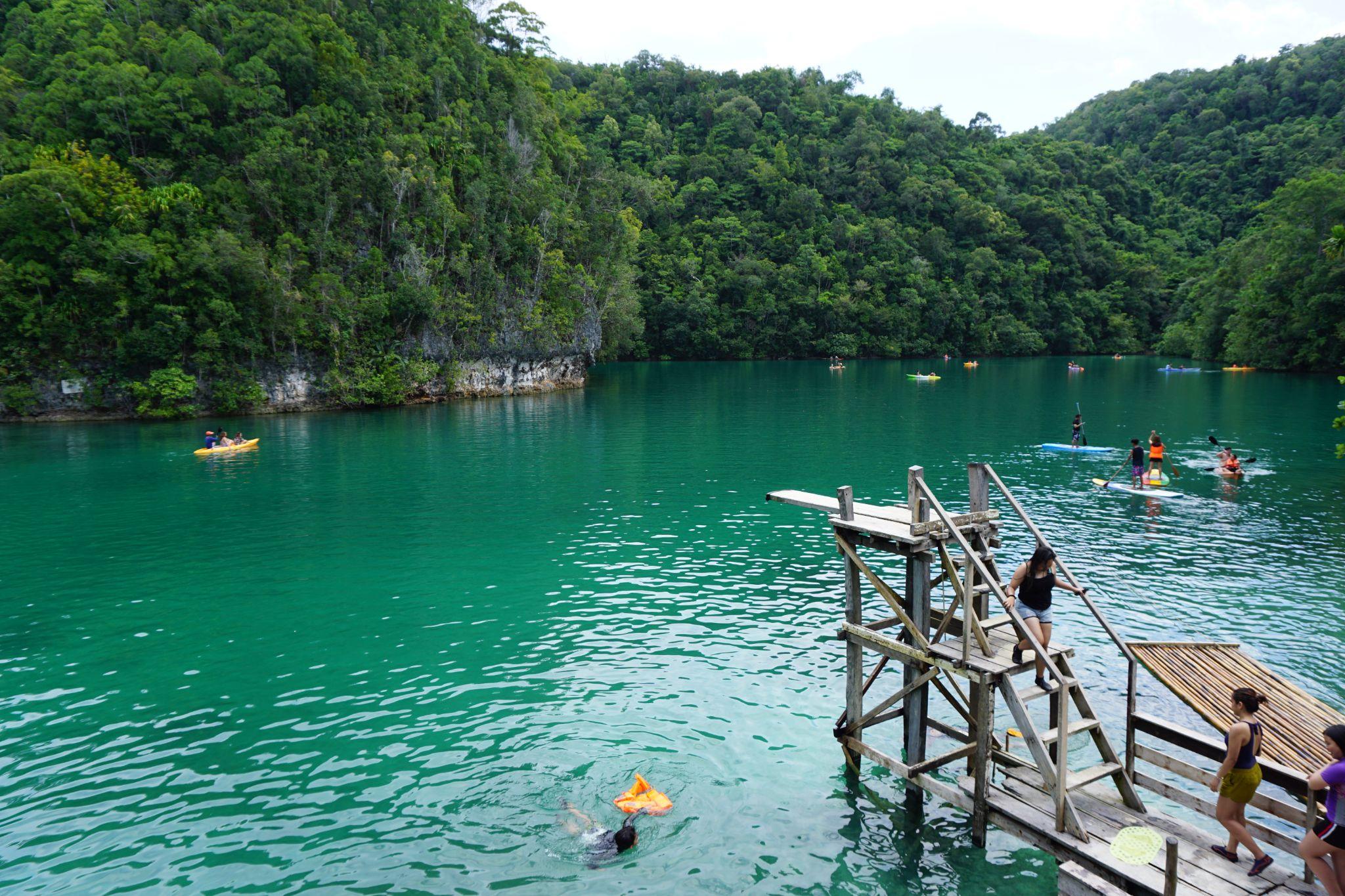
Located in Del Carmen, Siargao, Sugba Lagoon is a scenic kayaking destination surrounded by lush mangroves and calm, blue-green waters. Visitors can rent kayaks and paddle through the sheltered lagoon while taking in the surrounding limestone formations and forested landscape.
The lagoon is also known for its floating platform and diving board, but kayaking offers a quieter way to explore the area. Its calm conditions make it suitable for beginners, while the surrounding mangrove ecosystem highlights the connection between kayaking and nature-based tourism in the Philippines.
Visitors should follow local guidelines, stay within designated areas, and avoid disturbing the mangroves and wildlife. Sugba Lagoon has undergone environmental rehabilitation efforts in the past, making responsible tourism especially important.
Kayaking Culture in the Philippines
Kayaking in the Philippines is not just about collecting another activity for an itinerary. It increasingly reflects a broader interest in active and responsible tourism.
Many kayaking experiences are guided by locals who know the waterways, wildlife, tides, and surrounding communities.
In Bohol, for example, kayaking programs have incorporated mangrove conservation and local guide training, while some operators participate in mangrove planting activities.
There is also an interesting cultural shift in how Filipinos and visitors approach leisure. Just as people can spend an afternoon exploring different forms of entertainment on platforms such as GameZone Jili, outdoor recreation provides another way to spend free time.
Except the scenery is considerably less likely to require a screen and anticipating wins and rewards.
More importantly, kayaking encourages people to engage directly with natural spaces. That makes responsible behavior essential: avoid disturbing wildlife, keep plastic and other waste out of the water, follow designated routes, and respect local communities and conservation rules.
What to Know Before You Paddle
Beginners should start with calm, sheltered waters and consider joining a guided trip. Wear a properly fitted life vest, protect valuables with a dry bag, and bring sun protection and sufficient drinking water.
Weather and water conditions can change quickly, particularly around coastal areas. Always follow local guides and check conditions before launching. For lagoon and river trips, tides can also affect accessibility and safety.
From Palawan’s limestone lagoons to Bohol’s mangrove forests and Siargao’s peaceful rivers, kayaking offers one of the Philippines’ most rewarding ways to experience its waterways. You do not need to be an expert paddler. You simply need enough curiosity to pick up a paddle and see where the water leads.