
Cold feet and sore toes can turn a fun day on the mountain into a long one.
That is why boot fit matters so much. If you have been asking how snowboard boots should fit, the answer is simple: snug, secure, and comfortable without pain.
Your toes should lightly touch the front, heel should stay in place, and nothing should pinch or feel numb. A good fit also helps you stay balanced and in control while riding.
The tricky part is that boots can feel different after a few uses, which makes choosing the right fit harder than it seems. Once you know what to check, it gets much easier.
A few small fit details can save you from a lot of discomfort later.
What a Proper Snowboard Boot Fit Feels Like
A snowboard boot should feel snug from the moment you put it on. Not tight, not painful, just firm and secure around your foot.
Your toes should lightly touch the front of the boot when you stand straight. This might feel a bit close at first, but it’s normal. When you bend your knees into a riding position, your toes should pull back slightly and stop pressing.
Your heel should stay in place. Try bending your knees and shifting your weight forward. If your heel lifts too much, the boot is too loose. A small movement is fine, but it should not feel like your foot is sliding.
You should not feel sharp pressure on any part of your foot. A little tightness is okay, but pain, numbness, or tingling is a sign the fit is wrong.
Note: Snowboard boots tend to loosen a bit after a few days of use. So, a snug fit at the start usually turns into a comfortable fit later.
Why the Right Boot Fit Can Make or Break Your Ride
A proper boot fit makes a big difference in how you ride. It affects your control, comfort, and overall experience on the mountain.
| Key Benefit | How it helps |
|---|---|
| Better control | Helps your movements transfer clearly to the board for smoother turns |
| More comfort | Reduces pressure points and foot pain so you can ride longer |
| Strong heel hold | Keeps your foot stable and improves balance on uneven terrain |
| Improved warmth | A good boot fit helps maintain proper circulation, keeping your feet warmer and reducing numbness. |
| Less fatigue | Reduces strain on your feet and legs during longer rides |
Of course, even the best-fitting boots can only do so much if the board itself doesn’t match your riding style, which is why choosing the right snowboard makes a big difference.
How to Check Snowboard Boot Fit
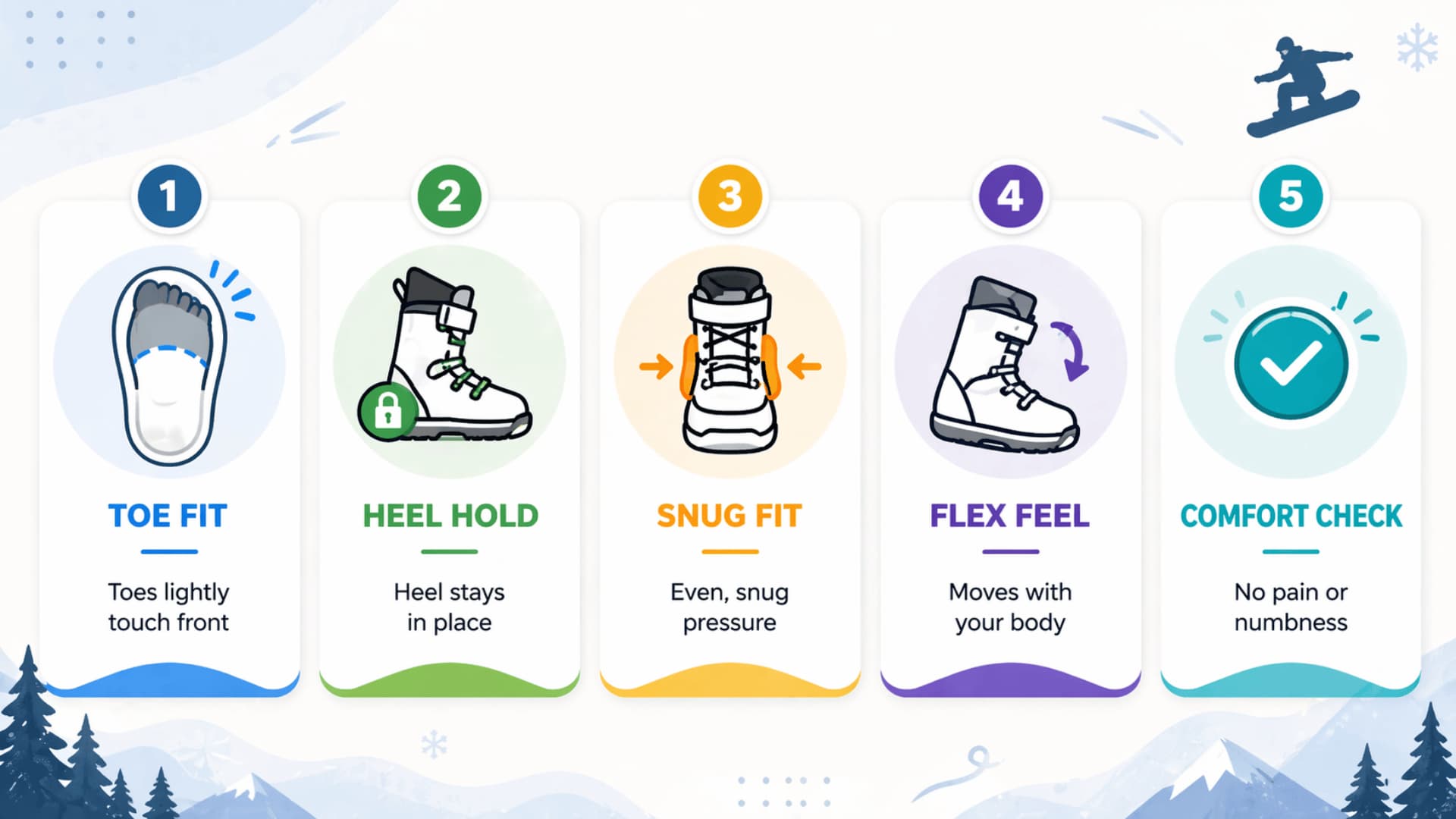
Checking boot fit is simple when you know what to look for. Focus on these key points to make sure the boots feel snug, secure, and comfortable.
- Toe fit: Your toes should lightly touch the front when you stand straight, then pull back a little when you bend your knees.
- Heel hold: Your heel should stay in place with very little lift when you lean forward or shift your weight.
- Even pressure: The boot should feel snug all around your foot, without pinching or tight spots on the sides.
- Flex feel: The boot should bend naturally with your movement and feel supportive, not stiff in the wrong places.
- Overall comfort: The fit should feel firm and secure without causing pain, numbness, or tingling.
Take a few minutes to test each of these points before buying. A good fit should feel supportive right away and more comfortable after some use.
Do Snowboard Boots Loosen Over Time?
Yes, snowboard boots do loosen over time, particularly the liner, which compresses and molds to the shape of your foot.
This is normal, and the boots often feel a little roomier and more comfortable after the first few days of riding. Most of the change comes from the liner inside the boot, which starts to compress and shape itself to your foot after a few rides.
As this happens, the boot begins to feel a little roomier and more comfortable than it did when it was brand new. In many cases, the fit can feel about half a size looser once the boot is fully broken in.
That is why a snug fit at the start is usually the better choice. If the boots already feel loose when you first try them on, they may feel too roomy after some use.
While the softer feel can improve comfort, it can also reduce support slightly over time. Starting with the right fit helps the boots stay comfortable and supportive longer.
Common Snowboard Boot Fit Mistakes to Avoid
It is easy to judge snowboard boots by first-step comfort, but that can lead to the wrong fit. A few common mistakes can affect support, control, and comfort once you start riding.
| Common mistake | Why it matters |
|---|---|
| Buying too big | Boots that feel roomy at first often loosen more over time and lose support |
| Ignoring the heel lift | Too much heel movement can reduce balance, control, and board response |
| Standing only upright | Testing boots without bending your knees gives an incomplete idea of fit |
| Wearing thick socks | Bulky socks can change the fit and create pressure in the wrong spots |
| Rushing the fit check | Not moving enough in the boots can make early discomfort easy to miss |
Avoiding these mistakes can help you choose boots that feel secure from the start. A proper fit gives you better comfort, better control, and a smoother ride overall.
It also helps to pay attention to the snowboarding accessories you wear with them, since bulky or poorly chosen gear can change how your boots feel.
Pro Tips for Getting the Right Fit
Getting the right fit is easier when you follow a few simple tips. These small checks can help you avoid common mistakes and make sure your boots feel comfortable from the start.
- Try boots in the evening: Your feet swell slightly during the day, so trying boots later helps you get a more accurate and realistic fit
- Wear proper socks: Thick socks can distort the fit, creating pressure points and affecting comfort. Stick to socks specifically designed for snowboarding to ensure the best fit
- Bend your knees: Always test the boots in a riding stance to see how your toes and heel feel during movement
- Lace boots fully: Tighten the boots properly before judging comfort, since a loose fit can give the wrong impression
- Walk around: Spend a few minutes moving in the boots to check for pressure points or discomfort before making a decision
These small steps can make a big difference in how your boots feel on the mountain. Taking a little extra time now helps you avoid discomfort later.
Not sure about your boot size?Snowboard boot sizing is close to your regular shoe size, but it can vary by brand and fit. For a quick reference, you can check a standardsnowboard boot size chartbefore buying to avoid choosing the wrong size. |
What Riders Commonly Mention in Online Discussions
Across snowboard discussions online, one point comes up again and again: boots often feel “too snug” at first, but that does not always mean the fit is wrong.
Many riders mention their boots feel ‘too snug’ at first, but this is often a sign of the liner still molding to your foot. Once broken in, this snug fit should feel comfortable and supportive, improving control.
Another common complaint is heel lift, which riders often describe as the moment boots start to feel less responsive in turns.
Numb toes are also often mentioned, and this is usually treated as a warning sign that the fit is too tight or is causing excessive pressure.
Wrap Up
Getting the right answer to how snowboard boots should fit comes down to one thing: a snug, secure feel without pain.
Your toes should lightly touch the front, your heel should stay in place, and the fit should feel firm but comfortable. Remember, boots loosen over time, so starting snug is the better choice.
Avoid common mistakes, take time to test the fit, and focus on how the boots feel in a riding stance. A proper fit improves control, comfort, and your overall experience on the mountain.
Before you buy your next pair, take a moment and ask yourself: do they truly feel right, or just comfortable at first?
Frequently Asked Questions
Is it Better to Have Tighter or Looser Snowboard Boots?
Tighter is better, as long as the boots feel snug and secure without causing pain, numbness, or excessive pressure.
How Do I Know if My Snowboard Boots Fit Right?
Your toes should lightly touch the front, your heel should stay put, and the boots should feel snug.
Is It Better to Size Up or Down in Snowboard Boots?
If you’re between sizes, choose the snug fit, but consider foot volume (wide feet or high arches) for comfort.