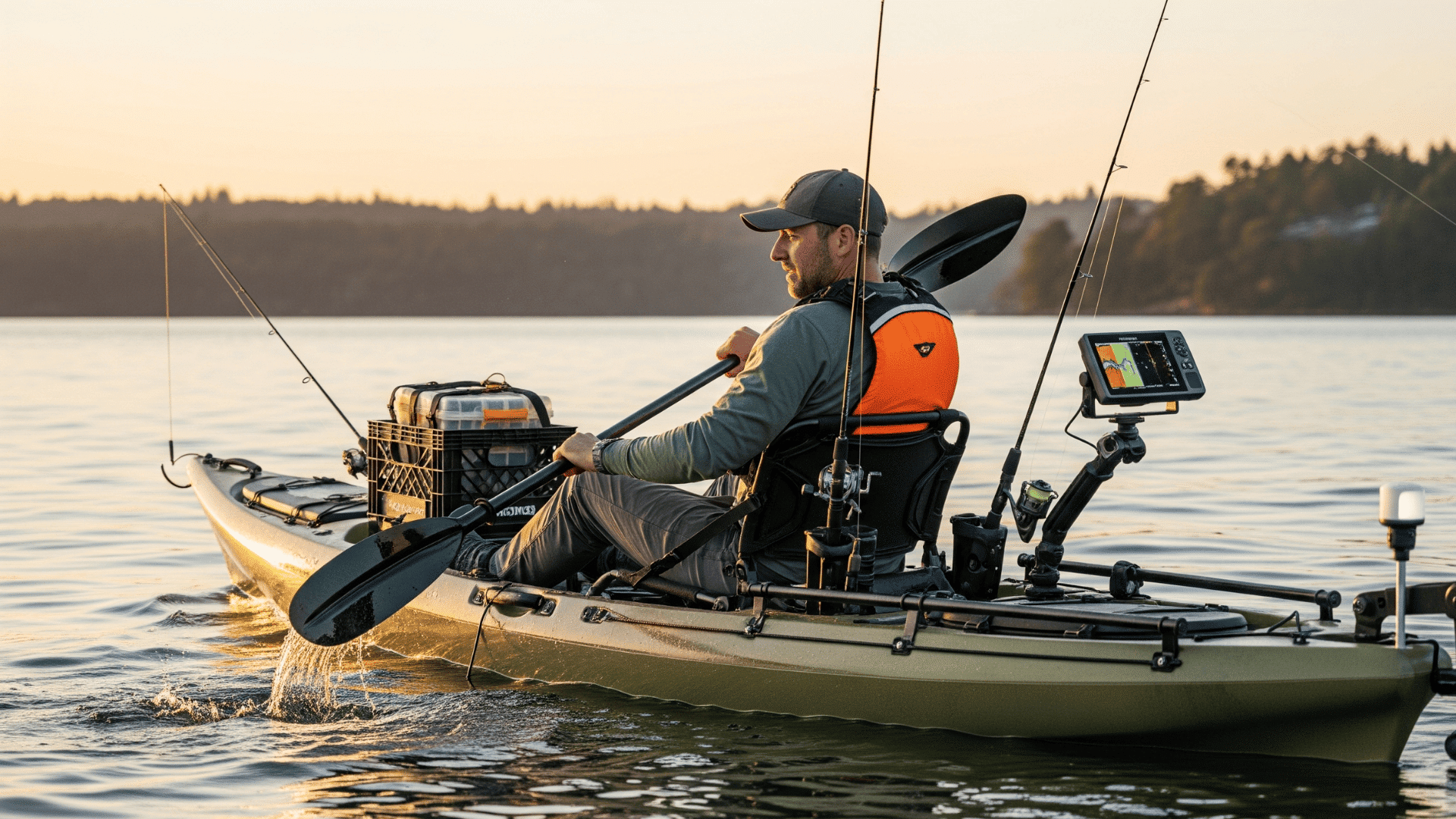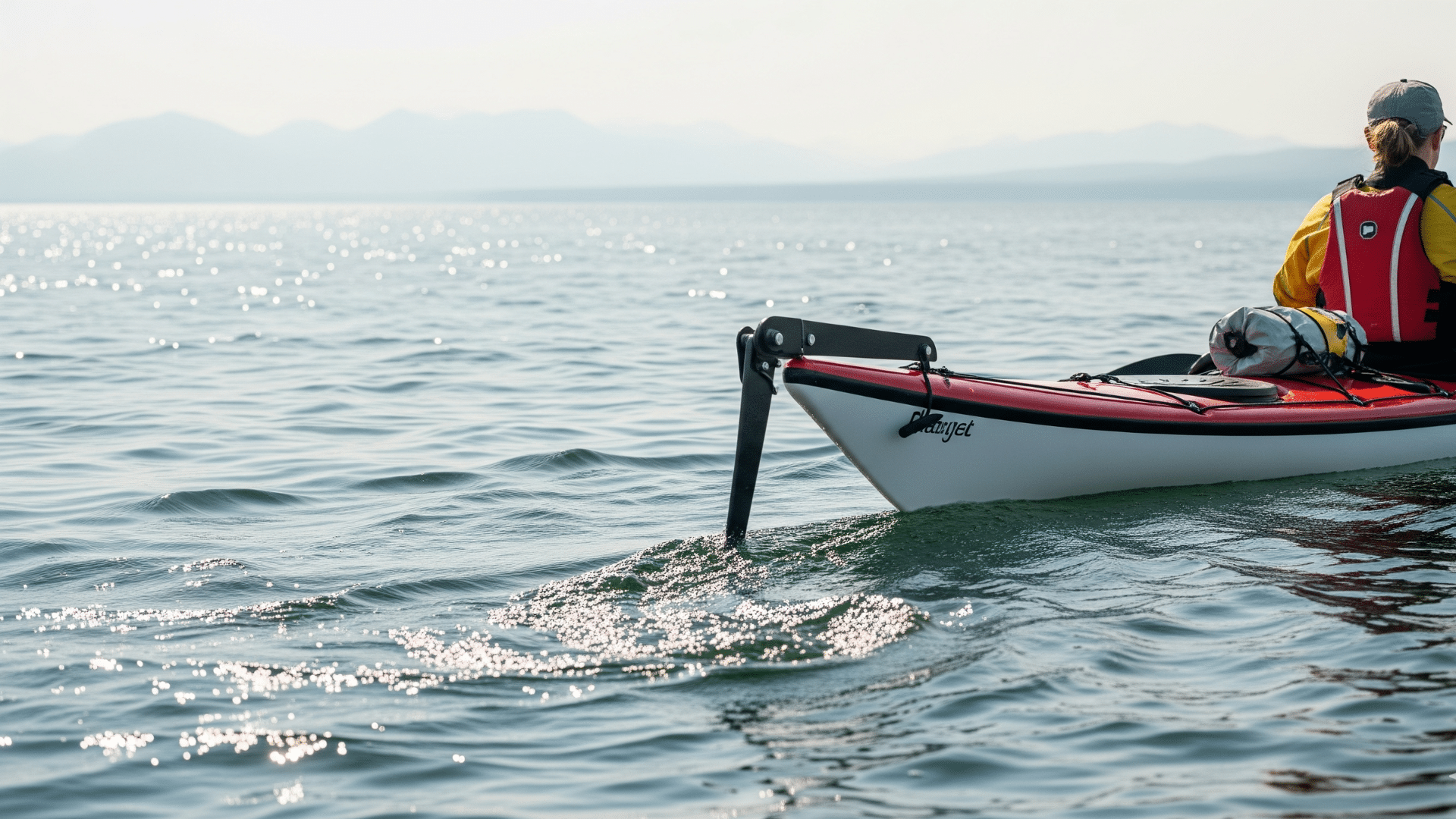
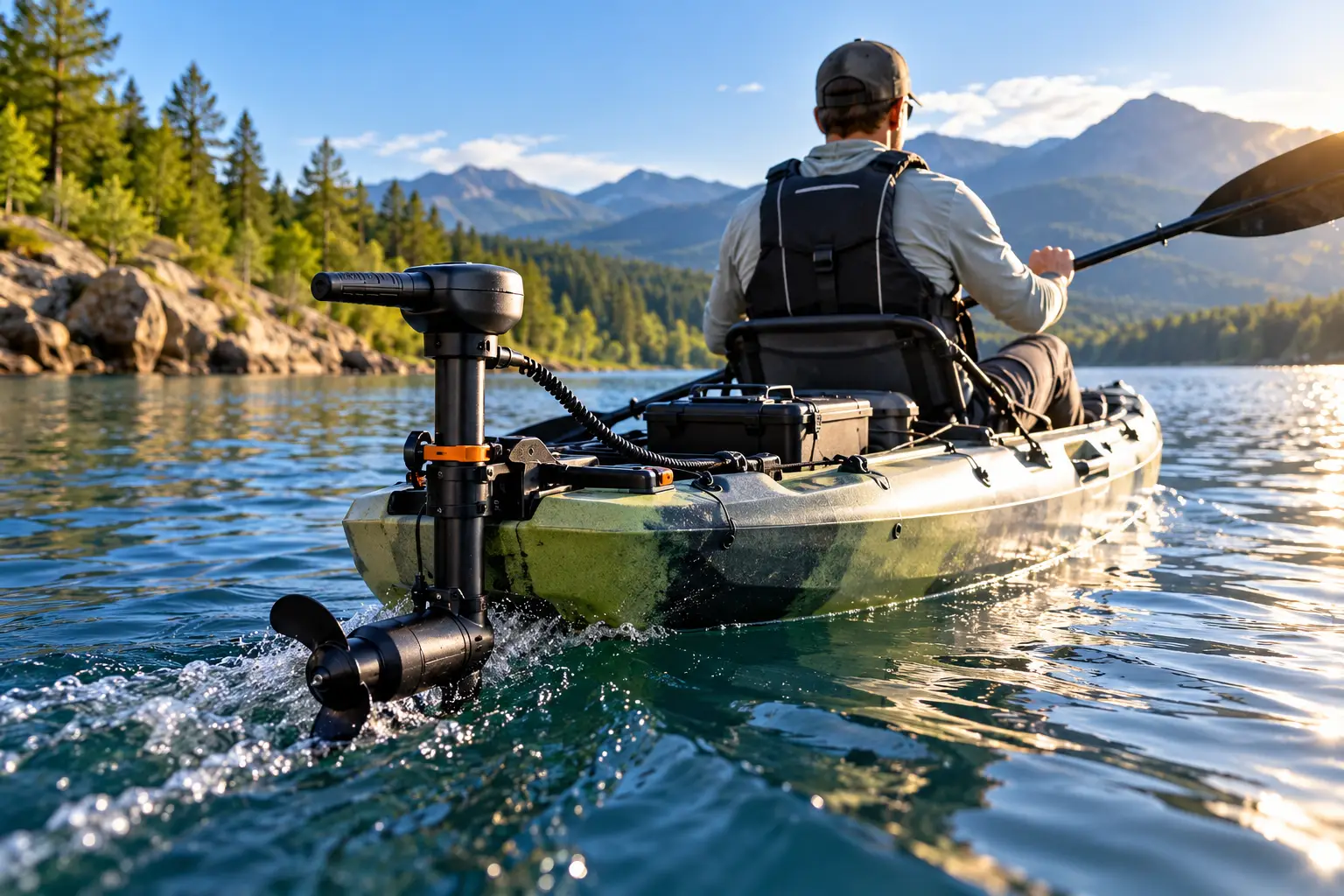
Adding electric propulsion to a kayak can reduce physical effort, assist with longer journeys, and make certain fishing activities more convenient.
However, upgrading requires careful consideration of kayak compatibility, mounting arrangements, motor performance, battery capacity, and additional weight. Not every kayak supports motor installation, particularly inflatable models with specific structural limitations.
Before purchasing equipment, paddlers should verify manufacturer requirements, calculate realistic operating time, and understand how motorization may affect handling, safety, and registration obligations.
Benefits and Trade-Offs of Electric Propulsion
Electric propulsion can make kayaking more convenient, but its advantages depend on the motor, water conditions, and installation. Understanding these limitations helps paddlers determine whether the additional equipment justifies its cost and complexity.
What Electric Propulsion Can Offer
An electric motor can reduce sustained paddling effort during longer journeys or fishing trips. Certain systems also offer adjustable speed controls, allowing operators to maintain relatively consistent movement in suitable conditions.
Potential advantages include:
- Reduced physical effort: Motor assistance can make longer outings less demanding.
- Fishing convenience: Compatible steering and control systems may free a hand for fishing activities.
- Controlled movement: Adjustable propulsion can help with positioning in calm water.
- Return-trip assistance: Motor power may reduce paddling demands when sufficient battery capacity remains.
Consider Costs, Weight, and Maintenance
Electric propulsion introduces expenses beyond purchasing the motor.
For example, Newport currently lists its 36-pound-thrust Kayak Series trolling motor at approximately $170. Its motor-and-battery bundle is listed at approximately $370, although mounting accessories and other equipment may cost extra.
These are manufacturer-listed examples rather than universal market prices. Actual costs vary according to configuration, retailer, and availability.
Batteries also require appropriate charging, storage, inspection, and eventual replacement. The entire setup must remain manageable during transportation and launching.
Check Kayak Compatibility Before Selecting a Motor
Kayak compatibility depends on manufacturer-approved mounting options, motor restrictions, and total loaded weight. No universal minimum width or carrying capacity guarantees that a kayak can safely accommodate electric propulsion.
Review Manufacturer Weight and Motor Limits
Consult the kayak’s documentation before purchasing mounting equipment. Check the maximum permitted load, approved motor types, mounting locations, and any restrictions concerning propulsion power.
The total load should account for:
- Paddler and passenger weight.
- Motor, battery, and mounting hardware.
- Fishing equipment and personal belongings.
- Water, safety supplies, and other accessories.
Choose a Suitable Mounting Arrangement
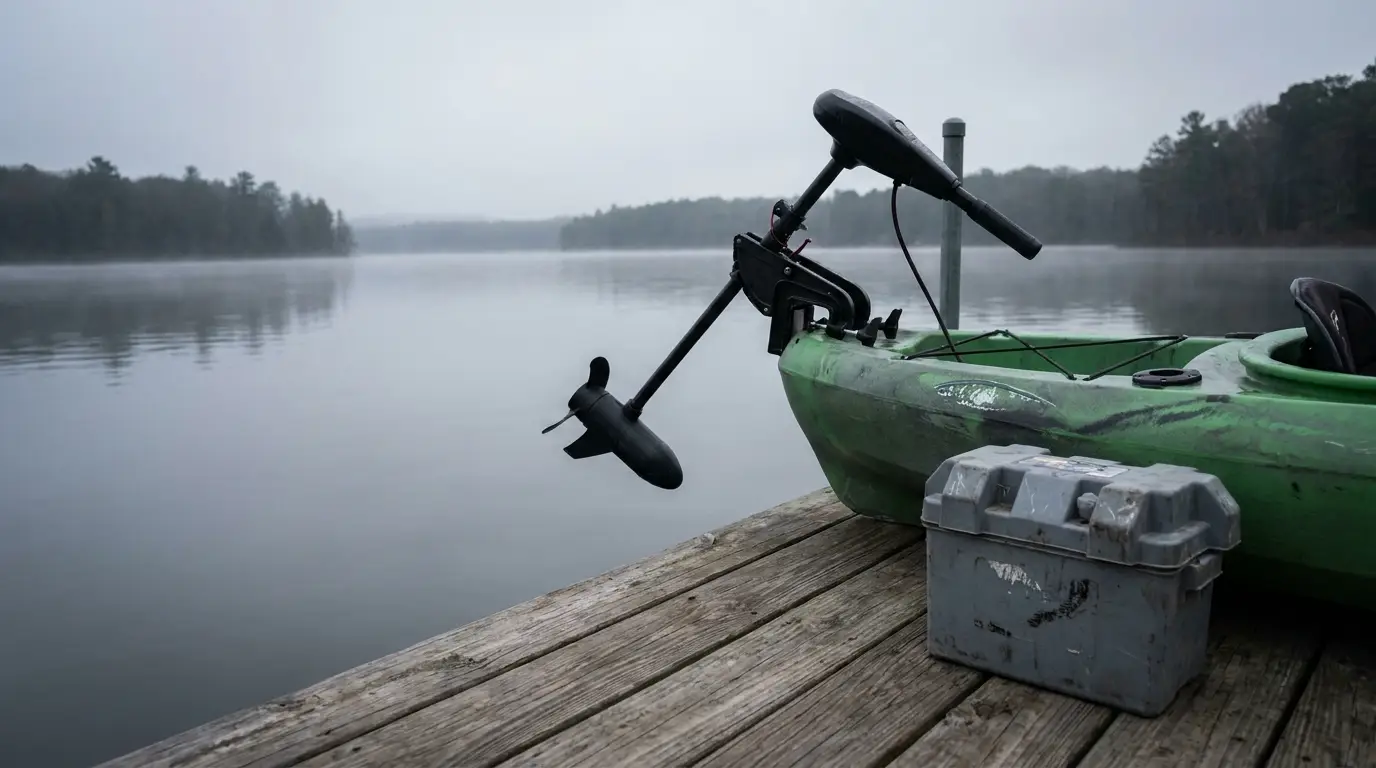
Different kayak designs support different installation methods.
| Mounting type | Typical arrangement | Important consideration |
| Stern mount | Motor positioned behind the seat | Requires an approved stern attachment |
| Side mount | Motor supported beside the hull | May affect balance and paddle clearance |
| Bow mount | Motor fitted toward the front | Requires structural support and compatible steering |
Additional Considerations for Inflatable Kayaks
Inflatable kayaks require particular attention because mounting hardware must work with their construction and pressure requirements.
Some manufacturers explicitly approve particular propulsion systems. For example, Sea Eagle’s EZLite10 specifications identify compatibility with the Bixpy K-1 motor and specify the kayak’s loading limits.
Avoid drilling into inflatable structures or attaching improvised brackets without manufacturer approval. Check that the propeller remains clear of inflatable tubes and that the mounting system does not damage the hull.
Choosing Between an Electric Outboard and a Trolling Motor
Motor selection should reflect the intended activity, available mounting arrangements, and electrical requirements. Neither propulsion category is automatically faster or more suitable for every kayak.
Compare Motor Features and Controls
Electric outboard motor systems may offer integrated steering, variable throttle controls, dedicated battery arrangements, or electronic performance displays, depending on the product.
Conventional trolling motors commonly emphasize adjustable thrust and controlled movement, making them attractive for certain fishing applications.
Consider the following differences:
| Feature | Electric outboard | Trolling motor |
| Primary consideration | Integrated propulsion and control | Adjustable thrust and positioning |
| Steering | Tiller, remote, or compatible steering controls | Commonly tiller or compatible remote controls |
| Battery arrangement | Integrated or external, depending on model | Frequently uses an external battery |
| Installation | Requires compatible mounting hardware | Requires suitable motor support |
Selecting a Compatible Kayak Battery
Battery selection involves more than finding sufficient amp-hour capacity. Voltage, discharge capability, total weight, and charging requirements must match the chosen motor.
Check Electrical Compatibility
Before purchasing a battery, verify three essential specifications:
- Voltage: The battery must provide the voltage required by the motor.
- Continuous discharge current: The battery must support the motor’s expected electrical demand.
- Battery management system: Protection features and discharge limits must suit the installation.
For example, a motor drawing up to 29A requires a compatible battery capable of supplying that current continuously under the manufacturer’s specified conditions.
A lithium iron phosphate (LiFePO4) battery may reduce weight compared with some lead-acid alternatives, but the actual difference depends on the models being compared.
The manufacturer also specifies thousands of charge cycles under defined testing conditions. Actual service life depends on operating temperatures, charging practices, discharge depth, and usage.
Charging speed is not determined by battery size alone. It also depends on charger output, battery limitations, and remaining charge.
Added Weight and Estimated Motor Runtime
A motorized kayak must remain practical to transport, launch, and control. Weight and runtime should therefore be evaluated together.
Calculate the Total Equipment Weight
Newport lists its 36-pound-thrust kayak trolling motor at approximately 18 pounds. Combining that with the LiTime battery example weighing approximately 11.6 pounds produces a total of about 29.6 pounds.
This figure excludes mounting hardware, wiring, protective equipment, and other accessories. Actual installed weight should be measured before loading the kayak. Confirm that both the overall capacity and weight distribution remain within manufacturer recommendations.
Estimate Battery Runtime With Clear Assumptions
A simple calculation can illustrate expected operating duration.
Assume a 12.8V, 50Ah LiFePO4 battery provides:
12.8V × 50Ah = 640Wh
For conservative planning, assume 80% of rated energy is available, allowing for reserve capacity and operating losses.
Usable energy = 640Wh × 0.80 = 512Wh
If the motor draws an illustrative average current of 15A at 12.8V:
Power consumption = 12.8V × 15A = 192W
Estimated runtime = 512Wh ÷ 192W = approximately 2.7 hours
This is a hypothetical calculation, not a measured runtime for a specific kayak and motor combination.
Actual demand depends on throttle settings, hull resistance, passenger load, current, wind, and operating conditions. Higher power consumption reduces runtime considerably.
Operators should preserve sufficient battery capacity for the return journey rather than planning to exhaust the available energy.
Is Electric Propulsion Right for Your Kayaking Routine?
Electric propulsion is most useful when its practical benefits outweigh additional weight, cost, and installation requirements.
Short recreational trips on calm water may not justify motorization. Longer fishing outings or journeys involving sustained travel may benefit more, provided conditions and equipment remain suitable.
Before purchasing, complete these checks:
- Compatibility: Confirm approved motor types and mounting arrangements.
- Loaded weight: Include the motor, battery, hardware, paddler, and equipment.
- Runtime: Calculate expected consumption with a realistic battery reserve.
- Local regulations: Check registration, equipment, and operating requirements.
- Safety: Carry a suitable personal flotation device and an accessible backup paddle.
Adding a motor can change a kayak’s legal classification. For example, Texas Parks and Wildlife requires registration of motorized vessels regardless of length, including kayaks fitted with trolling motors.
Electric propulsion should complement safe paddling practices rather than replace them. Choosing equipment that suits the kayak, operating conditions, and intended journeys provides the strongest foundation for a practical upgrade.