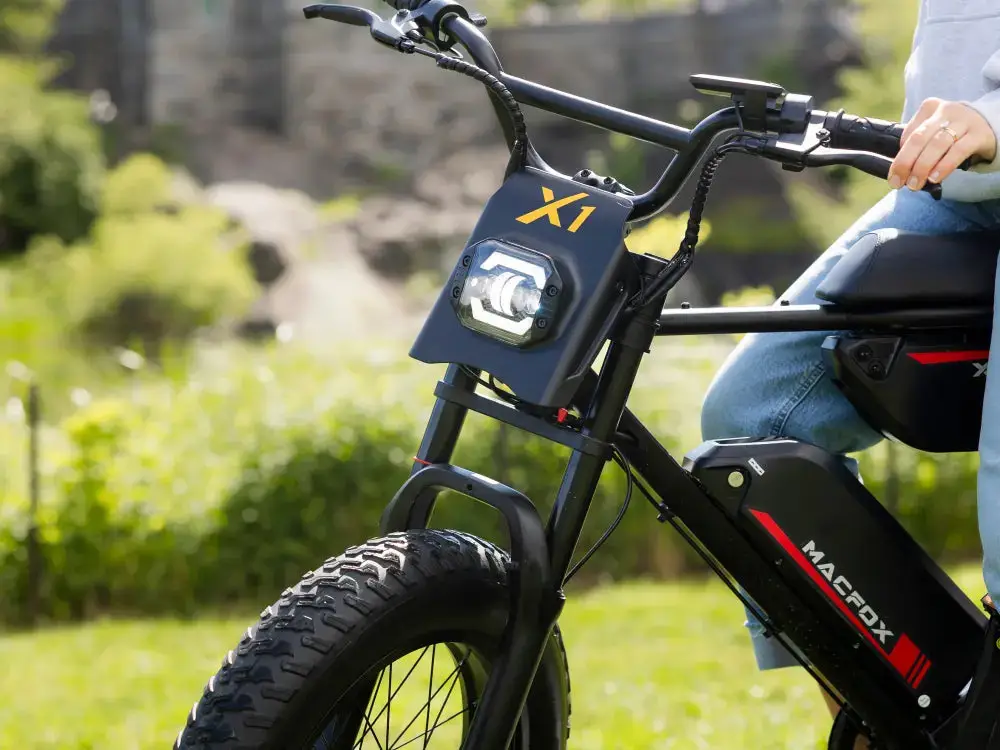
An electric bike is often the better fit when you want to sit down, pedal when it suits you, and prioritize riding comfort over compact storage. A standing electric kick scooter can make more sense when storage space and frequent transitions on and off the vehicle matter most. Neither choice automatically wins on range, cost, or convenience.
Consider the whole journey: how the ride feels, how much room you have afterward, and what you will need to keep the vehicle running.
Sitting or Standing Changes the Experience
A seated riding position gives you support without requiring you to stay on your feet throughout the trip. That can make an ebike appealing for outings that feel too long to stand comfortably. But the seat alone does not settle comfort: your reach to the handlebars, leg position, and access to the brakes still need to feel natural.
A standing scooter can be convenient for short journeys with frequent stops. You remain on your feet, balancing and responding to movement through your legs. Some people enjoy that active stance; others prefer a seat.
Compare how each feels through starts, ordinary turns, and stops, not just while stationary. A position that feels fine for a moment may be less appealing when held for the entire journey.
Street Surfaces and Stop-Start Control Matter
Larger wheels generally roll over small surface changes more smoothly. That can favor an ebike on uneven pavement, but wheel size is only part of the picture. Some standing scooters have suspension, while tire construction and pressure affect both categories. Wide tires are not a guarantee of better grip, shorter stopping distances, or comfort everywhere.
Look for predictable acceleration and brakes you can use comfortably. A vehicle that responds abruptly to a small input may take more familiarization, regardless of whether you sit or stand. Potholes, broken edges, and abrupt changes in pavement deserve attention on either vehicle.
Peak power and top speed do not tell you which will feel more manageable between intersections. Red-light waits also affect travel time, so a faster advertised maximum may matter less than smooth starts, controlled stops, and convenient parking.
Compare Usable Range, Not the Biggest Claim
There is no reliable rule that ebikes always travel farther or scooters always need charging sooner. Battery capacity, speed, load, hills, and how much assistance you request all influence the result. Advertised distances are only useful comparisons when the test conditions are reasonably similar.
Choose enough range for the travel you actually expect, with room for an extra stop or a change of plan. An ebike’s pedals offer a way to keep moving without motor assistance, but pedaling a heavy bike with an empty battery may be hard work. Treat that as a fallback, not a reason to buy too little usable range.
Charging also needs to fit your day. A removable battery may let you bring only the pack to a charging location, but removal depends on the model. Otherwise, the whole vehicle needs access to a suitable charging space. Consider charging time and use a manufacturer-approved charger rather than assuming any connector that fits will work.
Folding Helps With Space, Not Necessarily Weight
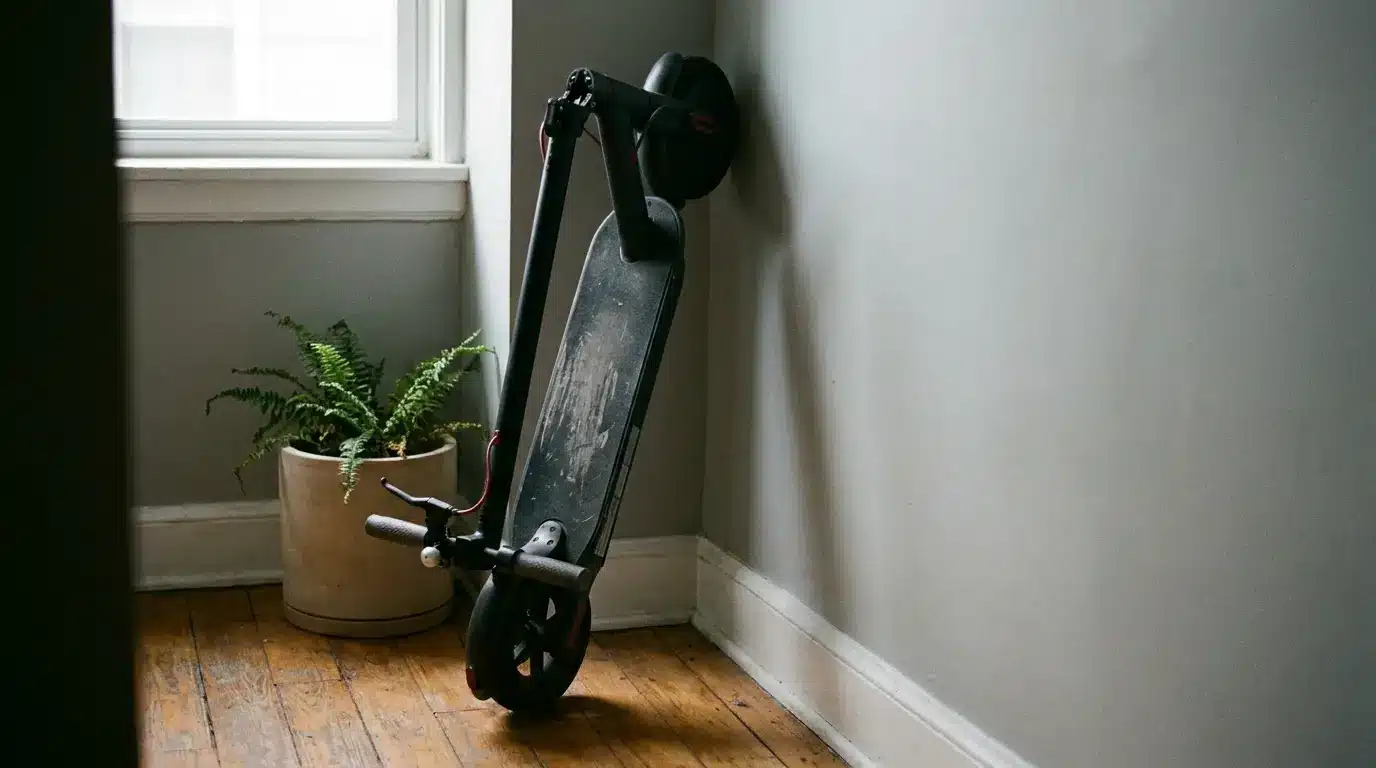
This is where a folding scooter can have a clear practical advantage. A folded stem can reduce the space it occupies when parked or carried. That may be more valuable than a seat when storage space is tight.
Folding does not make a vehicle lightweight, though. A substantial scooter can still be awkward on stairs, while an ebike’s size can make it difficult to maneuver even before you lift it. Compare actual weight, folded dimensions where relevant, and how comfortably you can hold the vehicle.
Some ebikes fold too, so this is a design comparison rather than an absolute difference between categories. For public transportation, the operator’s rules determine whether either vehicle is permitted and how it must be carried. Being able to fold it does not automatically grant access.
Count Maintenance Alongside the Purchase Price
Compare the prices of specific vehicles rather than assuming one category is always cheaper. The less expensive purchase may not be the less expensive one to own if replacement parts are difficult to obtain or routine repairs require specialist labor.
An ebike has a pedal drivetrain that needs attention alongside its tires, brakes, and electrical system. A standing scooter avoids that pedal drivetrain but still needs mechanical maintenance. Tire replacement, brake servicing, and access to batteries or electronic parts depend on the design; neither category is maintenance-free.
Electricity is another running cost, but it should not distract from battery replacement and repair support. At an illustrative rate of $0.20 per kilowatt-hour, 500 watt-hours costs $0.10 before charging losses. The amount of energy you add and your local electricity rate determine the actual bill. Ask about the price and availability of a replacement battery, tires, and brake service before comparing long-term costs.
For either vehicle, look for certification covering the electrical system: UL 2849 for ebikes and UL 2272 for electric scooters. A claim about a certified individual component is not the same thing. Service support and an appropriate system certification are worth considering alongside the purchase price.
Which One Fits Your City Travel?
Favor a standing scooter when its compact folded size genuinely solves a storage or carrying problem and you are comfortable riding on your feet. Favor an ebike when seated riding and the option to pedal are worth the extra space it may require. The right tradeoff depends on what happens both during and after the ride.
For someone choosing a commuter ebike for regular city travel, the Macfox X1S pairs an extended seat with a thumb throttle. The seated layout may suit a rider who prefers not to stand for the journey, while the throttle lets them request motor power without rotating the grip. Try the seating position and control reach together before deciding whether this layout suits you better than standing.
Choose the vehicle whose comfort, usable range, storage needs, and upkeep fit your routine. A scooter’s compactness only helps if you enjoy riding it; an ebike’s seated comfort only helps if you can comfortably manage it afterward. The better choice works both while you are moving and once you stop.