
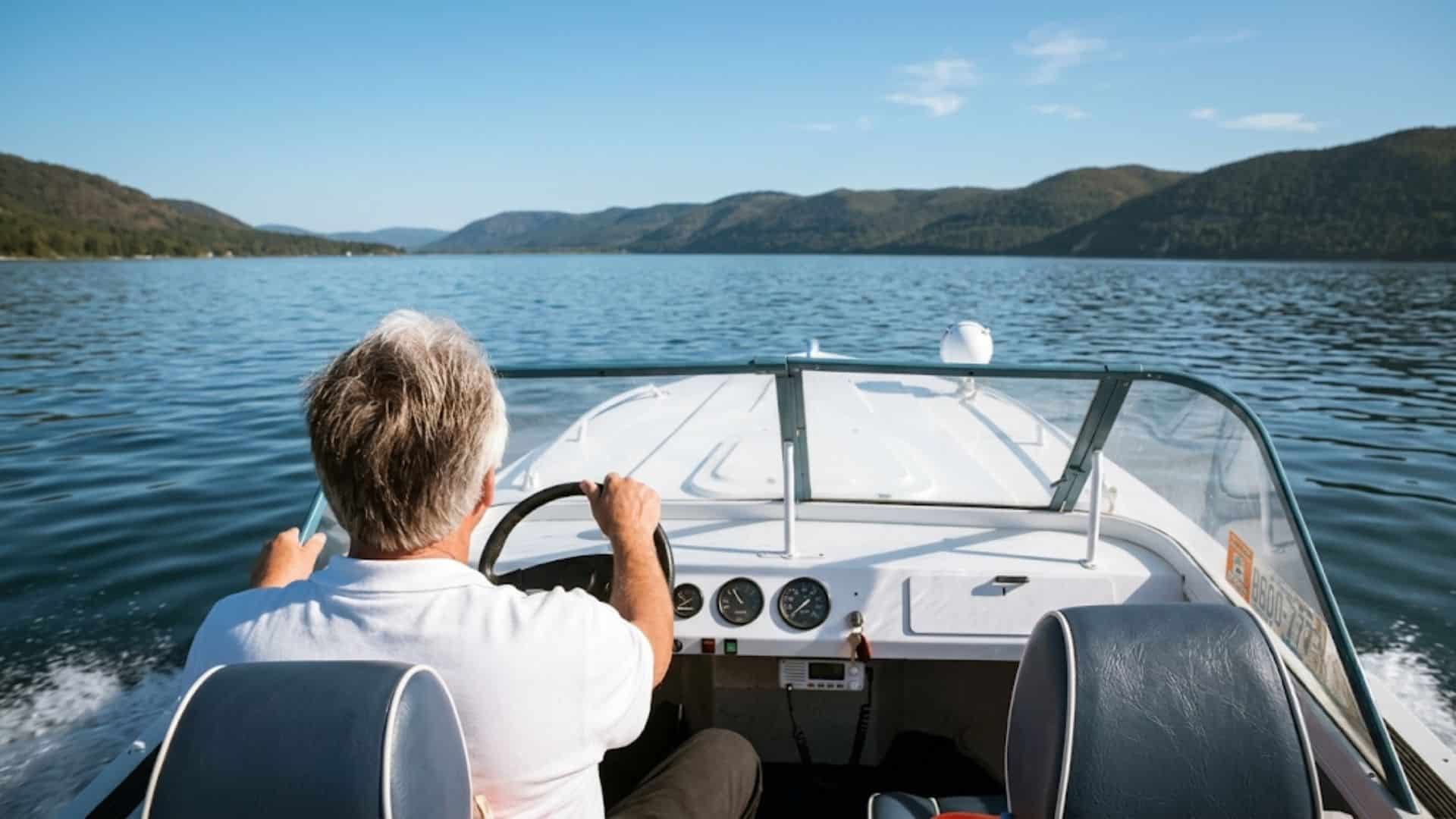
Driving a boat can be scary when you first sit down at the helm. But it is not that hard. The controls are much the same as a car.
You have a throttle that works like the gas pedal in a car and a wheel that works like the steering wheel.
But the catch is, boats don’t handle like cars; you don’t have brakes on a boat. The wind and the current can push your boat around, so you need to be ready for that.
Below are some steps to help you get started with driving a boat, turning it, and stopping it with confidence.
Pre-Departure Safety Checklist
|
How to Drive a Boat: Steps to Know
Every boat trip begins in the same way. To get to the open water, you need to follow some simple steps.
Step 1: Start The Engine Safely
To start the boat engine safely, you need to run the blower for a few minutes if your boat has an engine compartment.
Before you press the start button, clip the kill switch to your life jacket first, since most boats will not start or will shut off immediately if it is not attached.
The kill switch is important because it cuts the boat engine if you leave the helm.
Step 2: Confirm The Throttle Is In Neutral
Confirm the throttle is in neutral. Most boat engines will not start unless the throttle is in neutral first. If you turn the key and nothing happens, you should check the throttle before you do anything.
Step 3: Remove The Dock Lines
Remove the dock lines. You need to untie every line that is securing the boat to the dock. Double-check that none of the lines remain caught on a cleat before you shift the boat into gear and pull away from the dock.
Step 4: Shift Into Gear And Steer Away
To move the boat forward, you need to push the throttle gently. If you want to move the boat backward, you need to pull the throttle back.
Start at idle speed near the dock, since it’s the slowest setting and creates very little wake, which helps you avoid disrupting other boaters as you clear the marina.
Turn the wheel slowly. Keep your speed low near the dock or other boats. The boat will start to move.
Step 5: Increase Speed And Adjust The Trim
When you get out of traffic, you should slowly push the throttle forward a bit at a time. As the boat starts to go, you use the trim to raise or lower the bow.
Lowering the bow helps you get on plane as you accelerate, and trimming up once you’re planing lets the boat skim across the water more efficiently. This helps you control the boat, and it makes the ride much smoother.
Step 6: Slow Down When Needed
To slow down the boat, you need to pull the throttle to neutral first. Then, you should pause for a moment.
If you need to stop the boat, you can shift into reverse. Use just enough reverse throttle to bring the boat to a gentle stop, and always pause in neutral before shifting between forward and reverse since jumping straight between the two can damage the drivetrain on some boats.
Practice these steps a few times, and steering, docking, and slowing down will start to feel natural.
Refer to Jack Wood Builds to learn more about riding a boat safely and using proper techniques.
Types of Boats and How Their Controls Differ
Not every boat handles the same way, and the steps above are written mainly for a motorboat with a wheel and a single throttle. Here’s how a few common types differ:
- Outboard motors: The motor sits on the exterior of the boat rather than inside the hull, so there’s no engine compartment to vent before starting. Smaller outboards are often steered with a tiller instead of a wheel, twisting the handle to control speed and pushing or pulling it to steer.
- Pontoon boats: A best pontoon boats shopping list will tell you these flat-bottomed boats offer plenty of deck space, but the shallow draft makes them slower and less maneuverable than a deep-hull boat, which is worth knowing before you try a tight turn.
- Powerboats: These can reach high speeds quickly, which makes sharp turns riskier. Ease off the throttle and watch your trim before turning at speed to avoid capsizing.
- Sailboats: Powered by wind rather than an engine, sailboats add rigging and sail trim to the mix and generally take longer to learn than a motorboat.
- Personal watercraft (PWCs): Jet skis and similar craft respond quickly but have no brakes either, and most states set separate age requirements and safety course rules for operating one.
Boating Terms Beginners Should Know
Before you get behind the wheel, there are some important terms that you should understand. These words appear all the time on the water, and understanding them makes every instruction easier to follow.
- Bow, Stern, Port, Starboard: The front of the boat is referred to as the bow, while the back side is called the stern. If you are facing forward, the left side is known as port and the right is called the starboard.
- Throttle and Trim: The throttle is similar to the gas pedal in the car; it helps to control how fast the boat moves. The trim helps control the angle of the bow to give the boat a smooth ride.
- Kill Switch: A very small device that you hook onto your life jacket; once you leave the helm, the kill switch cuts off the engine, bringing the boat to a stop.
- Wake and Planing: When a boat moves through the water, it leaves behind a wave called the wake. As the boat picks up speed, it starts to rise and skim across the top of the water as it pushes through the water; this is called planing.
- Mooring Lines and Cleats: Mooring lines tie your boat to the dock. Cleats are the metal fittings on the dock or boat where these lines get secured.
These five terms cover most of what you will hear at the dock or on the water. Once they feel familiar, the rest of this piece falls into place easily.
Understanding Boat ControlsBefore you head out on the water, get familiar with the three controls you will rely on most. The throttle controls the boat’s speed: move forward to accelerate and backward to slow down. The kill switch, attached to your life jacket, stops the engine if you leave the helm. The steering wheel or tiller controls direction, but wind and current can affect how the boat moves. Once these three controls feel familiar, operating the craft becomes second nature. Practice each one in calm water first, so you are ready to respond the moment conditions change. |
Steering a Boat
Steering a boat looks easy until the wind and water get in the way. These two things will help you avoid the mistakes many new boaters make.
Turning The Wheel: When you turn the wheel on a boat, it does not move away as a car does. There is a delay, so you should start turning a bit earlier than you would if you were driving on land. Speed matters too. Tight turns are easier at slower speeds, and pushing a hard turn at high speed can put you at risk of capsizing.
Why Wind and Current Change Your Turn: The wind and water are always pushing against the boat. This means that a turn that works well in calm water might need some extra help when the wind and water are stronger.
When you get used to waiting a bit and paying attention to the wind and water, steering a boat becomes very natural.
Speeding Up and Slowing Down Without Brakes
Boats do not stop the way cars do. This section explains how to control speed safely, using the throttle correctly instead of relying on brakes that do not exist. Use the throttle with small, steady movements when accelerating.
Sudden speed changes can make the boat harder to control. Boats do not have brakes like cars. They slow down by reducing throttle and using reverse when needed.
To slow safely, shift to neutral, pause briefly, then use reverse if required. Small adjustments help protect the engine and improve control.
Boats also do not have seatbelts, so any sudden change in speed or direction can throw passengers off balance or knock them off their feet. Warn everyone on board before making a quick maneuver, and keep speed changes gradual whenever you have the room to do so.
When you spot a large wave or another boat’s wake ahead, aim to cross it at roughly a 45-degree angle instead of head-on. This spreads the impact more evenly and lowers the chance of the bow slamming down hard or the boat catching air.
Docking a Boat
Docking a boat is often the most stressful part of a trip for new boaters, but breaking it into a few steps makes it far more manageable.
- Approaching The Dock Slowly: People usually make mistakes when docking a boat. You should slow down your boat well before you get to the dock, and approach at a slight angle rather than head-on. Fenders hung along the side you’re docking against will protect the hull from scratches and dents if you misjudge the distance.
- Using Reverse to Stop: Use reverse to stop near the dock. Shift to neutral first, then briefly into reverse. Use short bursts of throttle, not one long push.
Let the boat’s momentum slow naturally before adding reverse power.
If you are backing into a slip or a tight space, keep the wheel straight, move slowly, and turn to look behind you as you go. A second person acting as a spotter makes this much easier.
How to Get a Boating LicenseRequirements vary widely, so check your state’s boating authority before assuming you need or don’t need one. Most states require a safety course, followed by an exam, then a certificate you carry while boating. Some states also set a minimum operator age, commonly in the 12 to 16 range, with younger riders sometimes allowed under direct adult supervision. Look for NASBLA-approved courses to make sure your certificate is recognized and valid in your state. Online courses offer flexibility and self-paced learning, while in-person classes give hands-on practice and direct instructor feedback. |
Right-of-Way Rules on the Water
According to the Navigation Rules, understanding right-of-way rules helps boaters avoid confusion and prevent collisions. These rules determine which vessel should maintain its course and which one should give way in different situations.
- Head-On Situation: When two boats approach each other directly from opposite directions, both vessels should alter their course to the right (starboard) side. This allows both boats to pass safely on each other’s left side.
- Crossing Situation: When two boats are crossing paths, the vessel with the other approaching from its starboard (right) side is the give-way vessel and must slow down, change direction, or stop if needed. The other boat is the stand-on vessel and should maintain a steady course and speed.
- Overtaking Situation: When one boat approaches another from behind, the overtaking boat is always the give-way vessel, no matter which side it passes on. The overtaken boat should maintain its course and speed unless a safety issue requires action.
Sound signals help you communicate your next move to other boaters: one short horn blast means you’re turning to starboard, two short blasts mean you’re turning to port, and five short blasts are a danger signal telling the other boat you don’t understand or agree with its intentions.
These rules are easy to understand. They are important every time you go on the water. If you follow the rules all the time, your trips on the water will be fun and safe for everyone who’s with you on the water.
Final Thoughts
Driving a boat comes down to a few basics: know your terms, follow the steps in order, and stay steady on the throttle and wheel. Controls, steering, docking, and slowing down all get easier with a little practice on the water.
Do not skip your safety checklist or the rules that keep everyone on board protected. If your state requires a license, get certified through an approved course before you head out.
Ready to take the wheel? Start with a short trip on calm water, run through your checklist, and build your confidence one step at a time.
Frequently Asked Questions
Do I Need a License to Drive a Boat?
Requirements vary by state, so check your local boating authority to confirm what’s required before you head out.
Is Driving a Boat Hard for Beginners?
Not really. Controls are simple once you know them, and most people feel comfortable after a little practice.
What is the First Thing You Do When Driving a Boat?
Run the blower if needed, then start the engine and clip on the kill switch before moving.
What Should I Do if I Feel Unsure While Driving a Boat?
Slow down immediately. Reducing speed gives you more time to react and regain control safely.
What is the Easiest Type of Boat to Learn On?
Small outboard motorboats between 10 and 20 feet are generally the easiest for beginners. Pontoon boats are also forgiving since they’re stable, though their shallow draft makes them a bit slower to maneuver.