
Rolling up to a marina for the first time, keys jangling, is when most boaters realize the paperwork uses words nobody actually explained.
“Slip number 14B” sounds official, but what does that even mean if the only mooring experience so far has been tying a rope to a random post at a friend’s lake house?
Getting this wrong isn’t just embarrassing: it can mean a boat that doesn’t fit, a scraped hull, or a wasted trip to the wrong pier.
Here’s the plain-language breakdown of what a boat slip is, how it differs from a dock, what it actually costs, and how to choose and maintain the right one for your boat.
What is a Boat Slip?
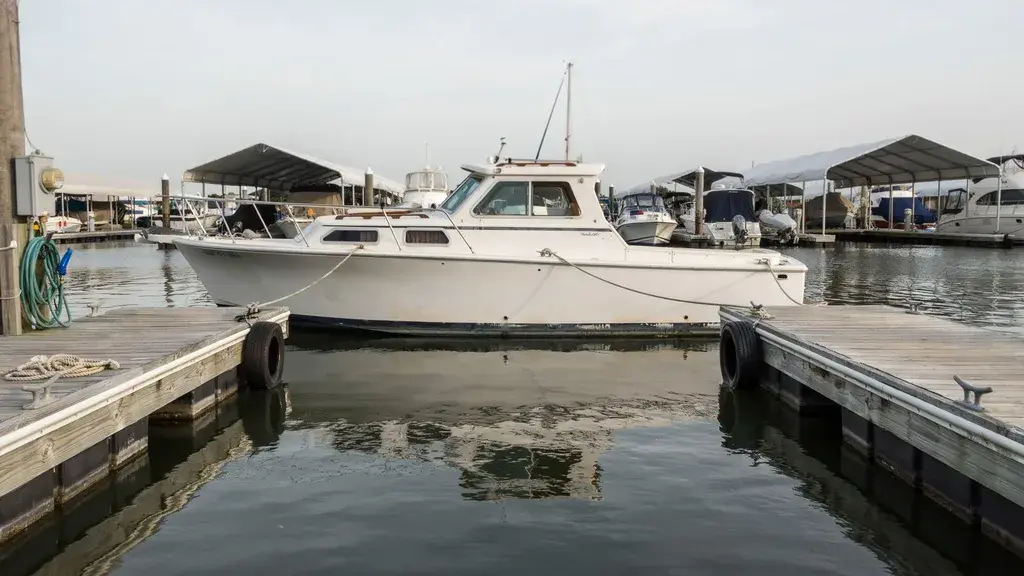
A boat slip is a designated, numbered parking spot for a boat at a marina, usually rented by the month or season.
A boat slip is enclosed on three sides by piers or pilings, and a single boat moors between two parallel walkways.
Instead of tying up alongside an open platform, the boat noses straight into the space, similar to backing a car into a garage stall.
A related term worth knowing is “berth,” which port and harbor staff use for any designated mooring location, including slips. Most boaters will only ever need the word slip, but berth shows up often enough in marina paperwork and larger harbors that it’s worth recognizing on sight.
| Part | What It Does |
|---|---|
| Pilings | Anchor the whole structure to the lake or seabed |
| Finger piers | The narrow walkways running along each side of the boat |
| Cleats | Metal fittings where mooring lines get tied off |
| Bumpers | Rubber or foam padding that stops hull-to-pier contact |
Marina layouts like this follow established marina design and siting standards for pilings, piers, and finger walkways.
Wet Slip vs Dry Slip
Most people picture a “wet slip”; the boat stays in the water year-round, tied between the piers described above.
A “dry slip” (or dry rack storage) keeps the boat out of the water on a rack or trailer, and staff launches it on request.
Dry slips cost less and avoid hull fouling, but they’re only practical for smaller boats.
Once the term itself is out of the way, the natural next step is lining it up against the word people use just as often: dock.
Slip vs. Dock: What’s the Difference?
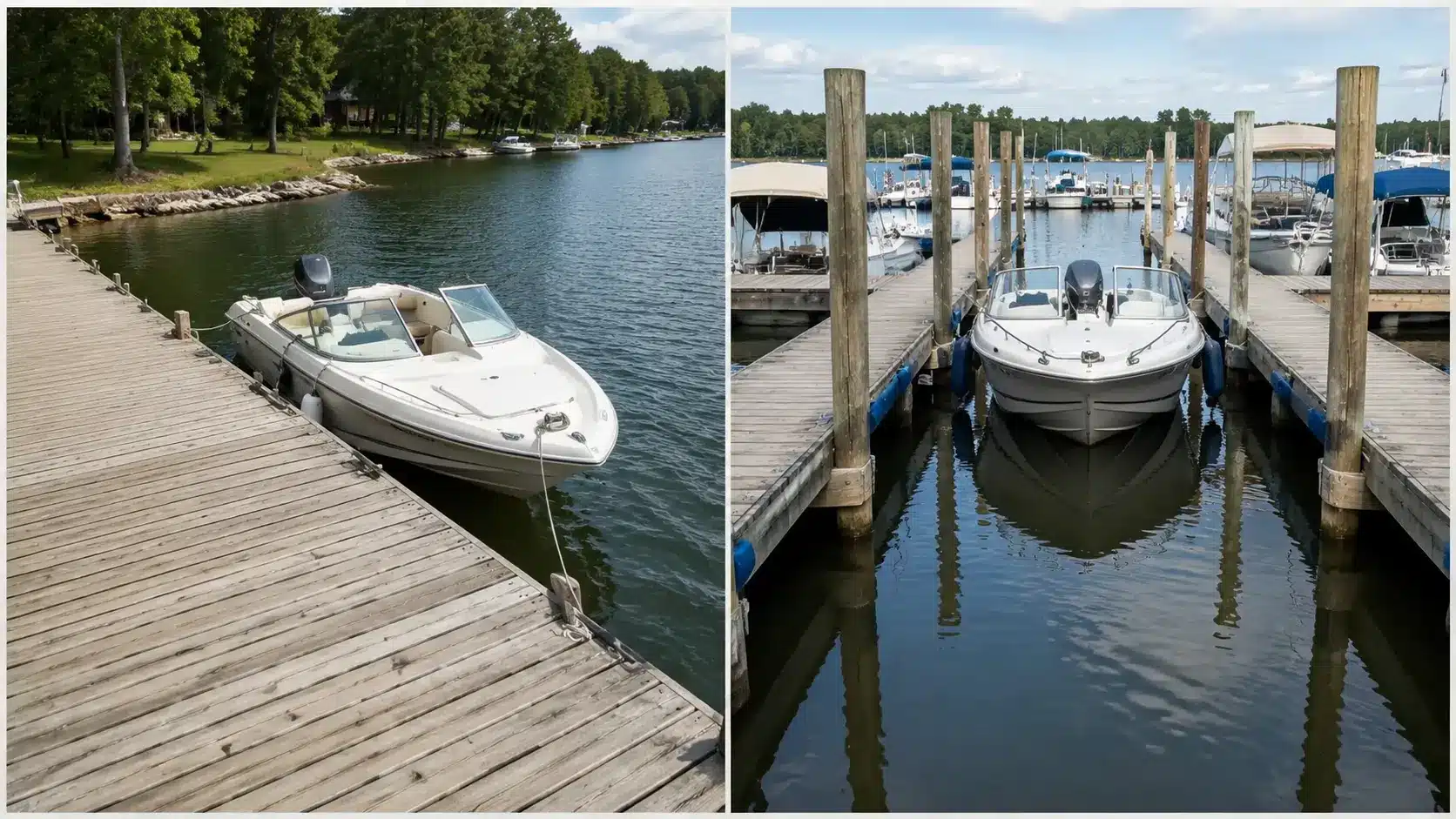
These two get used interchangeably at the lake, but the physical setup underneath them isn’t the same at all.
| Feature | Boat Dock | Boat Slip |
|---|---|---|
| Entry design | Open on three sides for easy entry | Closed on three sides for secure entry |
| Boat position | Boat sits parallel along one side | Boat sits straight between two piers |
| Protection | Gives less protection from wind and wake | Gives more protection from wind and wake |
| Shoreline space | Needs more shoreline space per boat | Needs less shoreline space per boat |
| Common use | Common at private lakefront homes, especially for boats built for lake use | Common at busy marina locations |
It’s worth knowing that in parts of the South and Midwest, marina staff sometimes use “dock” and “slip” loosely to mean the same thing, so the terms can shift a little depending on the region.
The structural difference above is the technical version, and it’s what to go by when reading a lease or sizing a boat for a space.
Structural terms sorted, the follow-up question every boater eventually asks is which setup actually wins.
Which One Should You Choose?
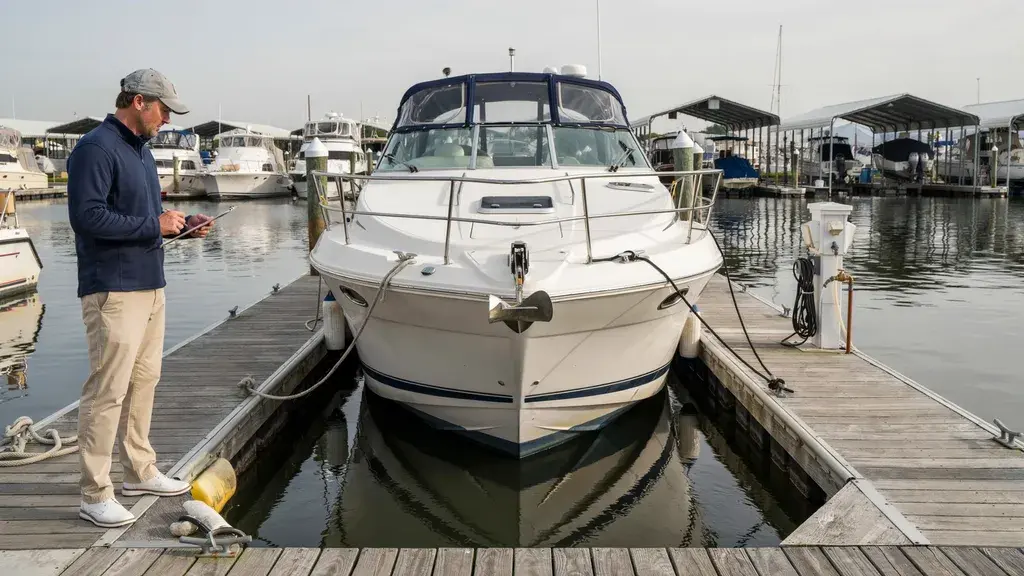
There isn’t a single right answer; it comes down to where the boat lives and how it gets used.
A slip makes sense when:
- Traffic at the marina is heavy, and bumping is a real risk
- More than one boat needs a home
- Wave and wind protection matters more than upfront cost
A dock makes sense when:
- The waterfront is private and calm
- Budget is tight
- The space needs to double as a hangout spot, not just parking
Neither setup is objectively superior; it’s really a question of matching the structure to the water it sits on, which leads straight into the practical side of choosing one.
Picking the Right Boat Slip
Getting a slip wrong usually shows up the first time the boat tries to fit into it.
☐ Check water depth clears the propeller, even at low tide
☐ Measure the slip against the boat’s full beam width, not just its length
☐ Confirm shore power and water hookups if the boat needs them
☐ Look at finger pier height relative to the boat’s deck
☐ Ask whether a covered slip is available for weather protection
☐ Read the lease terms carefully if renting from a public or private marina, since slip and dock construction falls under federal permitting rules
With sizing and paperwork covered, the next question that usually comes up is whether renting or owning that slip makes more sense.
Renting vs. Owning a Slip
Most first-time boaters rent, and for good reason.
Renting keeps things flexible if plans change, you buy a bigger boat later, or a different marina turns out to be a better fit.
Buying a slip makes more sense for boaters who plan to stay in one spot long-term, own a larger vessel, or boat in a coastal market where slips are genuinely scarce and waiting lists are common.
Slip ownership can also work like a small property investment; some owners sublet the space when they’re not using it, though that usually requires marina approval first.
Either way, it helps to visit the marina in person before committing, walk the actual pier, and confirm what’s included in the fee versus what gets billed separately.
What a Slip Actually Costs
Slip rental is typically priced by the linear foot of the boat or the slip itself, whichever the marina’s policy defaults to.
A rough example: at a rate of $20 per foot per year, a 25-foot boat runs about $500 annually, while a 30-foot boat runs closer to $600, though coastal marinas in high-demand areas often charge considerably more than inland lakes.
Location, utility hookups, and whether the slip is covered all move the price up or down, so it’s worth asking for an itemized quote rather than a flat monthly number.
How Each One Gets Used Day to Day
Beyond the structural talk, the real test is what happens once the lines are tied.
Slips typically handle: Overnight and long-term marina storage, fast in-and-out access for regular boaters, and on-site gear storage like life jackets or rods.
Docks typically handle: Weekend lounging and entertaining, swimming or fishing off the edge, and single-boat parking for private homeowners on a budget.
Some slips also use a boat lift underneath the boat, which raises the hull above the waterline between outings. It gives a wet slip easy, walk-on access while keeping the hull out of the water the same way dry storage does, which cuts down on the marine growth that comes with sitting in a slip full-time.
Keeping a Boat in a Slip: Basic Maintenance
Keeping a boat in a slip requires regular care to prevent damage, maintain performance, and protect important parts from water exposure.
-
A boat kept in a wet slip full-time needs more upkeep than one that is trailered home after every trip.
-
Apply anti-fouling paint to the hull to reduce algae and barnacle buildup, especially for boats that stay in the water between outings.
-
Check zinc anodes every few months. These small sacrificial metal pieces protect expensive boat components by corroding before the boat’s important metal parts.
-
Schedule regular hull cleaning by a diver or during a short haul-out to remove buildup from the bottom. A clean hull helps maintain fuel efficiency and keeps the boat performing properly.
-
Inspect the bilge pump regularly since a boat sitting in the water depends on it to remove rainwater and handle small leaks.
-
Check dock lines, cleats, and fenders periodically to keep the boat secure and protected while tied to the slip.
-
Keep an eye on electrical connections, batteries, and other systems because constant water exposure can speed up wear over time.
Consistent slip maintenance keeps your boat cleaner, safer, and ready for every outing while reducing costly repairs over time.
Conclusion
A slip and a dock are really just two different answers to the same question: where does the boat rest when it’s not out on the water?
A slip is enclosed on three sides for extra protection and structure, while a dock is a simpler, open platform that’s usually more affordable to build.
Neither one beats the other across the board; it depends entirely on the waterfront, the boat, and the habits of whoever’s docking it.
Once that call is made, details like hookups, covers, rent-versus-own, and lease terms tend to fall into place.
And once the boat’s actually tied up and squared away, brushing up on a basic sailboat terminology guide or the correct boat-side terms makes the rest of the marina a lot less confusing.
Frequently Asked Questions
Why Do They Call it a Boat Slip?
The boat “slips” straight into an enclosed stall, unlike sliding alongside an open dock edge.
What Is the Average Cost for a Boat Slip?
Monthly rates vary widely by region and boat size, often running higher near coastal marinas, and pricing is usually calculated by the linear foot of the boat or slip.
Can You Live on a Boat in a Slip?
Many marinas allow liveaboards in slips, though permits and utility hookups depend on local rules.
What Is Cheaper than a Slip?
Mooring buoys or dry rack storage usually cost less than a full slip rental.
Is a Slip the Same Thing as a Berth?
Not exactly. Berth is the broader term ports and harbors use for any designated mooring spot, while a slip specifically describes the three-sided, enclosed layout common at marinas.