
Ever tied a knot on the water, only to watch it slip loose at the worst moment?
Most paddlers know a few boating knots but freeze up when it’s time to pick the right one fast, whether it’s a bowline for a secure loop, a cleat hitch for docking, or a clove hitch for a mooring line.
Even if you’ve never touched a boat, you’ve probably fumbled with a knot before, tying down a tent or hanging a hammock in the backyard.
After twelve years on boats, rafts, and docks, I know firsthand that a rushed knot can turn a simple task into a headache.
So grab your rope, and let’s get you tying knots you can actually trust.
What Are Boating Knots
Boating knots are specific ways of tying rope that help you dock, anchor, tow, or secure a boat safely on the water. Each one serves a different job, and picking the right knot for the right task keeps you and your gear secure.
Why they matter:
- They keep your boat in place while docking, anchoring, towing, or mooring.
- Good rope handling is a core safety skill every boater needs.
- Knots, bends, and hitches aren’t the same: knots shape a single line, bends join two lines, and hitches attach a line to an object.
- A knot should hold strong under load, yet release fast when needed.
Boating Knots Every Boater Needs to Know
Good knots keep your boat, your gear, and sometimes you safe on the water.
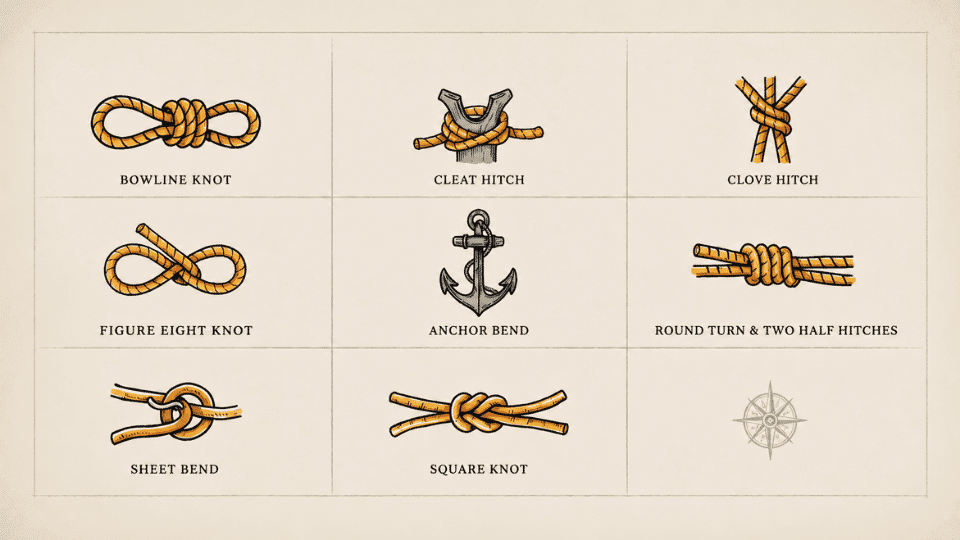
Most boaters only need five to eight knots for docking, anchoring, and joining lines.
Beginners should start with simple, repeatable ties, since muscle memory matters more than variety. Learn the basics, then practice until they’re second nature.
Bowline Knot
This knot forms a fixed loop that won’t slip or jam, even under heavy strain. It’s the go-to choice for mooring lines, rescue situations, and anywhere you need a dependable loop that still comes apart easily once the pressure’s off.
Cleat Hitch
Wrap the line around the cleat base, cross it in a figure-eight pattern over the horns, then lock it with a loop. It’s fast to tie and release, making it the standard knot for securing your boat at the dock.
Clove Hitch
Best for quick, short-term ties around a post, rail, or piling. It holds well under steady tension but can slip loose if the line shifts, so skip it for anything load-bearing or long-term.
Anchor Bend Knot
The anchor bend attaches your line directly to an anchor ring or shackle, holding tight under strain while still untying easily. Unlike the bowline’s simple loop, it grips the ring itself, making it the better choice for anchor work.
Figure Eight Knot
When tied at the end of a rope, this knot prevents it from sliding through a block, cleat, or chock. It’s simple, quick, and one of the first knots most sailors learn.
Square / Reef Knot
Used to join two lines of equal thickness for tasks such as securing gear, furling sails, or towing. It ties and unties easily, but skip it for critical loads or lines under heavy tension since it can slip or capsize unexpectedly.
Sheet Bend
When your lines are different sizes or materials, the sheet bend joins them securely. It’s more reliable than a square knot in that situation and still easy to release afterward.
Round Turn and Two Half Hitches
A strong, adjustable option for mooring or securing a line to a post. The extra turn spreads out the load, giving you a knot that holds firm yet loosens easily when you’re ready to cast off.
Knot-Tying Terms Worth Knowing
Before you start tying boating knots, it helps to know the parts of a rope you’re working with. Some of the terms that you’ll come across often are:
- Standing end (or standing part): The main length of rope that isn’t being actively tied, usually holding the load
- Working end (or tag end): The loose end you move to form the knot
- Bight: A loop or bend in the rope where two parts run parallel without crossing
- Bitter end: The very last inch of rope, often secured to a cleat, post, or bitts
Once these terms feel familiar, tying boating knots gets a lot easier to follow, and so does any video or diagram you use for practice.
How to Tie Essential Boating Knots
Every time you head out on the water, a few reliable knots can make the difference between a boat that stays put and one that drifts off without you. So let me give you four knots worth learning by heart.
Bowline Knot
Step 1: Make a small loop in the rope, a couple of feet from the end.
Step 2: Push the working end up through the loop.
Step 3: Bring the working end around behind the standing line.
Step 4: Feed the working end back down into the loop.
Step 5: Hold the loop steady and pull the standing part to cinch it snug.
Done correctly, this knot holds strong under load and still unties with ease.
Video Credits: NightHawkInLight
Cleat Hitch
Step 1: Start with a full turn around the base of the cleat.
Step 2: Cross the line over the top of the cleat.
Step 3: Loop the line around each horn to form a figure-eight pattern.
Step 4: Finish with an underhand loop over the last horn.
Step 5: Pull the line tight to lock it in place.
This keeps the boat snug at the dock, even with shifting tides.
Video Credits: Maryland School of Sailing
Clove Hitch
Step 1: Wrap the rope once around the rail or post.
Step 2: Cross the rope over itself.
Step 3: Wrap the rope around the rail or post a second time.
Step 4: Slip the tag end under the last wrap.
Step 5: Pull both ends to lock the knot in place.
Tying a clove hitch knot comes in handy for fenders, but skip it for anything heavy-duty.
Video Credits: Adlard Coles
Figure Eight Knot
Step 1: Make a loop in the rope.
Step 2: Twist the working end around the standing line.
Step 3: Feed the working end back through the loop.
Step 4: Pull both ends until the rope forms a neat figure-eight shape.
This stopper keeps your line from slipping through a chock or pulley.
Practice these knots on dry land until your hands know them without thinking. That muscle memory pays off the moment you’re out on the water and need a knot fast.
Video Credits: REI
The Best Knots for Different Types of Boats
The right knot depends on the type of boat and how you plan to use it.
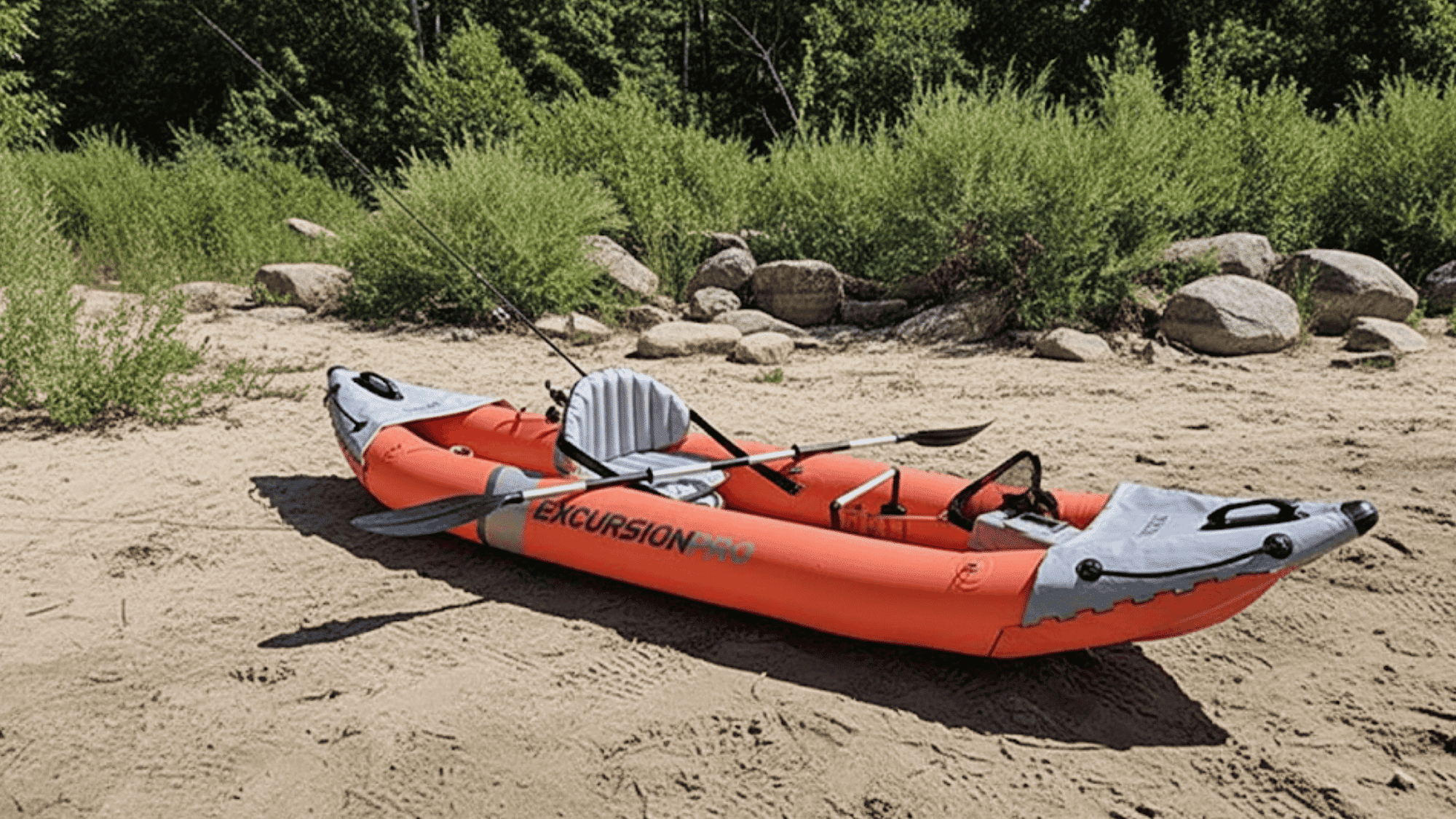
Kayakers often rely on simple, secure knots like the figure-eight and half-hitch for tying down gear and securing throw ropes.
Sailboats require stronger rigging knots, with the bowline being a key choice because it creates a reliable loop that stays secure under heavy loads.
A cleat hitch is also commonly used on sailboats for docking because it is easy to tie and release when needed.
Powerboats typically use the cleat hitch for docking, while a round turn with two half hitches is useful for securing lines to pilings, rails, or other points when a cleat is not available.
Rope Material and Knot Choice
Not all rope behaves the same way, and picking the right knot starts with knowing what you’re tying. The common rope types and the knots that work best with each other are as follows.
| Rope Type | Key Trait | Best Knot Match | Watch Out For |
|---|---|---|---|
| Nylon | Stretches under load, absorbs shock | Bowline, Cleat Hitch, Clove Hitch | Stretch can loosen knots over time; UV weakens it |
| Polyester | Low stretch, holds knots well | Figure Eight and Cleat Hitch are the most standard knots | Slightly less shock absorption than nylon |
| Polypropylene | Lightweight, floats, budget-friendly | Cleat Hitch, Clove Hitch (with care) | Slippery surface lets knots loosen more easily; melts from friction |
| Polyethylene | Very light, floats, cheap | Basic hitches for light loads only | Quite slippery, so knots slip more; not for critical loads |
| Manila (natural hemp) | Traditional, good grip when dry | Bowline, Clove Hitch | Shrinks 10–15% when wet, making it hard to untie; doesn’t float |
| Dyneema (HMPE) | Very strong but slippery | EStar Stopper, Water Bowline | Standard knots slip or roll under load |
Once you know your rope, the right knot becomes second nature, keeping your boat secure every time you head out.
Pro Tips for Mastering Boating Knots Faster
- Start with the basics: bowline, cleat hitch, clove hitch, figure eight, and sheet bend. These cover most on-water jobs.
- Practice on dry land first. A calm kitchen table beats a rocking boat.
- Repetition builds muscle memory faster than just reading about knots.
- Try tying knots with your eyes closed once you’re comfortable. It’s a fun way to check real confidence.
- Keep a rope scrap in a bag or car for quick practice anytime.
- Watch short tutorials alongside hands-on practice to speed things up.
Quick Reference Table and Pro Tips for Mastering Boating Knots Faster
Every boater needs a handful of reliable knots for docking, anchoring, and everyday tasks on the water. A quick reference for the most useful ones and when to use each is:
| Knot | What It’s For | How Strong/Reliable | Easy Tip |
|---|---|---|---|
| Bowline | Makes a loop that won’t slip (mooring, lifting) | High | Called the “king of knots”, it holds tight, unties easily |
| Cleat Hitch | Tying your boat to a dock cleat | Very High | The main knot for docking |
| Clove Hitch | Quick, temporary tie-off (fenders, posts) | Medium | Can slip loose, add a half-hitch for extra hold |
| Anchor Bend | Attaching rope to your anchor | High | Won’t slip even under heavy pull |
| Figure Eight | Stops a rope from sliding through a hole/pulley | High | Tie at the end of any rope that runs through hardware |
| Square (Reef) Knot | Joining two ropes of the same thickness | Medium | Good for light jobs only, not for heavy loads |
| Sheet Bend | Joining two ropes of different thicknesses | Medium | Better than a square knot when ropes don’t match in size |
Master these seven knots, and you’re set for anything the water throws at you. Practice them on dry land first, then take them out on your next trip.
Conclusion
You now have the knots that matter most: a bowline for a secure loop, a cleat hitch for docking, a clove hitch for quick holds.
Once your hands know the motion, you won’t have to think twice.
Keep a rope handy and practice a little each day. Boating knots are one of the simplest skills you can learn, yet they keep your boat, your gear, and you safe on the water.
So next time you’re at the dock, grab a line, tie a bowline, and feel it become second nature.
Frequently Asked Questions
Which Rope is the Strongest?
Most sailors have different ropework preferences, but bowlines for genoa clews and clove hitches for fenders are widely accepted choices.
What is a Trucker’s Hitch and When Do You Use It?
A trucker’s hitch works like a mini pulley in the rope, so you can pull it much tighter than a normal knot. Use it to strap a kayak or canoe to a roof rack or trailer so it stays put at highway speed.
What is a Prusik Knot?
A loop of cord that grips a thicker rope under tension but slides when slack, and is used for rescue setups or makeshift ascending.
Does Tying a Knot Weaken a Rope?
Yes, most knots reduce a rope’s rated breaking strength, sometimes by 20-50%, depending on the knot type.
How Do You Tow Another Kayak or Canoe?
Use a tow belt or tow rope with a quick-release system, joined with a sheet bend if the lines are different thicknesses.
How Do You Stop a Rope from Fraying at the End?
Melt the synthetic rope ends with a lighter, then use heat-shrink tubing, tape, or whip the ends with cord.