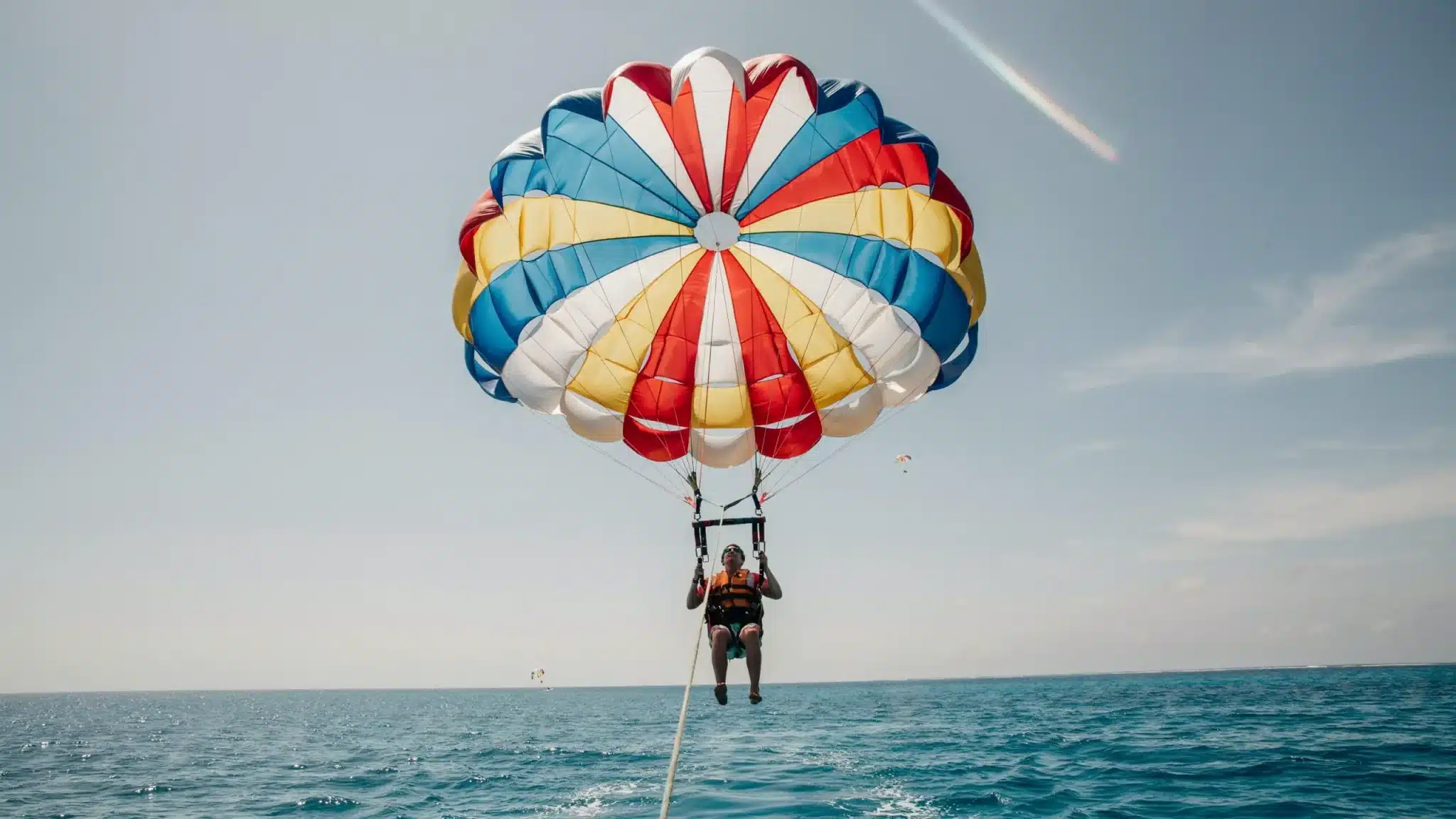
Most adventure activities have rules for a reason, and parasailing is no exception. Before you book a flight over the water, there are a few things worth knowing, and the parasailing weight limit is one of the most important.
It affects your safety, your experience, and whether you can fly at all. Everything ahead tells exactly how weight limits work, why operators set them, what happens if you are outside the range, and what your real options are.
Planning your first ride or your tenth, the answers here will help you show up prepared, not surprised. Get the full picture before you ever leave the ground.
Why Parasailing Has Strict Weight Limits
Parasailing weight limits are carefully determined, not arbitrary. They consider the parachute’s lift capacity, harness and rope load ratings, and the boat’s pulling power.
Each piece of parasailing equipment has a maximum tested load. Exceeding this weight increases the risk of equipment strain, unstable flights, and challenging landings. Operators establish limits to keep flights safe within their gear’s capabilities.
Weight limits can vary depending on factors such as wind speed, group size, and flight type. Recognizing the reasons behind these limits helps you handle them effectively
What Is the Standard Parasailing Weight Limit?
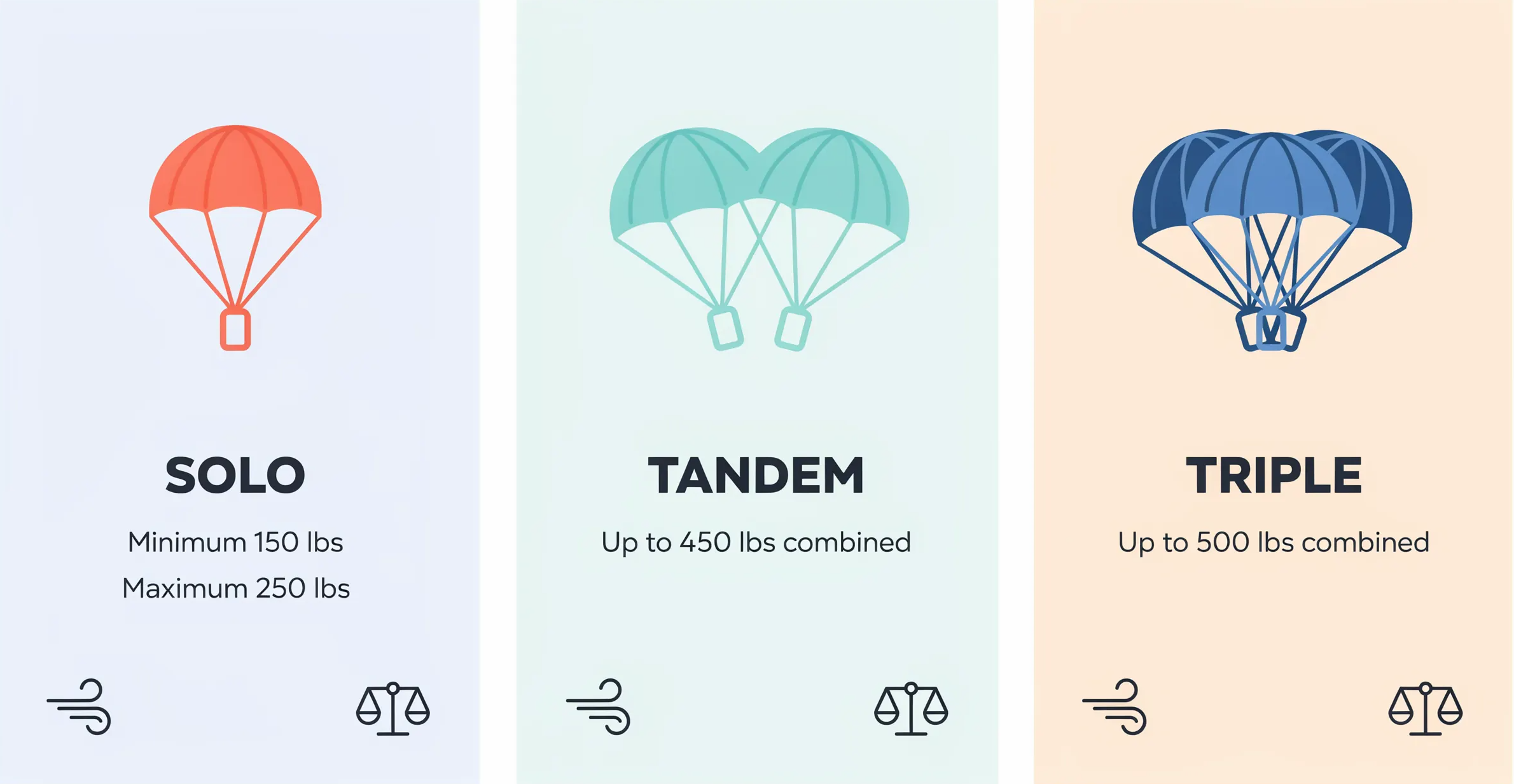
Most parasailing operators in the US set their limits based on equipment capacity, wind conditions, and manufacturer load ratings.
There are no federal weight-specific guidelines; limits are determined by each operator. There is no single universal number, but most fall within a consistent range across solo, tandem, and triple flight options.
How much the usable range shifts depends on wind conditions that day and the captain’s judgment. There is no fixed number. The captain reads the conditions at the dock and decides what the equipment can safely handle.
| Flight Type | Minimum Weight | Maximum Weight | Notes |
|---|---|---|---|
| Solo | 90-150 lbs | 300 lbs | Wind-dependent |
| Tandem | 150 lbs combined | 450 lbs combined | Most common option |
| Triple | 250 lbs combined | 420 to 500 lbs combined (captain-dependent) | Requires ideal wind. Final call is always the captain’s based on conditions that day. |
Always confirm the exact limits with your specific operator before booking, rather than assuming the numbers above apply everywhere.
Solo vs Tandem vs Triple: What Actually Works Near the Weight Limit?
Knowing which flight type works best for your weight situation before you arrive gives you a real advantage at the dock. Each option handles weight differently and suits different scenarios.
| Option | Best For | Key Condition | Near the Weight Limit? |
|---|---|---|---|
| Solo | Single riders near the upper end of the weight range | No partner variable; straightforward operator decision | Yes, if you fall within the solo range |
| Tandem | People near the limit who have a lighter partner | The combined weight must fall in a comfortable range | Most flexible option |
| Triple | Groups where tandem is unavailable | Good wind conditions and a specific combined weight range are required |
Not ideal. Ask only if tandem is off the table |
Tandem pairs should also think about weight distribution, not just the combined total. A large gap between two riders, such as one person at 280 lbs paired with someone at 120 lbs, can affect how the harness sits and how the wing balances during flight.
Most operators prefer pairs that are reasonably close in size. If there is a significant difference, ask the operator at the time of booking whether the pairing works with their equipment before you show up at the dock.
Understanding your options ahead of time reduces uncertainty at the dock, helping you choose the safest, most flexible parasailing setup for your weight and conditions.
Why Do Weight Limits Exist?
Weight limits in parasailing are not about discrimination or comfort preferences. They exist because every component in the system has a tested load rating that cannot safely be exceeded.
- Parachute wing lift: Generates lift based on wind speed and the weight below it. Too much weight and the wing struggles to rise cleanly.
- Harness and tow rope: Have maximum load ratings tested for safe operation. Exceeding them puts stress on the equipment mid-flight.
- Tow rope load capacity: The parasailing line is built to withstand up to 8,000 lbs of pressure. Under normal flight conditions, the load on the line rarely exceeds 800 lbs. Pushing above the weight limit quickly closes that safety margin.
- Boat engine power: Needs to maintain speed and control the pull. A heavier group adds drag that can affect takeoff and landing.
- Too little weight: Strong wind causes the wing to rise too fast and become difficult to control from the boat.
- Landing control: An overloaded wing loses maneuverability on the way down. The crew on the boat has less control over the descent speed and angle, which raises the risk of a rough or off-target landing.
- Equipment wear and lifespan: Running gear consistently at or above its rated load shortens its safe working life. Operators who stick to weight limits are also protecting the long-term condition of their equipment between inspection cycles.
Knowing why these limits exist is one thing. How strictly operators actually check and enforce them on the day is a different conversation entirely.
How Strictly Are Weight Limits Enforced?
The honest answer depends on who you book with. Operators with a Coast Guard license are held to vessel safety standards under the USCG Parasailing Bulletin, though the license covers boat operation rather than parasailing-specific weight enforcement.
Smaller operators vary widely in how strictly they enforce limits, with some applying more flexibility at the dock.
Most operators ask for your approximate weight at the time of booking to plan group assignments. At the dock, some use a scale while others go by self-reported weight and adjust if conditions change.
Being close to the limit rarely means automatic rejection. Operators usually run through options like switching flight types or adjusting group pairings before turning anyone away.
What Actually Happens in Edge Cases Around the Parasailing Weight Limit?
Showing up near the limit does not mean the day is over. Most operators run through a quick set of options before making a final call.
If you are a few pounds over for tandem, the crew may suggest switching to a solo flight or pairing you with a lighter group. The conversation is usually brief and matter-of-fact; the crew wants to get you in the air.
- One person just over the solo limit: May be moved to tandem with a lighter partner to balance the combined weight within range.
- Combined tandem weight slightly exceeds the limit; often resolved by switching to a different flight group or waiting for a windier slot.
- Kids flying with a heavier adult: Can push the combined weight into an awkward range where triple-flight rules apply, but wind conditions do not support it.
- Clothing and gear: Wet clothes, shoes, and a life jacket can add 5 to 10 pounds to your measured weight at check-in.
The common thread across all these situations is that communication before you arrive almost always leads to a better outcome than showing up and hoping for the best.
How Does Weather Change the Rules for the Day?
.webp)
Wind speed is the biggest variable operators work with on any given day. A group that fits comfortably within the weight limit on a calm morning may be too heavy or too light when afternoon winds pick up or drop off unexpectedly.
Strong wind gives the wing more lift, which means operators can sometimes work with slightly heavier groups. Light wind does the opposite, tightening the usable weight range and making operators more cautious about who goes up and when.
Morning slots are generally more predictable for people near the limit. Coastal winds tend to be calmer and more consistent early in the day, giving operators more confidence in their weight decisions before conditions shift.
How Much Does Parasailing Cost?
Most operators in the US charge between $50 and $130 per person for a standard flight. Pricing shifts based on location, flight type, and line length.
Flying tandem or triple is usually cheaper per person than going solo since you share one canopy and one takeoff slot. If you are near the solo limit and get moved to tandem, it often works in your favor on price.
A standard 600-foot line runs $60 to $85. An 800-foot upgrade adds roughly $15 to $30. Photo and video packages are typically $20 to $50 extra.
What to Do Before You Book If You’re Close to the Limit?
A quick call before booking prevents surprises at the dock, and reviewing parasailing safety tips helps you ask the right questions in advance.
- Call ahead and ask directly about weight limits for each flight type, not just the general maximum posted online.
- Ask if they use a scale at check-in or go by self-reported weight, so you know what to expect on arrival.
- Check whether a solo flight is available as a backup if a tandem does not work for your weight.
- Ask about morning slots when wind conditions tend to be calmer, and operators have more flexibility with weight groups.
- Do not rely only on the weight posted on the operator’s website. That number is a starting point and shifts with wind conditions on the day you arrive.
- Factor in what you are wearing at check-in. Wet clothes, shoes, and a life jacket can add 5 to 10 lbs to your measured weight. Light clothing helps when you are already close.
- Give an accurate weight when asked. Operators check at the dock. Being significantly off creates a problem that rarely resolves in your favor.
Doing these things right gets you most of the way there. But even well-prepared people make avoidable mistakes when booking near the weight limit, and those mistakes are worth knowing before you pick up the phone.
Who Should Avoid Parasailing?
The minimum weight catches people just as often as the maximum. Riders under around 100 to 110 lbs risk getting tossed around by wind gusts and are usually moved to a tandem pairing instead of flying solo.
Certain medical conditions are a hard stop regardless of weight. Pregnancy is universally excluded. Recent back, neck, or spinal surgery, serious cardiac conditions, and epilepsy are also common disqualifiers.
Children must be at least 5 to 6 years old, depending on the operator, and anyone under 18 needs a parent or guardian signature before boarding.
Final Words
Parasailing is one of those experiences you want to get right the first time, and a lot of that starts with knowing the basics before you show up.
The parasailing weight limit is not just a technicality. It is a real safety standard that affects your harness fit, your lift, and your overall experience on the water. Ignoring it can turn an exciting day into a disappointing one.
Now you know how the limits work, why they vary, and what to do if your weight falls outside the range. That puts you in a much better spot than most.
Call ahead, ask the right questions, and pick an operator who is upfront about their guidelines. A little preparation goes a long way. Go book your ride with confidence.
Frequently Asked Questions
Does Body Shape or Height Affect Parasailing Weight Limits?
Some operators consider the height-to-weight ratio when fitting harnesses. A taller person at the same weight may need a different harness size, which affects fit and comfort.
Are Parasailing Weight Limits Different Outside the US?
Yes. Countries with fewer regulations may have looser limits and fewer equipment checks. Always verify the operator’s licensing and safety record when booking abroad.
Can You Lose Your Deposit if You Are Turned Away for Weight Reasons?
Refund policies vary widely. Some operators offer full refunds or rebooking if you are turned away. Always check the cancellation policy before paying.