
Not every kayak is built the same. Some feel sluggish on the water, some wear out fast, and some just don’t match what you actually need. That’s where Eddyline Kayak stands apart.
Eddyline builds high-performance kayaks using thermoformed ABS/acrylic laminate, which gives them a rare combination of lightweight design and real durability.
They’re crafted for paddlers who want solid performance without hauling around a heavy boat. From calm lakes to open coastal waters, these kayaks hold up well.
Keep reading to find out exactly what makes Eddyline worth your attention and why paddlers keep coming back to them.
Why Eddyline Kayaks Stand Out
Eddyline kayaks are built differently, and you can feel it the moment you’re on the water. The thermoformed ABS construction keeps the weight low, so carrying and launching doesn’t feel like a workout.
But it’s not just about being light. These kayaks are stiff, responsive, and built to last through regular use. The hull designs provide solid tracking and smooth handling across varying water conditions.
And the cockpit comfort is actually designed with paddlers in mind. You get a kayak that performs well, holds its value, and holds up well through years of regular paddling.
Eddyline Kayak Pros and Cons
Every kayak has its strengths and its trade-offs, and Eddyline is no different. Knowing both sides helps you decide if it’s the right fit for your paddling style and budget.
| Pros | Cons |
|---|---|
| Lightweight due to thermoformed ABS construction | Higher price point than entry-level kayaks |
| Excellent hull tracking on various water types | Limited availability in some regions |
| Durable and resistant to UV damage | Fewer model options compared to larger brands |
| Comfortable cockpit design for long paddles | The resale market is smaller |
| Holds its shape and stiffness over time | Not ideal for whitewater paddling |
So before you buy, weigh these points against what you actually need on the water. While an inexpensive Ozark Trail Kayakmight appeal to weekend hobbyists on a budget, Eddyline’s pros are solid if you value performance and longevity over upfront savings.
6 Key Features Found in Most Eddyline Models
Eddyline packs a lot into their kayaks, and most of it actually matters on the water. These features show up across their lineup and give you a clear idea of what to expect before you buy.
- Thermoformed ABS Hull: Keeps the kayak light without sacrificing strength or rigidity.
- UV-Resistant Finish: Protects the surface from sun damage, keeping it looking good longer.
- Adjustable Foot Braces: Let you dial in your seating position for better control and comfort.
- Skeg or Rudder System: Helps you maintain straight tracking, especially in wind or current.
- Comfortable Seat Design: Built for longer paddling sessions without leaving you sore.
- Bow and Stern Hatches: Give you dry, accessible storage for gear on the water.
These features aren’t just extras. They work together to give you a kayak that feels complete and ready for real use right out of the box.
Types of Eddyline Kayaks
Eddyline makes kayaks for different kinds of paddlers, and knowing the types helps you narrow down your choice fast. Each one is built for a specific purpose, so choosing the right type matters more than just choosing a name.
| Type | Best For | Key Trait | Recommended Model |
|---|---|---|---|
| Touring Kayaks | Long-distance and coastal paddling | Strong tracking and storage capacity | Eddyline Fathom |
| Recreational Kayaks | Casual lake and flatwater use | Easy to handle and stable | Eddyline Skylark |
| Day Touring Kayaks | Half-day trips and light exploring | Balanced speed and maneuverability | Eddyline Sitka LT |
| Sit-on-Top Kayaks | Warm weather and easy entry | Open deck for simple access | Eddyline Caribbean 12 FS |
Pick the type that fits how and where you actually paddle. Getting that right from the start saves you from buying twice.
Best Eddyline Kayak Models
Eddyline has a solid range of models, and each one is built with a clear paddler in mind. These breakdowns cover the key specs and details so you can compare them side by side and find what actually fits your needs.
1. Eddyline Equinox
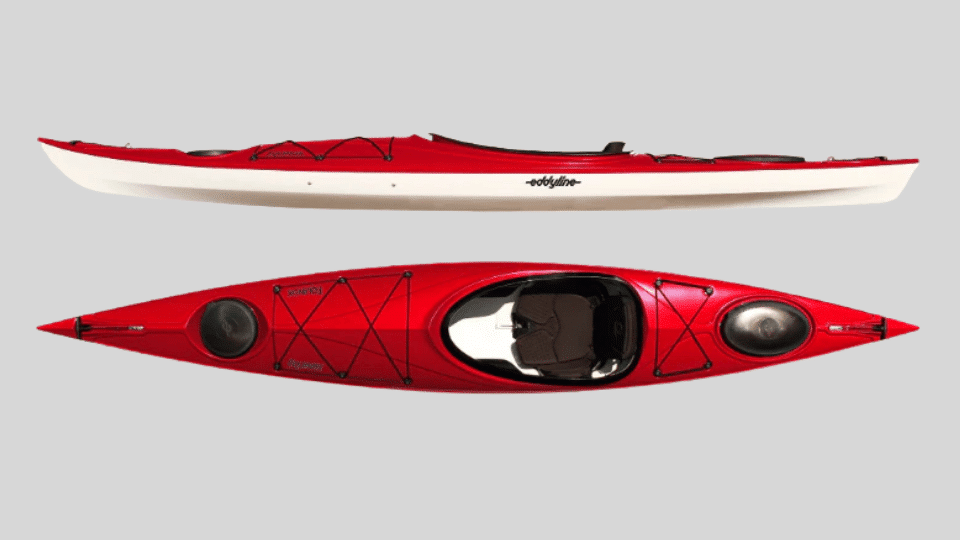
The Equinox is a sit-inside recreational kayak made for easy, relaxed paddling. It’s stable, simple to get in and out of, and makes a strong case as the ideal first boat for anyone stepping onto the water for the first time on calm lakes and bays.
- Length: 13’6″
- Weight: 36 lbs
- Capacity: 300 lbs
- Best For: Beginners and casual warm-weather paddlers
- Key Features: Open deck design, stable flat hull, adjustable footrests
- Pros: Easy entry and exit, lightweight, beginner-friendly
- Cons: Limited dry storage, not suited for colder water
- Price: $1,799- $2200
2. Eddyline Sitka LT
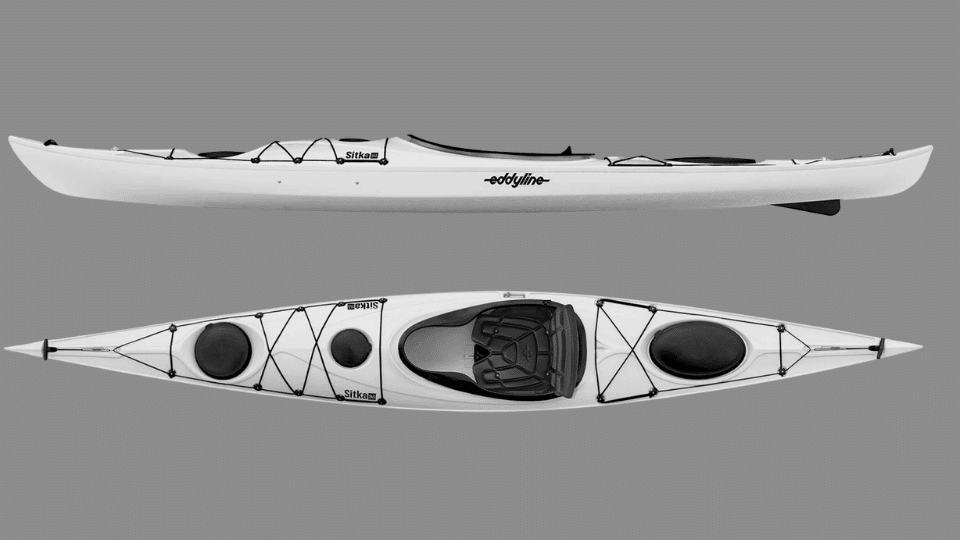
The Sitka LT is a lighter take on the Sitka line, built for day trips and moderate touring. It’s responsive enough for experienced paddlers but not overwhelming for those stepping up from recreational kayaks. And because it’s lighter, loading it onto your car is noticeably easier.
- Length: 14’4″
- Weight: 44 lbs
- Capacity: 300 lbs
- Best For: Day touring and intermediate paddlers
- Key Features: Thermoformed ABS hull, skeg system, bow and stern hatches
- Pros: Lightweight for its size, good tracking, comfortable cockpit
- Cons: Pricier than recreational models, less volume for multi-day trips
- Price: $1700-$1900
3. Eddyline Caribbean 12 FS
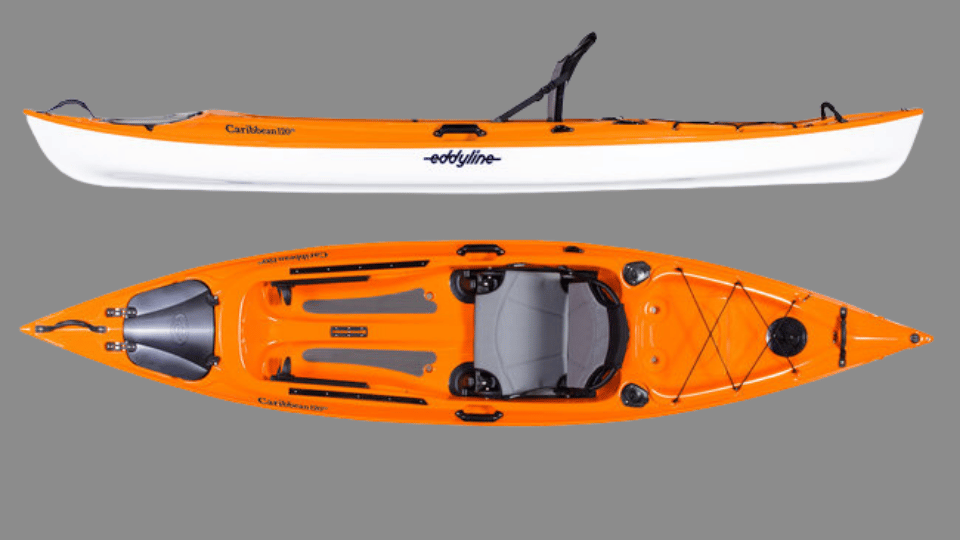
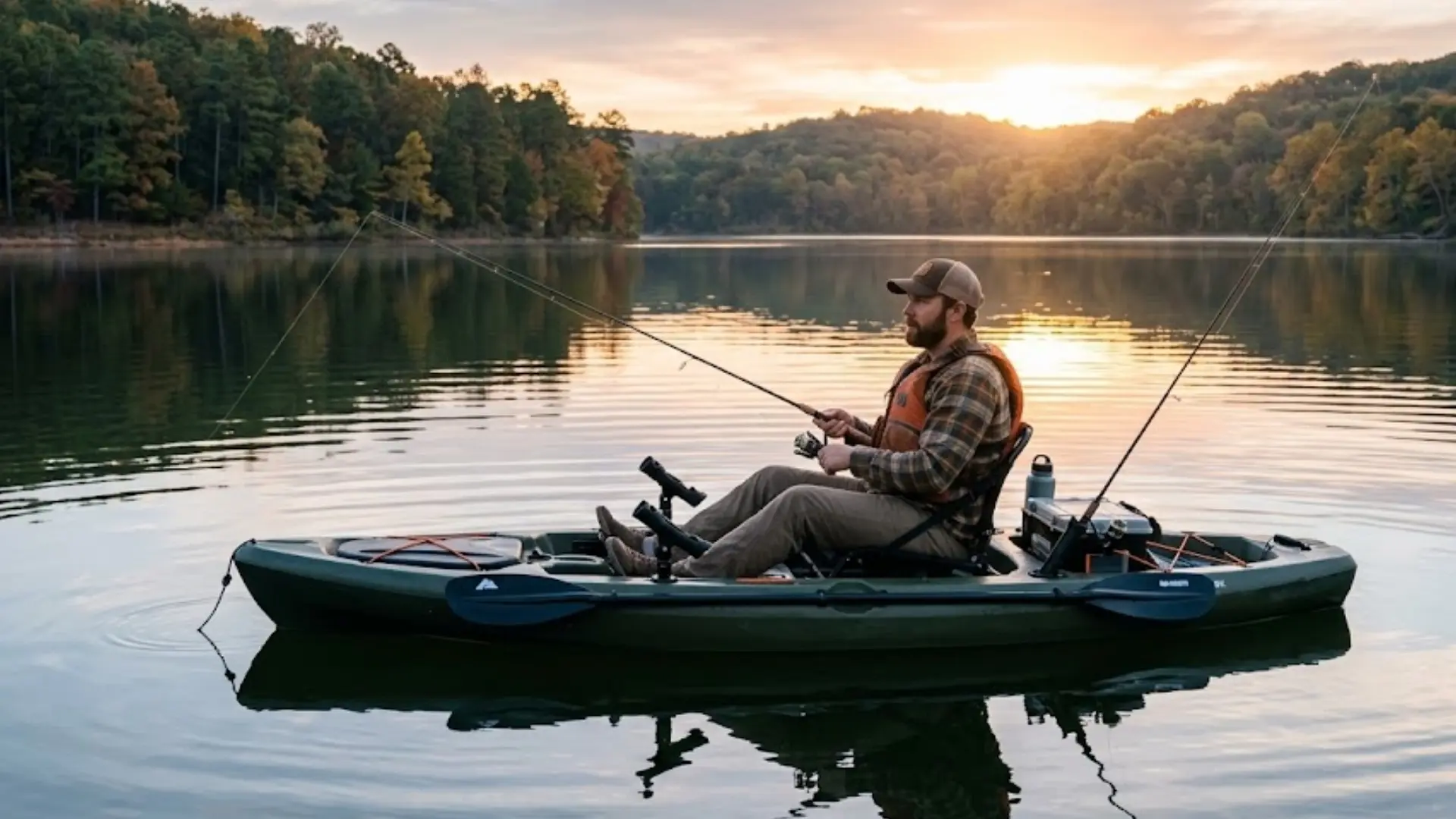
The Caribbean 12 FS is a fishing-ready sit-on-top that keeps things practical. It’s stable enough to cast from and has enough deck space to set up your gear comfortably. So if you want a kayak that pulls double duty as both a paddling and fishing platform, this one delivers.
- Length: 12′
- Weight: 41 lbs
- Capacity: 325 lbs
- Best For: Kayak fishing on calm lakes and bays
- Key Features: Rod holders, gear tracks, open deck, stable hull
- Pros: Fishing-ready setup, stable platform, good weight capacity
- Cons: Heavier than standard models, less speed-focused
- Price: $1,900-$2000
4. Eddyline Fathom
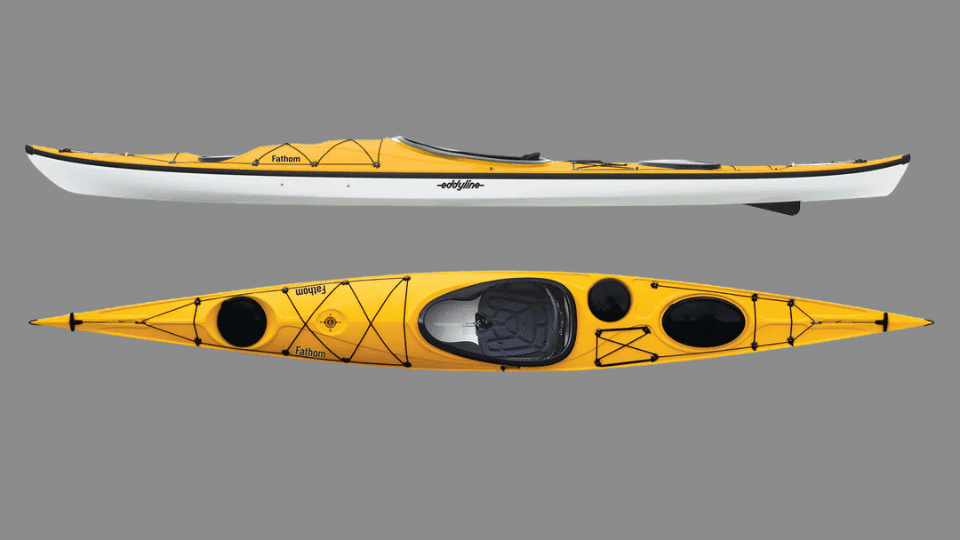
The Fathom is Eddyline’s performance touring kayak and one of their most capable builds. It’s designed for serious paddlers who want speed, tracking, and control in open coastal waters. If you’re planning longer trips or tougher conditions, this kayak is built to keep up.
- Length: 16’8″
- Weight: 50 lbs
- Capacity: 325 lbs
- Best For: Experienced paddlers and long-distance coastal touring
- Key Features: High-volume hull, rudder system, large hatches for gear storage
- Pros: Excellent tracking, high storage capacity, built for serious use
- Cons: Heavier than lighter models, higher price point
- Price: $2,499-$3300
5. Eddyline Sky 120
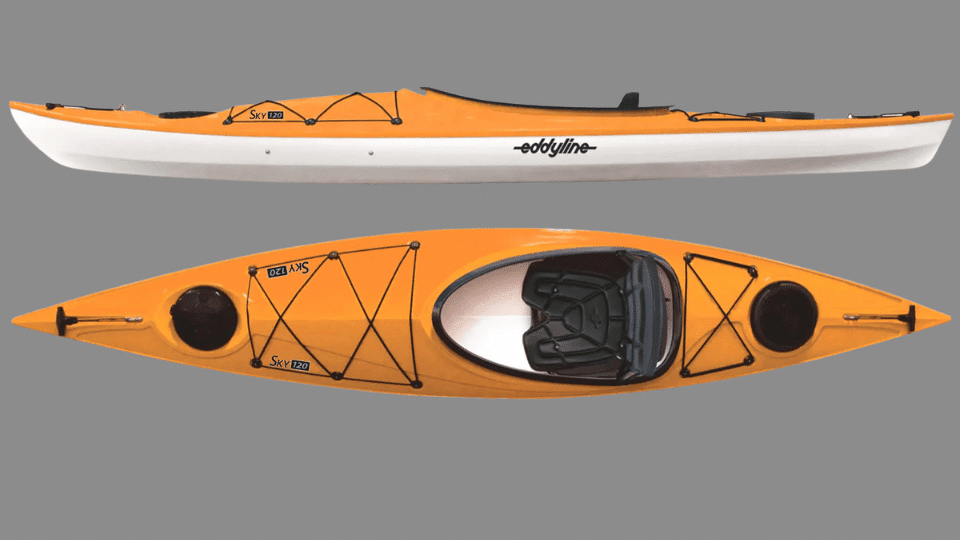
The Sky 120 replaced older recreational models like the Skylark in Eddyline’s lineup. It’s a great fit for paddlers who want a reliable, easy-going kayak for lakes and slow rivers. Light enough to handle on your own and comfortable enough for a full day out.
- Length: 12′
- Weight: 34 lbs
- Capacity: 275 lbs
- Best For: Recreational paddling on calm water
- Key Features: Adjustable seat, foot braces, bow hatch
- Pros: Easy to maneuver, lightweight, great for beginners
- Cons: Not built for open water or faster currents
- Price: $1700-$1900
6. Eddyline Sky 100
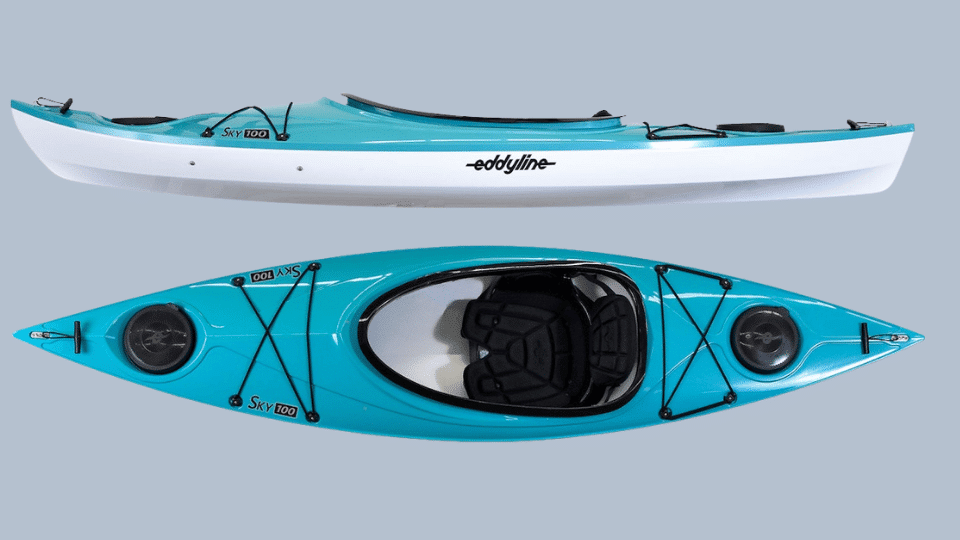
The Sky 100 is the most compact option in the Eddyline lineup. It’s short, light, and easy to store, making it a smart pick for paddlers with limited space. It works best on calm, protected waters and is a good starter kayak for smaller adults or younger paddlers.
- Length: 10′
- Weight: 30 lbs
- Capacity: 250 lbs
- Best For: Smaller paddlers and tight storage situations
- Key Features: Compact hull, adjustable seat, simple cockpit design
- Pros: Very lightweight, easy to store and transport
- Cons: Limited speed and range, not ideal for taller adults
- Price: $1150-$1300
7. Eddyline Sitka 145
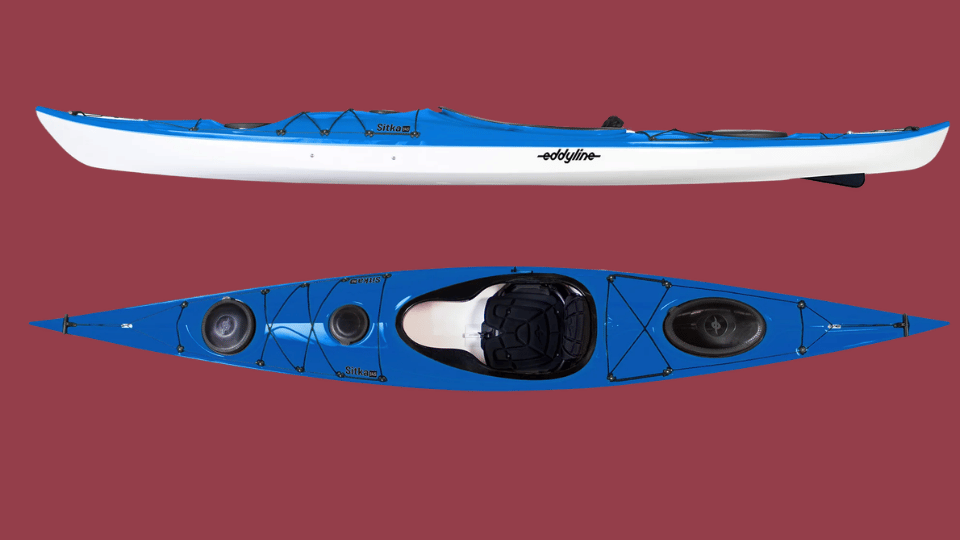
The Sitka 145 sits right between casual day touring and serious performance paddling. It gives you enough volume for overnight gear and enough speed for longer days on the water. And it handles well in both flatwater and mild coastal conditions, making it a genuinely adaptable option.
- Length: 14’5″
- Weight: 47 lbs
- Capacity: 350 lbs
- Best For: Intermediate to advanced paddlers on touring trips
- Key Features: Skeg system, dual hatches, ergonomic cockpit
- Pros: Versatile across water types, good balance of speed and stability
- Cons: Heavier than the Sitka LT, steeper learning curve for beginners
- Price: $2,600-$2700
8. Eddyline Caribbean 14 Angler
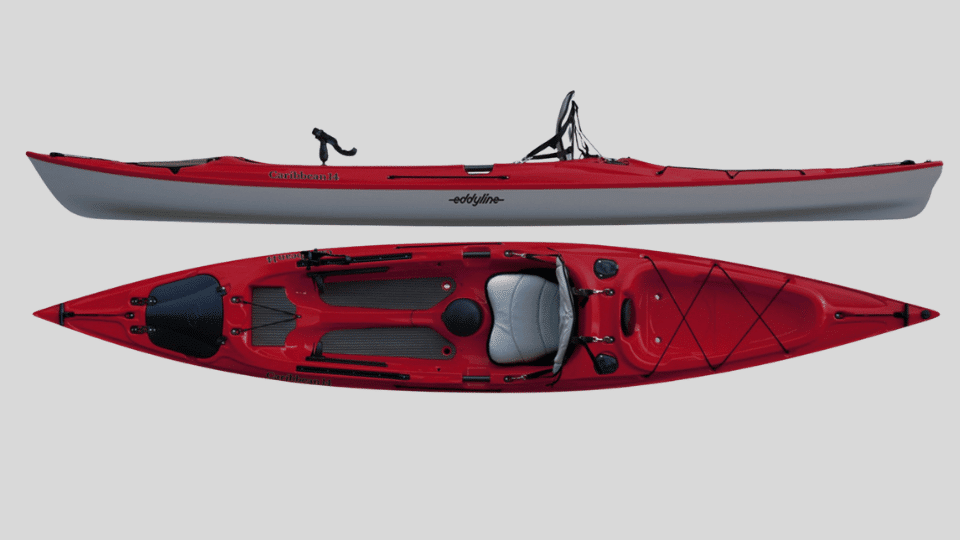
The Caribbean 14 Angler is built specifically for serious kayak fishing. It’s longer for better tracking, carries more weight, and comes loaded with angler-friendly features. The wide, stable hull and open deck also make it a natural fit for waterfowl hunting trips where a low profile and quiet glide matter.
If you are looking for an alternative to a traditional duck hunting kayak, this stable platform lets you transition effortlessly from casting a line to dropping decoys.
- Length: 14′
- Weight: 47 lbs
- Capacity: 350 lbs
- Best For: Dedicated kayak anglers on lakes and coastal waters
- Key Features: Multiple rod holders, gear tracks, anchor trolley, large open deck
- Pros: High capacity, strong tracking, purpose-built for fishing
- Cons: Bulkier than recreational kayaks, harder to transport solo
- Price: $1,900- $2100
Every model on this list has a clear strength. Match it to how you paddle, where you paddle, and what you’re willing to spend. That’s how you find the right fit without second-guessing yourself later.
Note: Prices and specs are approximate and may vary. Always check Eddyline’s official website for current listings.
How to Choose the Right Eddyline Kayak
Picking the right kayak comes down to a few honest questions about how you paddle and where you go. Get these right, and the choice becomes a lot clearer.
- Know Your Water Type: Flatwater lakes need a different build than open coastal paddling, so start there.
- Check Your Skill Level: Some models reward experience while others are built for easy handling from day one.
- Set a Real Budget: Eddyline kayaks range in price, so knowing your limit upfront keeps the decision practical.
- Think About Portability:
Lighter models are easier to car-top and launch solo, but if you regularly put in from a sandy shore, having a reliable option like the beach launch kayak cart to roll down to the waterline saves your back more than you’d expect.
- Match the Kayak to Your Goal: Fishing, touring, and casual paddling each call for a different setup.
Take your time with these points before you commit. A good fit now saves you frustration later. And once you find the right model, getting on the water feels exactly the way it should.
Eddyline vs Other Kayak Brands
Eddyline isn’t the only name in kayaking, and comparing it to other brands helps you see where it actually stands. Each brand has its own strengths, so the goal here is to give you a clear, honest look.
| Brand | Build Material | Weight | Price Range | Best For |
|---|---|---|---|---|
| Eddyline | Thermoformed ABS | Very Light | $1100 – $3,300+ | Performance and touring paddlers |
| Perception | Rotomolded Plastic | Heavier | $400 – $1,200 | Budget-friendly recreational use |
| Wilderness Systems | Rotomolded / Thermoform | Moderate | $800 – $2,000+ | Easy touring and fishing |
| Old Town | Rotomolded Plastic | Heavier | $500 – $1,500 | Casual and beginner paddlers |
| Delta Kayaks | Thermoformed ABS | Light | $1,200 – $2,500+ | Touring and performance paddling |
Eddyline holds its own well against these brands, especially in terms of weight and build quality. If performance and durability matter most to you, it stays near the top of the list.
Are Eddyline Kayaks Worth the Money
Eddyline kayaks cost more than a lot of other options, and that’s a fair thing to question. But the price reflects something real.
The thermoformed ABS build keeps weight down and holds up over years of use, so you’re not replacing it every few seasons. The fit, finish, and on-water performance are noticeably better than what you get from cheaper rotomolded kayaks.
On the other end of the spectrum, if you’re deciding between a premium paddle boat and a pedal-driven Hobie kayak,the choice comes down to whether you prefer hands-free mechanics or the pure efficiency of a lightweight hull.
The thermoformed ABS build keeps weight down and holds up over years of use, so you’re not replacing it every few seasons. The fit, finish, and on-water performance are noticeably better than what you get from cheaper rotomolded kayaks.
And because they hold their resale value well, you don’t lose as much if you ever decide to sell. So yes, if you paddle regularly and want a kayak that actually lasts, the investment makes sense.
Is the Eddyline Kayak Right for You?
Choosing a kayak is a real investment, and it deserves a real decision.
Eddyline kayaks deliver on the things that actually matter: a thermoformed build that stays lighter than rotomolded alternatives, finish quality that holds through years of regular use, and a clear range of models across skill levels and water types.
If you paddle regularly, carry your kayak solo, and want something that will hold its value over time, Eddyline is worth testing before you commit.
Head to Eddyline’s official website to find a dealer near you, get on the water in one, and make the decision from a paddle rather than a spec sheet.
Frequently Asked Questions
Are Eddyline Kayaks Good for Beginners?
Yes, some Eddyline kayaks are good for beginners. Models like the Sky 10 and Sky 120 are stable, light, and easy to handle.
Can Eddyline Kayaks Handle Ocean Conditions?
Yes, touring models like the Sitka and Fathom can handle ocean and coastal paddling. Beginners should start in calm water first.
How Long Do Eddyline Kayaks Last?
Eddyline kayaks can last many years with proper care. Clean them, store them well, and avoid hard impacts.