
Planning a surf trip can feel like a lot. There is gear to sort, destinations to pick, and a hundred things to pack.
Get it right, and you are in the water from day one. Get it wrong, and you are chasing rentals, dealing with broken gear, and missing the best swells.
Here you will find everything you need for a smooth surfing trip. From picking the right destination and knowing when to book to packing the right gear for warm and cold-water conditions. By the end, you will know exactly what to bring, what to skip, and how to plan a trip that works.
Planning Your Surf Trip
Beginners do best at beach breaks, while more experienced surfers prefer point or reef breaks with more shape and power. Research the break type before you book.
Popular destinations include Bali for all levels, Pipeline in Hawaii for advanced surfers, Jeffreys Bay in South Africa for long, fast waves, Hossegor in France for powerful autumn barrels, and Ericeira in Portugal for a mix of breaks suited to different abilities.
For fewer crowds, consider Siargao in the Philippines, Taghazout in Morocco, or Chicama in Peru, home to one of the longest left-hand waves in the world.
Pick a spot that matches your level, your budget, and the time of year you can travel.
When to Book Your Surf Trip
Timing your surf trip well means better waves, better weather, and often better prices. Every surf spot has a peak swell season.
Going outside of that window can mean flat water and wasted days. Here is a quick breakdown by destination:
| Destination | Best Months |
|---|---|
| Bali, Indonesia | April – October |
| Hawaii | November – February |
| Portugal & France | September – November |
| Morocco | October – March |
| Maldives | March – October |
| Australia (Gold Coast) | March – September |
Use surf forecast tools like Surfline or Magic Seaweed to check swell charts before you commit to dates.
Essential Gear for Your Surf Trip
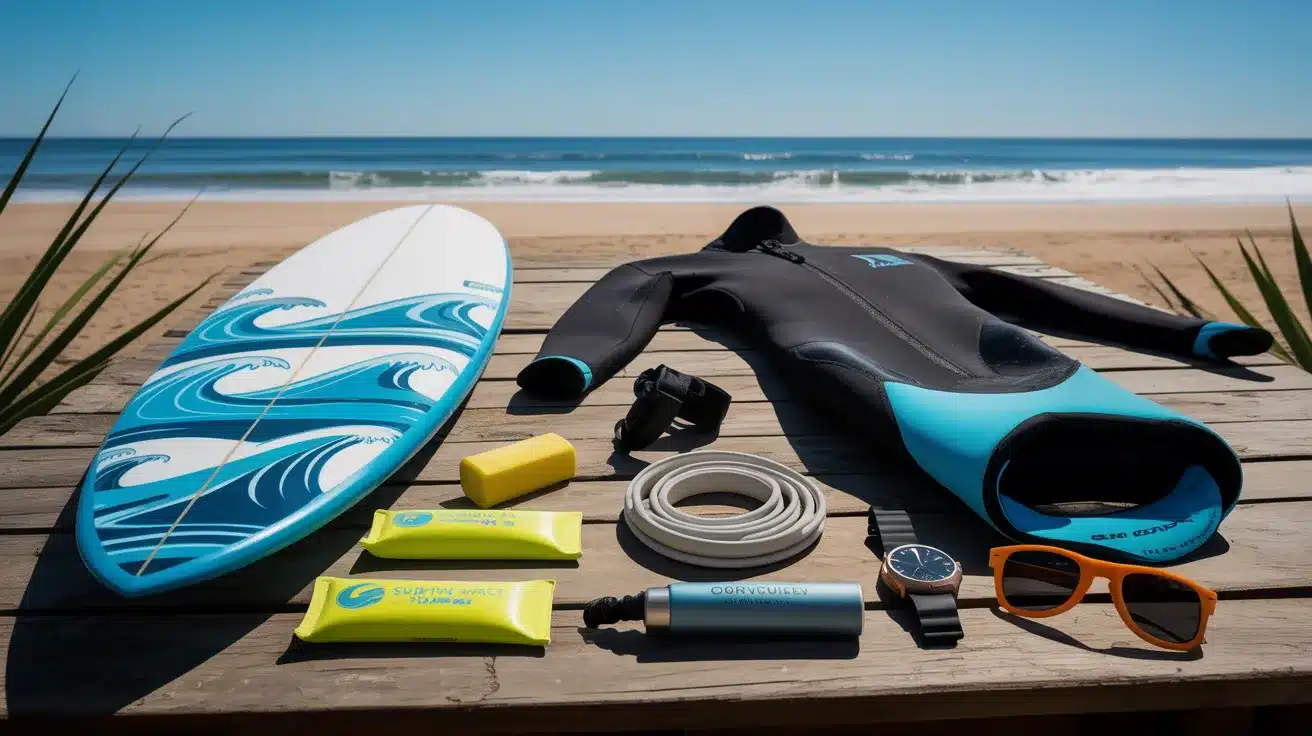
Having the right gear makes your time in the water better and saves you money on rentals or emergency purchases at your destination.
Surfboards
The board you ride should match the waves at your destination, not just the waves back home.
- Longboards work well in small, slow waves and are great for beginners.
- Shortboards suit fast, hollow reef breaks.
- Fish boards are wide, short, and handle a wide range of conditions, making them a solid all-around travel pick.
Should You Bring Your Own Board or Rent?
Bringing your own board is almost always the better option. Rental boards at popular surf destinations are often beat up, poorly waxed, and may not suit your style.
That said, renting makes sense if you’re flying long-haul and the board fees push the cost too high.
A good board is the foundation of any surf trip. Once you’ve picked the right shape, the next step is making sure it arrives in one piece.
Surfboard Bags and Travel Essentials
A good board bag is a must for surfing trips. Without proper padding, your board can crack or snap in transit.
What to Look for in a Board Bag:
- At least 5mm of foam padding
- Heavy-duty, water-resistant zippers
- Full-length coverage (nose to tail)
- Carry handles on both ends
- Extra pockets for fins, wax, and tools
What to Pack Inside Your Board Bag:
- Fins (remove them before packing your board)
- Fin key and spare fin screws
- Leash (pack a spare as they break at the worst times)
- Wax matched to your destination’s water temperature (cold, cool, warm, or tropical)
- A basic ding repair kit (small cracks can stop you from surfing for days without one)
Recommended Board Bags:
- Creatures of Leisure Day Use DT2.0 Board Bag – Thick padding, tough exterior, and a clean layout with gear pockets.
- Dakine Plate Lunch Board Bag – Well-made, with sturdy carry straps and solid protection for travel.
- FCS Stretch All Day Board Bag – A flexible, lightweight option that’s easy to fit in tight spaces.
Surf Clothing for Every Climate
For tropical surf trips, you need light, quick-dry clothing that protects you from the sun and board rash. Pack 3 to 4 pairs of board shorts in quick-dry fabric with a flat waistband so the board does not dig in.
For rashguards, choose UPF 50+ fabric and pack at least one long-sleeve option for extra coverage during long sessions.
Round it out with a reef-safe mineral sunscreen, which we cover in detail below.
Recommended Tropical Surf Clothing:
- Quiksilver Highline Board Shorts – Built for performance, fast-drying, and comfortable in the water.
- O’Neill Basic Skins Rashguard – A clean, well-fitted rashguard with reliable UV protection.
- Hurley One & Only Rashguard – Flexible, light, and holds up well over multiple sessions.
For cold-water surf trips, your wetsuit is everything. Here is how to pick the right thickness:
| Water Temperature | Wetsuit Thickness |
|---|---|
| Above 22°C (72°F) | Shorty or 2mm |
| 17–22°C (63–72°F) | 3/2mm |
| 12–17°C (54–63°F) | 4/3mm |
| Below 12°C (54°F) | 5/4mm + booties, gloves, hood |
Recommended Cold-Water Wetsuits:
- Rip Curl E-Bomb Pro Wetsuit – Stretchy, warm, and easy to get on and off. A strong pick for cold-water surf trips.
- O’Neill Hyperfreak Fire Wetsuit – One of the warmest wetsuits in its thickness class, with great flexibility.
- Patagonia R1 Yulex Wetsuit – Made from natural rubber, eco-friendly, and performs well in cold water.
Many surf destinations, especially reef-break spots, have banned chemical sunscreens to protect marine life. Always pack a reef-safe mineral sunscreen.
Recommended Reef-Safe Sunscreen:
- Raw Elements SPF 30 Sunscreen – A water-resistant, mineral-based formula that stays on through long surf sessions.
- Stream2Sea SPF 30 – Lab-tested safe for coral reefs. Works well in warm ocean water.
- Badger Sport SPF 35 – Clean ingredients, reef-safe, and good coverage for all-day sun exposure.
Getting the right clothing sorted before your trip means fewer purchases on the road and more time actually surfing.
Packing Tips for Your Surf Trip
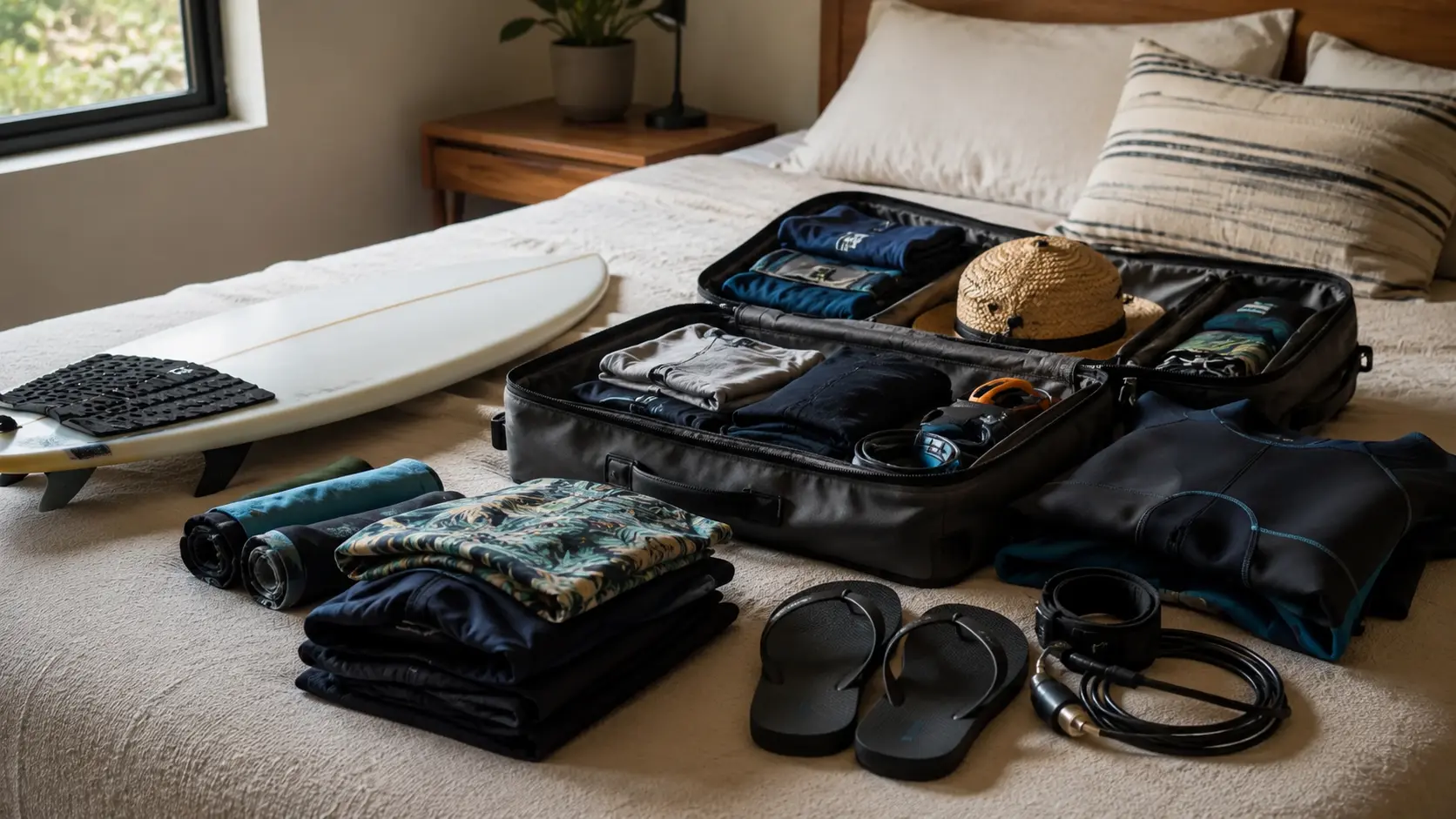
Good packing means bringing what you need, keeping your bag manageable, and making sure nothing important gets left behind.
| Category | Tropical Surfing Trips | Cold Water Surfing Trips |
|---|---|---|
| Clothing | Board shorts, rashguards, casual t-shirts, light waterproof jacket, flip flops, water shoes | Full wetsuit, booties, gloves, hood, fleece, thermal base layers, warm beanie, waterproof boots |
| Beach & Surf Gear | Microfiber towel, dry bag, waterproof daypack, waterproof phone case, reef-safe sunscreen | Wetsuit changing mat, large waterproof bag, wetsuit shampoo, earplugs, hand warmers, spare leash |
| Tech & Travel | Waterproof action camera, power bank, universal travel adapter, reusable water bottle | Power bank, universal travel adapter, reusable water bottle |
| Pro Tip | Pack light and plan to do laundry at least once on longer trips | Your wetsuit takes up the most bag space, so organize everything else around it |
Pack your wetsuit last so it’s the first thing out when you arrive. Keep everything else compressed using packing cubes to save space in your bag.
Travel and Practical Tips for Surfing Trips
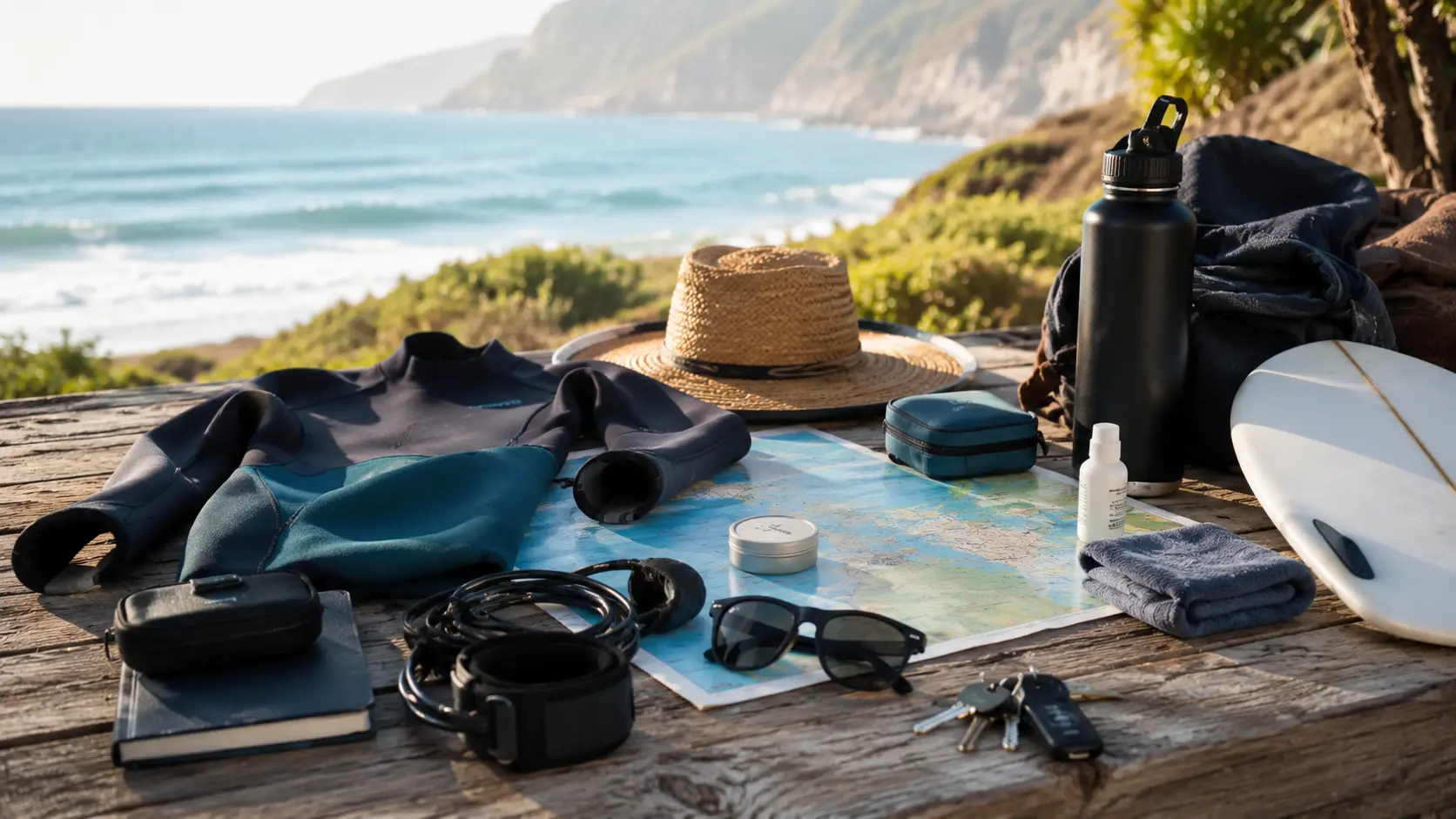
Getting yourself and your gear to the destination without hassle takes a bit of forward planning.
How to Travel with Your Surf Gear
Flying with a surfboard is manageable if you know the rules ahead of time. Most airlines charge extra for surfboards, with fees ranging from $30 to over $100 each way, depending on the airline and route.
Some airlines count a board bag as an oversized item, while others treat it as a standard checked bag if it falls under their size limit. Always call or check online before you fly.
Airlines like American Airlines, Southwest, and JetBlue are known for relatively clear surf policies, but always verify before booking, since policies change.
Packing Hacks for Safe Board Travel
Here are a few simple steps that can protect your board on any flight:
- Wrap the nose, tail, and rails with clothing or bubble wrap.
- Remove all fins before packing to avoid snapping the fin boxes.
- Pack your wetsuit and soft gear around the board for extra padding.
- Add a bright luggage tag so your bag stands out on the carousel.
If flying long-haul with multiple connections, book the board on the primary airline to avoid juggling fees across carriers.
Health and Safety Tips While Traveling
Before you go, pack a basic first-aid kit, check the CDC Traveler’s Health site for vaccination requirements, and confirm that your travel insurance covers water sports before you buy.
Surfer’s Ear Prevention: Over time, exposure to cold water and wind can cause bone growth in the ear canal, which can lead to hearing loss. Wear earplugs every session.
- SurfEars 3.0 – Let’s sound in, keeps water out
- Doc’s Proplugs – Affordable and long trusted by surfers
Sun Safety: Apply reef-safe sunscreen 20 minutes before entering the water. Use a rashguard for long sessions and a wide-brimmed hat on rest days.
Common Mistakes to Avoid
|
Conclusion
A well-planned surf trip puts you in the water more and out of your head less. When you know your destination, have the right gear, and pack smart, everything from the first session to the last runs smoother.
You spend less time fixing problems and more time catching waves. Whether you are heading to a warm-water beach break or a cold-water reef, the preparation you put in before you leave is what makes the difference on the ground.
Start planning early, get your gear sorted, and book that trip. The waves are not going to wait.
Frequently Asked Questions
How Much Does a Surf Trip Cost on Average?
A week-long trip can range from $800 to $3,000 depending on the destination, flights, and accommodation.
Do I Need Surf Lessons Before Going on a Surf Trip?
Not mandatory, but a few lessons at home will help you get more out of your time in the water.
How Fit Do I Need to Be for a Surf Trip?
A basic level of fitness helps since paddling and catching waves take upper-body and core strength.
How Long Should a Surf Trip Be?
A minimum of 7 days gives you enough time to read the local breaks and get into proper sessions.