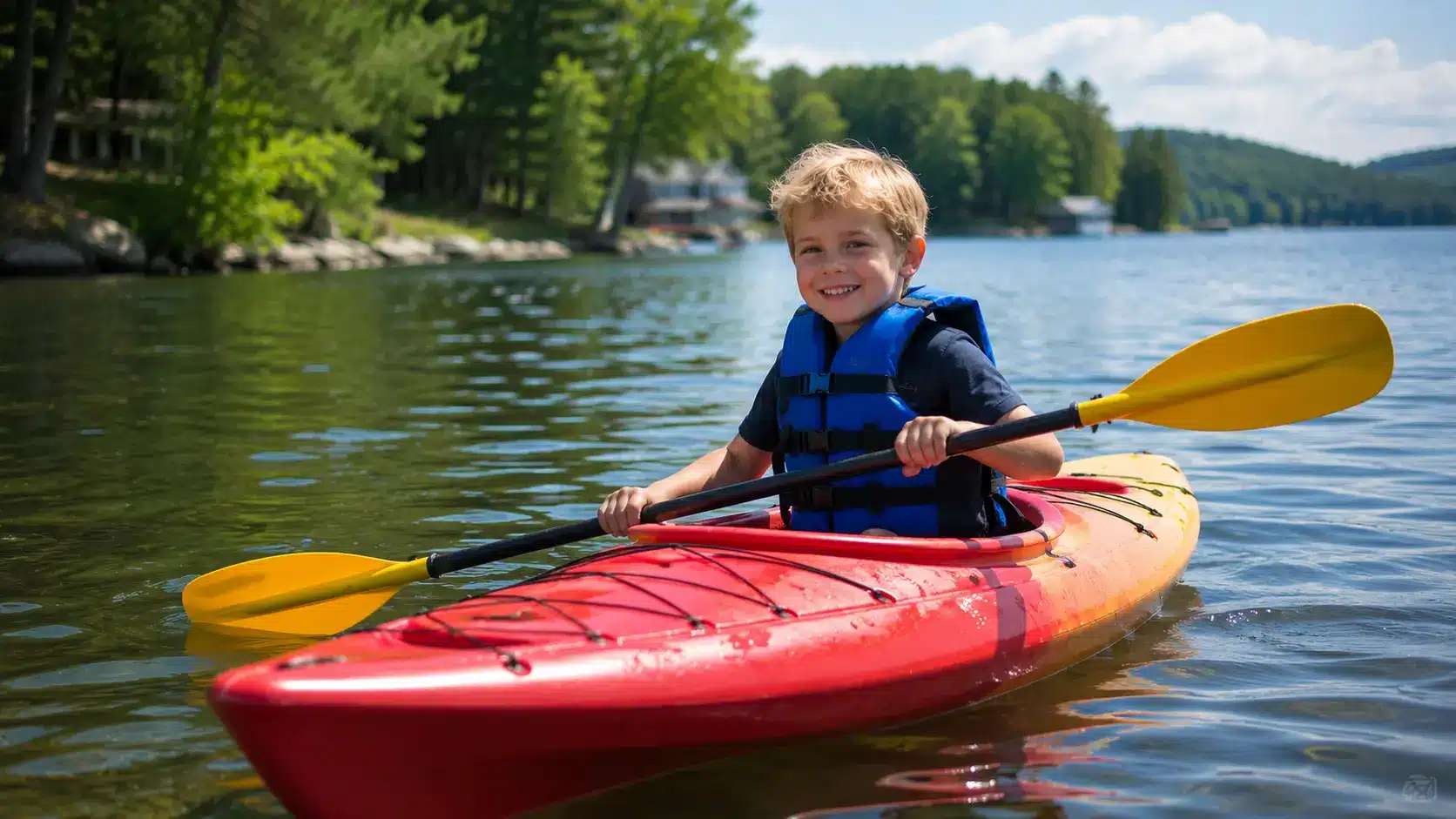
Most kids outgrow a rental kayak in one summer. The problem is not their skill. It is the kayak.
Adult-sized boats sit too wide, weigh too much, and leave young paddlers fighting the water instead of enjoying it.
A youth-specific kayak changes that. It is shorter, lighter, and built for a smaller body, which means faster progress and a lot more fun.
After extensive research, I have compiled a list of the best kids’ kayaks for three age groups: 5 to 8, 9 to 12, and teens.
Every pick has been matched to real weight limits, body size, and skill level. If you are starting with one name, start with the Lifetime Wave. It is the most popular beginner choice on the market for a reason.
Lifetime Wave Youth Kayak (Best Overall Kids Kayak)
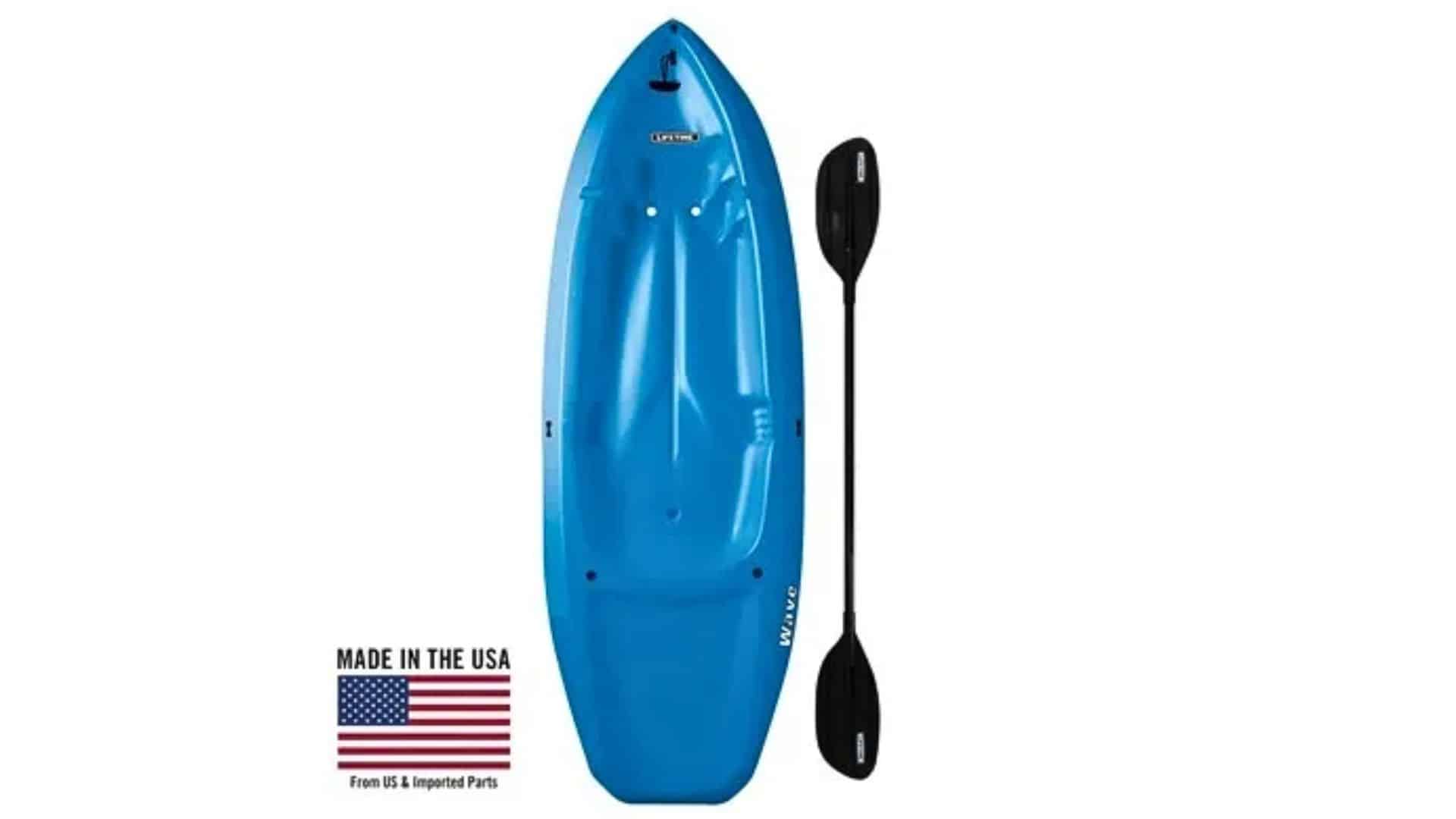
The Lifetime Wave is the most bought youth kayak in the United States, and it earns that position.
At six feet long and just 18 pounds, it is light enough for a child to drag to the water on their own. The 24-inch width creates a stable, flat platform that practically refuses to tip on calm water, which is exactly what a young paddler needs on day one.
The hull is blow-molded high-density polyethylene, meaning there are no sharp edges or protruding hardware anywhere on the boat.
Weight capacity is 130 lbs, making this a strong fit for children ages 5 through about 10, depending on build.
When parents search for a lifetime kids kayak or a lifetime wave youth kayak, this is consistently the model they find, buy, and recommend to other families.
| Pros | Cons |
|---|---|
| Very lightweight at 18 lbs | Kids may outgrow the 130 lb weight limit by ages 10–11 |
| Stable on calm, flat water | No storage space for gear or snacks |
| The swim-up step helps with easy self-rescue | Not suitable for rough water or longer trips |
Best for: Calm lakes, ponds, and relaxed family paddling sessions with kids ages 5 to 8.
Best Kids Kayaks by Age Group
Buying a kayak that fits your child today and grows with them tomorrow is the real challenge. Here is what works at each stage.
Best Kayaks for Kids Ages 5–8
Children in this age group are not ready to track a straight line or manage a long paddle session. What they need is a kayak that rewards curiosity without punishing mistakes. That means short, wide, and impossible to tip.
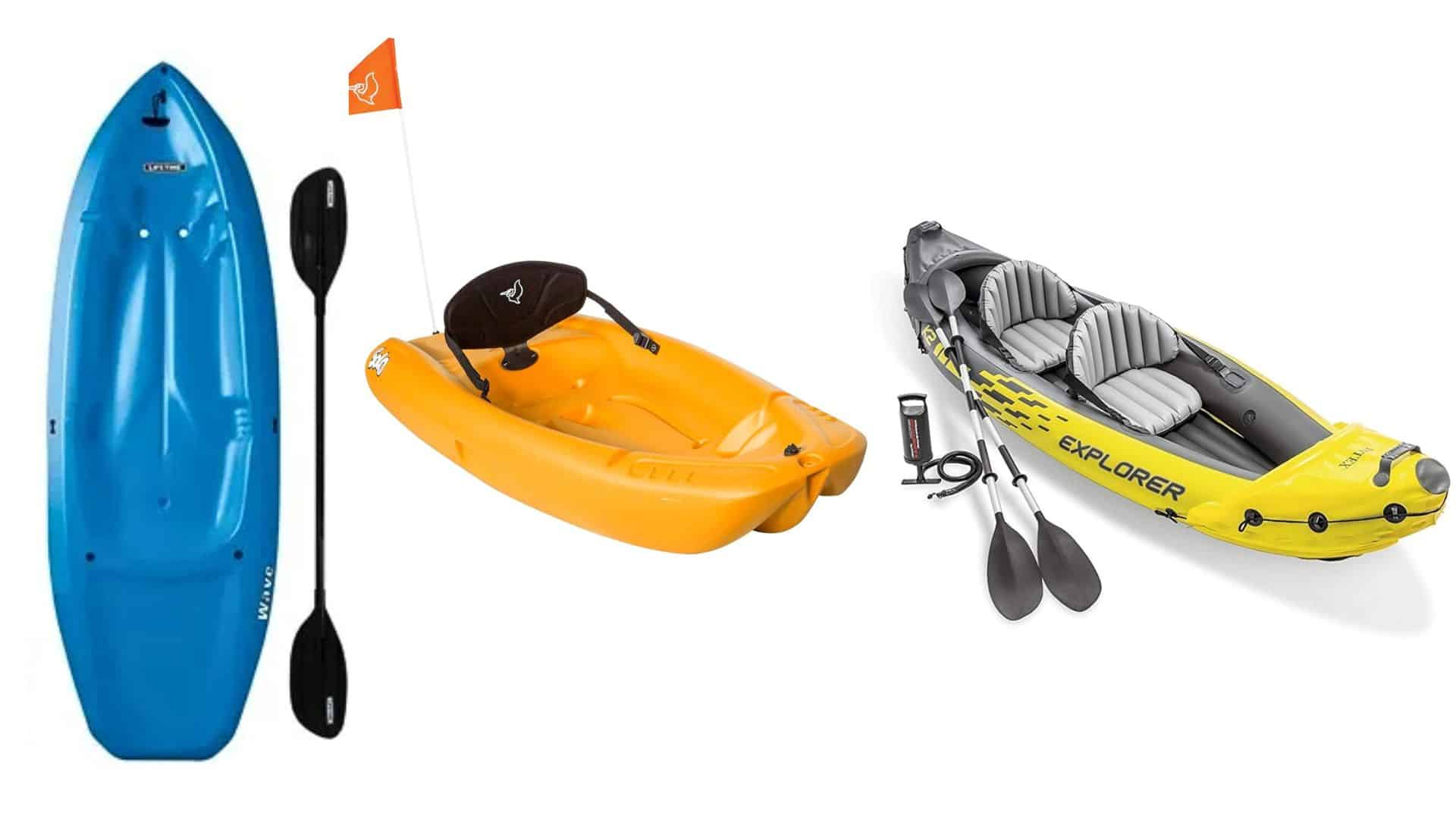
Lifetime Wave: The top pick for this age group. Wide stance, swim-up step, and a price point that makes it accessible for most families. Ideal for lake days and backyard ponds.
Features: 6 ft | 130 lbs capacity | 18 lbs
Pelican Solo: The Solo is Pelican’s answer to the lifetime youth kayak market. Its twin-tunnel hull sits slightly lower in the water, which some kids find even more stable than the Wave. It includes a safety flag that makes it easy to spot from shore and comes with an ERGOFORM padded backrest.
Features: 6 ft | 100 lbs capacity | 20 lbs
Intex Explorer K2: A tandem inflatable built for two paddlers. For young children, this works well as a parent-child kayak. The child paddles from the front seat while a parent controls direction from the rear. At under $200, it is by far the most affordable way to get a young child on the water.
Features: 10.3 ft | 400 lbs capacity | 26 lbs
(Also listed in Best Kids Inflatable Kayaks below with full specs.)
Best Kayaks for Kids Ages 9–12

By this age, children have enough focus to paddle longer sessions and enough coordination to work on tracking. The right kayak for beginners builds confidence rather than just providing stability.
Lifetime Dash 66: A step up from the Wave with a slightly longer waterline, this model is well-matched to children at the upper end of the 5 to 8 range, moving into the 9 to 12 group. It keeps the same lightweight HDPE build and carry handle.
Features: 6.5 ft | 130 lbs capacity | 18 lbs
Pelican Bandit NXT 100: As kids approach the 11 and 12-year range, adult-sized beginner kayaks start to make more sense than youth-specific models. The Bandit NXT 100 is one of the most stable sit-on-tops at its price point. Its twin-arched, multi-chine hull tracks better than most budget boats.
Features: 10 ft | 300 lbs capacity | 40 lbs
Sun Dolphin Journey 10 SS: A sit-on-top fishing kayak with three rod holders, front and rear storage, and adjustable foot braces. This makes a solid first fishing kayak for older kids in the 10-12 range who fish with a parent. It is slow and wide, which actually helps on calm lake fishing trips where speed is not the goal.
Features: 10 ft | 250 lbs capacity | 44 lbs
Best Kayaks for Teens
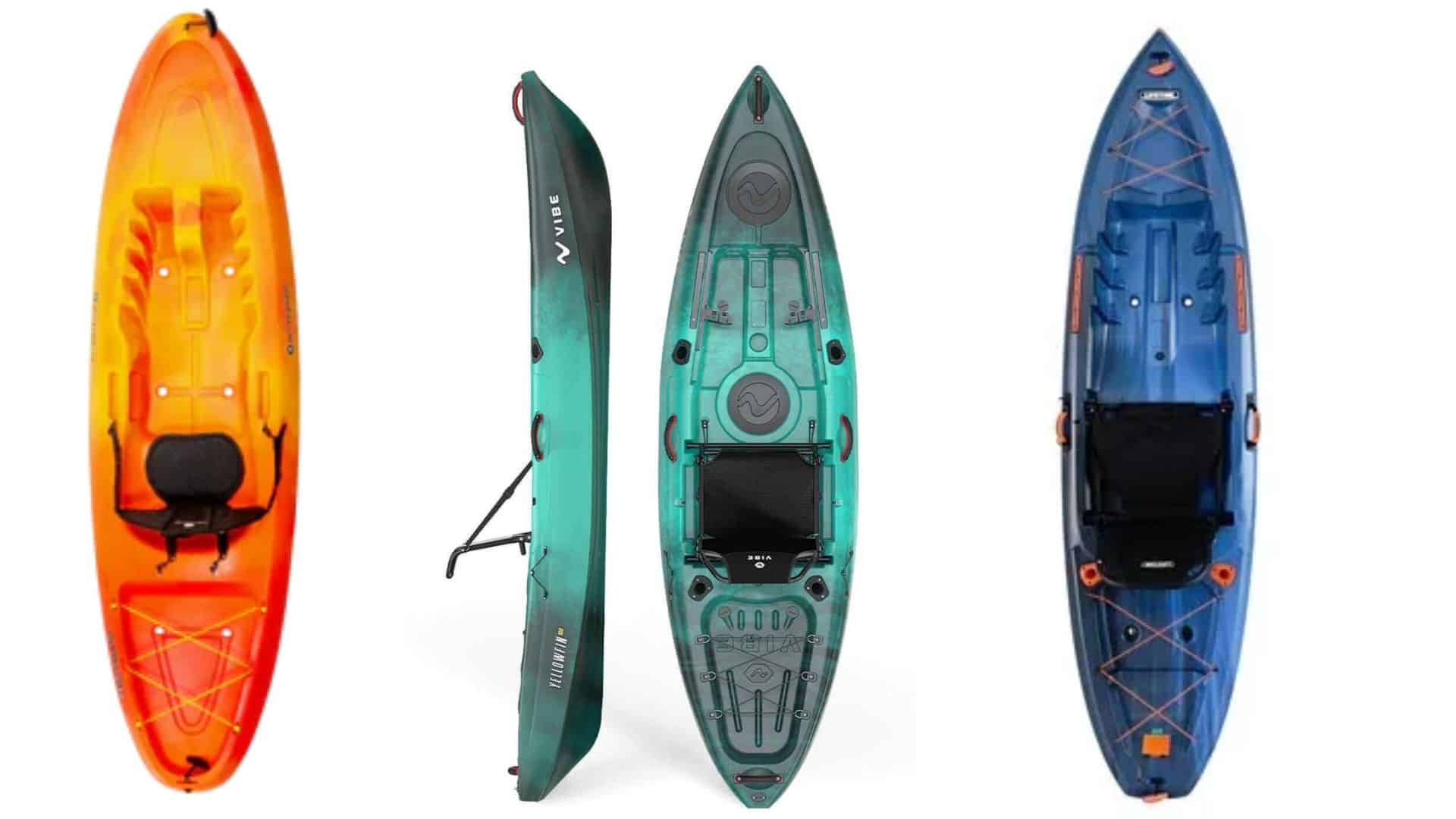
Teens who fish need a dedicated fishing setup, while recreational paddlers benefit most from lighter, faster boats that withstand more frequent use.
Perception Rambler 9.5: Made in South Carolina and backed by a five-year warranty, the Rambler 9.5 is one of the most recommended entry boats for older kids and teens. The wide, stable hull handles everything from flat lakes to light surf, which gives teens room to explore different water types.
Features: 9 ft 6 in | 250 lbs capacity | 47 lbs
Vibe Yellowfin 100: A purpose-built fishing kayak with four flush-mount rod holders, dual sealed storage hatches, and the elevated Vibe Hero Seat. The 375 lb weight limit makes it a genuine long-term buy. This is the top pick for teen anglers who want to fish independently.
Features: 10 ft | 375 lbs capacity | 57 lbs
Lifetime Teton Angler 100: A budget-friendly fishing kayak from Lifetime that includes two flush-mount rod holders, aluminum gear tracks for mounting accessories, and a padded frame seat. At 30.5 inches wide, it is stable on slow-moving rivers and lakes.
Features: 10 ft | 275 lbs capacity | 53.5 lbs
(Also listed in Best Kids Fishing Kayaks below.)
Best Kids Inflatable Kayaks
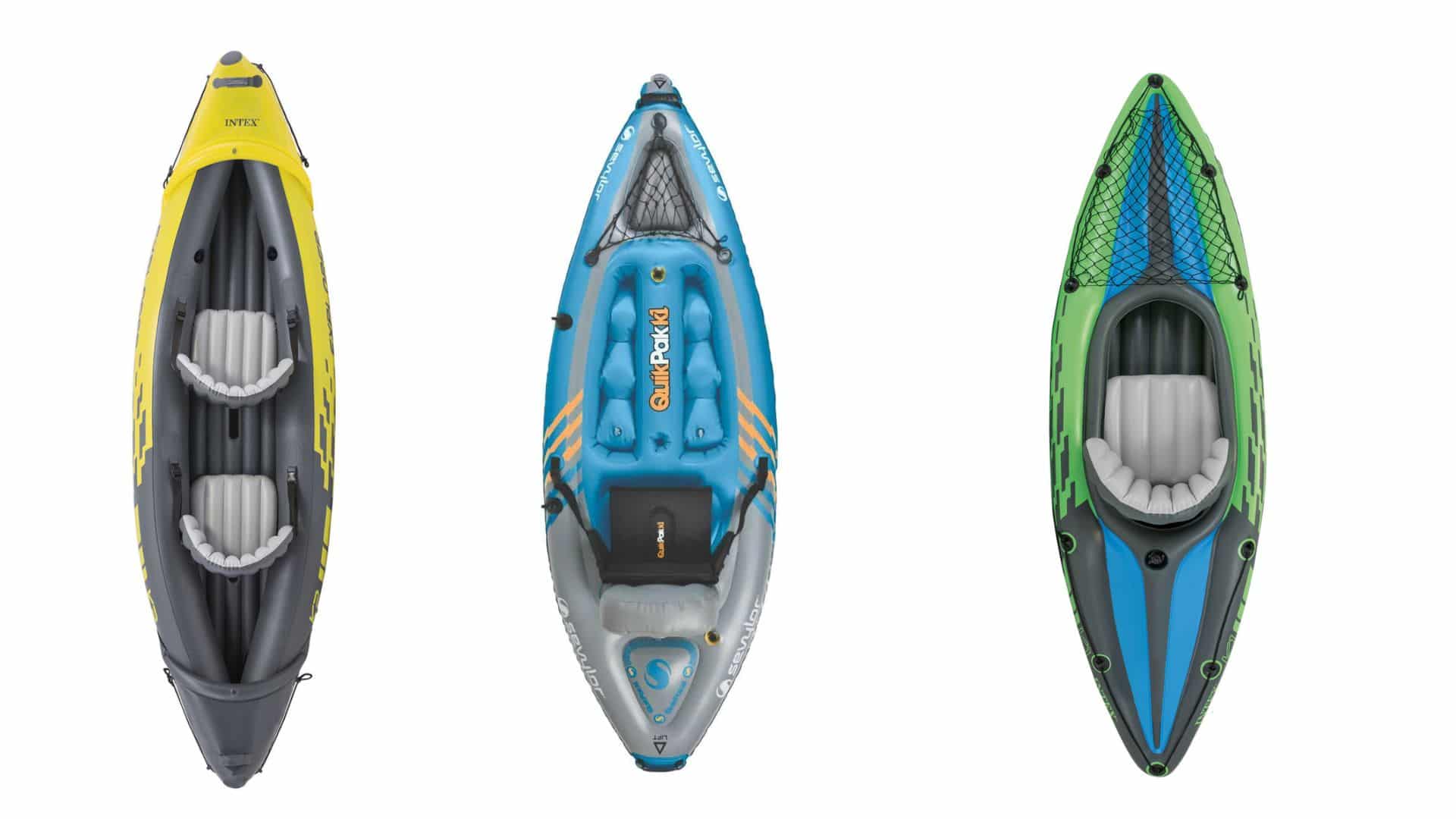
An inflatable kayak does not take up a garage wall. It packs into a bag, fits in a car trunk, and works equally well at a lake house in July or a river trip in August. For families who travel frequently or live in apartments, an inflatable is often the practical choice over a hardshell.
Intex Explorer K2: The most popular inflatable kayak at the entry level. This two-person tandem is the go-to choice for a parent and child paddling together on lakes and mild rivers. It includes two aluminum paddles, two inflatable seats, a high-output pump, and a removable skeg for directional stability.
Features: 10.3 ft | 400 lbs capacity | 26 lbs
Sevylor QuikPak K1: One of the most portable inflatables on the market. The backpack system folds out into the kayak seat, so the whole setup literally unpacks and becomes the boat. Built from 21-gauge PVC with a rugged tarpaulin bottom and multiple air chambers.
Features: 8 ft 7 in | 400 lbs capacity | 18 lbs
Intex Challenger K1: A single-person inflatable designed for one paddler on calm lakes and slow rivers. Lighter and shorter than the Explorer K2, which makes it more manageable for older children paddling independently. Includes a kayak paddle, hand pump, and removable skeg.
Features: 9 ft | 220 lbs capacity | 27 lbs
Best Kids Fishing Kayaks and Teen Angler Picks
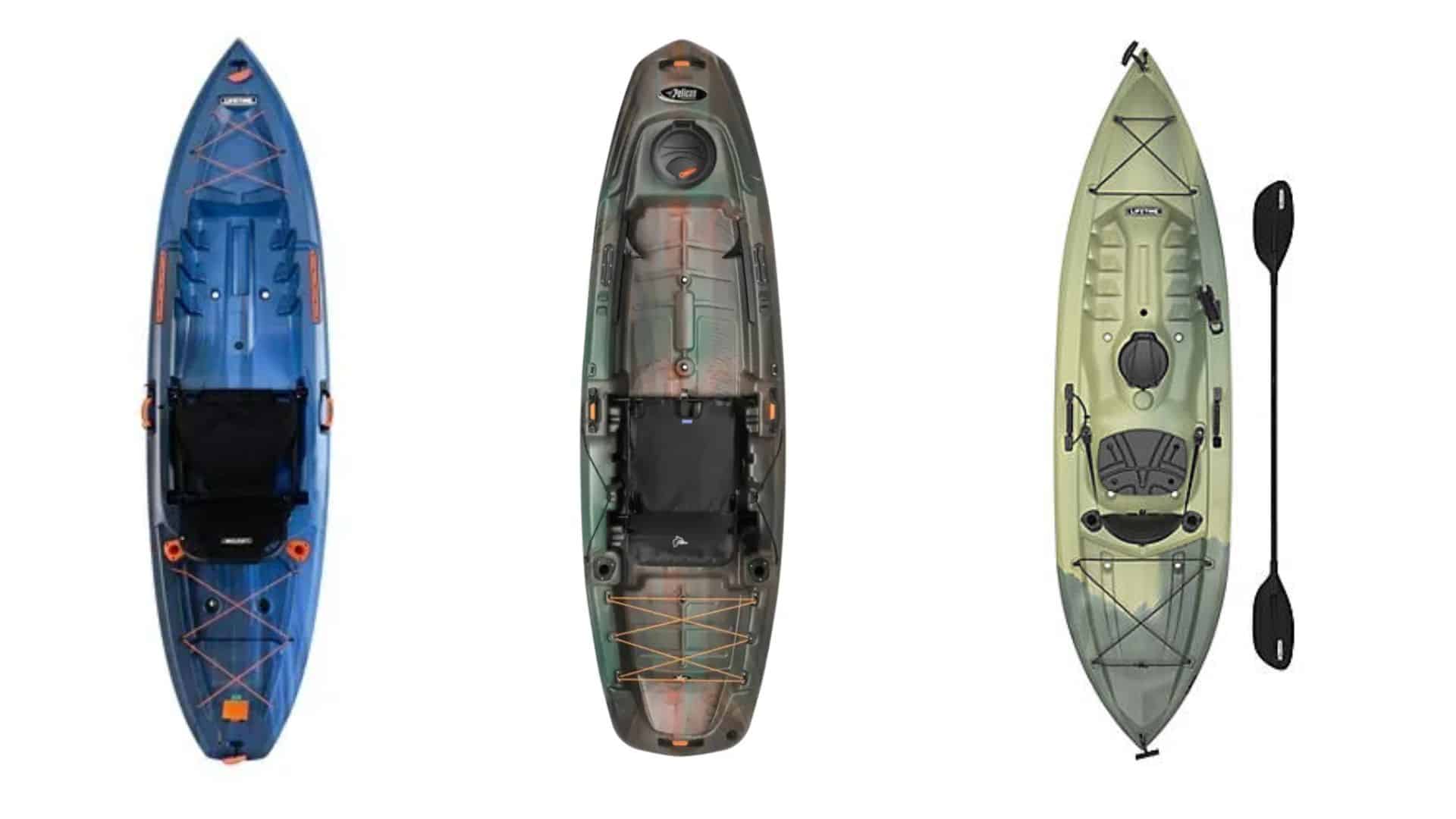
A good fishing kayak for younger anglers is not a scaled-down tournament boat. It is a stable, forgiving platform that lets a kid focus on casting and reeling rather than balancing. Width matters more than speed. Rod holders should be flush-mounted and positioned within reach.
Lifetime Teton Angler 100: Already covered in the teens section, this is the best budget fishing kayak for young anglers. It has everything needed to start: two rod holders, gear tracks for accessories, front and rear tank wells, and a padded frame seat.
Features: 10 ft | 275 lbs capacity | 53.5 lbs
Pelican Catch Classic 100: Pelican’s entry-level angler build with an Ergocast seating system that adjusts to both a low paddling position and a higher fishing position. Three rod holders and a wide hull make it a capable platform for beginner fishing on protected water.
Features: 10 ft | 350 lbs capacity
Sun Dolphin Journey 10 SS: Three rod holders, a portable accessory carrier for tackle, and bow and stern storage with bungee rigging. This is a compact, affordable sit-on-top fishing kayak that works well for older kids and teen anglers on calm lakes and slow-moving rivers.
Features: 10 ft | 250 lbs capacity | 44 lbs
Best Kids Kayak Paddles: Size Guide by Age Group
Paddle length affects everything from paddling efficiency to shoulder comfort. A paddle that is too long creates awkward angles and tires a child out quickly. The right length is determined by a child’s height and the width of the kayak they are paddling.
| Child Height | Recommended Paddle Length | Age Range (Approx) |
|---|---|---|
| Under 4 ft | 180–182 cm | Ages 5–7 |
| 4 ft to 4 ft 6 in | 190–194 cm | Ages 7–10 |
| 4 ft 6 in to 5 ft | 200–204 cm | Ages 10–13 |
| 5 ft to 5 ft 6 in | 210–215 cm | Ages 13–15 |
| Over 5 ft 6 in | 220–230 cm | Ages 15–Adult |
These ranges are based on standard recreational kayak widths of 24 to 32 inches. If a child is paddling a wider boat, add 5-10 cm to the recommended length.
Kayaking Safety for Kids: Life Jackets and PFD Guide
A personal flotation device is not optional. Full stop. Even confident swimmers need a USCG-approved PFD on the water, and for children, that requirement is even more critical.
USCG-approved life jackets are marked with a United States Coast Guard approval number on the label. Do not buy a PFD that does not have this marking. Foam pool floaties and swim vests do not meet this standard.
Weight-based sizing is the most important fit factor. PFD sizing for children is based on body weight range, not age. A typical youth PFD is rated for children between 30 and 50 lbs, while a child PFD is rated for the 50 to 90 lb range. Always check the label for the specific weight range.
Proper fit means the armholes do not gap open when the jacket is lifted by the shoulders. A correctly fitted PFD will not slide up over a child’s face when lifted from the collar. Test this before every water session.
Head support for younger children: For children under six or under 30 lbs, look for a Type II PFD with a collar that supports the head in the water. This keeps an unconscious or panicked child’s face above the surface without requiring them to do anything.
How to Choose the Right Kayak for KidsSit-On-Top vs Sit-Inside Kayaks: Sit-on-tops are the right call for kids. No trapped cockpit, self-bailing hull, and easy water re-entry. Weight Capacity and Kayak Length: Always leave a 30-40 lb buffer between your child’s weight and the kayak’s maximum capacity. Ages 5 to 8 do best on 6 to 8-foot kayaks. Ages 9 and up can move to 9 to 10-foot models with better tracking. Plastic vs Inflatable Kayaks: Hardshell HDPE kayaks track better and last longer, but need roof rack transport. Inflatables pack small and cost less but are slower and are only for calm water. |
Conclusion
The right kayak does not just get a child on the water. It makes them want to come back. Start with the age group and weight limit, match the boat to calm water, and do not skip the PFD.
For most families, the Lifetime Wave is where I would begin. It is stable, light, and forgiving enough for a five-year-old on day one. As kids grow, the picks in this guide scale with them, from first paddles to first fishing trips.
Get the fit right, keep safety non-negotiable, and the rest takes care of itself.
Ready to shop? Browse the age group that fits your child and pick the kayak they will actually use.
Frequently Asked Questions
What Size Kayak is Best for a Child?
Children ages 5 to 8 do best in a 6-foot kayak, such as the Lifetime Wave or Pelican Solo. Children ages 9 to 12 can move to 8 to 10-foot models depending on their height and weight.
Is the Lifetime Wave Good for Beginners?
The Lifetime Wave is one of the best beginner picks available. Its 24-inch width and reverse-chine hull make it very stable on flat water, and its 18-pound weight means most kids can carry it themselves.
Should Kids Use Tandem Kayaks First?
For children under seven, starting tandem with a parent builds confidence fast. Once they can paddle steadily for 20 to 30 minutes and follow directions, a solo youth kayak is the right next step.
What Type of Kayak is Easiest for Children?
Sit-on-top kayaks are the easiest for children. They are self-bailing, stable, and allow kids to get on and off without technique. Short, wide models like the Lifetime Wave and Pelican Solo are specifically designed for beginner young paddlers.