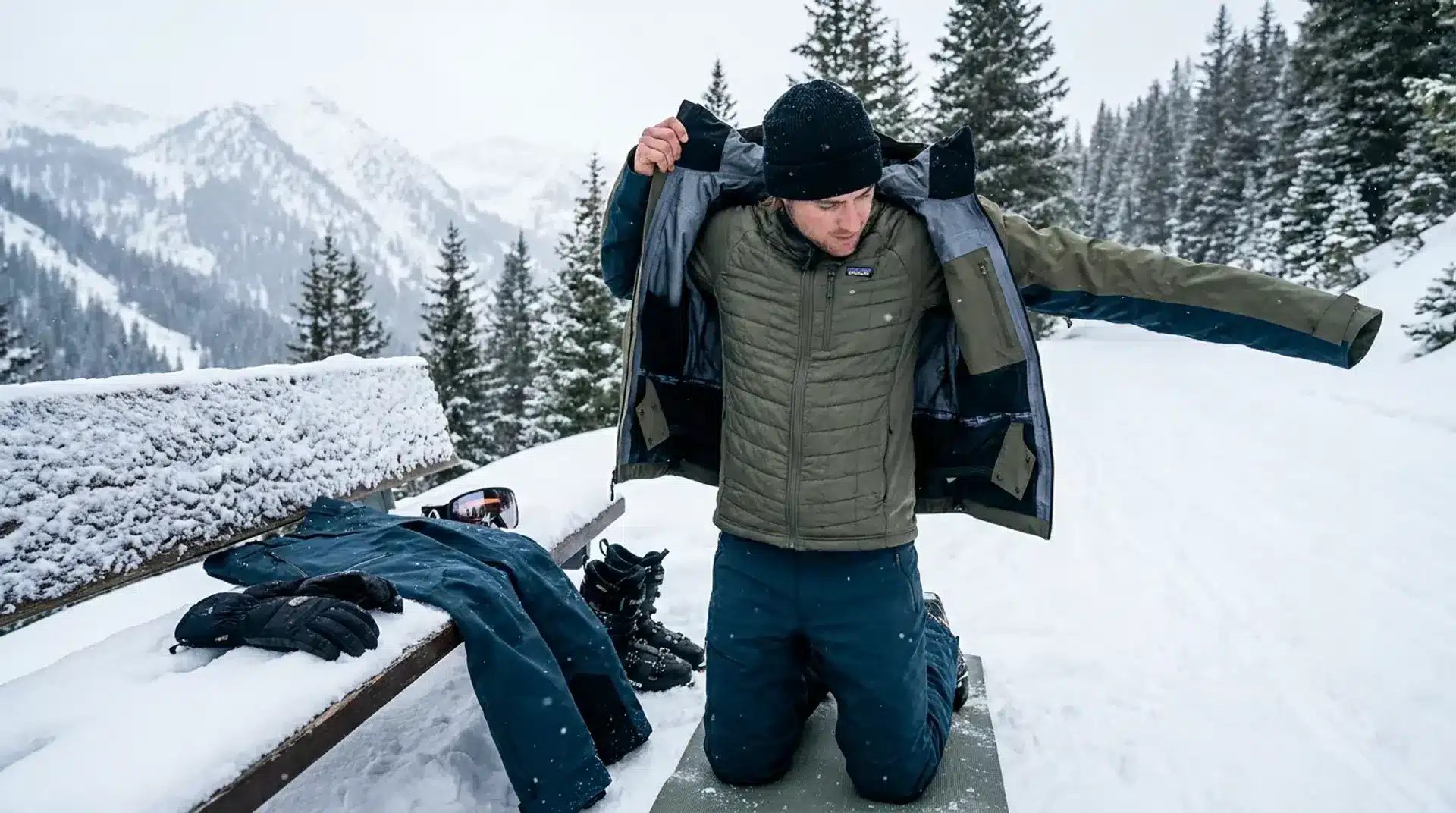
A lot of new skiers think staying warm means piling on the thickest jacket they own. That usually works for about one chairlift ride before the sweating starts.
Once moisture gets trapped inside your clothes, the cold hits much harder, especially when the wind picks up or you stop moving.
Good ski layering is less about wearing more and more and more about wearing the right combination.
The right setup helps with the biggest skiing problems: sweating during runs, freezing on lifts, and overheating halfway through the day.
Most skiers rely on a simple three-layer system that balances warmth, airflow, and weather protection without making movement feel heavy or restricted.
| Layer | Main Job | Best Options |
|---|---|---|
| Base Layer | Pulls sweat away from skin | Merino wool, synthetic fabrics |
| Mid Layer | Holds body heat | Fleece, lightweight down, insulated jackets |
| Outer Layer | Protects against snow, wind, and moisture | Waterproof ski jackets and ski pants |
1. Base Layer Keeps Sweat Off Your Skin
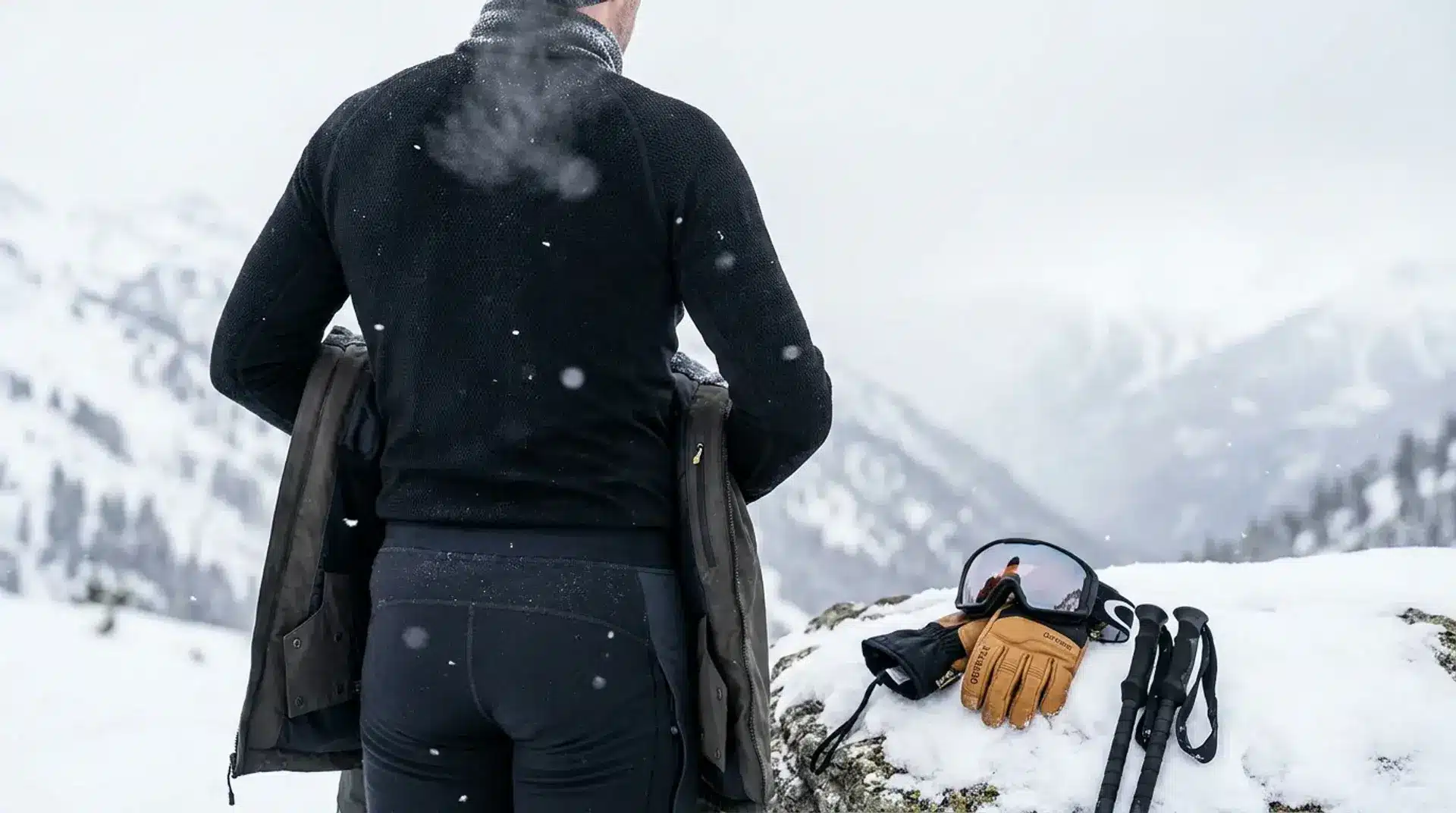
The base layer sits directly against your skin, so its main job is to control moisture. Even on cold ski days, your body heats up quickly once you start moving. If sweat stays trapped, you can end up freezing during lift rides.
Merino wool is popular because it stays warm even when slightly damp and feels soft against the skin. Synthetic fabrics also work well because they dry fast and usually cost less.
What you want to avoid is cotton. Cotton absorbs sweat and holds moisture for hours, which makes cold weather feel even colder.
Base Layer Weight Guide: Not all base layers are the same thickness. On warm spring days, a lightweight base layer keeps you from overheating. On typical winter resort days, midweight is the go-to. For very cold conditions or low-activity days, a heavyweight base layer adds meaningful warmth without needing an extra mid-layer.
A ski base layer should fit close to the body without feeling restrictive. Loose layers tend to trap moisture and bunch up under jackets and ski pants.
2. Mid Layer Traps Body Heat
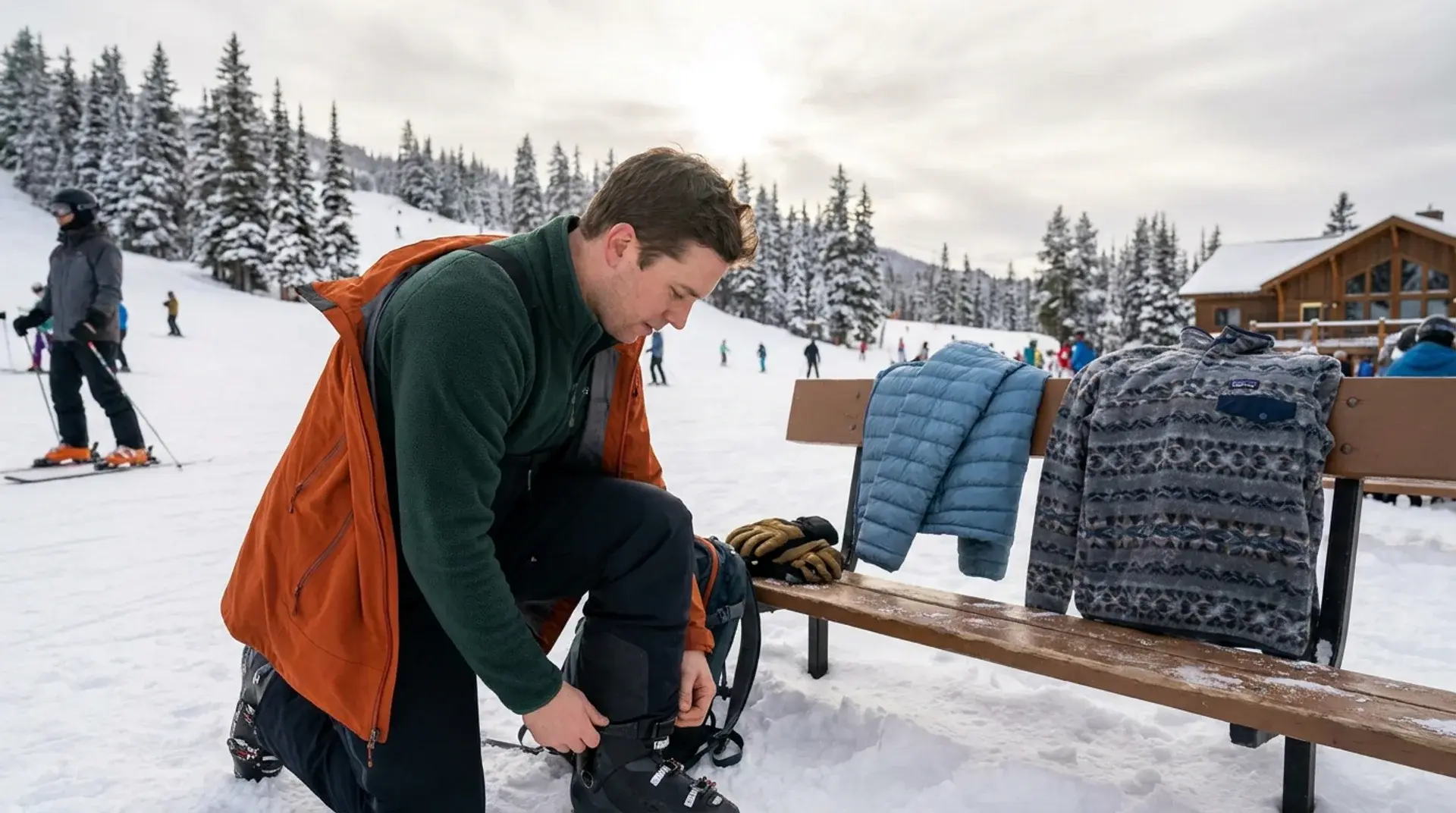
The mid-layer handles insulation. This is the piece that keeps you warm as temperatures start to drop.
Common mid-layer choices include:
- Fleece jackets for mild to moderately cold weather
- Lightweight down jackets for colder, dry mountain conditions (down loses its insulating power when wet)
- Synthetic insulated layers (like PrimaLoft) for wet snow days, synthetic fill retains warmth even when damp, making it a better all-around choice for variable mountain weather
The thickness depends heavily on temperature and activity level. Someone skiing all day aggressively may need less insulation than someone taking long breaks or skiing slowly with family.
Many experienced skiers carry an extra mid-layer in their bag rather than wearing the heaviest option from the start.
Do you need a mid-layer for your legs?
Usually not. Skiing keeps your legs constantly active, which generates enough heat that a moisture-wicking base layer and ski pants are sufficient for most conditions. A leg mid-layer is only worth adding in extreme cold or on very slow, low-output days.
3. Outer Layer Blocks Snow, Wind, and Rain
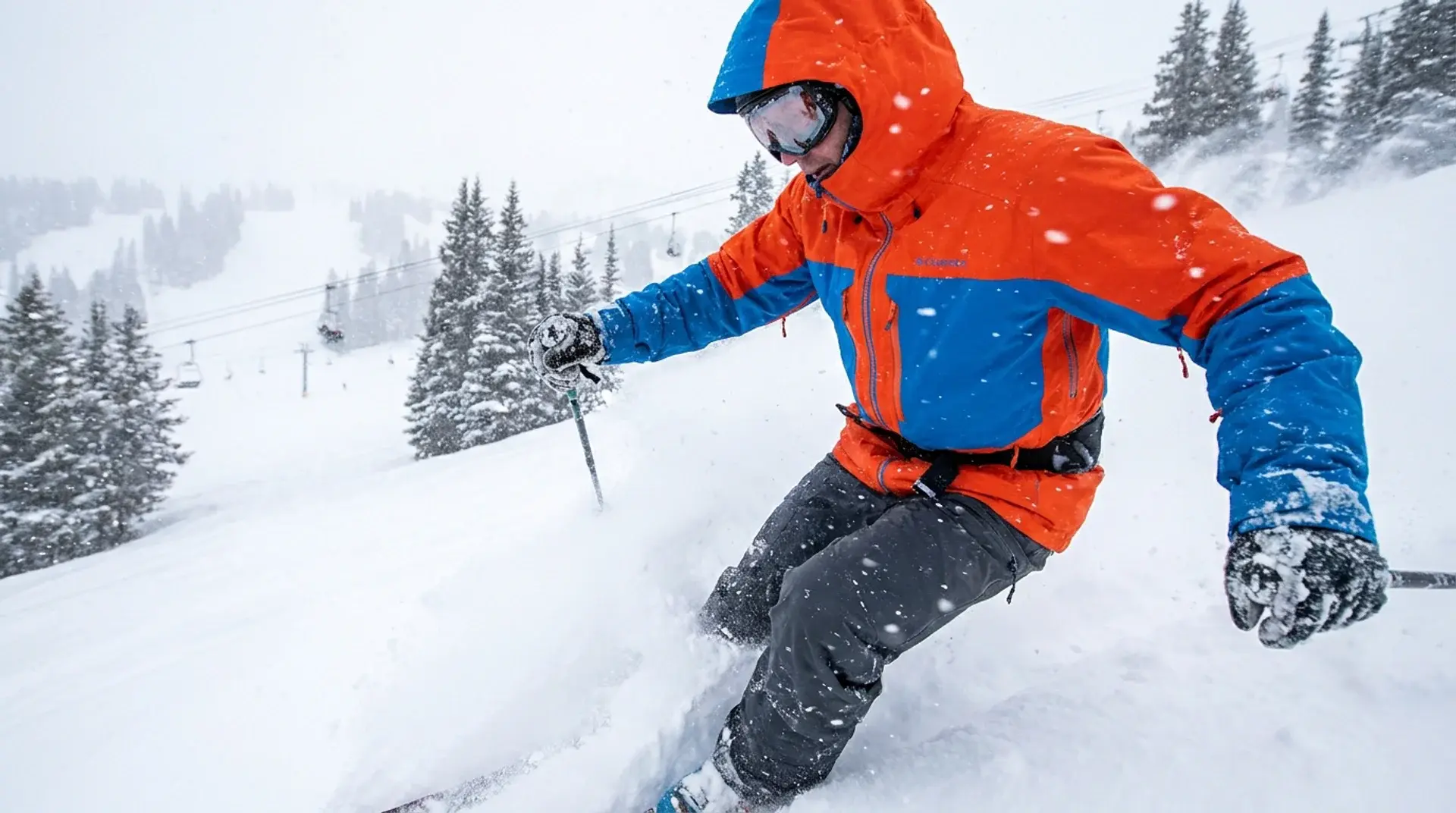
Your outer layer protects everything underneath from mountain weather. A proper ski shell is built differently from a typical winter coat because skiing involves constant movement, exposure to snow, and changing temperatures.
A Ski Jacket Usually Includes:
- Ventilation zippers
- Powder skirts to keep snow out
- Waterproof materials
- Better mobility through the shoulders
Waterproof and water-resistant are not the same thing. Water-resistant jackets can handle light snow for a short time, but heavy snowfall or wet conditions usually soak through eventually.
For the lower body, ski pants or bibs help block snow and wind while keeping movement comfortable during turns, lifts, and walking around the resort.
Many experienced skiers have their own layering combinations depending on weather, activity level, and comfort preferences. You can also see what Reddit users recommend for ski layering systems and cold-weather setups here.
Shell Jacket vs. Insulated Jacket: Which One Do You Need?
| Type | Best For | Trade-Off |
|---|---|---|
| Shell (Uninsulated) | Active skiers, variable weather, all-season use. Pairs with a mid-layer for flexible warmth. | Requires layering underneath; not as simple on cold days. |
| Insulated Jacket | Beginners, colder resorts, lift-heavy days. Warmth built in. | Less versatile; can overheat on active or spring days. |
For most beginners, an insulated jacket is the easiest starting point. Experienced skiers who ski hard and often tend to prefer shells for the layering flexibility.
What to Wear Skiing for Beginners
New skiers do not need expensive gear to layer properly. A simple skiing outfit for beginners works well for resort skiing and rental trips.
| Clothing Item | Beginner-Friendly Option |
|---|---|
| Base Layer | Synthetic thermal shirt and leggings |
| Mid Layer | Basic fleece jacket |
| Outer Layer | Waterproof ski jacket and pants |
| Socks | One pair of ski socks |
| Gloves | Waterproof insulated gloves |
| Neck Protection | Fleece neck gaiter |
| Eye Protection | Ski goggles |
Rental ski trips are much easier when you focus on staying dry rather than dressing for extreme cold right away.
Borrowing or renting outer layers can also help beginners avoid spending heavily before deciding how often they will ski.
How to Layer for Skiing in Different Temperatures
Getting your ski layers right can make a huge difference in how warm, dry, and comfortable you feel on the mountain.
The best layering setup depends on the temperature, wind, and how active you plan to be throughout the day while visiting a ski resort.
Mild Ski Weather
Warmer ski days often cause more sweating problems than freezing problems.
- Use a lighter fleece mid-layer
- Open ventilation zippers early
- Avoid thick insulated jackets
- Carry glove liners instead of heavy mittens
Many skiers overdress when temperatures rise above freezing, then spend the day overheating.
Cold Ski Days
Cold mountain weather needs stronger insulation, especially when wind chill builds on chairlifts.
- Thermal merino base layers
- Insulated mid layers
- Neck gaiters
- Glove liners inside waterproof gloves
- Thicker ski socks for lift-heavy days
Protecting exposed skin becomes more important once temperatures drop sharply.
Wet or Windy Conditions
Wet snow changes everything. Once moisture gets inside your layers, staying warm becomes much harder.
- Wear a fully waterproof outer shell
- Pack backup gloves
- Carry extra ski socks
- Keep jacket vents adjusted carefully
Strong winds can also make mild temperatures feel much colder than expected on open chairlifts.
Ski Accessories That Make a Big Difference
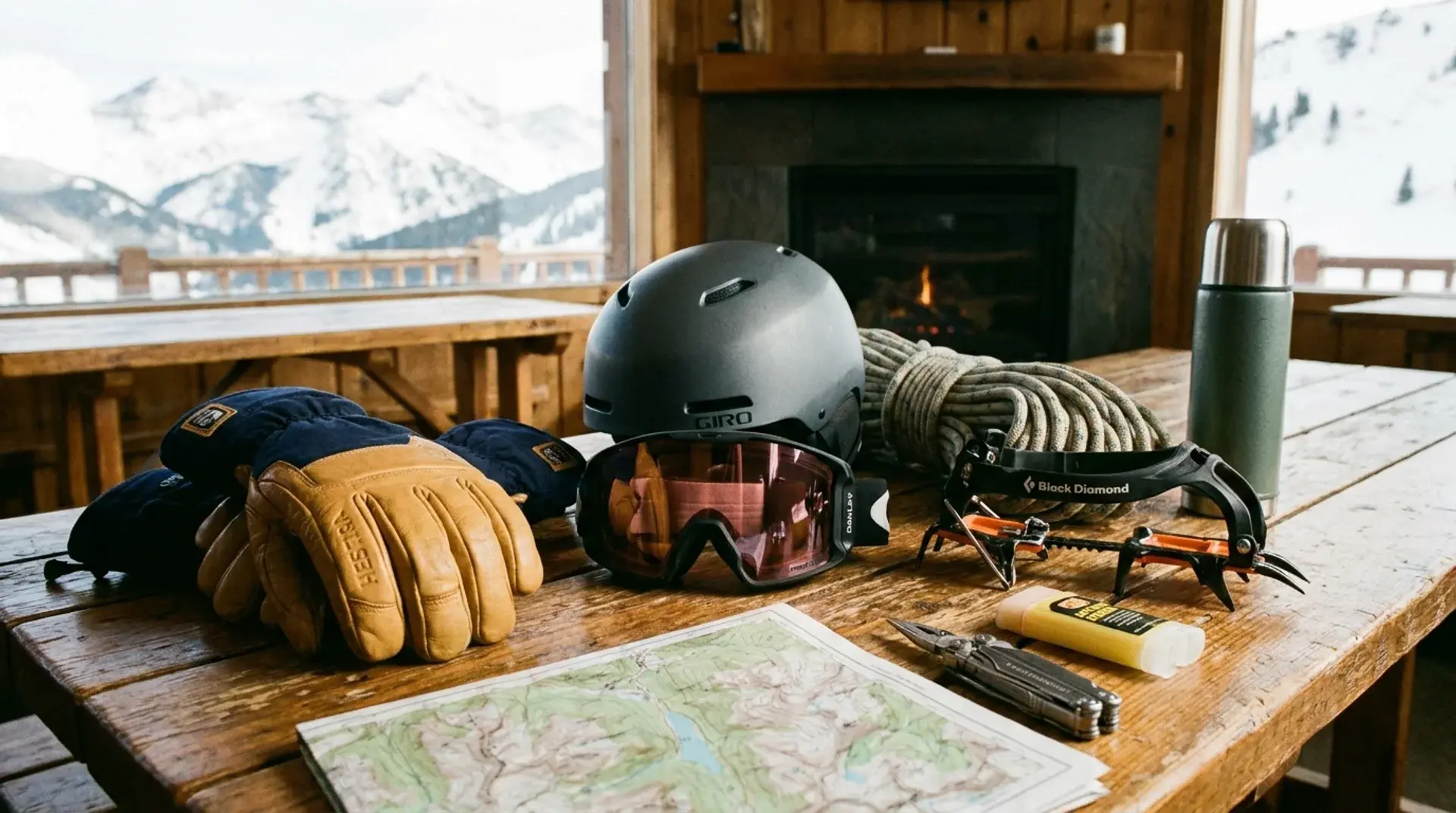
Some of the most useful ski gear is easy to overlook until you spend a full day uncomfortable on the mountain.
| Accessory | Why It Helps |
|---|---|
| Helmet | Protects against head injuries from falls and lift collisions at every skill level |
| Ski Socks | Reduce friction and keep feet warm without bulk |
| Gloves or Mittens | Protect hands from wind and wet snow |
| Helmet Liners | Add warmth under helmets during colder days |
| Neck Gaiters | Cover exposed skin from wind and snow |
| Goggles | Improve visibility and protect eyes from glare and snowfall |
| Sunscreen | Apply broad-spectrum sunscreen before heading out and reapply mid-day |
Thin, well-fitted accessories usually work better than bulky gear that limits movement.
Common Ski Layering Mistakes to Avoid
A few small layering choices can make skiing feel colder, tighter, or more uncomfortable than it needs to.
- Wearing Cotton: Cotton holds sweat instead of drying quickly, so once it gets wet, it can leave you feeling cold for a long time.
- Using Too Many Bulky Layers: Thick layers can limit movement and may cause overheating after your first few runs.
- Ignoring Ventilation Zippers: Jacket vents help release extra heat before sweat builds up inside your layers.
- Wearing Tight Layers: Tight clothing can restrict movement and reduce the small pockets of warm air your body needs.
- Overdressing Before Skiing Starts: Dress for active movement, not just standing outside, because your body warms up fast once you start skiing.
Good ski layering is about staying warm without trapping too much heat or sweat.
Final Thoughts
The biggest part of learning how to layer for skiing is understanding that staying dry matters first. Warmth becomes much easier to manage once sweat and external moisture are under control.
Your layering setup should change with the weather, wind, and how hard you ski during the day. Some mornings start freezing and end with people opening vents by lunchtime.
Comfortable ski layering keeps you focused on the mountain instead of constantly adjusting gloves, jackets, or soaked clothing halfway through the day.
Frequently Asked Questions
Should Ski Layers Fit Tight or Loose?
Ski layers should fit close to the body without restricting movement so they trap warmth properly and allow moisture to escape easily.
Can You Ski in Leggings Instead of Base Layers?
Yes, thermal leggings or moisture-wicking athletic leggings can work for skiing if they stay dry and fit comfortably under ski pants.
How Many Layers Do Most Skiers Wear?
Most skiers wear three main layers: a moisture-wicking base layer, an insulating mid layer, and a waterproof outer shell.
Do You Need Different Layers for Snowboarding and Skiing?
The layering system is mostly the same, though snowboarders sometimes prefer slightly looser outer layers for added mobility and comfort.