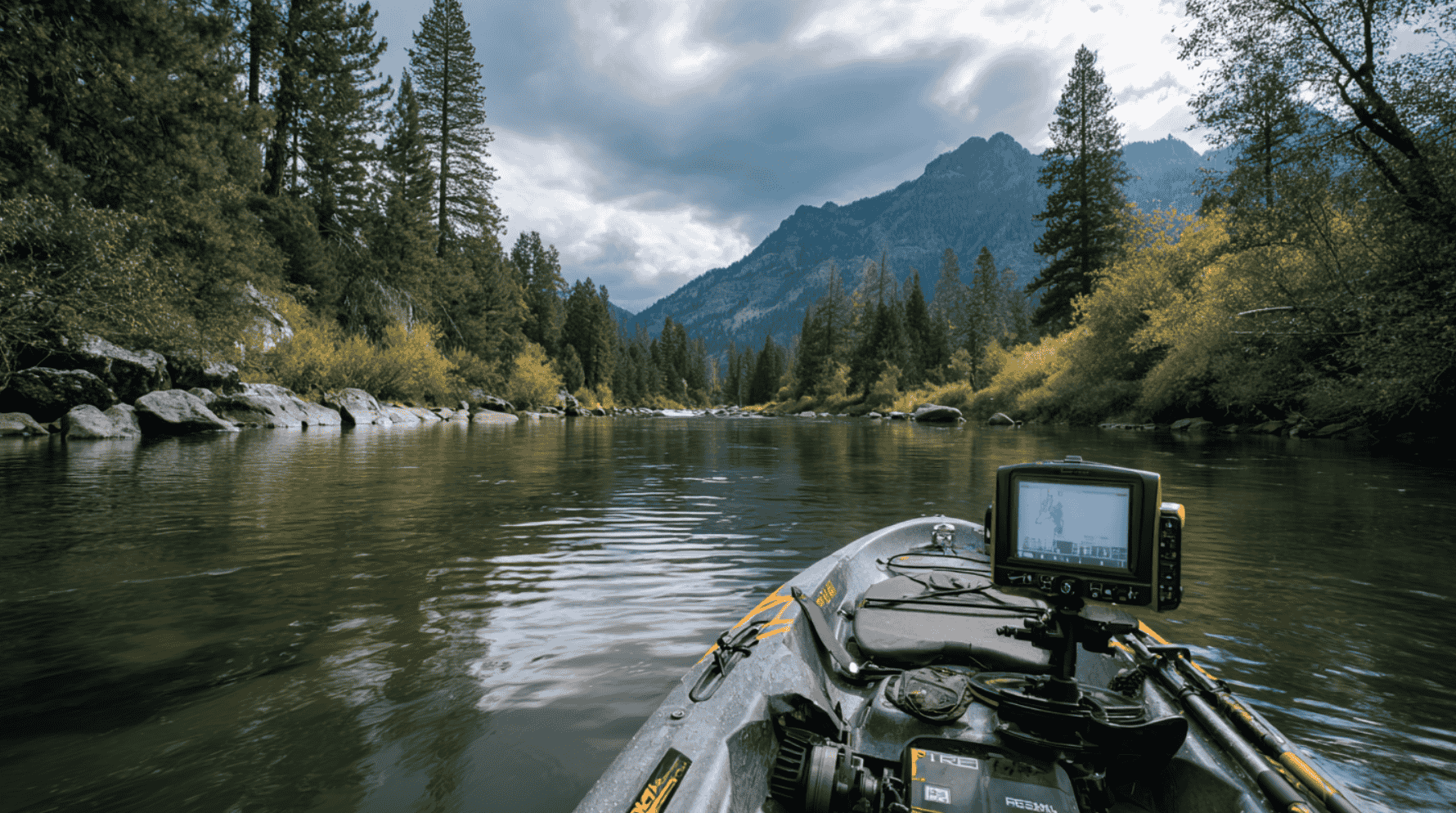
Most of my students show up knowing how to paddle. What trips them up is the fishing side specifically, casting blind and wondering why they’re not finding fish.
I’ve spent years on the water as a kayak instructor and outfitter, and I can tell you the single thing that made the biggest difference in my own fishing wasn’t technique. It was being able to see what’s actually beneath me.
That’s what a good kayak fish finder does. It takes the guesswork out and shows you depth, structure, and fish activity before you even make a cast.
I’ve tested many of these devices across different water types and compiled a list of the best fish finders for kayaks. They are based on real on-water use, not just what looks good on a spec sheet.
Challenges of Using Fish Finders on Kayaks
Kayaks are small, lightweight, and built for mobility, which makes adding electronics a bit tricky.
Limited space means every piece of gear has to be carefully chosen, and the setup should be simple enough not to interfere with paddling.
Power is another concern; unlike motorboats, kayaks don’t have built-in batteries, so anglers must rely on compact power sources.
Mounting also takes creativity, since you need to place the unit where it’s easy to read but still protected from splashes and bumps.
Understanding these challenges helps you appreciate why not every fish finder is suitable for a kayak, and why choosing the right fishing kayak can make a significant difference in comfort and results.
Different Types of Fish Finders for Kayaks
Not all fish finders work the same way, and picking the right type depends on how you like to fish from your kayak. Some are fixed in place, while others are fully portable.
Knowing the main types will help you match the unit to your fishing style.
| 1. Fixed or Mounted Units: Installed directly on the kayak, typically with a bracket, for stable, reliable performance.
2. Portable Units: Small screens with transducers that can be attached temporarily, ideal for switching between kayaks. 3. Castable Fish Finders: Wireless devices you toss into the water and connect to via smartphone apps. 4. Handheld Units: Compact devices you hold in your hand, useful for quick trips or ultra-light setups. |
Each type of fish finder has its strengths. Mounted units deliver the most stability, while portable fish finders for kayak fishing and castable versions excel when flexibility is a priority.
By understanding the options, you can select a design that suits both your kayak and your preferred fishing style.
Quick Comparison of All Fish Finders
Before going into each pick, here’s a side-by-side look at every model below. Use it to spot the unit that fits your budget, water type, and setup at a glance.
| Model | Display | Sonar Type | GPS / Mapping | Type | Top Pro | Top Con |
|---|---|---|---|---|---|---|
| Lowrance HOOK2 5 (Best Overall) | 5-inch | Auto-tuning + Downscan | GPS built in, map card sold separately | Mounted | Auto-tunes with no setup | No side imaging |
| Garmin Striker Plus 4CV (Best Budget) | 4.3-inch color | CHIRP | GPS waypoints, no mapping | Mounted | Best value with GPS | Small screen, no imaging |
| Garmin Echomap UHD2 (Best Premium) | High-res (sizes vary) | CHIRP + ClearVü | GPS with preloaded maps | Mounted | Near-photo bottom imaging | High price point |
| Lowrance HOOK2 4x (Best Shallow Water) | 4-inch | Auto-tuning sonar | None | Mounted | Reliable in 1.5 ft of water | No GPS, weak past 100 ft |
| Humminbird HELIX 7 CHIRP MSI GPS G4 (Best Deep Water) | 7-inch | CHIRP + Mega Side + Mega Down | Built-in GPS, AutoChart Live | Mounted | Mega Side covers a wide area | Bulky, premium price |
| Deeper PRO+ 2 (Best Castable) | Uses smartphone | Wireless castable sonar | App-based, no built-in GPS | Portable / Castable | No mounting needed | Depends on the phone battery |
That’s the snapshot. Each pick gets a full breakdown below, but first, it helps to know why kayak fish finders work differently than boat-mounted units.
Best Kayak Fish Finders 2026 by Category
With numerous models available, selecting the right fish finder can be daunting. That’s why we’ve sorted through the top options and narrowed them down; this is our pick for the best in each category.
1. Best Overall Fish Finder for Kayaks
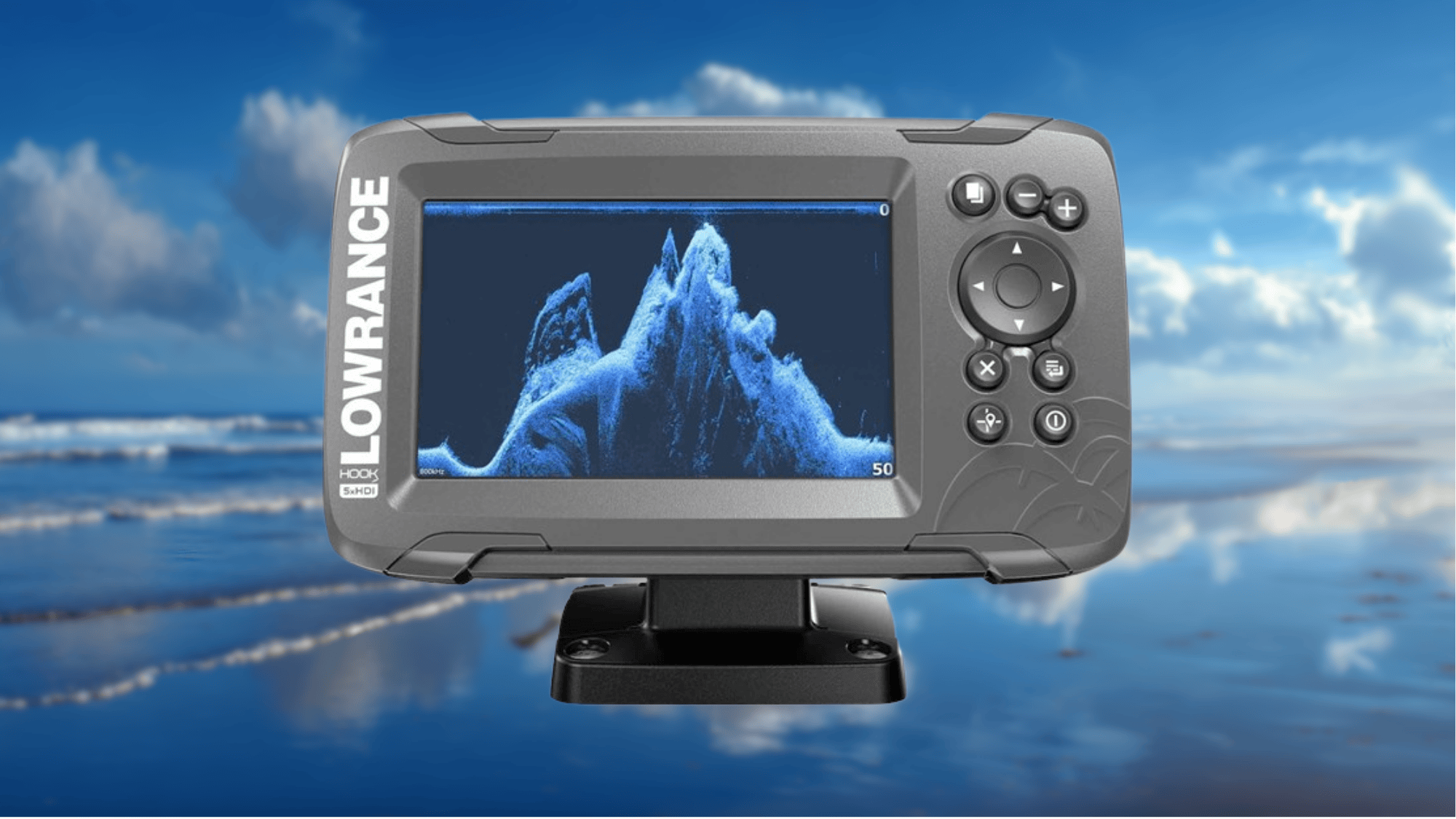
The Lowrance HOOK2 5 combines ease of use with strong performance, making it a great all-rounder. It has a bright 5-inch display, auto-tuning sonar, and simple menus that are beginner-friendly.
With downscan imaging and GPS features, it delivers reliable performance for both new and experienced kayak anglers.
| Pros | Cons |
|---|---|
| Auto-tuning sonar needs almost no manual adjustment | No side imaging limits water coverage |
| Downscan imaging gives clearer structure views than basic sonar | Chart mapping requires a separately purchased card |
| Good balance between price and features | The transducer cable can be short for some kayak setups |
Sonar tech: Standard auto-tuning sonar with DownScan imaging. No side imaging or live forward-facing sonar.
2. Best Budget Fish Finder for Kayaks
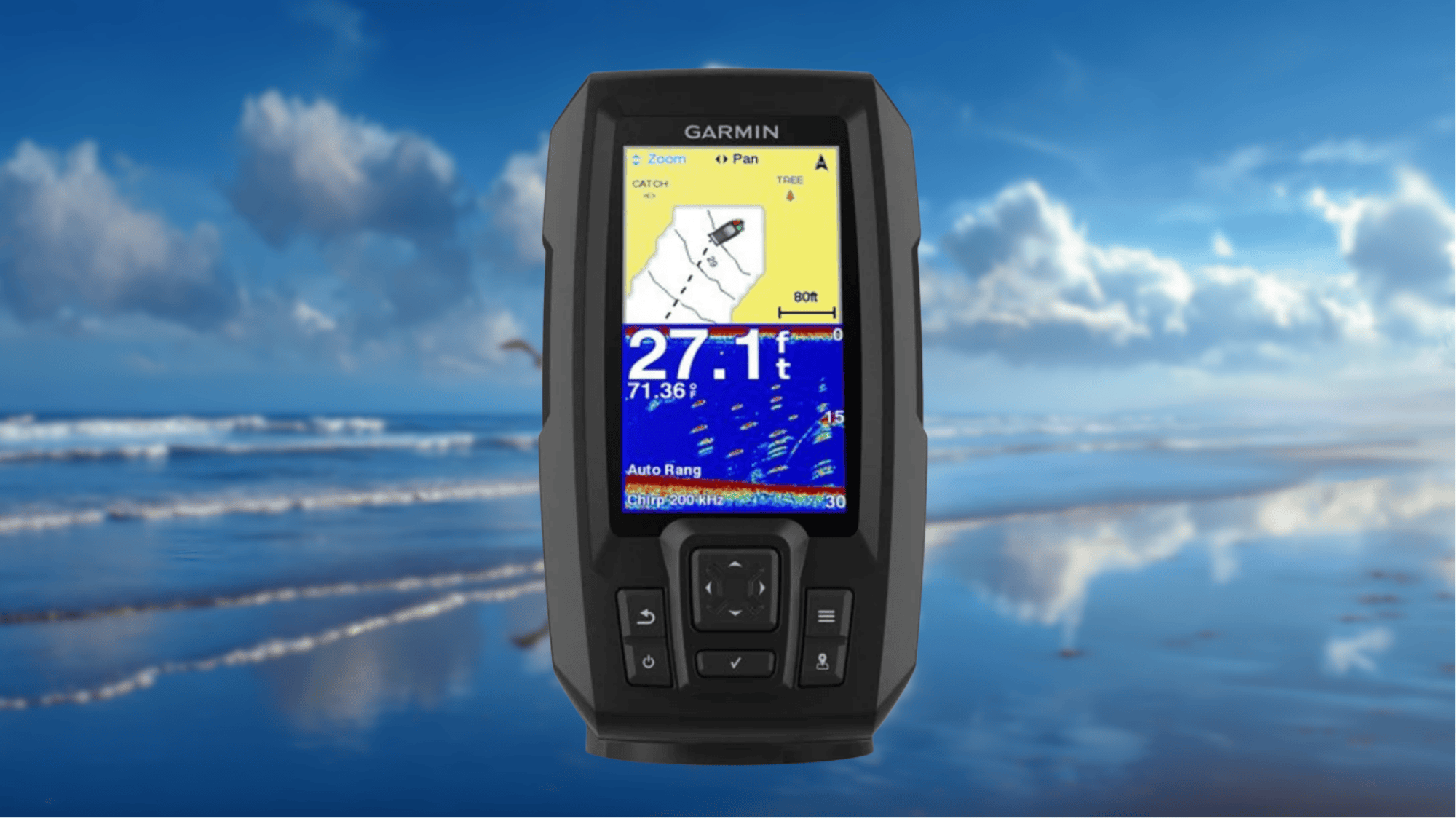
The Garmin Striker Plus 4CV is an affordable option that doesn’t compromise on essentials. Its 4.3-inch color screen is clear even in sunlight, and it offers CHIRP sonar plus GPS for marking waypoints.
Lightweight and compact, it’s ideal for smaller kayaks and anglers who want reliable results on a budget.
| Pros | Cons |
|---|---|
| One of the most affordable units with built-in GPS | 4.3-inch screen feels small for quick on-water reads |
| CHIRP sonar performs well above its price point | No mapping, only basic GPS with waypoints |
| Simple interface that doesn’t take long to learn | No down or side imaging at this price tier |
Sonar tech: Standard CHIRP sonar with ClearVü down imaging. No side imaging or live forward-facing sonar.
3. Best Premium Fish Finder for Kayaks
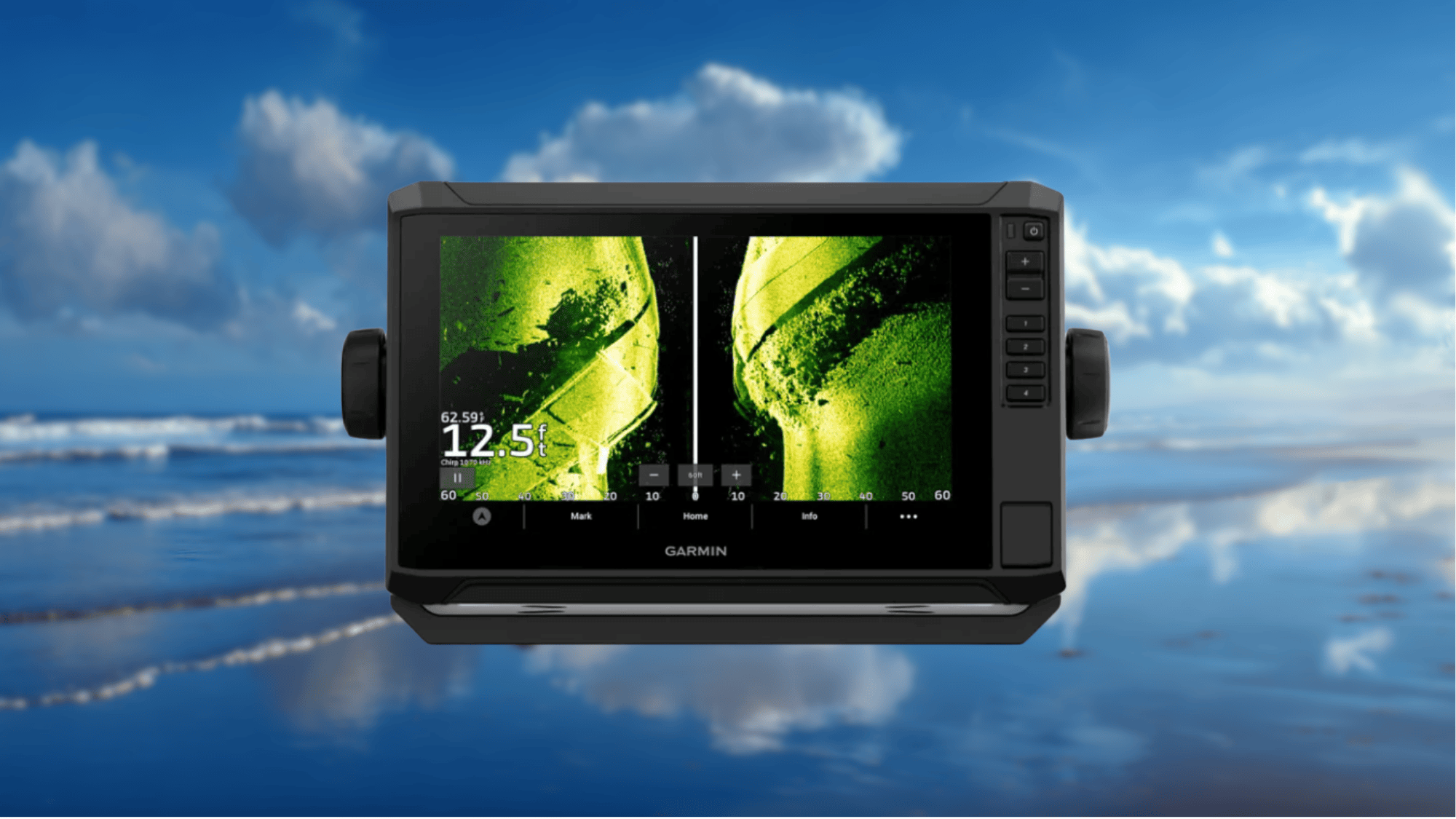
If you want the latest features, the Garmin Echomap UHD2 delivers. With a high-resolution screen, advanced CHIRP sonar, ClearVü imaging, and detailed GPS mapping, it offers pro-level performance in a compact size.
It’s perfect for serious anglers who want accuracy, durability, and full-featured navigation support.
| Pros | Cons |
|---|---|
| ClearVü sonar produces near-photographic bottom structure images | A higher price point won’t suit casual anglers |
| Preloaded maps save money on chart purchases | A touchscreen can be less accurate in cold weather with gloves |
| Holds up well in saltwater and heavy-use conditions | Needs a larger battery setup than entry-level units |
Sonar tech: Standard CHIRP sonar with ClearVü down imaging. SideVü side imaging is included on the “sv” models, and the unit is LiveScope-compatible (sold separately) for real-time forward-facing sonar.
4. Best for Shallow Water Fishing
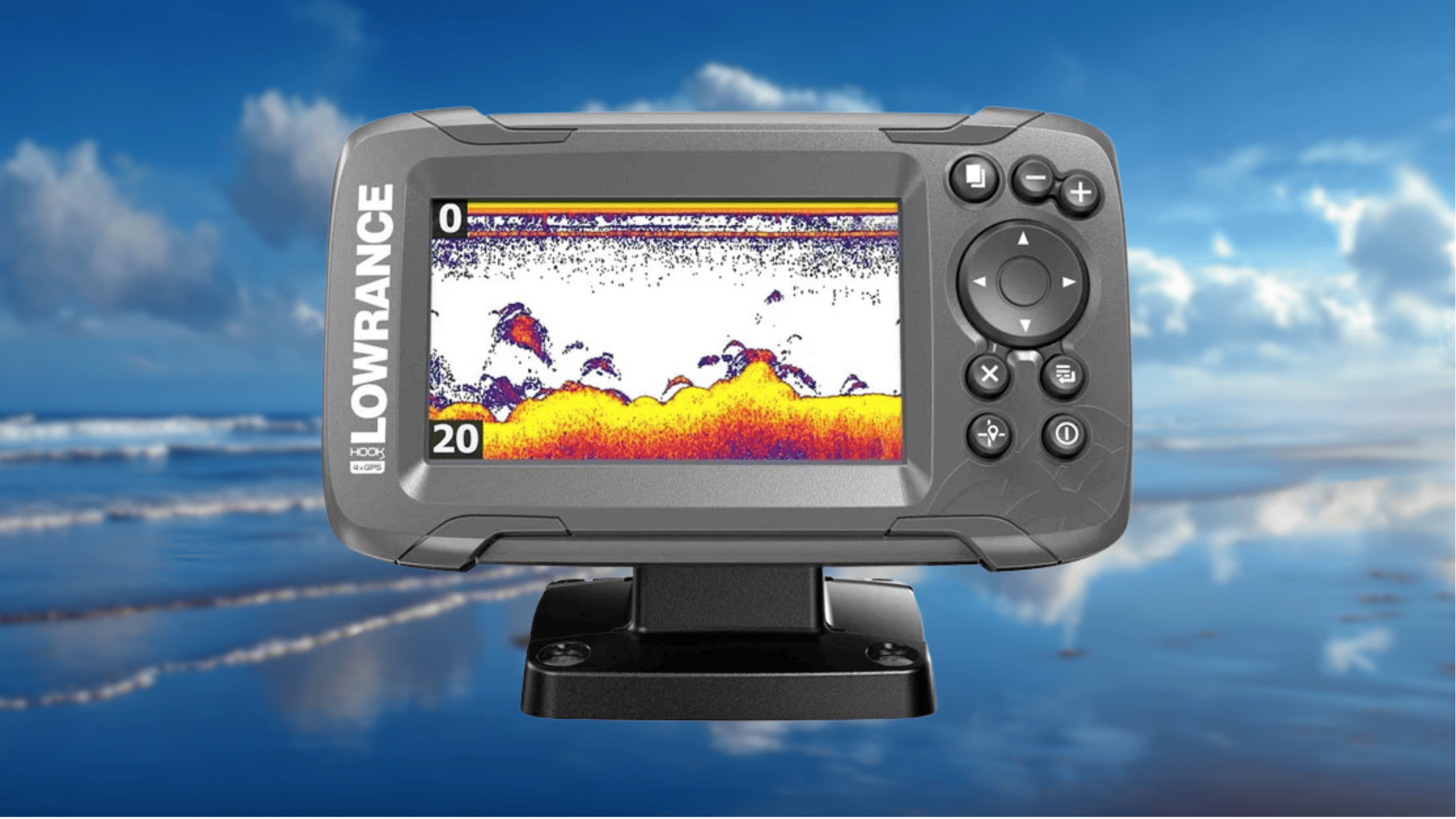
For shallow rivers, ponds, and nearshore spots, the Lowrance HOOK² 4x with Bullet Transducer and GPS Plotter is a smart pick. It’s compact, easy to install, and provides accurate readings in shallow depths.
The device keeps things simple with automated sonar settings while still giving clear views of bottom contours and fish.
| Pros | Cons |
|---|---|
| Auto-tuning sonar works reliably in water as shallow as 1.5 feet | No GPS, so you can’t mark or return to productive spots |
| Very affordable entry point for first-time buyers | 4-inch screen is small and can feel limiting |
| Light enough that it won’t throw off kayak balance | Performance drops significantly past 100 feet in depth |
Sonar tech: Standard auto-tuning sonar only. No down imaging, side imaging, or live forward-facing sonar.
5. Best for Deep Water Fishing
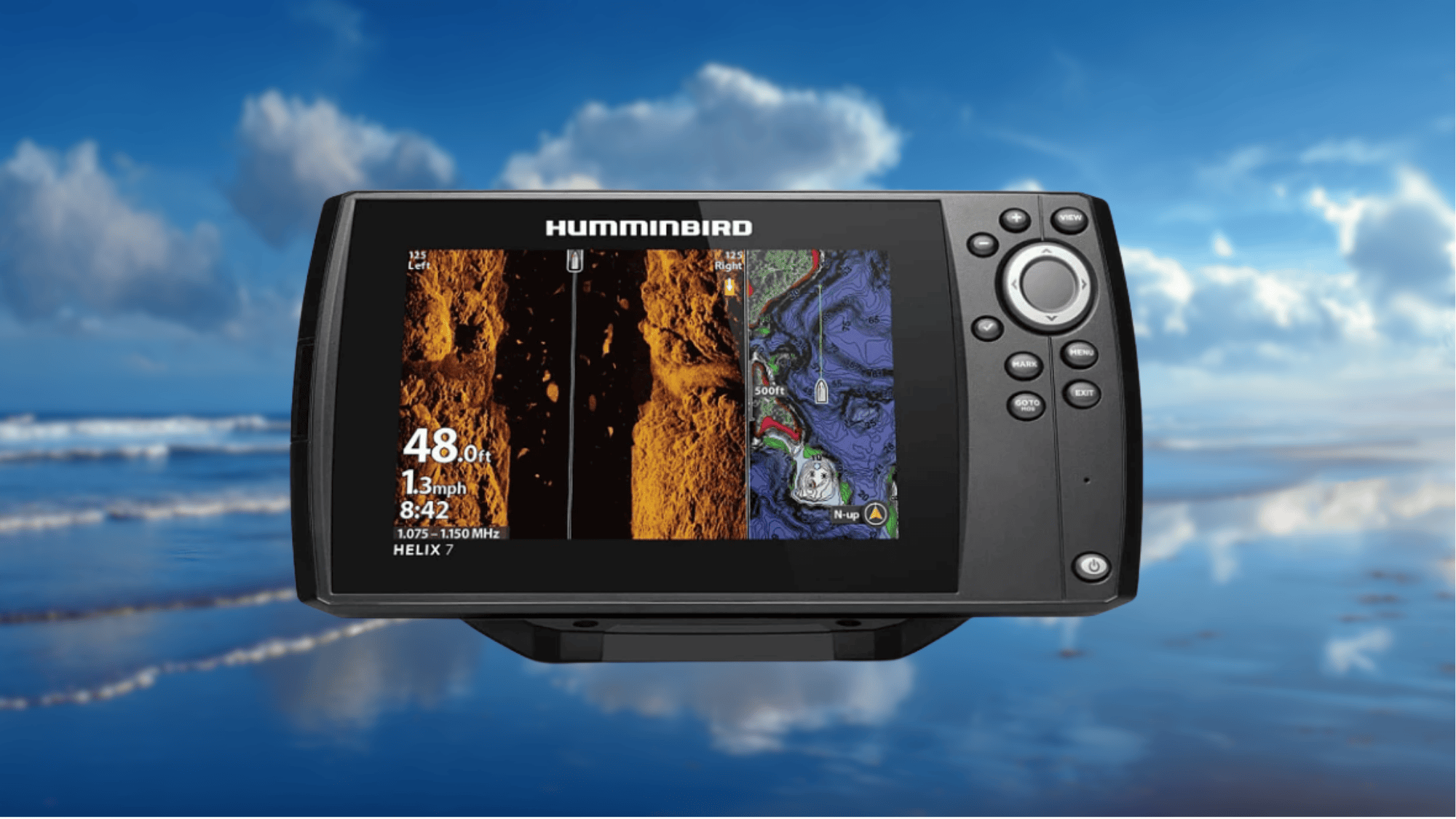
The Humminbird HELIX 7 CHIRP MSI GPS G4 is built for anglers who need clear readings in deeper water. This is a side-imaging fish finder for a kayak that offers Mega Down Imaging and CHIRP sonar. It provides sharp detail even at depth.
The 7-inch screen and built-in GPS mapping make it a reliable choice for serious kayak anglers fishing deep lakes or coastal areas.
| Pros | Cons |
|---|---|
| Mega Side Imaging covers a wide area of water on both sides of the kayak | Heavier and bulkier than most kayak fish finders |
| 7-inch screen is the largest on this list, easy to read at a glance | Premium price puts it out of reach for budget anglers |
| AutoChart Live builds your own depth maps in real time | A larger transducer can be tricky to mount on some hull shapes |
Sonar tech: Standard CHIRP sonar with Mega Down Imaging and Mega Side Imaging. No live forward-facing sonar.
6. Best Castable Fish Finder for Kayaks
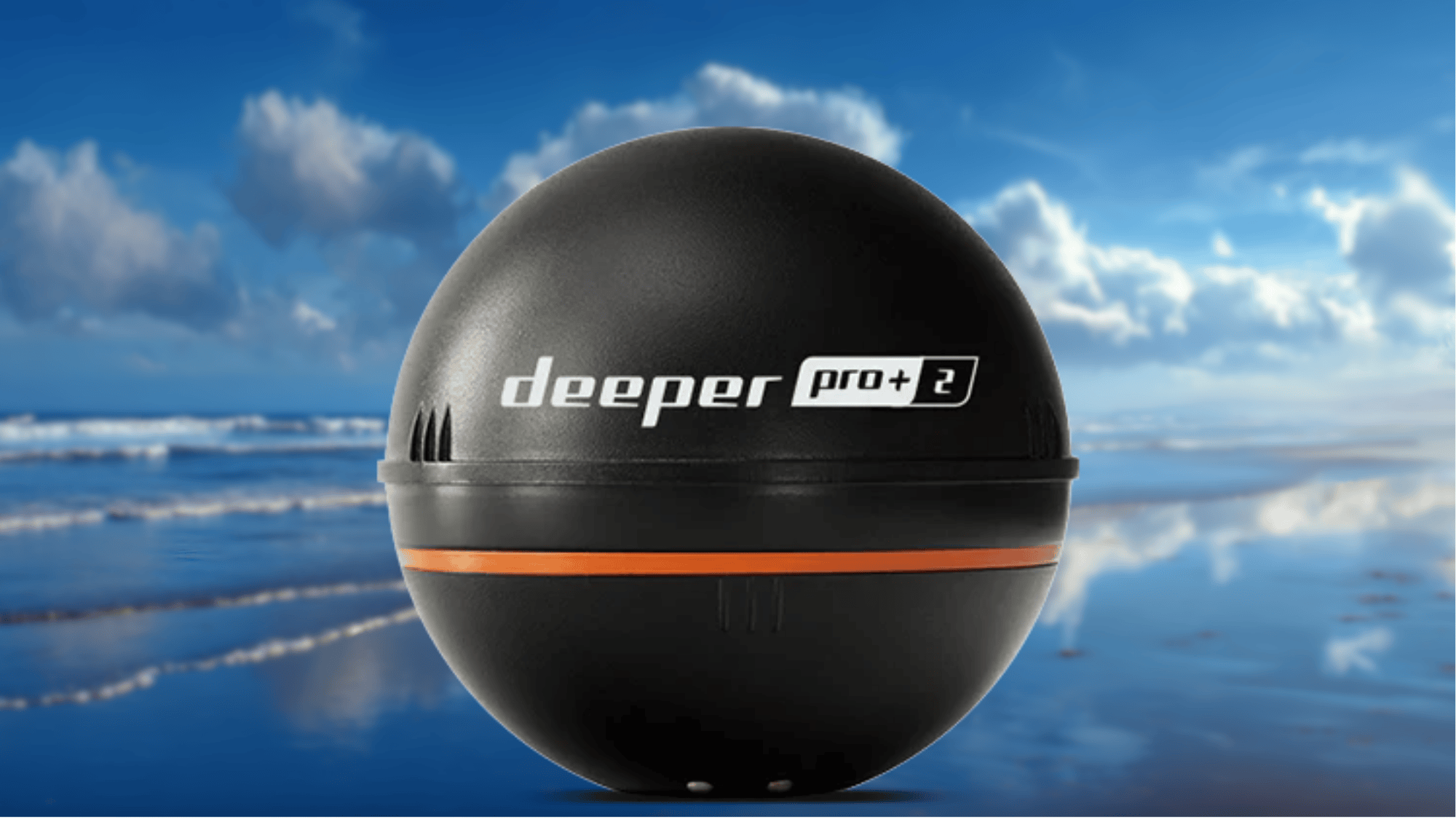
The Deeper Sonar PRO+ 2 is a castable, app-connected fish finder that turns your smartphone into a display. Toss it into the water and get instant depth, structure, and fish readings.
Lightweight and wireless, it’s a top choice for minimalist kayak setups or anglers who want fast, portable performance.
| Pros | Cons |
|---|---|
| No mounting needed, keeps your kayak setup clean | Relies on your phone’s battery and signal |
| Works from shore too, not just on the kayak | The app interface isn’t as fast as a dedicated display |
| Easy to pack and carry on any trip | Phone screen glare is harder to manage than a dedicated unit |
Sonar tech: Standard dual-beam castable sonar (narrow and wide). No side imaging or live forward-facing sonar.
How to Mount & Power a Fish Finder on a Kayak
A fish finder only works well if it’s mounted securely and has a reliable power source. Since kayaks have limited space and no built-in wiring, setup needs to be simple and safe.
Here are the main ways to mount and power your unit without creating clutter.
Mounting Options:
- Scupper Hole Mount: Uses the kayak’s built-in scupper holes to position the transducer below water.
- Suction Cup Mount: Quick and removable, ideal for anglers who switch between kayaks.
- Arm or Track Mount: Adjustable and secure, keeping the transducer stable while paddling.
- In-Hull Mount: Places the transducer inside the hull for protection (works best with thinner hull materials).
Powering Options:
- Small 12 v Battery: The most common setup, easy to store in a waterproof box.
- Lithium Battery Pack: Lightweight and long-lasting, perfect for longer trips.
- Portable Power Bank (USB models): Works for smaller, low-draw fish finders or castable units.
The best setup depends on your kayak and fishing style. Choose a mount that keeps the transducer stable and a power source that won’t run out mid-trip.
A clean, well-thought-out installation makes your fish finder reliable, safe, and easy to use every time you’re on the water.
Mistakes to Avoid When Using a Fish Finder on a Kayak
Setting up a fish finder can significantly increase the productivity of your fishing trips, but common mistakes can reduce its effectiveness.
One of the biggest errors is choosing a unit that’s too large or power-hungry for a small kayak, which can drain batteries quickly and clutter your space.
Another mistake is poor transducer placement; if it isn’t mounted properly, you’ll get inaccurate readings or lose signal when paddling.
Many anglers also overlook waterproofing, leaving connections and screens exposed to splashes or rain. Skipping a sunlight-readable display is another misstep since glare can make the screen almost impossible to use.
Lastly, some buyers focus on features they won’t use rather than prioritizing size, battery life, and clarity. Avoiding these pitfalls ensures your fish finder remains a helpful tool rather than a hassle.
Want to catch more bass from your kayak ? Read our full guide on setup, casting, and staying safe on the water.
Final Thoughts: Choosing the Right Fish Finder for Your Kayak
A fish finder can completely change how you approach kayak fishing, turning guesswork into a clear strategy. The right model helps you see depth, locate fish, and navigate water more confidently, all while fitting neatly into your kayak setup.
From budget-friendly starters to premium units, there’s an option for every style and need. The key is to focus on size, power efficiency, durability, and the features you’ll actually use.
If you’re still not sure which unit fits your setup, I put together a full breakdown of my top picks above. Start there, match the model to your water type and budget, and you’ll have a solid answer in minutes.
And if you’ve already got a fish finder you love, drop it in the comments. I’m always curious what’s working for other paddlers out there.
Frequently Asked Questions
Can I Use a Fish Finder in Saltwater on My Kayak?
Yes, most modern fish finders are built to handle saltwater, but you’ll want to rinse the transducer and connectors with fresh water after each use.
How Much Battery Does a Fish Finder Drain on a Kayak?
Most kayak fish finders draw between 0.5 and 1.5 amps per hour, so a small 7Ah lithium battery will comfortably power a full day on the water. Larger screens and side-imaging features draw more power.
Do I Need a Transducer Mount or Can I Shoot Through the Hull?
Shooting through the hull works on fiberglass and some plastic kayaks, but signal loss is common, and readings can be inconsistent depending on hull thickness.
Will a Fish Finder Work in Murky or Stained Water?
Yes, sonar works independently of water clarity since it reads sound waves, not light. CHIRP sonar in particular holds up well in murky conditions, giving you accurate depth and fish readings.