Choosing between windsurfing vs kitesurfing can feel confusing when both sports look exciting from the shore. I’m covering the real differences so you can figure out which one fits your style, budget, and skill level.
Windsurfing keeps you connected to a sail attached to your board, while kitesurfing uses a kite overhead to pull you across the water.
The gear is different, the learning process isn’t the same, and the feeling on the water varies a lot.
If you’re trying to decide which sport to try first, understanding what each one actually involves makes that choice much easier. Here’s what you need to know.
What Windsurfing and Kitesurfing Actually Are?
Windsurfing uses a sail that’s directly attached to your board. You hold onto a boom (the horizontal bar) and shift the sail to catch wind and change direction.
It’s all about using your body weight and sail position to control where you go. Kitesurfing works differently – you’re connected to a large kite through a control bar, and the kite pulls you across the water while you stand on a smaller board.
Windsurfing gives you more immediate control and stability, which helps when you’re learning.
Kitesurfing offers bigger jumps and faster speeds once you get the hang of it, but the learning curve is steeper since you’re managing the kite overhead while balancing on the board.
Gear Breakdown: Windsurfing vs Kitesurfing Equipment
The gear you need for each sport is pretty different. Windsurfing equipment is heavier and takes up more space, while kitesurfing gear packs down smaller and travels more easily.
Windsurfing Equipment
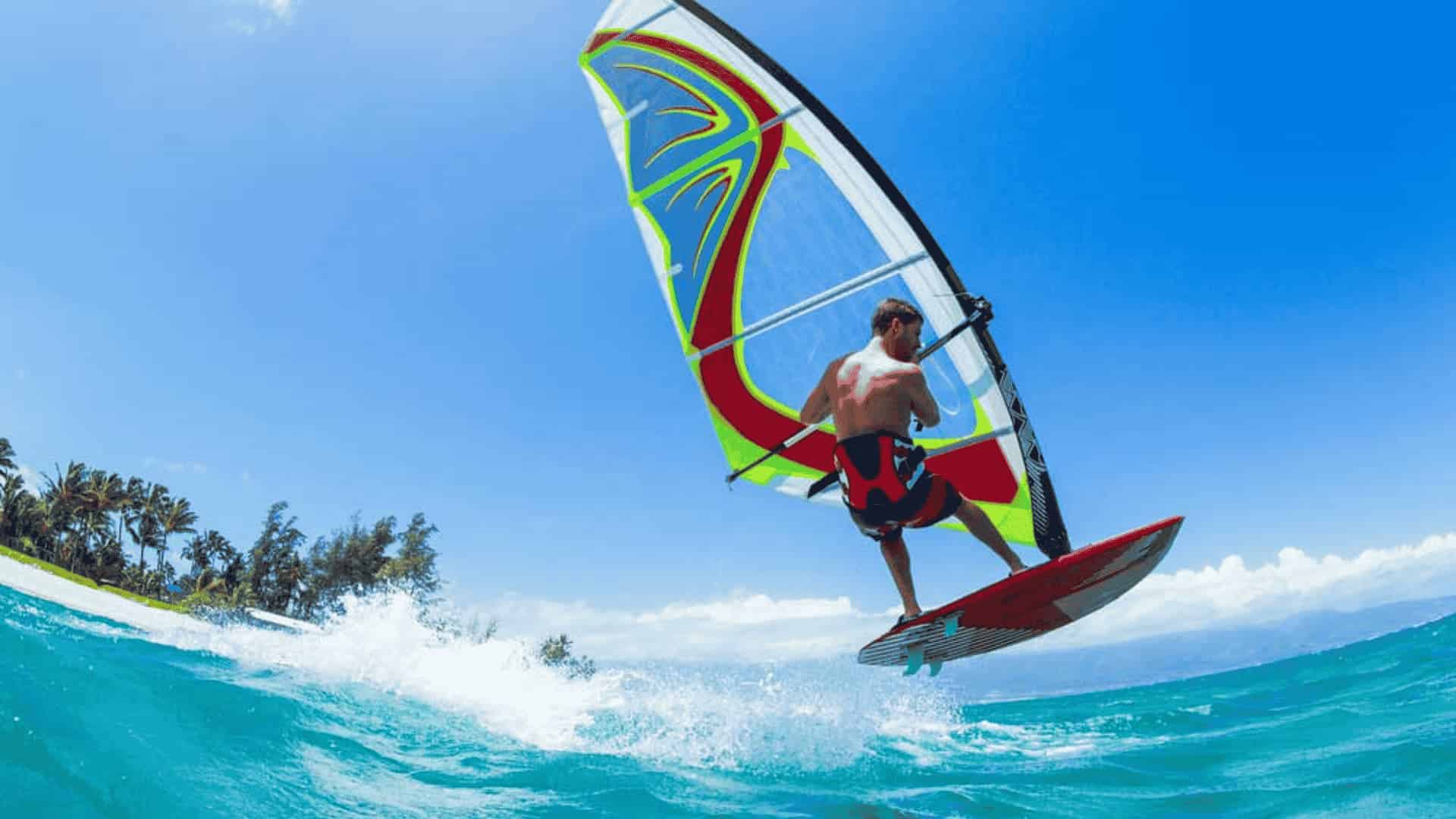
- The Board: Larger and heavier than kitesurf boards, with a mast track in the center where everything connects
- Sail and Mast: The sail attaches to a tall mast that slots into your board – you’ll need different sail sizes for different wind conditions
- Boom: The U-shaped bar you grip to control the sail and steer
- Rigging Parts: Includes the mast base, extension, and uphaul rope to set everything up
- Footstraps: Straps on the board that keep your feet secured when riding at speed
Kitesurfing Equipment
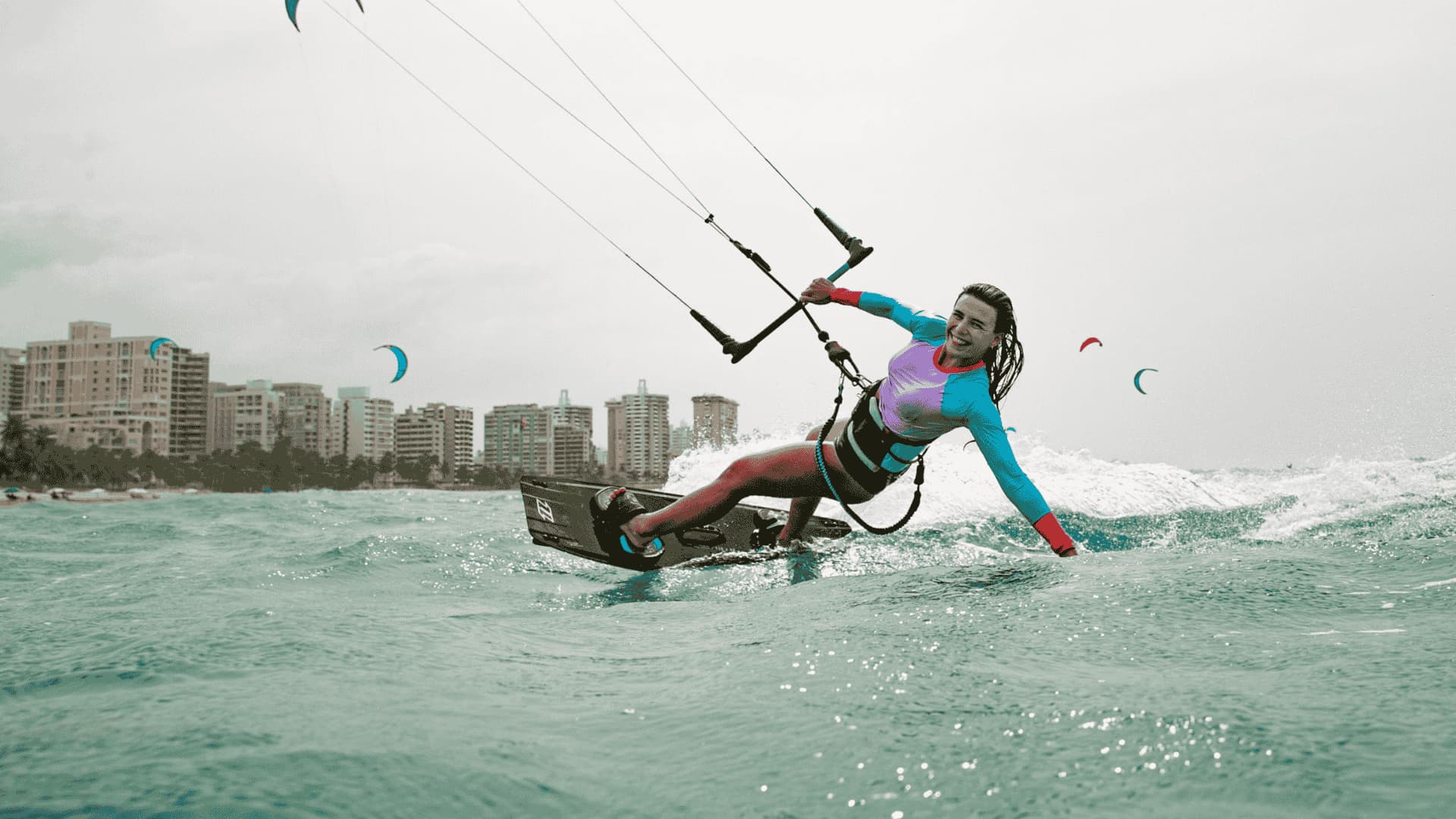
- The Kite: Inflatable wing in different sizes – smaller for strong winds, larger for light winds
- Control Bar and Lines: Four or five lines connect the bar to your kite, giving you full control
- Harness: Clips to your control bar and wraps around your waist or hips to take pressure off your arms
- Board: Smaller and lighter than windsurf boards, with or without footstraps, depending on your style
- Safety Gear: Quick-release system and leash that let you detach from the kite in emergencies
Before getting on the water, it helps to understand how the equipment for windsurfing and kitesurfing compares.
Technique & Skills – How Each Sport Works?
Windsurfing requires you to constantly adjust your stance and sail angle while keeping your balance on the board. You pull the sail in or let it out to control speed, and you lean back against the wind’s force.
Your core strength matters a lot since you’re holding that sail upright the whole time. Kitesurfing requires you to split your focus between managing the kite overhead and controlling the board beneath you.
You need to understand the power window – the area where your kite generates the most pull – and learn to move the kite smoothly while staying balanced.
Both sports demand good coordination, but windsurfing puts more emphasis on upper body strength and sail handling, while kitesurfing relies heavily on timing and spatial awareness to keep that kite stable.
Physical Demands: Windsurfing vs Kitesurfing
While both sports rely on wind power, the physical effort required on the water isn’t the same. Windsurfing involves constant muscle engagement, while kitesurfing spreads the load differently through the harness and core.
| FITNESS ASPECT | WINDSURFING | KITESURFING |
|---|---|---|
| Core Engagement | Constant core activation for balance and sail control | High core use to stabilize the body while managing kite pull |
| Leg Strength | Strong leg work for stance, turning, and absorbing chop | Legs absorb landings and maintain board control |
| Arm & Upper Body | Arms and shoulders work continuously to control the sail | Less arm strain; power is mostly transferred through the harness |
| Endurance Level | Feels physically demanding early, especially for beginners | Easier on the body at first, intensity increases with tricks |
| Overall Workout Impact | Full-body workout with steady muscle fatigue | Full-body workout with short bursts of high intensity |
Both sports deliver strong fitness benefits, but the type of fatigue you feel can vary greatly. Understanding these differences helps set expectations and choose the sport that best suits your body.
Experience & Ride Feel – What You Actually Feel on the Water?
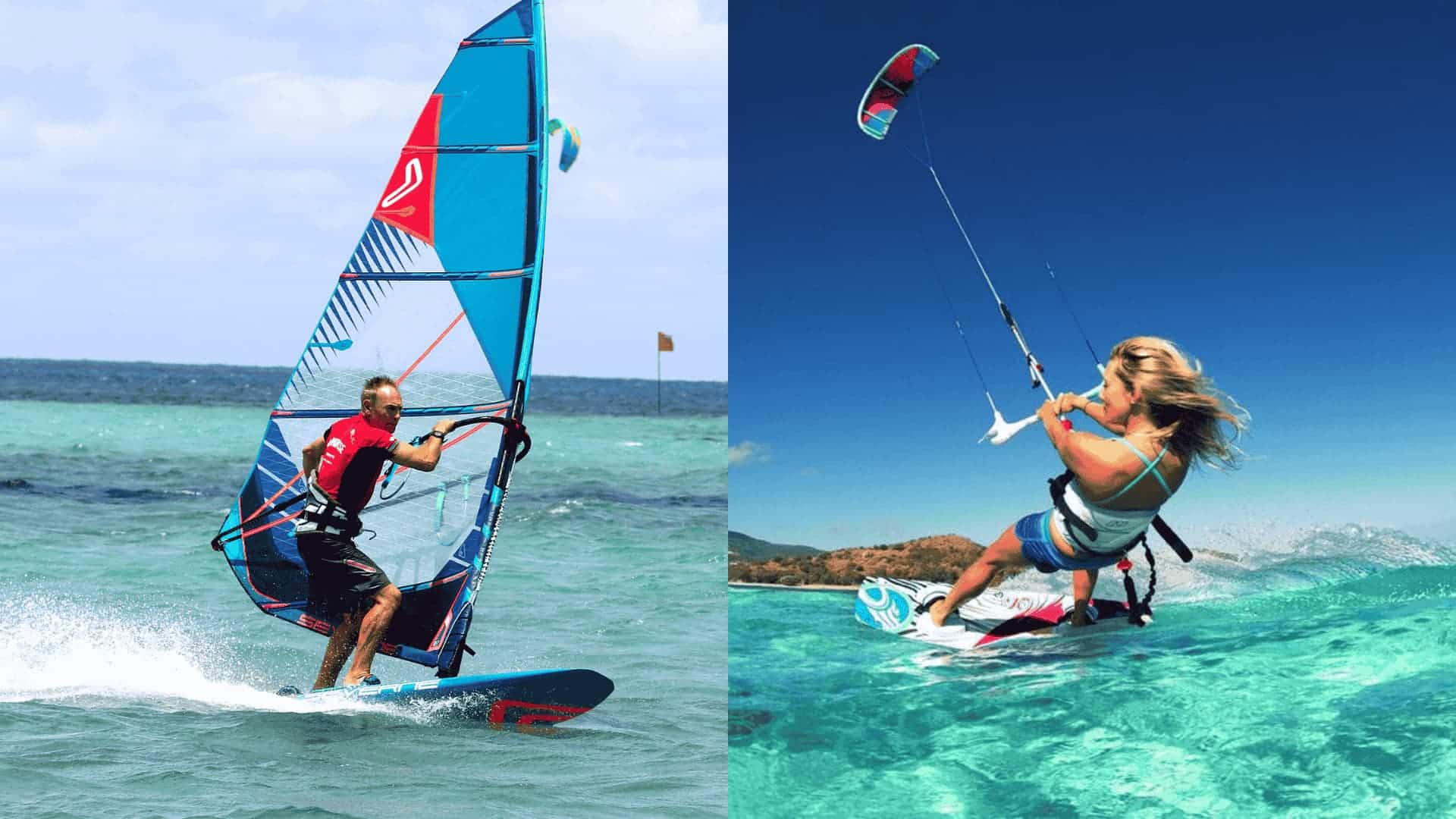
Windsurfing feels more grounded and rhythmic. You’re working with the sail constantly, making small adjustments as you glide across the water.
It’s physical but meditative once you find your rhythm. Kitesurfing delivers bigger rushes – the kite can launch you into the air, and even basic riding feels faster and more explosive.
Your first time windsurfing will probably involve a lot of falling while trying to pull up the sail.
Your first kitesurfing session might feel chaotic as you figure out kite control on land before even touching the water. If you want smooth, technical riding with moments of calm, windsurfing leans that way.
If you’re after big air and high-energy sessions, kitesurfing brings more adrenaline.
Cost Comparison: What You’ll Really Spend?
Windsurfing and kitesurfing both require upfront investment. Lessons typically run $200-400 for beginner courses in either sport.
New windsurfing gear costs $1,500-3,000 for a complete setup, while kitesurfing runs similarly at $1,800-3,500. Kitesurfing gear packs up small and fits in your car easily, but windsurfing boards require roof racks or trailers.
Maintenance is straightforward for both – rinse with fresh water after each session and check for wear. Kites can tear and need repairs, while windsurf sails handle wear better but are harder to fix.
Buying used gear saves money, especially for your first setup. Just inspect everything carefully – check kite bladders for leaks and windsurf sails for rips or stretched fabric that can’t hold wind properly.
Learning Curve: Which One Is Easier to Learn?
Windsurfing gets you riding on flat water within a few lessons – maybe 5-10 hours of practice. You’ll fall a lot at first, but once you can pull up the sail and catch wind, you’re moving. Advanced tricks take much longer to master. Kitesurfing takes more patience upfront.
You’ll spend several hours just learning to control the kite on the beach before you even get in the water. Once that clicks, you need another 10-15 hours to coordinate kite control with board riding.
Book multi-day lessons instead of single sessions – both sports need repetition.
People with sailing or wakeboarding experience often pick up windsurfing faster, while those with kite flying or snowboarding skills tend to progress quicker in kitesurfing
Safety First – Risks, Gear & Smart Riding Tips
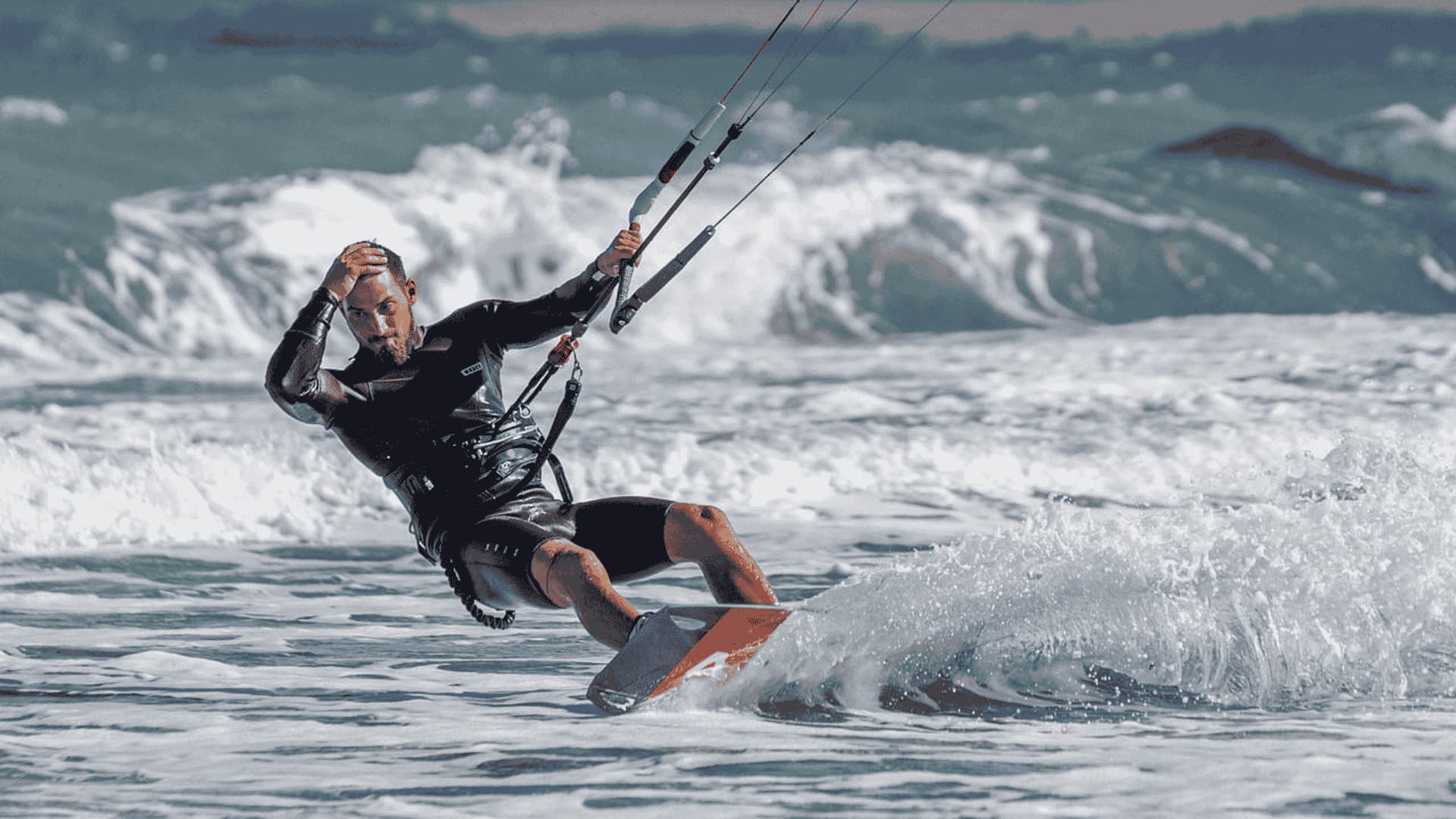
Both sports carry risks, but they’re different. Kitesurfing has more potential for getting lifted by sudden wind gusts or getting tangled in lines. Windsurfing keeps you closer to the water, but you can still get hit by your gear or drift offshore.
- Wear a Helmet and Impact Vest: Head injuries happen in both sports, especially when you’re learning and falling often.
- Use a Leash Correctly: Kitesurfers need a safety leash that releases under pressure – never attach directly to the kite without a quick-release system.
- Check Weather and Water Conditions: Offshore winds are dangerous because they push you away from shore with no easy way back.
- Learn Self-Rescue Techniques: Know how to get back to shore if your equipment fails or the wind drops completely.
- Take Lessons from Certified Instructors: They teach proper safety systems and help you avoid common mistakes that lead to injuries.
Start in light winds and controlled environments. Never go out alone when you’re new to either sport, and always let someone know where you’ll be riding and when you plan to finish.
That’s a Wrap
The windsurfing vs kitesurfing debate comes down to what kind of riding experience you want. Windsurfing offers more stability and a technical challenge that builds gradually.
Kitesurfing delivers bigger thrills and takes up less space in your garage. Both sports get you out on the water and give you a solid workout.
I recommend trying lessons in both before you invest in gear – what looks cool from the beach might not match your actual riding style. Your first session will tell you a lot about which sport clicks for you.
Drop a comment below and let me know which one you’re leaning toward or if you’ve already tried either sport.