Ever wondered why some paddlers glide effortlessly across the water while others struggle? The secret lies in understanding the anatomy of their vessel.
Most people think a canoe is just a simple hollow boat, but there’s so much more beneath the surface. Each component plays a crucial role in performance, stability, and control.
The parts of a canoe work together like a well-oiled machine, and knowing them can turn an average paddler into a confident traveller.
From the sleek curves to the hidden reinforcements, every element has a purpose. But here’s the question: can someone truly master the water without knowing what they’re sitting in?
Directional Anatomy of a Canoe
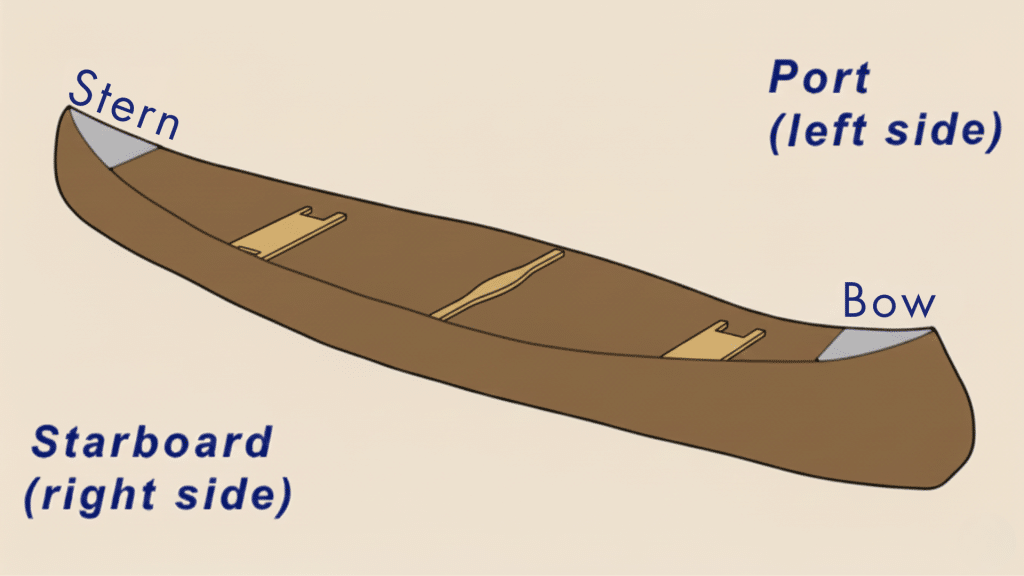
Figuring out which end is which might seem confusing at first glance. Many beginners stand by the water, staring at their canoe, wondering where to start. The parts of a canoe have specific names that paddlers use worldwide.
1. Bow (Front)
The bow is the front end that cuts through the water first. This part of a canoe typically has more legroom around the bow seat, giving the front paddler extra space to move.
The bow’s curved design helps push water aside smoothly, reducing resistance. When someone looks at a canoe from the side, the bow usually has a sharper, more pointed shape that slices through waves efficiently.
2. Stern (Back)
The stern marks the rear end where most steering takes place. Unlike the bow, the stern seat sits much closer to the end of the canoe, sometimes just 12-18 inches away.
This tight placement gives the stern paddler better control and leverage for directional changes. The stern paddler typically has more responsibility for keeping the canoe on course and making quick adjustments.
3. Port and Starboard
Port refers to the left side when facing the bow, while starboard means the right side. These nautical terms help paddlers communicate clearly without confusion about direction.
Remembering that “port” and “left” both have four letters makes it easier to remember. Understanding the parts of a canoe includes knowing these sides, especially when giving or receiving instructions on the water.
Now that the basic directions are clear, the next step is to learn the structural components that keep everything together.
Structural Foundation Behind Every Canoe
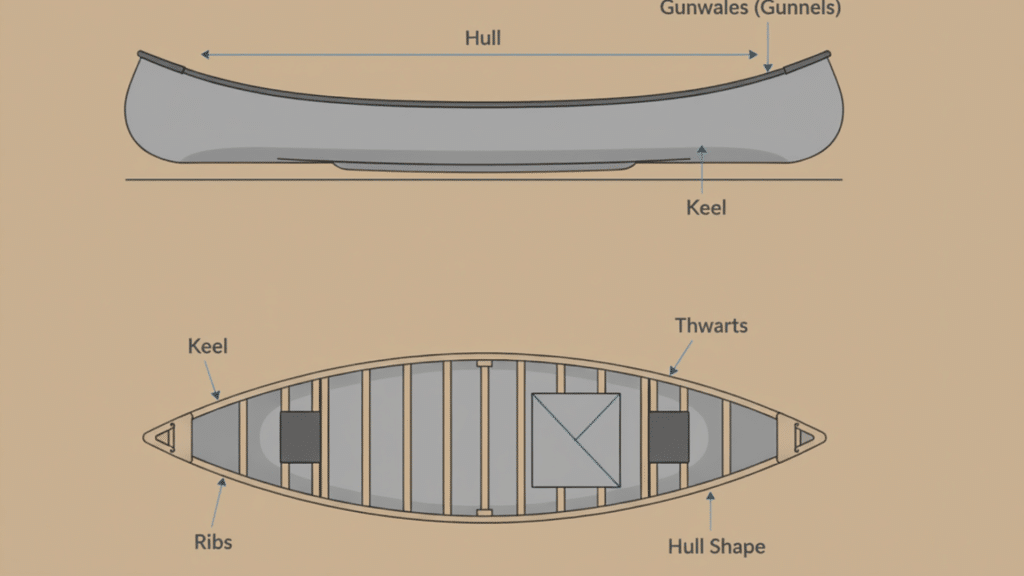
The hull forms the foundation of every canoe, serving as the watertight shell that keeps paddlers dry. Think of it as the skeleton and skin combined into one structural masterpiece. Various parts of a canoe attach to or reinforce this central body.
4. Hull Shape and Design
The hull is the main body that sits in the water, running from bow to stern. Its shape determines how fast, stable, and maneuverable the canoe performs.
Flat-bottomed hulls offer great initial stability for beginners, while rounded or V-shaped hulls cut through water faster. The hull’s material, whether fiberglass, aluminum, or plastic, affects weight and durability significantly.
5. Gunwales (Gunnels)
Gunwales are the reinforced rails running along both top edges of the hull. They protect the canoe’s rim from damage during loading, unloading, and accidental bumps.
Most paddlers grip the gunwales when carrying the canoe on their shoulders. These sturdy rails also provide attachment points for seats, thwarts, and other hardware that complete the parts of a canoe.
6. Keel
The keel runs along the bottom center of the hull from front to back. This raised strip helps the canoe track straight through calm water rather than wandering sideways.
However, canoes with pronounced keels turn less quickly, making them challenging in rapids. Many modern recreational canoes feature shallow or no keel for better maneuverability in various water conditions.
7. Ribs and Thwarts
Ribs curve across the inside bottom, reinforcing the hull against pressure and impacts. Thwarts are crossbars that span from one gunwale to the other, maintaining the canoe’s width and shape.
These horizontal braces prevent the hull from flexing or collapsing under stress. Some thwarts also serve as carrying handles, making portaging easier when paddlers need to move between waterways.
With these structural elements working together, the hull creates a reliable platform. But seats and decks add the finishing touches that make paddling comfortable.
Upper Structure of a Canoe
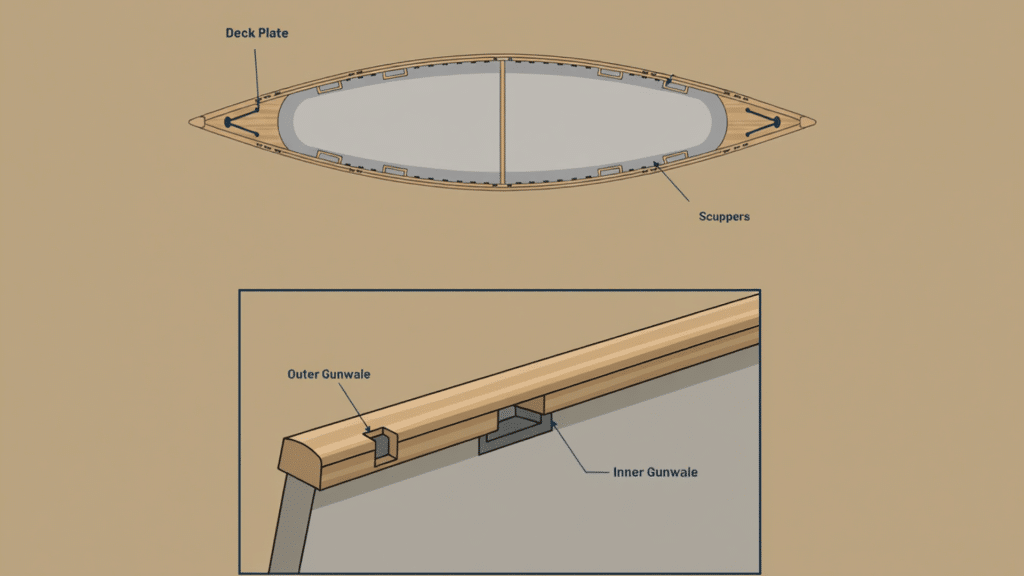
The top rim of a canoe features several important elements that protect and strengthen the vessel. These upper components take the most abuse during transport and daily use. From reinforced edges to decorative caps, each piece serves both practical and aesthetic purposes.
8. Deck Plates
Triangular or rounded plates cap the bow and stern ends, sealing off the pointed tips completely. Most manufacturers match these plates to the canoe’s main material, using fiberglass, plastic, or wood, depending on the build.
They shield the vulnerable end points from damage when the canoe scrapes against docks or beaches. Many designs include built-in carrying handles or rope loops, which make lifting and securing much easier for transport.
9. Scuppers
These small notches cut into the gunwales serve a clever dual purpose. Water from rain or paddle splashes can drain out through these openings instead of collecting inside the hull.
Beyond keeping things dry, scuppers also add visual interest to the canoe’s profile. Traditional builders sometimes create decorative patterns with their scupper placement, reflecting regional styles found across different parts of canoe construction.
These top-edge features complete the upper structure, but the interior holds equally crucial elements. The seating system comes next.
Interior Structural Parts of a Canoe
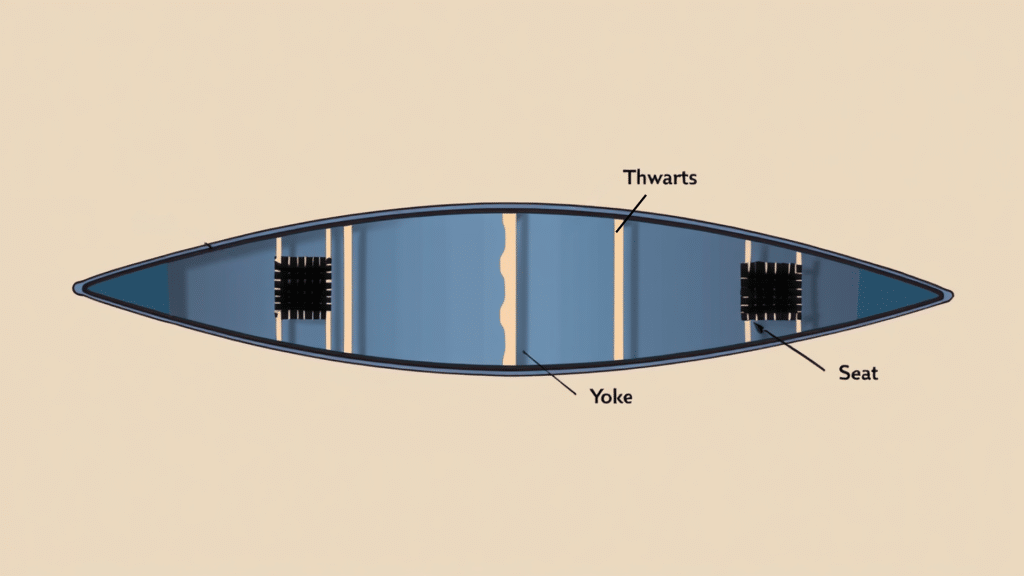
Looking inside a canoe reveals the framework that keeps everything stable and functional. These interior components often go unnoticed by beginners, yet they determine comfort and performance on every trip.
10. Seats and Positioning
Canoe seats attach to the gunwales and sit slightly above the hull bottom for better weight distribution. The bow seat typically sits farther from the end than the stern seat, giving the front paddler more legroom and space to move.
Most seats use caned webbing, molded plastic, or wooden slats for the sitting surface. Proper seat height affects the canoe’s center of gravity, which directly impacts stability in different water conditions.
11. Yoke (Carrying Thwart)
The center thwart often features curved padding and is called the yoke because it rests on the shoulders during portages. This specially designed crossbar includes contoured pads or foam inserts that distribute the canoe’s weight more comfortably across the neck and shoulders.
Without a proper yoke, carrying a canoe solo becomes painful after just a few minutes. Some paddlers customize their yoke padding to match their body shape for longer wilderness trips.
12. Foot Braces
Adjustable foot braces or pegs attach to the hull floor, giving paddlers something solid to push against while stroking. This simple addition improves paddling efficiency by allowing people to use their legs and core muscles rather than just their arms.
Many recreational canoes skip this feature, but serious paddlers quickly add aftermarket braces. Proper foot placement becomes especially important during powerful strokes or when navigating through challenging parts of a canoe trip.
With the interior framework understood, attention shifts to the bottom features that actually touch the water. The underside components deserve their own examination.
Measurements That Affect Stability and Handling
The parts of a canoe that interact directly with the water determine how the vessel moves and performs. These components sit at or below the surface, often invisible to paddlers once they’re on the water.
| Component | Location | Function | Impact on Performance |
|---|---|---|---|
| Waterline | The horizontal line where water meets the hull when floating | Marks the division between submerged and dry portions | A longer waterline generally means faster speeds but requires more effort to turn quickly |
| Draft | The vertical distance from the waterline to the lowest point of the hull | Indicates how deep the canoe sits in the water | A shallow draft allows paddling in rocky streams, while a deeper draft improves tracking in open water |
| Bilge | The curved transition area between the flat bottom and vertical sides | Creates the rounded shape where the bottom meets the sidewalls | Soft bilges provide stability for beginners, while hard bilges make the canoe tip more easily, but turn faster |
| Chines | The angle at which the hull bottom meets the sides | Defines how sharply or gradually the hull curves upward | Hard chines create quick, responsive turns but feel less stable, soft chines offer smoother, more forgiving handling |
| Rocker | The upward curve of the keel line from the center to the ends when viewed from the side | Determines how much of the hull actually touches water | More rocker means easier turning and better maneuverability, less rocker improves straight-line tracking and speed |
Maintenance Tips Based on Canoe Anatomy
Knowing the parts of a canoe makes maintenance much easier and more effective. Each component requires specific care to stay in top condition. Regular attention prevents small issues from becoming expensive repairs.
- Inspect gunwales for cracks, splinters, or loose bolts before each season, and apply varnish to wooden rails annually
- Rinse the hull with fresh water after every trip to remove sand, mud, and debris that can scratch protective coatings
- Check seats and thwarts for loose caning, stress cracks, or weak joints that could fail under a paddler’s weight
- Protect bow and stern deck plates by touching up scratches and chips immediately to prevent water damage underneath
- Clear scuppers of leaves and debris regularly, and lubricate adjustable foot braces with marine-grade lubricant each season
The Bottom Line
Mastering the anatomy of a vessel changes how paddlers interact with their equipment. From bow to stern, gunwales to bilge, every component serves a purpose that affects handling and performance.
Knowledge of parts of a canoe empowers people to make smarter purchasing decisions, perform proper maintenance, and communicate effectively with other enthusiasts.
When paddlers understand what sits beneath them, confidence grows naturally. This foundation opens doors to safer trips and better technique development.
Ready to put this knowledge into action? Head to the nearest dock, examine a real canoe closely, and identify each component discussed here. Then grab a paddle and feel how these elements work together in motion.