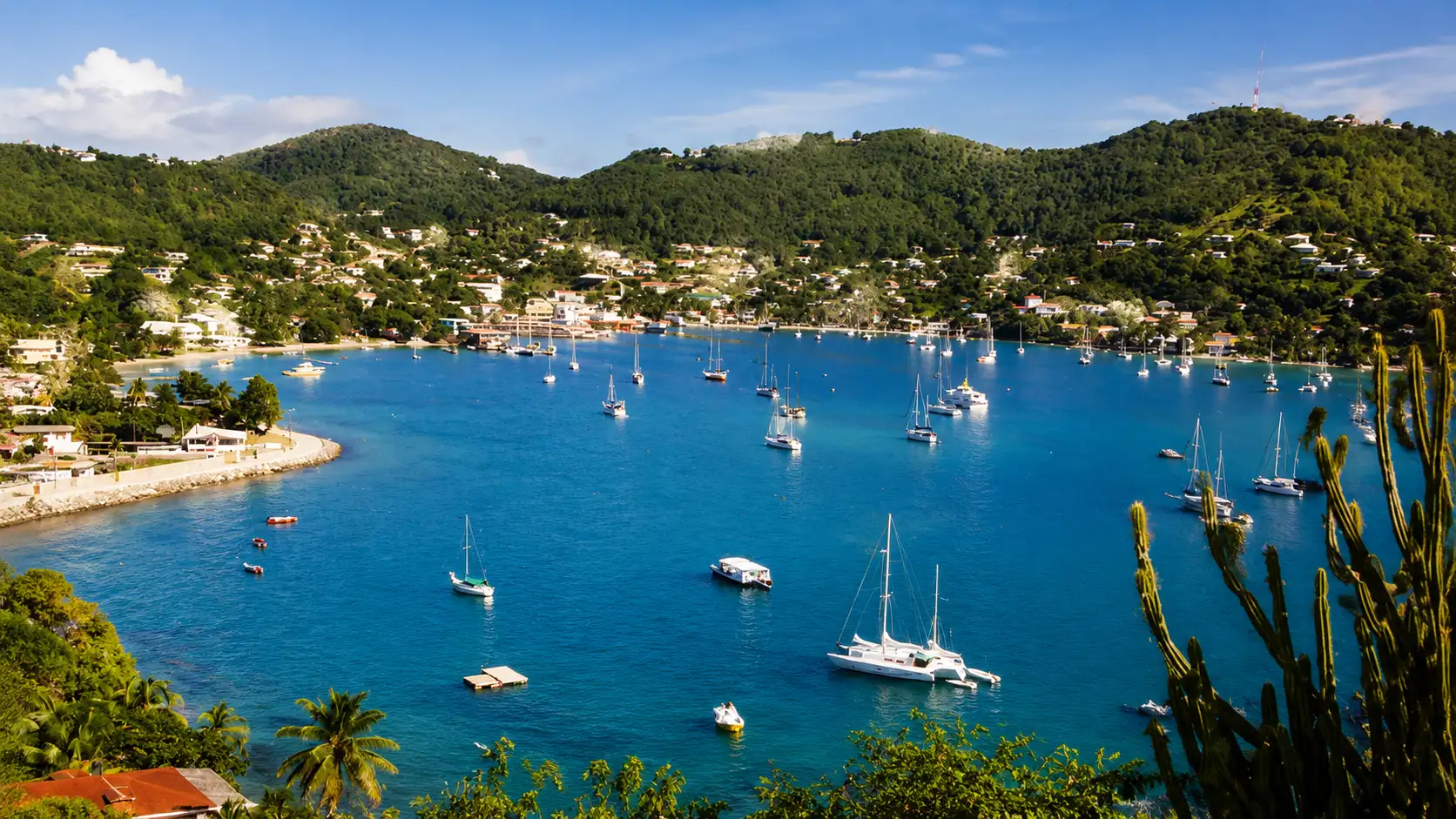
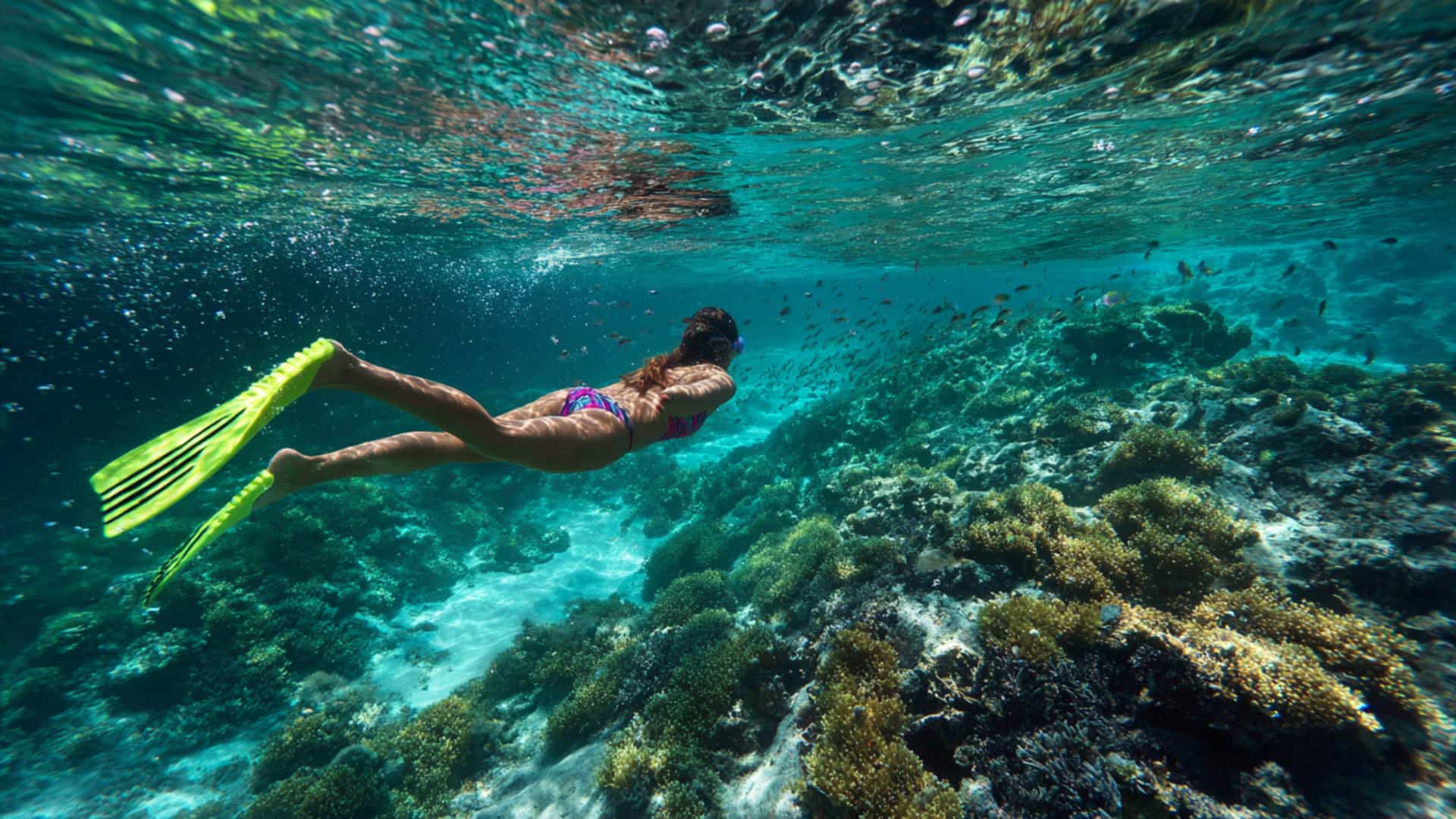
The best time to snorkel in the Caribbean is usually from December through April, when calmer seas and clearer water create the most reliable conditions.
From June through November, the risk of storms increases, and snorkeling conditions become less consistent.
Some islands also experience sargassum blooms during the warmer months, which can reduce water clarity, especially near shore.
While snorkeling is possible year-round, the best time to go depends on the island, the month, and the conditions that matter most to the traveler.
For travelers still comparing islands, finding where to snorkel in Barbados offers a useful way to get a closer look at reef access, conditions, and what a trip there is really like.
Why Month Matters for Caribbean Snorkeling?
The month visited directly affects water clarity, wave height, wind, and rainfall. Dry season brings calmer conditions and better visibility.
Hurricane season, from June to November, increases the risk of rough seas and canceled trips. Sargassum seaweed can also cloud the water in warmer months.
In ideal conditions, underwater visibility in the Caribbean can exceed 80 to 100 feet, especially during the dry season.
Caribbean Snorkeling Month by Month: What to Expect
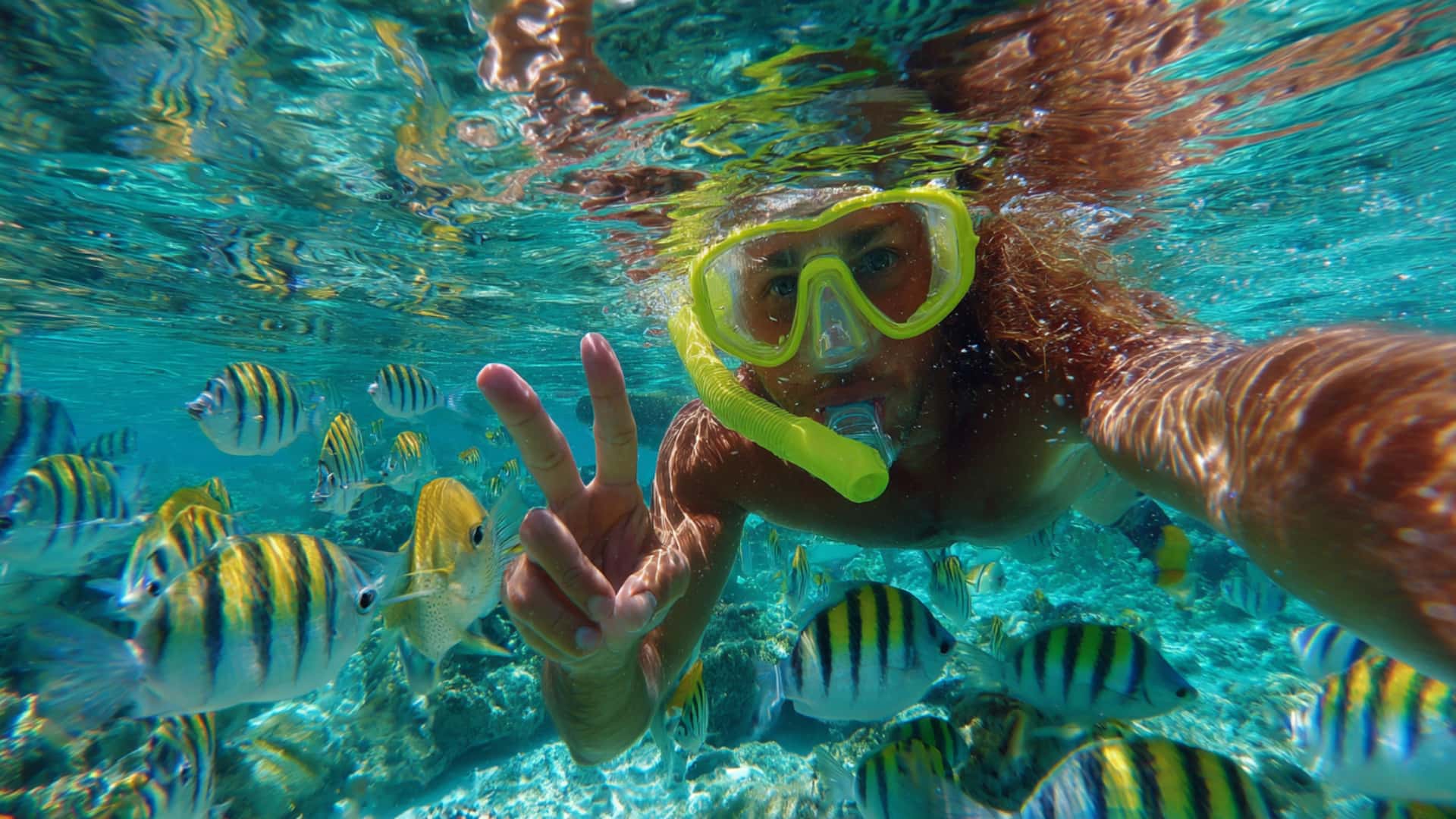
Snorkeling conditions in the Caribbean vary throughout the year, influenced by weather, water clarity, wind, and storm risk.
January
One of the best months for snorkeling in the Caribbean. The dry season brings calmer seas, clear water, and reliable conditions across many islands.
February
Another excellent month, with strong visibility, pleasant weather, and active marine life. It is a peak travel period, so popular snorkeling spots may be busier and more expensive.
March
A top month for snorkeling, with warm water, good visibility, and stable weather. It is a great time for reef trips, family travel, and first-time snorkelers.
April
One of the last months of the prime dry-season window. Conditions remain strong, with clear water, calmer seas, and favorable weather before wetter patterns begin to develop.
May
A good shoulder-season month with warm water and fewer crowds. Snorkeling can still be excellent, though it is wise to check local weather and sargassum conditions before booking.
June
The start of the Atlantic hurricane season. Snorkeling can still be enjoyable in many places, but the weather becomes less predictable, and flexibility becomes more important.
July
Water stays warm, but conditions are more variable than during the dry season. Visibility may be less consistent, though flexible travelers can still find good snorkeling days.
August
Heat, humidity, and storm risk increase noticeably. Conditions can still be decent in the right location, but it is less dependable for travelers planning a snorkeling-focused trip.
September
One of the least reliable months due to peak storm risk. Prices are often lower, but it is not the best choice for travelers who prioritize calm water and clear visibility.
October
A transitional month with mixed conditions across the region. Some islands offer good value and fewer crowds, but island-specific weather and sargassum patterns become especially important to check.
November
Conditions begin to improve in many areas as the region moves out of the wetter season. It can be a good-value month for travelers seeking lower prices and improving snorkeling conditions.
December
One of the best months to snorkel is the dry season, which returns across much of the Caribbean. Weather becomes more stable, water clarity improves, and overall conditions grow more reliable.
No single month is ideal for every island or every traveler. Use this overview as a starting point, then check local weather, wind, and sea conditions for your specific destination before booking.
Best and Worst Months for Caribbean Snorkeling at A Glance
December through April offers the clearest water and most reliable conditions. January and February are the strongest picks.
June through November brings increasing storm risk, with August and September being the least reliable months.
Sargassum peaks in warmer months, particularly affecting some eastern Caribbean islands, where it reduces water clarity near shore.
Best Caribbean Islands for Snorkeling by Season
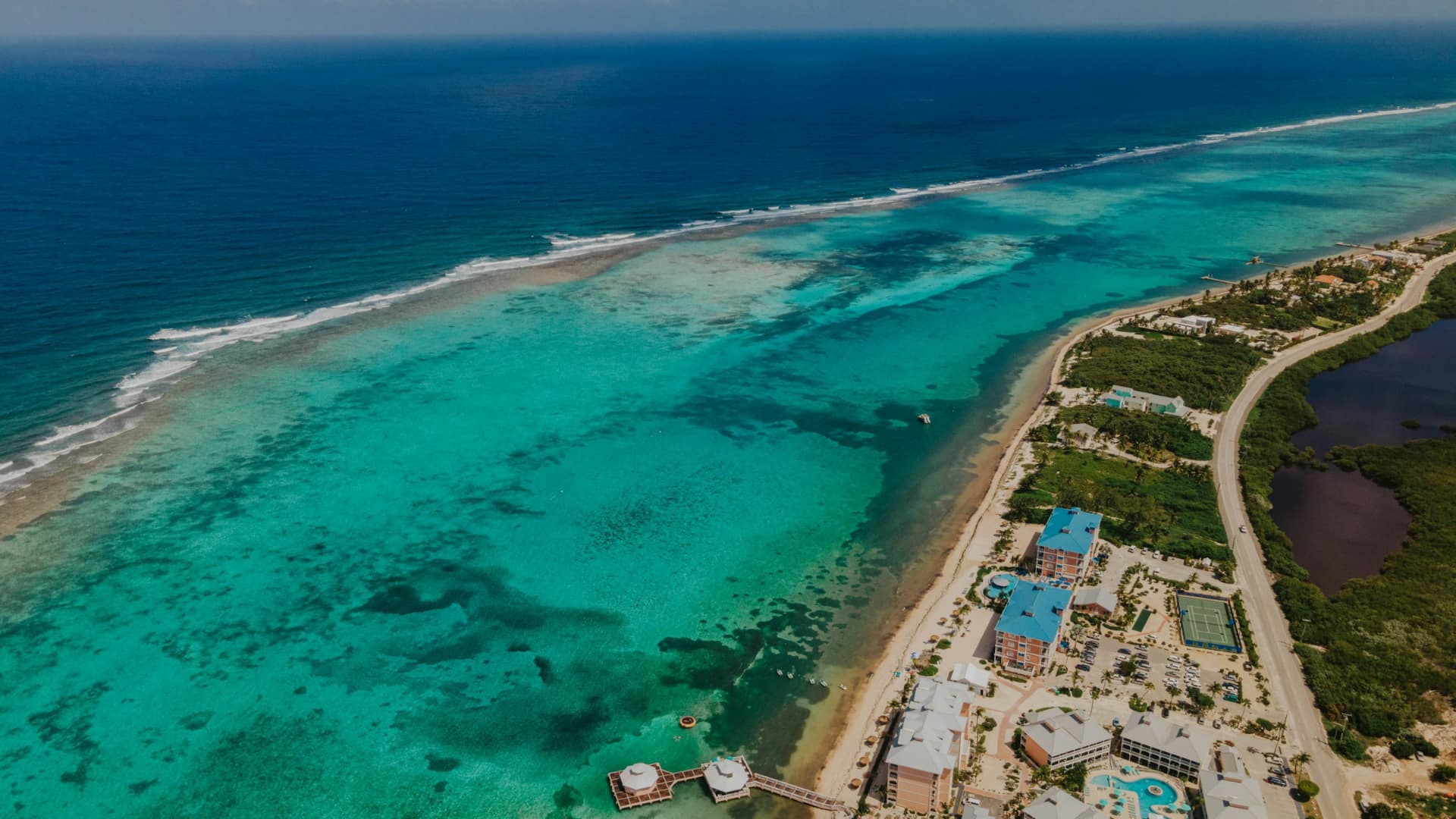
Some islands suit certain times of year better than others. Here is where to go and when.
- Bonaire in Winter: A top snorkeling pick from December through March with calm conditions and strong visibility throughout the season.
- Turks and Caicos in Winter: Clear, shallow water and healthy reefs. Winter offers the best visibility and most reliable snorkeling weather.
- Aruba in Shoulder Season: Outside the main hurricane belt, making it reliable even when other islands carry more weather risk.
- Curaçao Year-Round: Sheltered from hurricanes with protected reefs. One of the most flexible island choices across different months.
- Barbados in Dry Season: A strong pick from December through April, with calm west coast reefs and clear water ideal for snorkelers of all levels.
Matching the island to the season gives the best chance of calm water and clear conditions. Before traveling, it is also worth checking Barbados travel vaccine requirements.
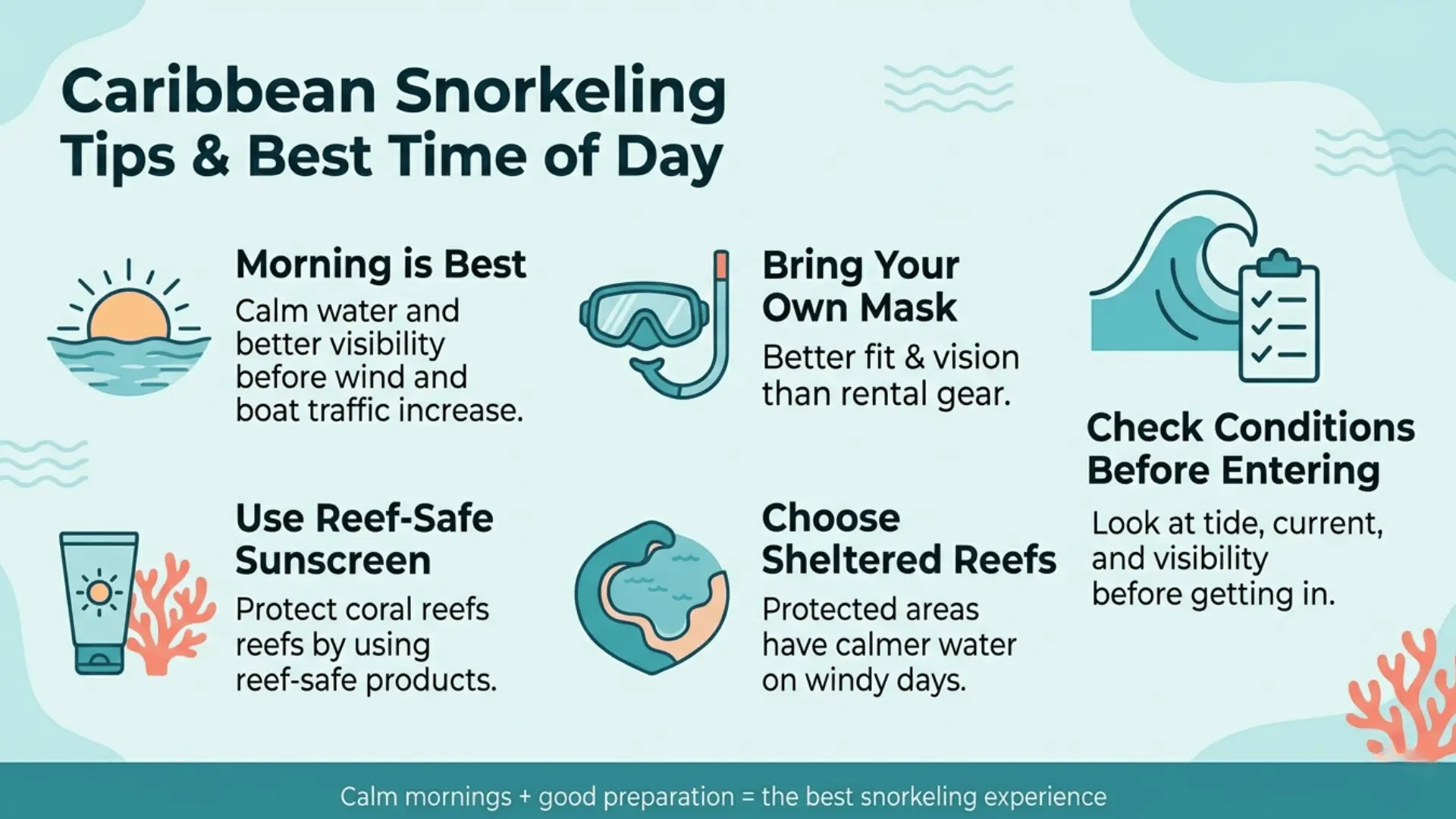
What to Check Before Booking a Caribbean Snorkeling Trip?
Before booking, check whether reef access is from shore or requires a boat trip. Review daily wind forecasts and rainfall patterns for the chosen island.
Heavy rain increases runoff from land, which carries sediment into the ocean and can significantly reduce water clarity, especially near shore.
Check sargassum forecasts for eastern Caribbean destinations during warmer months.
Finally, look into travel insurance and flexible booking options, especially for trips during or near hurricane season.
Health and water safety prep is also part of the process, especially in places like Barbados, where learning about Barbados sharks and swim safety can give a clearer picture of real risks.
Note: Wind direction matters more than many travelers expect. Leeward (sheltered) coasts typically offer calmer water and better visibility than the windward sides of the island.
Conclusion
The best time to snorkel in the Caribbean comes down to what matters most. Perfect conditions point toward the dry season, while lower prices and fewer crowds push toward the shoulder months.
Storm avoidance means skipping late summer entirely. There is no single right answer, only the right answer for each trip. Planning around a clear goal makes the whole process simpler.
Got a Caribbean snorkeling trip in the works? Drop a comment and share where you are heading.