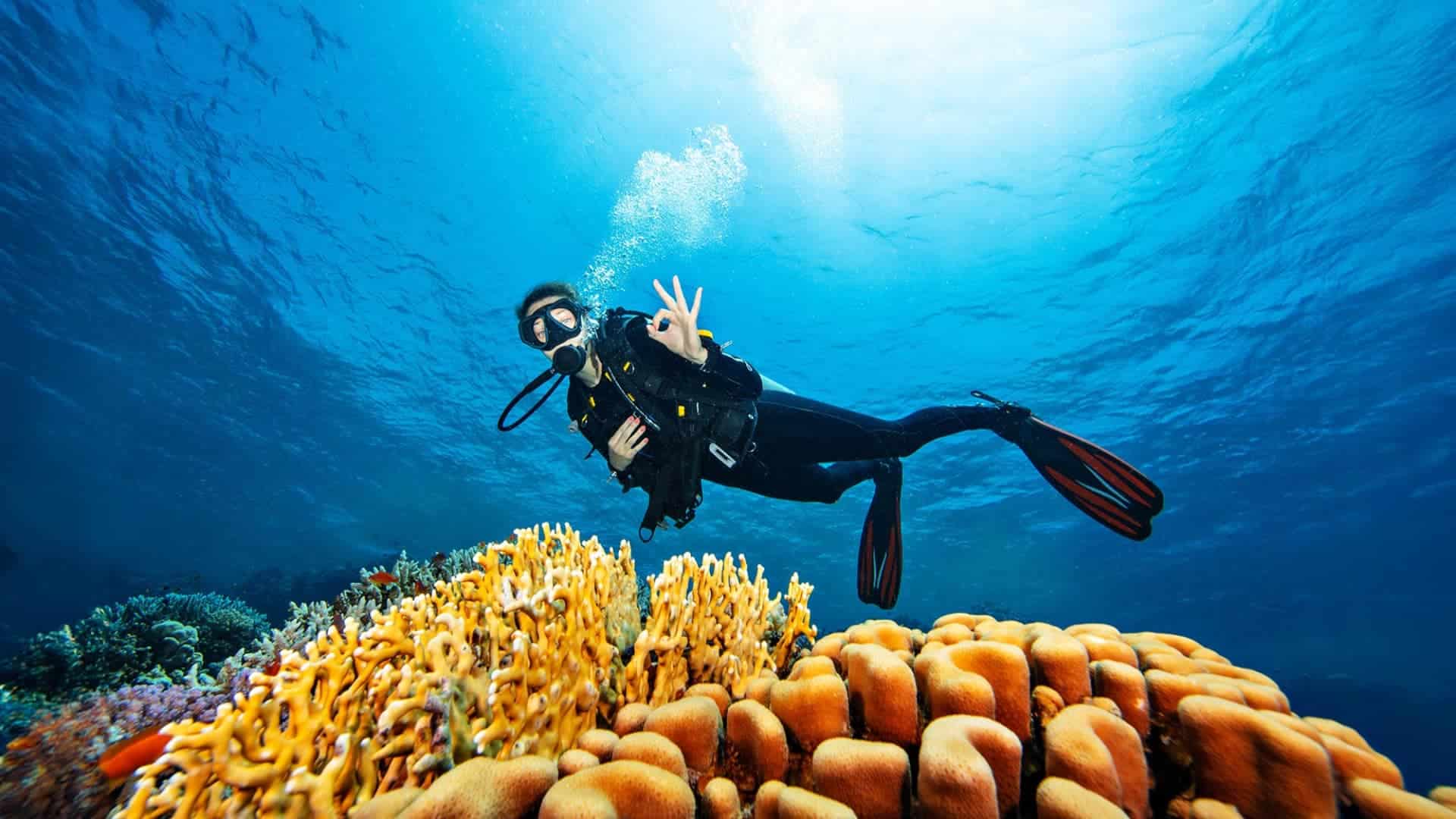
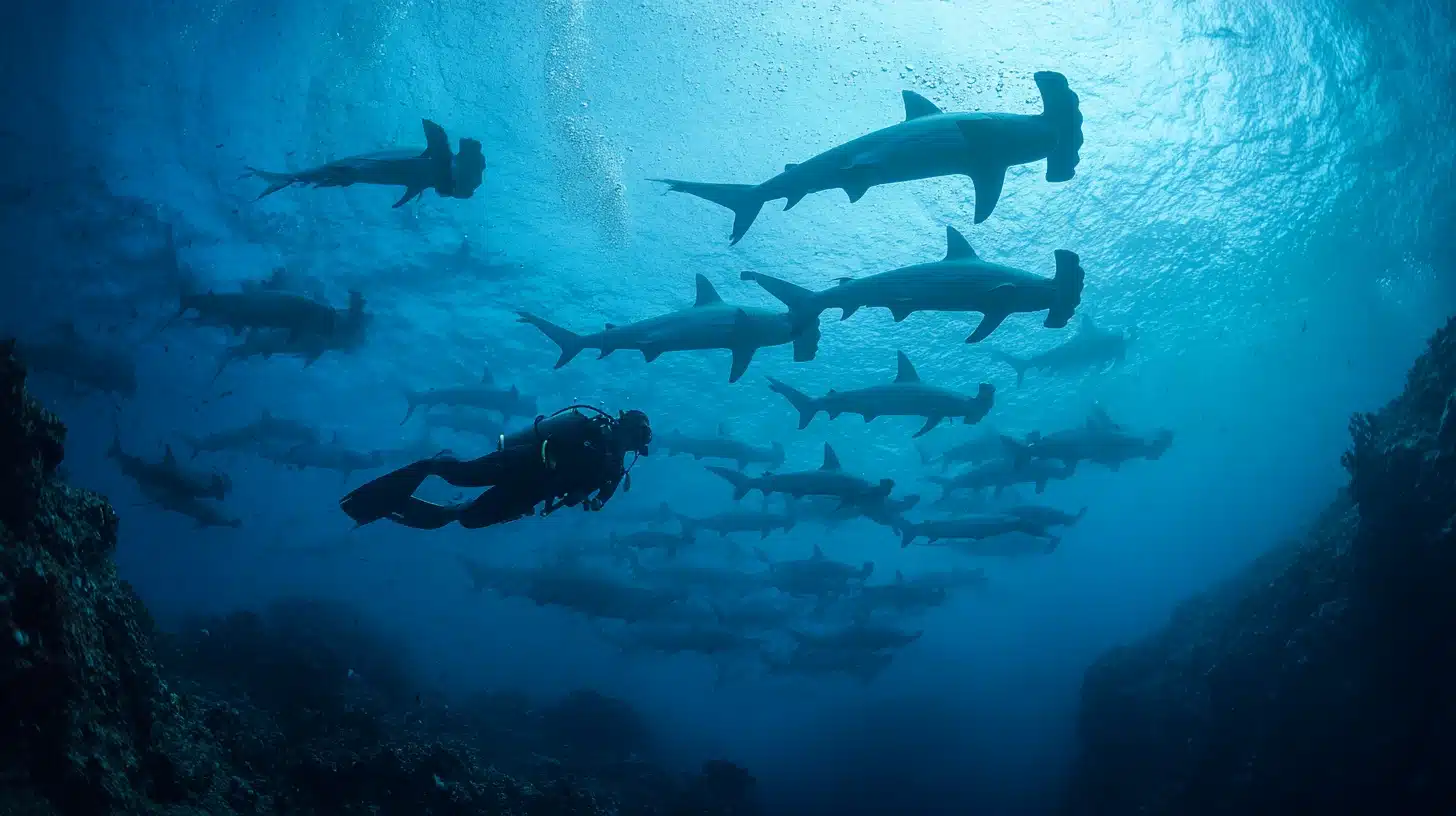
Few places on Earth put this much marine life in front of a diver in a single week. The Galapagos Islands sit where three ocean currents meet, and the result is water packed with hammerhead sharks, whale sharks, manta rays, and sea lions.
It is remote, cold at times, and demands real preparation. Galapagos scuba diving is not like most tropical trips. The currents are strong, conditions shift fast, and choosing the wrong operator or season can make the experience far harder than it needs to be.
Here is what first-timers actually need to know. From choosing a trip style and packing the right gear to understanding which sites match which skill levels, every section focuses on practical information that makes a real difference before you book.
What Makes the Galapagos Islands So Special?
The Galapagos Islands sit at the meeting point of three major ocean currents in the Pacific Ocean. It creates a rare mix of cold and warm waters, supporting an unusually rich marine ecosystem.
The islands sit about 600 miles off the coast of Ecuador. Because of their remote location, marine life here evolved largely free of human interference for thousands of years.
Over 97% of the land and a large marine reserve are protected as national parks, helping keep the ecosystem intact. Wildlife density here is far above that of most other dive locations in the world.
Divers regularly spot hammerhead sharks, whale sharks, manta rays, sea lions, and marine iguanas in a single outing. Water conditions also support diving every month of the year, though visibility and species vary by season.
Liveaboard Vs Land-Based Diving: How To Choose
Choosing between liveaboard and land-based Galapagos scuba diving depends on your budget, comfort level, seasickness tolerance, and the dive sites you want most. Here are quick differences to compare.
| Decision Point | Liveaboard Diving | Land-Based Diving |
|---|---|---|
| Best Sites | Wolf and Darwin access is the big win | Mostly central day-trip sites |
| Big Animal Odds | Higher chance for hammerheads, whale sharks (seasonal) | Still great, but fewer “mega” days |
| Dives Per Day | Usually 3 to 4 dives | Often 2 dives on dive days |
| Time Efficiency | Wake up at sites, less commuting | More daily boat rides from town |
| Comfort | Cabin living, boat routine | Hotel comfort, space, and easier rest |
| Flexibility | Fixed schedule and route | Mix diving with island exploring easily |
| Seasickness Risk | Higher (multi-day on a boat) | Lower overall (boat only on dive days) |
| Budget Style | Higher cost, more bundled | More control, pay per dive day |
When Is the Best Time for Galapagos Scuba Diving?
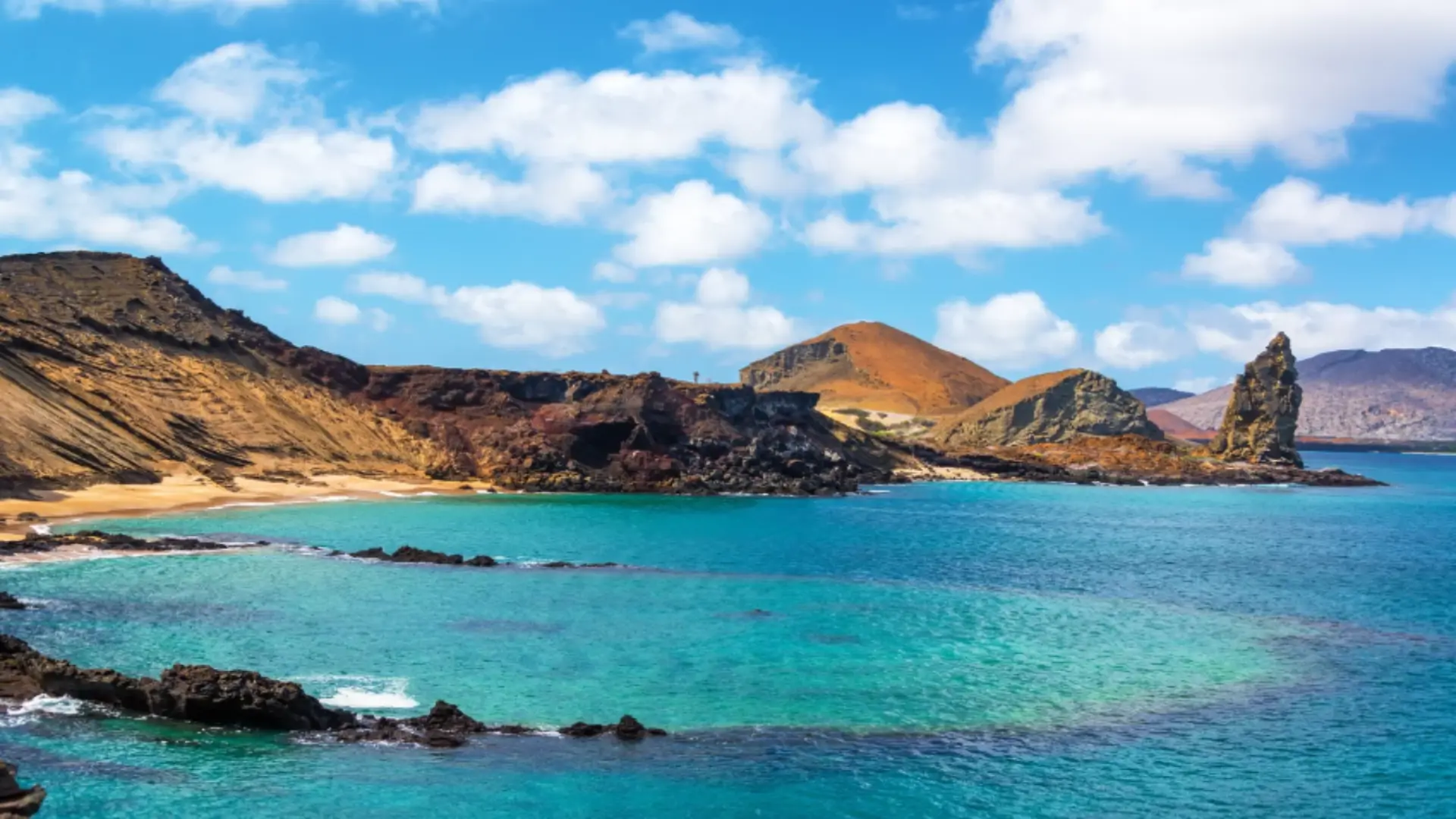
Alt text: Galapagos Islands inthe warm season
The Galapagos has two main diving seasons, and each brings different water conditions, visibility ranges, and marine life activity worth planning around.
- Warm Season (December–May): Water temperatures range from 75–82°F (24–28°C), seas stay calmer, and visibility reaches 50–65 feet. Sea turtles, rays, and reef fish are commonly seen. Best for first-timers who prefer comfortable, predictable conditions.
- Cool Season (June–November): The Humboldt Current drops temperatures to 60–72°F (15–22°C), thermoclines form sharply, and swells increase at outer sites. Visibility falls to 20–30 feet, but whale sharks and large hammerhead schools appear far more frequently.
Pick travel dates based on cold-water tolerance and experience level, not just a popular travel window or a single “best month” recommendation.
Top Dive Sites In The Galapagos
The Galapagos has some of the most sought-after spots for Galapagos scuba diving in the world. Each site offers something different, from large marine animals to calm, clear waters perfect for beginners.
1. Darwin Island (North)
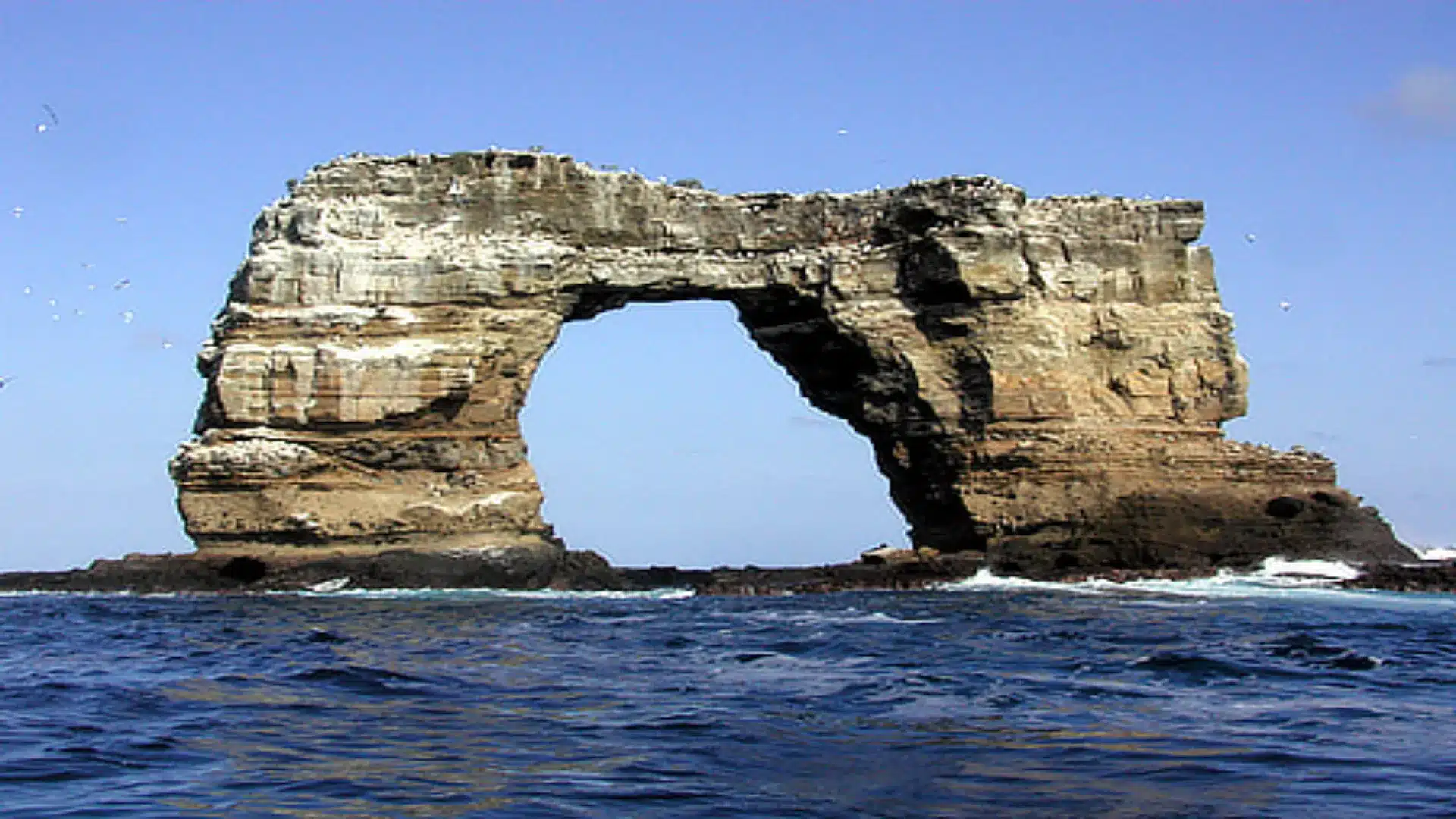
Alt text: A large rock formation on Darwin Island, showcasing rugged textures and natural beauty against a clear blue sky.
Darwin sits at the far northern tip of the archipelago and is only reachable via liveaboard. It holds some of the highest shark concentrations of any dive site in the world. Expect strong, sustained current and wide-open blue water with little to hold onto.
- Skill Level Required: Advanced. Strong current comfort and blue-water diving confidence are essential before attempting this site.
- Marine Life Found: Scalloped hammerheads, whale sharks (seasonal, June–November), Galapagos sharks, eagle rays, and large schools of tuna.
2. Wolf Island (North)
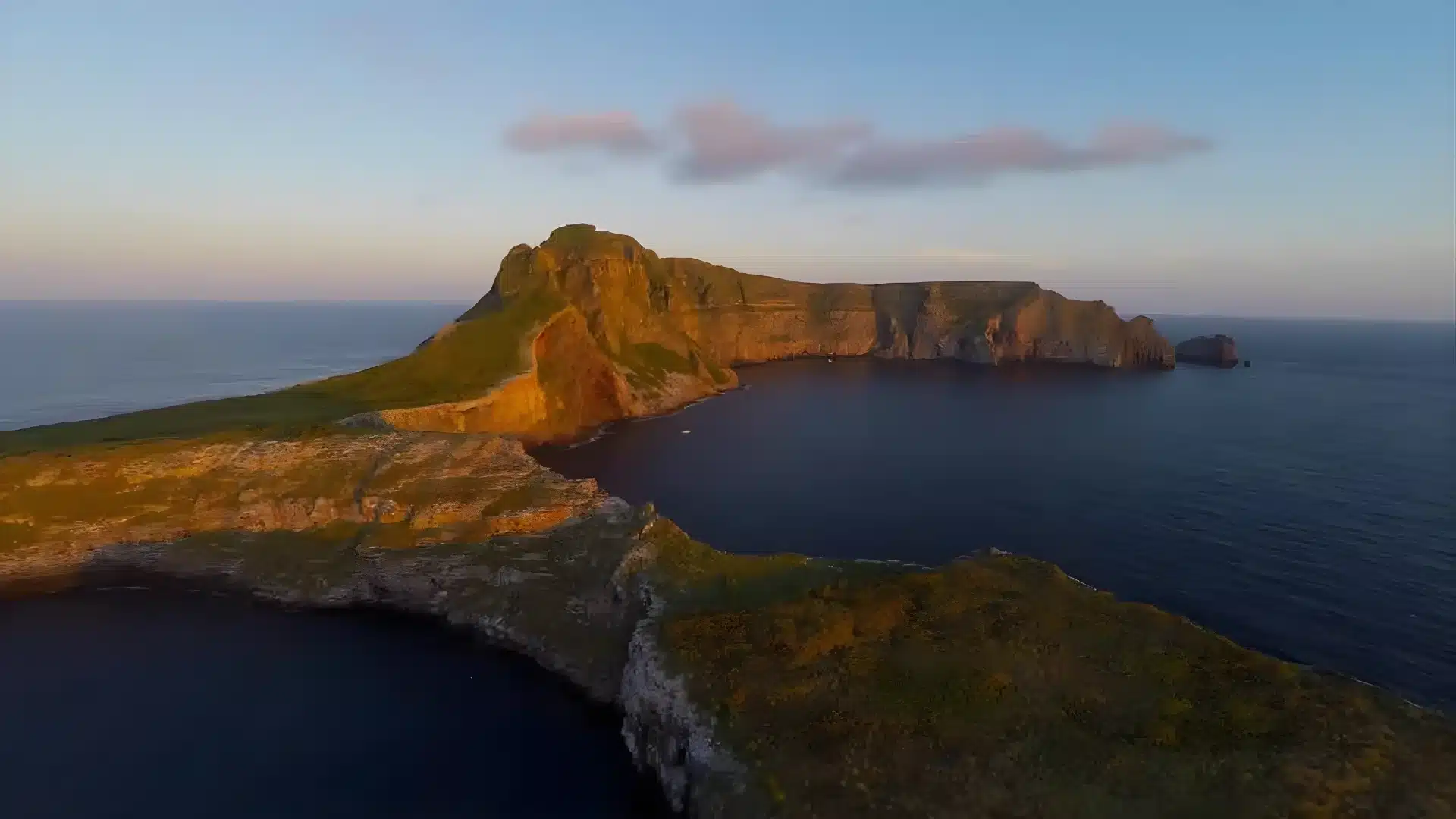
Alt text: Aerial view of Wolf Island, Ecuador, showcasing its rugged coastline and lush greenery.
Wolf sits close to Darwin and shares similar conditions: strong drift, deep water, and high pelagic activity. Negative entries are common here, meaning you drop into the current immediately on entry. Not a site for hesitant divers.
- Skill Level Required: Advanced. Drift diving experience and comfort with negative entries are required for safe participation.
- Marine Life Found: Hammerheads, Galapagos sharks, eagle rays, sea turtles, and large schools of fish moving through the current.
3. Gordon Rocks (Santa Cruz Area)
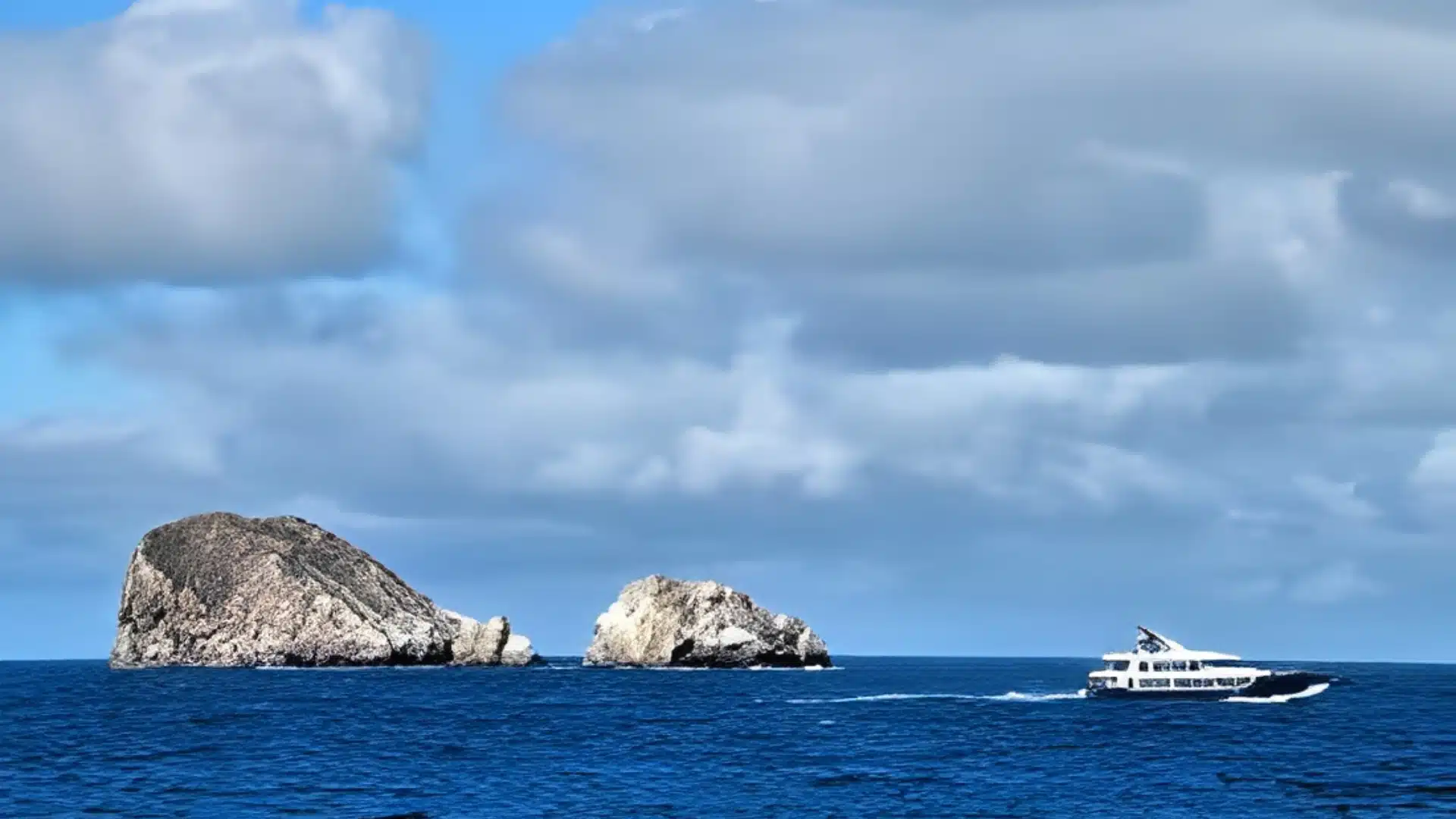
Alt text: A boat sails near the rock formation of Gordon Rocks in the Santa Cruz area, surrounded by clear blue water.
Gordon Rocks sits inside a submerged volcanic crater off Santa Cruz. The terrain drops into open water fast, and the current direction can shift without warning. It is one of the more technically demanding central island sites.
- Skill Level Required: Intermediate to advanced. Currents and surges are common, and buoyancy control in open water is critical.
- Marine Life Found: Hammerheads, rays, sea turtles, reef fish, and occasional pelagic species passing through the crater.
4. Kicker Rock (San Cristóbal)
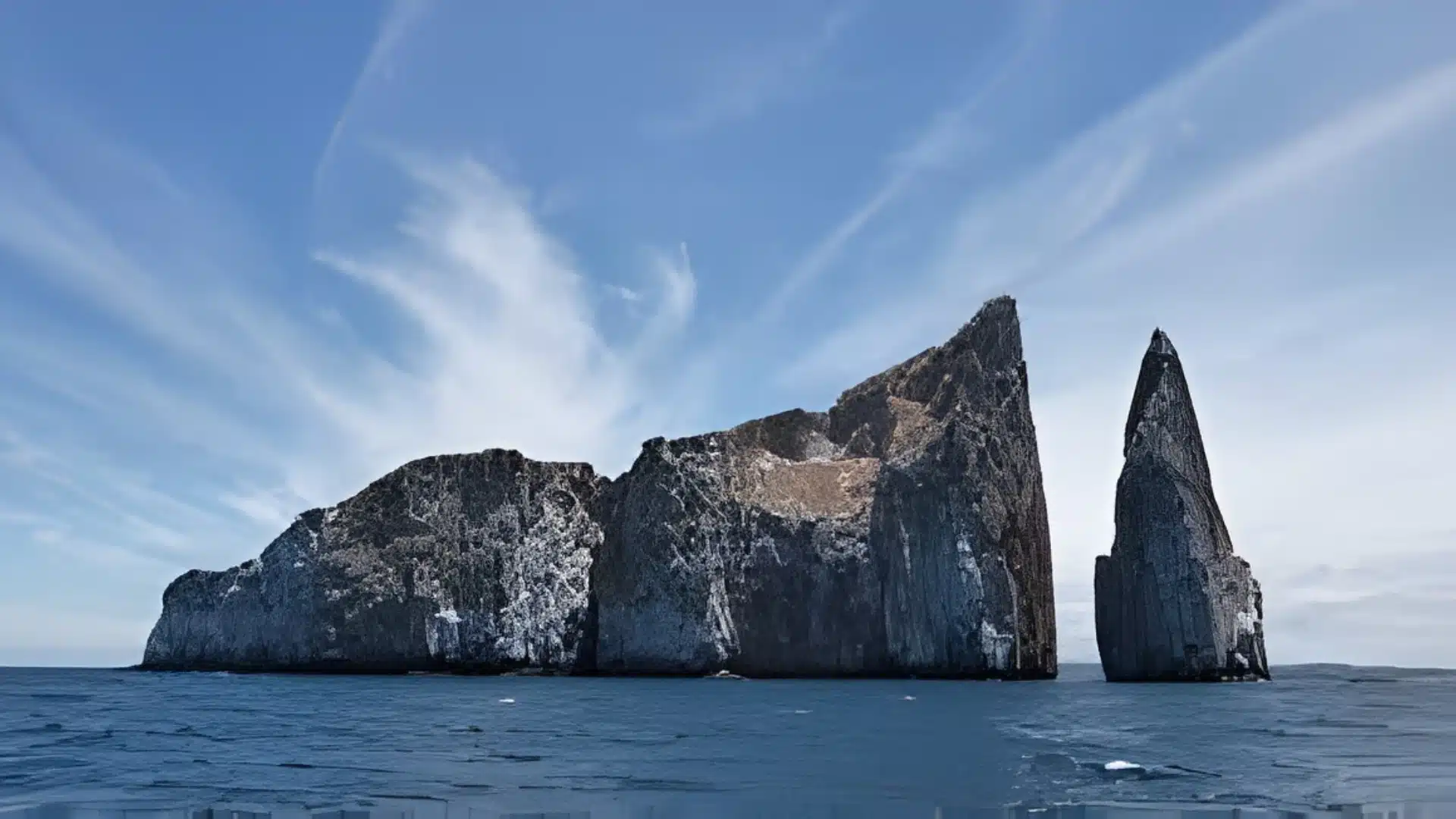
Kicker Rock consists of two large basalt formations rising out of the ocean with a narrow channel running between them. Currents through the channel are generally more predictable than at northern or crater sites.
- Skill Level Required: Intermediate. Variable current is present throughout, and good buoyancy control makes the channel passage significantly easier.
- Marine Life Found: Reef sharks, rays, sea turtles, schooling fish, and sea lions that patrol the outer walls.
5. Cousins Rock (Near Santiago)
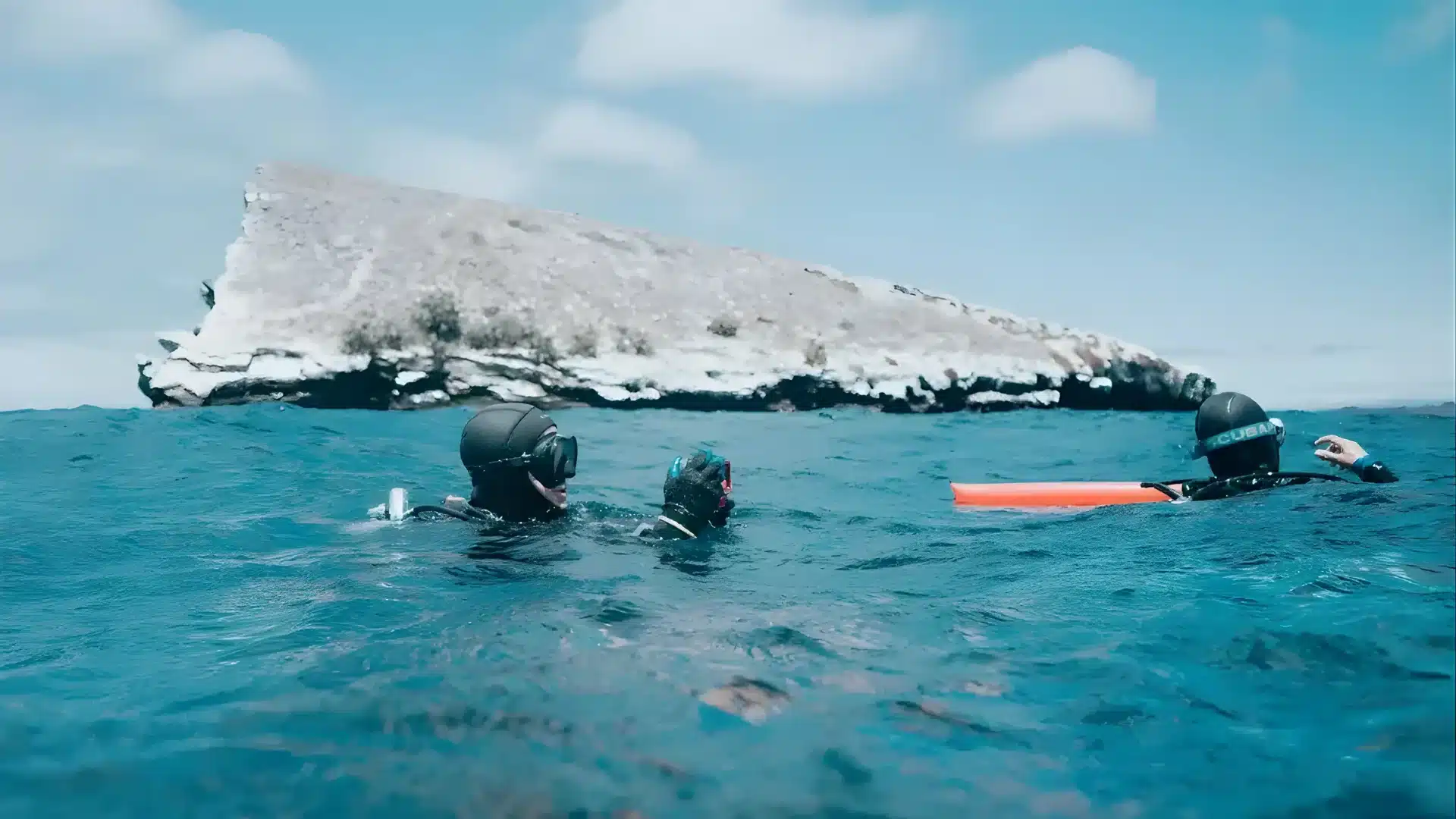
Alt text: Two people in wetsuits swim in the ocean near Cousins Rock, an island close to Santiago.
Cousins Rock is a steep wall dive covered in soft coral and sea fans. The surge near the wall can push divers around, so steady positioning matters. It rewards patient divers willing to look closely at the reef.
- Skill Level Required: Intermediate. Surge can be strong close to the wall, and controlled hovering is needed for macro sightings.
- Marine Life Found: Seahorses, frogfish, rays, sea turtles, nudibranchs, and dense schools of reef fish along the wall.
6. Punta Vicente Roca (Isabela)
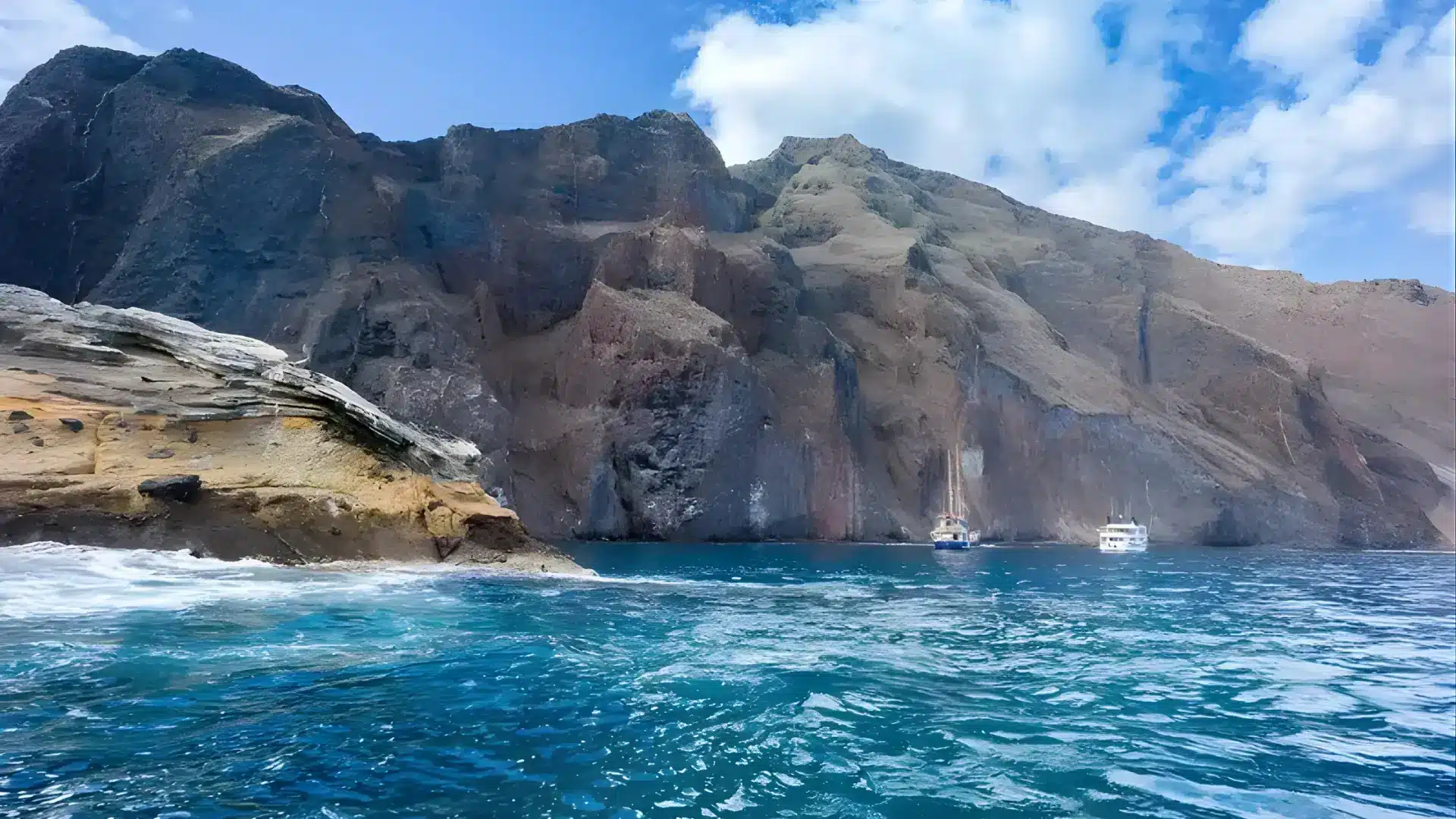
Punta Vicente Roca sits on the northwest tip of Isabela and brings some of the coldest water in the archipelago. The Humboldt Current brings nutrient-rich upwellings here, attracting cold-water species rarely seen elsewhere.
- Skill Level Required: Intermediate. Cooler water, variable visibility, and deeper profiles require solid thermal protection and air management.
- Marine Life Found: Mola mola (seasonal), seahorses, sea turtles, rays, and a range of cold-water species unique to this site.
7. Bartolomé And Sullivan Bay Area
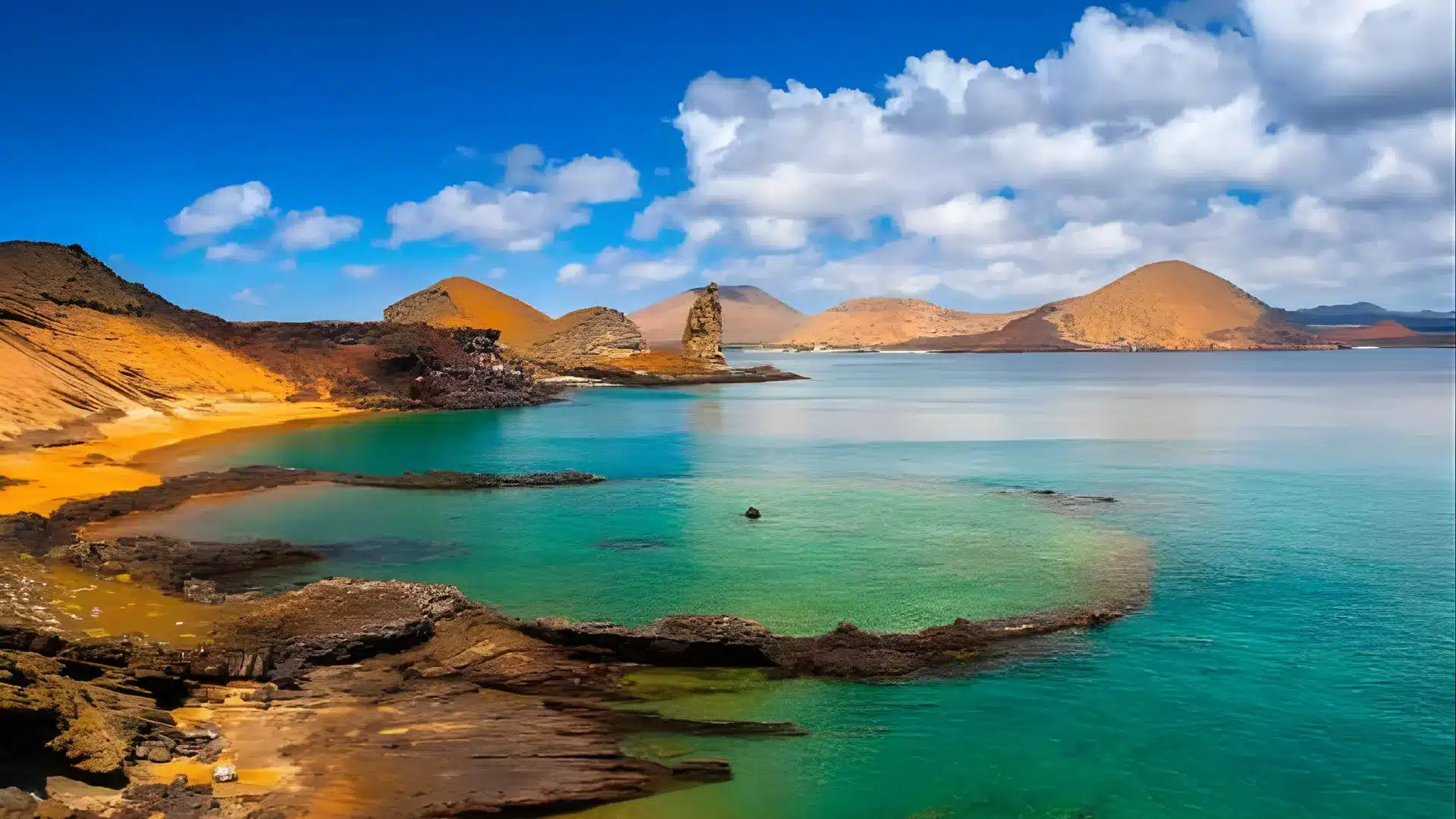
Bartolomé offers calmer conditions than most Galapagos sites and suits a wider range of experience levels. The underwater terrain includes rocky reef sections, sandy channels, and shallow areas with good natural light and regular marine activity.
- Skill Level Required: Beginner-friendly to intermediate. Conditions are generally calmer, though this can vary depending on the day and season.
- Marine Life Found: Sea lions, sea turtles, reef fish, rays, and occasional sharks passing through the shallower reef sections.
8. Floreana Sites (Devil’s Crown Area)
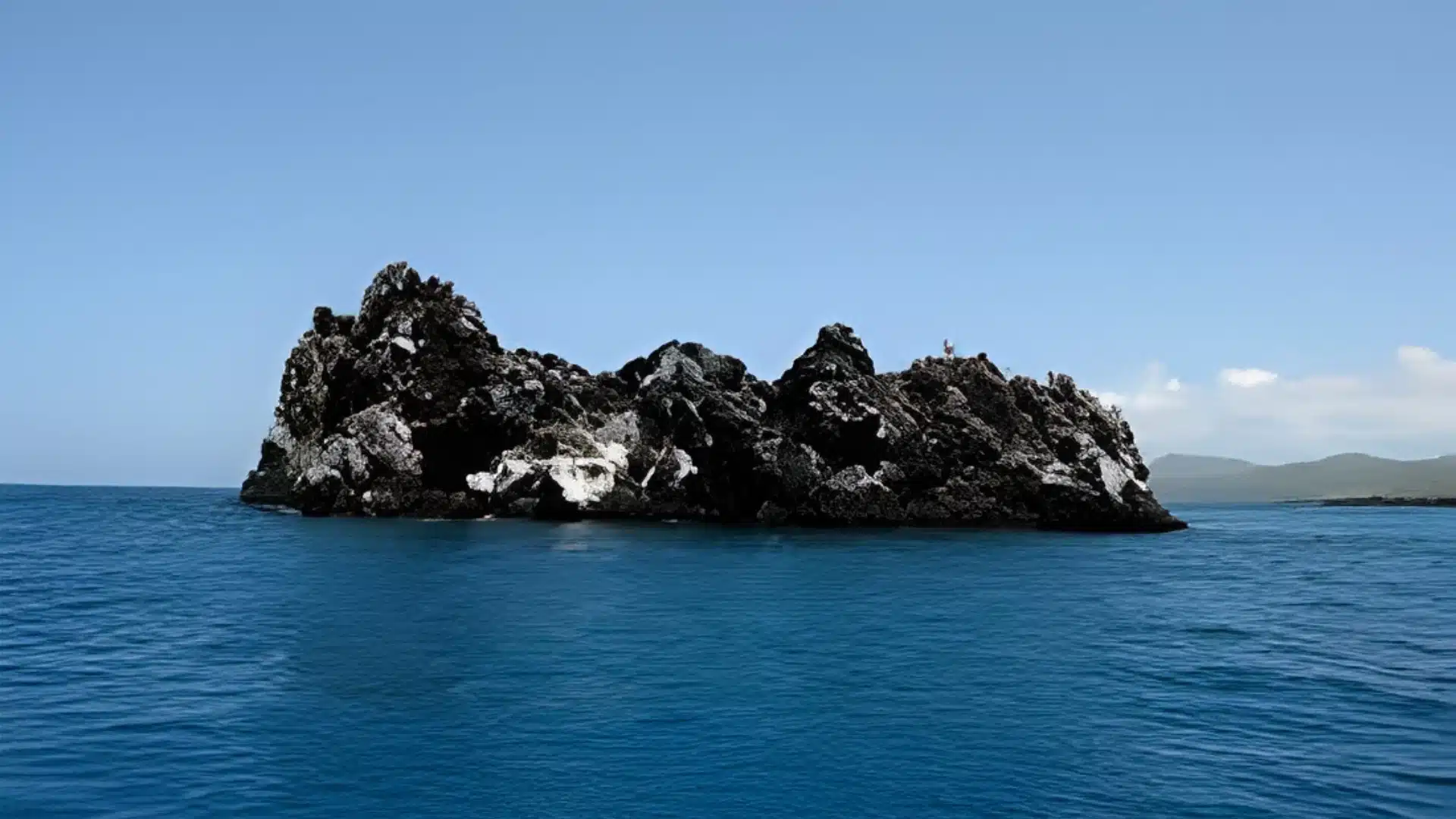
Alt text: A striking rock formation rises from the ocean under a clear blue sky at Floreana Sites, Devil’s Crown Area.
Devil’s Crown is a submerged volcanic crater off Floreana with a protected interior and more exposed outer walls. Swell can affect entries on the outer side, but the interior tends to stay calmer and suits less experienced divers well.
- Skill Level Required: Beginner-friendly to intermediate. Swell may affect entries on exposed sections, so conditions should be checked on the day.
- Marine Life Found: Sea turtles, rays, reef sharks, colorful reef fish, and sea lions that frequent both the interior and outer walls.
9. Cape Douglas (Fernandina)
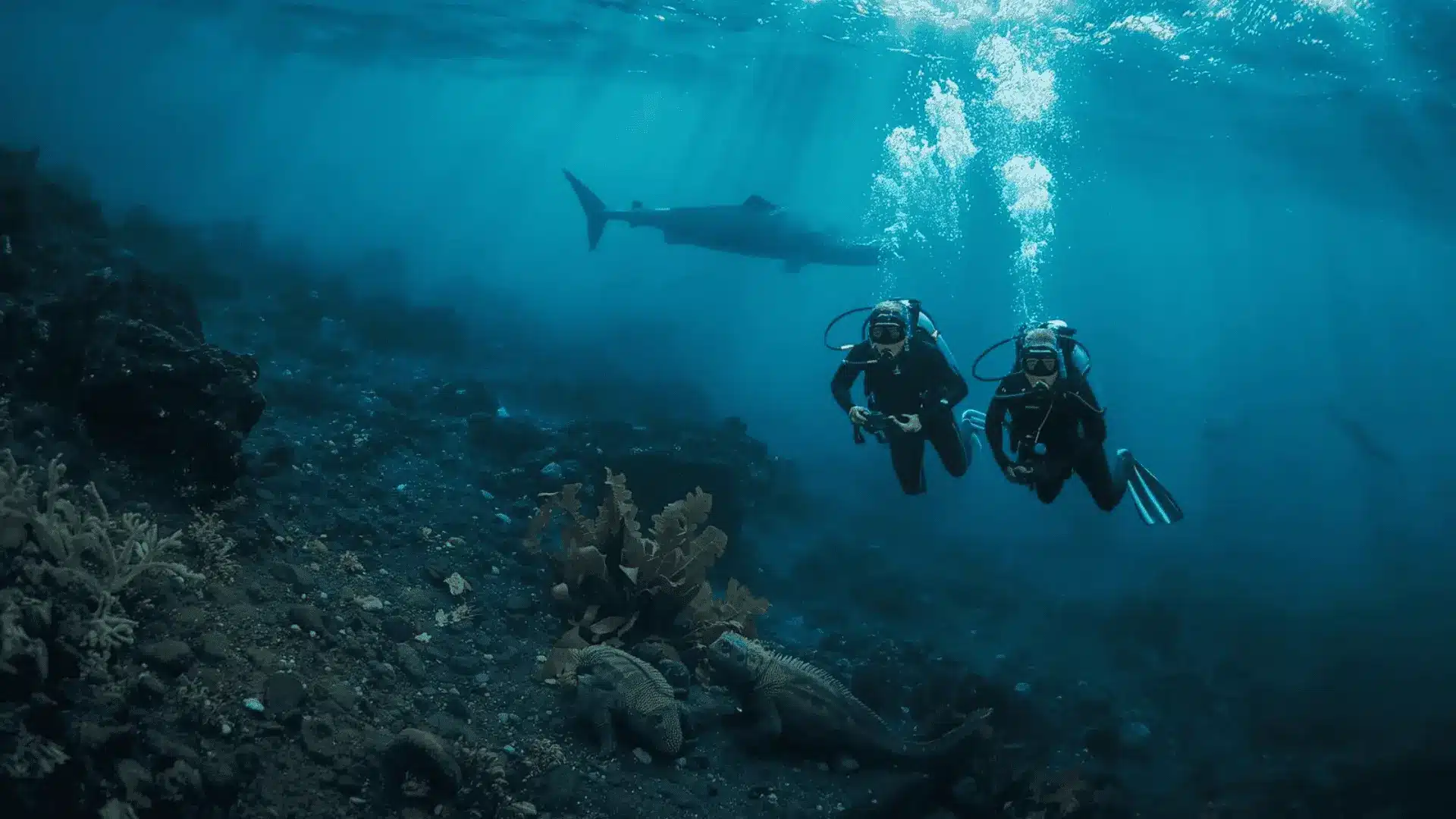
Cape Douglas sits off Fernandina Island, one of the most remote spots in the Galapagos. You can expect strong currents and cold upwellings here.
- Skill Level: Advanced
- Marine Life: Mola mola, marine iguanas, hammerhead sharks
10. North Seymour
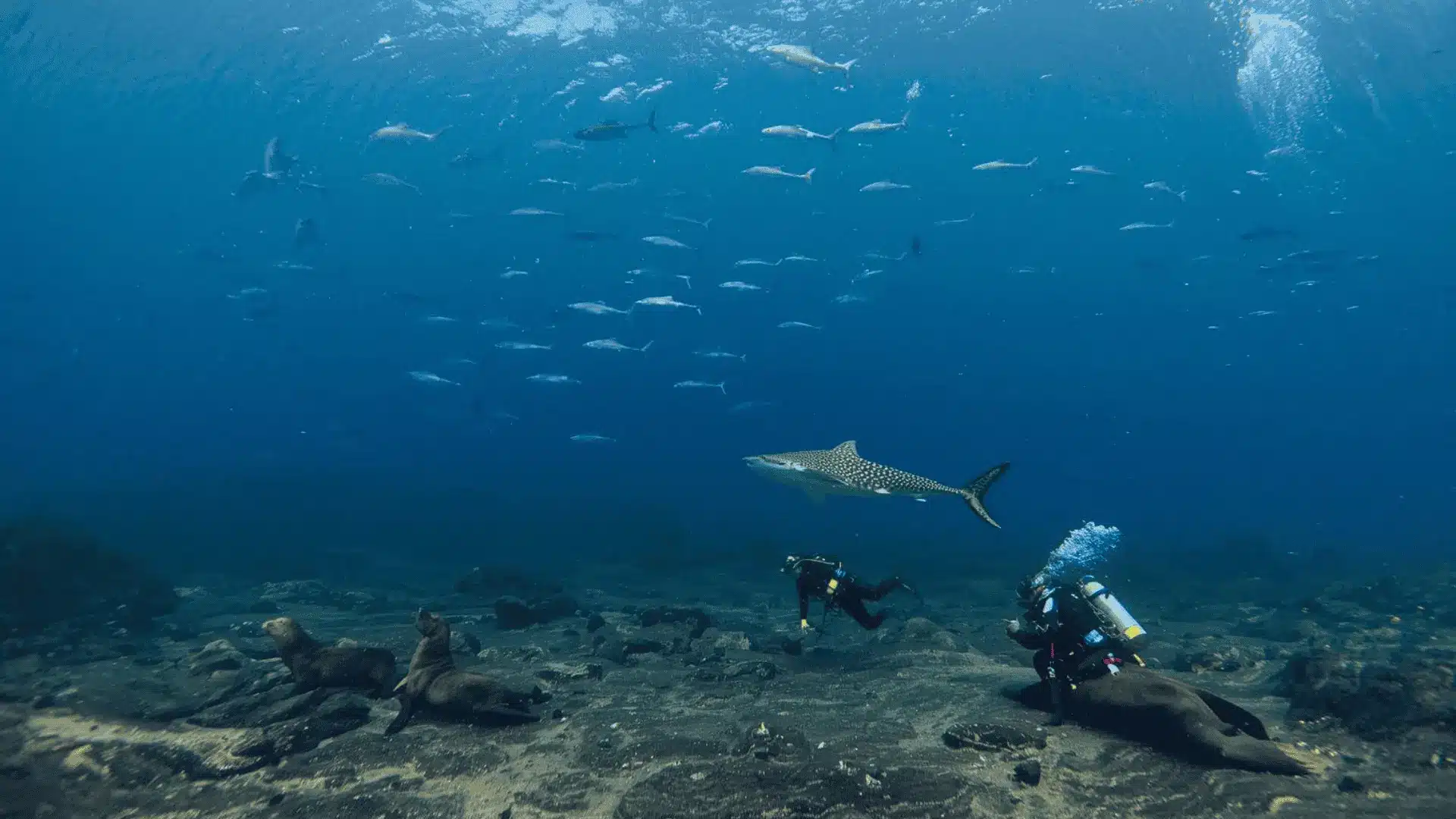
North Seymour is one of the most popular spots for Galapagos scuba diving, and for good reason. The waters are rich with hammerhead sharks, eagle rays, and sea lions. Currents can pick up, but conditions are often manageable. It works well for both intermediate and advanced divers seeking big-animal encounters.
- Skill Level: Intermediate to Advanced
- Marine Life: Hammerhead sharks, eagle rays, sea lions, reef fish
11. Las Tintoreras (Isabela)
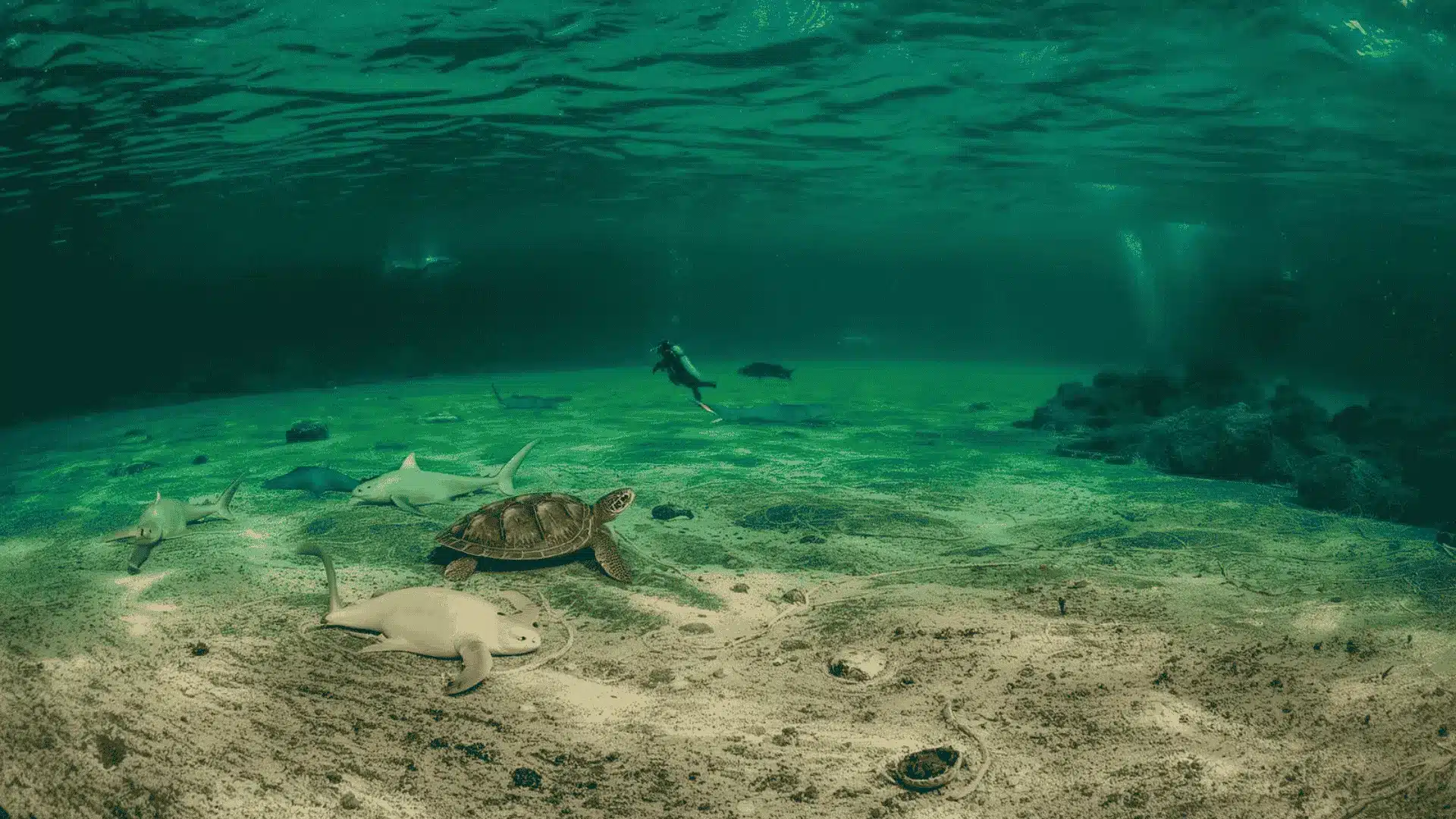
Las Tintoreras is named after the white-tipped reef sharks that rest in its shallow channels. The site is calm and close to Puerto Villamil, making it accessible for most skill levels.
- Skill Level: Beginner to Intermediate
- Marine Life: White-tipped reef sharks, sea turtles, Galapagos penguins, rays
12. Academy Bay (Santa Cruz)
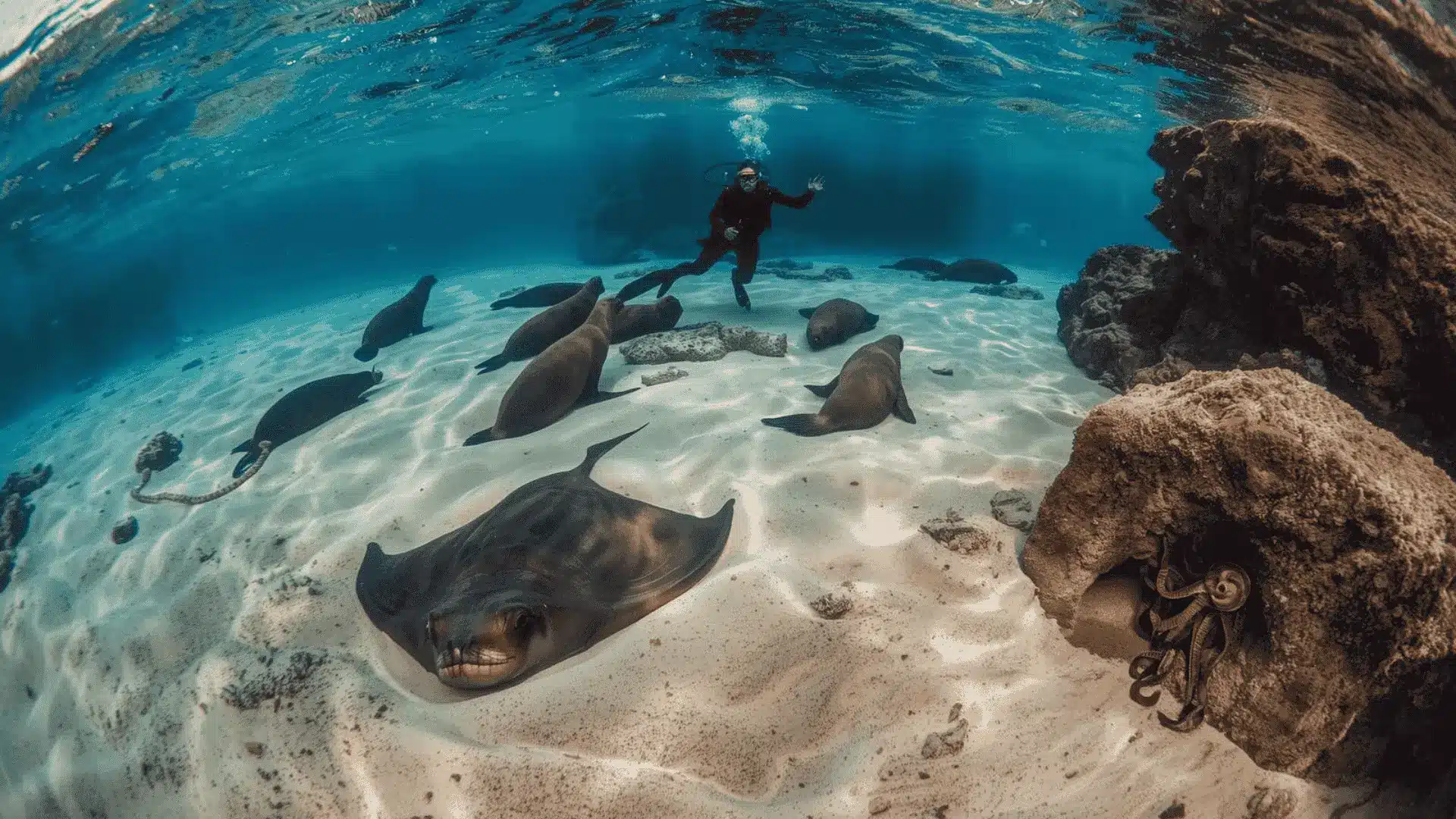
Academy Bay sits near Puerto Ayora and offers relaxed conditions close to shore. Because of its location and depth range, it works well for new divers getting their first taste of Galapagos scuba diving in a low-pressure setting.
- Skill Level: Beginner
- Marine Life: Sea lions, octopuses, stingrays, tropical fish
13. Tortuga Bay Area
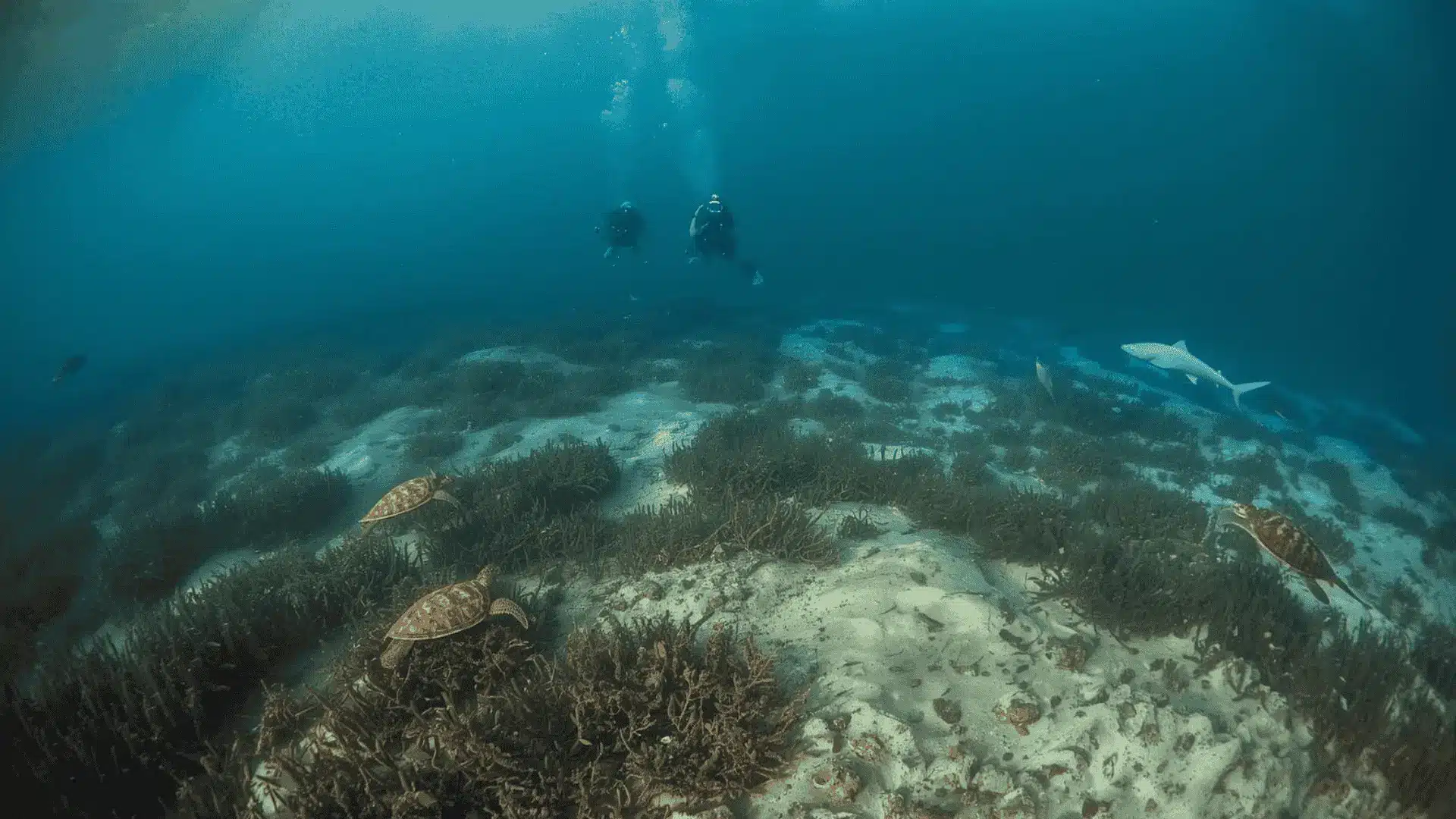
The Tortuga Bay area offers quiet, sheltered waters with a good variety of marine life. The conditions tend to be gentler than offshore sites, making it a practical option for divers who want a calmer introduction to the area.
- Skill Level: Beginner to Intermediate]
- Marine Life: White-tipped reef sharks, sea turtles, rays, sea lions
From shark-packed northern islands to current-swept volcanic pinnacles in the central archipelago, each site offers a completely different underwater experience. Understanding the conditions and marine life at each location helps you choose an itinerary that matches your skill level and diving goals.
How to Prepare for Your Galapagos Diving Trip
The Galapagos rewards divers who show up ready, and it can humble those who don’t. A little prep work before you fly goes a long way toward making sure your time underwater is spent enjoying the sharks, not just surviving the currents.
Certification and Experience
- Minimum: PADI or SSI Open Water certification
- Liveaboards require 50–100 logged dives
- Haven’t dived in 12+ months? Take a refresher course first
- Less experience? Opt for day-trip operators in Santa Cruz or San Cristóbal
- No certification yet? PADI courses available on the islands
What to Pack
- 5mm wetsuit- warm season (Dec–May)
- 7mm wetsuit or liner- cool season (Jun–Nov)
- Personal dive computer
- Reef-safe, biodegradable sunscreen
- Underwater camera or GoPro
- Dry bag
Regulations and Conservation Rules
- Approx $200 National Park entrance fee
- Only book with GNP-licensed dive operators
- Book 6–12 months ahead
- No single-use plastics
Health and Safety
- Get dive-specific travel insurance (DAN is recommended)
- No-fly window: 12–18 hrs after a single dive; 24 hrs after multiple dive days
- Pack seasickness medication
- Stay hydrated between dives
Get these boxes ticked before you land, and you’ll step off the plane feeling confident rather than confused. The Galapagos is one of those rare places that lives up to every expectation, and being well-prepared means you can focus entirely on the magic happening 60 feet below the surface.
Galapagos Diving and Safety Requirements
Beginners can handle some central island sites, but the Galapagos is not a learn-to-dive destination. Strong currents, thermoclines, and open-water conditions at sites like Darwin and Wolf require solid underwater skills.
Most liveaboard operators require Advanced Open Water certification and a minimum of 50–100 logged dives for northern site itineraries. Getting nitrox certified before the trip is also worth considering.
It extends no-decompression limits on repetitive deep dives, and some liveaboards require it. Requirements vary by operator, so always confirm directly before booking. Key safety behaviors every diver should follow on these trips:
- Stay close to the divemaster at all times, especially in current
- Perform slow, controlled ascents with a safety stop at 15 feet
- Carry and deploy an SMB at every dive
- Be honest with the operator about your experience and comfort level before each entry
Conditions change quickly. Overstating your skill level puts you and the group at risk. Confirm operator requirements early and arrive prepared.
How to Choose a Galapagos Dive Operator
Not all operators run the same-quality trips. The right choice depends on safety standards, itinerary focus, group size, and how well the operator matches your experience level.
Check these factors before committing:
- Group size and guide-to-diver ratio (smaller groups mean more attention)
- Oxygen and first aid availability on board
- Rental gear condition and maintenance standards
- Realistic site claims that match actual permit access
Questions to ask before booking:
- What is the maximum group size per divemaster?
- Does the itinerary include Darwin and Wolf?
- What certification and logged dive minimums do you require?
Liveaboard comparisons often come down to itinerary focus (northern shark sites vs. mixed routes), cabin comfort, and the dive deck’s organization between entries.
What You’ll See Underwater
The Galapagos hosts marine life from both cold- and warm-water environments, which makes species diversity unusually high. Timing your trip around specific animals significantly improves your chances of seeing them.
| Marine Life | Best Season | Notes |
|---|---|---|
| Scalloped Hammerhead Sharks | Year-round, peak Jun–Nov | Large schools are more common during the cool season at Gordon Rocks, Darwin, and Wolf |
| Whale Sharks | Jun–Nov | Most sightings at Darwin and Wolf, reached via liveaboard only |
| Manta Rays | Dec–May | More active during the warm season; commonly seen at cleaner, warmer sites |
| Marine Iguanas | Year-round | Unique to Galapagos; feed on algae underwater at shallow reef sites |
| Sea Lions | Year-round | Playful and curious at most central island sites, regardless of season |
| Green Sea Turtles | Year-round, peak Dec–May | Frequently spotted at Academy Bay and calmer central island sites |
| Mola Mola (Ocean Sunfish) | Jun–Nov | Occasional sightings at Gordon Rocks during cooler, current-driven months |
| Eagle Rays | Year-round | Common at Kicker Rock and Cousin’s Rock in moderate current conditions |
| Galapagos Penguins | Year-round | Found near Isabela and Fernandina; more active during the cool season |
| Dolphins | Year-round | Often spotted on surface crossings between sites and during shallow dives |
Logistics and Planning
Getting to the Galapagos requires more advance planning than most dive destinations. Flights, park permits, operator bookings, and inter-island transport must align before arrival.
- Choose Your Entry Airport: Fly into Baltra Island (GPS) or San Cristobal (SCY) from Quito or Guayaquil. Confirm which airport your liveaboard or day-trip operator departs from before booking any flights.
- Budget for Park Fees Separately: The Galapagos National Park entrance fee runs around $100–$200 per person and is paid on arrival. It’s not included in your dive trip cost, so factor it in early.
- Book Early for Peak Windows: June through August and December through January fill quickly. Booking 3–6 months in advance gives the best choice of operator, itinerary, and cabin type.
- Get Dive-Specific Travel Insurance: Standard travel policies often exclude scuba-related incidents. Look for coverage that includes decompression sickness treatment and access to an emergency hyperbaric chamber before confirming any booking.
What Divers Say About Galapagos Scuba Diving
The Galapagos does not ease you in. The first drift dive at a current-heavy site like Gordon Rocks feels nothing like anything most divers have experienced before.
The water is colder than expected, the current moves faster than the briefing suggested, and the marine life appears without warning. Hammerheads materialize out of the blue water in groups, not ones and twos.
Whale sharks, when they appear, are significantly larger than most divers anticipate. By day three, the routine settles. The cold becomes manageable, the current reads more predictably, and the dives start to feel controlled rather than reactive.
Most divers describe the final day as the point where everything clicks. The consistent feedback across reviews is the same: it is harder than expected and more rewarding than anything else they have dived into.
How Much Does Galapagos Scuba Diving Cost?
Galapagos diving costs vary widely depending on trip style, route, duration, and what the base price actually includes. Understanding each cost category upfront prevents surprises at checkout.
| Cost Category | Estimated Range | Notes |
|---|---|---|
| Liveaboard Trip | $3,000–$7,000+ per week | Price varies by route, cabin type, and operator quality |
| Land-Based Day Trip | $150–$300 per day | Central island sites only; outer sites not accessible |
| Galapagos National Park Fee | $100–$200 per person | Paid on arrival; separate from dive trip cost |
| Equipment Rental | $20–$50 per day | Wetsuit, regulator, BCD, or computer rented individually |
| Nitrox Fills | $10–$20 per fill | Not always included; confirm with the operator before booking |
| Guide & Crew Tips | $100–$300 per week | Expected on most liveaboards; rarely included in base price |
| Travel Insurance | $100–$300 per trip | Must cover scuba diving and hyperbaric chamber treatment |
| Flights to Galapagos | $200–$500 round trip | Domestic flights from Quito or Guayaquil to Baltra or San Cristobal |
| Inter-Island Transport | $30–$100 per leg | Ferry or domestic flight, depending on the islands visited |
| Nitrox Certification | $150–$250 | One-day course; recommended before liveaboard trips |
Safety Tips and Local Regulations
The Galapagos National Park enforces strict rules both underwater and above. Knowing both the safety practices and legal requirements before entry protects you, the group, and the marine environment.
- Never touch marine life, coral, or rock surfaces: Physical contact with animals or reef structures is prohibited by park regulations and disrupts natural behavior. Buoyancy control is the most effective way to stay compliant.
- Always carry and deploy an SMB at the end of every dive: Surface marker buoys are essential in Galapagos conditions. Strong currents can quickly carry divers away from the boat, and an SMB makes you visible immediately.
- Wait at least 24 hours after your last dive before flying: Nitrogen levels in the blood need time to stabilize before exposure to altitude. Flying too soon significantly raises the risk of decompression sickness.
- Follow the divemaster’s briefing instructions: Each site has specific entry techniques, current patterns, and exit procedures. Deviating from the briefed plan puts you and the rest of the group in a difficult position.
- Do not feed, chase, or interfere with any marine animal: Feeding wildlife is illegal inside the marine reserve and alters natural feeding behavior. Park rangers and divemasters actively enforce this rule on every dive.
Final Thoughts
Galapagos scuba diving rewards those who prepare well and set realistic expectations from the start. Choose your trip style before anything else.
Liveaboards open up remote northern sites; land-based trips keep costs lower and suit mixed groups. Match your travel window to your cold-water tolerance, not just a calendar recommendation.
The cool season brings larger aggregations of marine life, but it demands more from your gear and your body. Prep specifically for currents.
Log dives in similar conditions beforehand if possible, and be honest with your operator about your skill level. Prioritize guiding quality and safety standards over price when comparing operators.
The Galapagos delivers some of the most species-rich waters on the planet. The question is not if you should go, but how well you plan before you get there.
Frequently Asked Questions
Is Galapagos Scuba Diving Suitable for Beginners?
Some central island sites work for beginners, but most trips require Advanced Open Water certification and 50–100 logged dives. The Galapagos is not a destination for learning to dive.
What Certification Do I Need to Dive in the Galapagos?
Most liveaboard operators require Advanced Open Water certification. Some itineraries, especially those covering Darwin and Wolf, also recommend nitrox certification. Always confirm requirements directly with your chosen operator.
How Many Dives Can I Do per Day in the Galapagos?
Liveaboards typically offer 3–5 dives per day, including an optional night dive. Land-based day trips average 2–3 dives. Safety stops are mandatory on every dive, regardless of trip style.
Do I Need Travel Insurance for Galapagos Diving?
Yes. Standard travel insurance rarely covers scuba-related incidents. Get a policy that specifically includes decompression sickness treatment and emergency hyperbaric chamber access before confirming any booking.