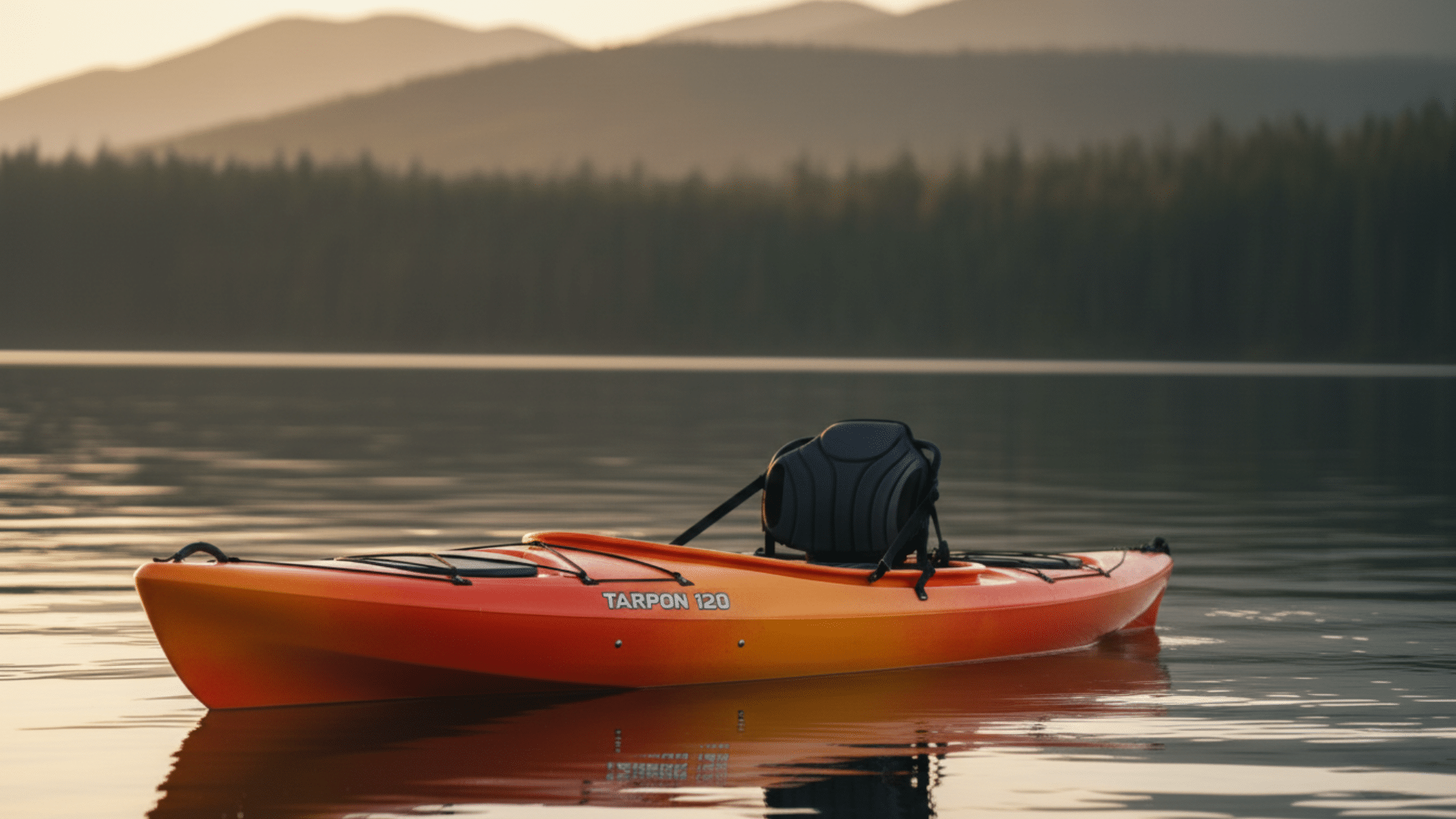
The Tarpon 120 has been one of the kayaks I was genuinely excited to take out on the water, and it didn’t disappoint. From the first few strokes, it felt steady, smooth, and easy to guide, even when the water wasn’t perfectly calm.
One thing that became clear during longer outings is how much the comfort features help. The seat support, foot adjustments, and open deck layout make it easy to stay out for hours without feeling cramped or sore.
The storage areas also feel well thought out enough space for gear, snacks, or fishing essentials without getting in the way.
It feels built for real use, not just specs on a page, which is why it stands out for both new paddlers and more experienced ones.
The Story Behind the Tarpon 120
The Tarpon 120 was introduced by Wilderness Systems in the early 2000s. It was created to offer paddlers a stable, comfortable sit-on-top kayak that didn’t feel slow or heavy, which was a common problem back then.
The idea behind its design was simple: combine speed, maneuverability, and comfort in one kayak that works for lakes, rivers, and light coastal trips.
Over the years, the Tarpon 120 has been updated with better seating and smarter storage, but its purpose has stayed the same: to give paddlers a reliable, versatile ride that feels good on the water.
Its long-lasting popularity comes from that balance. It performs well in different environments and remains comfortable for both beginners and experienced paddlers.
Key Specifications of The Tarpon 120
Before getting into the full water experience, these core specs give a clear picture of how the Tarpon 120 is built and what you can expect in terms of size, comfort, and performance.
| Specification | Details |
|---|---|
| Length | 12ft 3 in |
| Width | 31 in |
| Weight | ~64.5 lbs |
| Weight Capacity | Up to 350 lbs |
| Material | Rotomolded polyethylene |
| Seat Type | Phase 3® AirPro adjustable seating |
| Storage | Front dry hatch, rear tankwell with bungee, side pockets |
| Gear Tracks | SlideTrax™ accessory rails |
| Footrests | Adjustable padded foot braces |
| Style | Sit-on-top recreational/touring hybrid |
Key Features of The Tarpon 120

The Tarpon 120 includes features that make paddling smoother, more comfortable, and easier to manage across different water conditions. Each part of the design works together to create a kayak that feels dependable on every trip.
1. Stable, Well-Balanced Hull
The Tarpon 120 features a wide, well-balanced hull that keeps the kayak steady even when the water gets a little choppy. This stability makes it easier to relax, cast a line, or shift your weight without worrying about tipping.
It’s the kind of kayak that gives you confidence right away, especially if you’re not an expert paddler. The design helps it feel predictable and secure, doesn’t matter if you are cruising on a calm lake or moving through slow-moving rivers.
2. Comfortable Phase 3 Air Pro Seating
The seating system is one of the first things people notice. It has thick padding, breathable mesh, and adjustable support, making long outings feel easier on the back.
The seat holds its shape well and doesn’t feel stiff, even after hours of paddling. Because of its adjustability, it suits different body types and keeps you comfortable whether you’re sitting upright to paddle or leaning back to relax.
3. Large, Useful Storage Areas
One of the biggest perks is the amount of space you get for gear. The front hatch, rear tankwell, and side pockets make it simple to organize everything: coolers, dry bags, fishing equipment, you name it.
The layout keeps essentials within reach while leaving enough room for bulkier items. It’s the kind of setup that works for day trips, overnight excursions, or fishing outings without feeling cluttered.
4. Smooth Tracking and Control
The Tarpon 120 offers a nice balance of speed and control. Its length allows it to glide smoothly, while the hull design helps it stay straight without constant course correction.
This makes longer trips feel less tiring because you’re not fighting with the kayak to keep it in line. Doesn’t matter if you are heading across open water or following a narrow shoreline; it moves with purpose and stays easy to handle.
5. Gear-Ready Design
The kayak is built with accessory tracks and mounting points that let you customize your setup. Whether it’s a rod holder, cup holder, or action camera mount, everything fits neatly without needing major modifications.
This makes the Tarpon 120 beginner-friendly while still appealing to paddlers who love outfitting their kayak for specific hobbies.
On Water Experience of Tarpon 120

The Tarpon 120 performs in a way that feels dependable and easy to adjust to, even on the first outing.
- Overall Handling: The kayak responds smoothly to each paddle stroke, giving me a sense of control without feeling stiff or heavy.
- Water Behavior: On calm water, the Tarpon 120 feels effortless, but what stood out was how well it handled small waves and boat wakes.
- Acceleration: It increases at a steady rate. Not fast like a touring kayak, but quick enough that getting across a lake or covering distance doesn’t feel like a workout.
- Noise & Glide Feel: The kayak glides quietly, which is something I appreciate. It doesn’t slap against the water or make much hull noise, making it good for wildlife spotting or fishing.
- Wind Performance: Light wind barely affects it, and even on breezier days, it doesn’t get pushed around as much as some wider kayaks I’ve used.
Tarpon 120 vs Other Kayaks: How It Compares
Choosing a kayak is easier when you can see how each model performs side by side. This comparison highlights where the Tarpon 120 stands out and where other kayaks might be a better fit depending on your paddling style.
| Model | Length × Width | Weight Capacity | Key Strengths | Trade-Offs | Price Range |
|---|---|---|---|---|---|
| Tarpon 120 | 12’3″ × 31″ | ~350 lb | Stable, comfortable, great storage, smooth handling | Heavier for solo loading | $800–$1000 |
| Tarpon 140 | ~14’0″ × 28″ | ~375 lb | Faster, better for long distances | Harder to transport, less maneuverable in tight areas | $1,000–$1,300 |
| Pescador 12.0 | 12′ × ~32.5″ | ~375 lb | Strong load capacity, fishing-friendly setup | Heavier feel, less responsive than Tarpon models | $750–$950 |
Paddlers who are also looking at fishing-friendly sit-on-top models may want to compare it with the Ocean Kayak Prowler, which has a more dedicated angling focus.
Pros & Cons of The Tarpon 120
After spending time with the Tarpon 120, certain things quickly became clear. Some features made my paddling experience smoother and more enjoyable, while a few details stood out as areas for improvement. Here’s the honest breakdown of what I noticed.
| Pros | Cons |
|---|---|
| The stability really gave me confidence, even in choppier water | It’s heavier than I’d prefer, especially when loading it alone |
| The seating system kept me comfortable during long outings | It doesn’t offer the speed that touring-style kayaks do |
| Tracking felt smooth and steady, requiring less correction | The front hatch can let in a little water if not secured just right |
| Storage areas made carrying gear and fishing setups simple | Its wider body can feel bulky in very narrow or tight spaces |
| The deck layout kept everything within easy reach | The price may be a stretch for someone who paddles only occasionally |
| For a 12-foot kayak, it handled turns better than expected | Not the best choice if someone needs something ultra-light |
Who the Tarpon 120 Is Best For

The Tarpon 120 is a great match for paddlers who want a kayak that can handle various water conditions. It works especially well for people who enjoy calm lakes, slow rivers, and the occasional stretch of coastal water.
The stability makes it welcoming for beginners, while the comfort and storage options make longer outings feel easy for more experienced paddlers.
It’s also a strong choice for anyone who likes bringing gear, whether that’s fishing setups, a small cooler, or camping essentials.
If fishing is a bigger priority than all-around recreational paddling, the Old Town PDL106 is another model worth considering for its pedal-driven setup and on-water stability.
The deck layout keeps everything organized without getting in the way, which I appreciated on longer trips.
This kayak is less ideal for someone who needs something super lightweight or built mainly for speed, but for everyday paddling, weekend adventures, and fishing sessions, the Tarpon 120 fits right into that “do-a-bit-of-everything” space.
Buying options
The Tarpon 120 remains one of the most popular sit-on-top kayaks, so finding it is usually pretty easy.
It’s available at many local outdoor shops, sporting goods stores, and reliable online retailers, making it much easier to compare prices and choose the right place to buy.
To see it in person or order it from a trusted website, there are plenty of accessible options.
Where to find Tarpon 120
- Confluence Outdoor – Offers the Tarpon 120 for $849.15 with reliable build quality and official brand support.
- Offshore-Chicago – Provides the Tarpon 120 for $ 995.00 with expert guidance for local paddlers and gear setups.
- Kayak Centre – Sells the Tarpon 120 for $849.15, with knowledgeable staff and a range of accessories to pair with it.
- Kayak City – Features the Tarpon 120 for $875.00 with multiple color options and convenient online purchasing.
What to Consider Before Buying the Tarpon 120
Before picking up the Tarpon 120, there are a few things that make the decision easier. These points help set the right expectations so you know whether it fits your paddling style and needs.
- Weight & Transport: At around 64 lbs, the kayak has some heft. Transporting or lifting it alone can be tricky unless you use a cart or have a second person to help.
- Storage Space at Home: At 12 feet long, it needs a good amount of storage. A garage, shed, or wall-mounted rack is best for keeping it protected.
- Where You’ll Paddle Most: The Tarpon 120 performs great in lakes, calm rivers, and coastal waters. If you’re planning lots of whitewater or extreme conditions, a different style might be better.
- Budget & Long-Term Use: It’s not the cheapest kayak on the market, but the durability and comfort make it a long-term investment. It holds its value well over the years.
- Experience Level: Beginners appreciate its stability, while experienced paddlers enjoy the balance of speed and control. It works well for a wide range of skill levels.
Maintenance & Longevity
With these simple habits, the Tarpon 120 stays strong, reliable, and ready for years of paddling adventures.
- Rinse after every trip – Wash off sand, salt, and dirt so they don’t build up.
- Check moving parts – Footrests, seat adjustments, and gear tracks work better when inspected regularly.
- Protect the hull – The rotomolded body is tough, but avoiding sharp impacts helps it last longer.
- Store out of sunlight – Keeping the kayak out of direct sunlight prevents fading and long-term wear.
- Keep it off the ground – Use a rack or wall mount to prevent warping and moisture damage.
- Clean the deck occasionally – A quick wipe removes grime and keeps the fittings working smoothly.
- Use gentle cleaners – Mild soap and water are enough; harsh chemicals can damage the surface.
Conclusion
The Tarpon 120 combines comfort, stability, and practical design to make every trip enjoyable. Each outing showed how well it handles real-world conditions, from calm lakes to light coastal chop.
The kayak feels reliable, easy to manage, and supportive during longer paddling sessions, which is something many models struggle to deliver.
It isn’t the lightest or the fastest option on the market, but it makes up for that with a balance of performance and comfort that works for a wide range of paddlers.
Whether the goal is weekend exploring, fishing, fitness, or just getting outside more often, the Tarpon 120 has the kind of versatility that keeps it feeling useful year after year.
It’s a kayak that genuinely earns its reputation and remains a solid choice for anyone looking for something dependable and enjoyable to paddle.