In 2024, 87 percent of US recreational boating drowning victims were not wearing a life jacket, according to the US Coast Guard’s 2025 annual recreational boating statistics (US Coast Guard, 2025). A paddler reading a weather window and a person who sits down to play slots online are doing the same cognitive job — estimating probability times consequence before committing to a bet. The table is different; the arithmetic is identical. In the next thousand words you get a portable two-axis decision grid, a plain-English translation of casino house edge, and three go-or-no-go questions to run before every launch.
Key Takeaways
- In 2024, 87 percent of US recreational boating drowning victims were not wearing a life jacket (US Coast Guard, 2025).
- Paddling and casino play are both decisions under uncertainty; the useful frame is probability x consequence.
- The PFD is the cheapest, highest-return hedge any paddler owns — treat it as a default, not a choice.
Why Paddling and Gambling Share One Decision Model
Both paddling and casino play are decisions under uncertainty, where outcomes stay random, inputs stay knowable, and the frame that reduces regret is the same. In 2024, US recreational boating produced 556 deaths — the fewest total in more than fifty years — at a rate of 4.8 fatalities per 100,000 registered vessels (US Coast Guard, 2025). That improvement did not come from better weather. It came from a generation of paddlers who treat the launch decision as a probability calculation, not a mood.
Risk and uncertainty are not the same thing. Risk describes situations with known probability distributions, such as rolling two dice or playing blackjack with basic strategy. Uncertainty describes situations where the distribution itself is unknown, such as a forecast that mentions scattered thunderstorms over an open bay. The useful move is the same move a disciplined gambler makes before the first bet: push uncertainty back toward risk by gathering better information.
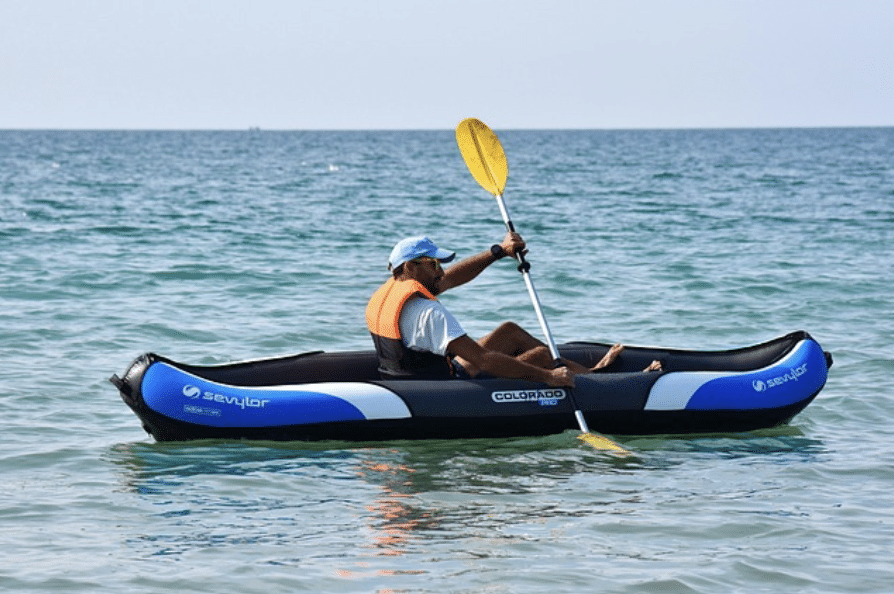
For first-launch gear and hull tradeoffs that affect open-water decisions, see our beginner’s guide to kayaking and our inflatable kayak reviews.
The Probability × Consequence Grid Paddlers Already Use
Expedition paddlers use a two-axis grid: the likelihood of a bad event along one side, and the severity if it happens along the other. In the US Coast Guard’s 2024 dataset, paddlesport vessels accounted for roughly 30 percent of known vessel-type fatalities, even though the paddlesport population — around 30 million Americans in 2024, up 22 percent since 2019 — is a small share of total water users (Outdoor Industry Association via Paddling Magazine, 2024). The fatal cases skew toward the low-probability, high-consequence quadrant.
Here is the grid, with one real-world example per cell:
|
Low consequence |
High consequence |
|
|---|---|---|
|
Low probability |
Scraping a rock on a known lake |
Lightning cell on open sea |
|
High probability |
Wet feet on the launch ramp |
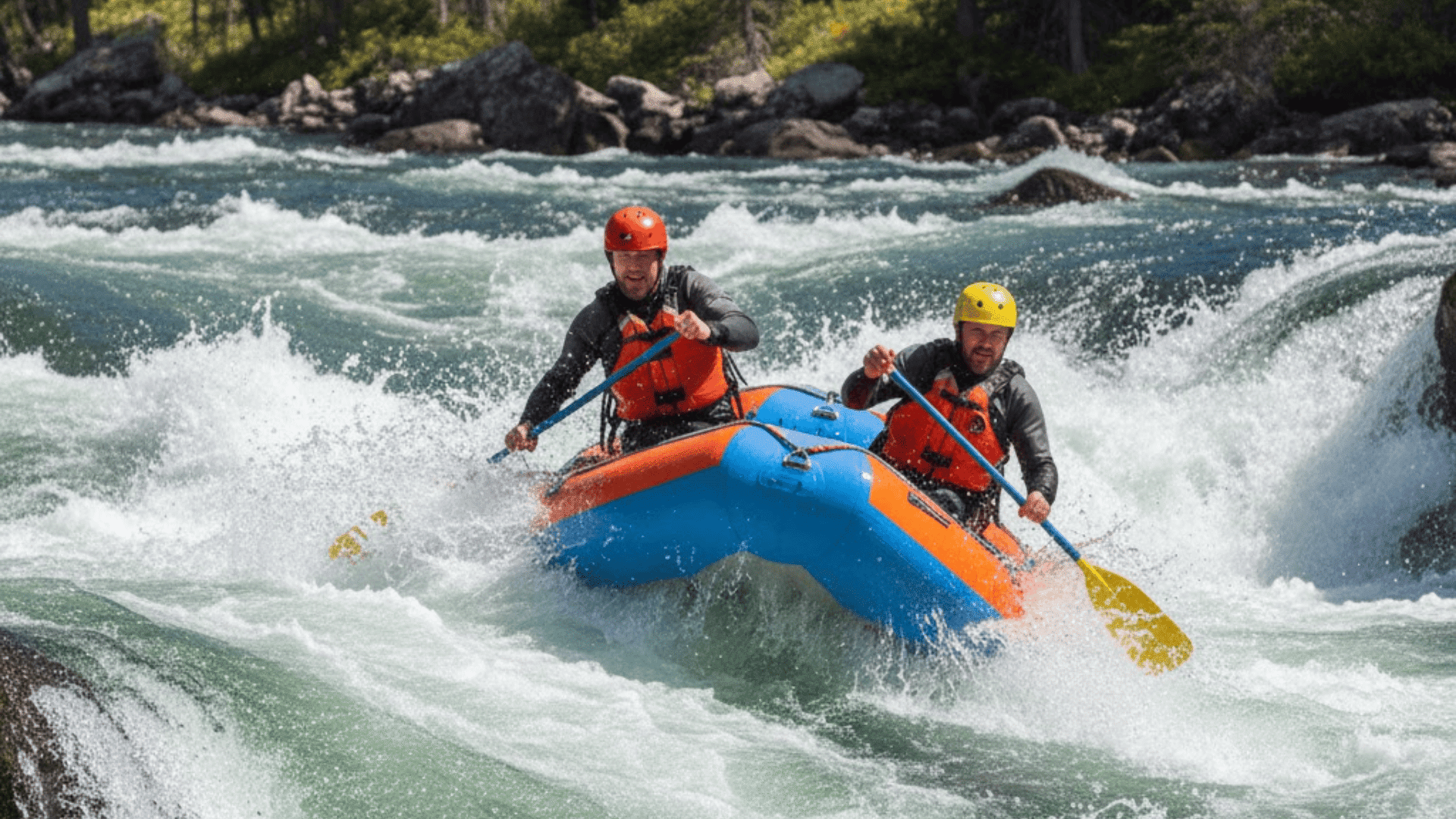
Hypothermia on a Class III run without thermal layers |
The rules are simple. Low-probability, low-consequence situations are trip reports you forget by Tuesday. High-probability, high-consequence situations are the ones that kill paddlers. The top-right cell deserves a hard no-go, not a brave maybe.
For the pre-trip inputs that move cases out of that quadrant, see our guide to reading water and weather.
The House Edge of a Bad Habit
Casinos profit because the house edge is small per bet but inevitable over many bets — and the same math explains why skipping the PFD eventually catches up with a paddler. Blackjack with basic strategy runs a house edge near 0.5 percent (UNLV Center for Gaming Research, 2017). European roulette sits at 2.70 percent, and American roulette almost doubles that at 5.26 percent, because the American wheel adds a second zero. Slots return long-run payouts of about 92 to 98 percent — a house edge of 2 to 8 percent across a session (UK Gambling Commission, 2024).
House edge by game (%)Blackjack0.5%EU roulette2.70%Slots (avg)5.0%US roulette5.26%Source: UNLV Center for Gaming Research (2017); UK Gambling Commission (2024)House edge varies from 0.5 percent (blackjack with basic strategy) to 5.26 percent (American roulette). Sources: UNLV Center for Gaming Research (2017); UK Gambling Commission (2024).
Here is the paddling translation. Is a single launch without a PFD a disaster? Rarely. Repeated across a hundred launches, however, the cumulative probability of an event that a jacket would have survived climbs steeply — slot-machine arithmetic in reverse. Every trip is a small bet against the house. The edge is modest. The house still wins.
For jacket fit, flotation ratings, and the decisions behind buoyancy choice, see our guide on choosing the right PFD.
Loss Aversion, the Gambler’s Fallacy, and Why Experienced Paddlers Still Drown
Tversky and Kahneman found that losses hurt about 2.25 times as much as equivalent gains feel good — which is why both chase-losses gamblers and over-committed paddlers push on when they should turn back (Tversky & Kahneman, Journal of Risk and Uncertainty, 1992). The loss coefficient, λ ≈ 2.25, means a paddler who has already driven three hours to the put-in weighs the cost of aborting far more heavily than the symmetric benefit of a safe return home.
In April 2024 the author aborted a planned Class II run on Oregon’s McKenzie River after a frontal shift dropped the water-temperature forecast below 45°F for the full window. Two paddlers in the group pressed to continue. The gambler’s fallacy was audible: “I have run this stretch ten times.” Ten prior safe runs do not alter the base rate of hypothermia on the eleventh.
Three questions to run before every launch:
- What is the probability of the worst likely event?
- What is the consequence if it happens?
- What is the realistic escape route?
For a repeatable pre-trip workflow, plan your next paddle with the full checklist.
Frequently Asked Questions
What Is the Difference Between Risk and Uncertainty?
Risk describes situations with known probability distributions, such as rolling dice. Uncertainty describes situations where even the distribution is unknown, such as a half-formed storm cell over an open bay. The 1921 Knight distinction, still used by the National Research Council, underpins modern decision theory. A paddler converts uncertainty into risk by collecting weather, water-level, and water-temperature data before the launch.
Is Kayaking a High-Risk Sport?
In 2024, US recreational boating produced 4.8 fatalities per 100,000 registered vessels (US Coast Guard, 2025) — lower than motorcycling but higher than swimming. Paddlesport sits near the median outdoor-sport fatality rate, and the single largest modifiable factor remains PFD use. In the fatal cases, the jacket was almost always absent, not merely unfastened.
How Is Probability Used in Decision Making?
Probability turns intuition into arithmetic. For paddlers, probability × consequence produces a 2×2 go-or-no-go grid. A Class III rapid in cold water is a low-probability, high-consequence cell — treat it as a hard no unless a reliable roll, thermal protection, and a trained safety boat are all present. Ranking cells, not emotions, is the point.
Conclusion
The portable framework is simple. First, decisions under uncertainty share one grid — probability on one axis, consequence on the other. Second, the rare-but-fatal cells produce the trips that end badly, which is why the house-edge analogy holds across a season. Third, the PFD is the cheapest hedge any paddler owns; wear it every time. Before the next launch, give the grid one quiet minute. Then put the jacket on.
For the broader safety mindset this framework sits inside, see our pillar on how paddlers think about risk.