
Thailand is one of the few places where a single trip can include sea caves, mangrove creeks and a slow jungle river. The water is warm, the scenery is dramatic, and rental boats are easy to find. What catches paddlers out is timing. The two coasts run on different weather calendars, and the wrong month can turn a calm bay into a washout.
Most paddlers also spend more time on land than on the water. Temples, markets and transfers fill the days between launches. A private local guide from Your Thai Guide can plan those land days and day trips from Bangkok around your paddling plans. That leaves your energy for the water.
Where Are the Best Places to Paddle in Thailand?
Each region suits a different kind of paddler. Sea kayakers head south to the Andaman coast. River paddlers look west of Bangkok. Here is how the main options compare.
| Area | Water type | Best for | Main watch-out |
|---|---|---|---|
| Phang Nga Bay | Sheltered sea, karst islands | Sea caves and lagoons | Tide timing for cave entrances |
| Krabi coast | Mangroves and open coast | Half-day mangrove loops | Boat traffic near piers |
| Kanchanaburi rivers | Slow inland river | Relaxed float trips | Current after heavy rain |
| Gulf islands | Open sea, sandy coves | Short beach paddles | Wind and swell late in the year |
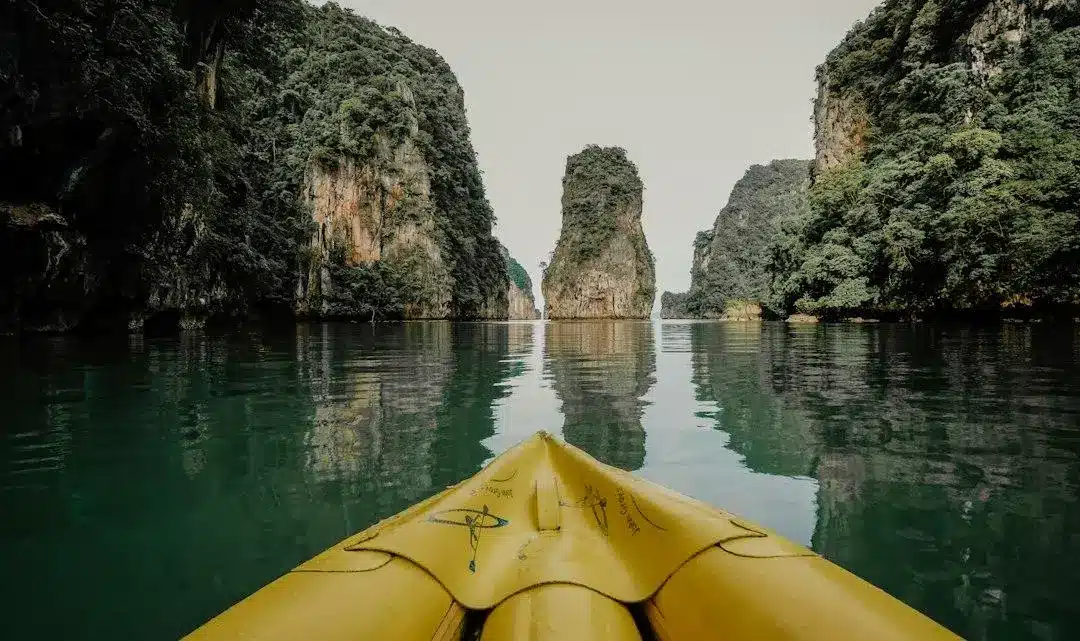
Phang Nga Bay is the classic choice. Its limestone towers hide tidal lagoons that you reach through low cave openings. Local operators time these trips around the tide, so follow their schedule rather than your own.
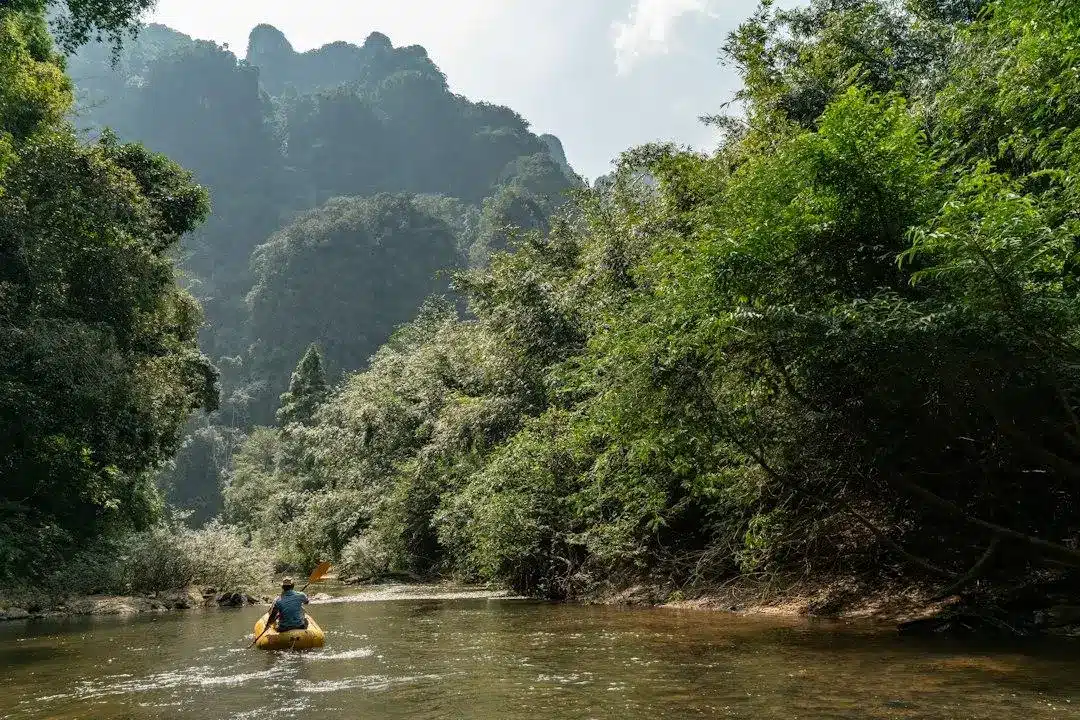
Krabi offers mangrove channels that stay calm when the open coast does not. Inland, the rivers around Kanchanaburi suit families and nervous paddlers. The current is usually gentle, though it can build after heavy rain. River days also pair well with sightseeing, since the town sits within a day trip of Bangkok. Morning paddles beat the midday heat and leave the afternoon free for history and food.
When Should You Plan a Kayaking Trip?
Season matters more than location. The Thai Meteorological Department’s September to November outlook, issued on 20 August 2026, describes the normal pattern using a 1991 to 2020 baseline. It says September brings the heaviest monthly rainfall of the year for most of the country.
From the middle of October, the southwest monsoon starts giving way to the northeast monsoon. Upper Thailand dries out and cools. The south behaves differently, and the outlook says rainfall stays heavy there in November, especially around the east coast.
In practice, that gives paddlers a rough rule:
- Andaman coast (Phang Nga, Krabi): Aim for the drier months after the southwest monsoon fades.
- Gulf coast islands: Avoid November, when the east coast is still wet.
- Rivers near Bangkok: Avoid days right after heavy rain, when currents rise.
- Any region: Follow forecasts and tropical storm warnings from the Thai Meteorological Department.
Which Safety Habits Matter Most in Tropical Water?
Warm water feels forgiving, but drowning risk does not change with temperature. The U.S. Coast Guard’s 2024 boating statistics make the point. Where the cause of death was known, 76% of fatal boating victims drowned. Where life jacket use was known, 87% were not wearing one.
Paddlers feature heavily in those numbers. Paddlecraft accounted for 26% of deaths where vessel type was known, with kayaks alone at 16%. The same report lists 143 paddlecraft deaths in 2024, and 124 of them were drownings. Those figures come from American waters, but the physics are the same in the Andaman Sea.
A few habits close most of that gap:
- Wear your life jacket on the water, not strapped to the deck, and check the life jacket rules for fit and type.
- Check tide times before entering any sea cave or lagoon.
- Carry drinking water and sun cover, since heat exhaustion builds quickly.
- Avoid paddling after drinking alcohol, a leading factor in boating deaths.
- Tell someone ashore your route and return time.
Should You Bring Your Own Inflatable Kayak?
It depends on your route. An inflatable packs into checked baggage and gives you freedom on rivers and quiet beaches. It also saves rental fees if you paddle often over a long trip.
Sea caves are a different story. Many lagoon trips run as organized tours with their own boats and timed entries. Some protected areas also have their own rules on private craft. If caves are your main goal, rent locally and keep the inflatable for river days. Tips on renting local kayaks apply here too.
Heat is the other factor. Keep an inflatable shaded between sessions and release a little pressure in direct sun. Pack a patch kit, a compact pump and a dry bag for your phone and passport copy. Spare parts for specific brands can be hard to find outside big cities, so bring what you need from home.
Planning the Days Between Launches
- Match each coast to its dry season before booking flights.
- Book cave and lagoon trips with operators who time them to the tide.
- Wear a life jacket every time you paddle.
- Use a private guide for Bangkok and day trips such as Kanchanaburi.
- Leave rest days, because heat and paddling together are tiring.
Your Thai Guide’s private Bangkok days start from $132 for up to 8 hours with a licensed, English-speaking guide. The company does not run kayak trips. It can, however, shape the temple, market and transfer days around them.
Frequently Asked Questions
Is Thailand Good for Beginner Kayakers?
Yes, especially on calm rivers and in sheltered bays. Guided lagoon trips handle navigation and timing for you. Beginners should avoid open coast on windy days.
What Is the Best Month to Kayak Phang Nga Bay?
Plan for the drier months after the southwest monsoon fades. Check the Thai Meteorological Department outlook before you book. Tide timing matters on any given day.
Can I Paddle My Own Inflatable Kayak in Thailand?
On many rivers and beaches, yes. Organized sea cave trips usually use their own boats. Ask locally about rules in protected areas before launching.
Do I Need a Life Jacket for Kayaking In Warm Water?
Yes. Warm water does not prevent drowning, and most boating deaths involve people without one. Wear it on the water every time.