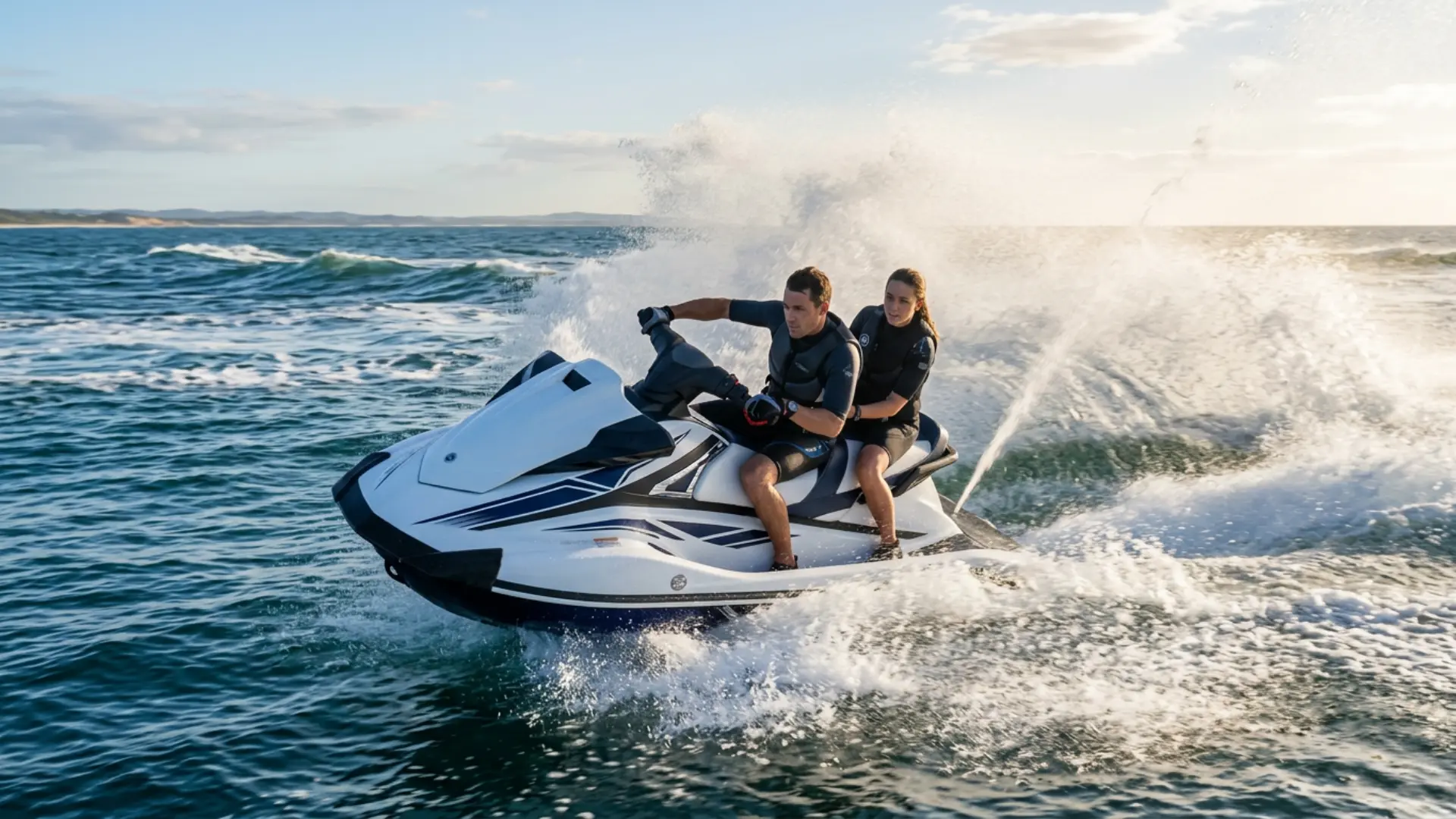
A “Honda jet ski” search can be confusing because Honda never officially used that name. The brand’s personal watercraft lineup was called Aquatrax, and it was produced from 2002 to 2009 before Honda left the market.
The confusion around the naming aside, the lineup itself covers six models, two hull types, and one unique turbocharged engine that earned both passionate followers and vocal critics over its seven-year run.
Here’s a closer look at what these Honda jet skis were actually like, where they struggled, and what matters most when buying one today.
Why “Honda Jet Ski” Isn’t the Exact Name
Most people use “jet ski” to describe any personal watercraft, but the term is actually a Kawasaki trademark. It refers specifically to Kawasaki’s personal watercraft models, not the entire category.
Honda’s version was called Aquatrax, which is the name you’ll need when searching for Honda’s watercraft. Other brands use their own names too, like Sea-Doo and Yamaha WaveRunner.
Searching “Honda Aquatrax” instead of “Honda jet ski” brings up far better results, since it points directly to Honda’s actual lineup, including model details, performance specs, and owner experiences.
What Models Did Honda Actually Build?
Despite having fewer models than competing brands such as Yamaha, Sea-Doo, and Kawasaki, Honda’s Aquatrax series had a variety of choices that catered to many types of users.
From 2002 through 2009, Honda designed six models using two types of hulls with naturally aspirated and turbocharged engines.
| Model | Years | Engine | Power | Seats | Key Feature |
|---|---|---|---|---|---|
| F-12 | 2002-2007 | 1235cc naturally aspirated | 125 hp | 3 | Entry-level, practical cruiser |
| F-12X | 2002-2007 | 1235cc turbocharged | 163-165 hp | 3 | Honda’s first turbocharged PWC |
| R-12 | 2003-2007 | 1235cc naturally aspirated | Around 125 hp | 2 | Shorter hull with sportier handling |
| R-12X | 2003-2007 | 1235cc turbocharged | Around 165 hp | 2 | Performance-focused turbo model |
| F-15 | 2008-2009 | 1470cc naturally aspirated | 153 hp | 3 | Larger, more stable redesign |
| F-15X | 2008-2009 | 1470cc turbocharged | 197 hp | 3 | Most powerful Aquatrax model |
The first F-12 and F-12X models kicked off the Aquatrax series in 2002, offering a steady three-seater design with the option of a turbocharged engine. The sportier R-12 and R-12X followed shortly after, built on a narrower, two-seat hull.
In 2008, Honda redesigned the lineup with the F-15 and F-15X, adding an upgraded 1.5L engine and a longer hull for greater stability.
The F-15X was the final and most powerful model in the Aquatrax range, with almost 200 horsepower, before Honda ceased PWC production in 2009.
Turbo Power and Handling Made Aquatrax Different
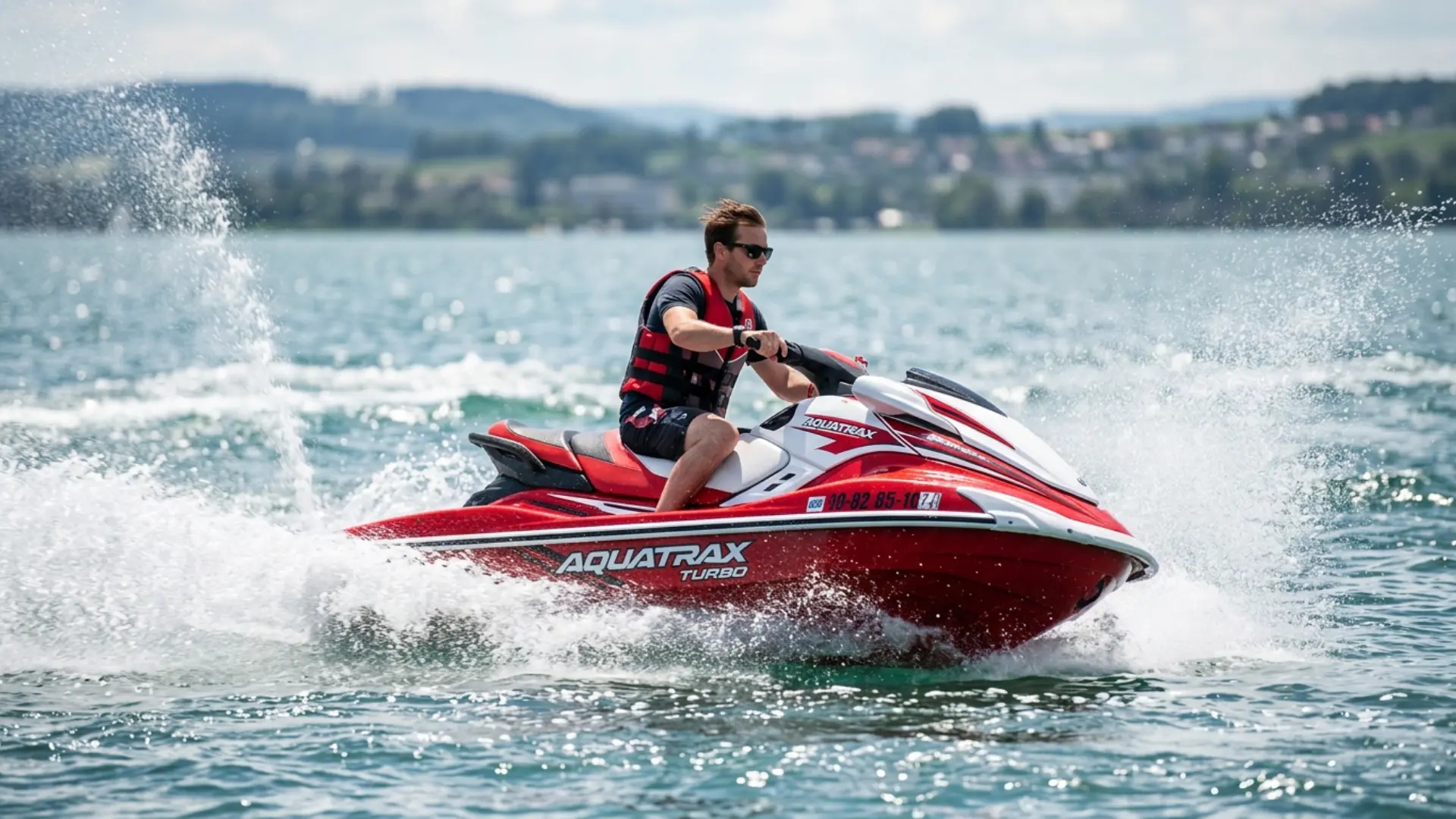
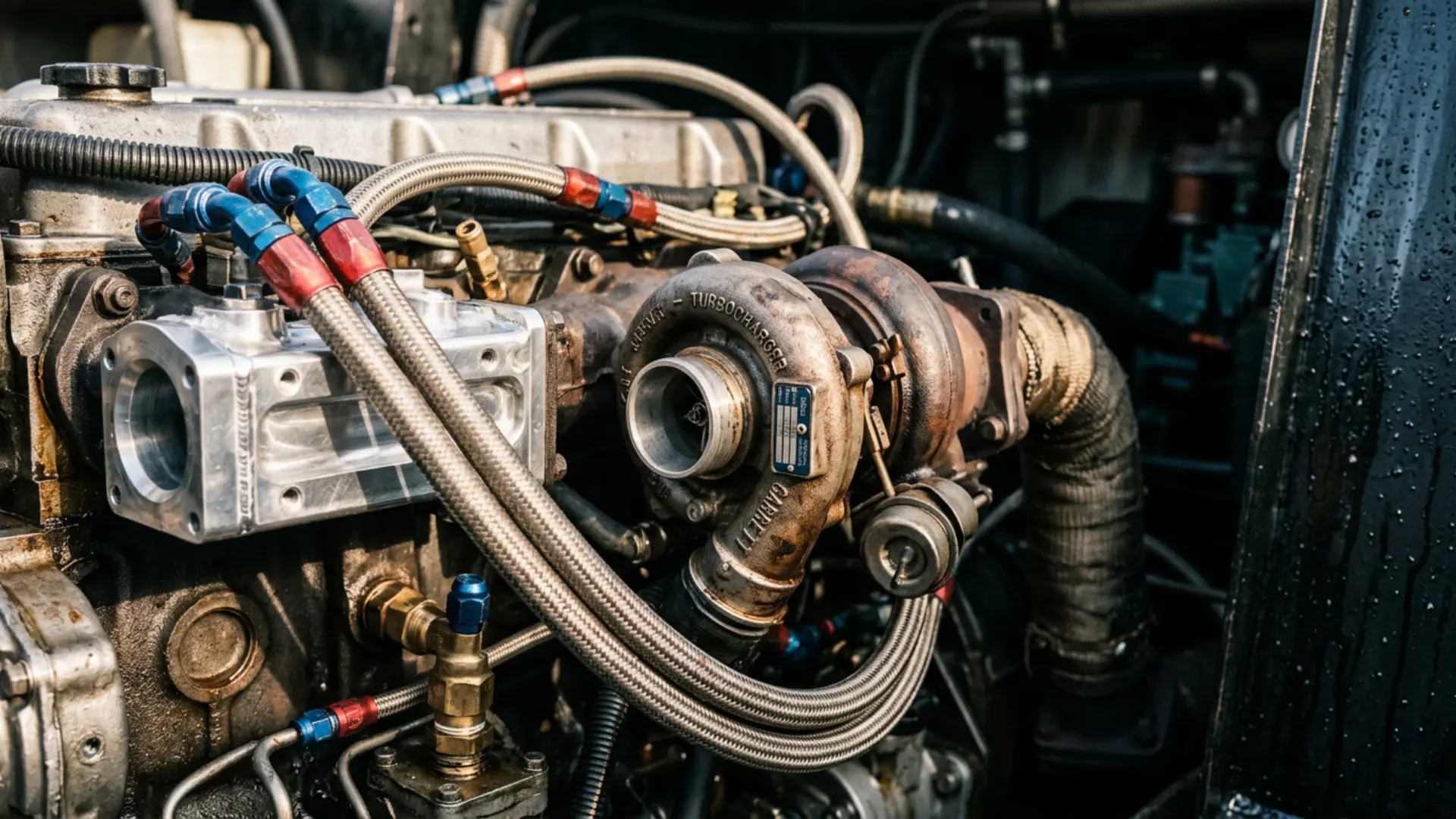
Honda took a different route with the Aquatrax lineup. When the F-12X launched, it became the first production turbocharged personal watercraft, using a smaller 1,235cc four-cylinder engine to deliver power that rival models achieved only with larger naturally aspirated engines.
The turbo setup gave Honda strong performance while helping the Aquatrax meet stricter emissions standards earlier than many competitors, including the federal marine engine emissions rules in effect at the time.
The F-12X also delivered reasonable fuel efficiency for its time, using about 14 gallons per hour at wide-open throttle. Control, however, relied heavily on the rider.
Compared to the Sea-Doo GTX, the F-12 was more reactive, demanding rider input the way a motorcycle does. Riders should also review proper PFD safety guidelines before taking any personal watercraft onto open water.
Honda addressed much of this handling sensitivity in the later F-15 model.
Honda Aquatrax vs. Sea-Doo and Yamaha WaveRunner
Honda entered a market that already had established players, and the Aquatrax rarely came out ahead on raw numbers.
The naturally aspirated F-12 offered 125 hp, while its direct rival, the Sea-Doo GTX, offered 155 hp. Even the turbocharged F-12X’s 163-165 hp trailed some naturally aspirated competitors of the same era.
By the time the F-15X arrived in 2008 with 197 hp, rivals like the Sea-Doo RXT-X and Kawasaki Ultra 250X were rated well above 230 hp.
Despite that gap, the F-15X still matched their real-world top speed of roughly 65 mph, which is part of why Honda’s turbo engineering earned respect even without leading the horsepower race.
How Reliable Are Honda Aquatrax Turbo Models?
Honda’s reputation for reliability is often questioned when it comes to the Aquatrax Turbo series, but mostly for the wrong reasons.
There are only a few factors contributing to this problem, and none of them involve the core engine itself.
- Waste Gate Solenoid Problems: Boost issues, FI warning lights, and lack of power can result from corrosion and improper maintenance.
- Maintenance Matters: A properly maintained Aquatrax can exceed 1,000 hours, while units left untreated after saltwater use tend to develop problems much faster.
- Sensor Problems: Rough running and reduced power are often traced to MAP or TPS sensors rather than the engine itself.
- Ignition Module Issues: Some owners report ignition control module failures unrelated to the turbo system, so it’s worth asking a seller whether this has ever been replaced.
- Not Fragile, Just Demanding: Aquatrax rewards owners who follow maintenance schedules and avoid neglect.
Honda Aquatrax Pros and Cons
Honda Aquatrax models stand out in the PWC market because of their turbocharged performance, unique engineering, and affordable used pricing.
However, ownership also comes with a few challenges, especially with parts availability and maintenance.
| Pros | Cons |
|---|---|
| Turbocharged performance from F-12X and F-15X models | Limited parts availability compared with newer PWCs |
| Smooth power delivery from four-cylinder engines | Turbo models require careful maintenance |
| Comfortable three-seat layouts for family riding | Smaller aftermarket support than Sea-Doo or Yamaha |
| More stable ride quality on later F-15 models | Older models may need electrical or sensor repairs |
| Affordable used prices compared with newer personal watercraft | Finding clean, well-maintained examples can be difficult |
Why Honda Left the PWC Market in 2009
Honda’s decision to leave the personal watercraft market came sooner than many expected. After launching the updated F-15 and F-15X Aquatrax models in 2008, Honda discontinued its entire PWC lineup the following year, ending a seven-year run.
The timing was affected by both market conditions and Honda’s distribution approach. First, the 2008 financial crisis hit recreational vehicle sales hard, as buyers postponed non-essential purchases across the board.
Second, many Honda dealerships were reportedly required to sell Aquatrax exclusively, meaning they had to drop competing brands like Sea-Doo, Yamaha, and Kawasaki to carry Honda’s lineup.
Multi-line dealers weren’t willing to give up established brands for a newer, less proven one, which limited how widely the Aquatrax could be sold in the first place.
Rather than restructure its distribution, Honda chose to leave the personal watercraft segment altogether.
Today, the Aquatrax is considered one of the more distinctive chapters in Honda’s history, thanks to its turbocharged engine and brief run on the market.
Things to Check Before Buying a Honda Aquatrax
When purchasing a used Aquatrax, more than just turning on the engine should be considered. These watercraft can absolutely still perform well, but a few checks up front can prevent costly repairs down the line.
- Confirm the Fuel Tank Recall Was Completed: Honda issued a recall covering fuel tank leaks on 2002-2007 Aquatrax models. Ask for proof the recall work was done, and if it wasn’t, factor that repair into your offer or walk away.
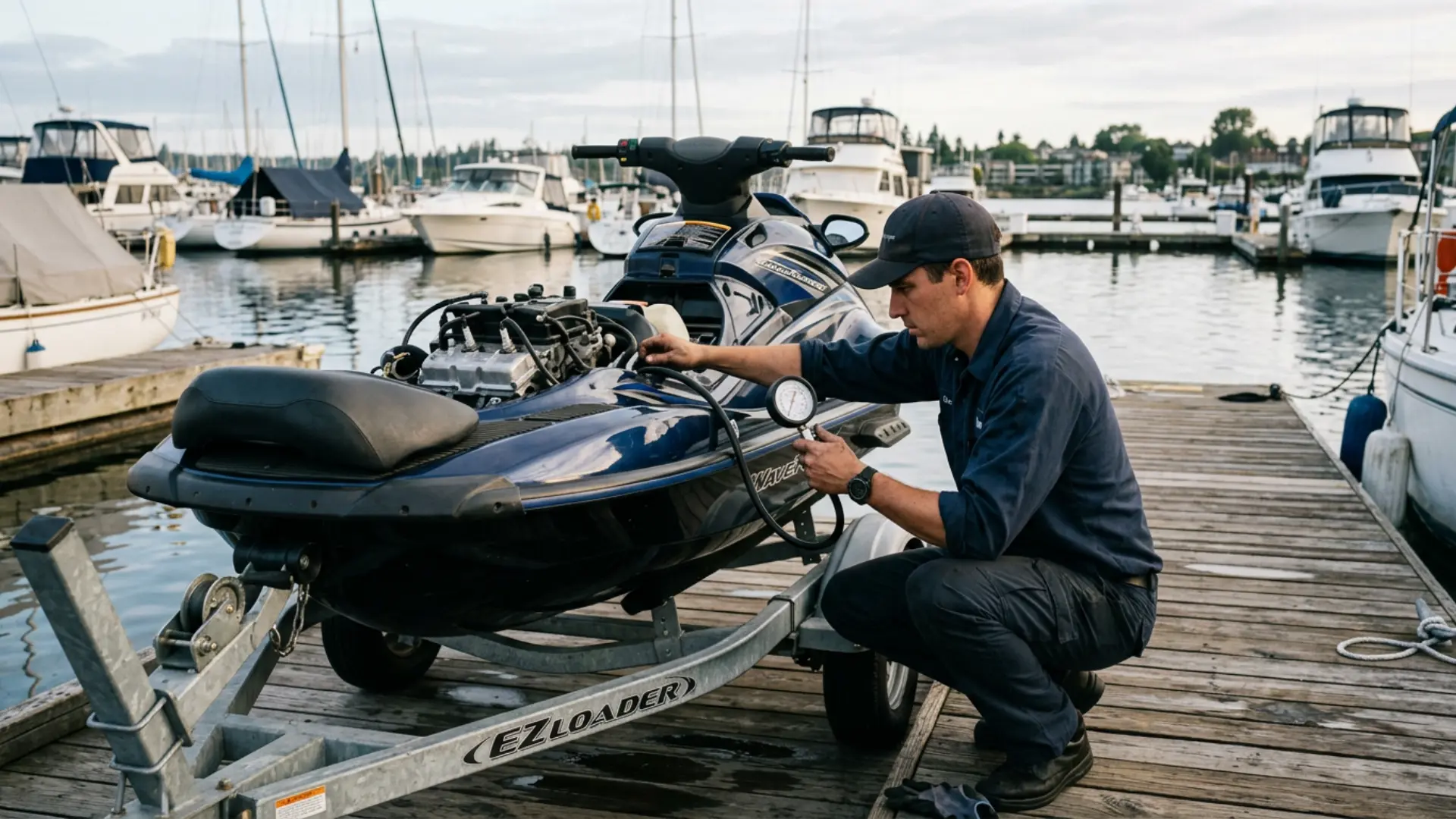
- Get a Compression Test: Have a shop run a compression test and compare the results against another Aquatrax of the same model, since consistent readings across cylinders matter more than hitting one universal number. Turbo and naturally aspirated engines don’t share the same baseline.
- Test the Turbo System: Check the wastegate solenoid and make sure the ski pulls smoothly at higher RPM without warning lights, fault codes, or entering limp mode.
- Ask About Saltwater Use: Poor flushing habits after saltwater riding are one of the biggest causes of corrosion and turbo-related issues.
- Review Maintenance Records: Look for proof of regular servicing, especially wastegate lubrication and turbo care, since Aquatrax parts are harder to find today.
- Do a Proper Water Test: Bring Coast Guard-approved safety equipment and test the craft under real riding conditions before buying.
Are Honda Aquatrax Still Worth Buying?
A used Honda Aquatrax can still be a great option for riders who want something different from the usual Sea-Doo or Yamaha models.
The turbocharged versions deliver impressive performance for their age, while naturally aspirated models offer a simpler ownership experience with fewer performance-related concerns.
Condition matters more than cost here. Because Honda no longer produces any Aquatrax models, a well-documented, well-maintained unit is worth paying more for than a cheaper one with an unknown history.
For those willing to look, the Aquatrax remains one of the more distinctive used PWCs on the market.
Current Used Market Prices by Honda Aquatrax Model
Used Honda Aquatrax prices are shaped by year of manufacture, engine hours, condition, location, and maintenance history, since Honda no longer produces new units.
- F-12 / R-12 (Naturally Aspirated): Around $2,000-$4,500
- F-12X / R-12X (Turbo): Around $2,500-$5,500
- F-15 (Naturally Aspirated): Around $4,000-$7,000
- F-15X (Turbo): Around $5,000-$9,000+
It’s generally worth paying more for an Aquatrax with documented service records than opting for a cheaper unit with an unknown history.
Disclaimer: The prices above are indicative only and are subject to change depending on demand and the condition of the specific unit.
Final Thoughts
To be honest, the story behind the Honda jet ski is somewhat unique compared to other PWCs on the market.
The Aquatrax was never designed to beat Sea-Doo and Yamaha on raw numbers, and it’s been difficult for me not to respect the attempt after digging into it. Honda built the world’s first turbo PWC, and that alone earns it a spot in the conversation.
If you’re considering a used Aquatrax today, I’d focus less on the badge and more on the machine itself.
Confirm the recall was handled, check the service history, test the turbo system, and inspect it carefully before buying. A well-kept model can still offer a distinctive riding experience years later.
Frequently Asked Questions
Does Honda Still Make Jet Skis?
No. Honda ended its Aquatrax personal watercraft lineup after the 2009 model year and has not produced a new PWC since.
What is the Fastest Honda Aquatrax Model?
The Honda Aquatrax F-15X is the fastest model, producing 197 hp from its 1,470cc turbocharged engine.
Are Honda Aquatrax Jet Skis Reliable?
Yes, when maintained properly. Regular turbo servicing, especially the wastegate solenoid, helps many models run beyond 1,000 hours.
Can You Still Get Parts for a Honda Aquatrax?
Yes, but availability is limited. Most owners rely on used parts, aftermarket suppliers, and online marketplaces for replacements.