Skimboarding is one of the few board sports where your first move is on the sand rather than in the water.
Every run begins with a sprint, every ride is shaped by the tide, and every landing teaches something new about balance and control.
Knowing how the sport works before your first session helps you choose the right board, practice the right techniques, and spend more time riding instead of falling.
What is Skim Boarding?
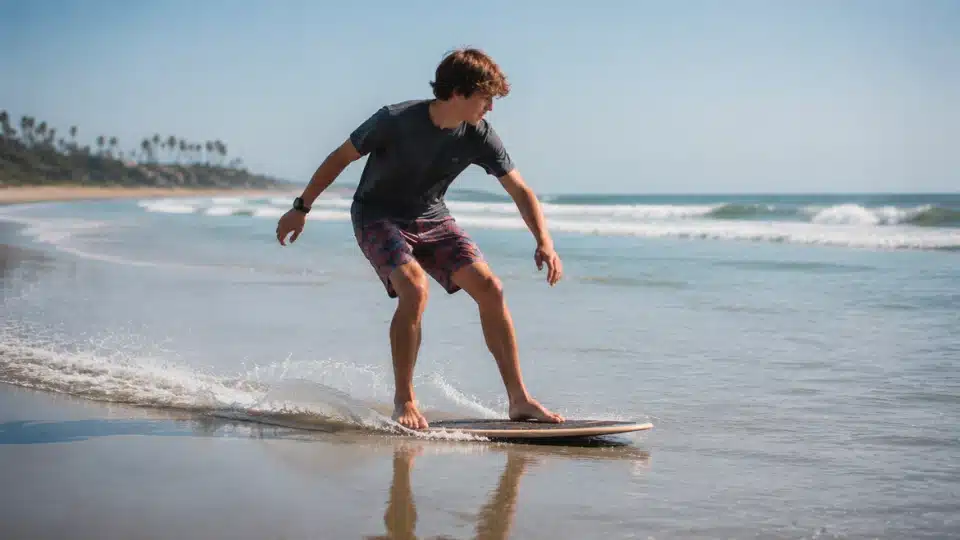
Skimboarding is a board sport where you run along the shoreline, drop a flat board onto a thin sheet of water, and glide across it to meet an incoming wave.
Unlike surfing, there’s no paddling out or waiting for a set; the action starts and ends right at the water’s edge, using only your speed and the board.
Riders generally fall into two camps: those who stick to calm, shallow water near the sand, and those who chase the shorebreak to meet waves head-on.
Either way, skim boarding rewards quick footwork, sharp timing, and a willingness to fall often before anything feels smooth.
The History of Skimboarding
Skimboarding traces back to a single day in 1929, when two Laguna Beach lifeguards, George Griffith and Graeme “Jimmy” Smith, nailed a round piece of plywood to their feet and became the sport’s first documented riders.
Other lifeguards on the beach picked it up fast, and the idea spread quietly along the California coast for decades.
By the 1980s, skimboarding had grown into a real competitive sport, with organizations like Skim USA ranking riders nationwide and dedicated events drawing crowds up and down the coast.
As more people took it up, the sport naturally split into two paths: flatland skimming on calm water, and wave skimming at the shorebreak, where riders challenge incoming waves head-on.
Skimboarding vs. Surfing: What Is the Difference?
Skimboarding and surfing share a board and a beach, but the similarities mostly stop there. Riders often ask which one to try first, so this table breaks down the practical differences you’ll actually notice.
| Aspect | Skimboarding | Surfing |
|---|---|---|
| Starting point | Shoreline, no paddling required | Paddle out past the breaking waves |
| Board size | Shorter, flatter, no fins | Longer, with fins for stability |
| Water depth needed | Inches of water at the shore | Several feet past the break |
| Wave dependency | Can ride flatland with zero waves | Needs a rideable swell |
| Learning curve | Faster to start, harder to time waves | Slower to start, easier once you’re up |
| Typical entry cost | Lower: simple boards cost less | Higher: boards and wetsuits add up |
Both sports demand board control, but skimboarding trades paddling for sprinting, and it rewards quick footwork over sustained balance on open water, which is worth keeping in mind if starting out on a surfboard is also on your radar.
Skimboarding Gear: What You Need to Get Started
Walking into the water without the right setup is the fastest way to end a session early. Here’s what actually matters before your first run.
- Skimboard material: wood boards suit flatland skimming and cost less; foam or carbon fiber boards suit wave riding and weigh less.
- Board size: match the board to your weight, not just your height. As a rough guide, a 45-inch board suits riders around 80–140 lbs, while taller or heavier riders need something closer to 50–56 inches. A board too small will sink and stall under you; one too big glides fine but feels sluggish and hard to control. Beginners generally do better sizing up slightly for stability.
- Traction pad or wax: grip on the deck keeps your feet planted during the drop and the ride.
- Rash guard or short wetsuit: protects your skin from sand abrasion, sun exposure, and cold wind.
- Beach with a gentle slope: flat, compact sand near the water’s edge gives you room to practice runs safely.
- A local shop consultation: staff can match you to a board based on your weight and experience level faster than you can by guessing on your own.
None of this gear needs to be expensive on day one, but skipping the traction pad or grabbing a low-quality board tends to make the learning curve steeper than it needs to be.
How to Skimboard
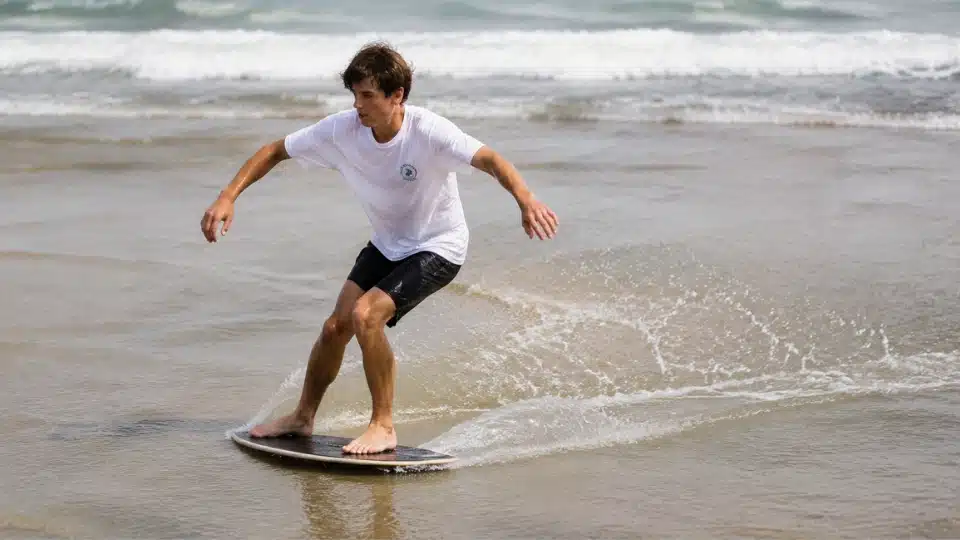
Once your gear is sorted, the actual technique comes down to four repeatable steps. Nail these on flat land before you take them anywhere near a wave.
Step 1: Drop the Board and Run From Behind
Place the board on the sand or in shallow water, then step back and approach it running from directly behind, never from the side.
Running from behind transfers your forward momentum into the board instead of pushing it sideways. It doesn’t matter whether you’re goofy or regular-footed here.
Step 2: Throw the Board Just Ahead of You
As you run, hold the board with a firm grip near the nose, then throw it a short distance in front of you so it lands flat on the wet surface.
A slight nose rocker helps prevent it from digging into the sand. Aim for a spot with only a thin film of water.
Step 3: Run Onto the Board, Don’t Jump
Place your lead foot toward the front of the board first, then follow immediately with your back foot in one continuous motion. Don’t break stride to hop on.
Jumping instead of running tends to end badly: the extra downward force can make the nose dig into the water rather than skate over it, and you’ll often feel your back foot slip out from under you as the board stalls. Running onto it keeps your speed and your feet where they need to be.
Step 4: Find Your Balance and Ride It Out
Distribute your weight evenly across both feet and keep your knees slightly bent to absorb the glide. Angle your feet toward the side of the board, similar to a snowboard stance, rather than pointing them straight ahead.
Position both feet slightly toward the back of the board rather than dead center. This gives your back foot more control, since it’s what steers and directs the board as you ride.
On flatland, either foot can land first; on waves, landing back-foot-first keeps the nose from dipping underwater. Stay loose through your hips as the board settles.
Step 5: Learn to Fall Safely
Falling is part of skimboarding, so knowing how to go down matters almost as much as knowing how to ride. Stay loose instead of bracing with stiff, straight arms. Locked arms are more likely to sprain a wrist than protect you.
Aim to fall to the side rather than straight back or face-first; a sideways fall spreads the impact across your body instead of concentrating it on one joint.
Tuck your chin toward your chest as you go down to keep your head from snapping back. And if you feel yourself losing balance, let the board go chasing after it, or twisting to keep your footing causes more injuries than the fall itself.
Types of Skim Boarding You Can Try
Skimboarding isn’t one single activity; it branches into distinct styles depending on the terrain and your skill level. This table lays out the two main types so you know where to start.
| Type | Where It’s Practiced | Best For |
|---|---|---|
| Flatland skimming | Calm, shallow water on riverbanks or beach shallows | Absolute beginners building balance |
| Wave skimming (shorebreak) | Shorebreak where waves crash directly on the sand | Riders comfortable with flatland basics |
You can also skim on rivers, lakes, or even rails and ramps once you’re advanced, but most riders start with flatland skimming and move into wave skimming once landings feel automatic.
Easy Skimboarding Tricks to Learn First
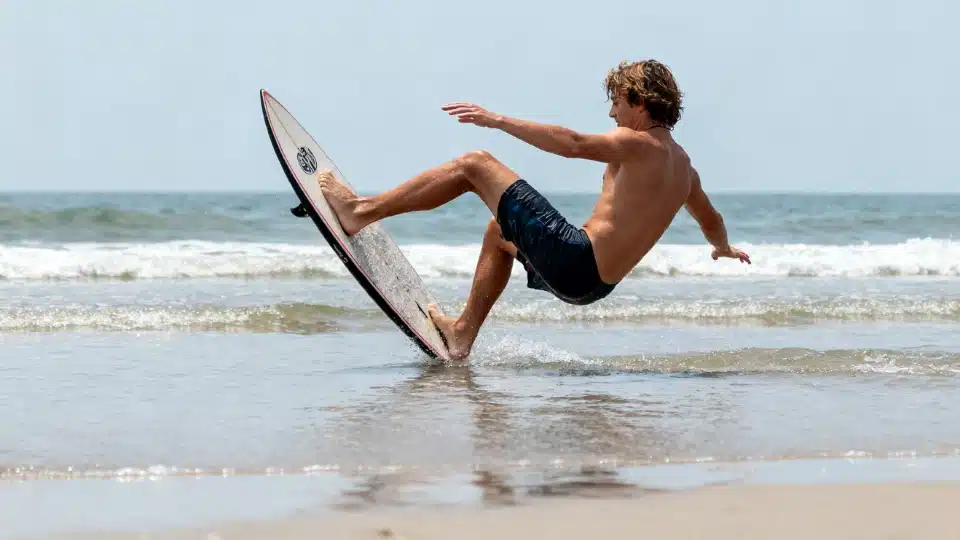
Once your basic ride and landing feel steady, a handful of entry-level tricks add style without requiring advanced timing. These build directly on the footwork you already practiced.
| Before you try any wave-based trick, you need to read the water. Watch for the next wave building as the previous one is still receding that’s your cue to start sprinting, not after the water has fully pulled back and gone flat.
As you run, you’ll usually need to clear the previous, already-broken wave first, lift the board’s nose slightly to hop over it without overdoing it, then push forward to meet the new wave coming in. Angle your run slightly toward where the wave will meet the shore, so you arrive at the same time it does, rather than chasing it once it’s already breaking. |
180 Spin
Rotate your body and board a half-turn mid-glide while keeping your weight centered. Start slowly on flat ground before adding any speed, since over-rotating is the most common way beginners lose balance here. Spot your landing early to keep the rotation controlled.
Wrap
Ride toward an incoming wave, use its face to redirect your board’s direction, and glide back the way you came.
This trick teaches you to read wave timing, which becomes essential once you move into consistent wave skimming sessions. Practice on smaller waves before scaling up.
Shove-It
Pop the board out from under your feet with a quick flick of your foot, let it rotate, and land back on it.
Borrowed straight from skateboarding, it’s a satisfying first trick to film once you land it consistently. Keep your eyes on the board, not your feet.
If you want a beginner-friendly place to start, Skaket Beach on Cape Cod is worth looking into. Its low tide exposes wide, flat sandbars, which give you plenty of calm, shallow water to practice on without fighting a crowded wave break.
Foam vs. Wood Skimboards
Choosing between foam and wood comes down to where and how you plan to ride.
| Factor | Wood | Foam / Fiberglass |
|---|---|---|
| Weight | Heavier, around 18–22 lbs | Much lighter, around 3–5 lbs |
| Best for | Flatland skimming, sand, tricks on rails | Wave skimming at the shorebreak |
| Durability | Tougher, resists dings and impacts | More fragile, can chip or crack |
| Price | Usually $50–$100 | Usually $150–$300 |
Beginners often start on wood since it’s cheaper and more forgiving, then move to foam once they’re chasing waves and want a lighter, more buoyant ride, a tradeoff you’ll also run into when comparing surfboard shapes and materials.
Skimboarding Safety Tips for Beginners
Falls are part of learning this sport, but a few habits can reduce how often you get hurt and how hard you land.
- Warm up and stretch first: loose ankles and knees handle sudden impacts far better than cold joints.
- Check the sand before every run: avoid patches with rocks, shells, or debris hidden under the water.
- Mind your skim etiquette: give other riders space and right of way, especially if they’re already mid-run; don’t cut across someone else’s line. Always check that the stretch of sand ahead is clear of people before you sprint toward the water.
- Master flatland before shorebreak: don’t attempt a powerful shore break until your landings are consistent on calm water.
- Study the tide schedule: tides change water depth quickly, which changes how your board behaves. Check official tide charts from NOAA Tides & Currents before heading out.
- Never skim alone in unfamiliar conditions: a second person nearby helps if a fall goes wrong.
- Find your local spot and community: ask at a local surf or skim shop about beaches with good shorebreak for your level. Staff and regulars usually know which spots are safest for beginners and which get too rough. Riding with others also means someone’s nearby if a fall goes wrong.
Conclusion
Skimboarding is one of those sports that’s far more enjoyable once you understand how it works.
A few simple adjustments in technique and choosing the right conditions can completely change how your board performs on the water.
Start with the basics, take your time learning them, and every session becomes a chance to ride farther and with more control.
Ready to get started? Grab a skimboard, find a beginner-friendly beach, and see how far your first glide takes you.
Frequently Asked Questions
Is Skimboarding Hard on Your Knees or Back?
It can be, especially if your technique is poor or you fall often. Bending your knees and using proper form helps reduce stress on your joints.
Can Kids Learn to Skimboard, and at What Age?
Yes, many kids start skimboarding around ages 6 to 8 with the right-sized board. Adult supervision and calm, shallow water are recommended.
Do You Need Waves to Skimboard, or Can Beginners Start Without Them?
No, beginners do not need waves to start. Flat, shallow water is ideal for learning balance and basic skimboarding skills.
How Much Does a Beginner Skimboard Cost?
Beginner wooden skimboards usually cost $50 to $100, while fiberglass models often start around $150. A basic wood board is a good choice for most beginners.
What’s the Best Time of Day to Go Skimboarding?
Early morning and late afternoon are usually the best times because the beach is less crowded and conditions are often calmer.