Cold air bites, the water looks even colder, and you’re standing there doing that familiar mental math: comfort or courage?
The wetsuit vs drysuit decision can shape the whole session, how confident you feel, how long you stay out, and whether you’re smiling or shivering.
Some people love the snug, sporty feel of a wetsuit. Others won’t touch winter water without the dry, cozy security of a drysuit.
If you’ve been stuck between the two, you’re not alone. No hype, no jargon, just the simple differences that matter, so you can choose fast and well.
What is a Wetsuit?
A wetsuit is a tight-fitting neoprene suit that keeps you warm in cold water. It works by allowing a thin layer of water to enter between the suit and your skin. Your body heat warms this water, creating insulation to keep you comfortable.
Wetsuits come in various styles, such as full suits that cover the entire body, shorties that stop at the knees and elbows, and spring suits for warmer water.
They are commonly used for activities such as surfing, diving, swimming, and kayaking in moderately cold conditions, providing both warmth and flexibility for water sports.
What is a Drysuit?
A drysuit is designed to keep the wearer completely dry, even in freezing waters. It features sealed zippers and wrist/neck seals to prevent water from entering, providing full protection.
Drysuits are designed to keep the wearer completely dry using waterproof materials and sealed seams. They typically have a durable outer layer for protection, while insulation comes from separate layers worn underneath.
These suits are ideal for cold-water activities like diving, kayaking, or winter fishing, where staying dry and warm is essential for comfort and safety. Drysuits are also popular for extended exposure to cold, allowing you to layer underneath to enhance insulation.
Key Differences Between Wetsuits and Drysuits
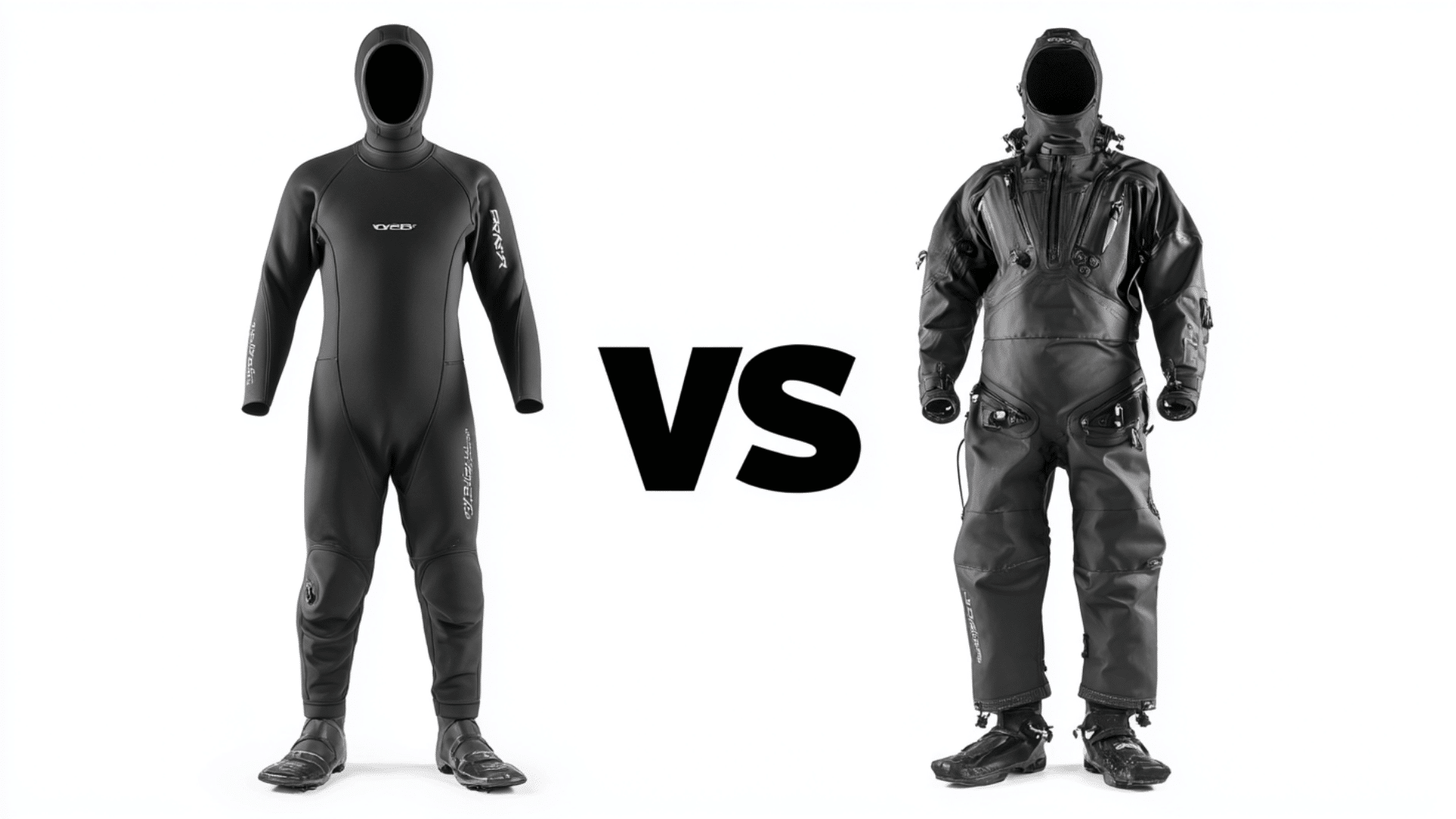
When choosing between a wetsuit and a drysuit, understanding their key differences helps you pick the right one. Both serve water activities, but they work differently based on temperature and conditions.
Materials
Wetsuits use neoprene, a flexible rubber that stretches and compresses to fit your body while insulating when wet. Thickness ranges from 2mm to 7mm based on water temperature.
Drysuits feature multi-layered waterproof nylon or breathable Gore-Tex with latex or neoprene seals at the neck, wrists, and ankles to block water. The outer shell protects against abrasion while the inner layers manage moisture.
Functionality
Wetsuits trap a thin layer of water between the suit and your skin, which your body heat warms for insulation. You get wet initially, but stay warm once heated.
Drysuits keep you bone dry with waterproof zippers, sealed cuffs, and neck gaskets that prevent water from entering. You wear clothes or thermal layers underneath and stay completely dry.
Flexibility and Comfort
Wetsuits hug your body closely, allowing easy movement for paddling, swimming, and active sports. The tight fit leaves minimal room for layers and can feel restrictive around the chest and shoulders.
Drysuits provide space for thermal undergarments like fleece or merino wool, offering adjustable insulation based on conditions. The loose fit provides warmth but reduces mobility and feels bulky during high-intensity activities.
Temperature Range
Wetsuits perform best in moderate to cool waters, typically 50-75°F (10-24°C), with thicker options (5-7mm) handling down to ~45-55°F (7-13°C) for shorter sessions or active use.
Performance drops for prolonged exposure in very cold water due to compression and heat loss.
Drysuits excel in cold to freezing waters, generally below 55-60°F (13-15°C), and are strongly recommended or essential below ~50°F (10°C) for longer immersion, safety, or when cold tolerance is low. They allow adjustable layering to adapt to conditions
Activity Suitability
Wetsuits are best for active water sports where flexibility and movement matter, such as surfing, swimming, snorkeling, and diving in warm-to-cool water.
Drysuits are better suited to cold-water activities, long sessions, or low-activity situations such as sea kayaking, cold-water scuba diving, winter fishing, and rescue work, where staying dry reduces heat loss and improves safety.
What Each Suit Offers: Benefits and Drawbacks
Choosing the right suit depends on your water temperature, activity type, and budget. This comparison will help you decide which option fits your needs best.
Wetsuits:
| Aspect | Pros | Cons |
|---|---|---|
| Warmth | Traps water layer that heats from the body | Leaves you feeling wet and cold |
| Flexibility | Stretchy material moves with you | Requires a tight fit, can feel uncomfortable |
| Cost | Budget-friendly and accessible | May need replacement with heavy use |
| Maintenance | Easy to rinse and hang | Takes time to dry fully |
| Best For | Summer activities and warm climates | Not suitable for very cold water |
Drysuits:
| Aspect | Pros | Cons |
|---|---|---|
| Warmth | Keeps you completely dry and warm | Can overheat with the wrong layers |
| Flexibility | Allows layering for customized warmth | Bulky and stiff, restricts movement |
| Cost | Long-lasting with proper care | Higher upfront cost |
| Maintenance | Inner stays dry and fresh | Requires seal and zipper checks |
| Best For | Winter paddling and cold water diving | Overkill for warm conditions |
Both suits serve different purposes and excel in their intended conditions. Consider where and when you’ll use it most to make the right choice for your outings.
Wetsuit and Drysuit Maintenance Tips

Proper care and maintenance of your wetsuit or drysuit is essential to prolong its lifespan and keep it in good condition. Here are some tips to ensure your gear lasts.
1. Wetsuit Care
- Rinse thoroughly with fresh water after each use to remove saltwater and chlorine.
- Dry inside-out in a shaded area, avoiding direct sunlight to prevent material damage.
- Store flat or on a wide hanger to maintain shape and avoid creases.
2. Drysuit Care
- After use, rinse the suit with fresh water and ensure it dries completely.
- Check and clean zippers regularly to avoid corrosion and ensure smooth operation.
- Inspect seals for any damage and treat them with suitable lubricants to maintain flexibility.
How to Make Your Choice?
Choosing the right suit depends on various factors such as water temperature, activity duration, and comfort. Here’s how to decide between a wetsuit and a drysuit for your needs:
| When to Choose a Wetsuit | When to Choose a Drysuit |
|---|---|
| Best for moderate to cool water temperatures (~50-75°F / 10-24°C), with thicker suits for lower end | Best for cold waters (below ~55-60°F / 13-15°C), essential below ~50°F (10°C) for prolonged exposure |
| Ideal for shorter activities like surfing and swimming | Ideal for longer exposure in extreme cold conditions |
| Provides flexibility and comfort for active water sports | Provides insulation and dryness for prolonged cold-water exposure |
| More affordable and accessible | Higher investment, but essential for safety in freezing temperatures |
Ranges are approximate and vary by suit thickness, personal cold tolerance, exposure duration, activity type, and air temperature. In borderline conditions (e.g., 50-60°F), test gear in your specific setup
Common Mistakes to Avoid
Taking care of your wetsuit or drysuit isn’t hard, but small mistakes can shorten its life. Here are the key things to avoid for long-lasting gear.
- Never Wring or Twist: Squeezing water out by wringing or twisting damages the material and weakens seams. Instead, gently press the water out or let it dry naturally to preserve the fabric’s integrity.
- Skip Harsh Chemicals: Bleach, fabric softeners, and strong detergents break down the neoprene and seals over time. Stick to mild soap or wetsuit-specific cleaners to keep your suit in top condition without causing damage.
- Store in Cool, Dry Spots: Damp or warm storage areas encourage mold growth and fabric breakdown. Hang your suit in a well-ventilated space away from heat sources to prevent deterioration and keep it fresh between uses.
- Hang Properly: Hanging by the neck or shoulders stretches out the material and ruins the fit. Use a wide, padded hanger to distribute weight evenly and maintain the suit’s original shape for years.
- Rinse After Every Use: Saltwater, chlorine, and lake minerals degrade fabric over time if left on. Always rinse your suit thoroughly with fresh water after each session to remove these elements and significantly extend its lifespan.
Follow these simple care steps and your suit will stay in great shape through countless outings. A little attention after each use goes a long way toward protecting your investment.
Final Thoughts
The right choice comes down to how you want to experience your time on the water, light and unrestricted, or fully shielded from the cold for longer sessions.
When your gear fits the conditions, comfort comes naturally, and confidence follows. Cold water stops being a distraction and becomes part of the adventure.
Before heading out, consider the temperature, how active you’ll be, and how long you plan to stay out. Making a thoughtful choice now can save you from discomfort later.
Making a thoughtful choice now can save you from discomfort later. Still weighing the wetsuit vs drysuit decision, or already have a favorite setup?
Drop a comment, share your experience, or ask a question below; your input might be exactly what another water lover needs to hear.