
Imagine yourself on the water with wind filling your sails. The boat glides forward. You’re in control. That moment feels incredible. And it’s closer than you think. Many people dream about sailing but never start.
They worry it’s too complicated or expensive. They think you need years of experience to begin.
None of that is true. Learning how to sail a boat is straightforward when you have clear steps to follow. You don’t need special skills or athletic ability.
You need basic knowledge, proper safety habits, and time on the water. Thousands of beginners start sailing every year. Some are teenagers. Others are retired. What matters is your desire to learn.
Understanding Your Sailboat: Essential Parts and Terminology
Learning how to sail a boat starts with understanding the parts of a sailboat. The hull is the boat’s body. The mast stands upright and holds the sails. The boom extends horizontally from the mast.
The keel sits underwater and keeps the boat stable. The bow is the front. The stern is the back. Port means left side. Starboard means right side.
Standing rigging includes permanent wires that support the mast. Running rigging refers to lines you adjust while sailing.
Halyards raise and lower sails. Sheets control sail angle. Tacking means turning the bow through the wind. Jibing turns the stern through the wind.
On boats, we call them lines, not ropes. This distinguishes working lines from unused rope.
Step-By-Step: How to Sail a Boat for the First Time
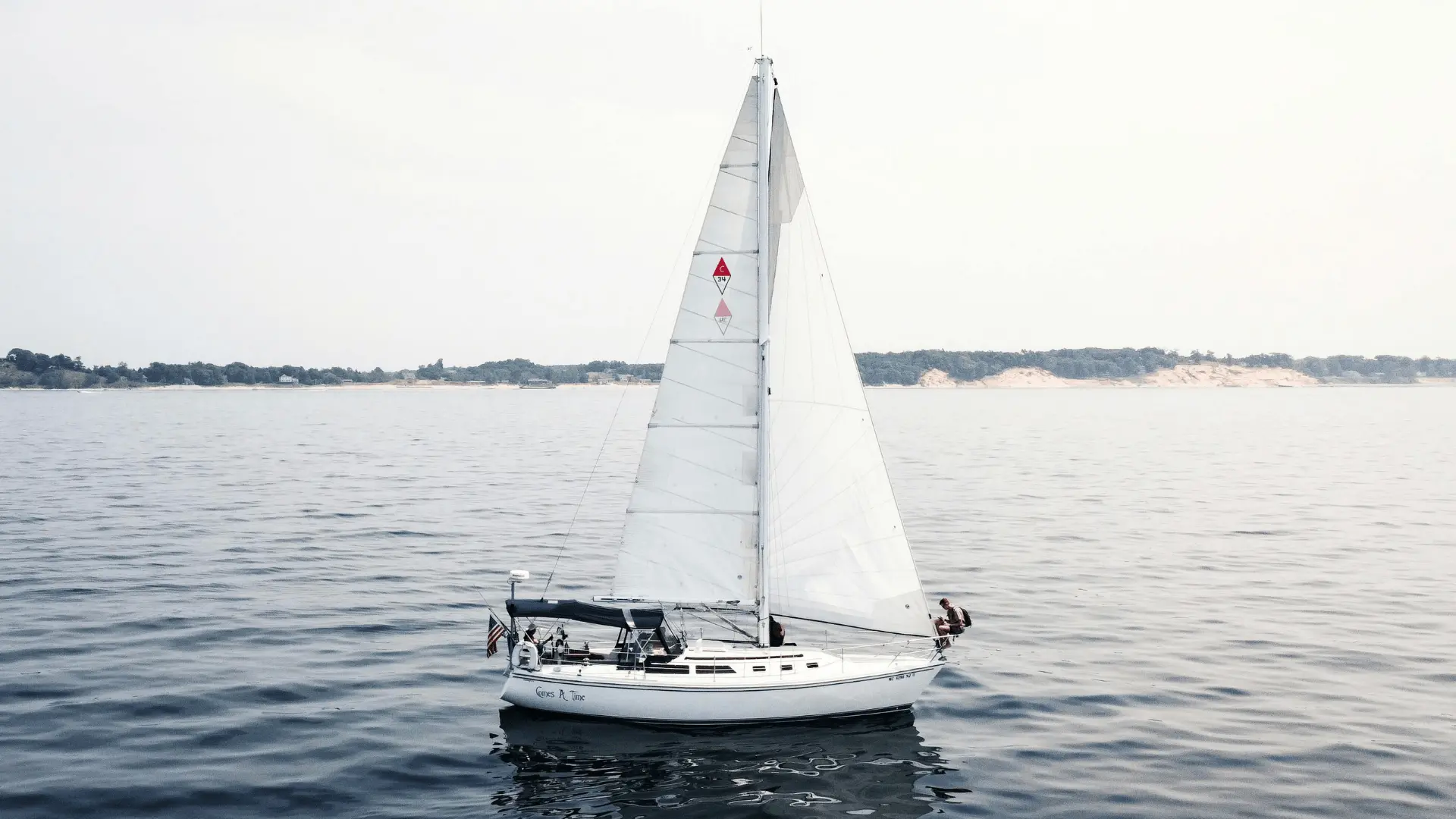
Your first solo sail combines everything you’ve learned. Take it slow and follow these steps in order.
Pick a calm day with light, steady winds. You want conditions between 5 and 12 knots for your first time out.
1. Check the Wind and Set Up the Boat
Choose open water with plenty of room and few obstacles. Confirm wind direction using flags, ripples, or wind on your face.
Point the bow straight into the wind (head-to-wind) before raising sails. Expect slight backward drift and steady luffing.
2. Get Underway and Build Controlled Speed
Hoist the mainsail first by pulling the halyard steadily and cleating it at the top. Raise the jib next, keeping it clear of rigging.
With both sails luffing, trim the mainsheet and jib sheet slowly until the sails fill and the boat moves gently.
3. Steer and Balance the Boat
Steer smoothly and avoid sudden corrections. With a tiller, push left to turn right and push right to turn left.
With a wheel, steer like a car. Keep weight centered, sit on the high side when heeling, and keep everyone low under the boom.
4. Practice Your First Course: Beam Reach
A beam reach is the easiest beginner course because the wind hits from the side. Turn until the wind comes from your left or right. Use a shore landmark to hold a straight line.
Watch for telltale signs of an uneven flow and adjust the sheets to reduce luffing.
5. Tack a Sailboat (Turning Upwind)
Start on a steady course, check for traffic, and alert the crew with Ready to tack. Turn the bow smoothly through the wind until sails fill on the new side.
Release the old jib sheet, trim the new one, and rebalance. Avoid stalling in irons.
6. Jibe Safely (Turning Downwind)
Jibing moves the stern through the wind and can snap the boom across fast. Warn everyone, bring the mainsail in toward the center by trimming the mainsheet, then turn slowly.
Call “Jibing,” control the boom as it crosses, and ease the sheet out smoothly.
7. Slow Down or Stop
Slow down early when approaching boats, docks, or swimmers. The quickest method is to head into the wind, so the sails luff and power drops.
You can also ease sheets until sails flap and the boat coasts. Practice stopping in open water to learn glide distance.
8. Returning, Lowering Sails, and Docking
Plan your return before entering tight areas. In light wind, approach slowly with sails partly luffing.
In stronger wind or crowds, stop head-to-wind offshore and drop the jib first, then the mainsail, securing everything. Set fenders, approach at an angle, and tie the bow, then the stern.
Essential Sailing Safety Equipment Every Beginner Needs
Safety gear protects you when learning how to sail a boat. These items should be on board every time you go out. Start with the basics. Add more equipment as you gain experience and sail in different conditions.
- Personal Flotation Devices (PFDs) and Life Jackets: Carry Coast Guard-approved PFDs for everyone onboard and wear them while sailing.
- Safety Harnesses and Tethers: Use harnesses and quick-release tethers in rough conditions to reduce the risk of overboard.
- VHF Radio for Communication: A marine VHF radio allows emergency calls and weather updates. Know Channel 16.
- First Aid Kit Essentials: Include bandages, antiseptics, seasickness medication, and basic injury supplies in a waterproof kit.
- Flares and Distress Signals: Carry valid distress signals and check expiration dates regularly.
- Fire Extinguishers for Boats: Keep a marine-approved extinguisher onboard and inspect it periodically.
Check all safety equipment before each trip. Replace expired items promptly. Good preparation lets you focus on learning how to sail a boat safely.
Right-of-Way Rules and Avoiding Collisions on the Water
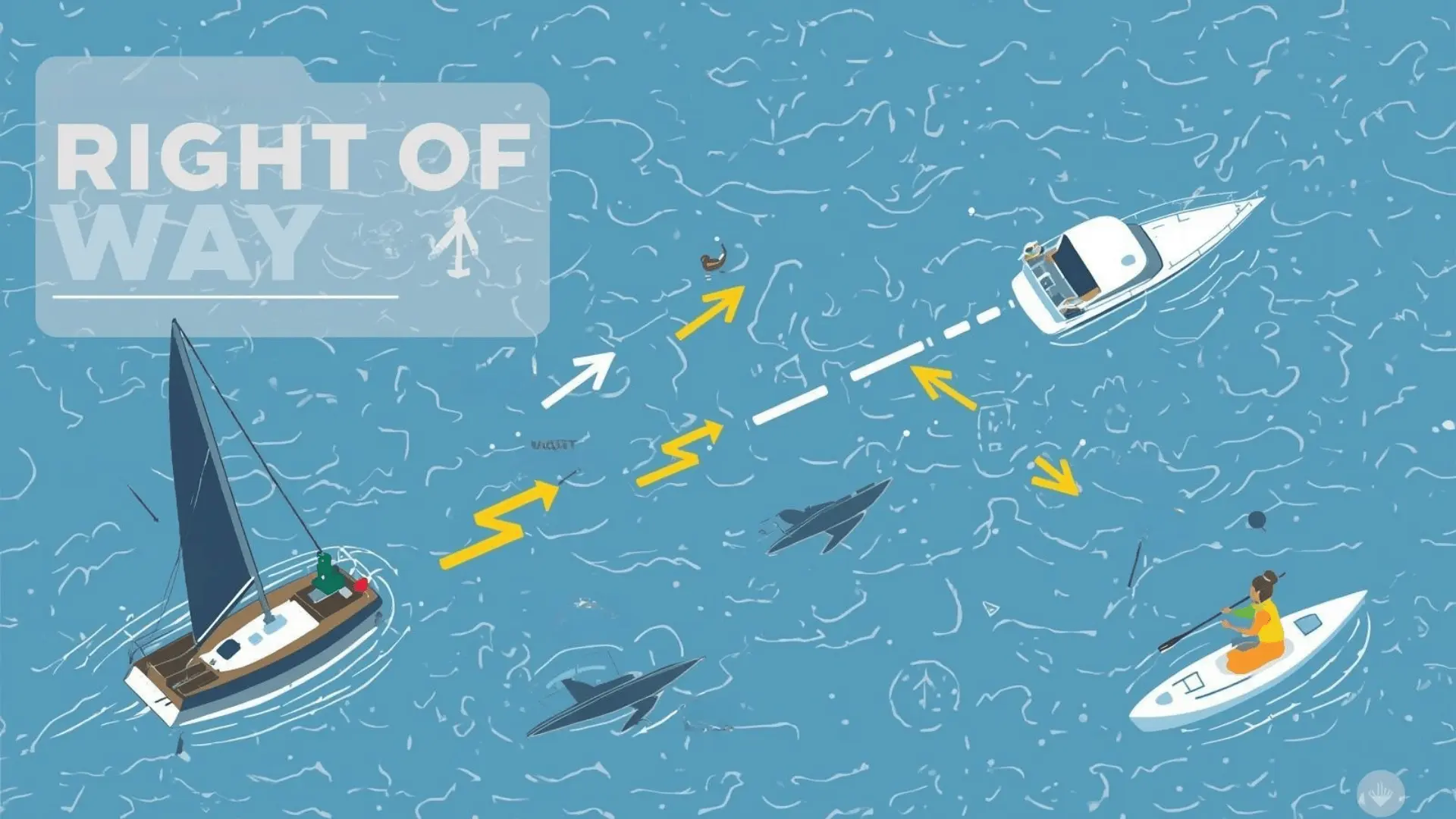
Understanding right-of-way rules is crucial when learning how to sail a boat. The stand-on vessel maintains course and speed. The give-way vessel must change direction to avoid collision.
Sailboats generally have the right of way over powerboats. But you must yield to vessels that are fishing, restricted in movement, or much larger than yours.
When two sailboats meet, the boat on starboard tack has right of way. The boat with wind coming from the port side must give way.
In crowded waters, stay alert and move predictably. Avoid sudden course changes that confuse other boaters. Use sound signals to communicate intentions. One short blast means turning right. Two blasts mean turning left.
Always be ready to avoid a collision, even when you have the right of way.
Safety Skills and Emergency Drills to Practice Early
Practice these emergency skills in calm conditions. Knowing them helps you stay safe when learning how to sail a boat in unexpected situations.
- Man Overboard Quick Routine: Shout “man overboard,” assign a spotter, and turn back using a quick stop or figure-eight approach.
- Capsize Recovery Basics: Stay with the boat, right it using the centerboard, re-enter from the stern, and clear water.
- What to Do in Sudden Strong Wind: Ease sheets immediately, head upwind to depower, then reef or drop sails if needed.
Practice these drills regularly with experienced sailors nearby. Building muscle memory for emergencies makes learning to sail safer and builds your confidence on the water.
Learn Faster: Lessons, Certifications, and Practice Plans
Formal instruction is one of the fastest ways to learn how to sail a boat because it replaces guesswork with structured guidance. Community sailing schools and clubs often provide affordable lessons led by experienced instructors, making sailing accessible to beginners.
ASA 101 is widely recognized as a standard entry-level certification that covers essential skills such as basic boat handling, sail trim, navigation rules, and docking techniques.
However, lessons alone are not enough; consistent practice between sessions is what truly builds confidence.
A simple progression works best: first mastering boat control and stopping, then refining smooth, controlled tacks, and finally adding jibes, docking approaches, and reefing drills.
Scheduling practice regularly, ideally weekly, helps reinforce skills before they fade and accelerates overall learning.
Start Your Sailing Journey Today
You now have the foundation to begin. Every sailor started exactly where you are now. They learned the same basics. They felt the same uncertainty.
The difference is that they got on the water and practiced.
Learning how to sail a boat happens through doing, not just reading. Book a lesson at a local sailing school. Join a sailing club. Rent a small boat for an afternoon. Each hour on the water builds your skills.
Start in calm conditions. Focus on one technique at a time. Don’t rush the process. The water is waiting. Your first sail is one decision away.
Share it with friends who want to learn, then go schedule that first lesson!