Every rower hits a point where the oar feels clunky, and the stroke feels off. Most of the time, the problem is feathering. Or the lack of it.
Feathering an oar is one of the first real skills a rower learns, but if you are just getting started, it helps to first understand the difference between an oar and a paddle before working on how to use one properly.
It looks simple from the outside. But getting it right takes more than just rotating a blade.
From what it actually means to why it matters and how to start doing it correctly from day one, everything is covered ahead.
Clear, practical guidance that any rower at any level can follow and use right away.
What Does Feathering an Oar Mean?
Feathering means rotating the oar blade so it lies flat and parallel to the water during the recovery.
The recovery is the phase when you move back to the starting position after a stroke. Instead of the blade standing upright like a wall, it turns flat like a wing slicing through the air.
The opposite of feathering is squaring. That is when you rotate the blade back to vertical just before it enters the water for the next stroke.
Think of it this way. A flat blade cuts through the air easily. An upright blade fights it. Feathering is simply how rowers stop wasting energy on the way back.
Why Do Rowers Feather the Oar?
Feathering helps rowers move the blade smoothly above the water, keep better control, and make each stroke feel cleaner.
- It helps the blade clear the water: A feathered blade stays flat on recovery, reducing the likelihood of accidental contact with the water.
- It makes the stroke smoother: Clean feathering helps the recovery feel calm, balanced, and more connected to the next stroke.
- It helps with control: rowers can guide the blade more effectively between strokes and set up a cleaner catch.
- It can reduce wasted effort: Good feathering cuts extra movements, saves energy, and helps rowers stay relaxed through the stroke.
In simple words, feathering is a small skill that makes rowing smoother, easier, and more controlled from one stroke to the next.
Simple Steps to Get It Right From Day One
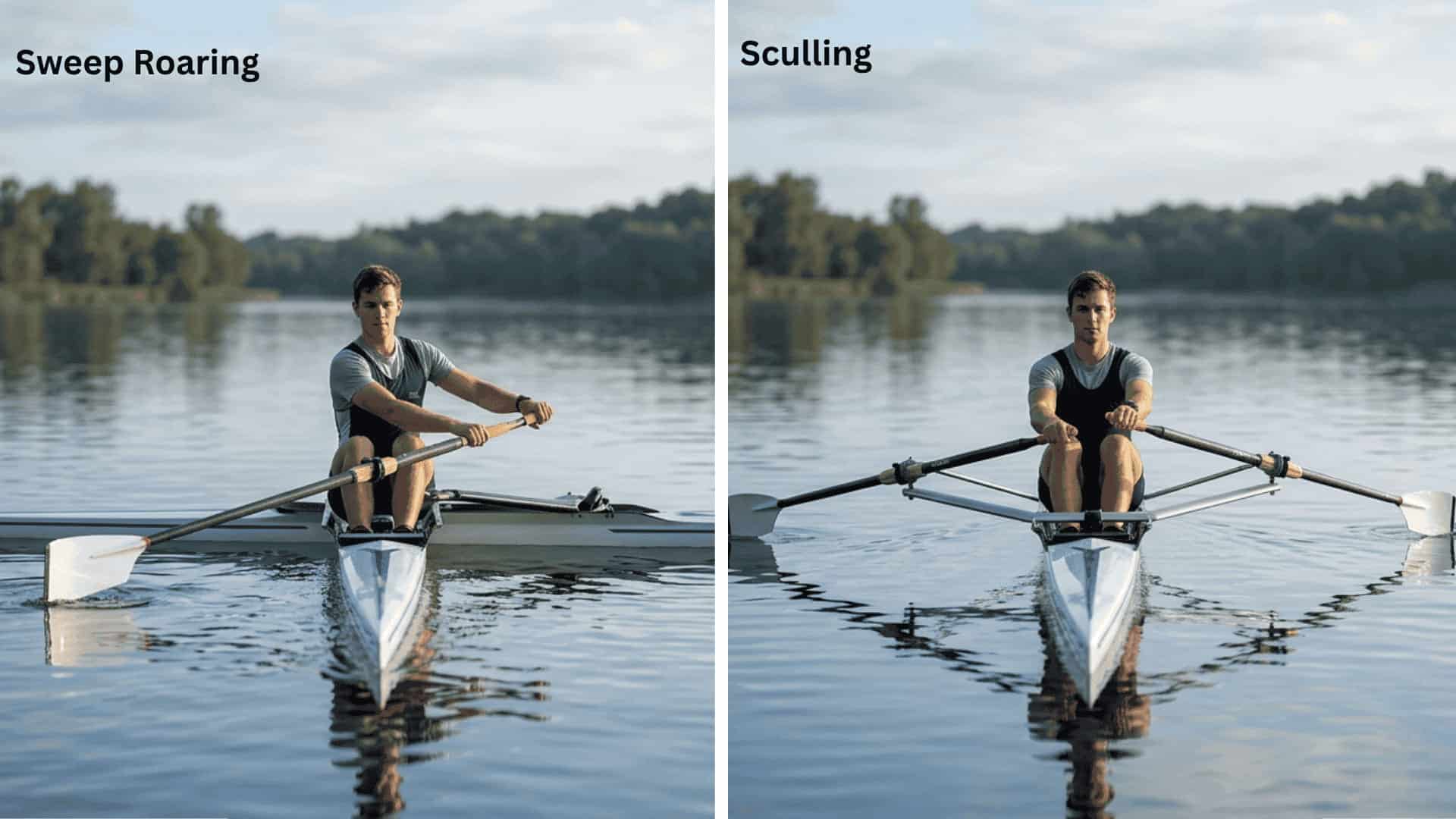
Feathering looks different depending on whether you are sweep rowing or sculling — and if you are still unclear on what sculling actually means compared to using a single oar, that is worth sorting out before you drill this technique.
Sweep Rowing (One Oar)
The inside hand (closest to the oarlock) does all the feathering. The outside hand stays still and just guides the oar.
- Pull the oar through the water with your wrist flat
- As the blade exits the water, drop your inside wrist down
- The blade rotates flat. You will feel a small click in the oarlock
- Keep your outside wrist flat throughout the whole movement
Sculling (Two Oars)
Both hands are feathered, but it is all in the fingers. The wrist stays flat throughout.
- Hold the handles loosely in your fingers during the recovery
- Let the oar roll from your fingers into your palm as you square for the catch
- Your fingers do the work, not your whole wrist
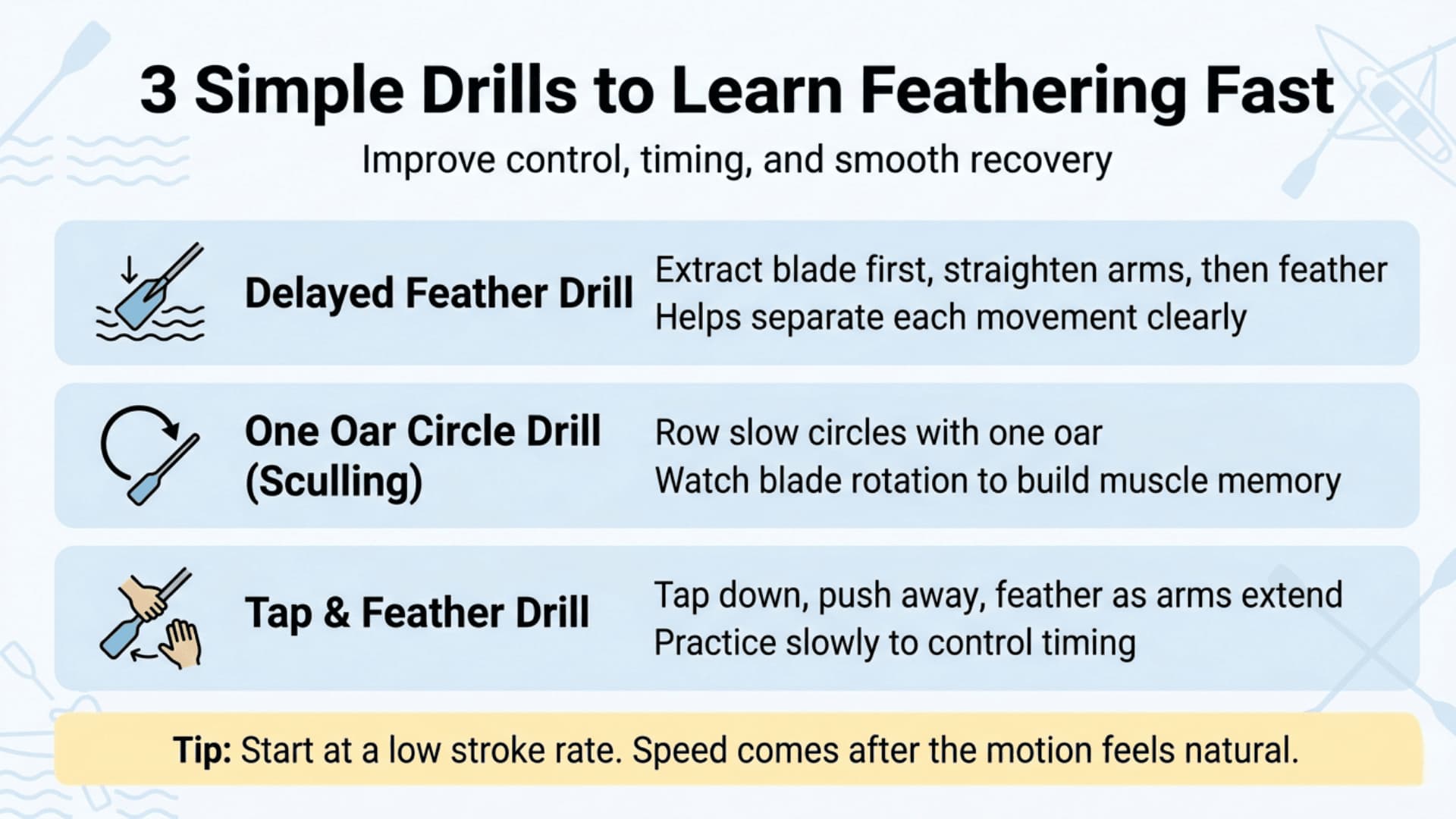
Quick Tip: Slow your stroke rate down when learning. Watch your blade as you row. You cannot fix what you cannot see.
Common Feathering Mistakes
Most rowers get feathering wrong because no one pointed out these small errors early on.
- Dropping the Wrist: The blade does not rotate cleanly. Keep your wrist flat and let your fingers do the feathering instead.
- Feathering Too Early: The blade is still in the water when you feather. Always wait for the blade to fully exit first.
- Gripping Too Tight: A tight grip robs you of control over the rotation. Relax your hand and let the handle roll freely in your fingers.
- Outside Wrist Breaking: This throws off the whole stroke. Your outside wrist should stay flat and still throughout the recovery.
Catch these early, and you will save yourself months of trying to unlearn bad habits later. And if you ever kayak with a drink in hand, know that these same habits fall apart first, which is exactly why it carries legal consequences on the water.
Timing TipFeather only after the blade fully leaves the water, and square it just before the catch. Keep the motion small and smooth. Good timing makes the stroke cleaner, easier, and more controlled. |
Final Thoughts
Feathering is not a complicated skill. It is a small movement that makes a big difference.
Get the timing right, keep your wrists flat, and let your fingers do the work. That is really all there is to it.
Like most things in rowing, it feels awkward at first and automatic later. The rowers who get it right fastest are the ones who slow down, pay attention, and drill it consistently.
Now it is your turn. Try one drill this week and see how it feels. Drop a comment below and tell us which tip helped you the most.
Frequently Asked Questions
What is the Advantage of Feathering Oars While Rowing?
Feathering keeps the blade flat on recovery, reducing wind resistance, preventing water contact, and making each stroke smoother and more controlled.
How to Feather an Oar?
After the blade exits the water, drop your inside wrist down. The blade rotates flat. Keep your outside wrist still.
How to do the Feathering Technique?
Hold the handle loosely, let it roll in your fingers, keep your wrist flat, and feather only after the blade fully exits.