


Most people think DUI only happens on roads. A car, a truck, maybe a motorcycle. But a kayak?
That one catches people off guard.
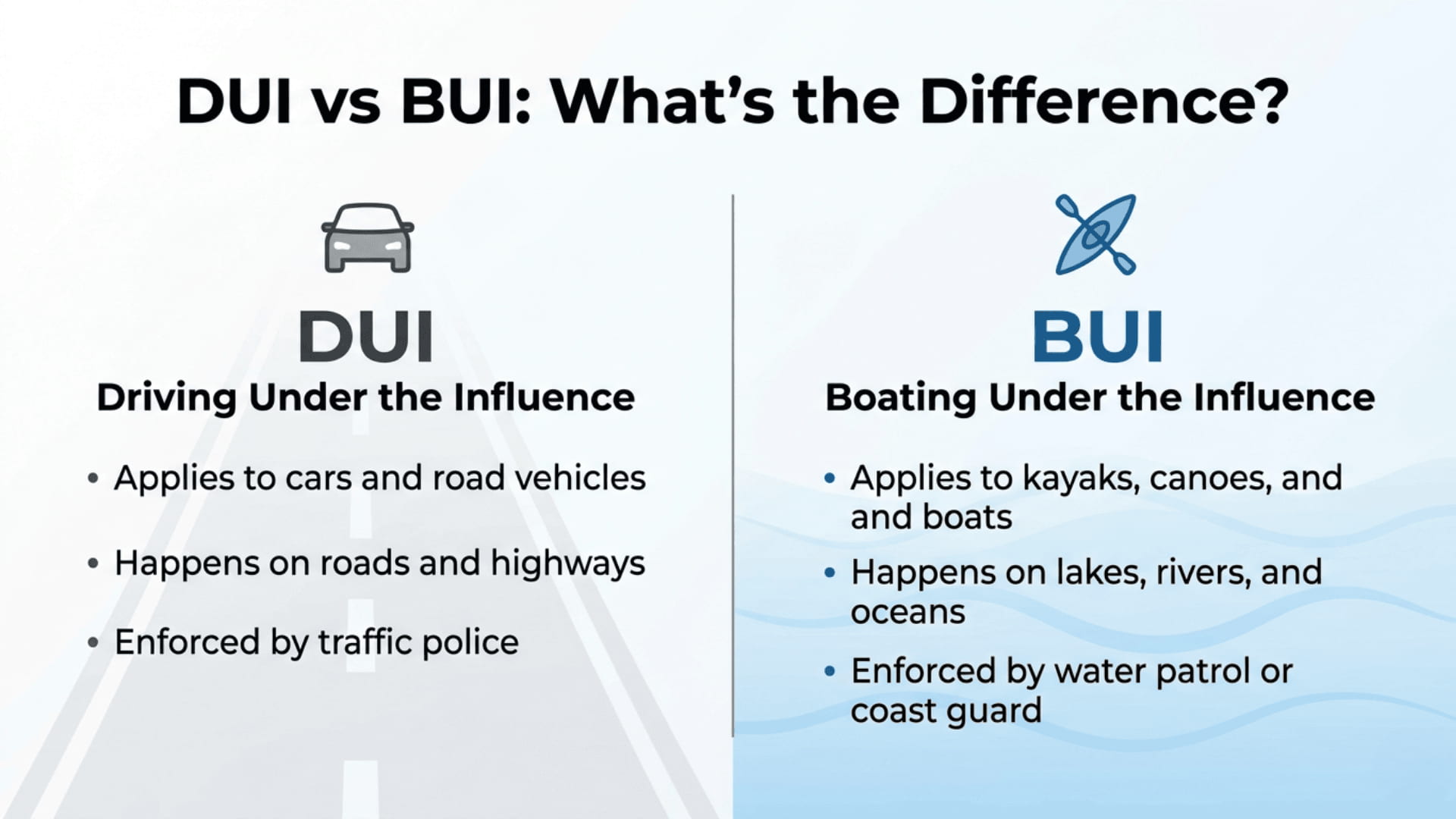
A DUI on a kayak is very real. It has a different name, BUI or Boating Under the Influence, but the consequences are just as serious.
Fines, jail time, and a mark on your record.
Every summer, thousands of people head out on the water with a drink in hand, not knowing they could be breaking the law.
Knowing the law could save a fun day from turning into a very expensive one.
Read on to find out what the law says, what the penalties are, and how to stay safe on the water.
Can You Get a DUI on a Kayak?
Yes, you can get a DUI on a kayak in many places, though the legal term is often BUI, which means Boating Under the Influence.
A kayak is usually treated as a vessel under boating law, and whether you are holding an oar or paddle makes no difference to law enforcement on the water.
So, if you are drunk or under the influence while paddling, you can be stopped by law officers on the water.
For example, if someone drinks near a lake and then starts kayaking, that can lead to legal trouble. Alcohol affects balance, judgment, and reaction time.
On water, that risk becomes even more serious. The safest choice is simple: do not drink before kayaking.
When Does a Kayak Count as “Operating a Vessel”?
A kayak is considered a vessel when you are in control of it on the water. This includes paddling on public water, steering, or guiding its direction.
That applies whether you’re pulling a single scull or handling a sweep oar; once you’re in control on public water, boating laws are already in effect.
Even without a motor, a kayak is still treated as a watercraft under most laws. In some places, simply being in control of the kayak, even if you are not actively paddling, may still count as operating it.
Because of this, boating rules apply as soon as you take control of the kayak, not just when you are moving at full speed.
What Are the Penalties for Kayak BUI?
Kayak BUI penalties can be serious. The punishment depends on the state, but it may include fines, jail time, court costs, and other legal consequences for operating under the influence.
- Fines
- Possible jail time
- Court and legal costs
- Mandatory alcohol or safety programs
- Higher penalties for repeat offenses
- Possible effect on boating or driving privileges in some states
Since BUI laws can change from one state to another, it helps to link to the official state BUI BAC limits so readers can quickly check the exact rule that applies to them.
Why Is Kayaking Drunk More Dangerous Than You Think?
Most people think, “It’s just a kayak. What’s the worst that can happen?” A lot, actually.
Alcohol dehydrates you faster than water. Sun, heat, and wind already drain your body. Add alcohol, and it hits harder and quicker than it would on land.
It also kills your balance, slows your reaction time, and blurs your depth perception, three things you need most on a kayak.
Even something as routine as feathering an oar correctly demands clean wrist control and precise timing, two things alcohol directly strips away.
Capsizing becomes far more likely. And if you flip your kayak 500 meters from shore, impaired, alone, in cold water, that’s not just a bad day. That’s life-threatening.
Cold water shock can stop your breathing in seconds. Impairment means you can’t swim or signal for help properly.
Safe Choices for Enjoying Kayaking Without the Legal Risk
You don’t have to skip the fun. You just need to be smart about it.
- Drink on shore: Finish your drink well before you get on the water. Wait a few hours at least.
- Designate a sober paddler: Just like a designated driver, have one person stay sober and in control of the kayak.
- Bring water, not beer: Staying hydrated on the water is more important than you think. Your body needs it.
- Know your state’s laws: BUI rules vary by state. Check your local boating laws before you head out.
- Wear your PFD: A life jacket saves lives. Even more so if alcohol is involved around you.
The water is meant to be enjoyed, just not recklessly. A little planning keeps you safe, legal, and on the water longer.
Conclusion
A kayak may feel casual, but the law treats it like any other vessel on water. You can be stopped, tested, and charged with BUI just like a driver on the road.
The penalties are real, the dangers are serious, and all of its is avoidable.
Paddle smart. Drink on shore. Know your state laws. One bad decision on the water can cost you far more than a fine.
Found this helpful? Share it with your kayaking crew before your next trip out.
Frequently Asked Questions
Can You Drink as a Passenger on a Kayak?
It depends on your state. Some allow passengers to drink, but laws vary. Always check local rules first.
Does a Bui Affect Your Driver’s License?
In some states, yes. A BUI conviction can also trigger a suspension of your regular driving license.
What is the Legal BAC Limit for Kayaking?
In most U.S. states, the legal BAC limit is 0.08 percent, the same as the legal limit for driving a car.