
A heavy backpack can ruin a great hike. Sore shoulders, a sweaty back, and tired legs. That is where the Osprey Exos changes everything.
The Osprey Exos is one of the most popular lightweight backpacking packs on the trail today. And for good reason. It is light enough to keep your legs fresh. It is comfortable enough to wear all day. And it is built well enough to last for years.
But with three different sizes and a women’s version too, picking the right one can feel confusing.
Every Exos model is covered below, the specs, the real ratings from trusted shopping sites, and what makes each size worth considering. Whether planning a weekend trip or a full thru-hike, the right pack is out there.
The perfect fit is closer than expected.
What Is the Osprey Exos?
The Osprey Exos is a lightweight backpack designed for hikers who want the support of a framed pack without the extra weight. It sits in Osprey’s superlight category, lighter than traditional models like the Atmos or Aether, yet more supportive than many ultralight packs.
A key feature of the Exos is the AirSpeed suspended-mesh back panel, a trampoline-style system that keeps the pack slightly lifted from your back. This design improves airflow, reduces sweat buildup, and helps stabilize the load while hiking.
First introduced in 2009, the Exos received a major redesign in 2022, adding an adjustable torso-length system, reinstating hip-belt pockets, and switching to 100% recycled bluesign-approved fabrics.
Available in three capacities (38L, 48L, 58L) with multiple torso sizes, making it suitable for everything from minimalist overnight trips to multi-day backpacking adventures. Osprey also offers a women-specific version, the Eja, with a similar lightweight design tailored for female hikers.
Osprey Exos Size Comparison at a Glance
All three Exos models share the same core DNA, but each one is built for a different kind of trip. Here is a direct side-by-side look at how they differ across the specs that matter most.
| Feature | Exos 38 | Exos 48 | Exos 58 |
|---|---|---|---|
| Volume | 38L | 48L | 58L |
| Weight | 2 lbs 8 oz | 2 lbs 9 oz | 2 lbs 13 oz |
| Max Load | 30 lbs | 35 lbs | 35 lbs |
| Back Panel | AirSpeed Mesh | AirSpeed Mesh | AirSpeed Mesh |
| Hip Belt Pockets | Yes | Yes | Yes |
| Top Lid | No | No | Removable |
| Torso Fit | Adjustable | Adjustable | Adjustable |
The right size comes down to how long you are out and how much you carry. Pick the 38 for light and fast, the 48 for versatility, and the 58 for everything else.
Types of Osprey Exos Backpacks
Choosing the right Osprey Exos backpack is not just about picking a size; it is about matching the pack to your trip style, gear load, and comfort preferences.
The Exos series is designed for hikers who want a lightweight backpacking pack without sacrificing essential comfort or trail performance.
1. Osprey Exos 38
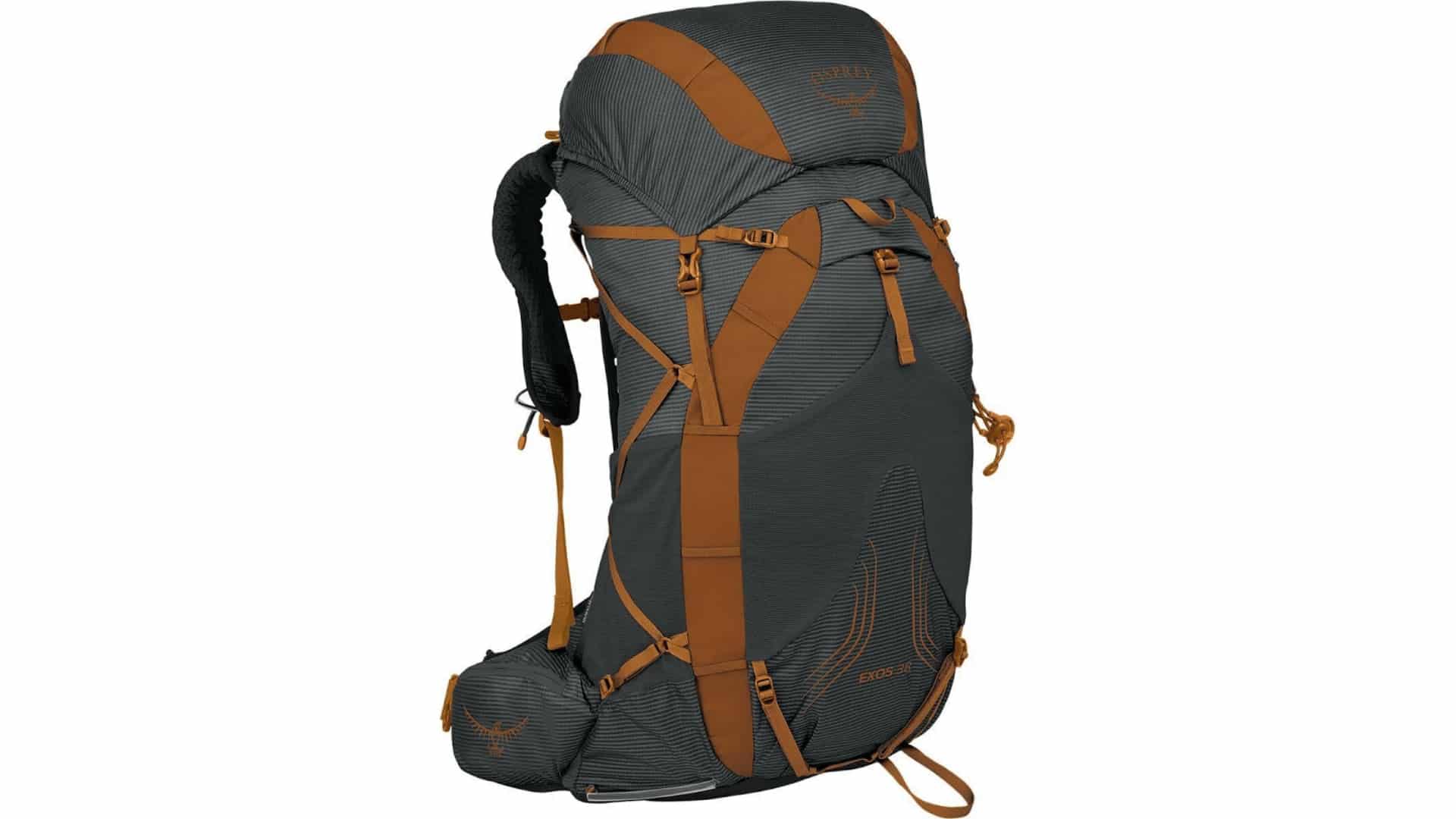
The Exos 38 is the most streamlined pick in the lineup, built for minimalist packers who want to cover big miles without the bulk.
Made from 100D recycled nylon with 400D reinforcements, it holds up to 30 lbs and fits a wide range of torsos with its adjustable S/M and L/XL sizing.
Specifications:
- Volume: 38 liters
- Weight: ~2 lbs 8 oz (1.13 kg)
- Back Panel: AirSpeed trampoline-style mesh
- Hip Belt Pockets: Yes (2)
| Source | Rating |
|---|---|
| BackCountry | 4.6 / 5 |
| Wanderlust Outfitters | 4.5 / 5 |
Note: Ratings may fluctuate over time as new customer reviews are added.
2. Osprey Exos 48
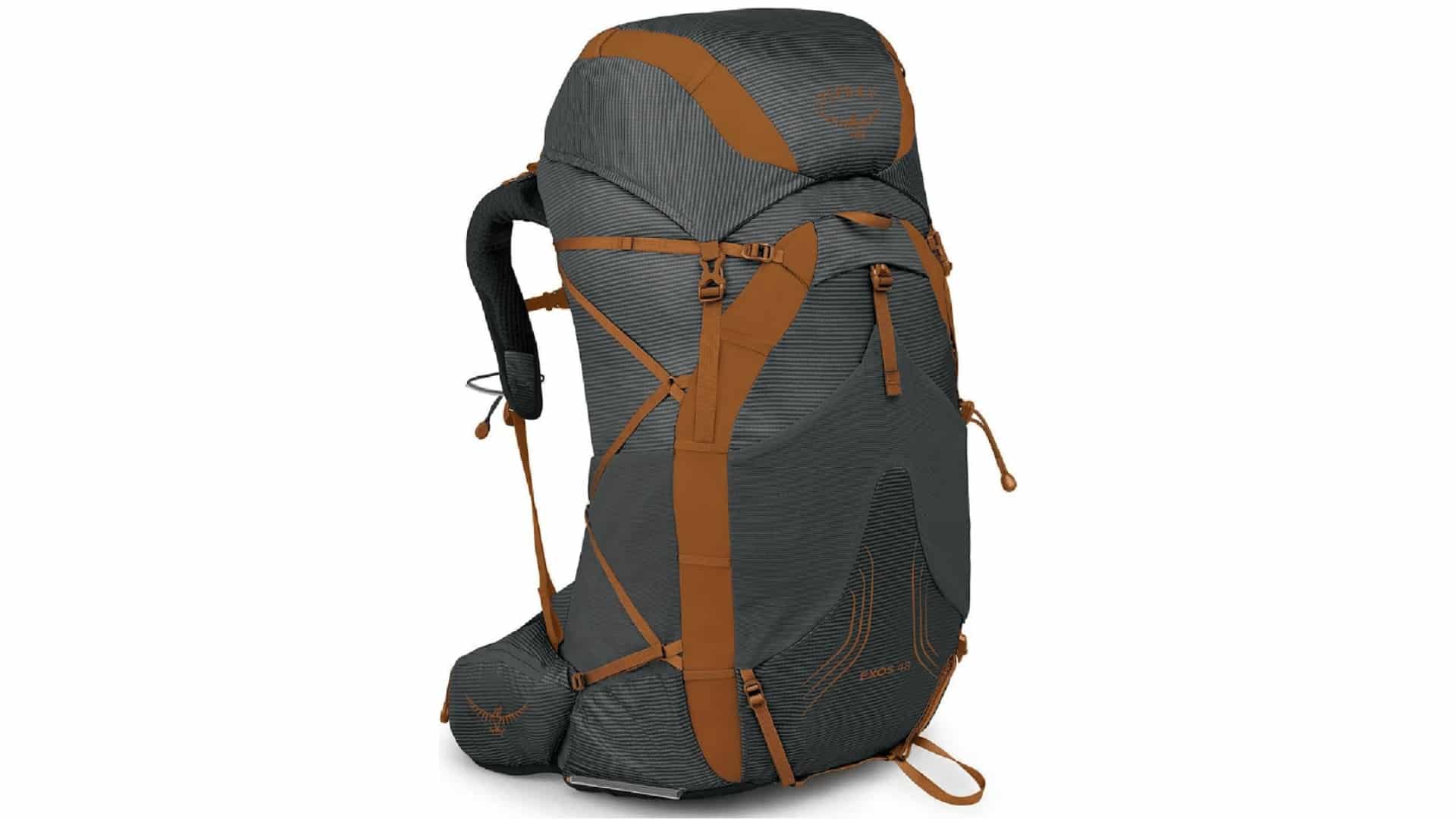
Often called the sweet spot of the lineup, the Exos 48 strikes the best balance of volume, weight, and comfort.
It runs on high-tenacity recycled nylon, handles loads up to 35 lbs, and comes with a hydration sleeve and two hip belt pockets, versatile enough for 3–5 night trips yet light enough for speed-focused adventures.
Specifications:
- Volume: 48 liters
- Weight: ~2 lbs 9 oz (1.16 kg)
- Back Panel: AirSpeed suspended mesh
- Hip Belt Pockets: Yes (2)
| Source | Rating |
|---|---|
| REI | 4.7 / 5 |
| OutdoorXL | 4.3 / 5 |
Note: Ratings may fluctuate over time as new customer reviews are added.
3. Osprey Exos 58
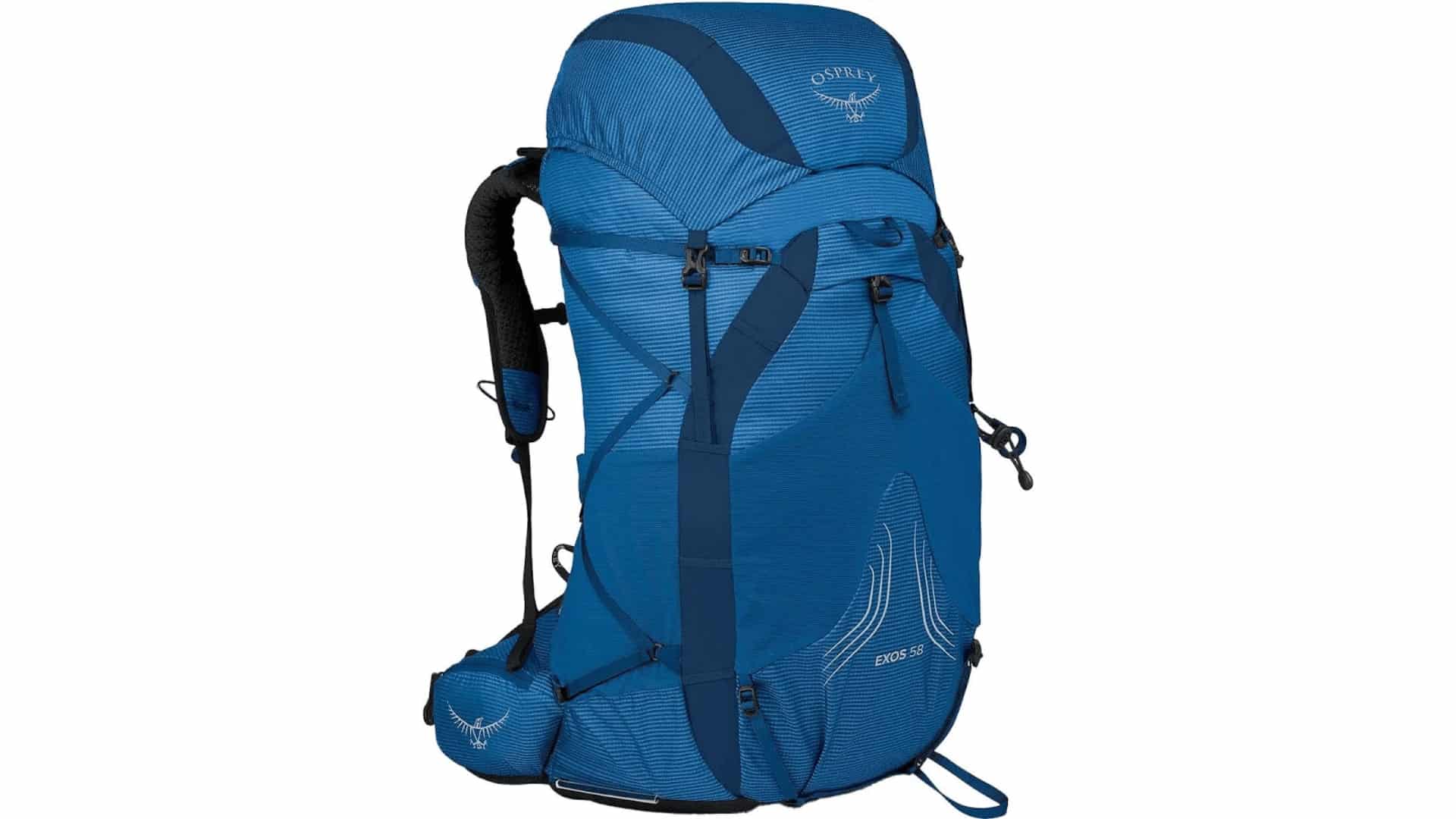
The flagship of the Exos line, the Exos 58, delivers maximum capacity, built from bluesign-approved, 100% recycled nylon with a PFC-free DWR coating.
It carries loads up to 35 lbs, fits torsos from 16–20 inches, and includes a removable top lid, two hip belt pockets, and a full stretch-mesh pocket system, the go-to for thru-hikers and multi-day adventures.
Specifications:
- Volume: 58 liters
- Weight: 2 lbs 13 oz
- Back Panel: AirSpeed trampoline-style suspended mesh
- Top Lid: Removable (2 zippered compartments)
| Source | Rating |
|---|---|
| REI | 4.2 / 5 |
| BackCountry | 4.6 / 5 |
Note: Ratings may fluctuate over time as new customer reviews are added.
Women’s Alternative: Osprey Eja
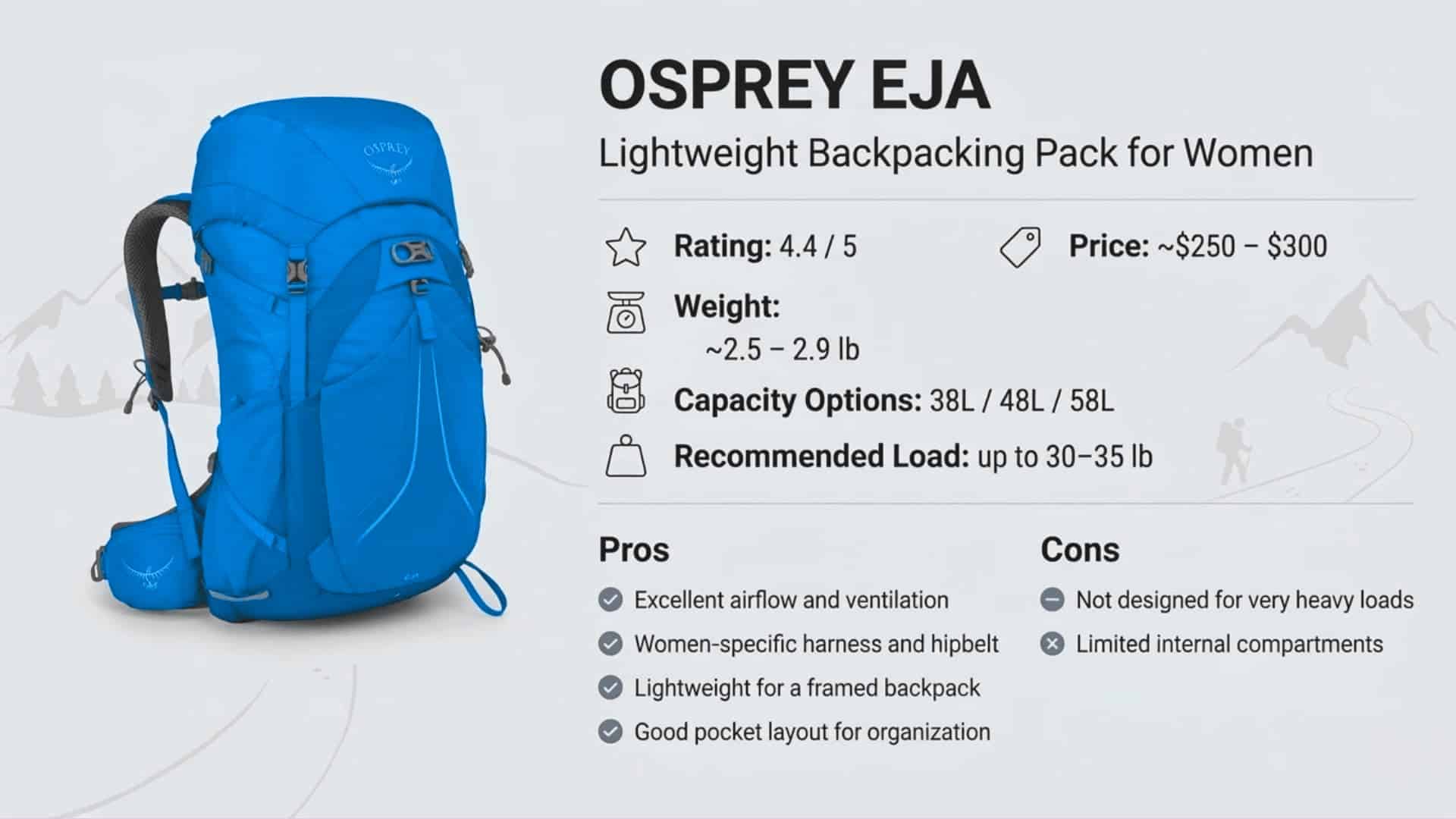
For hikers looking for a women-specific alternative to the Osprey Exos, the Osprey Eja is the closest equivalent in Osprey’s backpacking lineup.
It offers many of the same qualities that make the Exos popular, including a lightweight build, ventilated suspension system, and practical storage for multi-day hiking trips.
What Makes it Stand Out
The Osprey Exos stands out in the lightweight backpacking category because its features are designed to balance ventilation, support, and efficiency. Each component works together to help hikers carry gear comfortably over long distances.
- AirSpeed Suspended Mesh Back Panel: The trampoline-style AirSpeed mesh keeps the pack slightly away from your back, creating continuous airflow. This design reduces sweat buildup while stabilizing the load for better comfort during long or hot hikes.
- Adjustable Torso Length System: Added in the 2022 update, the adjustable ladder system allows hikers to fine-tune the fit between 16 and 20 inches. This improves weight transfer to the hips and prevents discomfort during multi-day backpacking trips.
- Lightweight Aluminum Perimeter Frame: The Exos uses a sturdy aluminum frame that maintains pack structure without adding significant weight. It helps distribute loads of around 25–35 pounds evenly, improving stability compared to frameless ultralight packs.
- Smart Organization and Pocket Layout: A removable top lid, stretch mesh front pocket, side bottle pockets, and hip-belt pockets provide quick access to essentials like snacks, maps, or a rain jacket without removing the pack on the trail.
- Sustainable Materials and Lifetime Warranty: The pack is built from 100% recycled bluesign-approved nylon with a PFC-free DWR coating. Osprey also backs it with the All Mighty Guarantee, offering lifetime repairs or replacement if needed.
Together, these features make the Osprey Exos a well-balanced backpack that combines lightweight construction, strong ventilation, and reliable load support for hikers tackling multi-day trails.
Osprey Exos Pros and Cons
No pack is perfect for everyone. Here is a balanced breakdown of what the Osprey Exos genuinely gets right and where it falls short.
| Pros | Cons |
|---|---|
| Best-in-class back ventilation via AirSpeed suspended mesh | Not a true ultralight; heavier than Zpacks, Hyperlite, and ULA alternatives |
| Impressive comfort for loads between 25 and 35 lbs | Frame-to-glute contact can cause discomfort on long, high-mileage days |
| Adjustable torso fit suits a wide range of body types | Moderate durability; mesh pockets and frame edges need care on rough terrain |
| Smart trail-ready organization with pockets for every need | Compression straps sit over water bottle pockets, making access awkward |
| Lifetime warranty; free repairs or replacements, no conditions | Limited color options; fewer style choices than other packs in the same price range. |
The Exos earns its reputation for good reason; the pros far outweigh the cons for the right hiker.
How to Get the Right Fit and Actually Enjoy the Carry
The Osprey Exos delivers impressive comfort for its weight class, but getting the most out of it starts with the right fit. Always measure your torso length rather than your height; the S/M fits 16 to 18 inches, and the L/XL covers 18 to 20 inches.
Once sized correctly, the padded hip belt and contoured shoulder straps work together to carry loads between 25 and 35 pounds with minimal fatigue. The AirSpeed mesh keeps your back cool and dry, even on long, sweaty climbs.
That said, two things are worth knowing before you buy. First, the aluminum frame sits close to the upper glutes, which can put pressure on them on high-mileage days as muscles fatigue.
Second, hikers with narrower or smaller frames may find the shoulder straps sit slightly wide; in that case, the women ’s-specific Osprey Eja is a better anatomical match.
Best Alternatives to the Osprey Exos Backpack
The Exos is a great pack, but it is not for everyone. Here are five solid alternatives worth considering based on your budget, trail style, and load preferences.
- Zpacks Arc Blast: The go-to for weight-obsessed hikers. Weighs under 1 pound using Dyneema fabric, but costs more and suits lighter loads.
- Hyperlite Mountain Gear 3400: Fully waterproof and built for rugged terrain. Best for experienced minimalists who face unpredictable weather on tough trails.
- REI Flash 55: A budget-friendly pick for casual backpackers. Slightly heavier than the Exos but delivers reliable performance at a lower price.
- Gregory Baltoro 65: Built for loads over 35 pounds. Offers superior padding and support that the Exos cannot match on heavy gear trips.
- Gossamer Gear Mariposa: A thru-hiker favorite sitting at the ultralight edge. Great for hikers transitioning from traditional setups to a lighter trail style.
Every hiker is different, and the right pack depends on your trail, your gear, and how you like to carry it. The best pack is simply the one that fits your adventure.
Final Thoughts
The Osprey Exos earns its reputation on every trail it touches.
If you are eyeing the nimble 38 for fast overnights, the versatile 48 for weekend trips, or the 58 for a full thru-hike, each model delivers the same core promise: a lightweight, ventilated, and genuinely comfortable carry that holds up across real miles.
It is not the lightest pack on the market, and it is not trying to be. What it offers is the best balance of weight, comfort, organization, and long-term reliability in its category, backed by a lifetime warranty that few brands can match.
So, which Exos size are you leaning toward for your next adventure? Drop your answer in the comments. We would love to help you decide.
Frequently Asked Questions
Is the Osprey Exos good?
Yes. The Osprey Exos is one of the most trusted lightweight backpacking packs on the trail, offering impressive comfort, great ventilation, and solid organization for its weight.
What Is the Difference Between the Osprey Atmos and Exos?
The Atmos is heavier with more padding, built for bigger loads. The Exos is lighter, with a suspended-mesh back, making it better suited for hikers prioritizing weight savings and ventilation.
Is the Osprey Exos 58 Worth the Money?
For most backpackers, yes. The Exos 58 delivers comfort, ventilation, and smart organization at a fair price, backed by Osprey’s lifetime warranty, solid value for thru-hikers.