Nobody really thinks about storage when they’re excited about buying a kayak.
You’re picturing a quiet morning on the lake, maybe a few hours exploring somewhere you haven’t been before. You’re looking at paddles, life jackets, and all the other bits you’ll need. Where the kayak will actually live when you’re not using it tends to be a problem for another day.
Then you bring it home.
You stand in the garage, look at the kayak, look at the space you’ve got, and realize there’s no obvious place for it. So you move a few things around. The bicycle gets pushed closer to the wall. A couple of boxes go on top of each other. Eventually, you manage to squeeze the kayak into a corner where it’s mostly out of the way.
Good enough for now. Except that temporary spot becomes its permanent home. And a few months later, you’re climbing over camping chairs to reach the paddles. At some point, having a proper place for everything starts to sound less like an unnecessary home project and more like something you should have done ages ago.
Start by Figuring Out What You’ve Got
It’s tempting to jump straight into looking at kayak racks or backyard sheds. But before spending money, take a little time to see how much equipment you’re actually trying to store.
You might be surprised.
The kayak itself is easy to account for. It’s the smaller things that get forgotten. Dry bags, spare paddles, life jackets, fishing gear, camping chairs, ropes, and that collection of straps you keep buying because you can never find the ones you already own. Try getting everything together in one place. Yes, it’ll probably make the garage look worse for a while. But once it’s all laid out, you can see what needs a proper spot and what has simply been taking up room.
You’ll probably come across a few things you haven’t used in years, too. Before putting everything back, think about what you reach for most often. If you take the kayak out regularly, keeping it behind stacks of camping equipment doesn’t make much sense.
The things you use every weekend should be the easiest to get to. And maybe leave some extra space. It’s amazing how quickly one outdoor hobby turns into three.
Take Another Look at Your Garage
A garage that’s already crowded might not seem like the best place for a kayak. But sometimes the problem isn’t a lack of space. It’s how that space is being used.
Look at the walls.
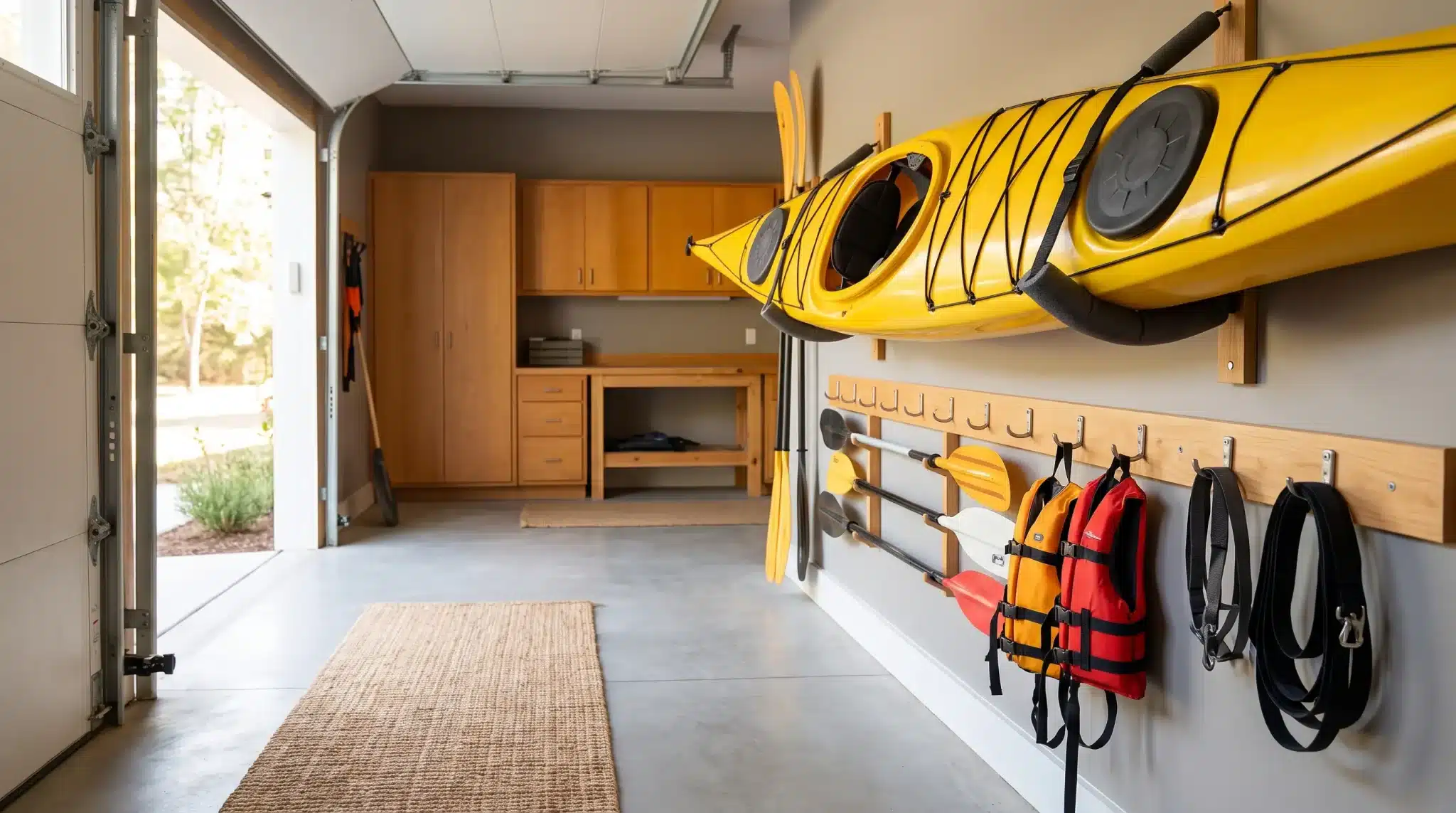
If most of your equipment is sitting on the floor, you’re probably wasting a fair amount of room higher up. A couple of sturdy wall racks can get the kayak off the ground and out of the way. You could add hooks nearby for paddles and straps, then use a shelf or two for the smaller equipment.
Nothing complicated.
Just make sure the racks are attached to suitable structural supports and can handle the weight of the kayak. Also, consider how much room you’ll need to lift it into place. A rack can look perfectly positioned until you try getting a long kayak onto it without hitting the garage door or scraping the car.
If the garage still feels too crowded, that’s when a separate shed might be worth considering.
Would a Backyard Shed Make More Sense?
There’s something appealing about having a little building dedicated to outdoor equipment.
No more moving garden tools to reach the kayak. No more trying to remember which corner you left the camping stove in.
Everything has somewhere to go.
But a shed needs to be practical, not just large enough to hold your stuff. Think about carrying a kayak through the doorway. It’s awkward enough moving one around in open space. Add a narrow entrance and a sharp turn, and the whole thing gets frustrating. It’s worth measuring the kayak and planning how you’ll move it in and out before choosing the shed’s dimensions.
And pay attention to the ground.
A spot that looks dry in summer could become muddy after several days of rain. You don’t want water sitting around the base of a building that’s supposed to protect your equipment. Good ventilation matters as well. A shed with poor airflow can feel damp inside, even when the roof isn’t leaking.
If there’s no room for a shed, a covered outdoor area could still be useful. It won’t provide the same protection as an enclosed building, but proper covers, secure supports, and a sheltered location can help.
Be Careful How You Store the Kayak
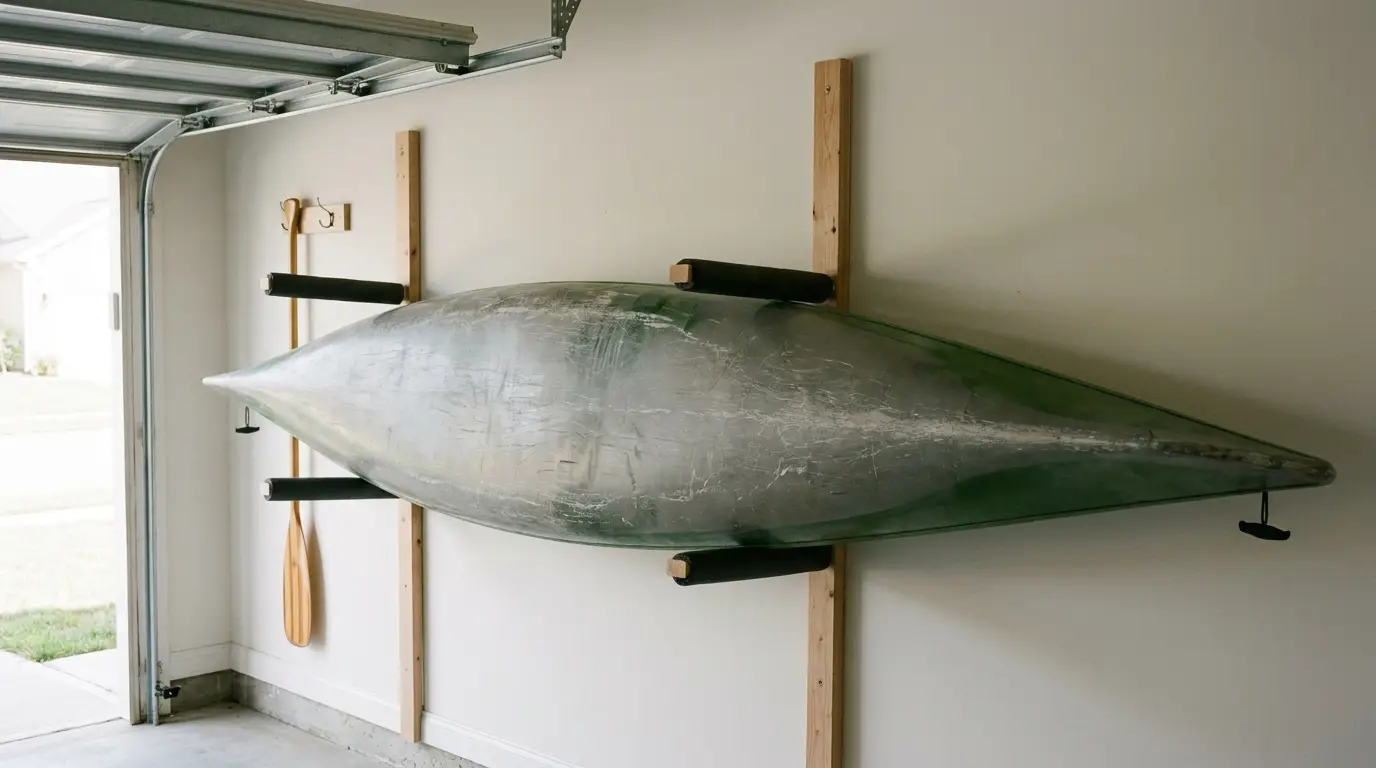
It’s easy to assume a kayak can handle just about anything. After all, it’s made to spend time in the water and deal with the occasional bump or scrape.
But storing one badly for months is different from using it for a few hours. Some kayak hulls can change shape if too much pressure stays concentrated in one spot. That’s why resting the whole weight on a narrow edge or leaving the kayak poorly supported isn’t a great idea.
Padded wall racks are a common solution. Freestanding supports can also work well if you don’t want to drill into the garage walls. The important thing is following the storage guidance for your particular kayak. Different materials and hull designs may need different support arrangements. Ceiling storage is another possibility, although it’s worth being realistic about the weight.
Lifting a kayak overhead when you’re fresh and feeling energetic is one thing. Doing it after several hours of paddling is something else entirely. You want a setup that still feels manageable when you’re tired.
Otherwise, chances are the kayak will end up back on the floor.
Find Somewhere for All Those Smaller Things
The kayak might take up the most room, but it’s rarely the thing that makes the biggest mess.
That job usually belongs to everything that comes with it. Paddles, life jackets, dry bags, water shoes, tie down straps. Somehow they end up scattered across the garage, even if you were sure you put them together last time. You don’t need a complicated storage system to fix this.
A few hooks can keep straps and paddles from getting tangled. Clear containers work well for smaller accessories. Shelves make it easier to keep camping equipment together without piling everything on the floor. Try arranging things according to what you’d normally take on a trip.
That way, when you’re getting ready to leave, you’re not walking back and forth across the garage looking for individual items.
And give wet gear somewhere to dry.
This one’s easy to forget.
You get home, unload the car, and throw everything into a bag because you just want to get inside and sit down. A few weeks later, you open that bag. The smell tells you everything. Life jackets, tents, and other fabric equipment should be completely dry before being packed away. Having a few drying hooks or an open rack makes that a lot easier.
Don’t Let the Project Get Bigger Than It Needs To
A storage project can start out pretty innocently.
Maybe you only wanted a wall rack. Then you notice the shelves need replacing. The garage lighting isn’t great. There’s not enough room for the camping equipment. Before long, you’re looking at plans for an entirely new shed.
It’s easy to keep adding things when you’re already making improvements. But before you spend too much, figure out which changes will actually make a difference. If the main problem is a kayak lying across the garage floor, proper racks might solve it. If you’re storing several kayaks, fishing equipment, camping gear, and bicycles in the same small space, you may need something more substantial.
A new storage building comes with expenses beyond the walls and roof. There may be site preparation, flooring, doors, ventilation, and electrical work to consider. For homeowners taking on a larger property improvement, an online home equity loan is one possible financing option to research when comparing ways to pay for construction. It’s not a decision to rush, though. Your home is used as collateral, and failing to meet the repayment terms can put it at risk. Make sure you understand the interest rate, fees, and monthly payment before committing.
You might also find that there’s no need to do everything immediately. Install the racks first. Add shelves when you can. If you still need a shed later, you’ll have a much better idea of how large it should be.
Sometimes doing a little at a time works out better anyway.
Keep an Eye on Dampness
An outdoor storage area doesn’t have to look particularly impressive.
It does need to stay reasonably dry. Kayaks and camping equipment are made for outdoor use, but constant moisture can still cause problems. Metal fittings may corrode, fabric can develop mildew, and sunlight can gradually affect some plastics. If you’re using a shed, check the roof and pay attention to where rainwater collects.
Keep equipment off damp floors where possible, and make sure air can move through the space. You don’t have to inspect everything every week. Just take a look now and then, especially after heavy rain or when equipment has been sitting unused for a while.
There’s nothing more disappointing than getting ready for a trip and discovering that something you packed away in good condition has been damaged while sitting in storage.
Make Sure It’s Easy to Put Everything Away
People tend to plan storage around how they’re going to take equipment out.
But it’s worth thinking about what happens when you get home. Maybe you’ve spent the entire afternoon paddling. You’re hungry, your shoulders are sore, and the car is full of wet gear. Are you really going to want to move a stack of boxes before putting the kayak away?
Probably not.
And that’s why a practical layout matters. Keep a clear path from the entrance to the kayak rack. Put frequently used accessories somewhere easy to reach. Avoid stacking heavy items in awkward places. It also helps to have a temporary spot for wet equipment.
Not everything can go straight into a sealed container when you get home, especially after a rainy trip. The easier your setup is to use, the more likely you’ll keep it organized. That’s really the whole idea.
A Better Storage Space Means Less Hassle Later
A dedicated storage area doesn’t have to be a major renovation.
It could be a cleared section of your garage with a couple of racks and some shelves. It could be a small shed in the backyard. Or it might simply mean giving your existing equipment a proper place instead of leaving it wherever there’s room.
What works for one household won’t necessarily work for another.
The point is to make things easier. You should be able to find your paddles without searching through boxes. Your kayak should be supported properly, not balanced somewhere it might fall. And putting everything away after a trip shouldn’t feel like another exhausting job.
Because when you’ve got a free Saturday and the weather looks good, the last thing you want to do is spend the morning reorganizing your garage.
You want to grab your gear and go.