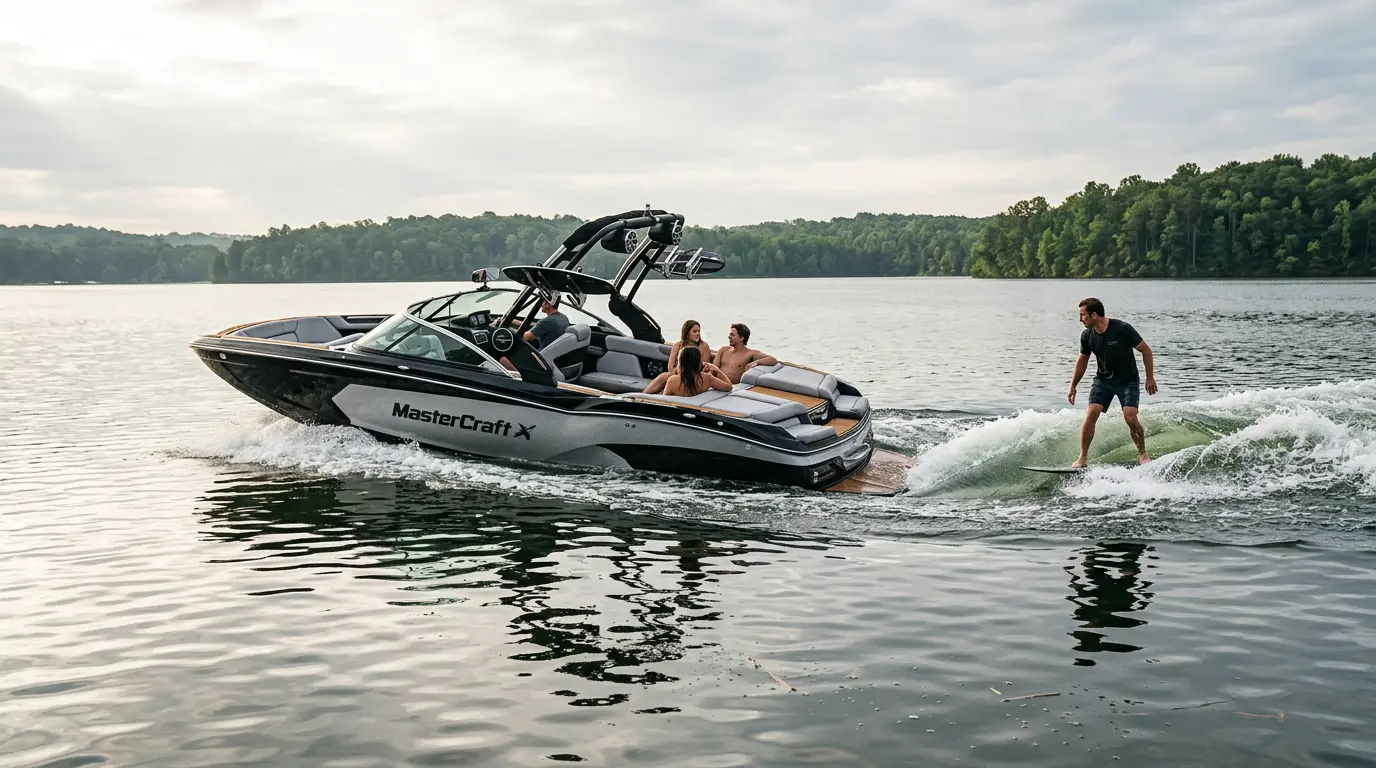
Finding the best wake boats means weighing ballast, surf systems, and price against how a crew actually plans to ride. A clean, glassy wake behind a boat looks simple until you try to build one yourself.
Wake boats turn that challenge into a science, with ballast tanks, surf systems, and hull shapes doing the real work.
The category used to be a small corner of boating. Now brands compete hard on wave quality, comfort, and price.
Sorting real performance from hype takes some digging into how each system actually works. What follows covers the brands, features, and price ranges worth a serious look before signing on a boat.
Top Wake Boats at a Glance
Every crew has a different priority, from wave shape to price to seating for the whole family. This table matches the top pick to each need before the full brand and budget breakdowns below.
| Category | Top Pick | Why It Stands Out |
|---|---|---|
| Best overall | Malibu Wakesetter 23 LSV | Surf Gate performance with strong resale value |
| Best for wakesurfing | Nautique G23 Paragon | Clean, even wave on both sides of the boat |
| Best budget pick | Axis A24 | Malibu-level Surf Gate tech at a lower price |
| Best for families | Moomba Mojo | Easy-fill ballast and flexible seating |
| Best for tournaments | MasterCraft XStar | Tournament-grade wake control and build quality |
These five cover most riding styles and budgets on the market today. The sections below break down why each brand earns its spot and what else is worth considering.
What Makes a Wake Boat Different From a Regular Boat
Wake boats carry gear a standard powerboat skips entirely. Every part on board exists to shape one thing: the wave behind it.
Crews who want something more general-purpose before committing to a dedicated surf setup may want to compare other lake boat types first.
- Ballast tanks: Built-in compartments that fill with water to add weight and shape a bigger wave.
- Surf systems: Hydraulic tabs or gates that push water to one side for wakesurfing.
- Inboard propulsion: V-drive engines keep the propeller away from riders near the stern.
- Reinforced tow points: Towers and pylons hold a safe rope angle for wakeboarding tricks.
- Deep V-hull: Shapes the wake face for a cleaner, more surfable curl.
Ballast tanks: Built-in compartments that fill with water to add weight and shape a bigger wave. Owners moving between lakes should also get in the habit of draining ballast tanks completely to avoid spreading aquatic invasive species between waterways.
That hardware explains how a wake boat performs. The spec sheet shows which parts are actually worth paying extra for.
Key Features to Check Before Buying a Wake Boat
Not every spec sheet number moves the needle on wave quality. This table breaks down what actually counts.
| Feature | Why It Matters | What to Look For |
|---|---|---|
| Ballast weight | Bigger ballast builds a bigger, more surfable wave | 1,500 to 4,500+ lbs, fast-fill systems |
| Surf system | Lets riders switch sides without shifting people around | Surf Gate, TAPS, Nautique Surf System, Flow Surf System |
| Hull design | Shapes wake steepness and wave length | V-drive hull with reverse chine |
| Engine power | Pushes heavy ballast at slow surf speed | 350 to 600+ hp inboard engines |
| Tower and audio | Adds comfort and rider control extras | Swiveling racks, marine-grade speakers |
Once those specs are settled, brand reputation is the next thing worth digging into.
Best Wake Boats by Brand
Every major brand brings something different to the water. Budget-friendly starters and six-figure surf machines both live here.
1. Malibu
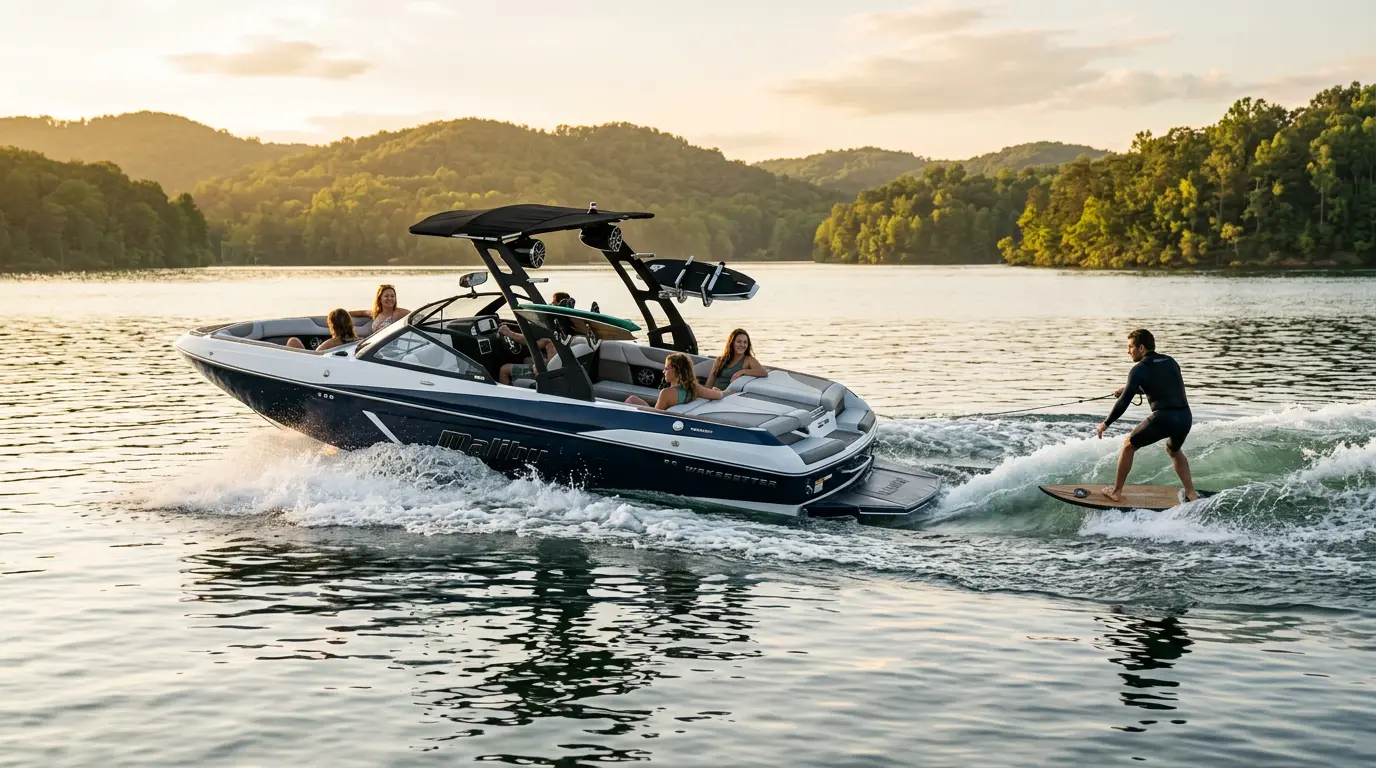
| LOA | Beam | Dry Weight | Seating/Weight Capacity | Fuel Capacity | Price |
|---|---|---|---|---|---|
| 23′ | 8′6″ | 5,700 lb | 15 people / 2,115 lb | 65 gal. | Starting around $260,000 USD* |
Malibu pioneered Surf Gate technology and still leads the surf boat category. The Wakesetter 23 LSV remains one of the best-known inboards on the water.
Recent lineups add the M230 and M242 for buyers wanting more luxury. The brand also owns Axis Wake Research, giving it reach across both premium and budget-friendly builds.
Pros:
- Excellent surf performance with Surf Gate technology
- Wide model range from premium Wakesetter boats to luxury M Series models
- Strong dealer network and good resale reputation
Cons:
- Higher purchase price compared with value-focused brands
- Premium features can increase cost quickly with options
2. Nautique
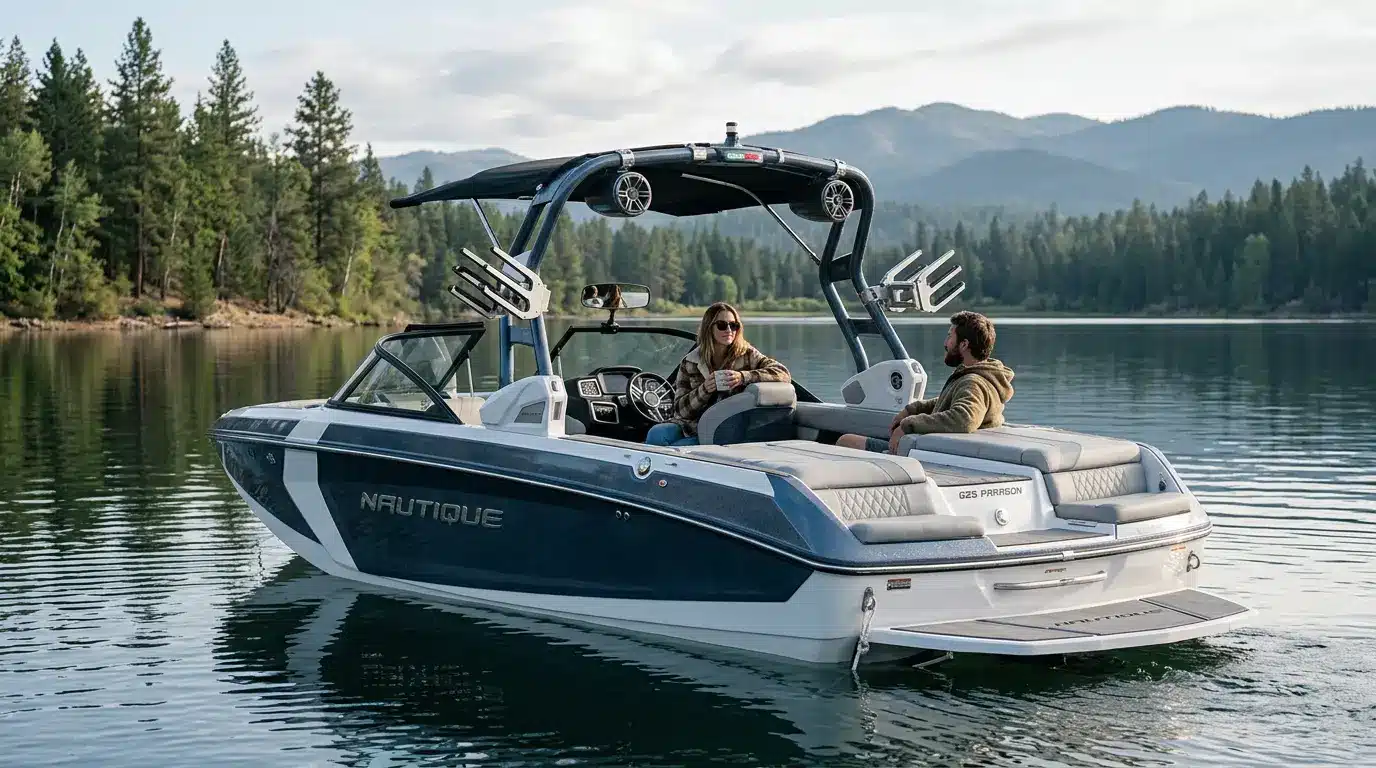
| LOA | Beam | Dry Weight | Seating/Weight Capacity | Fuel Capacity | Price |
|---|---|---|---|---|---|
| 23′ | 8′6″ | 6,300 lb | 16 people / Not Available | 65.6 gal. | Starting around $180,000 USD* |
Nautique built its name on decades of ski and wakeboard competition. The Nautique Surf System produces a wave often described as clean on both sides.
The G23 Paragon and G25 Paragon sit at the top of the surf lineup. Diesel options are also available for owners who want longer range on the water.
Pros:
- Known for competition-level wake and surf performance
- Nautique Surf System creates adjustable, clean waves
- Strong build quality and long-term brand reputation
Cons:
- Among the most expensive wake boats available
- Luxury features and upgrades add high cost
3. MasterCraft
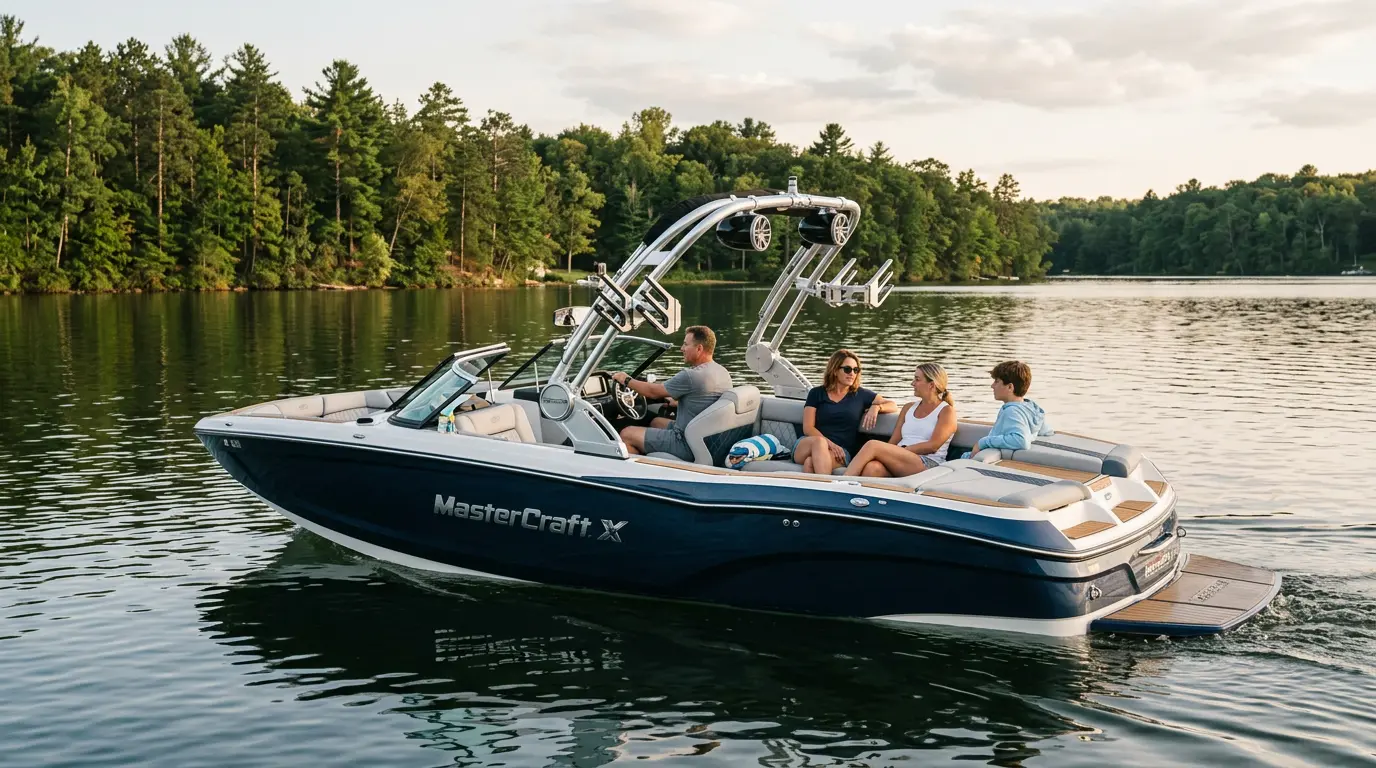
| LOA | Beam | Dry Weight | Seating/Weight Capacity | Fuel Capacity | Price |
|---|---|---|---|---|---|
| 23′7″ | 8′6″ | 7,600 lb | 16 people / Not Available | 86 gal. | Starting around $498,700 USD* |
MasterCraft earns respect for build quality and resale value. The XStar and X series sit at the top end of the tournament-level segment.
The NXT series gives buyers a lower-cost entry point without losing core wake performance. Owners often point to fit and finish as a standout strength.
Pros:
- Premium construction with high-end interiors and finishes
- X Series delivers advanced wake performance for serious riders
- NXT models provide a more affordable entry into the brand
Cons:
- Flagship models carry some of the highest prices in the category
- Large premium boats can have higher maintenance and ownership costs
4. Axis Wake Research

| LOA | Beam | Dry Weight | Seating/Weight Capacity | Fuel Capacity | Price |
|---|---|---|---|---|---|
| 24′5″ | 8′6″ | 4,500 lb | 18 people / 2,397 lb | 70 gal. | Starting around $100,000 USD* |
Axis is Malibu’s budget-focused sister brand. First-time buyers often pick it for real surf performance without the premium price tag.
Models like the A24 borrow Surf Gate technology straight from Malibu’s own lineup. That shared engineering keeps wave quality high even at a lower cost.
Pros:
- Offers Malibu-inspired surf technology at a lower price point
- Good option for new wake boat buyers
- Strong wake performance without many luxury extras
Cons:
- Fewer premium comfort features than Malibu models
- Interior materials and technology are simpler compared with luxury brands
5. Moomba

| LOA | Beam | Dry Weight | Seating/Weight Capacity | Fuel Capacity | Price |
|---|---|---|---|---|---|
| 23′ | 8′6″ | 5,300 lb | 17 people / 2,700 lb | 65 gal. | Starting around $100,000 USD* |
Moomba built its reputation on affordable, real wake performance. The lineup now runs from the compact Mojo up through the Craz and Mondo.
The entry-level Tykon rounds things out for buyers new to the sport. Its Flow Surf System still delivers a rideable wave at a lower price.
Pros:
- Good value for riders wanting real surf capability
- Flow Surf System provides adjustable waves across different rider styles
- Lower entry price than many premium competitors
Cons:
- Less upscale interior finish compared with luxury wake boats
- Resale value may not match top premium brands
6. Tige

| LOA | Beam | Dry Weight | Seating/Weight Capacity | Fuel Capacity | Price |
|---|---|---|---|---|---|
| 23′ | 8′6″ | 5,250 lb | 16 people / 2,100 lb | 65 gal. | Starting around $150,000 USD* |
Tige is a Texas-built brand known for its TAPS surf system. Its hull design produces strong waves using less ballast than some rivals.
The touchscreen Tige Clear interface lets owners save rider profiles and wave settings. That kind of control appeals to crews who switch riders often.
Pros:
- TAPS surf system provides easy wave adjustments
- User profiles and touchscreen controls help crews switch settings quickly
- Strong surf-focused hull design
Cons:
- Limited model range compared with larger manufacturers
- Premium pricing may be high for some first-time buyers
7. Centurion

| LOA | Beam | Dry Weight | Seating/Weight Capacity | Fuel Capacity | Price |
|---|---|---|---|---|---|
| 24′5″ | 8′6″ | 5,950 lb | 17 people / 2,500 lb | 70 gal. | Starting around $170,000 USD* |
Centurion is known for the Ramfill ballast system, which fills fast to build some of the largest waves in the category.
The Articulating Tracking System fine-tunes wake shape without shifting weight around the boat. Riders often note how consistent the wave stays across a full day out.
Pros:
- Ramfill ballast system helps create large surf waves quickly
- ATS technology allows fine wake adjustments
- Popular among dedicated wakesurf riders
Cons:
- Large surf-focused setups may use more fuel
- Performance features come with a higher ownership cost
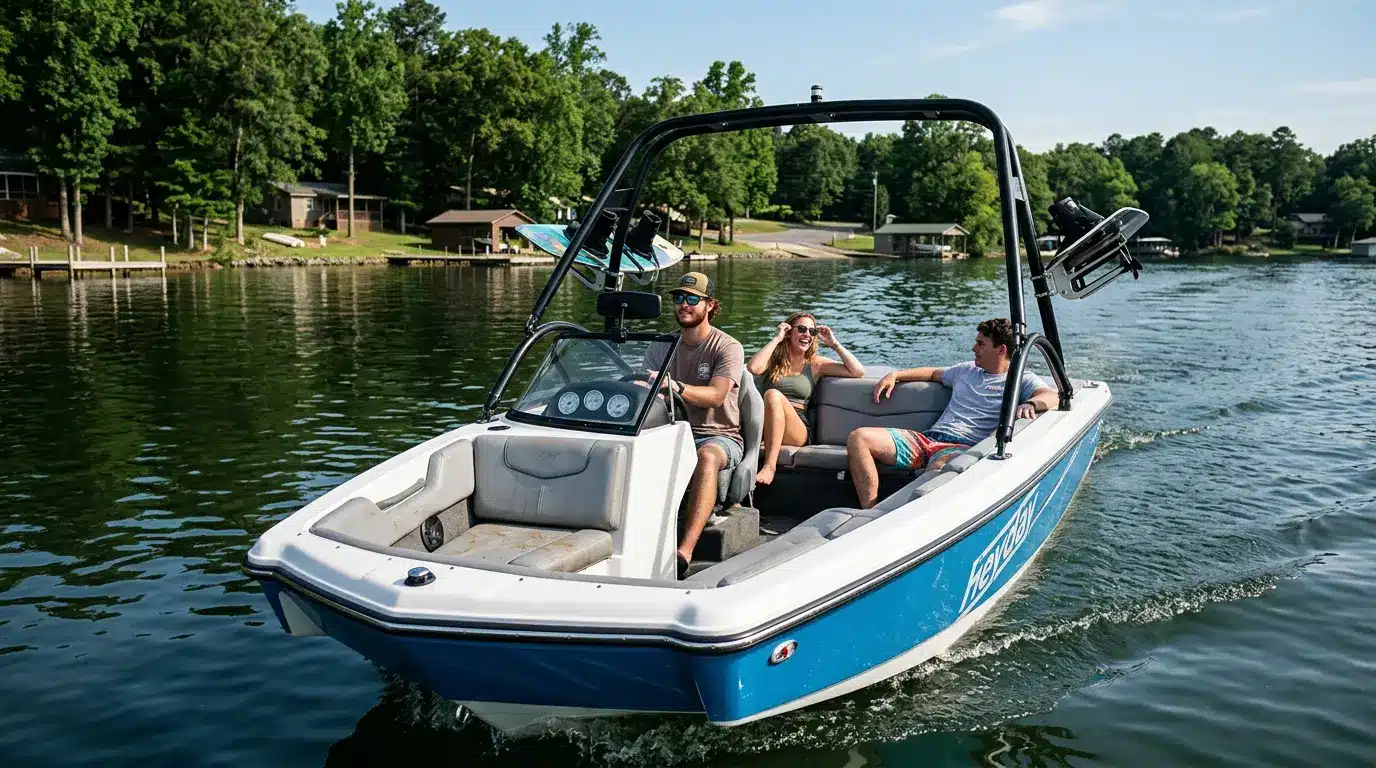
8. Heyday
| LOA | Beam | Dry Weight | Seating/Weight Capacity | Fuel Capacity | Price |
|---|---|---|---|---|---|
| 23′1″ | 8′0″ | 4,300 lb | 17 people / Not Available | 60 gal. | Starting around $90,000 USD* |
Heyday is backed by Nautique and prices its boats well below premium competitors. The wave quality still holds up surprisingly well for the price.
Its stripped-down helm design keeps the focus on performance rather than extra features. That approach makes Heyday a common pick for first-time wake boat owners.
Pros:
- Lower price makes it easier for beginners to enter wake sports
- Simple design keeps operation straightforward
- Provides solid surf ability for recreational riders
Cons:
- Fewer luxury features and customization options
- May not satisfy advanced riders looking for maximum wake tuning
Brand reputation only tells half the story. Budget usually decides where the search actually lands.
Prices listed are approximate starting prices and can vary by model year, engine choice, dealer location, taxes, freight, setup fees, and optional upgrades. Actual purchase prices may differ based on boat configuration and available packages.
Best Wake Boats by Budget
Price ranges in this category swing widely. Matching budget to tier early saves time with dealers later.
| Budget Tier | Price Range | Brands to Consider |
|---|---|---|
| Entry-level | Roughly $75,000 to $110,000 | Heyday, Moomba Mojo, Axis A20 |
| Mid-tier | Roughly $110,000 to $175,000 | Axis A22/A24, Moomba Max, MasterCraft NXT |
| Premium | Roughly $175,000 to $275,000 | MasterCraft XT/X, Malibu 25 LSV, Nautique GS series |
| Ultra-premium | $275,000 and up | Nautique Paragon series, Malibu M-Series, MasterCraft XStar |
Note: figures are general market ranges and shift by model year, so confirm current pricing directly with a dealer before drafting final copy.
Budget narrows the list fast, but the sport a buyer plans to do most is what settles the final pick.
Wakeboard Boats vs Wakesurf Boats: Which Fits the Crew
Wakeboarding and wakesurfing feel similar from the dock. They ask very different things from a boat.
Wakeboarding: Runs at 18 to 24 mph with a steep, ramp-style wake and a tow rope.
Wakesurfing: Runs at 10 to 13 mph with a long, pushy wave and no rope.
Crossover boats: Most modern models switch between both modes at the push of a button.
Family use: Flexible seating and easy-fill ballast suit mixed groups best. Crews prioritizing comfort over wave quality might also weigh pontoon boats for families before deciding.
Serious riders: Dedicated surf hulls and heavier ballast matter more than versatility.
Wakesurfing: Speed and distance-from-shore limits for towed water sports also vary by state, so it’s worth checking current federal recreational boating regulations before heading out with a new crew.
Riding style narrows the shortlist further, and a quick checklist covers what’s left before signing anything.
Checklist Before Signing on a Wake Boat
A few minutes with this checklist can prevent an expensive mismatch later.
☐ Confirm ballast weight matches the wave size wanted
☐ Test the surf system on both sides of the boat
☐ Check engine horsepower against fully loaded ballast weight
☐ Verify required safety equipment onboard matches current federal standards
☐ Ask about resale value and dealer network nearby
☐ Factor in storage, insurance, and yearly maintenance costs
☐ Demo more than one brand on the same day for a fair comparison
Checking these off before signing anything keeps regret off the table.
Conclusion
A long options list rarely matters as much as how and where a boat actually gets used. A family cruising a calm lake needs something different than a competitive surfer chasing a glass-clean wave.
Price tags can overlap even when needs do not. Ballast, surf systems, and hull design separate the good models from the forgettable ones. Budget and riding style still decide the final shortlist.
Demo a few models back-to-back and ask hard questions about resale. The right boat tends to make itself obvious once those details line up.
Frequently Asked Questions
Is Nautique or Master Craft Better?
Neither wins outright. Nautique leans toward surf performance, while MasterCraft is known for resale value and build quality.
What Is the Best Used Wake Boat to Buy?
Look at Malibu Wakesetter or MasterCraft X models from the last five years for strong parts support and resale.
What Is the Rolls Royce of Boats?
Nautique’s Paragon series carries that reputation, built for buyers who want the most complete surf experience available.
Which Brand Sells the Most Wake Boats in North America?
Malibu holds over a third of the global watersports towboat market, more than any single rival brand.
How Much Does a New Wake Boat Cost?
Most new wake boats run from about $75,000 for entry-level models to $275,000 or more for ultra-premium surf boats.
What is the Most Popular Wake Boat Right Now?
The Malibu Wakesetter 23 LSV remains one of the most requested models thanks to its Surf Gate system and resale value.