Shopping for windsurfing equipment can feel a bit overwhelming, especially when boards, sails, and parts all start to blur together. Product pages often use terms that sound complicated, but the basics are simpler than they seem.
The right setup makes sessions smoother. It helps riders balance sooner, turn with less effort, and stay on the water longer. The wrong setup can feel heavy, unstable, or just awkward, and that can take the fun out of it.
Wind surfing equipment usually includes a board, a rig, and a few key parts that connect everything. Some buyers choose pieces one by one, while others go for a complete package that’s already matched.
A few quick checks can prevent costly mistakes and make online shopping feel much more comfortable.
What Is Windsurfing Equipment?
Windsurfing equipment can look like a long shopping list at first, but it really comes down to a few pieces that need to play nicely together. Each piece plays a specific role, and together they control how the ride feels, performs, and handles different conditions.
Types of Windsurfing Equipment
- Board: the main platform that sits on the water and supports the rider
- Sail: captures wind power and drives the board forward
- Mast: the vertical pole that holds the sail upright
- Boom: the horizontal bar the rider grips to steer and control the sail
- Fin: sits under the board and keeps it tracking in the right direction
- Universal Joint: connects the rig to the board and allows the sail to move freely
- Harness: takes arm strain away by connecting the rider to the boom
- Wetsuit: keeps the rider warm and comfortable during longer sessions, though choosing between a wetsuit and drysuit depends on the water temperature you’re riding in
The board sets how steady everything feels underfoot, while the rig, the sail, mast, boom, and base act as the engine that pulls you forward. If the two don’t match well, things can feel awkward and hard to control.
That’s why understanding each piece before buying makes the whole process much simpler.
Windsurfing Packages vs Individual Gear
Most buyers end up choosing between a complete package or building a setup piece by piece. Packages are the easiest route, especially for beginners, because the board and rig are already matched and usually cost less as a bundle.
Individual gear makes more sense for experienced riders who want to upgrade one part at a time.
| Option | Best for | Why it works | Watch out for |
|---|---|---|---|
| Complete package | Beginners, first-time buyers, and easy online shopping | Matched parts, fewer mistakes, often better value | Less customization |
| Individual pieces | Intermediate/advanced riders, upgrading | Pick exactly what you want, upgrade step by step | Compatibility checks take time |
A simple way to decide is to think about effort and confidence. If avoiding mistakes and getting on the water sooner matters most, a package is usually the safer bet.
If performance tweaks and specific preferences matter more, building the setup piece by piece is the better path.
Pro Tip: If the goal is to shop online safely, go with a package. If the goal is fine-tuning performance, go piece by piece.
How to Choose the Right Windsurfing Board?
Choosing a windsurfing board gets easier when the focus is on one thing above all: stability. When the board feels steady, balancing takes less effort, turns feel less scary, and staying on the water feels more relaxed. Once the right size is clear, choosing a board type and deciding between a single board or a package becomes much simpler.
-
Volume: Measured in liters, volume shows how much the board floats. More volume means more balance and a calmer feel, which is especially helpful for beginners. Boards with too little volume can feel wobbly and tiring, particularly in lighter wind.
-
Width: Width adds side-to-side stability. A wider board usually feels more forgiving and makes standing up, steering, and uphauling the sail easier.
Starting with a slightly bigger board builds confidence, and moving to a smaller one later feels natural as skills improve. With size sorted, the next step is choosing the right board type based on conditions and riding style.
Windsurfing Board Types
With size sorted, choosing the right board type becomes much easier. Each type is built for specific wind, water, and riding goals, so choosing the right category quickly narrows options when shopping online.
1. Beginner / School Boards
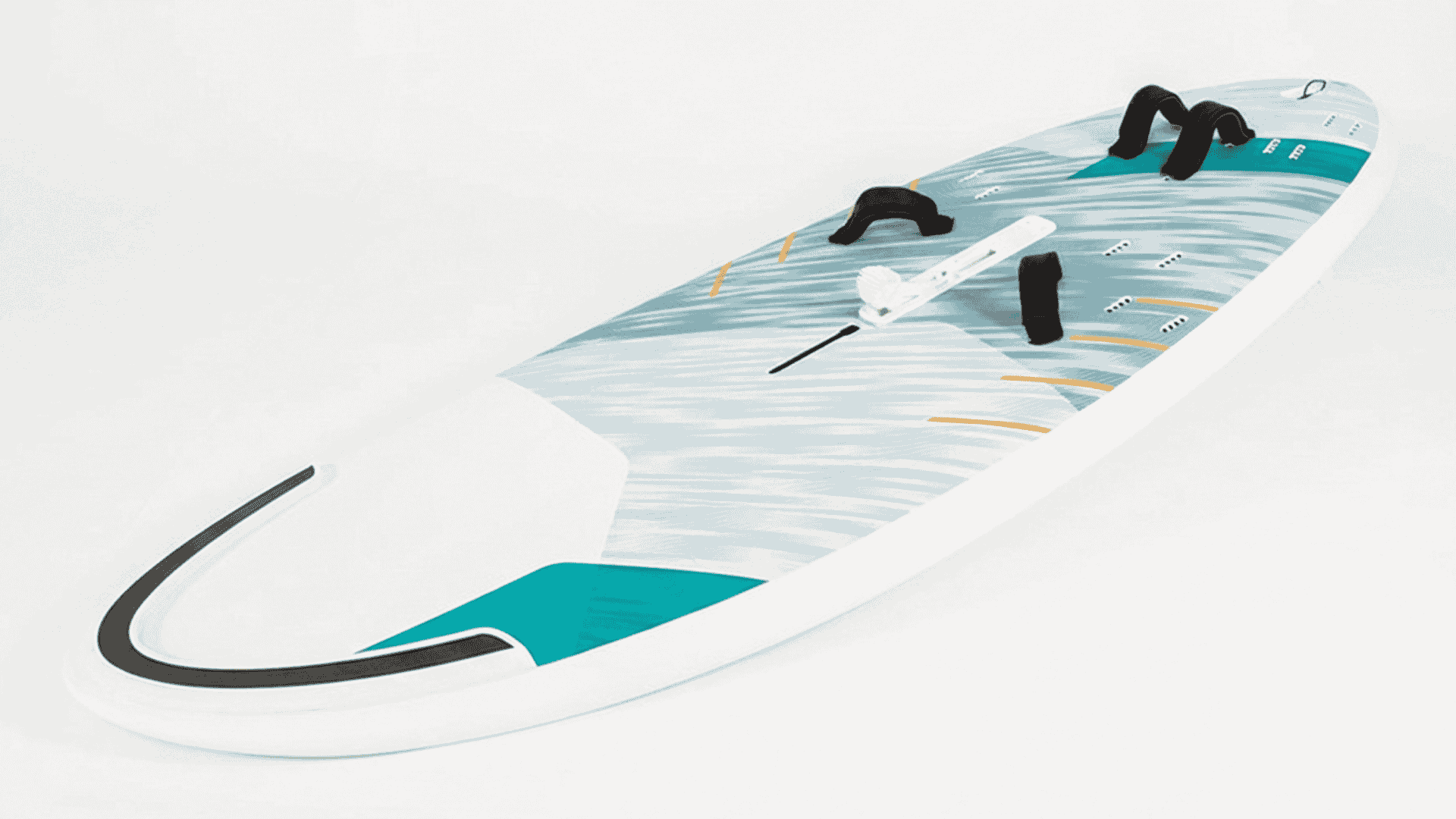
Designed for stability and easy balance, beginner boards help new riders learn with confidence. Extra volume and width make uphauling, turning, and early progression smoother and far less intimidating on the water.
Suitable for: First-timers, lessons, lighter wind, flat water, slow-and-steady progression
Shop here:
- Duotone Viper HD Beginner Windsurf Board
- Exocet Link Beginner Windsurf Board XL Windsurfing Board – 230L
- 22 JP Funster Eva – 240
2. Freeride Boards

Freeride boards balance stability, speed, and control for everyday sailing. They suit a wide range of wind conditions and skill levels, making them a popular choice for riders progressing beyond the basics.
Suitable for: Beginners progressing to intermediate, mixed wind days, flat to choppy water
Shop here:
- Tahe Techno 148 Freeride Windsurf Board
- Goya Volar Freeride Windsurf Board 2024
- Exocet Nano Freeride Windsurf Board
3. Freerace / Slalom Boards

Built for speed and efficiency, freerace boards offer a fast, responsive feel in stronger winds. Their narrower outlines and performance shapes suit experienced riders looking to sail faster with precision and control.
Suitable for: Advanced riders, stronger wind, speed runs, flat to choppy water
Shop here:
4. Wave Boards
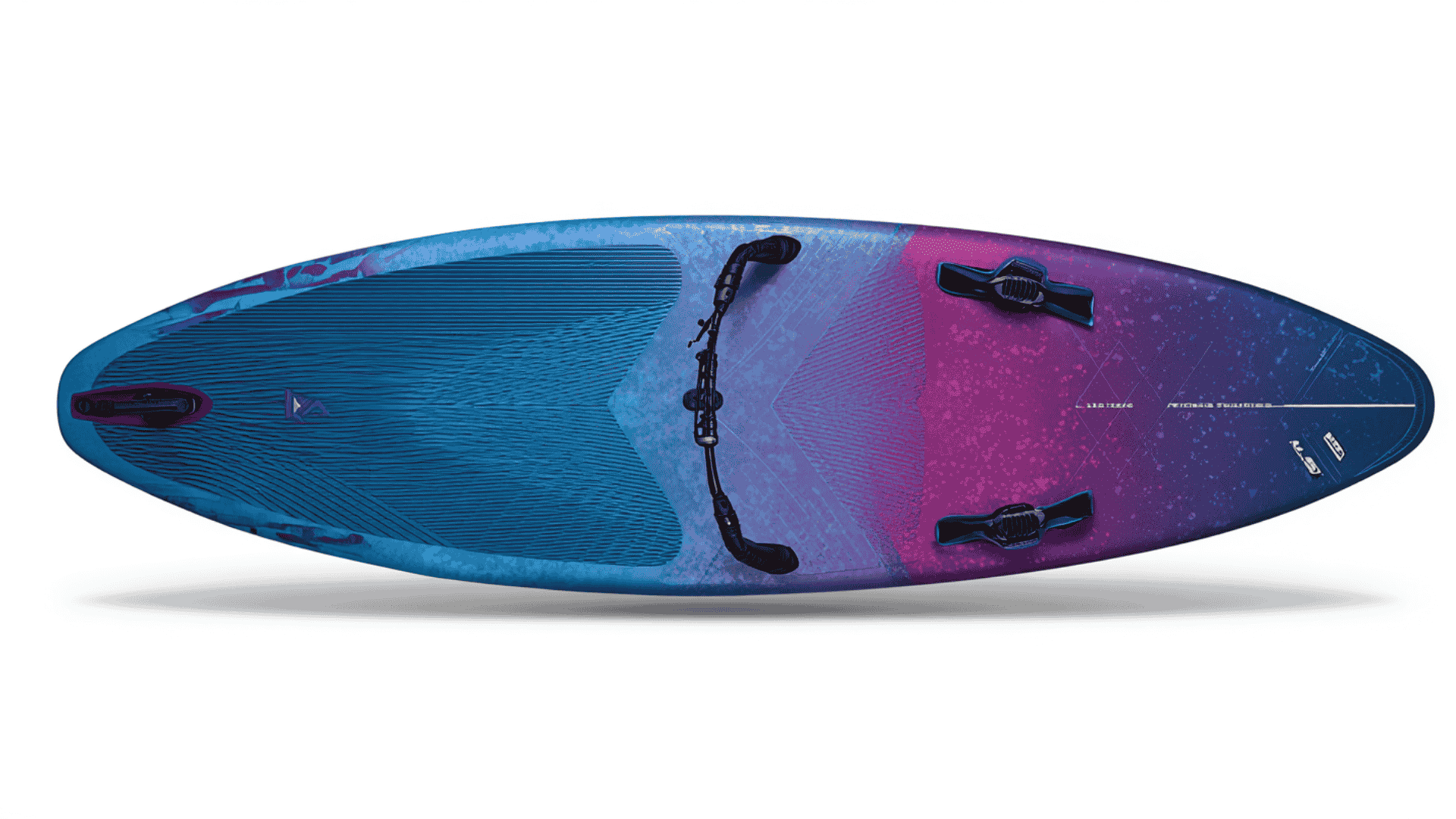
Wave boards are compact and agile, designed for rough water. They excel in strong wind and wave conditions, offering quick turns, solid grip, and confidence when riding waves or handling challenging chop.
Suitable for: Experienced riders, waves, rough water, high wind days
Shop here:
How to Choose the Right Windsurfing Rig
After the board, the rig provides power to the setup. It catches the wind and turns it into forward motion, so the right rig can make sailing feel smooth and controlled. A rig that’s too big can feel heavy and tiring, while one that’s too small can leave riders underpowered, especially when buying windsurfing equipment online.
-
Sail size: Measured in m². Bigger sails give more pull in lighter wind. Smaller sails feel easier to manage in stronger wind. Aim for the wind conditions that happen most often, not the rare extreme day.
-
Compatibility: Many online mistakes happen here. Match the sail’s recommended mast length and mast type (RDM or SDM), then choose a boom range that fits the sail size. If these specs line up, the setup usually works smoothly.
With these checks done, choosing the right rig feels much simpler, and checkout feels a lot safer.
Windsurfing Rig Types
Once the basics are clear, it helps to know that sails and rigs also come in different styles. Each type is designed for specific wind conditions and riding goals, making online selection much easier.
1. Beginner / School Rigs
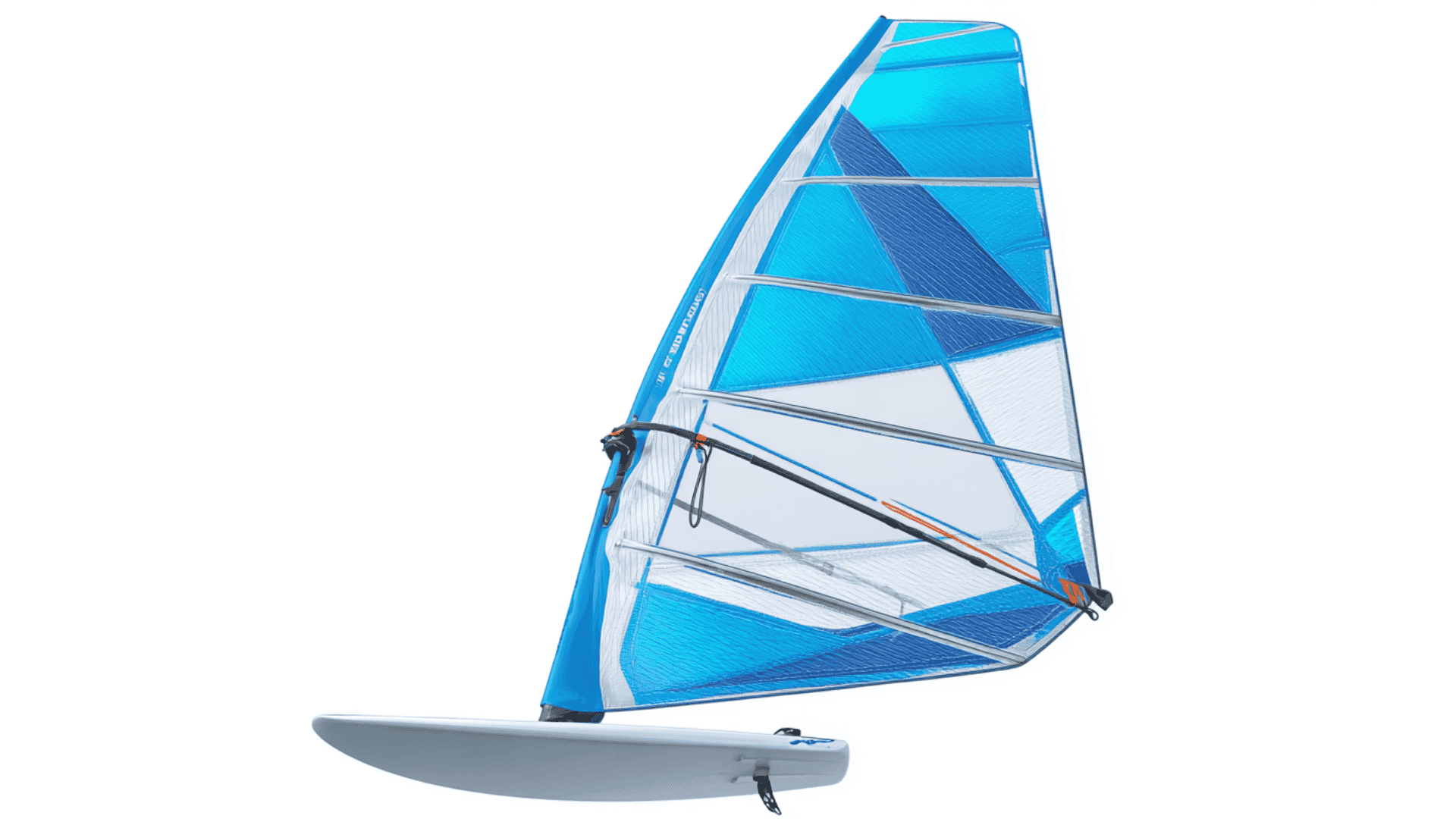
Designed to feel light, simple, and easy to control, beginner windsurfing rigs help new riders focus on balance and basic technique. Soft sail tension and durable materials make learning smoother and less tiring.
Suitable for: First-time riders, learning sessions, light to moderate wind
Shop here:
- Severne Synergy Beginner Windsurf Rig
- Chinook Shift Beginner Windsurf Rig
- Unifiber Evolution II – Windsurfing Entry-level Complete Rig
2. Freeride Rigs
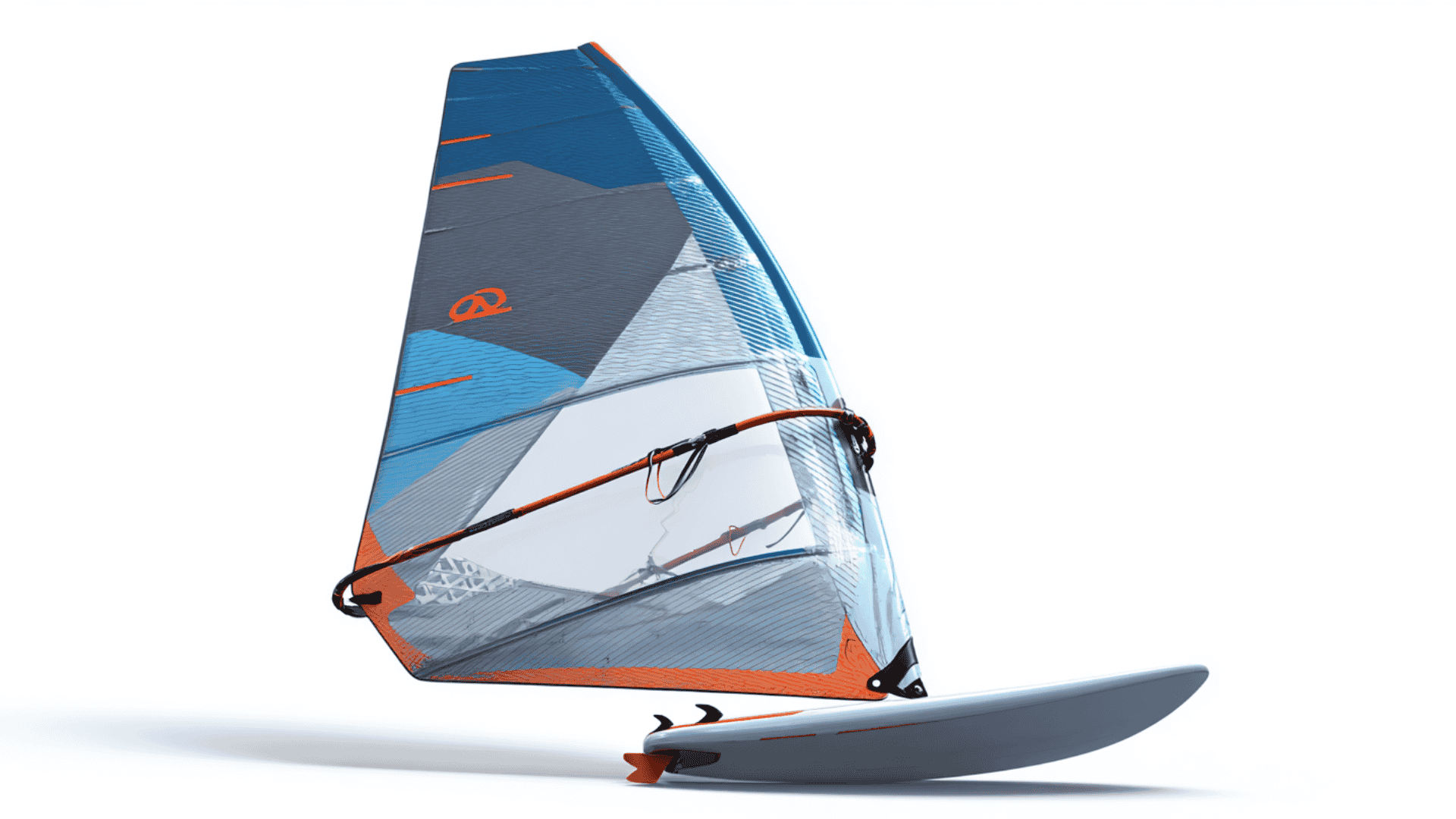
Freeride rigs offer a balanced mix of power and control for everyday sailing. They work across a wide range of wind conditions, making them ideal for riders who want one versatile setup to progress comfortably.
Suitable for: Beginner to intermediate riders, regular sailing, mixed wind conditions
Shop Here:
3. Freerace / Performance Rigs

Built for speed and efficiency, freerace rigs deliver strong power and quick response. Their high-performance shape suits experienced riders looking to sail faster and push limits in steady, stronger wind conditions.
Suitable for: Intermediate to advanced riders, stronger wind, speed-focused sailing
Shop here:
- GOYA Mark \ Mark B 2023 Freerace Sail
- 2024/25 Naish No Cam Freerace 7.0
- 2022 XO Sails Silver Freerace Sail – 6.3
4. Wave Rigs

Wave rigs focus on control, maneuverability, and durability in rough water. Compact sail shapes and reinforced panels help riders stay confident in strong winds, waves, and fast-changing conditions.
Suitable for: Experienced riders, wave sailing, high-wind conditions
Shop here:
- Aerotech Motion Rig – 5.5 Orange
- Duotone iRig One Inflatable Windsurf Sail M
- Duotone iRIG ONE Inflatable Windsurf Rig
To keep things simple, remember that boards and rigs are chosen for different reasons. The board sets the feel under your feet, while the rig controls how the wind is used. Even if the names sound similar, each choice serves its own purpose, and picking them to complement each other is what makes a setup work smoothly..
Board and Sail Size Matching – Simple Buying Rules
Once the board and rig choices are clear, the next step is to ensure they make sense together. A simple pairing keeps the setup balanced, easier to control, and more enjoyable, especially when buying windsurfing equipment online.
A bigger, higher-volume board can comfortably carry a wider range of sail sizes. It feels stable, so a slightly larger sail won’t overwhelm the rider as quickly.
On the other hand, a small board paired with a big sail can feel twitchy and hard to manage, especially in gusty wind. A safe approach is to keep things balanced: stable boards work best with “everyday” sail sizes, while performance boards are usually paired with more specific sail ranges.
Wind conditions matter too. Lighter wind often calls for a larger sail and a more supportive board. Stronger wind usually feels better with a smaller sail and a board that stays controlled when powered up.
When shopping online, it helps to check the board’s recommended sail range (if listed) and compare it with the sail size being considered. If those ranges overlap, the setup is usually in a good place.
Windsurfing Equipment for Beginners vs Advanced Riders
The right gear depends heavily on where you are in your journey. Matching equipment to skill level makes sessions safer, more enjoyable, and easier to progress through.
| Skill Level | Board Volume | Sail Size | Gear Type |
|---|---|---|---|
| Beginner | 160–210L | 4.5–6 m² | Wide, stable boards |
| Intermediate | 120–160L | 5–7 m² | Freeride boards |
| Advanced | 70–120L | 4–6 m² | Wave or slalom boards |
A simple rule of thumb: if sessions feel tiring or out of control, the gear is likely too advanced. If everything feels too slow, it’s probably time to size down and push a little harder.
Buying Windsurfing Equipment Online?
Online shopping is convenient, but it’s easier to make small mistakes that turn into big headaches later. Before buying windsurfing equipment, scan the listing for the details that actually affect fit, feel, and returns.
- Sizing details to confirm: For boards, check the volume (L) and the width/length to understand how stable it will feel, and use the provided rider weight range if available. For sails, confirm the size (m²), the expected wind range, and the recommended mast length.
- Compatibility notes to look for: Match the sail’s mast requirement (RDM or SDM) and confirm the mast length can be tuned with the right extension. It’s also worth checking the mast base connection so everything fits without extra purchases.
- Shipping and delivery: Boards are large, so shipping costs can be higher. Check the shipping fee, delivery timeline, and how the board is packed. It also helps to see what the store offers if the item arrives with damage.
- Warranty and returns: Confirm the return window, return shipping cost, and condition rules before checkout. Check what the warranty covers and for how long. If it’s a package, verify exactly what’s included instead of assuming.
With these quick checks in place, buying windsurfing gear online feels much safer. Take a minute to confirm the details, then shop with confidence and avoid costly surprises later.
Average Cost of Windsurfing Equipment
Windsurfing equipment costs can vary widely depending on materials, performance level, and whether the gear is purchased as a package or in separate pieces.
Entry-level setups are usually the most budget-friendly and designed for beginners, often landing around $1,000 to $2,700 for a complete board + rig package.
Mid-range gear is where many regular riders feel comfortable. These setups often feel lighter and smoother, and a complete setup typically costs around $2,700 to $3,500, depending on the brand and build.
Premium equipment focuses on performance, with lighter materials and faster response. Complete packages often cost $3,500+; performance rig packages alone can run $1,700 to $2,000 (sometimes higher).
For context, windsurfing vs kitesurfing costs are actually quite close, so the sport you enjoy more should drive the decision.
A simple way to manage costs is by choosing a package. Bundled boards and rigs often offer better value and built-in compatibility, while buying piece by piece costs more but supports upgrades over time.
Wrap Up
Choosing the right windsurfing equipment becomes much easier when each part is understood and carefully matched. From boards and rigs to complete packages, the goal is to balance stability and control, power and comfort, and skill level and conditions.
Paying attention to size, compatibility, and real sailing needs helps avoid costly mistakes and leads to better sessions on the water. Whether starting out or upgrading over time, smart choices make windsurfing more enjoyable and less frustrating.
With the right setup, progress feels natural, and confidence builds faster. Ready to make a better gear choice? Bookmark this page, share it with a sailing buddy, or leave a comment with the setup you’re considering.
Frequently Asked Questions
What Equipment Do You Need for Windsurfing?
The basics include a board, sail, mast, boom, and fin. A harness, wetsuit, and footstraps are worth adding once you’re ready to progress.
What Size Windsurf Board Should a Beginner Buy?
Beginners do best with boards between 160–210 liters. The extra volume adds stability, makes balancing easier, and helps build confidence faster on the water.
Is Windsurfing Equipment Expensive?
Entry-level setups typically run between $1,000 and $2,700. Buying a complete package is usually the most cost-effective way to get started without compatibility issues.