
Every person who is even slightly curious about the water sports has at least once asked a question: What is Body Surfing? Body surfing is one of the purest ways to experience the ocean, no board, no gear, just you and the power of the waves.
It’s all about using your body to glide across the water, timing your movement so the wave carries you forward in a smooth, exhilarating ride.
This style of wave riding is easy to learn, exciting to practice, and a great way to feel connected to the ocean’s natural rhythm.
It also builds confidence in the water and teaches you how to read waves more intuitively. Many beach lovers consider it the most authentic and freeing way to enjoy the surf.
History of Body Surfing
Body surfing is an ancient, worldwide wave-riding practice using only the human body, rooted in coastal cultures long before modern surfboards.
1. Polynesia & Hawaii
Polynesians perfected wave skills for daily ocean life.
In Hawaiʻi, bodysurfing (often called surf swimming) existed alongside board surfing, appearing in legends and everyday play, requiring only strong swimming, timing, and comfort in powerful surf.
2. West Africa
West Africa contains some of the earliest written observations of surf-zone wave riding.
Accounts describe confident swimmers and fishing communities reading breakers, using body control to ride shoreward, showing wave-riding traditions developed independently outside Polynesia.
3. Turkey (Black Sea)
Turkey’s Black Sea coast preserves a local bodysurfing tradition known as “viya.”
It evolved with distinctive technique and strong community identity, largely separate from Hawaiian–Californian surf culture, showing how bodysurfing traditions can develop in isolation.
4. China
Chinese sources describe swimmers performing skillful feats in powerful tidal conditions, including bore-like waves.
While different from modern beach-break bodysurfing, these accounts reflect long-standing traditions of “riding moving water” through strength, timing, and courage.
5. Japan
Japan has a deep coastal wave-riding heritage, including children using boat planks (itago) and later written instruction describing bodysurfing methods.
Modern surf culture expanded after World War II, but older local wave practices existed long before.
6. Australia
Indigenous Australians were skilled ocean swimmers and divers with strong surf-zone knowledge.
By the late 1800s and early 1900s, “surf shooting” became widely popular, shaped by beach culture and surf lifesaving communities refining timing and style.
7. Southern California
Southern California became a major center for modern bodysurfing technique. Early watermen and lifeguards helped spread skills in the early 1900s, and the sport grew rapidly through the 1920s–30s as a staple beach pastime.
Global Spread and Modern DevelopmentOrganized bodysurfing expanded in the early 20th century across Hawaii, California, and Australia. The biggest turning point came with swim fins, especially Churchill’s 1940 “Duck Feet,” which increased speed and control, enabling longer rides and diagonal trimming. |
How Does Body Surfing Work?
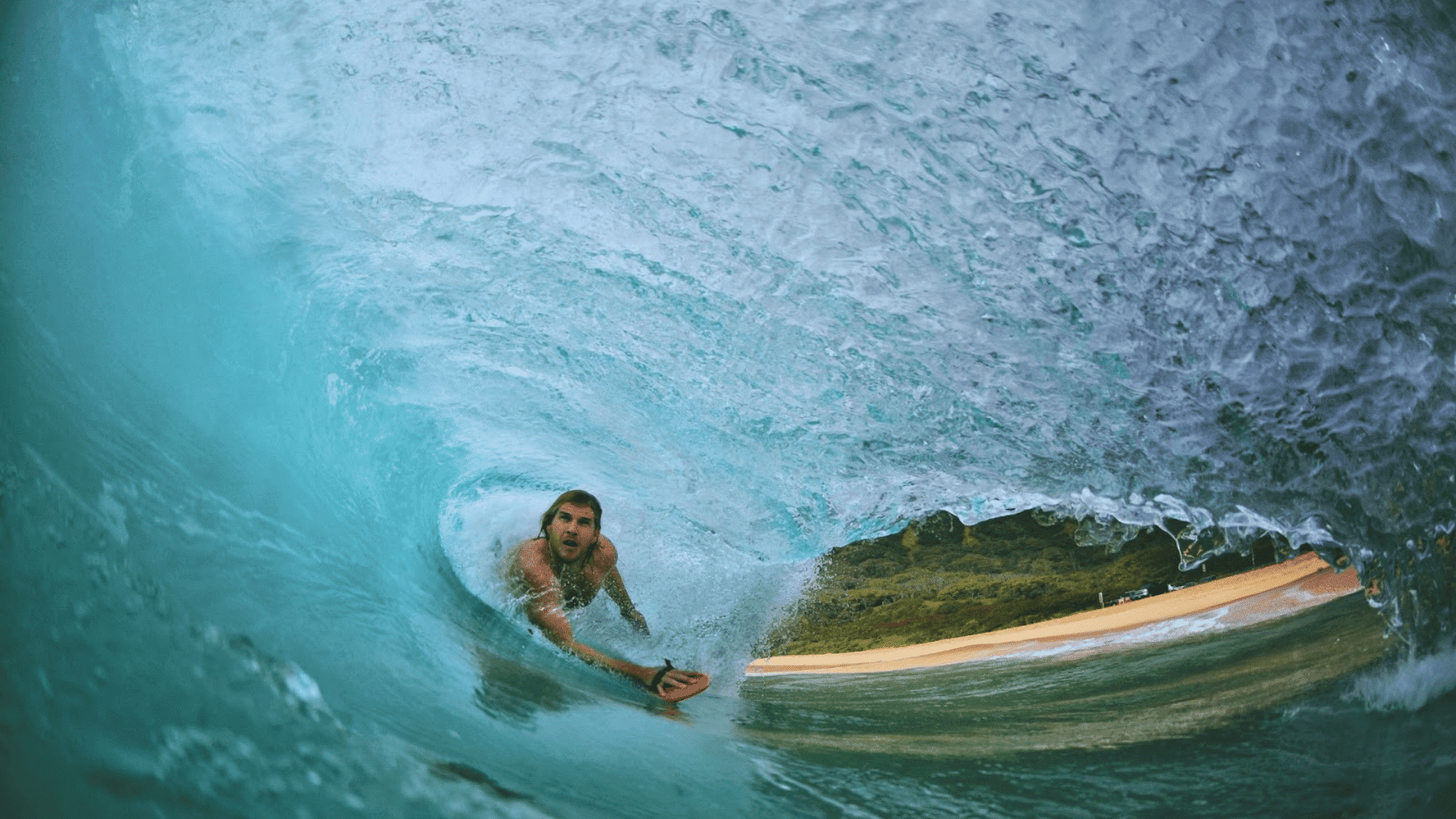
Body surfing relies on matching your movement with the energy of an incoming wave. The goal is to catch the wave at just the right moment so it lifts your body and carries you forward.
Most of the momentum comes from a strong swim start, followed by extending your body in a streamlined position to stay aligned with the wave’s motion.
Your chest and shoulders act like a natural “planing surface,” helping you glide smoothly across the water.
Small adjustments in your arms, legs, and body angle allow you to maintain speed, stay balanced, and keep riding for as long as the wave allows.
This simple blend of timing, positioning, and wave awareness is what makes body surfing both fun and surprisingly intuitive.
Equipment Needed for Body Surfing
Body surfing doesn’t require much gear, which is part of what makes it so enjoyable. Still, a few basic items can make the experience safer, faster, and more comfortable.
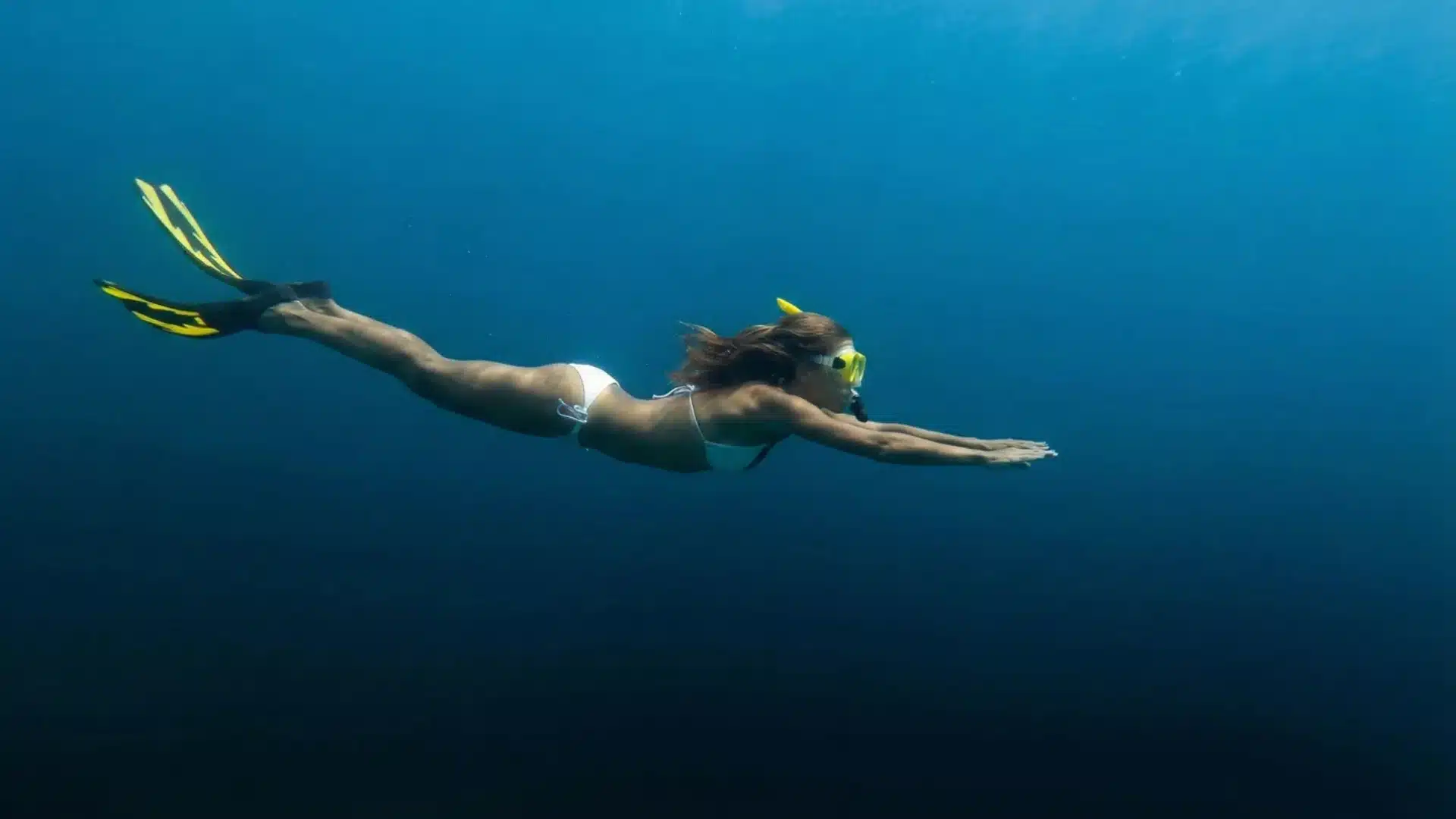
- Swim Fins: These are the most important tool for body surfing. Fins give you stronger kicks, helping you catch waves more easily and stay in control as you ride.
- Hand Plane or Handboard: A small board that fits in your hand and helps lift your upper body onto the wave. It adds speed, stability, and a smoother glide.
- Swim Goggles: Goggles help you see underwater, avoid irritation from saltwater, and stay aware of incoming sets.
- Rash Guard or Wetsuit: These protect your skin from irritation and keep you warm in cooler water. Wetsuits also add a bit of buoyancy.
- Fin Savers or Teethers: Straps that attach your fins to your ankles, preventing them from slipping off in strong waves.
Basic Concepts of Body Surfing
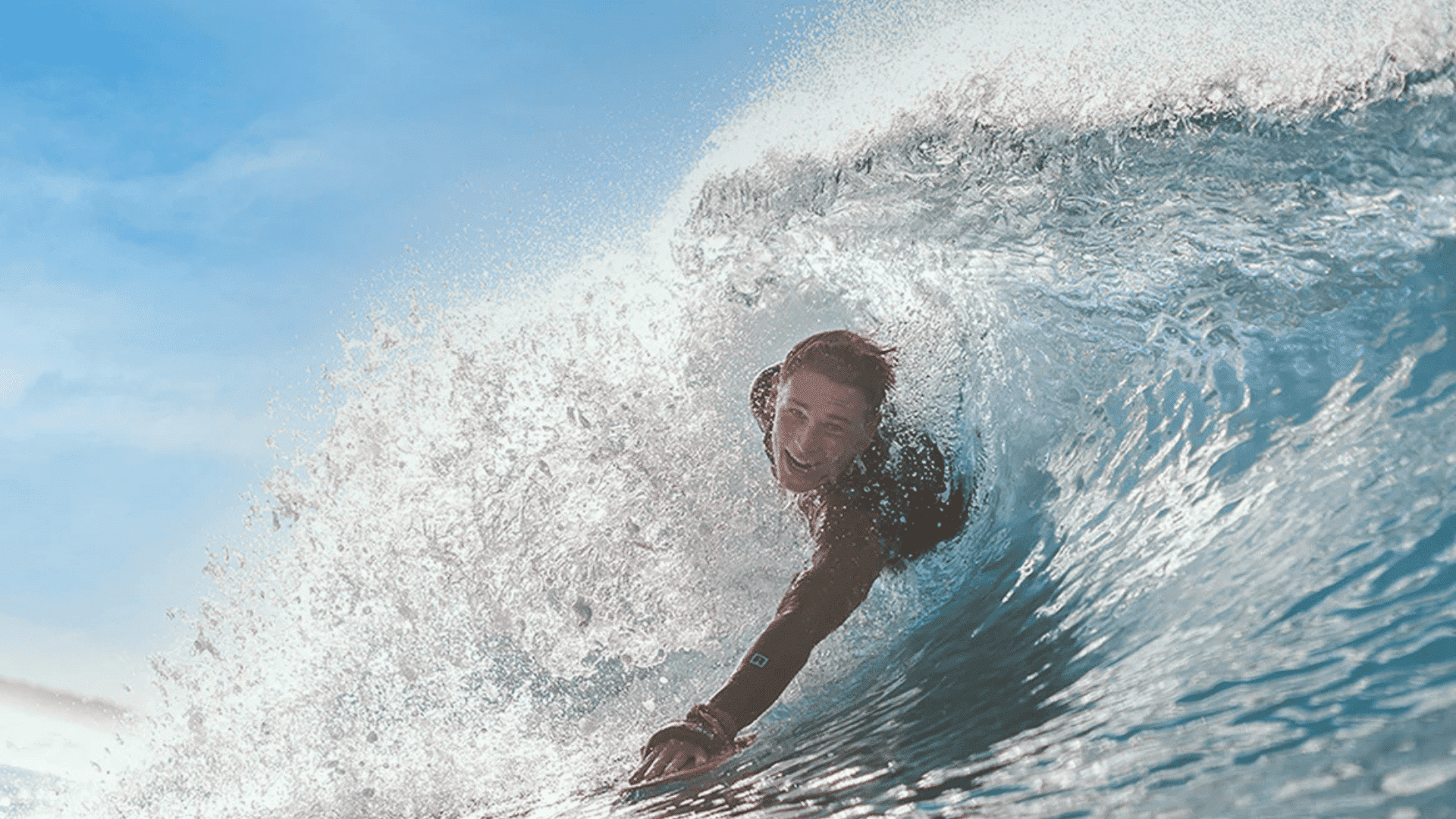
Body surfing comes down to a few core ideas that help you work with the ocean instead of against it. These principles guide how you position yourself, catch waves, and stay in control during each ride.
1. Reading the Waves
Understanding how waves form, rise, and break is the heart of body surfing. The best waves usually have a clean, smooth face and a consistent shape as they roll in.
By watching how sets build and where they peak, you can place yourself in the right spot and choose waves that offer a long, steady ride.
2. Positioning Yourself Correctly
Finding the right place in the lineup makes everything easier. If you’re too far out, the waves will pass underneath you without enough push.
Too close to shore, and the ride ends before it even begins. The ideal position is just before the wave begins to break, where it has enough power to lift your body and carry you forward.
3. Timing Your Takeoff
Body surfing is all about timing. As a wave approaches, you need to match its speed with a strong kick and a few fast strokes.
Starting too early means the wave rolls past you; starting too late, it breaks over you. When you time it correctly, you feel the wave pick you up in one smooth motion.
4. Body Alignment
Once the wave grabs you, your body becomes the “board.” Keeping your chest slightly lifted, arms extended or positioned for balance, and your body streamlined helps you stay on the surface.
A level, aligned position reduces drag and allows the wave to push you faster and farther.
5. Using Arm and Leg Control
Your arms and legs act like natural steering tools. Small adjustments can help you turn, stay in the pocket of the wave, or extend the length of your ride.
Kicking lightly maintains speed, while angling your hands or shifting your weight helps guide your direction.
Mastering Body Surfing Techniques
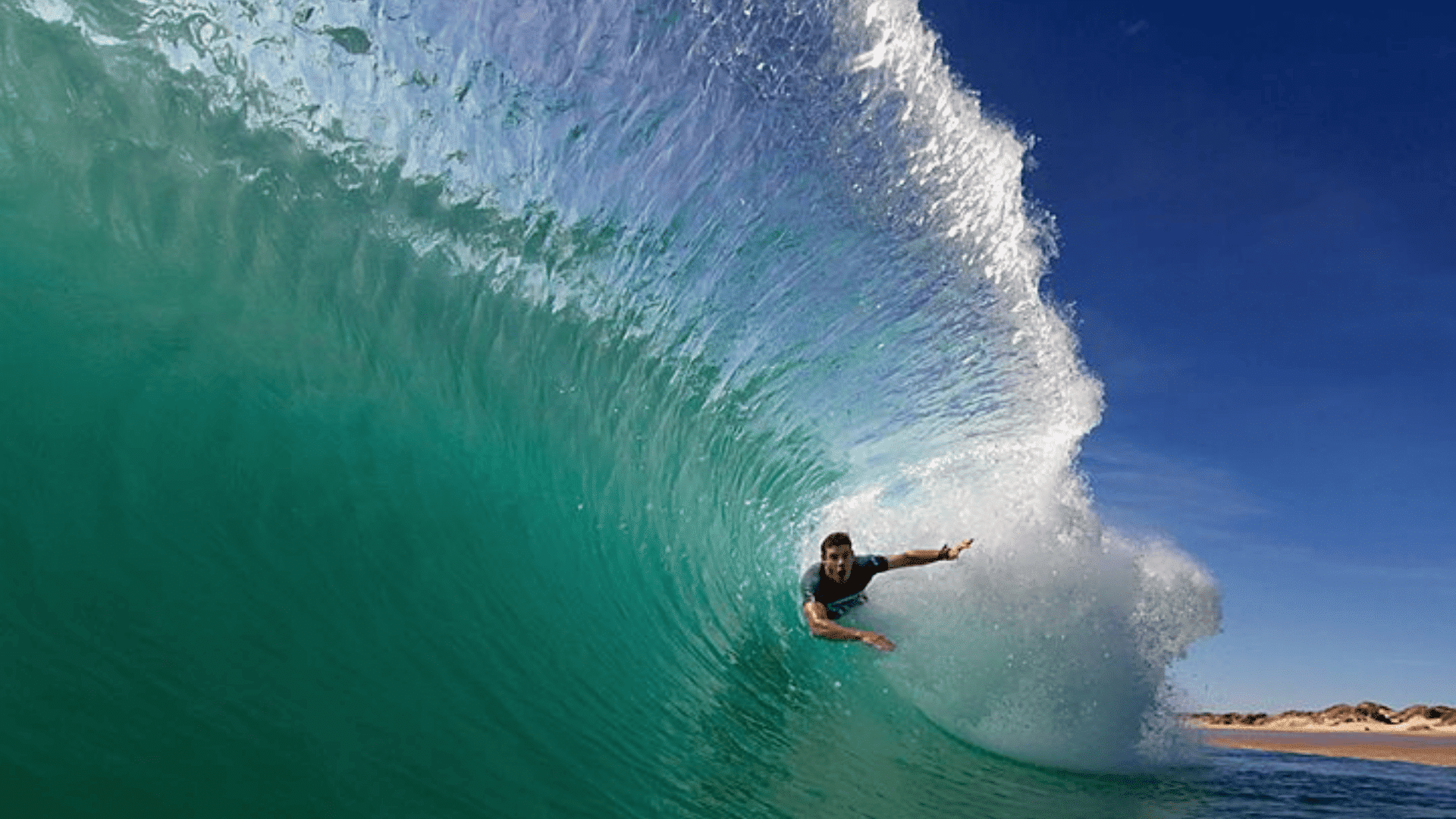
Body surfing techniques center on precise timing, streamlined positioning, and wave energy, with or without fins/handplanes for enhanced control. Master these steps for safe, exhilarating rides in any suitable swell.
Without Fins or Handplanes
- Swimming Strength: Pure body surfing relies solely on swimming strength and body positioning to harness wave energy.
- Paddling: Swim freestyle to the break zone, keeping streamlined with head low and body flat for efficiency.
- Positioning: Face shore parallel to the wave, arms extended forward to reduce drag and build speed.
- Timing: Kick hard and stroke as the wave lifts your feet; feel it accelerate under your torso before fully breaking.
- Riding: Extend arms ahead, chest slightly raised for planing, and use subtle leg sculling or hand pressure for direction.
- Exit: Roll sideways or dolphin-kick free as whitewater fades, then paddle back out.
With Fins and/or Handplane
- Fins: add kick power for easier catches; handplanes provide forward lift under the chest.
- Paddling: Same freestyle approach, but fins enable stronger propulsion with less arm effort.
- Positioning: Align parallel; grip the handplane under the chest if using, keeping the hips high initially.
- Timing: Powerful fin kicks match wave speed; plane engages as swell steepens.
- Riding: Fins maintain momentum via light kicks; handplane boosts glide angle edges for turns, weight-shift for speed.
- Exit: Same roll or kick-out, securing the handplane to prevent loss.
Learning Body Surfing: A Beginner’s Guide
Body surfing is an exciting and accessible way to enjoy the waves, requiring little equipment beyond swim fins and a natural feel for the ocean. Here’s how to get started:
1. Choose the Right Location: Choose the Right Beach. Look for a beach with a gentle slope and waves no higher than 4 feet. This is ideal for beginners.
2. Wade Into the Water: Enter the water past the breaking waves. Push off the ocean floor and swim toward the shore as the wave approaches.
3. Prepare for the Wave: Kick to gain speed and raise your body to the surface. Dive so that your head and shoulders are lower than your hips and legs.
4. Ride the Wave: As the wave lifts you, stop kicking and keep your body stiff like a surfboard. Keep your arms straight in front of you to protect against injury.
5. After the Wave Breaks: Once the wave breaks, bring your feet together and start kicking hard. Keep your head down, back arched, and arms in front as you swim toward shore.
6. Exit the Wave: Wade back out into the sea. If you don’t want to ride the next wave, turn to the side, drop the shoulder facing the sea, and let the wave push you out.
With practice, you’ll gain better control, timing, and an intuitive feel for the waves. Body surfing is a rewarding, low-cost activity that allows you to experience the ocean in its purest form.
Here is a detailed Video tutorial by Howcast that will help you to understand Body surfing better:
Body Surfing vs. Board Surfing: Key Differences
Body surfing and board surfing offer distinct experiences in wave riding. While both share the thrill of the ocean, they differ in equipment, skill requirements, wave preferences, and physical connection with the water.
| Category | Body Surfing | Board Surfing |
|---|---|---|
| Equipment Needed | Minimal usually just swim fins, goggles, or a hand plane | Requires a surfboard, leash, wax, and sometimes wetsuits |
| Skill Entry Level | Easier for beginners; simple to start with basic swimming ability | Harder for beginners; requires balance, paddling technique, and board control |
| Wave Connection | Direct contact with the water is more natural and immersive | Indirect contact through the board; more lift and support |
| Speed & Glide | Usually slower and closer to the water’s surface | Faster due to the board’s surface area and buoyancy |
| Wave Size Preference | Works well in small to medium waves | Prefers medium to large waves for strong rides |
| Control & Maneuverability | Limited steering using arms and body position | High maneuverability with turns, cuts, and advanced tricks |
| Portability | Extremely portable, no large gear to carry | Less portable boards are bulky and require transport |
| Learning Curve | Gentle learning curve; builds confidence in the ocean | Steeper learning curve; takes time to master paddling, popping up, and riding |
| Risk Factor | Lower impact; fewer collisions due to no board | Higher risk of injury from board impact or wipeouts |
| Physical Connection to Wave | Full-body contact makes the experience raw and intimate | The board creates some distance but adds power and stability |
Benefits of Body Surfing
Body surfing comes with a surprising number of advantages, both for beginners and experienced ocean lovers. It’s simple, freeing, and builds valuable skills in the water. Here are some of the key benefits:
- Builds Strong Swimming Skills: Improves endurance, control, and confidence in open water.
- Connects You Directly With the Ocean: With no board between you and the wave, the experience feels natural and immersive.
- Low-Cost and Minimal Gear Required: You only need basics like fins or a rash guard, making it budget-friendly.
- Easier for Beginners: Simple techniques and a gentle learning curve make it accessible to many.
- Great Full-Body Workout: Strengthens your core, legs, arms, and improves overall stamina.
- Portable: No heavy equipment means you can enjoy body surfing almost anywhere.
- Fun in Small to Medium Waves: Even modest swells offer great rides, unlike board surfing, which often needs bigger waves.
Final Thoughts
Today, we have answered a very important question here: What is Body surfing?
It is one of the most natural, freeing, and enjoyable ways to experience the ocean. Its simplicity allows anyone to step into the water and feel the excitement of riding a wave without needing much gear or complicated techniques.
It’s a skill that grows with time. Each session teaches you something new about the ocean and your own abilities.
Beyond the fun and exercise, body surfing builds confidence, sharpens your awareness of the water, and deepens your connection to the beach environment.
For many people, it becomes more than a hobby; it becomes a favorite way to unwind, stay active, and enjoy the rhythm of the sea.
With practice, patience, and a bit of ocean curiosity, body surfing can turn even simple waves into unforgettable moments.