Picture two boats gliding across a lake. They look almost the same, right? Wrong. One athlete holds two oars, while another grips just one. Both are racing, both are strong, but they’re playing completely different games.
The debate of sculling vs rowing has confused sports fans for years. Most people use these terms interchangeably, but serious rowers know better. These two rowing styles demand different skills, techniques, and equipment.
Understanding sculling and rowing isn’t just about knowing the difference; it’s about learning which style matches an athlete’s strengths.
Everything from oar types to body mechanics separates these two approaches. But here’s the real question: can someone master both, or does choosing one mean giving up the other forever?
How Rowing Became the Sport It Is Today
Rowing ranks among the oldest competitive sports, dating back thousands of years across multiple cultures. Modern rowing splits into two main categories that create the sculling vs rowing debate most people encounter.
The sport demands full-body coordination since legs, core, and arms must work in perfect sequence. Water resistance provides constant feedback; sloppy technique slows the boat immediately, while clean strokes glide smoothly.
Competition happens on calm water courses, typically 2,000 meters long, for standard races. Athletes train year-round, building cardiovascular endurance and explosive power simultaneously.
Rowing clubs welcome everyone from teenagers to senior citizens, making it accessible across age groups. The sport combines individual discipline with team dynamics, depending on boat size and the style chosen.
What Is Sculling?
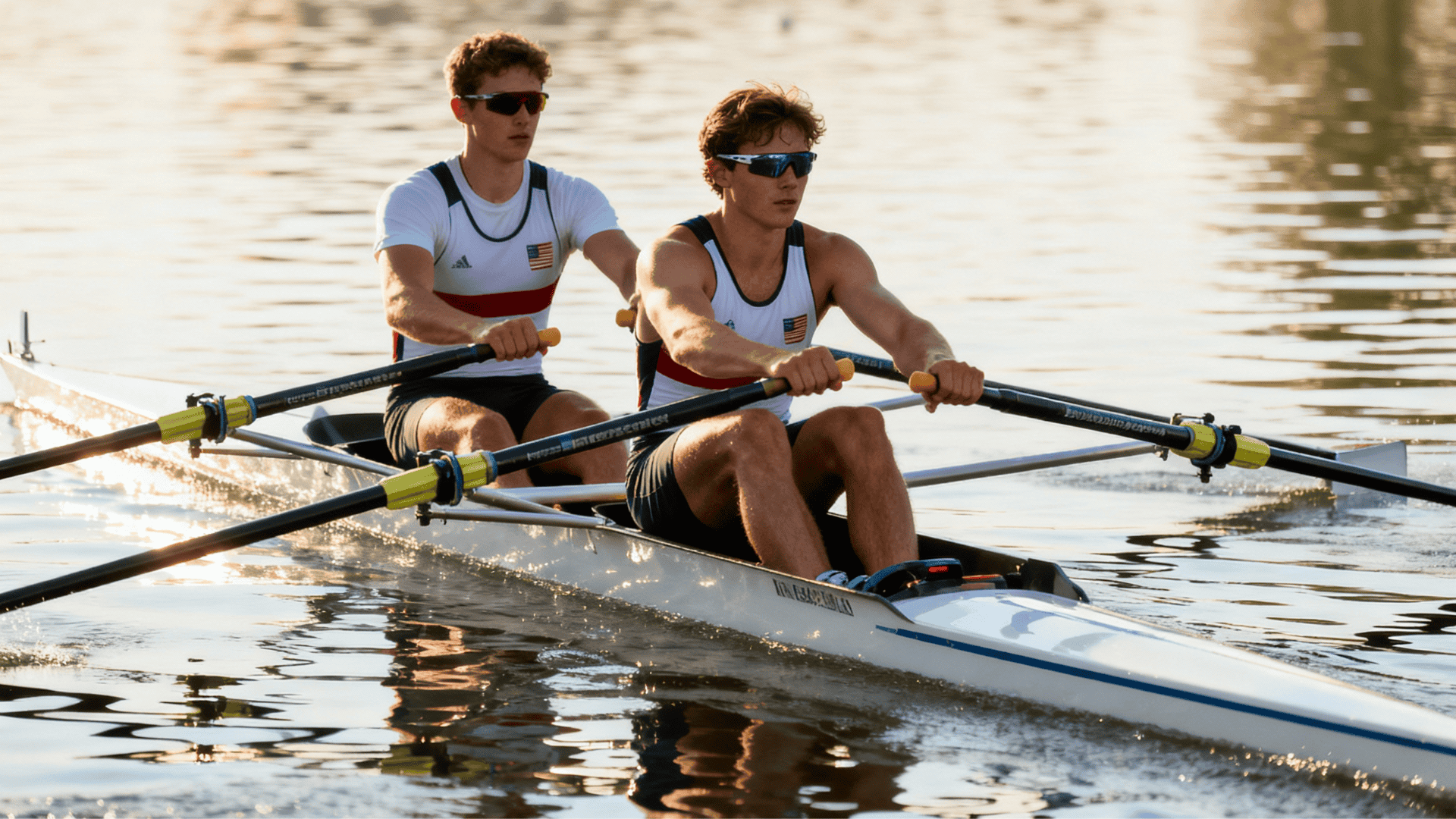
Sculling puts two oars in a rower’s hands, one on each side of the boat. Each oar moves independently, giving the athlete complete control over both sides.
This setup requires serious coordination, since both arms work independently throughout each stroke.
Single sculls (1x) are extremely narrow and balance-intensive; larger boats (2x/4x/8+) are generally more stable.
The sculling vs rowing distinction starts right here with the oar count. Singles, doubles, and quads all fall under sculling categories based on crew size.
Athletes grip the oars differently, too; scullers hold each oar with one hand. The technique demands symmetrical strength development since neither side can slack off during a race.
What Is Sweep Rowing?
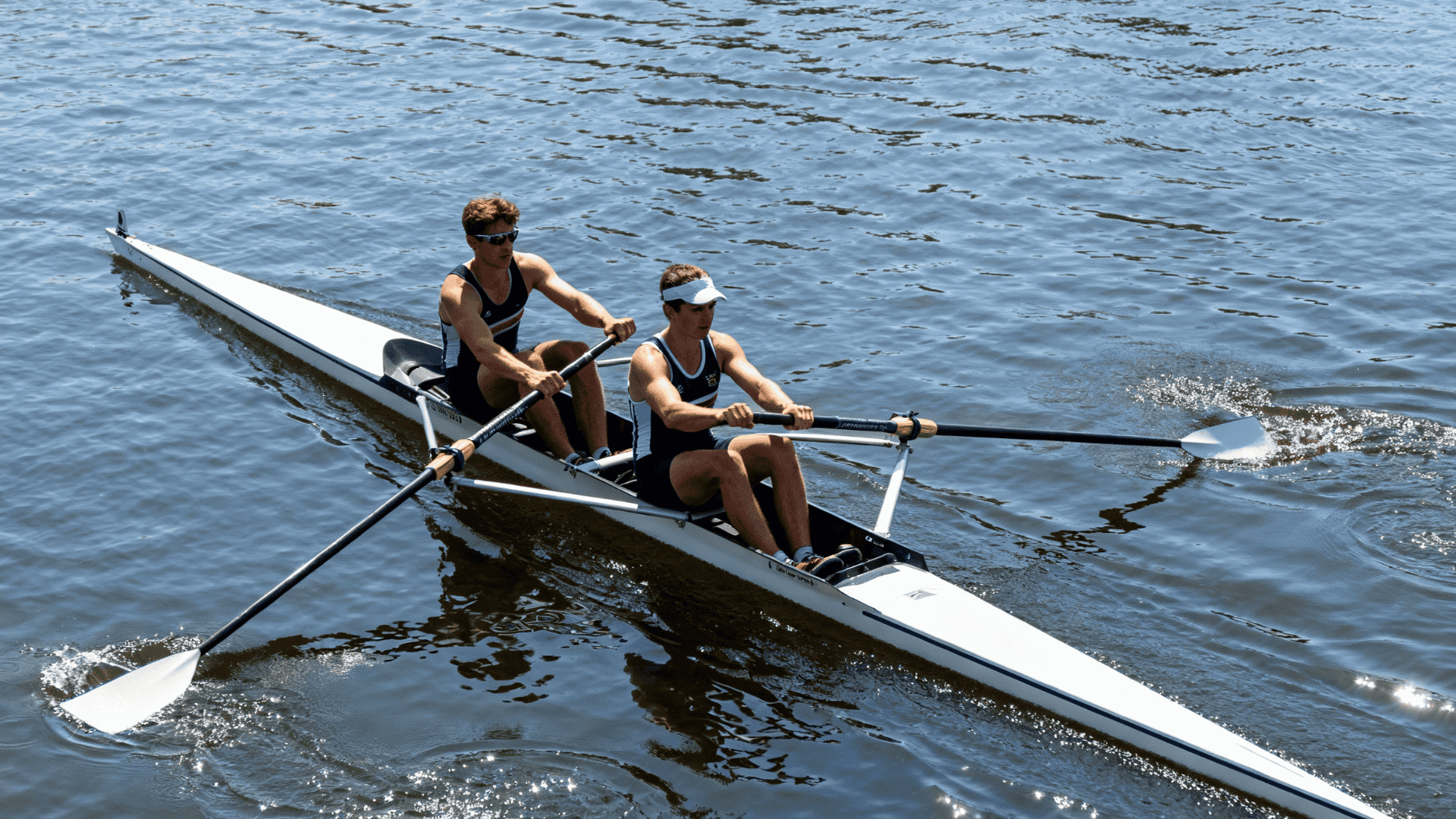
Sweep rowing flips the script entirely. Each rower holds just one oar. That single oar stays on either the port or starboard side throughout the entire race. Unlike sculling, sweep rowing requires teamwork since no single athlete controls both sides of the boat.
Crews must synchronize every movement perfectly, or the boat zigzags across the water. Pairs, fours, and eights are common sweep boat configurations.
The comparison becomes clearest here: sweep rowers depend on their teammates while scullers operate independently. Each athlete grips their oar with both hands, generating more power per stroke. The technique demands trust since one person’s mistake affects everyone’s performance instantly.
Sculling vs Rowing: The Main Differences
The sculling vs rowing debate boils down to several key distinctions that affect everything from technique to competition style. While both sports involve propelling a boat through water, the mechanics and strategies differ significantly.
| Aspect | Sculling | Sweep Rowing |
|---|---|---|
| Number of Oars | Two oars (one per hand) | One oar (both hands) |
| Boat Width | Narrower boats | Wider boats |
| Independence | Individual control | Team coordination required |
| Grip Style | One hand per oar | Both hands on a single oar |
| Common Boats | Singles, doubles, quads | Pairs, fours, eights |
| Balance Difficulty | Higher (narrower base) | Lower (team stability) |
Four Key Stroke Phases in Rowing
Every rowing stroke follows the same basic pattern, whether an athlete sculls or sweeps. The movement breaks down into four distinct phases that repeat thousands of times during a single race. Mastering these phases separates beginners from competitive rowers.
- The Catch: The blade enters the water with arms extended forward and legs compressed. This starting position sets up the entire stroke sequence.
- The Drive: Legs push down powerfully while the core stays tight and engaged. Arms remain straight until legs finish their explosive movement completely.
- The Finish: Hands pull the oar handle to the chest as legs straighten out fully. The blade exits the water cleanly without splashing or unnecessarily dragging.
- The Recovery: Arms extend first, then the body leans forward, and finally, the legs bend again. This phase prepares the rower for the next catch position smoothly.
Stroke Differences Between Sculling and Sweep
The sculling vs rowing stroke mechanics vary significantly due to oar placement and hand positioning. While the four phases remain consistent, how athletes execute each movement changes dramatically between disciplines. These technical differences impact power generation, balance, and overall boat speed.
| Stroke Element | Sculling | Sweep Rowing |
|---|---|---|
| Hand Position | Hands separate (one per oar) | Hands together on a single oar |
| Body Rotation | Minimal torso twist | More rotational movement |
| Power Distribution | Balanced across both sides | Concentrated on one side |
| Blade Angle | Both blades must match perfectly | Single-blade timing matters |
| Recovery Path | Hands overlap during recovery | Hands move as one unit |
| Feathering | Independent wrist rotation | Synchronized wrist movement |
Physical Demands of Sculling and Sweep Rowing
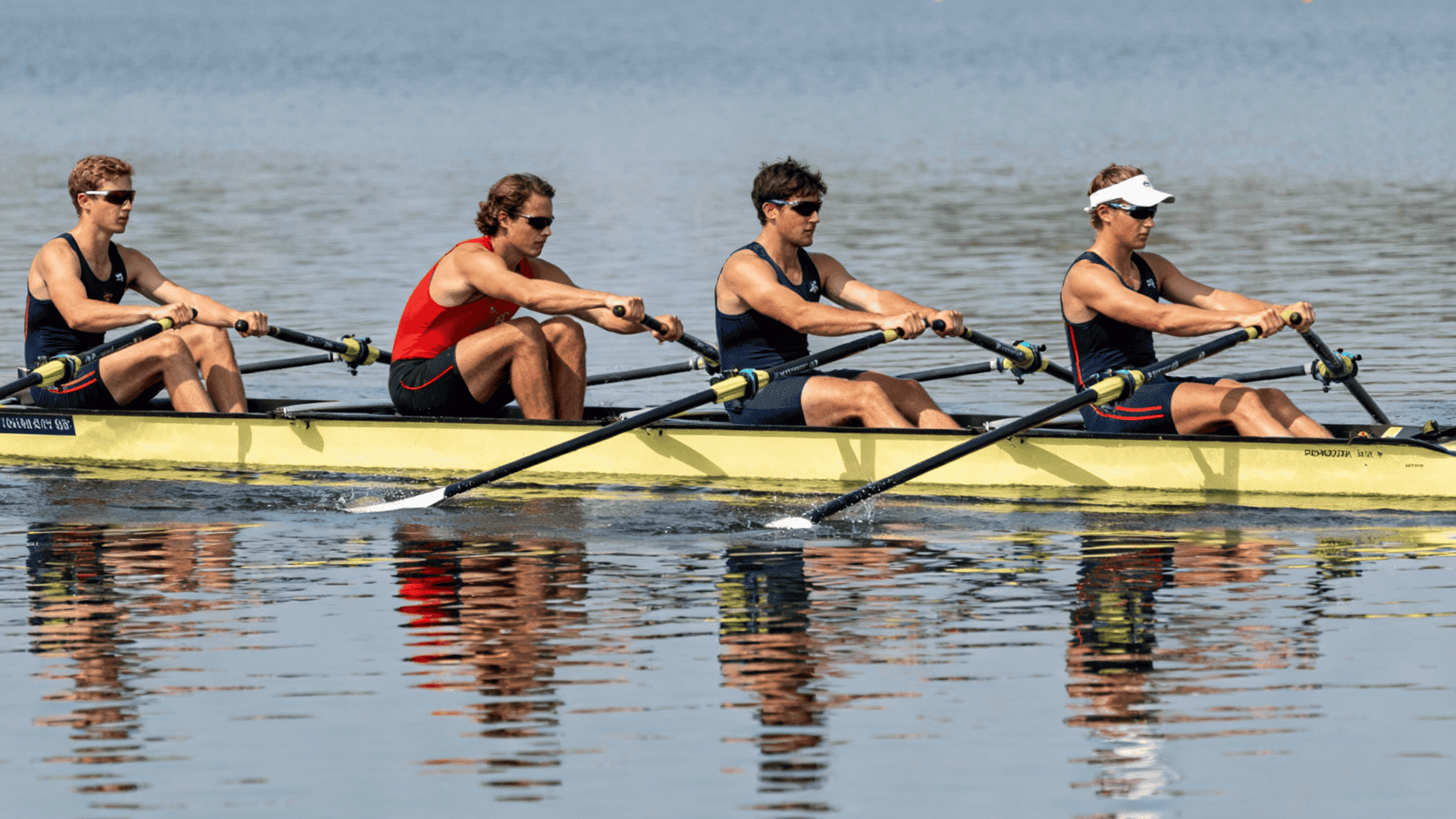
Sweep boats, especially the eight, can reach the highest speeds because of crew size and leverage. This concentrated force allows larger crews like eights to reach incredible speeds on the water.
Sculling places a higher coordination and balance load, while sweep emphasizes shared timing and power application. The coordination required burns energy faster than sweep rowing’s unified motion.
Muscle engagement differs; scullers develop symmetrical strength across both sides, while sweep rowers often show dominant-side development.
Balance muscles work overtime in sculling since narrower boats require constant micro-adjustments.
Sweep rowers rely on collective power where the team’s synchronized effort matters more than individual strength. Both disciplines push athletes to their physical limits differently.
Crew Positions and Roles
Crew positions vary dramatically between sculling and sweep rowing boats. In sweep boats, each seat has specific responsibilities that contribute to overall boat performance. Sculling crews focus more on individual execution since every athlete controls their own propulsion independently.
| Position | Sculling Boats | Sweep Rowing Boats |
|---|---|---|
| Stroke Seat | Sets rhythm in doubles/quads | Sets the pace for the entire crew |
| Bow Seat | Crosses the finish line first | Balances boat, communicates conditions |
| Middle Seats | Maintains steady power | The engine room generates maximum power |
| Coxswain | Not present in most sculling | Steers the boat, calls the strategy |
| Leadership | Shared equally among scullers | Hierarchical with stroke leading |
What Beginners Should Know Before Choosing a Rowing Style
The choice between starting with sculling or sweep rowing depends on personal learning style and available resources. Neither option is objectively better for beginners; each offers unique advantages that suit different athlete preferences.
Pros of Starting With Sculling
- Complete boat control from day one, since beginners handle all propulsion independently
- Develops balanced strength across both sides of the body naturally
- Self-sufficiency grows faster than in team-based sweep rowing
- Singles allow practice anytime without coordinating team schedules
- Balance skills improve dramatically with constant adjustments required
Pros of Starting With Sweep Rowing
- Built-in support through team structure makes early mistakes less intimidating
- Coaches focus on perfecting one-sided technique rather than managing two oars
- Wider boats provide more stability, reducing the fear of tipping over
- Teammates offer immediate feedback and encouragement throughout learning
- Synchronized movement feels more intuitive with both hands working together
Challenges of Switching Between Sculling and Sweep Rowing
Many rowers switch between sculling and sweep rowing throughout their careers. The transition challenges athletes to relearn basic movements and adapt muscle memory. Each discipline requires distinct adjustments that take time to master.
- Hand Coordination: Scullers must adapt from independent hand movements to synchronized double-hand grips. This mental shift takes several practice sessions.
- Balance Adjustment: Moving from narrow sculling boats to wider sweep boats feels more stable. The opposite transition demands heightened balance awareness immediately.
- Power Application: Athletes learn to distribute force differently across one oar versus two. Timing changes completely between disciplines.
- Blade Work: Feathering techniques differ since sweep rowers control one blade with both wrists. Scullers manage two independent blade angles.
- Team Dynamics: Solo scullers adjusting to sweep crews must learn communication and synchronization skills quickly.
The Bottom Line
Both disciplines offer incredible physical challenges and unique rewards for athletes willing to commit. The sculling vs rowing debate doesn’t have a single correct answer since each style suits different personalities and goals.
Scullers enjoy independence and complete control over their boats, while sweep rowers thrive on teamwork and collective power. The technical differences from oar count to stroke mechanics create entirely separate skill sets worth mastering.
Athletes serious about either discipline will find years of growth ahead, regardless of their choice. Many competitive rowers eventually try both styles to become well-rounded athletes.
Ready to make the choice? Visit a local rowing club and test both disciplines firsthand. Nothing beats real experience on the water.