You’re ready to get out on the water. Then someone asks if you need oars or paddles. Wait, aren’t they the same thing?
They’re not. And picking the wrong one can turn a relaxing day into a frustrating struggle.
The difference between oars and paddles matters more than most people think.
It affects which boats you can use, how tired you’ll get, and whether you can handle the water conditions you’ll face. Get it wrong, and you might end up with equipment youcan’tt even attach to your boat.
We’ll break down the oar vs paddle question in simple terms. No complicated terms. Just clear answers.
What Is Oars vs Paddle?
Oars and paddles both help move a boat through water, but they function differently.
Oars attach to the boat using an oarlock/rowlock, which acts as a pivot for leverage. When rowing with oars, you usually sit facing backward and pull the blades through the water.
Paddles are not attached to the boat; you hold them and move them through the water by hand. When paddling, you typically face forward and can see where you’re going.
The main difference is attachment: oars connect to the boat, paddles stay in your hands.
Oar Vs Paddle: The Key Differences
| Factor | Oars | Paddles |
|---|---|---|
| Attachment To Boat | Attached using oarlocks (pivot points) | Handheld, not attached to the vessel |
| Visual Comparison | Fixed at the side of the boat, swings on a pivot | Moves freely in your hands |
| Direction You Face | Rower faces backward (toward stern) | Paddler faces forward (toward bow) |
| Travel Direction | The boat still moves forward | The boat moves forward |
| Navigation And Visibility | The forward view is limited (often checked over the shoulder) | Full forward view |
| Blade Count | Single-bladed | Single or double-bladed |
| Performance Impact | Strong leverage per stroke | Faster corrections and quick turns |
Which Water Activities Require Oars vs Paddles?
The type of equipment you need depends on your watercraft and what you plan to do. Some boats only work with one or the other, while some give you options.
Best Watercraft for Paddles

Paddles are the go-to choice when your craft is built for quick steering and steady balance.
In most paddle sports, the paddle style is not optional. It is part of how the boat is designed to move, turn, and stay stable.
Here’s which watercraft typically use paddles and why.
- Kayaks: Use double-blade paddles—alternate sides to keep a steady rhythm. The two-blade design helps you track straighter without constant switching.
- Canoes: Use single-blade paddles. Paddle on one side, then switch to stay on course. Some paddlers remain on one side and use steering strokes to keep the canoe straight.
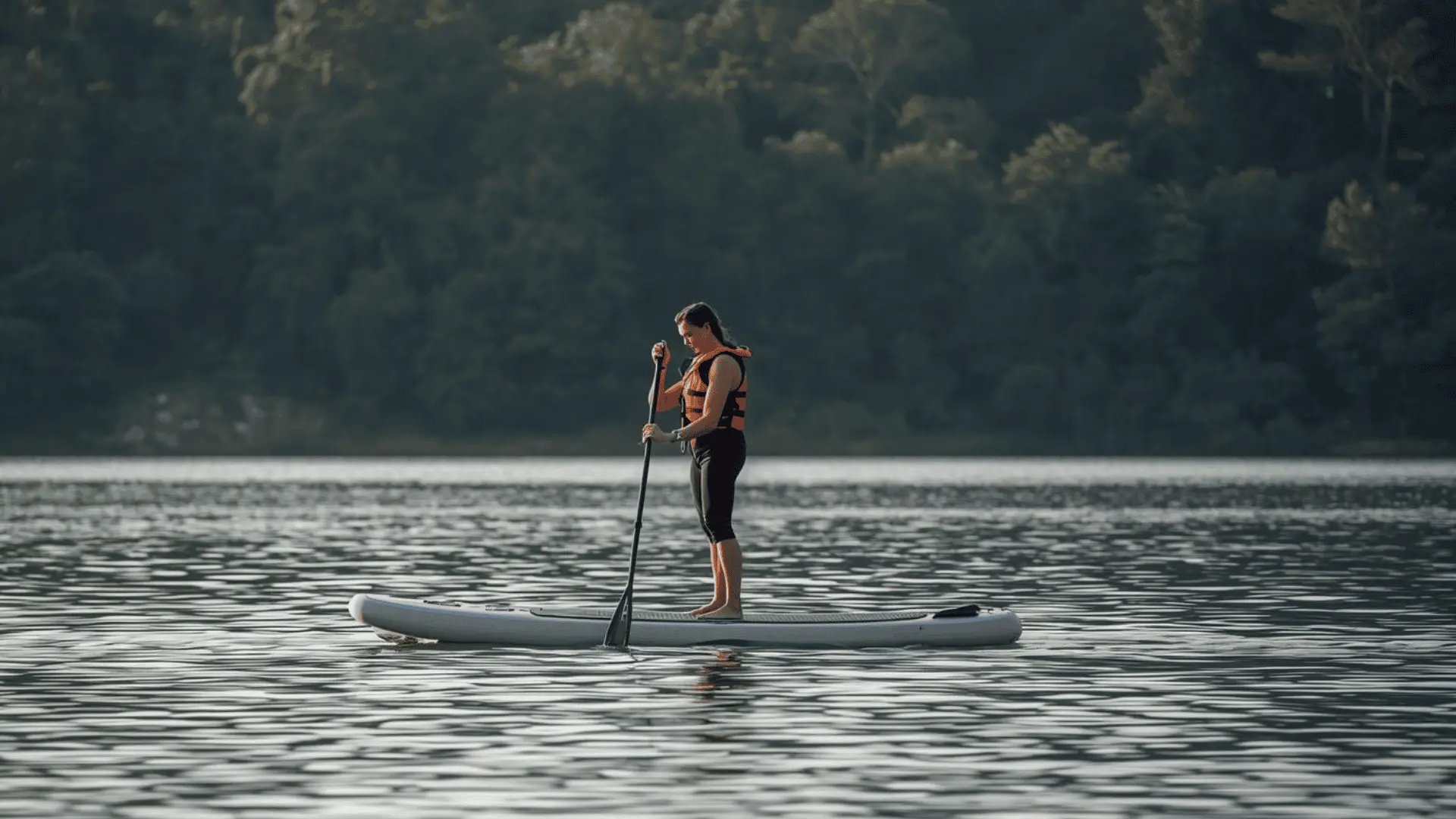
- Stand-Up Paddleboards: Require a single-blade paddle. Paddle on alternating sides for control. It also helps with balance, especially in wind or choppy water.
- Rafts: Often use single-blade paddles, especially on guided trips and shorter floats. Each person paddles from the edge, which works well on calm water and mild rapids.
Best Watercraft for Oars
Oars make the most sense when your boat is built around oarlocks, and you want steady power over time.
They shine on longer outings, heavier loads, and trips where efficient forward progress matters more than quick, frequent turns.
Here’s which watercraft typically use oars and why.
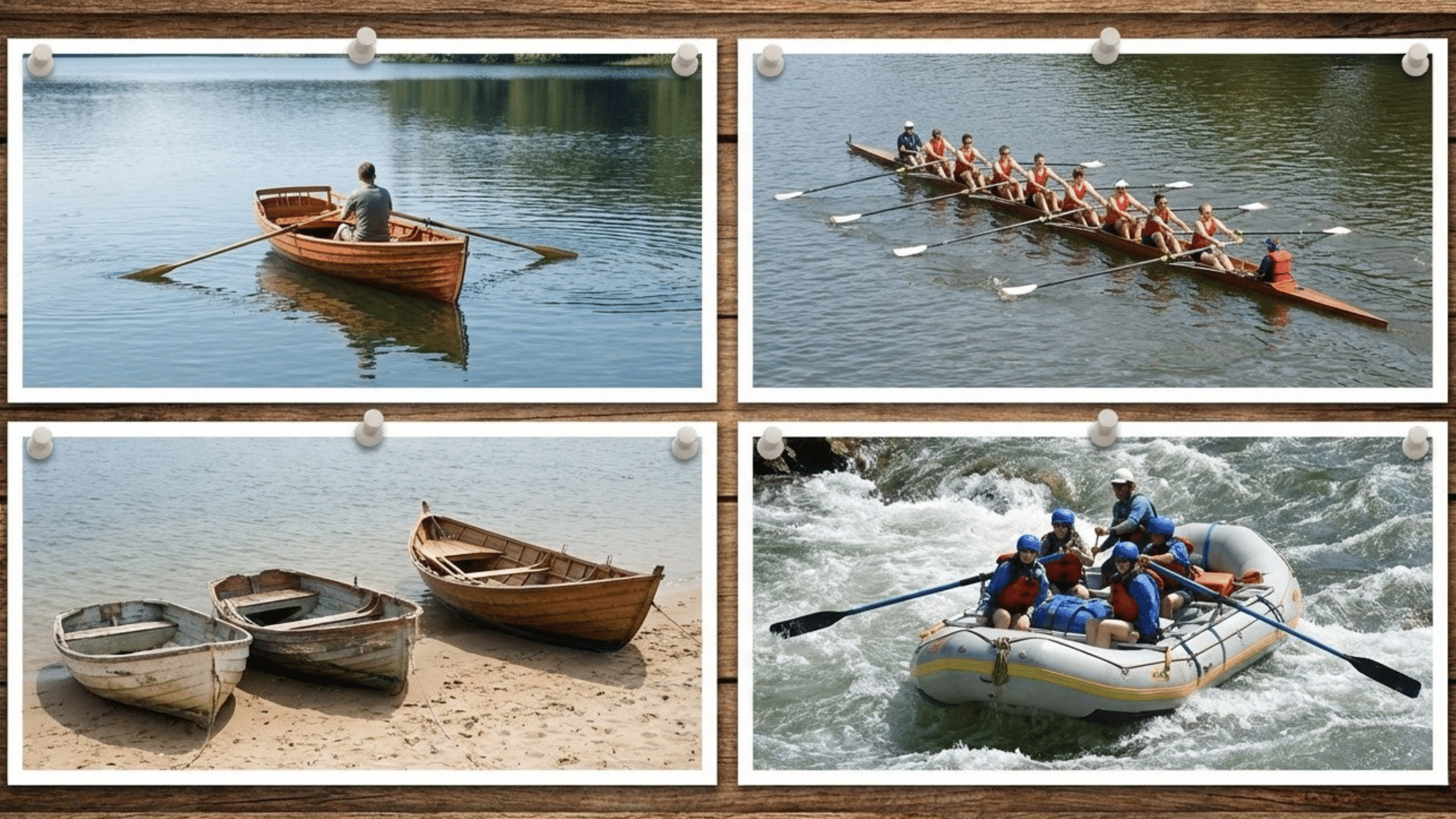
- Rowing Boats And Sculls: Explicitly built for oars, with oarlocks and often sliding seats. Best for calm water fitness rowing, training, and competitive rowing.
- Sweep-Oar Boats: One oar per person, with rowers on alternating sides of the boat. Common in crew teams, where timing and teamwork drive speed and control.
- Dinghies and Dories: Classic small boats where oars attach to the sides for simple rowing. Great for solo fishing, short coastal trips, and getting to shore quietly.
- Large Rafts With Rowing Frames: Oars mount to a frame so one rower can steer the whole raft. Ideal for multi-day trips, heavier gear, and long stretches of river.
How to Choose Between Oars and Paddles for Your Activity
Your choice between oars and paddles affects your entire water experience. Think about where you’ll go, how long you’ll be out, and what your body can handle.
| Factor | Oars | Paddles |
|---|---|---|
| Water Conditions | Safer in rough/choppy water since they stay attached; efficient for long distances due to leverage. | Best for calm water and tight streams; quicker steering and adjustments; great for short trips. |
| Strength & Effort | Effort spreads across legs, core, and back (less tiring over time). | More arm and shoulder effort since you hold/support the paddle continuously. |
| Mobility & Comfort | More stable; easier to adapt with seats/rigging; less hand fatigue because you can pause without losing gear. | Flexible grip and positioning; single-blade can favor your stronger side; hands/forearms may tire over time. |
| Cost & Setup | Higher cost due to oarlocks and sometimes a frame; more setup. | Usually cheaper upfront; simple, lightweight setup (no hardware needed). |
| Maintenance & Durability | Durable, but needs extra upkeep for oarlocks (moving parts); attached gear is harder to lose. | Durable with basic care; fewer parts to maintain, but easier to misplace/lose if not secured. |
Top Mistakes When Selecting Rowing Equipment
Choosing between oars and paddles seems straightforward until you start shopping. Many people make common errors that lead to frustration on the water.
These mistakes can affect your safety and your enjoyment of your time out there.
- Using the Wrong Equipment for Your Watercraft: Match gear to the boat: kayaks use paddles, rowing shells use oars, and rafts depend on whether there’s a frame (frame = oars, no frame = paddles).
- Ignoring Proper Sizing: Choose paddle length based on your height and boat width, and oar length based on boat beam and oarlock spacing, or you’ll lose efficiency and risk strain.
- Neglecting Safety Considerations: Oars won’t slip away but can hit obstacles, while paddles should be leashed (and sometimes backed up with a spare) to avoid getting stranded.
- Confusing Terminology and Buying the Wrong Gear: Oars attach to the boat, and paddles don’t, so read product details carefully and confirm your boat’s specs before buying.
Conclusion
The oar vs paddle decision isn’t just about preference. It shapes your entire time on the water.
Using the wrong equipment doesn’t just slow you down; it can also cause problems. It can leave you stuck mid-trip with gear that won’t work with your boat’s design. It can drain your energy twice as fast because you’re fighting against how the vessel was meant to move.
Once you understand the difference, the choice becomes obvious. Every dollar spent on proper equipment protects you from having to replace the wrong gear later.
Now you know what to look for. You know which questions to ask before buying.
Bookmark this page before your next shopping trip. You’ll want these details handy.
Frequently Asked Questions
Can You Use Oars on A Kayak?
Kayaks are designed for paddles, not oars. They lack oarlocks for attachment. Some adaptive equipment exists that mimics oars, but standard kayaks require double-blade paddles.
Which Is Faster – Rowing with Oars or Paddling?
Rowing with Oars Generally Produces Faster Speeds Because It Uses Leg, Back, and Arm Muscles Together. Paddles Rely Mainly on Upper Body Strength, Making Them Slower but More Maneuverable.
Do Oars and Paddles Cost the Same Amount?
Oars typically cost more upfront due to required oarlocks and frames. Basic paddles start around $50, while oar setups with hardware can exceed $500-$2,000 depending on the boat type.