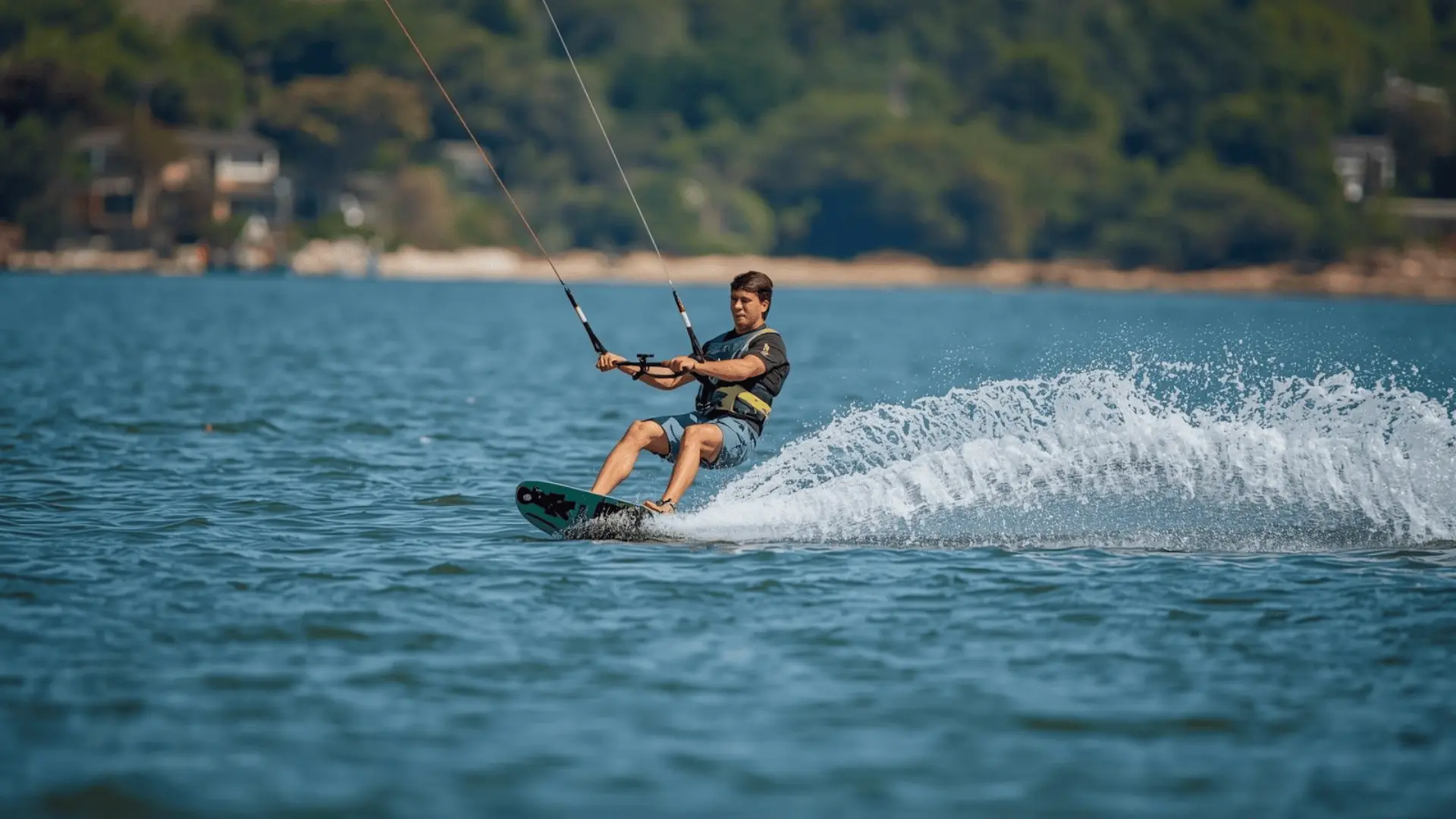
Watching someone glide across the water on a wakeboard looks impressive. The speed, the spray, the smooth turns. It seems impossible at first.
Learning how to wakeboard does not require special talent. Anyone can do it with the right approach. The key is understanding the basics before you hit the water.
Most beginners skip the basics of wakeboarding and make the same mistakes. They try to muscle their way up. They stand too soon. They look down instead of ahead. These errors keep them stuck in the learning phase.
Here’s the breakdown where you will learn proper body position, equipment setup, and step-by-step techniques. The information comes from proven methods that work for new riders.
Getting up on a wakeboard takes practice. But knowing what to do makes the process much faster. You can skip the frustration and start riding sooner.
Essential Wakeboarding Gear
Complete list of essential equipment and safety gear required for safe wakeboarding, including a suitable tow boat, life jackets, beginner wakeboard with bindings, specialized rope and handle, and appropriate waterwear.
| Material | Quantity | Details |
|---|---|---|
| Tow Boat With Enough Power | 1 | Wakeboard-specific boat preferred but not required. |
| Coast Guard Approved Life Jacket | 1 per rider | Proper fit and fully secured. |
| Beginner Wakeboard With Center Fin | 1 | Correct size for the rider; the center fin helps with tracking. |
| Wakeboard Bindings (Boots) | 1 pair | Mounted securely and sized for the rider. |
| Non-Stretch Wakeboard Rope | 1 | Wakeboard-specific rope. |
| Wakeboard Handle | 1 | Attached to the rope. |
| Board Shorts Or Waterwear | 1 per rider | Comfortable, secure fit. |
Step-by-Step Instructions
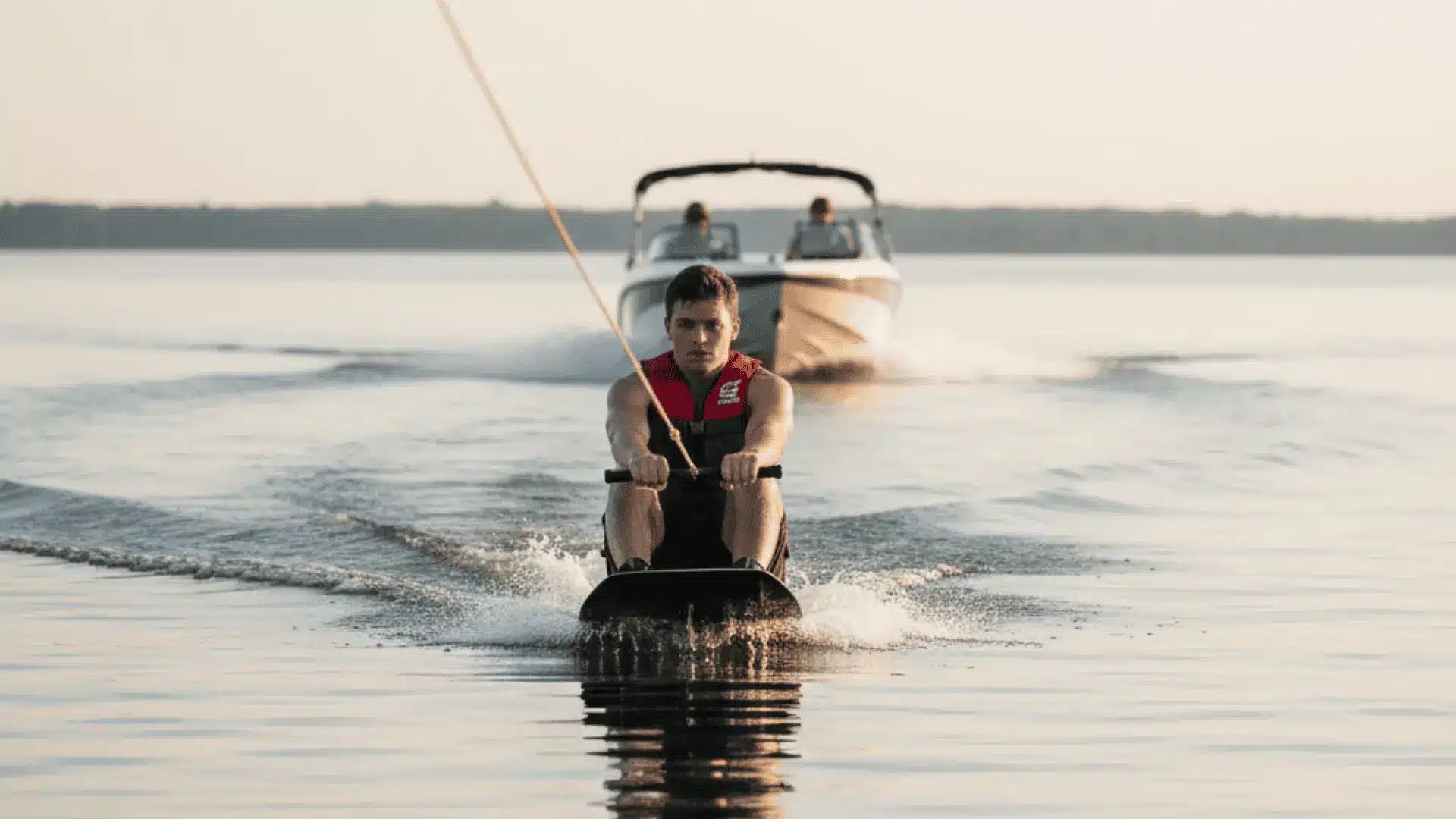
Follow these clear steps to get up on a wakeboard and start riding. Each step builds on the last, taking you from water entry to basic turns with proper technique.
Step 1: Set Up Gear And Rope For An Easy Start
The rider should put on a Coast Guard-approved life jacket and confirm it is snug. The rider should use a non-stretch wakeboard rope and handle, then shorten the rope slightly for early attempts, then lengthen it once they can get up consistently.
The rider should check the board size and confirm a center fin is installed for steadier tracking.
Step 2: Adjust Stance And Enter The Water Safely
The rider should set feet shoulder-width apart in the bindings and angle both feet slightly outward for control. The rider should sit on the swim platform and slide into the water with the board, rather than jumping, to reduce the risk of impact.
Once in the water, the rider should keep the board between the body and the boat while holding the handle.
Step 3: Get Into The Correct Start Position Behind The Boat
The rider should line up directly behind the boat with arms straight and hands holding the handle low. The rider should rest their straight arms on top of bent knees and keep the board flat on the water.
The rider should stay compact and calm, allowing the rope to tighten without pulling with the arms or pushing the legs away.
Step 4: Let The Boat Pull And Stand Up Slowly
When the boat starts moving, the rider should let the knees bend more and keep the hips close to the board in a compressed position. The rider should hold that position until the body feels stacked over the board.
Then the rider should stand up slowly, without rushing, keeping the handle close and maintaining steady balance as the board rises onto the surface.
Step 5: Stabilize The Ride And Control Direction
Once up, the rider should lean back slightly against the rope and apply gentle pressure to the heels for stability. The rider should keep weight evenly distributed and avoid bending at the waist.
If the rider needs to choose a stance, the foot used to kick a ball is typically the back foot, and the other foot becomes the lead foot.
Step 6: Practice Basic Turns Using Edge Pressure
To turn heelside, the rider should press into the heels to engage the edge and move outward from the wake. To turn toeside, the rider should press over the toes, stand taller, and lean on the rope while keeping the back straight.
If the rider feels stuck, the weight should stay back against the rope rather than leaning forward toward the turn.
For more detailed instructions, refer to the YouTube video by evo below:
Safety Tips and Best Practices for Wakeboarding
Wakeboarding is an exciting and adrenaline-filled water sport, but safety should always come first. Understanding the right precautions and best practices helps reduce the risk of injuries and ensures a fun experience on the water.
- Start with Proper Rope Length and Boat Speed: Use a 50-65 foot rope for your first attempts, and ask your driver to keep the speed around 12-15 mph. Slower speeds give you more control, and a shorter rope makes it easier to get up.
- Always Have a Designated Spotter in The Boat: The driver needs to focus on navigation, so a spotter watches you and relays hand signals. Your spotter confirms you’re OK after falls and communicates “ready,” “stop,” and “go” signals to the driver.
- Choose Calm Water and Clear Areas for Practice: Learn in smooth, flat water, away from boat traffic and obstacles such as docks or buoys. Early morning sessions often offer the best conditions, and fewer boats mean less wake to deal with.
- Wear a Coast Guard-Approved Life Jacket: It isn’t optional and could save your life. Make sure it fits snugly so it won’t ride up when you fall
- Use a Helmet for Head Protection: Even experienced riders take hard falls. Protect your head every single time you ride.
Basic Wakeboarding Techniques
Master these fundamental wakeboarding techniques to ride with control and confidence. Each skill builds on proper form and helps you progress from basic riding to crossing the wake safely.
| Basic Wakeboarding Techniques | What To Do |
|---|---|
| Deep-Water Start (Getting Up) | Stay compact, arms straight, handle low. Stand up slowly. |
| Neutral Riding Stance | Hips over feet, chest up. Slight lean back. |
| Handle Control | Keep the handle low. Elbows close. No yanking. |
| Heelside Edge | Press heels gently. Keep your weight slightly back. |
| Toeside Edge | Press toes gently. Stand tall. Back straight. |
| Basic Turns | Look ahead. Small edge pressure changes. |
| Crossing The Wake | Handle in. Soft knees. Stay balanced. |
| Speed Control (Communication) | Use hand signals. Ask for small changes. |
| Safe Falling | Let go. Fall away from the board. |
| Quick Reset After A Fall | Signal OK. Board in front. Reset and go. |
How To Choose The Right Wakeboard Size
Your weight determines the right board size. Most boards show a weight range on the sizing chart. Heavier riders need longer boards for better support. Lighter riders do better with shorter boards.
Beginners should pick boards on the longer end of their weight range. Longer boards provide more surface area. This extra space makes balancing easier when you are learning.
Board width matters too. Wider boards offer more stability in the water. Narrower boards turn faster but require better balance.
Most rental shops help you find the correct size. They consider your weight and skill level. Start with their recommendations.
As you improve, you can try different sizes. Your riding style will guide future choices.
Common Mistakes and How to Fix Them
New wakeboarders often make the same errors when trying to stand up. Understanding these common mistakes helps you correct your technique and get up on the board faster.
| Common Mistakes | How To Fix It |
|---|---|
| Standing Too Early | Stay in a seated, compact position until the board planes on the surface. Stand up slowly after you feel stable. |
| Pulling With Arms | Keep your arms straight and let the boat pull you up. Do not curl the handle toward you. |
| Handle Too High | Keep the handle low near your hips. Hold it close to your center for better balance. |
| Looking at the Board | If you look at your feet, you go into the water. Keep your chest up and eyes on the back of the boat. |
| Fighting the Boat | Let the boat do 100% of the work. If you pull on the rope, you’ll create slack, and once that slack snaps tight, it will pull you right over the front of the board. |
| Board Drifting Sideways | Point the board straight at the boat before the pull. Reset your board angle after each attempt. |
Beginner Tips For Getting Up Faster
Learn essential wakeboarding basics that help beginners get up on the board safely. These practical tips cover body position, rope handling, and common mistakes to avoid on your first rides.
- Choose the Right Equipment: Start with a larger board for added stability. Beginners need extra surface area to balance more easily. Wear a properly fitted life vest every time you ride.
- Master Your Starting Position: Sit in the water with your knees bent toward your chest. Keep the board perpendicular to the boat. Hold the rope handle with both hands between your knees. Let your arms stay straight.
- Keep Your Weight Centered: Stand with your weight over the middle of the board. Leaning too far back or forward leads to wipeouts. Your hips should stay above your feet. Small adjustments work better than big movements.
- Look Ahead, Not Down: Focus on the horizon or the boat. Looking down at the water throws off your balance. Your body follows where your eyes go. Keep your head up and shoulders back.
Final Thoughts
Learning how to wakeboard opens up a new world on the water. The skills covered in this guide give you a solid foundation. Proper equipment, correct body position, and letting the boat do the work make all the difference.
Start with short sessions and focus on one skill at a time. Remember that every wakeboarder fell many times before finding their balance. Your progress comes from understanding the technique and practicing consistently.
The mistakes you avoid matter just as much as the techniques you master. Aim for 3 clean starts, then practice gentle heelside and toeside turns. These small details change everything.
Take this knowledge with you to the lake. Refer back to the steps whenever you need a reminder. Practice makes progress.
What will your first successful ride feel like? Bookmark this page and come back after your next session.