Thinking about becoming a certified diver but wondering how long does it take to get scuba certified? The answer varies based on your personal situation and training preferences.
Your timeline depends on factors such as course format, comfort level in the water, and scheduling flexibility. Some students complete theory online before starting practical training, while others prefer traditional classroom settings.
Understanding what affects certification length helps you choose the right training option and plan accordingly.
The thing is, multiple pathways exist to suit different lifestyles, travel plans, and learning paces. Getting certified is more accessible than most people realize once you know your options.
What Does “Getting Scuba Certified” Really Mean?
Scuba certification is your official license to dive underwater with proper training and equipment. Once certified, you can rent gear, book dive trips, and explore underwater environments around the world.
Organizations like PADI (Professional Association of Diving Instructors), SSI (Scuba Schools International), and NAUI (National Association of Underwater Instructors) offer recognized certification programs.
Before you start, you’ll need to meet basic requirements: most courses require you to be at least 10-15 years old, swim comfortably for about 200 meters, and tread water for 10 minutes.
You’ll also complete a medical questionnaire to ensure you’re physically fit for diving activities.
How Long Does It Take to Get Scuba Certified?
The time needed to get scuba certified typically ranges from 3 to 5 days for intensive courses or 1 to 6 weeks for a more flexible schedule with evening or weekend classes.
Since scuba training is performance-based rather than time-based, your personal comfort level in the water plays a significant role in how quickly you progress.
Some students feel confident after just a few pool sessions, while others need extra practice time.
Your instructor will ensure you’ve mastered essential skills before moving forward. The key factor isn’t rushing through – it’s building genuine confidence and competence underwater at your own pace.
The Different Scuba Certification Courses You Can Take

Several organizations offer scuba certification programs, each with slightly different teaching styles but similar overall structures. The course you choose depends on your location, schedule preferences, and learning style.
1. PADI Open Water Diver
PADI is the world’s largest diver training organization, with dive centers in nearly every country. Their Open Water Diver course includes online study materials, pool training sessions, and four open water dives.
Most students complete this certification in 3-4 days through an intensive format or spread it over several weekends. PADI certification is accepted at dive sites worldwide, making it the most popular choice for beginners.
2. SSI Open Water Diver
SSI offers a flexible approach with extensive digital learning tools and mobile app access. Their course structure mirrors PADI’s requirements but allows students to progress at their own speed through online materials.
Many dive shops prefer SSI for its user-friendly tech platform. Time commitments are similar – 3–5 days for intensive courses or 2–4 weeks part-time – and SSI certifications are equally recognized worldwide.
3. NAUI Scuba Diver/NAUI Open Water Diver
NAUI focuses heavily on dive theory and safety protocols, often requiring more classroom time than other agencies. Their instructors have greater flexibility to extend training based on student performance.
While it may extend your certification by a few days, many divers value NAUI’s thorough academics. NAUI certifications are widely respected, especially in North America, and intensive courses usually take 4–6 days.
4. Referral Courses
Referral programs let you complete classroom and pool sessions near home, then finish your open water dives at a vacation destination. This option works perfectly if you live far from diving locations or want to earn your certification during a tropical trip.
The academic portion takes 2-3 days locally, while open water dives require 2 days at your destination. Total time remains the same, just split between two locations.
5. Junior Open Water
Kids aged 10-14 can earn Junior Open Water certification with slightly modified depth limits and supervision requirements. The course content and time commitment match adult programs – usually 3-5 days for completion.
Junior divers must dive with a certified adult until they turn 15, when they can upgrade to complete certification. This program teaches the same skills with age-appropriate safety restrictions.
Factors that Affect Your Scuba Certification Timeline
Not everyone completes scuba certification in the same timeframe. Several practical factors can speed up or slow down your progress through the course. Understanding these variables helps you plan realistically and choose the best training format.
- Your Comfort Level in Water: How quickly you master skills and feel relaxed underwater directly affects your pace through the course.
- Course Format: Intensive programs take 3-5 days; weekend courses span weeks; flexible options may extend to 4-6 weeks.
- Theory Learning Method: Online eLearning completed at home saves 1-2 days compared to scheduled classroom sessions.
- Pool and Dive Site Availability: Limited facility access or infrequent open water trip schedules can add waiting time between training components.
- Weather and Water Conditions: Poor visibility, rough seas, or unsafe conditions can delay open-water dives by several days.
These factors work together to create your unique certification experience. Planning and communicating with your dive center about scheduling helps minimize delays and keeps your training on track.
What the Scuba Certification Process Looks Like
Scuba certification follows a structured three-part process that progressively builds your knowledge and skills. You’ll start with theory to understand diving principles, practice techniques in a controlled pool environment, and finally apply everything in open water.
1. Online or Classroom Theory
The theory portion covers essential diving concepts like pressure effects, equipment function, safety procedures, and underwater communication. You’ll spend 5-10 hours studying through online modules or attending classroom sessions.
Most students complete online coursework at their own pace over several evenings. You’ll take a final knowledge review to demonstrate understanding before starting practical training.
2. Pool/Confined-Water Sessions
Confined-water training takes place in a swimming pool or calm, shallow water, where you’ll practice basic scuba skills. You’ll learn to assemble equipment and clear your mask underwater.
You’ll also practice controlling buoyancy and handling emergency scenarios. Some courses complete all pool work in a single 6-8 hour day, while others split sessions across multiple evenings or weekends.
3. Four Open-Water Dives
Open-water dives take place in natural environments such as oceans, lakes, or quarries. You’ll complete four dives total, typically over two consecutive days with two dives each day.
Each dive goes progressively deeper and introduces challenges like navigation and buoyancy control. Your instructor supervises closely and evaluates your performance throughout.
4. Final Certification
Once you’ve completed all theory requirements, pool sessions, and four open water dives, your instructor submits your certification paperwork.
Most agencies issue digital certification cards immediately, with physical cards arriving in 2-4 weeks. Your certification never expires, is recognized worldwide, and lets you dive up to 18 meters with a certified buddy.
How Long Does Scuba Certification Take in Different Situations?
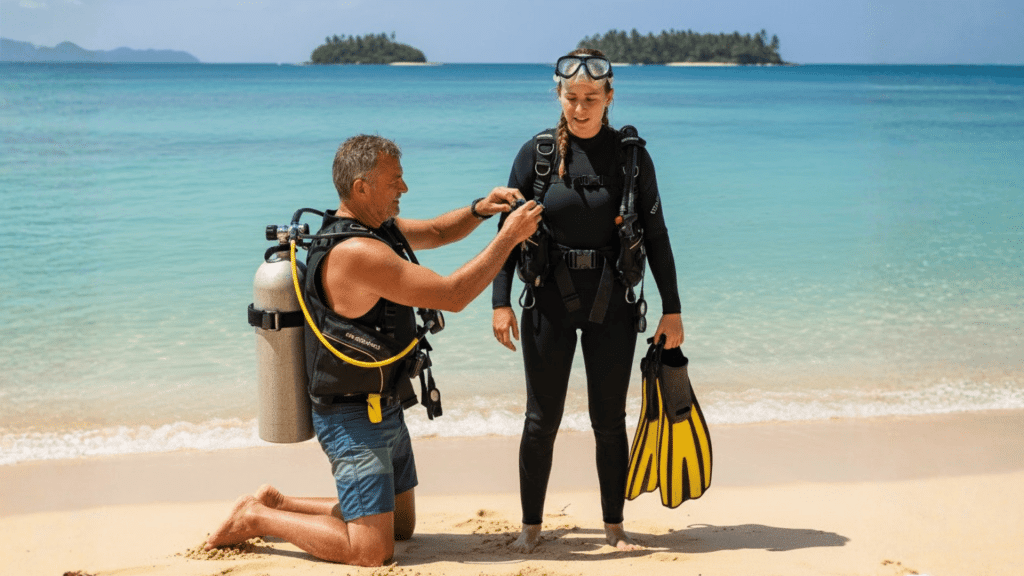
Your personal schedule and learning preferences determine which certification format works best for you. Different training structures offer the same quality education but vary significantly in timeline.
- Vacation Fast-Track: Complete everything in 3-4 consecutive days at a resort or dive center, perfect for tourists who want to earn a certification during their trip.
- Weekend-Only Course: Attend theory and pool sessions on Saturdays or Sundays, finishing certification in 3-6 weeks, depending on dive schedule availability.
- Flexible Local Course: Study theory online at your own pace, then book pool sessions and open water dives when convenient, taking anywhere from 2-8 weeks total.
- Referral System: Finish theory and pool training near home over 1-2 weeks, then complete open water dives at your vacation destination in 2 days.
Each format leads to the same certification level with identical diving privileges. The main difference is how the training fits into your lifestyle and timeline.
Consider your schedule constraints and comfort level when selecting your preferred course structure.
How to Plan Your Certification: Simple Tips to Avoid Delays
Proper planning helps you complete scuba certification smoothly without unexpected setbacks. Before enrolling, confirm that you can comfortably swim at least 200 meters and tread water for 10 minutes.
Review the medical questionnaire early – certain conditions require doctor approval, which can add days to your timeline. Book your course well in advance, especially during peak seasons when pool slots and dive trips fill quickly.
If certifying in ocean environments, consider typical weather patterns and build in buffer days for potential cancellations. Complete your online theory modules before arriving for practical training to save 1-2 days.
Contact your dive center with questions about scheduling and equipment to avoid last-minute surprises.
Summing It Up
So, how long does it take to get scuba certified? Your timeline ultimately depends on the course format you choose and how your schedule aligns with training availability.
The key is selecting an option that matches your learning style and personal commitments. Remember that scuba training is performance-based, not time-based – your instructor ensures you’re genuinely ready before certification.
With proper planning, precise prerequisites, and booking, you’ll minimize delays and complete your course smoothly.
Ready to start your certification process? Share your questions or experiences in the comments below – I’d love to hear about your diving plans and help you prepare for this exciting new skill!
Frequently Asked Questions (FAQs)
Can I Start Scuba Certification If I Have Glasses or Contact Lenses?
Yes, most courses allow the use of corrective lenses underwater with prescription masks or contact lenses, ensuring safe, clear vision while diving.
Do I Need My Own Scuba Gear to Get Certified?
No, rental gear is usually provided during training; personal gear is optional but can improve comfort and familiarity.
Can People with Mild Asthma or Controlled Medical Conditions Dive?
Often, yes, with a doctor’s approval; instructors will assess your fitness to dive to ensure safe participation.
Is There a Maximum Age Limit to Start Scuba Certification?
No strict age limit exists; as long as you are medically fit and meet basic swimming requirements, adults of any age can start.