
Towing a boat may seem easy at first, but permit rules can make things confusing fast.
Many boat owners wonder how big a boat they can tow without a permit. Rules vary, and even a small mistake can lead to fines or delays.
In most cases, the answer depends on width, height, and trailer size. Knowing these limits before you tow can save time and trouble on the road.
With the right checks, it becomes much easier to stay legal, avoid stress, and feel more confident before taking your boat out for the trip ahead.
What’s the No-Permit Limit?
In most U.S. states, you can tow a boat without a permit if it stays within normal road size limits. The main thing to check is the overall width of the boat and trailer.
If your boat is within the legal size limits, you usually will not need a permit.
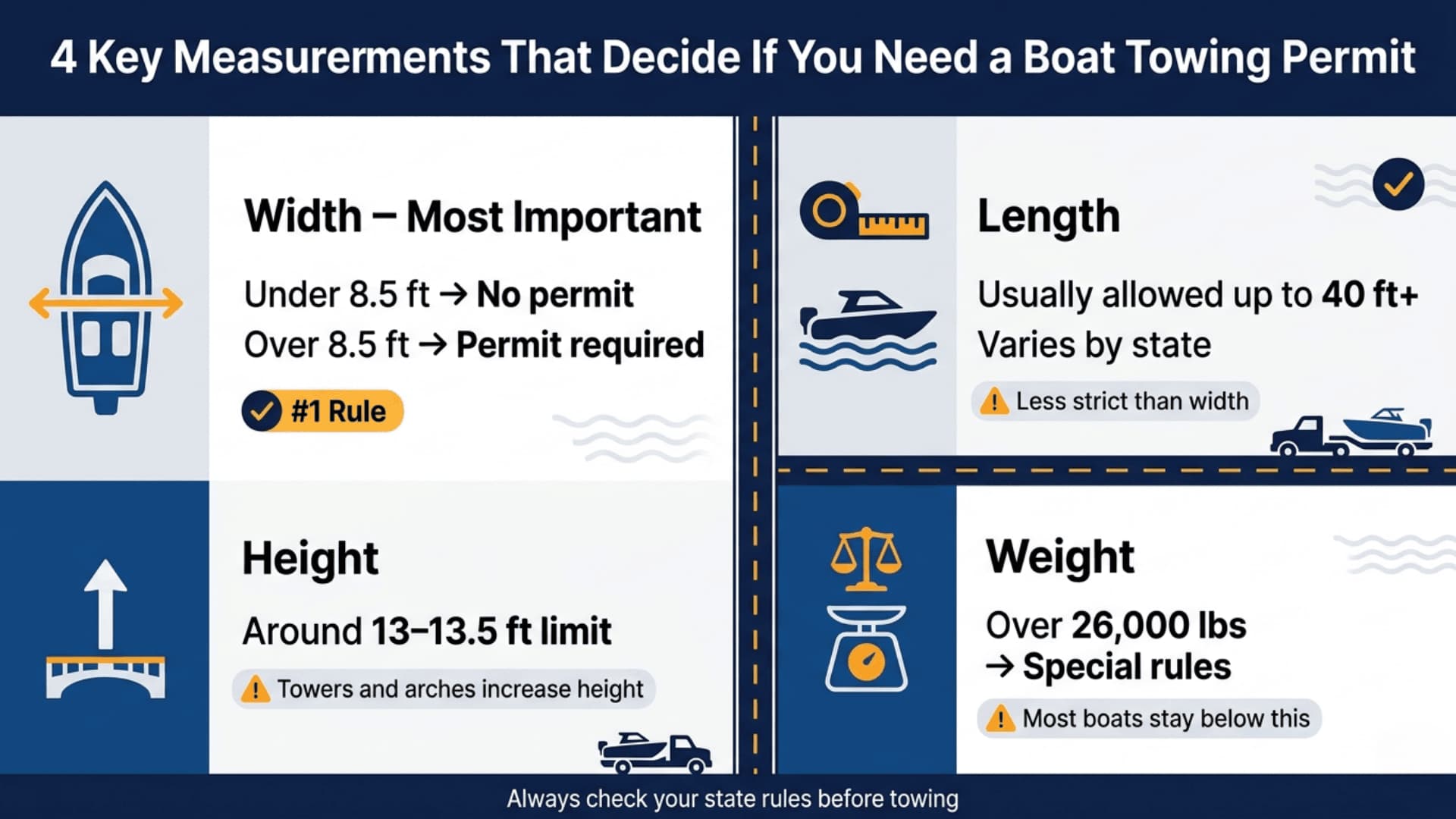
Height and total length matter too, but width is the rule that most often causes permit issues. Height is less commonly the first problem, while length limits vary more from state to state.
For example, a small fishing boat usually falls within the limit, while a wider pontoon boat may need an oversize permit. Always measure the widest part before you tow.
- Maximum width: 8.5 feet (102 inches)
- Maximum height: Around 13.5 feet
- Length: Varies by state and setup
If your boat goes over these limits, you will likely need a permit before towing it on public roads.
When Do You Need a Permit to Tow a Boat?
You need a permit when your boat goes beyond the legal road size limits. In most cases, the main trigger is width, but height and total length can also matter.
Once the boat is over the allowed limit, it is treated as an oversize load. That means you cannot tow it like a standard trailer setup.
In many cases, extra conditions also apply. You may need special signs, limited travel hours, or a set route. For larger loads, escort vehicles may also be required.
The key point is simple: if your boat is over the legal size limit, a permit is usually required before you tow it.
State-by-State Boat Towing Rules You Should Know
Boat towing rules are not exactly the same in every state. While most follow the 8.5-foot width limit, some states may have small differences in height, length, or permit requirements.
Rules for travel time, routes, and safety equipment can also change.
Because of this, you should always check the laws of the state you are driving in, especially if you are crossing state lines. It also helps to review general boat towing rules before your trip.
The safest step is to confirm local DMV or transport guidelines in advance. This helps you avoid legal issues and tow with more confidence.
Towing Capacity vs Legal Limits
Many people think towing capacity and legal limits are the same, but they refer to completely different things when towing a boat.
| Factor | Towing Capacity | Legal Limits |
|---|---|---|
| Meaning | How much weight your vehicle can pull | Size limits set by road laws |
| Based on | Vehicle engine, build, and towing setup | State transport regulations |
| Includes | Boat + trailer weight | Width, height, and length |
| Permit required? | No | Yes, if the size exceeds the limits |
| Controlled by | Vehicle manufacturer | Government authorities |
Always check both your vehicle’s towing capacity and legal size limits before towing to avoid safety risks, fines, or legal issues.
Tips for Safe Boat Towing
Safe boat towing starts before you drive. A few simple checks can lower risk, prevent damage, and help you tow more safely and confidently on the road.
- Check lights, brakes, and tires: Make sure your trailer lights work, brakes respond well, and tires have enough pressure before every trip.
- Secure the boat properly: Use strong straps and supports to keep the boat stable and prevent shifting while driving.
- Balance the load well: Proper weight balance helps the trailer track straight and reduces sway on the road.
- Inspect the hitch setup: Double-check the hitch, coupler, and safety chains to avoid towing failures during travel.
- Drive with extra care: Slow down, leave more braking space, and avoid sudden turns or lane changes.
These steps may seem small, but they improve safety in a big way. Good preparation makes towing easier, protects your setup, and helps prevent problems.
And if you’re starting from scratch, building your own trailer the right way makes all these checks much simpler down the road.
ReminderBoat weight isn’t the only factor that determines whether you need a permit. Width, height, length, and the full trailer setup also matter and can affect whether your boat is legal to tow on public roads. |
Wrap Up
Towing a boat without a permit mostly comes down to staying within size limits, especially the 8.5 ft width rule. While towing capacity matters, legal limits determine whether a permit is required.
Since rules can vary by state, checking local laws before you tow is always the safest step.
A few simple checks and proper planning can help you avoid fines and travel stress-free, especially when your trip involves time on the water, where understanding the 120 rule for kayakingand preparing for cold conditions matters just as much as the journey itself.
Before your next trip, take a moment to measure your setup. Are you sure your boat is within legal limits?
Frequently Asked Questions
How Big a Boat Can You Tow without a Permit?
Most states allow boats up to 8.5 feet wide to be operated without a permit. Anything wider is considered oversize and needs approval.
What is the 80% Rule for Towing?
The 80% rule means you should tow only up to 80% of your vehicle’s capacity for better safety and control.
What is the Biggest Trailer You Can Tow Without a License?
It depends on your region, but most regular licenses allow towing standard trailers within weight limits without needing a special license