Thinking about getting into paddleboarding, but confused about which type to buy? You’re not alone. The biggest question on every beginner’s mind is: are inflatable paddle boards good enough, or should you spend more on a hard board?
The answer might surprise you. Inflatable boards have come a long way from their early days. They’re no longer just the “cheap option” that serious paddlers avoid.
Today’s inflatables can handle everything from calm lakes to choppy rivers, and they’re actually the top choice for most recreational paddlers.
If you’re asking, are inflatable paddle boards good? This guide compares inflatable vs hard boards on speed, durability, storage, and price so you can choose with confidence.
Let’s break down exactly what makes each type special and who they’re really built for.
What Are Inflatable Paddle Boards?
Inflatable paddle boards are made from military-grade PVC with drop-stitch technology. Thousands of polyester threads connect the top and bottom layers together.
When you pump air into the board, these threads create a rigid structure. Most iSUPs recommend around 12–15 PSI, and some premium boards go up to 18–20 PSI.
The board comes with a hand pump or an electric pump. You inflate it before paddling and deflate it after. When deflated, it rolls up into a backpack-sized bundle.
Most beginners find an iSUP stiff enough for calm water once it’s inflated to the recommended PSI. The construction makes them durable against impacts.
Inflatable Vs Hard Paddle Boards
Choosing between inflatable and hard paddle boards mostly depends on how you’ll carry, store, and use the board. Here are quick differences to compare.
| Basis | Inflatable Paddle Board (iSUP) | Hard Paddle Board (Solid) |
|---|---|---|
| Portability | Deflates into a backpack; easy to carry in small cars and travel | Bulky; often needs roof racks or a larger vehicle |
| Storage Space | Stores in a closet, trunk, or under a bed | Needs a garage, wall rack, or dedicated storage space |
| Setup Time | Requires inflation and fin setup (usually 5–15 minutes) | Ready instantly (grab and go) |
| Speed And Glide | Usually slower glide, especially over long distances | Typically faster and smoother glide |
| Comfort | A softer deck is more comfortable for kneeling, yoga, kids, and pets | More rigid surface; comfort depends on deck pad quality |
| Durability Against Dings | Handles bumps on rocks/docks well; less likely to dent | Can get dings, chips, and cracks from impacts |
| Puncture/Leak Risk | Possible punctures, seam/valve leaks (repairable with patch kits) | No air to leak, but cracks can be costly to repair |
| Price And Value | Often sold as kits; hard boards are often board-only | Board-only pricing can be higher; accessories are often extra |
Advantages and Disadvantages of an Inflatable Paddle Board
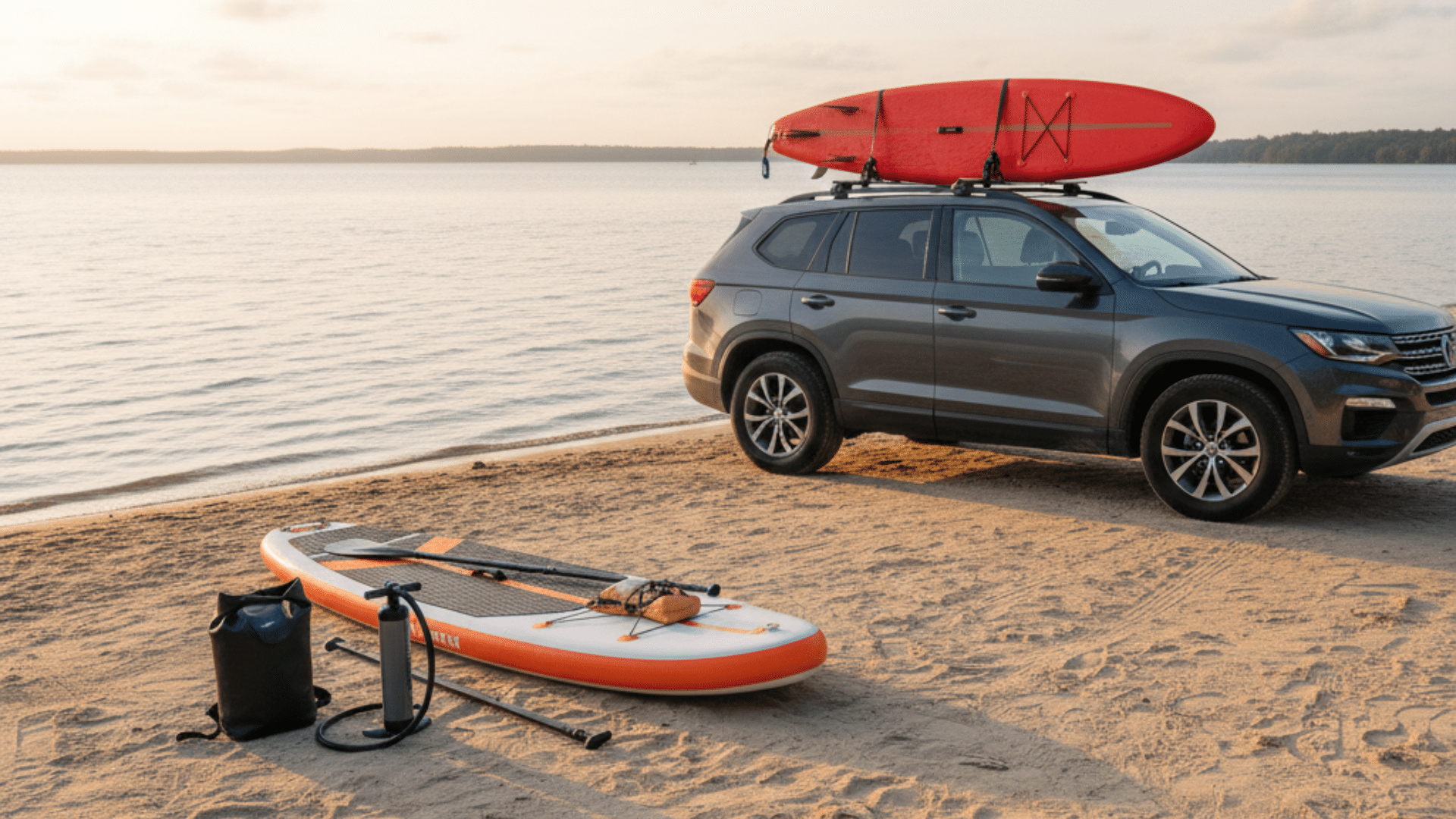
Inflatable paddle boards deliver significant advantages in portability, durability, and cost-effectiveness, but they’re not perfect for everyone. Weighing pros and cons ensures you choose the right board for your needs.
Pros
Inflatable paddle boards offer a smart blend of convenience, performance, and durability, making them a popular choice for beginners and experienced paddlers alike.
- Durability: Boards bounce off rocks, docks, and obstacles that would crack or dent hard boards; PVC construction resists punctures and abrasions remarkably well
- Portability: Deflated board rolls into a backpack-sized bundle weighing around 15-25 pounds; can carry on public transportation, check on flights, fit in compact cars, or bike to the water
- Safety: Soft, cushioned surface reduces injury risk during falls or collisions; ideal for families and children
- Minimal Maintenance: Rinse with fresh water after use, dry thoroughly, and store in the included bag; no waxing or ding repairs needed
Cons
Inflatable paddleboards are highly practical, but they do have a few limitations worth considering before you buy. Factors like performance differences, setup time, and sensitivity to damage can affect the experience depending on how and where you plan to paddle.
- Setup Time: Requires 5-10 minutes of pumping before each session; can be tedious for quick paddles
- Performance Differences: Track slightly less efficiently and feel marginally less responsive than comparable hard boards; more noticeable for advanced paddlers
- Wind Sensitivity: Slightly higher profile catches wind more readily, requiring more effort to paddle in breezy conditions
- Limited Lifespan: Eventually shows wear on seams and valve areas after years of heavy use; hard boards can last decades with proper maintenance
Overall, inflatable paddle boards strike a great balance between convenience and performance, making them an excellent option for many paddlers. While they may not match hard boards in every scenario, their portability, durability, and ease of use often outweigh the drawbacks for recreational, travel, and beginner use.
Best Types of Inflatable Paddle Boards
Different inflatable board designs serve specific purposes and paddling styles. Understanding these categories helps you match the right board type to your activities, skill level, and performance needs.
| Type | Benefits | Best For |
|---|---|---|
| All-Around iSUP | Stable, easy to turn, good for most uses | Beginners, families, casual paddling |
| Touring iSUP | Better glide, tracks straighter, more efficient | Long paddles, fitness, flatwater distance |
| Yoga/Fitness iSUP | Extra-wide and very stable, comfy deck | Yoga, workouts, balance practice |
| River iSUP | Tough build, handles bumps and shallow water well | Rivers, rocky launches, mild rapids |
| Fishing iSUP | High stability, higher capacity, more tie-down points | Fishing, carrying gear, cooler setups |
| Performance/Race iSUP | Faster and more efficient tracking | Speed training, racing, and advanced paddlers |
| Tandem iSUP | Big capacity for two riders, stable platform | Couples, parent + child, extra payload |
| Compact/Travel iSUP | Packs smaller, lighter to carry | Travel, limited storage, and smaller riders |
Best Use Cases For Inflatable Paddle Boards

Inflatable boards excel in specific environments and scenarios where their unique characteristics provide distinct advantages over hard boards.
- Lakes and Calm Water Cruising: Inflatables work well for relaxed lake paddles and weekend cruising. They’re easy to pack, carry, and launch, especially when you try new spots often.
- Rivers and Shallow Water: Great for shallow routes with rocks and sandbars. You can explore more confidently, and carrying the board to remote access points is simple.
- Travel, Camping, and Limited-Storage Homes: Easy to pack for road trips and vacations. It fits in a trunk, closet, or campsite setup without racks or extra storage space.
- Family Fun, Fitness, and Yoga: A comfortable choice for kneeling, beginners, kids, and yoga-style sessions because the deck feels softer underfoot.
What Should You Expect To Pay?
Paddleboard prices vary widely based on construction quality, materials, and included accessories. Understanding price tiers helps you budget appropriately and avoid overpaying or buying inferior products.
| Price Tier | Inflatable Paddle Board (iSUP) | Hard Paddle Board (Solid) | What You Usually Get At This Price |
|---|---|---|---|
| Budget | $200–$400 (often kit) | $300–$700 | Entry-level build and accessories; fine for occasional calm-water use, but quality can vary a lot |
| Mid-Range | $400–$800 | $700–$1,200 | Better materials and stiffness, more reliable seams/fin boxes, nicer paddles and bags in iSUP kits |
| Premium | $800–$1,500+ | $1,200–$2,500 | Higher performance shapes and materials; lighter or stiffer builds; better glide and tracking (especially hard boards) |
| Specialty | Touring, race, and fishing iSUPs can run $1,500+ | Specialty hard boards often cost $1,500+ | Purpose-built boards (race, surf, expedition touring) cost more due to design and materials |
Quick note: iSUPs are often sold as complete kits (board + pump + paddle + leash + bag), while hard boards are frequently board-only, so compare “total setup cost,” not just the board price.
Who Should Buy Inflatable Paddle Boards?
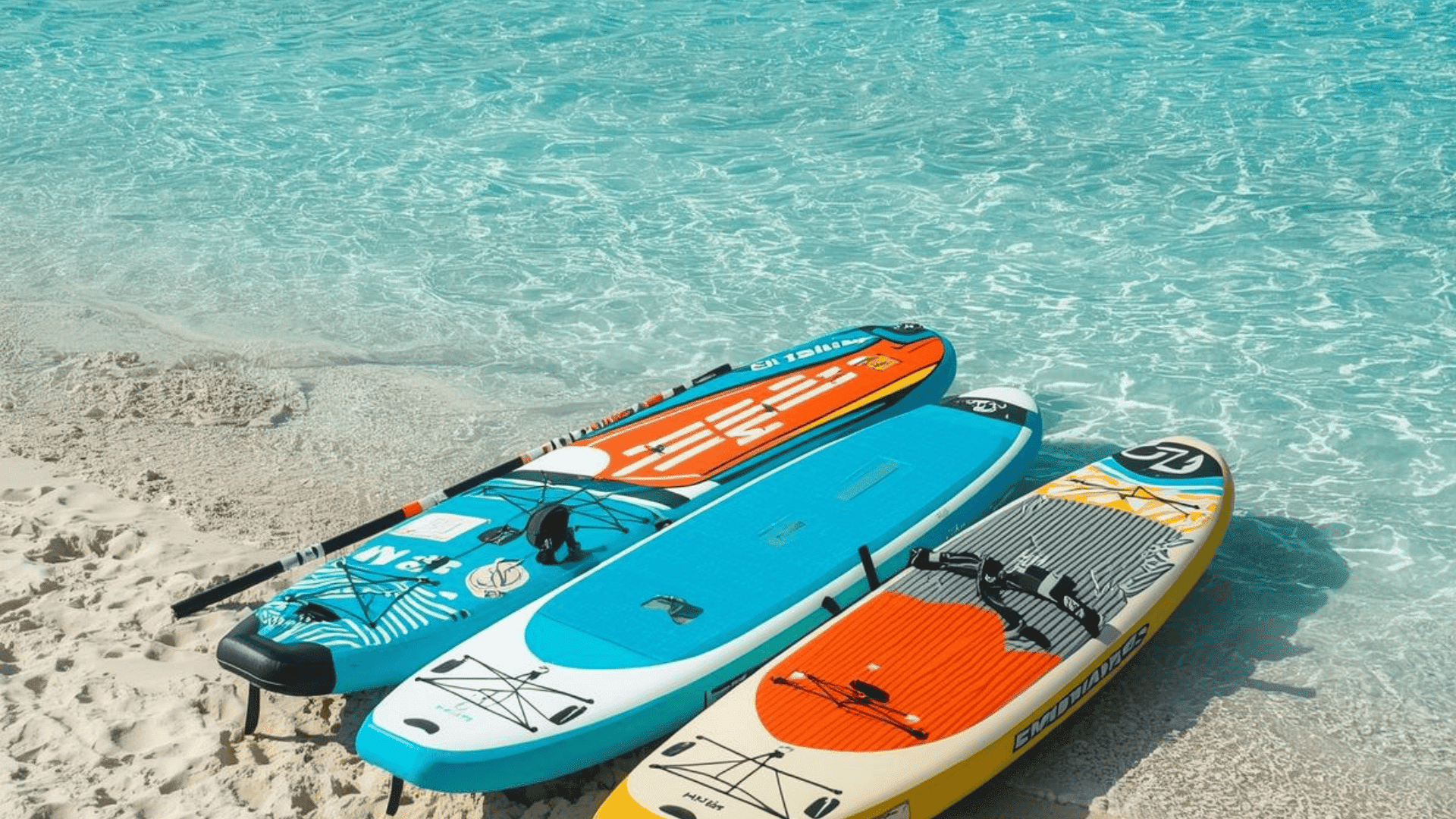
Inflatable paddleboards offer unique advantages that make them ideal for some paddlers, but they’re not the perfect choice for everyone. Here’s who typically benefits most from inflatable boards and who might want to consider hard boards instead.
Who Should Consider Inflatable Boards:
- Budget-conscious buyers seeking a complete package value
- Dog owners needing claw-resistant surfaces
- Hikers accessing remote alpine lakes and backcountry waters
- Drivers without roof racks or using compact vehicles
- SUP instructors and rental operators prioritize durability
- Seasonal paddlers needing convenient off-season storage
- Those with back or mobility concerns about lifting heavy boards
Who Should Avoid Inflatable Boards:
- Paddlers prioritizing maximum glide efficiency and speed
- Collectors building a quiver of specialized boards
- People who dislike managing inflation pressure and drying routines
- Purists seeking traditional hard board feel and water feedback
- Those with climate-controlled, dedicated storage space
- Paddlers in extreme cold climates where inflating is impractical
In the end, choosing the right paddleboard comes down to how, where, and how often you plan to use it. Understanding your priorities will help ensure you invest in a board that truly enhances your time on the water.
Tips to Follow Before You Buy
Consider these important factors before purchasing to ensure you get a board that matches your actual needs and budget.
- Check Weight Capacity Realistically: Choose boards where capacity exceeds your weight plus gear by 50-75 pounds. Overloaded boards feel unstable and perform poorly on the water.
- Read Real User Reviews: Look for reviews mentioning long-term durability and customer service experiences. Avoid brands with consistent complaints about seam failures or poor warranty support.
- Test Inflation Pressure Rating: Inflate your iSUP near the top of its recommended PSI range (often around 12–15 PSI) for the best stiffness. Higher PSI can help, but always follow the board’s max rating. Stiffness also depends on construction, not PSI alone.
- Verify Complete Package Contents: Confirm your package includes a quality pump, adjustable paddle, coiled leash, repair kit, and wheeled carry bag. Buying separately costs significantly more.
- Compare Warranty Terms: Look for a minimum 1-year warranty covering manufacturing defects. Longer warranties indicate the manufacturer’s confidence in its product quality and materials.
- Consider Storage Space First: Measure your actual storage area before buying. Even deflated boards need space for the bag, pump, and paddle in your home or vehicle.
Conclusion
Both inflatable and hard paddle boards have their place, and the right choice depends entirely on your lifestyle.
Are inflatable paddle boards good? Yes, for most recreational paddlers who want easy storage, travel-friendly transport, and solid durability. They handle lakes, rivers, and travel situations beautifully, even when stored in your closet.
Hard boards shine for serious surfers, competitive racers, and frequent paddlers who’ve already solved storage challenges.
The truth is, there’s no universal “best” board. Think about where you’ll store it, how often you’ll paddle, and what type of water you’ll explore.
Your honest answers to these questions will point you in the right direction. Which matters most to you: ultimate performance or maximum convenience?
Drop a comment below and let us know what you decided!
Frequently Asked Questions
Do Inflatable Paddle Boards Puncture Easily?
No. Quality inflatable boards use military-grade PVC that resists punctures well. They bounce off rocks and other obstacles instead of puncturing them. Minor damage can be easily fixed with the included repair kits.
How Long Do Inflatable Paddle Boards Last?
Quality inflatable paddle boards typically last 5-10 years with proper care. Lifespan depends on usage frequency, storage conditions, and maintenance. Hard boards can last 20+ years but require more careful handling.
How Much Does a Good Paddleboard Cost?
A solid iSUP setup usually costs $400–$800 for a mid-range kit. Premium boards often start around $800+. Hard boards are commonly $700–$1,500+ for the board alone