
A sunny day may feel perfect for kayaking, but cold water can still be dangerous. Many paddlers underestimate how quickly it can affect breathing, movement, and judgment.
The 120 rule adds air and water temperatures to provide a quick warning sign, but experts say it is only a rough guide, not a safety standard.
Warm weather does not mean safe water. Smart paddlers prepare for immersion, wear proper gear, and understand the limits of boat towing permits before heading out.
What is the 120 Rule for Kayaking?
The 120 rule for kayaking is a simple way to check cold water safety before you go out. You add the air temperature and the water temperature.
If the total is 120°F or less, the risk from cold water is high. In this case, you should wear proper gear, such as a wetsuit or drysuit.
This rule helps beginners make quick decisions, but it lacks a scientific basis and should not be relied on as a safety standard.
Cold-water safety experts warn that the 120 rule can be misleading and even dangerous because it oversimplifies real risk.
It does not account for factors such as cold shock, clothing, wind, waves, or time spent in the water.
Most importantly, cold water can still be dangerous even if the air feels warm.
So, use the 120 rule as a guide, not a guarantee. Always think about the water first and prepare for a possible fall into it.
How the Rule Works
The 120 rule works by adding two simple numbers: the air temperature and the water temperature. This gives you a quick idea of how risky the conditions are.
For example, if the air is 70°F and the water is 55°F, the total is 125°F. Even though this is above 120°F, 55°F water is still cold and potentially dangerous, and you may still need a wetsuit or drysuit.
Now take another case: the air is 60°F, and the water is 50°F. The total is 110°F, which means the cold water risk is higher.
This number helps you decide if you need extra protection. But remember, it is only a rough guide.
Note: The 120 rule should never be used as a safety decision tool. Always base your preparation on water temperature and immersion risk, not combined temperature numbers.
Cold Water Safety Temperature Guidelines
While the 120 rule is commonly mentioned, safety experts rely more on water temperature thresholds:
- Below 70°F (21°C): Cold shock and loss of coordination can begin
- Below 60°F (15°C): Thermal protection is recommended
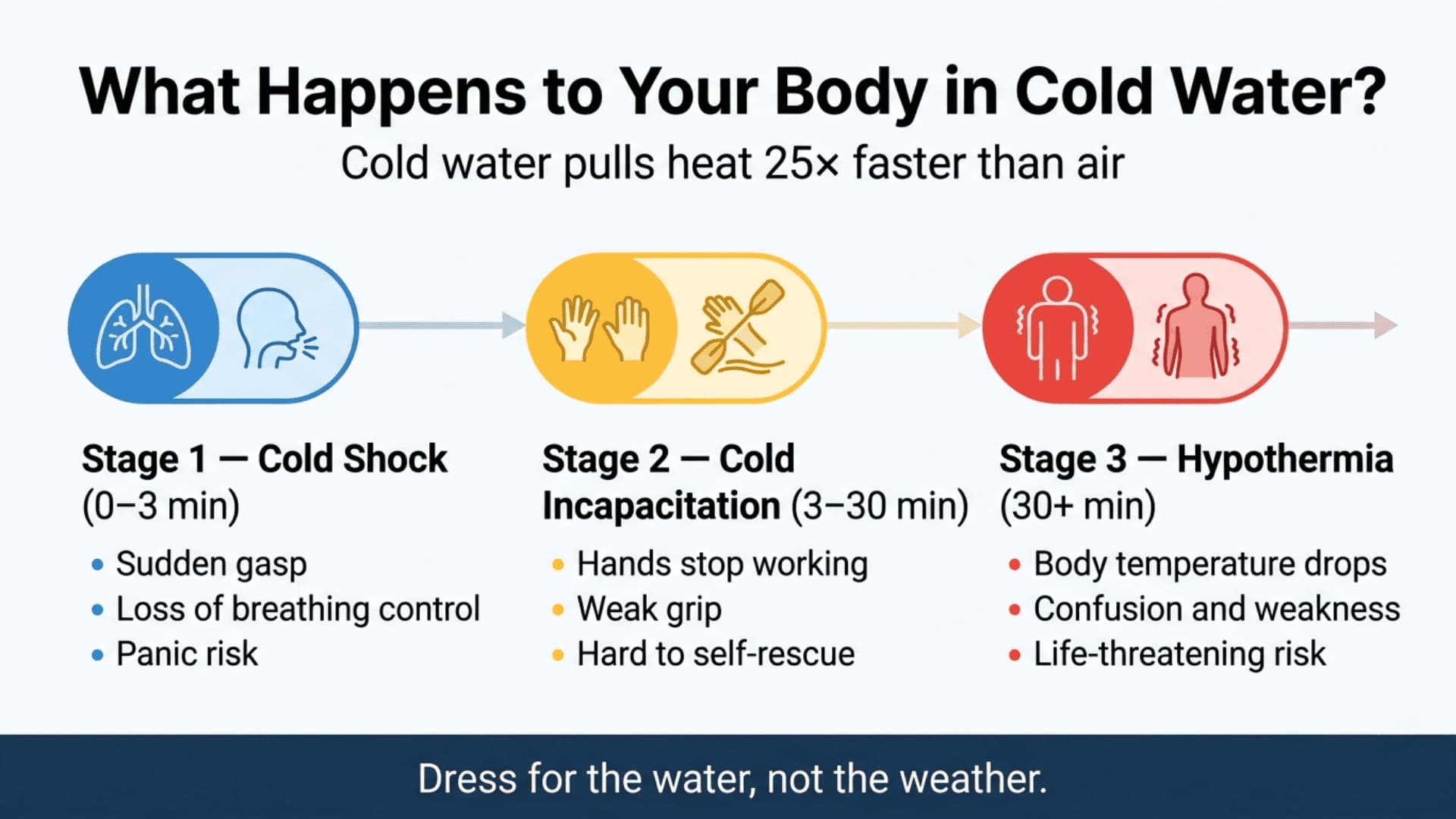
- Below 50°F (10°C): High risk of cold shock and rapid incapacitation
These guidelines are more reliable because they reflect how the body reacts to cold water.
What to Wear for Cold Water Kayaking
What you wear matters a lot in cold water. Even on a warm day, cold water can be dangerous. The right gear helps you stay warm, float safely, and rescue yourself faster.
| Gear | Why It Matters |
|---|---|
| Wetsuit | Helps keep your body warm in cold water |
| Drysuit | Best choice for very cold water and long exposure |
| Life jacket (PFD) | Keeps you afloat and supports you if you panic |
| Quick-dry layers | Dry faster and help keep your body warm |
| Avoid cotton | Cotton stays wet, heavy, and cold |
| Dry bag with extra clothes | Gives you a warm backup after a fall |
Choosing the right safety gear is only part of trip preparation. Having a dependable way to transport your kayak matters too, especially if you are still comparing kayak trailer options and buying tipsbefore your next outing.
Simple Cold Water Safety Tips Before You Launch
Before you launch, take a few easy safety steps. Cold water can turn risky fast, so a short pre-launch check helps you stay ready and avoid trouble.
- Check air and water temperature: Always check both before paddling, because cold water can still be dangerous even if the weather feels warm.
- Wear your life jacket (PFD): A life jacket keeps you afloat, supports your body, and gives you more time to stay calm.
- Never kayak alone: Paddling with someone ensures quick help if you capsize or face trouble in cold water.
- Tell someone your plan: Share your route and return time so others can alert help if you don’t come back.
- Stay close to shore: Being near shore makes it easier to exit quickly if the water becomes too cold.
These simple steps do not take long, but they can significantly reduce your risk. Plan ahead, stay aware, and treat cold water with respect every time.
After all, a safe trip begins long before you hit the water, starting with how you get your kayak there. A smart setup can make every outing easier, especially with a DIY kayak trailer build on a budget.
What to Do in a Kayaking Emergency
Even with good planning, emergencies can happen. Cold water can affect your body fast, so staying calm and acting quickly can help you stay safe and get help.
- Control your breathing first and try to stay calm
- Stay with your kayak, as it is easier to spot
- Try a quick self-rescue if you are able to
- Use a whistle or phone to signal for help
- Keep your body as still as possible to reduce heat loss
Emergency: Call 911
Marine radio: Use VHF Channel 16
Wrap Up
The 120 rule is a simple way to assess cold-water risk, but it is not enough on its own. Always focus on water temperature, wear the right gear, and follow basic safety steps before you launch.
Cold water can affect your body faster than you expect, so preparation matters more than conditions that seem safe.
A few smart choices can prevent serious danger, and those choices start well before the water, right from how you tow your boat there.
Before your next trip, ask yourself, are you truly dressed and prepared for the water, not just the weather?
If this helped, save or share it with a fellow paddler.
Frequently Asked Questions
What is the 120-Degree Rule for Kayaking?
The 120 rule adds air and water temperature. If the total is 120°F or less, the risk of cold water is high.
What is the 1-10-1 Rule for Cold Water?
The 1-10-1 rule means one minute of cold shock, ten minutes of useful movement, and one hour before hypothermia risk increases.
What are the Three Golden Rules of Kayaking?
Always wear a life jacket, dress for the water temperature, and never paddle alone to stay safe in changing conditions.