


Ever wondered why sailors talk about “port” and “starboard” instead of simply saying left and right? The sides of the boat have their own secret language, and there’s a fascinating reason behind it.
These aren’t just random names slapped onto a vessel. Each side tells a story, serves a purpose, and holds maritime secrets that have been passed down through centuries.
From ancient wooden ships to modern yachts, understanding the sides of a boat opens up a whole new world of nautical knowledge.
But here’s the catch: most people get it completely wrong. Ready to learn what seasoned sailors know that landlubbers don’t?
What Are the Sides of a Boat Called?
The sides of the boat have specific names that every boater should know. These terms aren’t just fancy sailor talk; they’re essential for navigation, communication, and safety on the water.
- Port Side: The left side of the boat when facing forward (bow). This side is marked with red lights at night.
- Starboard Side: The right side of the boat when facing forward. Green lights identify this side after dark.
- Hull: Hull is the main watertight body of the boat (including the bottom and sides).
- Bow: The front end where both sides meet at the vessel’s pointed edge. This V-shaped design cuts through waves and helps the boat move smoothly through water.
- Stern: The rear end where the sides come together at the back. Most boats have motors or engines mounted here.
Why Ships Use Port and Starboard Instead of Left and Right
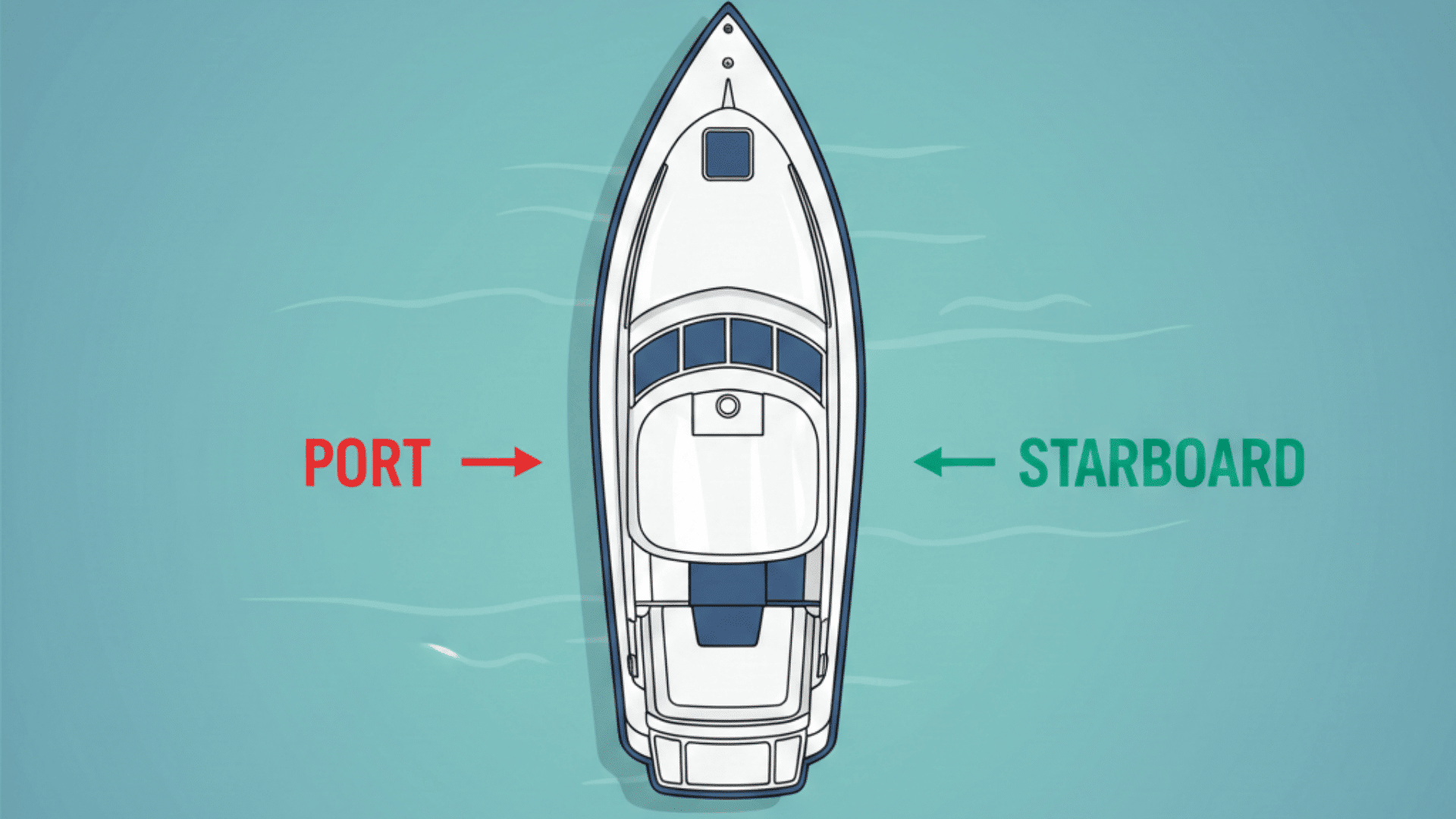
Ships rely on port and starboard because “left” and “right” create dangerous confusion. When a crew member faces forward, their left differs from someone facing backward.
During emergencies or complex maneuvers, this mix-up could cause accidents or collisions. The sides need unchanging terms that everyone understands instantly, regardless of position.
Port always means the left side when facing the bow, and starboard always means the right side. This consistency dates back centuries when sailors needed foolproof communication during storms and battles.
The sides of the boat terminology eliminates guesswork and keeps everyone safe. One universal language prevents costly mistakes on the water.
The Fascinating History Behind Starboard
The word “starboard” has Old English origins that reveal how ancient sailors navigated. Early ships used a large steering oar mounted on the right side, called the “steerboard” or “steering board.”
Since most sailors were right-handed, this placement made controlling the vessel easier. Over centuries, “steorboard” evolved into “starboard.” Vikings and medieval sailors shaped this term long before modern steering wheels existed.
When docking, captains positioned the vessel with its starboard (right) side facing away from the pier to protect the steering oar from damage. Traditionally, many vessels docked port-side-to, helping protect the steering oar on the starboard side
The sides of boat terminology carry this rich maritime heritage, connecting today’s boaters with seafaring ancestors who braved dangerous waters using simple wooden oars.
How the Left Side of a Boat Became Known as Port
The left side wasn’t always called “port.” Originally, sailors used the term “larboard,” meaning “loading side.” However, this caused serious problems aboard ships.
During storms and noisy conditions, “larboard” sounded too similar to “starboard,” leading to dangerous mistakes. While the British Admiralty did issue an order in 1844, it was actually the U.S. Navy that officially transitioned to the word “port” in 1846.
The name makes perfect sense; ships docked with their left side toward the harbor or port to protect the steering oar on the opposite side. This side of the boat is connected directly to the loading dock, where cargo and passengers come aboard.
This practical naming stuck because it was simple and clear. Today, the sides still carry this tradition, with “port” reminding sailors of those busy harbor days.
Why This Terminology Matters for Modern Boaters
Understanding the sides of a boat isn’t just about tradition; it’s essential for safe boating today. Whether someone owns a small fishing boat or plans to crew on larger vessels, knowing proper nautical terms prevents accidents and builds confidence on the water.
- Safety Communication: When radioing for help or coordinating with other boats, using port and starboard eliminates confusion during critical moments.
- Licensing Requirements: Boating safety courses and captain’s licenses test knowledge of the boat terminology as part of certification standards.
- Docking Procedures: Marina staff and fellow boaters communicate using these terms when guiding vessels into tight spaces.
- Equipment Placement: Boat manufacturers label parts, storage, and safety equipment using port and starboard, making maintenance and repairs straightforward.
- Universal Language: The sides of boat terms work internationally, allowing boaters to navigate anywhere without language barriers.
How Running Lights Help Identify a Boat’s Direction
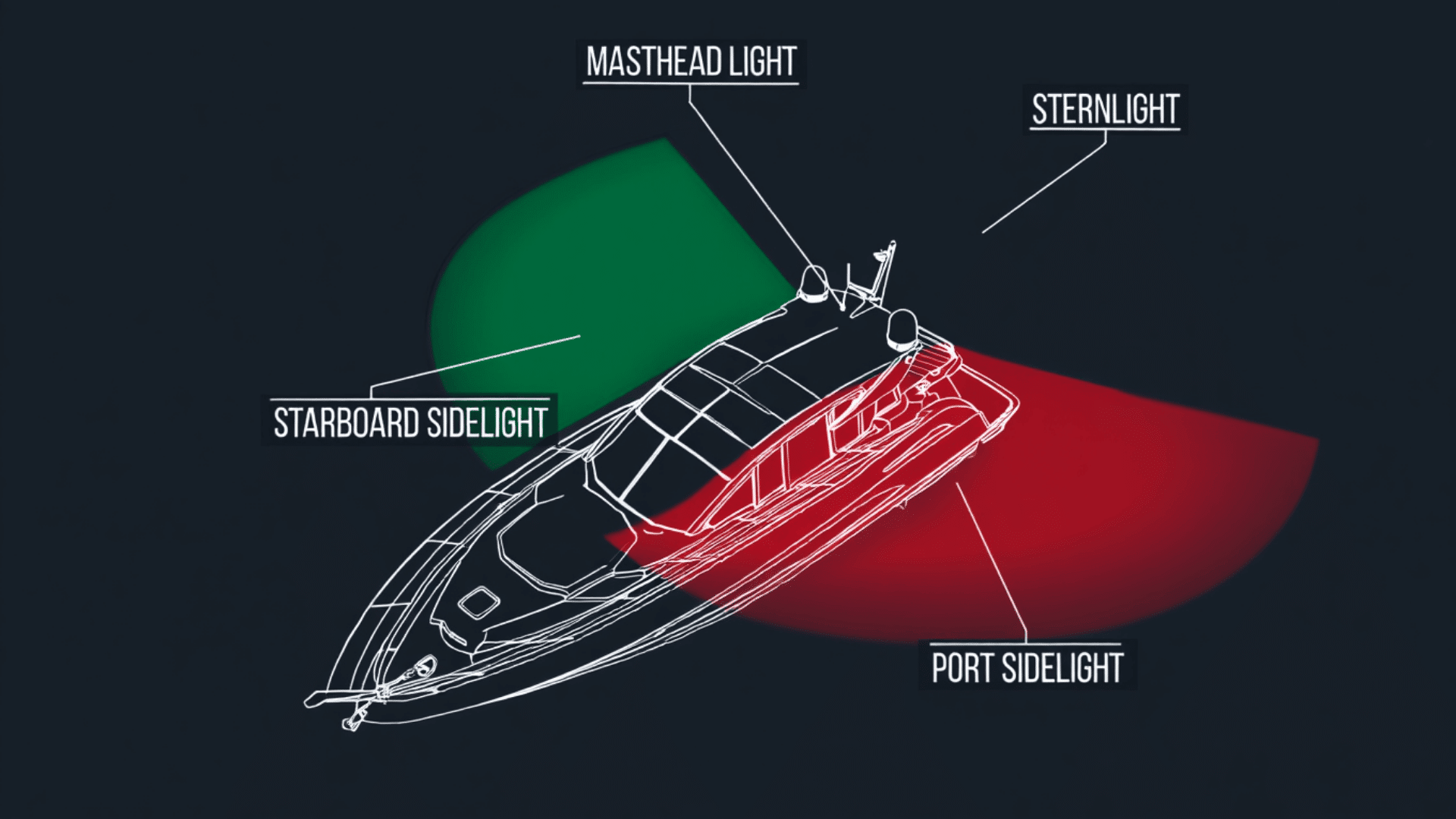
Boats display colored lights on their sides to prevent nighttime collisions. The port side always shows a red light, while the starboard side displays a green light.
In a head-on meeting, both power vessels usually alter course to starboard so they pass port-to-port (‘red to red’). Red/green lights show which side of the other vessel the captain is seeing. Who must give way depends on the situation (crossing, head-on, overtaking) under the Rules of the Road.
The boats use these universal color codes worldwide, creating a visual language all mariners understand. Many setups also include a masthead light (white, forward arc) or an all-round white in some configurations. This simple yet brilliant setup has saved countless lives.
Easy Memory Tricks to Remember Port and Starboard
New boaters often struggle to remember which side is which. The sides become much easier to identify with simple memory tricks that stick. These proven mnemonics help anyone master nautical terminology quickly.
- “Port” and “Left” Both Have Four Letters: This simple word-length match makes remembering the left side effortless.
- Red Port Wine: Port wine is red, just like the port side navigation light, which both stay on the left.
- “Starboard” Starts with Arrr (Like right-hand gesture): “Arrr” mimics a pirate’s right-hand gesture for the longer word on the right.
- Alphabetical Order: In the alphabet, “L” (left) comes before “R” (right), just as “P” (port) comes before “S” (starboard).
- Is there any Red Port Left?: This phrase combines both sides of boat terms, meaning the port (left) side has departed.
- Visual Hand Trick: Making an “L” shape with the left hand creates a visual reminder for port placement.
Final Thoughts
Mastering the sides of the boat turns confusion into confidence on the water. What seemed like complicated sailor-speak now makes perfect sense: port, starboard, navigation lights, and memory tricks all work together for safer boating.
This knowledge isn’t just textbook learning; it’s practical wisdom that prevents accidents, passes certification tests, and earns respect at any marina.
Ancient Vikings never imagined their steering oar would shape modern maritime language, yet their legacy lives on every vessel today. From understanding why red means port to remembering simple four-letter tricks, boaters now have essential skills to navigate confidently.
Ready to put this knowledge into action? Head to the nearest marina, practice identifying port and starboard, and watch those navigation lights come alive at dusk!







One Response