
If you’re booking your first trip and wondering what to wear for white water rafting, you’re not alone. The right outfit can be the difference between a fun, comfortable day on the river and shivering through every rapid.
The good news? You don’t need expensive gear to stay safe and warm. Just a few smart layers and the proper footwear will do the trick.
You’ll see exactly what to wear from head to toe, what to avoid, and how to dress for any weather.
I’ll also share real tips from rafters who’ve tested these outfits on freezing glacial waters and scorching summer runs, so you’ll know what actually works when comfort, safety, and performance matter most.
Dress Right for Rafting Safety
Your clothing choices actually affect your safety on the river, not just your comfort. Here’s something many first-timers miss: you need to dress for water temperature, not air temperature.
Even on a sunny 80-degree day, glacial rivers can be dangerously cold. If you end up in the water wearing cotton, it stays wet and heavy, pulling warmth away from your body. That’s a fast track to hypothermia.
Quick-dry synthetic fabrics or merino wool work the opposite way. They wick moisture away from your skin and continue to insulate even when damp.
Beyond warmth, the right clothes give you freedom to paddle without restriction, protect your skin from the sun and rocks, and work well under the safety gear your guide will provide.
The best part? Most rafters already own items that work perfectly. You might only need water shoes, or you can rent a wetsuit for cold conditions.
What to Wear for White Water Rafting
Knowing what to wear for white water rafting can make or break your trip. The right layers keep you warm, protected, and comfortable from the first splash to the final rapid.
Below, I’ve broken down each layer so you know exactly what works, why it matters, and how real rafters dress for every type of river condition.
1. Base Layers: Your Second Skin
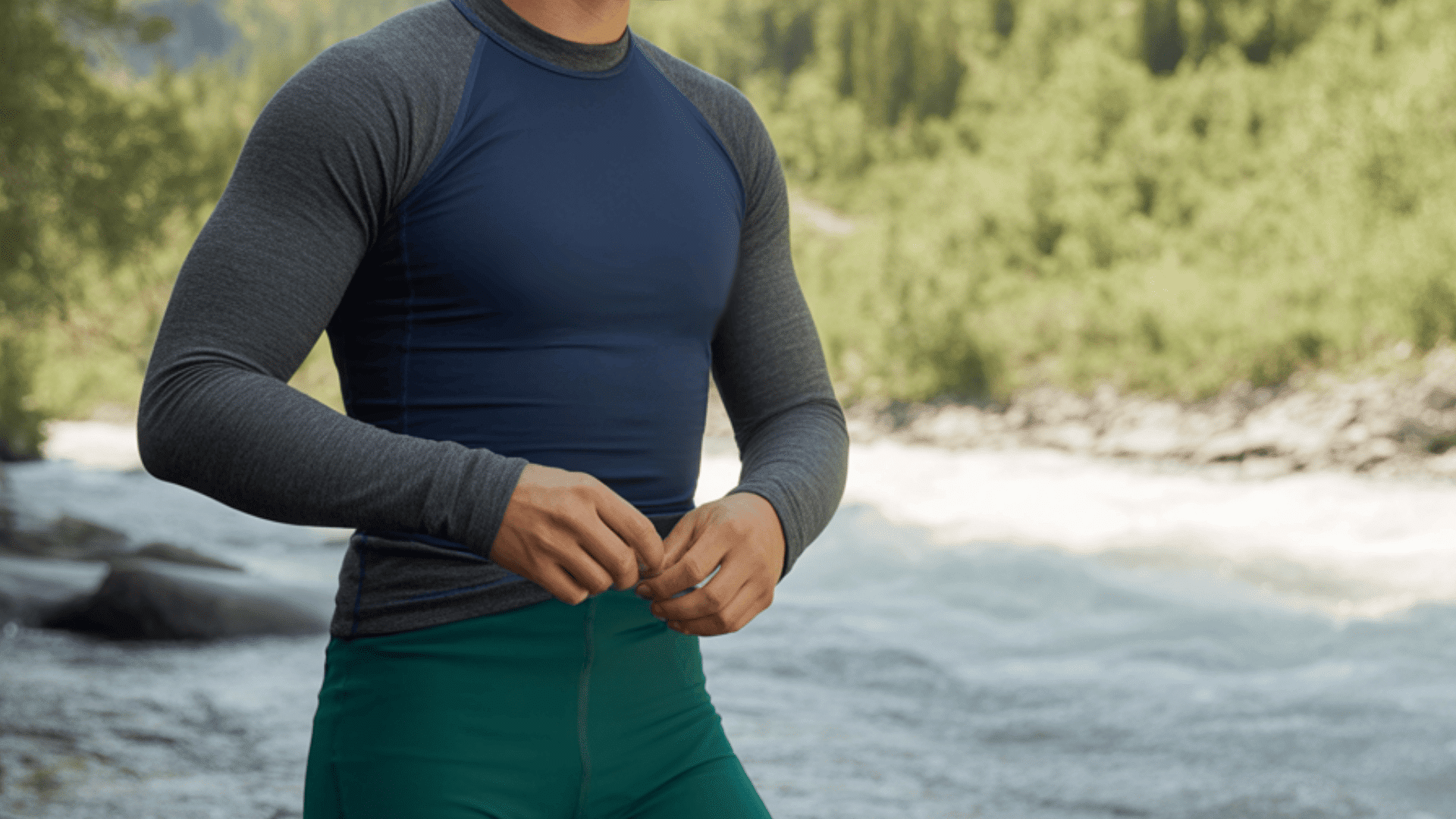
Your base layer is all about moisture control and comfort. It sits directly against your skin, so choose synthetics or merino wool that wick sweat and dry fast.
A swimsuit or rash guard works well, and women often pair a sports bra with a quick-dry top. Snug fits prevent bunching under wetsuits or life jackets, especially during long paddling sessions.
Looking for the right moisture-wicking layers? Check out these top-rated base layers perfect for rafting adventures.
2. Mid Layer: Insulation for Cold Trips
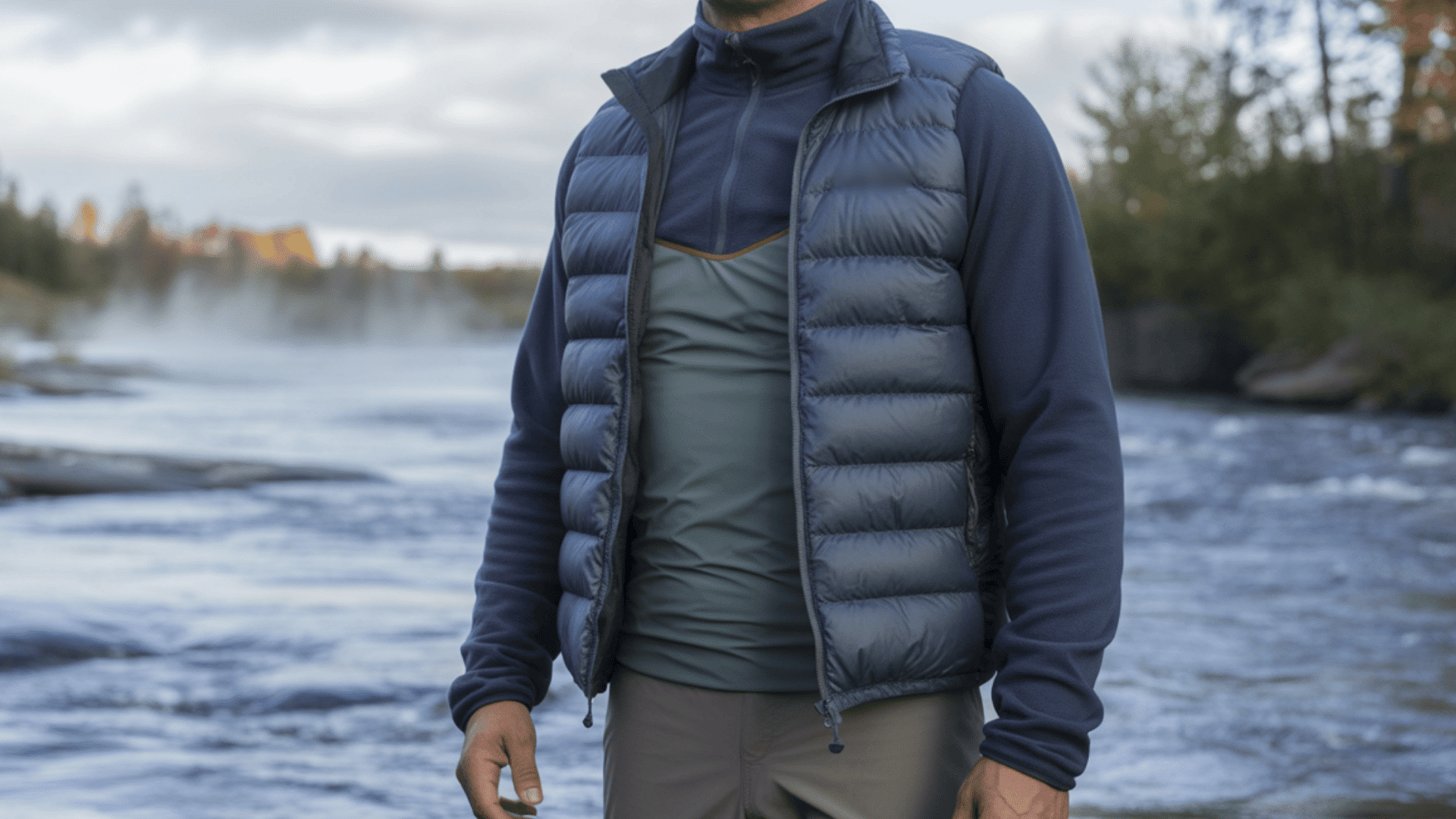
The mid layer adds warmth on cold rivers, early mornings, or shoulder-season trips. Fleece pullovers, lightweight puffers, or merino tops trap heat without restricting movement.
This layer is flexible; you can remove it if you warm up while paddling. Starting slightly overdressed is smart because it’s far easier to cool down than warm up on the river.
Need lightweight warmth? Here are some great mid-layer picks that balance comfort and mobility on chilly river days: M-tac Thermal Layer.
3. Outer Layer: Wetsuits, Drysuits, and Splash Jackets
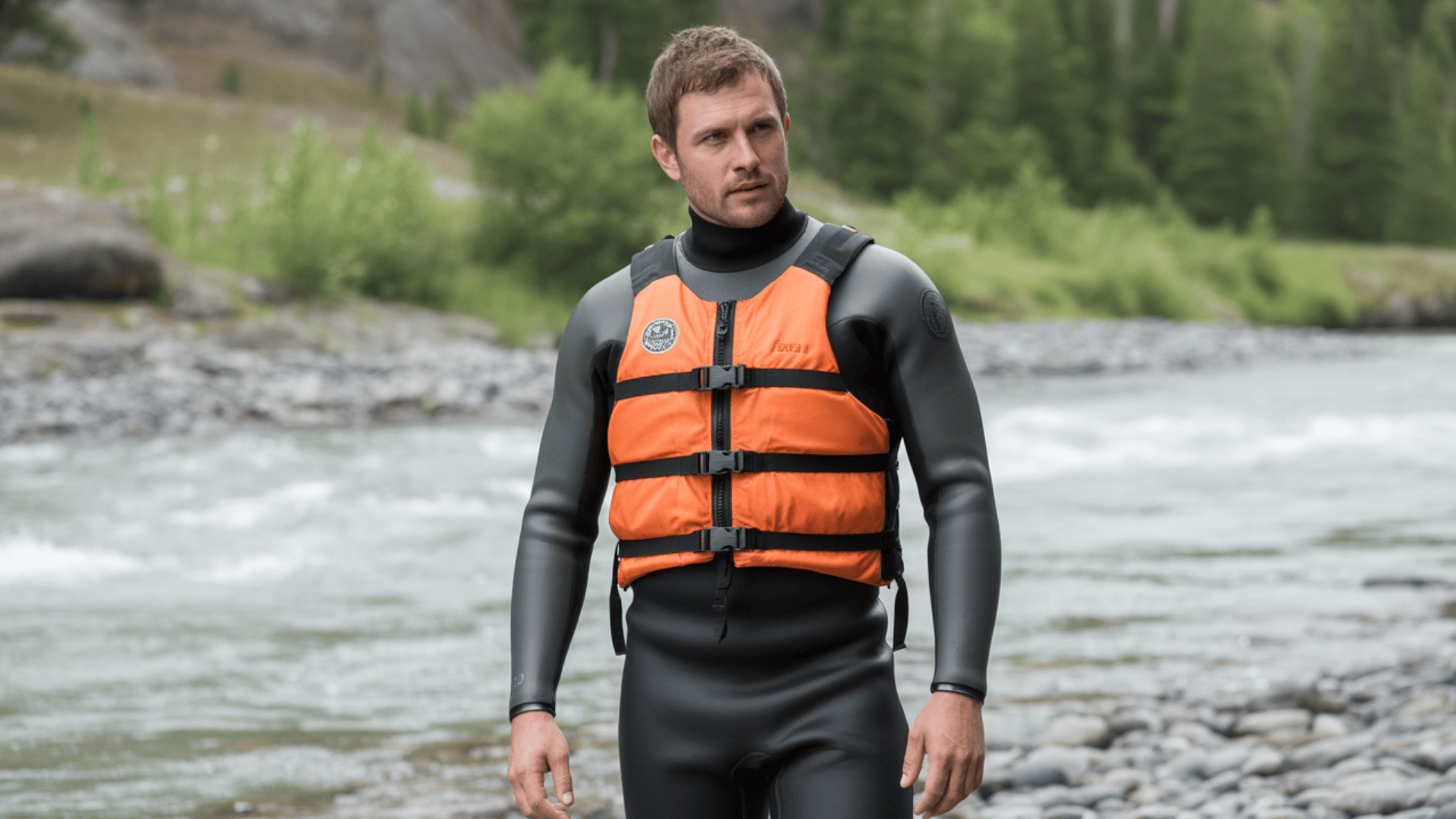
Your outer layer protects you from cold water and wind. Wetsuits insulate by trapping a layer of water that your body warms up, making them perfect for cool conditions.
Drysuits seal out water completely and are best for icy, high-risk rivers. For moderate weather, a lightweight splash jacket shields you from wind and spray without adding bulk.
Find the best wetsuits, drysuits, and splash jackets designed for real rafting conditions from icy runs to mild summer waves.
4. Footwear: Don’t Mess This Up
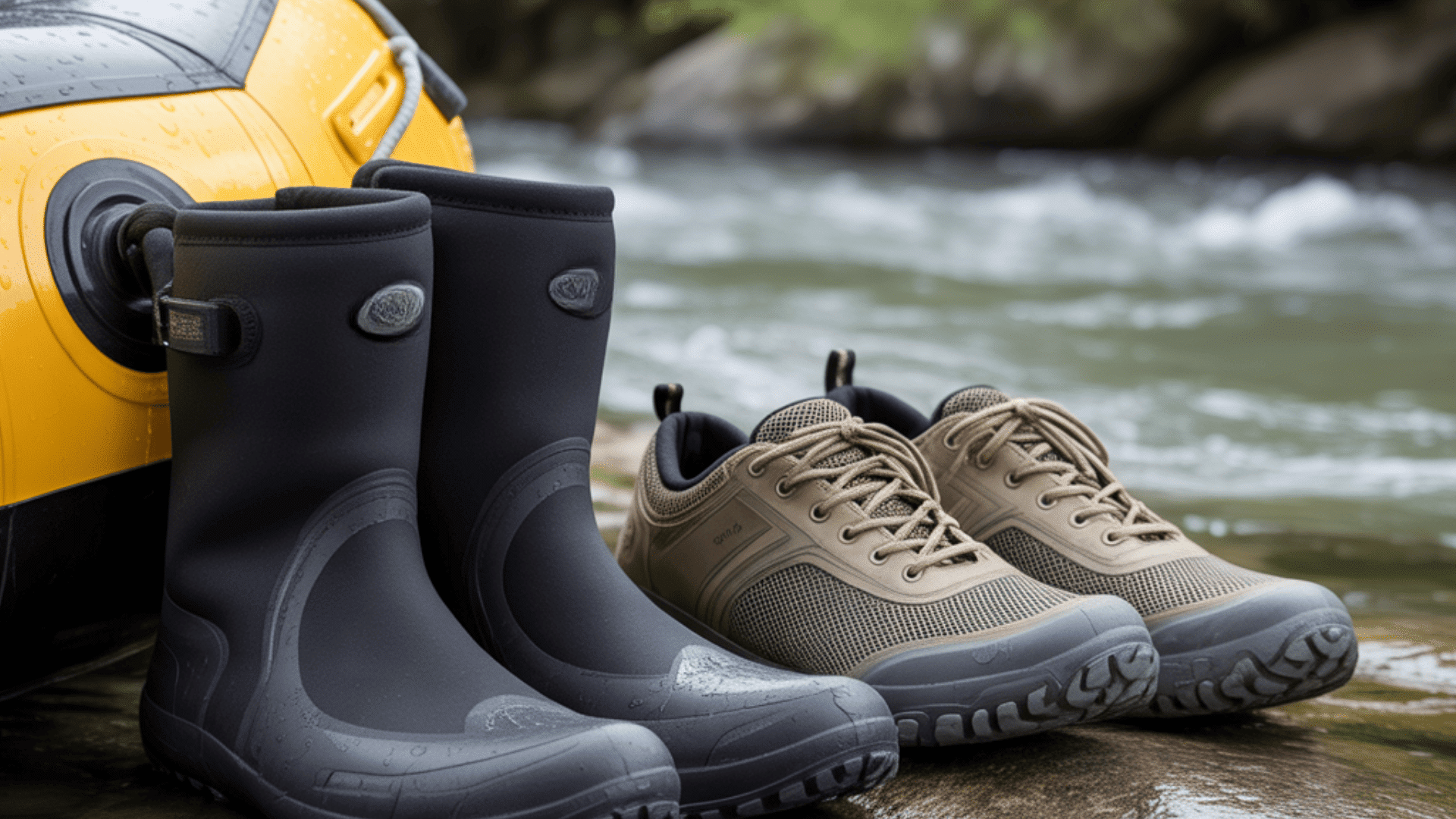
Footwear is critical for traction, safety, and comfort. Flip-flops or loose sandals can slip off instantly, so stick to neoprene booties, secure water shoes, or sturdy old sneakers.
Rafters often prefer broken-in trainers because they prevent blisters and grip wet surfaces well. Whatever you choose, make sure it fits snugly to avoid losing it in fast water.
Not sure what shoes to wear? Find water shoes and river-ready footwear that keep your feet secure and comfortable all day.
5. Safety Gear: Usually Provided by Your Outfitter
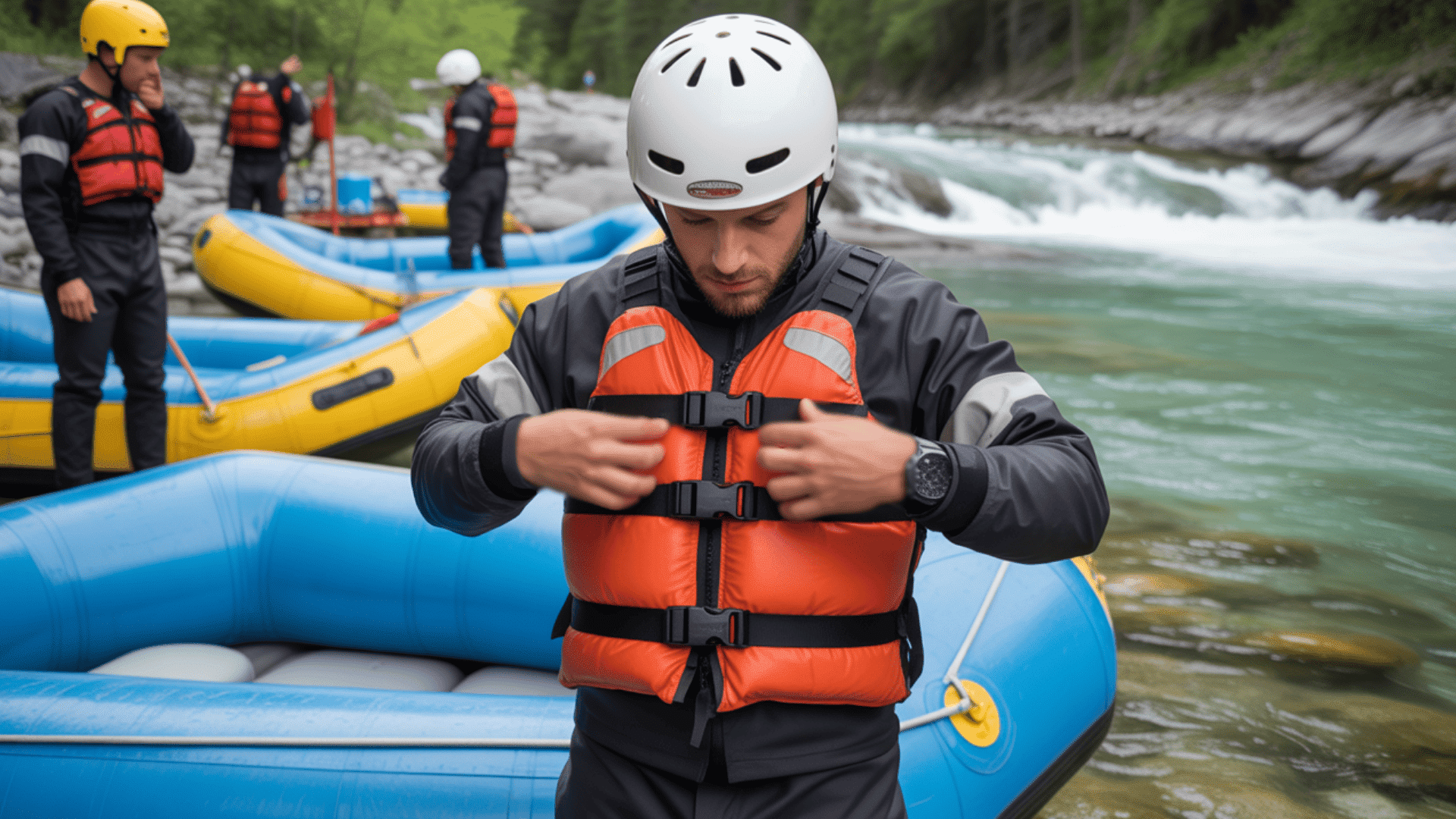
Your outfitter supplies key safety gear like your PFD and helmet, and proper fit is essential. A snug PFD that doesn’t ride up helps you float correctly, while a secure helmet protects you in rocky rapids.
Guides will check your gear before launching, so you can focus on paddling and enjoying the experience.
If you prefer bringing your own gear, here are a few reliable PFDs and helmets trusted by experienced rafters.
6. Accessories That Make a Big Difference
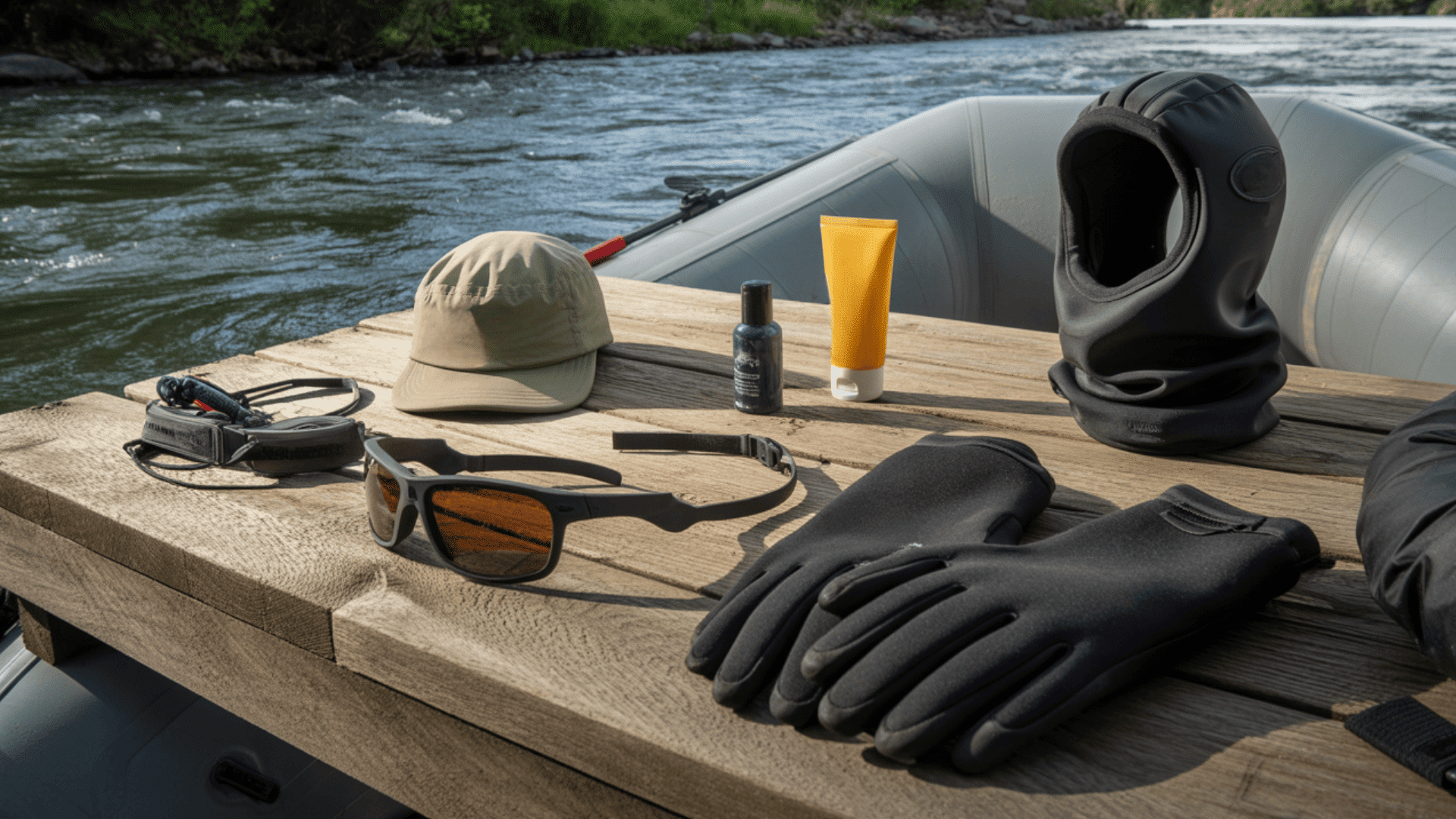
Small accessories can dramatically improve your rafting experience. A hat, polarized sunglasses with a strap, and intense SPF protect you from harsh sun and reflective glare.
For cold trips, neoprene gloves or pogies keep your hands warm, while buffs shield your neck from the wind. A small dry bag, if allowed, lets you carry essentials like medication or snacks safely.
Complete your rafting kit with these practical accessories, from sun-protective hats to waterproof dry bags that actually stay dry.
Dressing for Different Weather and Water Conditions
What you wear should match the conditions you’re rafting in. Water temperature matters even more than air temperature, and choosing the right layers can make your entire trip safer and more comfortable.
Hot, Sunny Summer Trips:
When both air and water are warm, minimal layers work fine. A UPF long-sleeve shirt, board shorts, or a swimsuit with a rash guard provides protection, comfort, and quick-drying throughout the day.
Key Focus – Sun Protection:
Strong UV reflection off the water means you’ll burn faster. Prioritize UPF fabrics, polarized sunglasses, hydration, and regular sunscreen reapplication to stay protected during long hours on open water.
Cool or Shoulder-Season Trips:
Spring and fall require clever layering. A synthetic base layer, fleece mid-layer, and splash jacket help regulate warmth. Add a shorty wetsuit or neoprene top if water temperatures dip below 60°F.
Layering Benefit – Temperature Control:
You may start the trip chilly but warm up quickly while paddling. Layering lets you adjust on the go, ensuring comfort without overheating or getting cold mid-rapid.
Very Cold or Glacial Rivers:
For snowmelt-fed or high-altitude rivers, full wetsuits or drysuits are essential. Pair them with neoprene booties, wool socks, waterproof gloves, and a snug beanie under your helmet for full-body insulation.
Safety Priority – Cold Water Risk:
Extremely cold water can be dangerous. Always check expected temperatures with your outfitter; they know their river best and can recommend the exact gear needed for safe, warm rafting.
What NOT to Wear for White Water Rafting
Knowing what not to wear is just as important as choosing the right layers. The wrong clothing can make you cold, uncomfortable, or even unsafe on the river.
Here are the key items you should always leave at home before a rafting trip.
- Cotton clothing: Cotton hoodies, jeans, and sweatpants absorb water, get heavy, and stay cold, increasing your risk of hypothermia even in mild weather.
- Flip-flops and loose sandals: They fall off instantly and offer zero protection or traction on slippery, rocky riverbanks.
- Fashion sandals or thin-strap shoes: Stylish, but useless on the river; they provide poor stability and almost no foot protection.
- Heavy jewelry or watches: These can snag on gear, cause minor injuries, or get lost in seconds. Leave all valuables behind.
- See-through fabrics when wet: White tops and some swimsuits become transparent in water; consider if modesty matters to you.
- Restrictive or stiff clothing: Denim, tight belts, or non-stretch fabrics limit movement and make paddling uncomfortable.
By skipping these items, you’ll stay safer, warmer, and far more comfortable on your rafting experience. Stick to quick-dry, secure, and flexible gear to get the most from your time on the water.
Quick Packing Checklist
A simple, streamlined rafting packing list makes getting ready stress-free. Here’s a clean, compact version you can save, screenshot, or keep on your phone before any trip.
Use this checklist to make sure you have all the essentials, no overpacking, no forgetting the important stuff.
| Item | Notes |
|---|---|
| Swimsuit / moisture-wicking base | Fast-drying, no cotton |
| Quick-dry shorts/river pants | Comfortable for all-day wear |
| Fleece layer (if cool) | Extra warmth when needed |
| Wetsuit/drysuit | For cold or glacial water |
| Water shoes / old sneakers | Secure, protective footwear |
| Hat + sunglasses strap | Sun protection that stays put |
| Sunscreen + lip balm | Water-resistant formulas |
| Dry clothes + towel | After-trip comfort |
Keep this checklist handy so you can pack quickly and confidently, no second-guessing, no last-minute scrambling.
What Experienced Rafters Recommend
Experienced rafters know that comfort and safety start with smart clothing choices.
For warm summer trips, they prefer a swimsuit, quick-dry shorts, and a UPF long-sleeve shirt, paired with lightweight water shoes, a snug hat under the helmet, and strapped sunglasses.
When rafting in cooler seasons, they switch to synthetic base layers, a 2–3 mm wetsuit, a fleece for warmth, and a splash jacket to block wind and spray. Neoprene booties with wool socks keep feet warm and secure.
Veteran rafters always offer the same advice: avoid cotton, break in your shoes early, and pack an extra fleece just in case.
They also stress keeping hair and drawstrings tucked to prevent anything from catching on your helmet or gear.
Wrapping It Up
Choosing what to wear for white water rafting doesn’t have to be complicated. If you focus on quick-dry layers, secure footwear, and the safety gear your outfitter provides, you’ll already be ahead of most first-time rafters.
From there, adjust your outfit based on the water temperature and how sensitive you are to the cold. Talk to your guide and ask what they wear on the same stretch of river.
Don’t be shy about bringing an extra warm layer just in case. With the right rafting clothes, you’ll be able to forget about your outfit, lean into the splashes, and enjoy every rapid.
Dress smart, trust the gear, and you’ll have everything you need for a safe, unforgettable day on the river.