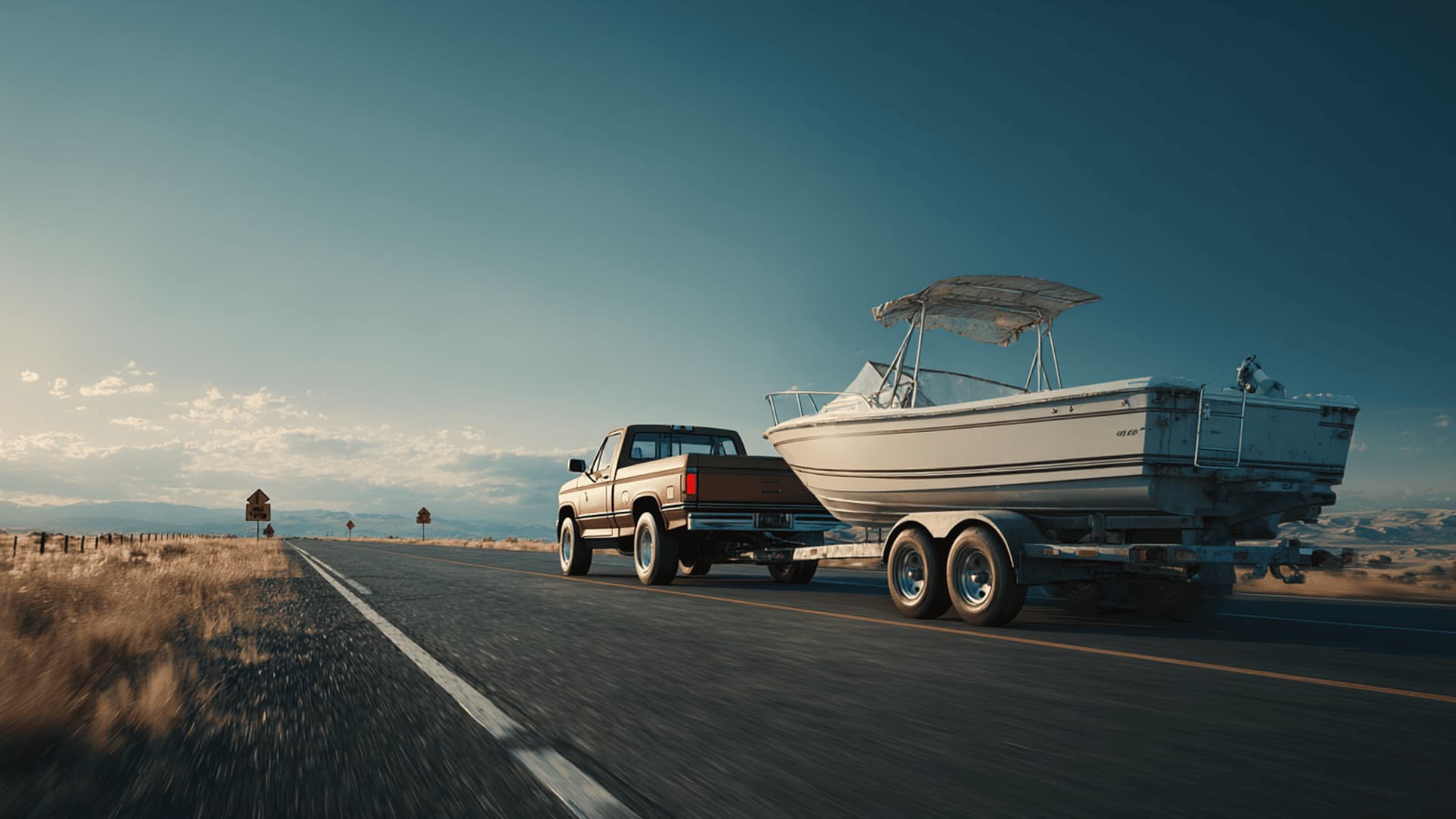

When I first stepped onto a skiff, I was surprised at how simple yet effective it was. So, what is a skiff boat?
At its core, it’s a small, lightweight boat designed for shallow, calm waters. Its flat or shallow-V hull makes it easy to move through bays, creeks, and estuaries where bigger boats struggle.
I’ve found that skiffs are perfect for fishing, casual water outings, or quietly watching wildlife without making a splash.
They’re affordable, easy to handle, and don’t take up much storage space. For anyone thinking about a small, practical boat, understanding what a skiff boat offers is a good place to start.
What Is a Skiff Boat?
A skiff is a small, lightweight boat commonly used in shallow or protected waters.
Many skiffs have a shallow draft and are often flat-bottomed or built with a shallow-V hull, making them ideal for navigating tight areas where larger boats can’t reach.
Skiffs are easy to tow, launch, and steer, thanks to their simple design. Their open layout gives plenty of space for fishing gear or a relaxing day on the water, which is why they’re so popular among small-boat enthusiasts.
Depending on the model, a skiff can be powered by oars, a small outboard motor, or even a sail.
The word “skiff” is sometimes used loosely to describe several small-boat styles, and understanding what qualifies as a boat helps clarify how skiffs compare to jon boats, dinghies, and other small watercraft.
Key Benefits of Skiff Boats
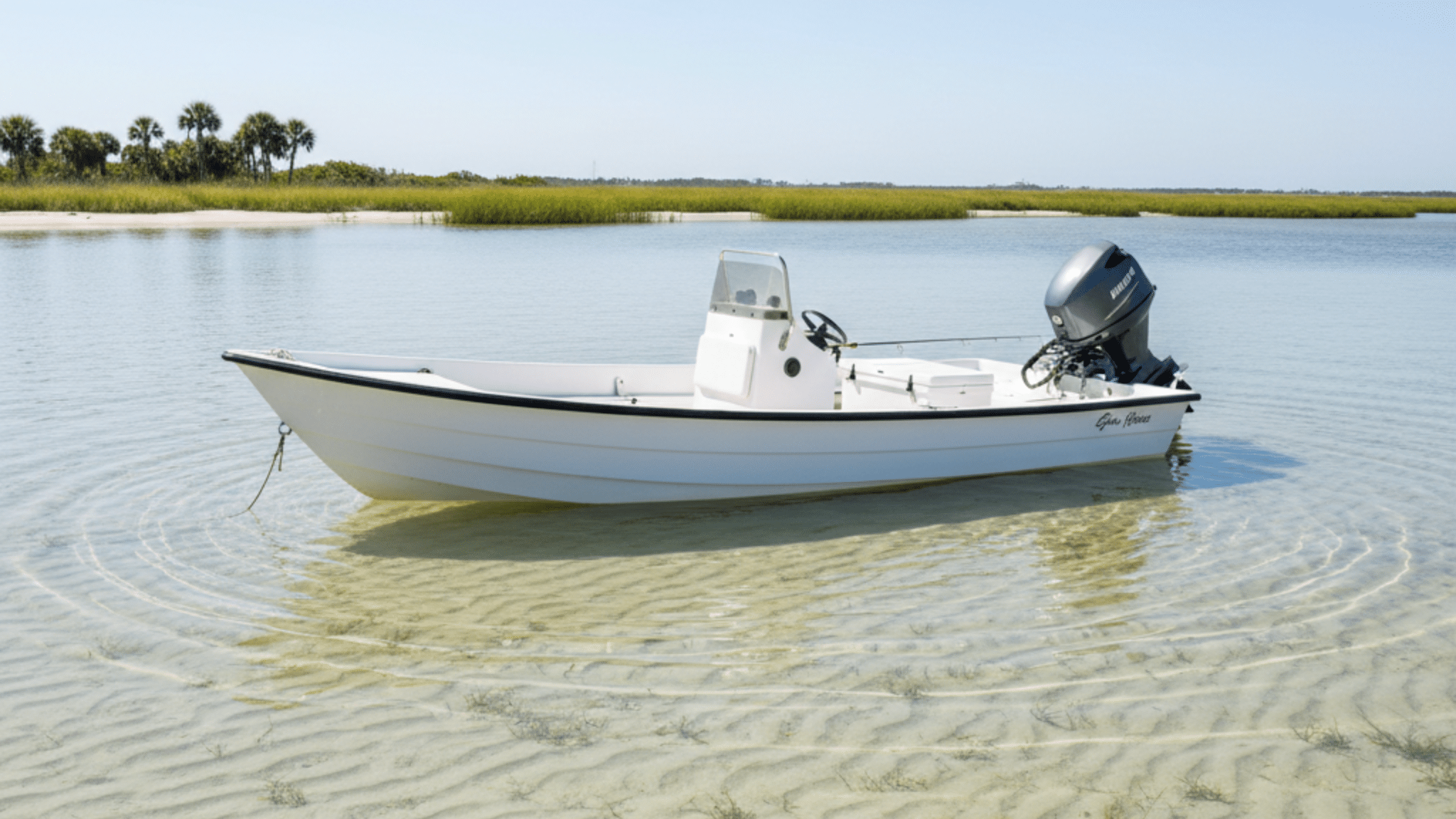
Skiff boats offer numerous advantages that make them popular among boating enthusiasts of all experience levels.
From their budget-friendly price tag to their ability to access shallow waters, skiffs provide practical benefits that larger boats simply can’t match. Here are the key reasons why so many people choose skiff boats.
- Affordability and Value: Skiffs are budget-friendly with lower purchase prices and reduced operating costs. Less fuel consumption and simpler maintenance result in significant long-term savings for owners.
- Easy to Handle and Maintain: Lightweight construction makes skiffs easy to tow and launch. Their simple design requires minimal maintenance, no specialized storage, and straightforward winterizing for off-season care.
- Shallow Water Access: Flat-bottom design allows skiffs to navigate shallow bays, estuaries, and creeks where larger boats can’t go, providing access to prime fishing spots.
- Fuel Economy: Small motors and lightweight construction create excellent fuel efficiency. Skiffs use less gas than larger boats, saving money during extended hours on the water.
- Versatility for Multiple Activities: Skiffs work in freshwater and saltwater for fishing, recreational boating, wildlife watching, and hunting. Easy to customize with accessories for specific needs.
Common Uses for Skiff Boats
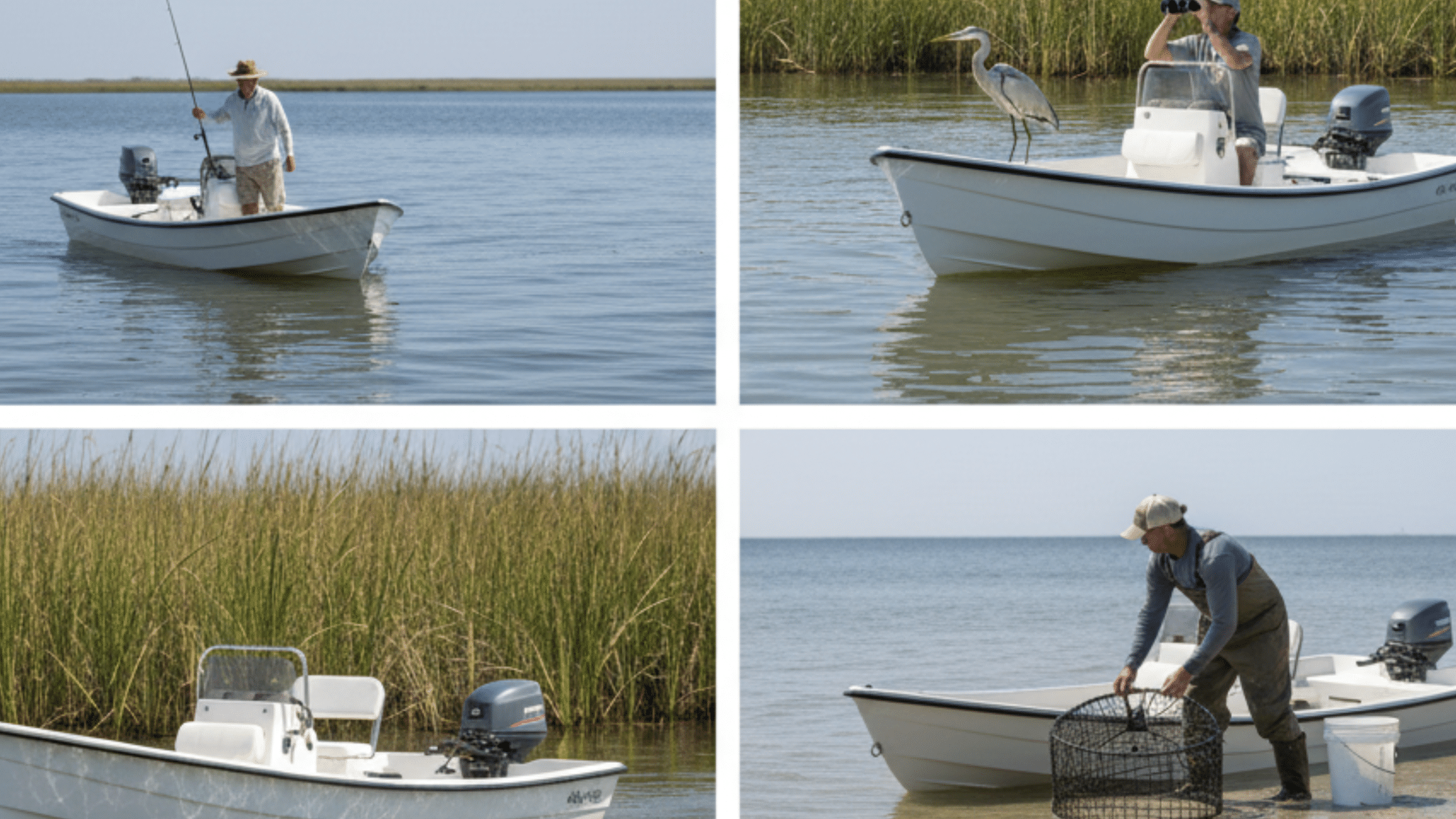
Skiff boats aren’t limited to just one type of activity. Their versatility and ability to navigate shallow waters make them ideal for a wide range of uses.
From serious fishing expeditions to leisurely afternoon cruises, skiffs adapt to various needs and water conditions.
1. Fishing Adventures
Skiffs are a fisherman’s dream. With their ability to navigate shallow waters, skiffs give anglers access to areas where larger boats can’t go. Techniques for fishing from small watercraft, including setup, casting, and safety, are similar whether using a skiff or a kayak.
Additionally, skiffs can be customized with fishing accessories like rod holders, tackle boxes, and live wells to make the fishing experience even better.
2. Recreational Boating
Not all boaters are looking for a fishing adventure. Recreational boaters love skiffs because they’re great for casual cruising on lakes, rivers, and bays.
Skiffs are perfect for a quiet day on the water. Their simple layout makes trips relaxing and hassle-free, whether it’s a short ride around a bay or a longer outing on calm waters.
3. Hunting and Wildlife Observation
For those who enjoy hunting or wildlife observation, a skiff boat provides a unique way to navigate marshes, wetlands, and other quiet areas. Skiffs can access these ecosystems without disturbing wildlife.
They’re ideal for transporting hunting gear or getting into remote areas where land access is difficult. Their quiet operation makes them perfect for birdwatching or spotting wildlife.
4. Crabbing and Clamming
If you’re into shellfish harvesting, skiffs are a great choice for the job. Their shallow draft makes it easy to access coastal areas where crabs and clams thrive.
A skiff will help you reach the best spots without disturbing the environment. Their compact design makes them a great choice for anyone looking to harvest shellfish with ease.
5. Transportation
Skiffs are also useful for transporting people and goods across shallow waters. They can be used as tenders for larger vessels, moving supplies, equipment, or passengers between boats in areas where deeper drafts aren’t feasible.
Their versatility makes them practical for various transportation needs in shallow waterways and coastal environments.
What Are the Types of Skiff Boats
Skiff boats come in various styles, each designed to serve different needs on the water.
Depending on the type of water activity you enjoy, there’s a skiff that fits your preferences. Here are the main types of skiff boats you might encounter:
| Type of Skiff | Description | Best For |
|---|---|---|
| Flats Skiffs | Specialized for sight fishing in shallow, calm waters. | Anglers looking for inshore fishing areas. |
| Micro Skiffs | Small boats for one to two people, ideal for tight spaces. | Solo or small group fishing trips. |
| Bay Boats | Larger than micro skiffs, used for inshore and nearshore fishing. | Fishing in both shallow and slightly deeper waters. |
| Tunnel Hull Skiffs | Designed for extremely shallow water, with a unique hull for low depths. | Navigating ultra-shallow waters. |
| Traditional Rowboat-Style Skiffs | Simple, basic skiffs are often used for general recreation. | Casual boating, light fishing, or short trips. |
Things to Consider Before Buying
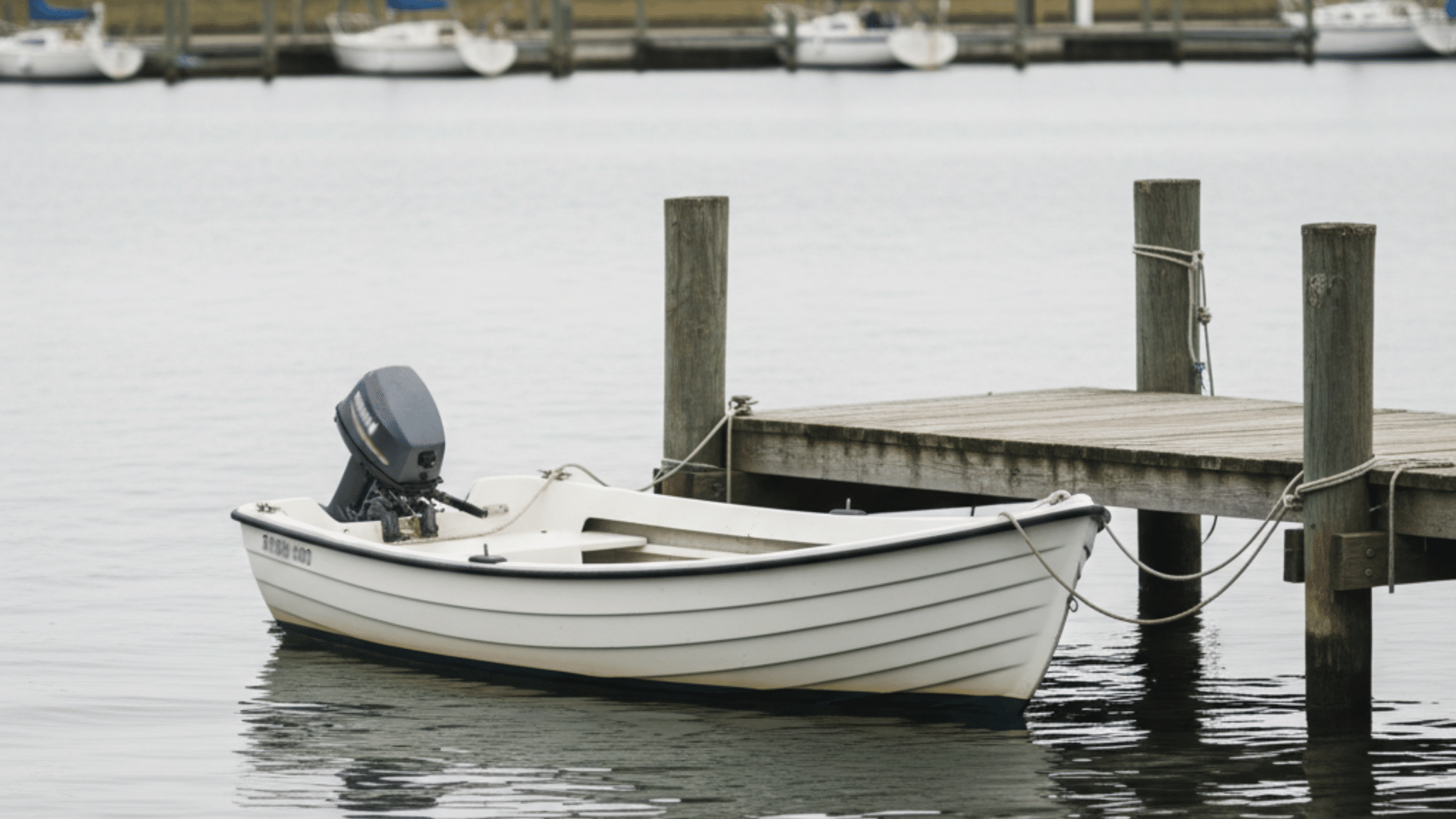
Before committing to a skiff boat, it’s essential to weigh its limitations against your specific needs.
While skiffs offer many advantages, understanding their restrictions can help you make a more informed decision. Here’s what you should consider:
Limitations to Keep in Mind
While skiff boats are versatile and easy to use, they do come with some limitations that you should consider before making a purchase:
-
Limited passenger and gear capacity: Skiffs are smaller boats, so they typically have less space for passengers and equipment.
-
Less stable in rough or choppy water: Due to their lightweight, flat-bottomed design, skiffs can be less stable in rough or choppy water.
-
Speed varies by design: Most skiffs prioritize shallow draft and efficiency over speed. Some flats skiffs run quickly to shallow spots, but performance and comfort vary significantly by model.
-
Best for calm, protected waters: Skiffs perform best in shallow, calm areas and aren’t suited for waves or rough conditions, so learning about watercraft safety and gear for different environments is helpful if you explore other small boats.
-
Exposure to sun and weather: Many skiffs don’t offer much protection from the sun or elements, so prolonged exposure can be a factor to consider, especially in hot or rainy conditions.
Who Skiff Boats Are Perfect For
Despite their limitations, skiff boats are an excellent choice for specific types of boaters. They’re ideal for:
-
Anglers seeking shallow water access: Skiffs are perfect for accessing hard-to-reach fishing spots in shallow waters, making them a favorite for anglers.
-
Budget-conscious boat buyers: If you’re looking for an affordable boating option without sacrificing quality, a skiff provides great value for your money.
-
Those wanting low-maintenance watercraft: If you prefer something simple that doesn’t require a lot of upkeep, skiffs are easy to handle and maintain.
-
Recreational boaters in calm waters: For those who enjoy leisurely trips in protected, shallow waters, skiffs are a perfect match.
-
People with limited storage space: Skiffs are small and easy to store, which is great if you don’t have much space at home or in your garage. Think of it like a skiff room on a boat, a narrow, well-planned space that makes the most of every inch.
If this sounds like you, find trusted skiff boat options from Hewes, Mako, and Coastal skiff boats.
Is a Skiff Boat Right for You?
A skiff boat is a perfect choice if you plan to spend most of your time in shallow waters for fishing, cruising, or nature observation.
If you want an affordable, easy-to-maintain boat for low-speed, leisurely activities, a skiff is a great fit. However, if you need a boat for rough waters, high-speed cruising, or large groups, a skiff might not meet your needs.
Ask yourself: What are your primary activities on the water? What kind of water conditions do you plan to boat in? What is your budget and experience level?
If a skiff aligns with your answers, it’s time to take the next step in your boating adventure.
Final Thoughts
Skiff boats are an excellent choice for those who need a versatile, affordable, and easy-to-handle watercraft. Now that you’ve learned what is a skiff boat and its key advantages, you can make an informed decision.
From shallow water fishing and recreational cruising to wildlife observation and shellfish harvesting, skiffs offer a great balance of features and convenience.
Their budget-friendly price, low maintenance, and fuel efficiency make them ideal for beginners and experienced boaters.
By understanding its benefits and uses, you can decide if a skiff fits your water adventures. If a skiff is right for you, check out your options and start planning your next outing!
Frequently Asked Questions
Do Skiff Boats Need a Boating License?
Rules vary by location and engine size. Check your local boating authority for exact licensing and age requirements.
Can a Skiff Boat Be Stored Outside Year-Round?
Yes, with a fitted cover and proper drainage. Remove valuables, protect from UV, and rinse saltwater exposure regularly.
What Safety Gear Should You Always Carry on A Skiff?
Life jackets for everyone, whistle/horn, waterproof light, basic first-aid kit, anchor, and a charged phone or VHF radio.
How Long Do Skiff Boats Usually Last?
With regular rinsing, basic maintenance, and proper storage, many skiffs last decades. Saltwater use needs more frequent corrosion checks.