


Surfing offers a powerful connection with the ocean, a feeling of freedom on each wave, and an adventure unlike any other water sport.
It’s physically engaging, mentally refreshing, and endlessly rewarding.
Before you paddle out for the first time, knowing a few basics helps you feel more confident, stay safe, and enjoy the experience from the start.
Surfing takes patience and consistency, but every small step, your first paddle, your first pop-up, your first ride, brings you closer to the thrill that keeps surfers coming back again and again.
Why Starting with the Right Foundation Matters
Surfing isn’t just about standing on a board. It requires ocean knowledge, balance, wave-reading ability, and proper timing.
Many beginners focus solely on the pop-up and standing, but understanding how waves work, how to position yourself, and how to move safely in the water are equally important.
Building a solid foundation helps you avoid injuries, develop confidence in the ocean, and progress more efficiently.
When you understand the basics, from choosing appropriate equipment to reading surf conditions, you’ll spend less time struggling and more time actually riding waves.
Choose the Right Gear: Beginner Surf Equipment
Using suitable surf equipment makes learning smoother, safer, and far more enjoyable, helping beginners build confidence from their very first session.
| Board Type | Key Characteristics | Skill Level |
|---|---|---|
| Shortboard | Low volume, narrow, designed for sharp turns and speed | Advanced surfers |
| Fish / Hybrid | Wider outline, added volume, easier paddling | Lower-intermediate upward |
| Longboard / Malibu | High volume, very stable, ideal for small waves | All levels |
| Soft-Top / Foamie | Soft, buoyant, extremely forgiving, and safe | True beginners |
This comparison highlights how each board affects stability, paddling, and wave-catching, helping beginners choose a board with enough length and volume to learn faster, stay safer, and enjoy more consistent early progress.
Other Essential Surf Gear
A few key accessories ensure safety, comfort, and better performance in the water.
- Leash: Keeps the board attached after wipeouts.
- Surf wax: Adds traction to prevent slipping during pop-ups and paddling.
- Rash guard or wetsuit: Protects from rashes, sun exposure, and cold water.
- Sunscreen: Waterproof, reef-safe protection for extended sessions.
- Booties (optional): Helpful for cold water or rocky surf spots.
Beginner-friendly rental packages often include everything needed, making it easy to start without buying gear immediately.
Picking the Right Surf Spot and Conditions
Choosing the right location and understanding ocean conditions helps beginners stay safe, catch better waves, and learn more efficiently.
Find Beginner-Friendly Beaches

Learning in the right environment makes every surf session safer, smoother, and far less overwhelming for new surfers.
- Small, gentle waves (2–4 ft): Ideal size for practicing pop-ups, balance, and basic wave riding.
- Sandy bottoms: Much safer than reef or rocks, reducing injury risk during wipeouts.
- Minimal hazards: Avoid spots with piers, jetties, rocks, or strong currents.
- Uncrowded lineups: Give beginners space, reduce collisions, and boost confidence.
- Local guidance: Ask lifeguards or surf shops for beginner-friendly zones or safe learning areas.
Starting at beginner beaches ensures safer conditions and helps you progress without unnecessary challenges.
Understanding Ocean Conditions

Reading conditions before entering the water improves safety, wave count, and overall comfort in unfamiliar surf environments.
- Tide information: Some surf spots function better at high tide, others at low tide; check before paddling out.
- Swell size and direction: Determines wave height, shape, and how waves break at your chosen beach.
- Wind conditions: Offshore winds create smooth waves; onshore winds make surf choppy and harder to ride.
- Currents and rips: Learn to identify moving water, channels, and potentially dangerous rip currents.
- Observation time: Watch the ocean for a few minutes to understand the wave rhythm and surfer positioning.
Understanding conditions builds awareness, confidence, and the decision-making skills every new surfer needs.
Core Surf Techniques Every Beginner Must Master
Learning the core techniques early builds confidence, improves consistency, and helps you catch waves with far less effort during every surf session.
1. Mastering the Paddle

Efficient paddling helps you catch waves earlier, position properly, and move through the lineup with less fatigue and much more control.
- Lie centered on your board with your chest slightly raised.
- Keep your legs together with toes pointed behind you.
- Use smooth, deep strokes with relaxed, cupped hands.
- Pull water from front to back using full arm extension.
- Practice paddling in calm water to build strength and technique.
Strong paddling increases wave count, confidence, and comfort, helping beginners progress much faster across all conditions.
2. Practicing the Pop-Up
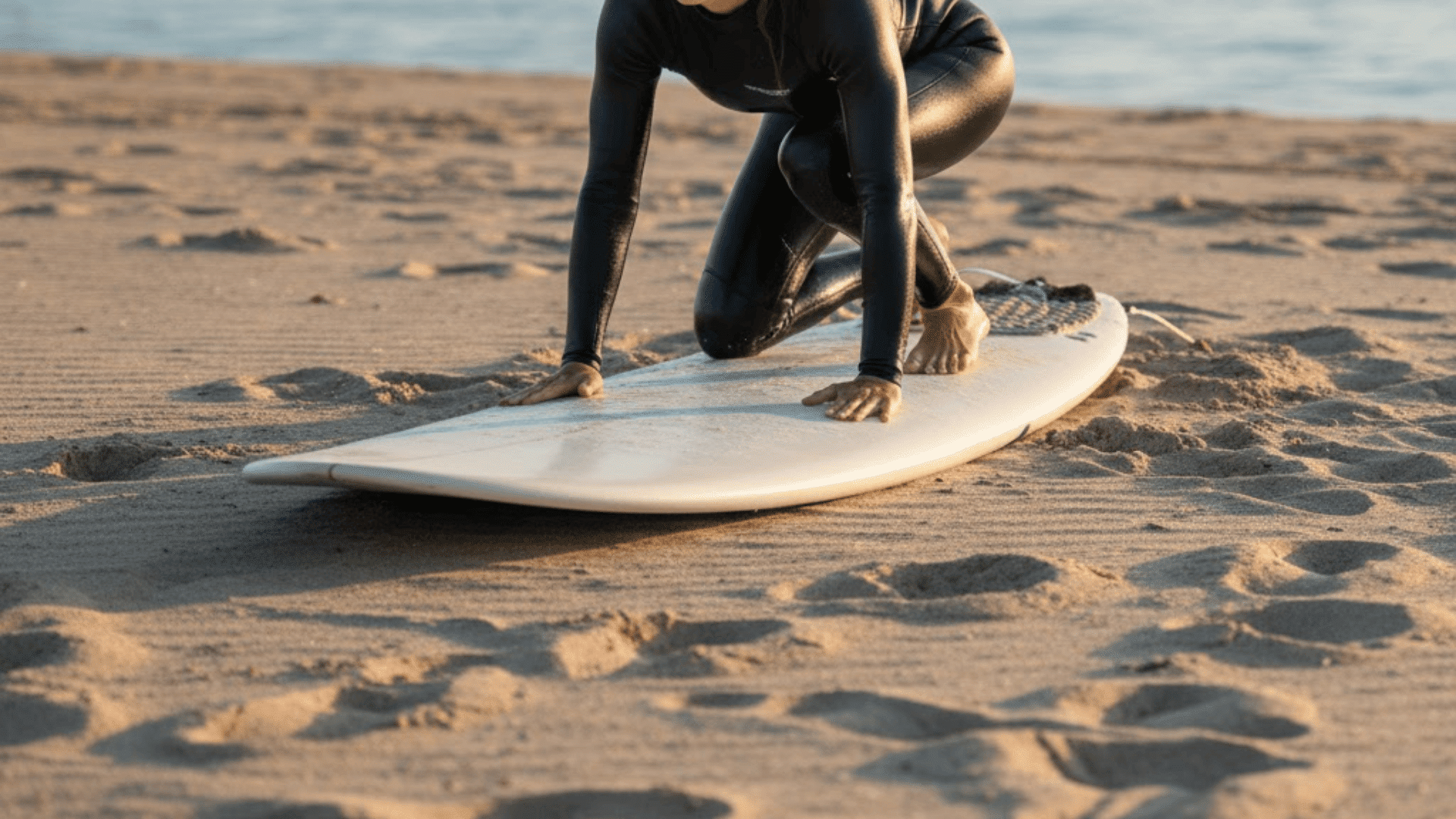
The pop-up is your transition to standing, and practicing this movement on land builds muscle memory that directly improves your surfing.
- Lie flat with your hands placed under your shoulders.
- Push your upper body upward in one smooth movement.
- Bring your back foot forward as your hips rise.
- Land in a low, centered stance with both knees bent.
- Keep your eyes forward and weight balanced over the board.
Consistent pop-up practice on sand makes standing in the water smoother, faster, and far more predictable for new surfers.
3. Stance and Balance Fundamentals

A proper stance gives you stability, control, and confidence, allowing you to stay balanced even when waves feel fast or unpredictable.
- Keep your feet shoulder-width apart on the stringer line.
- Angle your front foot slightly forward for stability.
- Bend both knees and lower your center of gravity.
- Stay relaxed and centered rather than leaning back.
- Look where you’re going instead of staring down, a habit that becomes even more important as you move into advanced board handling techniques.
Good stance habits create smooth, balanced rides and help beginners stay on their board for much longer.
4. Catching Your First Waves
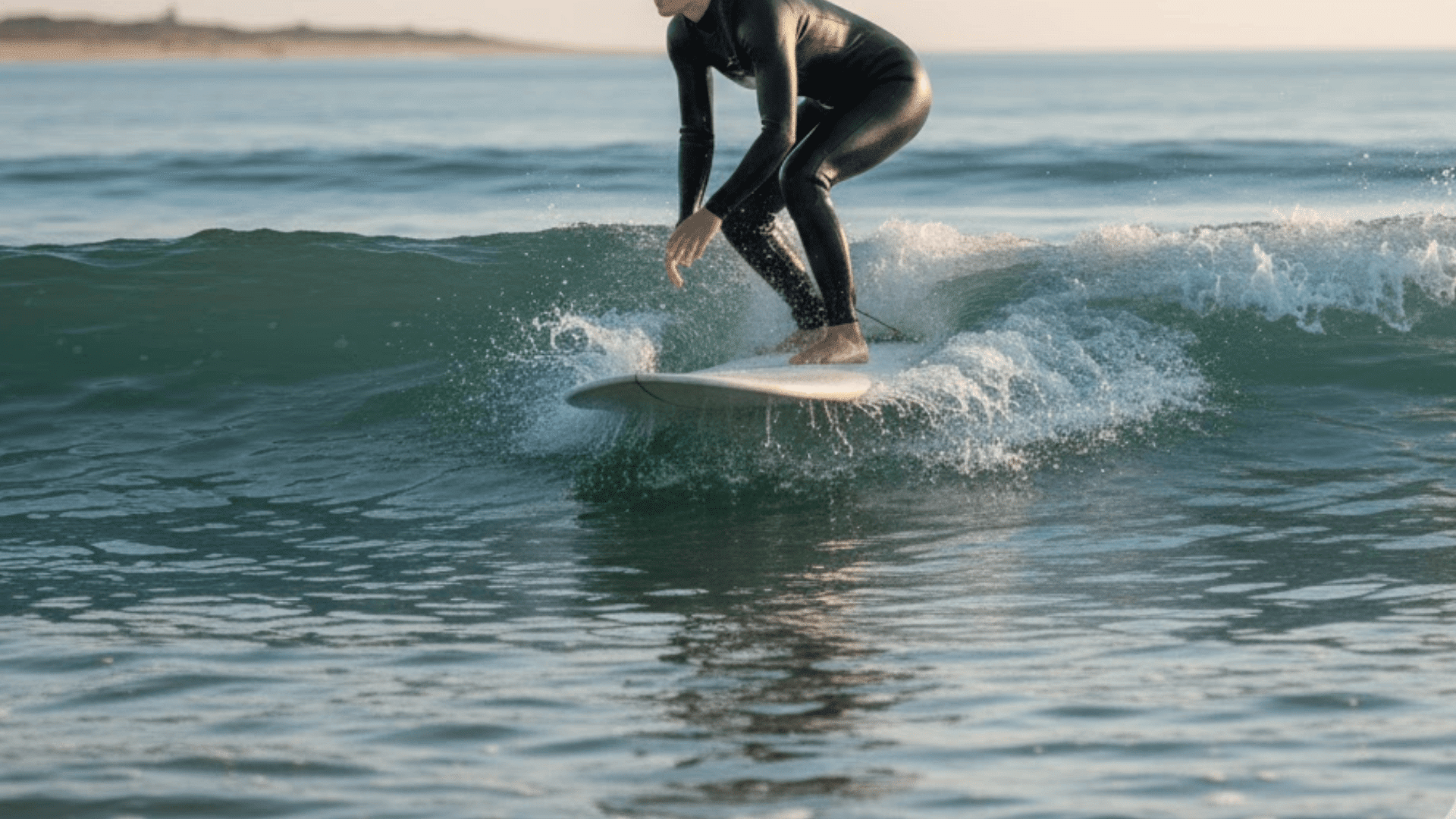
Whitewater waves are perfect for practicing timing, balance, and pop-ups, helping you build confidence before progressing to unbroken waves.
- Begin in waist-to-chest-deep water, facing toward the beach.
- Turn your board toward shore as whitewater approaches.
- Start paddling early to match the wave’s speed.
- Add two or three final strong strokes as the wave lifts you.
- Pop up quickly once you feel the wave carrying your board.
Riding whitewater consistently builds essential skills that prepare beginners to catch and ride small green waves later on.
Mastering Wave-Passing Techniques
Understanding how to move safely through breaking waves is essential for beginners. These two techniques help you reach the lineup smoothly and confidently.
| Technique | Used With | How It Works | Why It’s Important |
|---|---|---|---|
| Duck Dive | Shortboards, low-volume boards | Push nose down → sink tail → glide under a wave → resurface behind it | Helps you pass through waves efficiently and reach the lineup with less energy |
| Turtle Roll | Longboards, foamies, high-volume boards | Grip rails → flip board over → let wave pass → roll back upright |
Maintains board control and prevents getting pushed back when duck diving isn’t possible |
Mastering these techniques improves control, saves energy, and prepares you for more advanced surfing challenges as you progress beyond beginner-level waves.
Safety and Ocean Awareness
Understanding and respecting the ocean is essential for every beginner.
Always check surf reports for wave size, swell direction, wind, and tides before entering the water, and take time to identify rip currents, channels, and potential hazards.
Never surf alone when learning, and avoid conditions that exceed your comfort or skill level.
Wipeouts are a normal part of progressing, so stay calm when you fall, protect your head with your arms, and wait for the turbulence to settle before surfacing.
In shallow water, rise feet-first, then check for your board and other surfers before swimming back.
Surf Etiquette Rules Every Beginner Must Know
Surfing has an unspoken code of conduct that keeps everyone safe and maintains respect in the lineup:
- Right of way: The surfer closest to the peak (where the wave breaks first) has priority
- Don’t drop in: Never take off on a wave when someone else is already riding it
- Don’t snake: Don’t paddle around others to get closer to the peak
- Communicate: Make eye contact and acknowledge other surfers’ priority
- Respect locals: Be courteous to surfers who frequent that spot regularly
- Control your board: You’re responsible for your board; don’t let it hit others
- Help others: If someone’s in trouble, assist them
- Wait your turn: In crowded lineups, don’t catch every wave that comes through
Breaking these rules can create dangerous situations and conflicts. Even as a beginner, following surf etiquette shows respect for the sport and the surfing community.
Mindset, Progress, and What to Expect

Surfing has a steep learning curve, and real progress comes with consistent practice.
Early sessions focus on paddling, pop-ups, and riding whitewater, while later sessions improve positioning, timing, and the ability to catch small unbroken waves.For those just getting started, following first-time surfing steps can help make early sessions more productive.
Progress won’t always feel steady; conditions, crowds, and personal energy all influence each surf.
Celebrate small improvements like better balance, smoother pop-ups, or more efficient paddling. These wins build the foundation for bigger skills.
Taking a lesson can speed up learning by correcting technique, improving safety, and teaching you how to read waves effectively. Patience and persistence matter more than natural talent.
Common Beginner Mistakes to Avoid
Learning from common beginner mistakes helps you progress faster, stay safe, and build confidence during your early surfing sessions.
- Using a board that’s too small: Bigger, high-volume boards make learning easier, faster, and far less frustrating for beginners.
- Paddling too late: Start paddling earlier than feels natural—most new surfers consistently misjudge timing and miss waves.
- Looking down during a pop-up: Your body follows your eyes; looking down almost always leads to an immediate fall.
- Riding straight to the shore: Angle your board along the wave to ride longer, gain control, and develop real surfing technique.
- Ignoring your leash or holding the board: Always check your leash—never grab the board during wipeouts; let the leash retrieve it safely.
- Standing with feet too close together: Keep a wide, balanced stance for stability; narrow stances are for advanced surfers only.
Avoiding these mistakes builds good habits, keeps you safer in the water, and helps you improve more quickly as a new surfer.
Your Surfing Path Starts Now
Learning to surf takes patience, consistency, and a true appreciation for the ocean.
Progress may feel slow at times, but every session brings new growth, and every wave offers a thrill unlike anything else.
Focus on small improvements, stay safe, respect the ocean, and enjoy each moment as your skills develop.
The feeling of catching your first real wave will make every challenge worthwhile.
Ready to begin your surfing experience? Start practicing, stay committed, and take that first step into the water; your next wave could be the one that changes everything.
Frequently Asked Questions
What Time Of Day Is Best For Beginners To Surf?
Early mornings offer cleaner waves, lighter winds, fewer crowds, and safer, more predictable conditions for beginners.
Can I Learn To Surf If I Can’t Swim Well?
No, basic swimming ability is essential for safety, confidence, and handling unexpected situations in the ocean.
How Do I Overcome Fear Of Waves When Starting Out?
Begin in shallow water, practice safe falls, and gradually build confidence with small, manageable waves.
How Often Should Beginners Surf To Improve Consistently?
Surfing two to three times weekly builds strength, confidence, and consistent progress through regular practice.








2 Responses