
Getting into a kayak from a dock shouldn’t feel like the hardest part of the trip.
A well-designed kayak launch for a dock creates a stable entry point, protects your kayak from dock damage, and makes launching safer in a wide range of water conditions.
After years of helping paddlers choose and use launch systems on lakes, rivers, and waterfront docks, I’ve found that the best option depends less on price and more on your dock height, water levels, and the type of kayak you own.
Choosing the right system from the start makes every launch easier and every outing more enjoyable.
What is a Kayak Launch for a Dock
A kayak launch for dock use is a platform, cradle, or bar system that attaches to an existing dock and gives you a stable, low entry point to get in and out of a kayak.
Instead of stepping down from a high dock edge onto a bobbing hull, you slide the kayak onto the launch, sit down at a controlled height, and push off into the water.
Most systems fall into three categories. Floating platforms rise and fall with the water level. Fixed cradle or bar systems bolt directly to the dock structure. Mechanical lifts raise the kayak fully out of the water between trips.
The right one for your dock depends on whether your water is tidal, how much freeboard your dock has, and how many people will use it.
Why Use a Kayak Launch System on a Dock?
A dock edge without a launch system turns every trip into a small negotiation with balance, and that negotiation adds up over a season.
- Fewer falls and near misses, since a stable low entry point removes the wobble that comes from stepping into a floating hull from a fixed dock edge
- More frequent paddling, because an easy launch removes the friction that keeps kayaks racked up instead of on the water
- Wider access for the whole household, since kids, older paddlers, and anyone with limited mobility can use a proper launch safely
- Less wear on your kayak, since sliding onto a smooth platform beats scraping the hull against dock edges or pilings
- Better resale value on your dock setup, since a working launch system is a feature buyers notice on waterfront property listings
None of these benefits show up in a single trip. They show up over a season of not thinking twice before grabbing the paddle.
Types of Kayak Launch Systems
Three basic mechanisms cover almost every kayak launch for dock product on the market, and this table breaks down how each one behaves in the water.
| Launch Type | How It Works | Best Suited For |
|---|---|---|
| Floating platform | Rises and falls naturally with the water level, no manual adjustment | Lakes and calm water with seasonal level changes |
| Fixed cradle or bar | Bolts directly onto the dock; kayak slides on above the water level | Fixed docks, budget-conscious upgrades |
| Mechanical lift | Winch or crank lowers and raises the kayak fully out of the water | Tidal docks with big water level swings |
Most buyers start with a floating platform or fixed cradle, then move to a mechanical lift once tidal swing becomes the real problem.
Key Features to Look for in a Kayak Launch for a Dock
Not every launch system solves the same problem, so match the features below to the water conditions your dock actually deals with.
- Weight capacity, since a launch rated for a light recreational kayak will not hold up under a loaded fishing kayak
- Entry width, because wider fishing and pedal kayaks need more clearance than a standard sit-inside recreational model
- Material and hardware, since HDPE and stainless steel resist saltwater corrosion far better than untreated metal parts
- Tide compensation, which matters if your dock sees more than a couple of feet of water level change during the day
- Handrail or grab bar options, since a rail gives older paddlers or beginners something solid to hold during entry
- Retrofit compatibility, because a system that bolts onto your existing dock saves you a full rebuild
Getting these six details right upfront saves you from buying a launch system twice.
Best Kayak Launch for Dock
As a kayak instructor who has spent years on the water helping paddlers launch safely off every dock type, from wood pilings to floating platforms, I have seen firsthand which systems hold up and which ones just look good in a listing.
1. EZ Dock EZ Launch
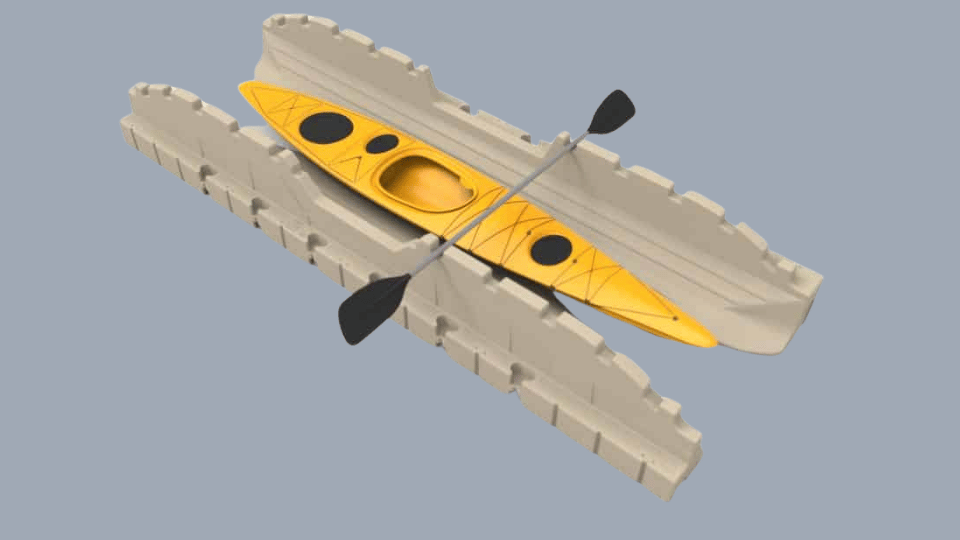
The EZ Launch is a floating system with a V-shaped entry that centers the kayak on its own during boarding. It needs a compatible EZ Dock core system to attach to.
- Best for: Family docks with mixed paddling skill levels
- Pros: Self-adjusting float, wide, stable entry, low-maintenance polyethylene build
- Cons: Cannot be installed as a standalone unit without EZ Dock’s core system
- Why I recommend it: The V-shaped entry genuinely reduces the fumbling I see with first-time paddlers
- Price range: Roughly $1,500 to $3,000 depending on the core dock configuration
2. Connect-A-Dock YAKport
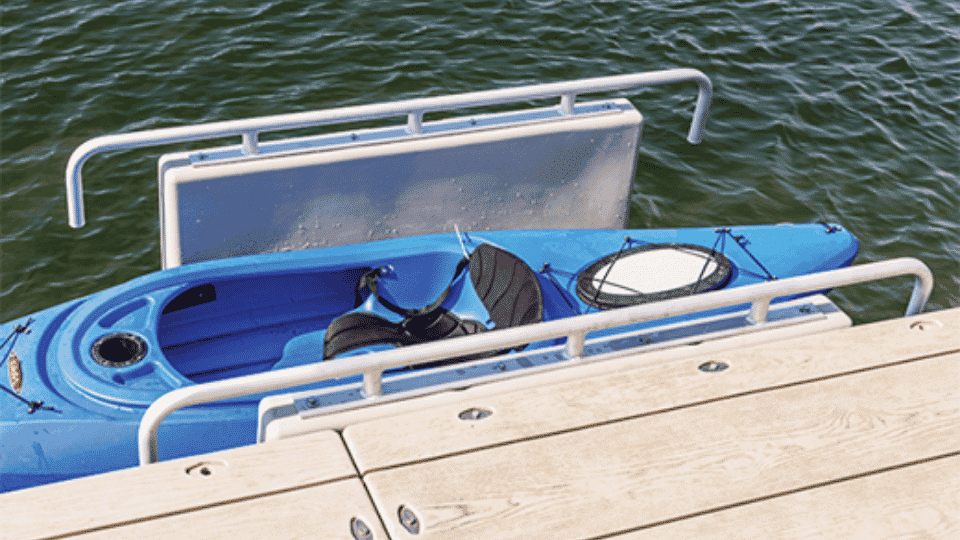
The YAKport is a molded cradle that bolts onto fixed or floating docks and holds kayaks, canoes, or paddleboards up to 34 inches wide.
- Best for: Dock owners wanting a fast, low-cost upgrade
- Pros: Simple bolt-on installation, works on nearly any dock type, no moving parts to maintain
- Cons: Narrower entry width limits it compared to wider fishing kayaks
- Why I recommend it: Solo installs like this one are rare, and this is the system that made me a believer
- Price range: Typically $400 to $700
3. Wave Armor Kayak Launch with 2 Rails
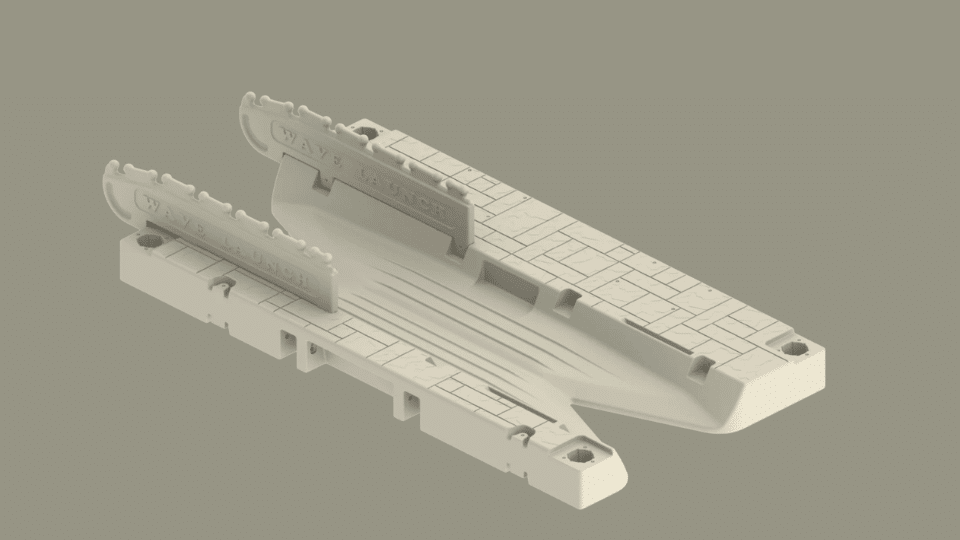
Wave Armor builds handrails directly into its floating launch, giving paddlers something solid to grip as they lower into the seat.
- Best for: Older paddlers or anyone recovering from an injury
- Pros: Sturdy grab rails, floating base adjusts with water level, stable platform
- Cons: Bulkier footprint than a basic cradle system
- Why I recommend it: Nervous first-timers do better with something to hold, and this is where I send them
- Price range: Roughly $1,800 to $2,800
4. Snap Dock Paddle Port
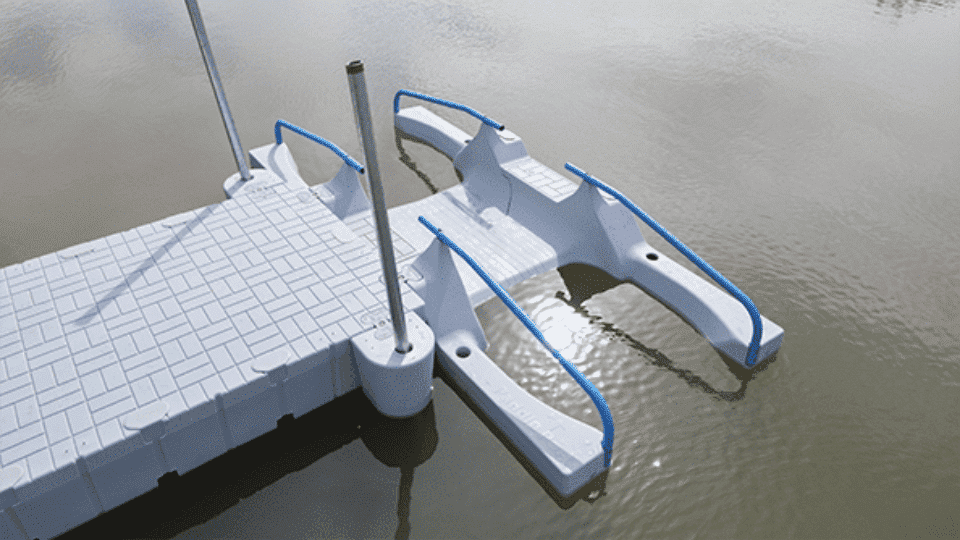
Paddle Port is a compact modular launch built for docks with limited space, connecting to existing Snap Dock platforms or installing on its own.
- Best for: Small docks and tighter budgets
- Pros: Tool-free modular setup, lower price point, easy to expand later
- Cons: Less stable than heavier systems in rough or choppy water
- Why I recommend it: It is the upgrade I suggest first to anyone testing the waters on a launch system
- Price range: Roughly $600 to $1,200
5. Candock Kayak Launch Modular Cubes
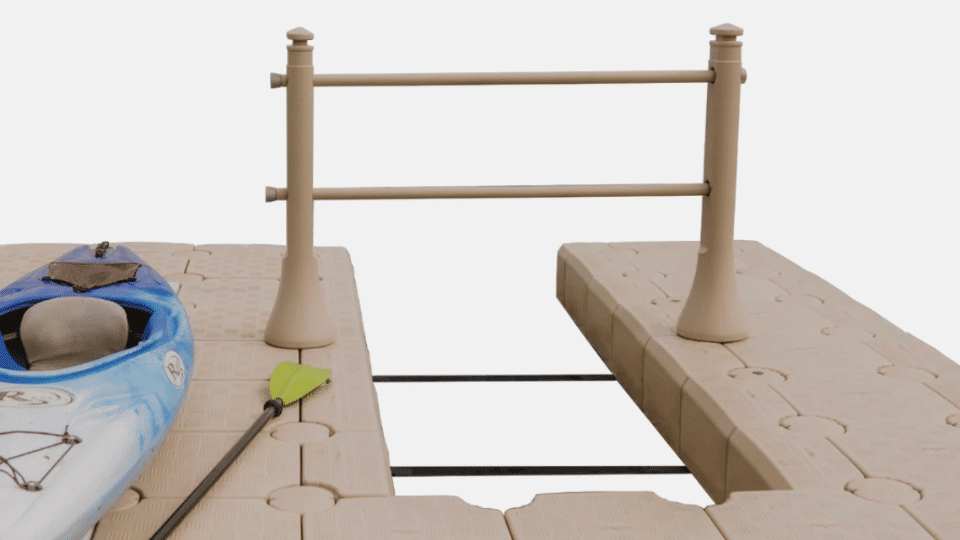
Candock builds its launch bar into the same HDPE cube system used across its full floating dock line, so it retrofits onto existing installations.
- Best for: Municipal docks and accessibility focused installs
- Pros: Retrofits without tearing out existing Candock cubes, roughly 38-inch opening, integrated support bars
- Cons: Installation needs someone in the water to bolt the aluminum supports
- Why I recommend it: Municipal buyers care about looking accessible without looking institutional, and this hits that mark
- Price range: Roughly $1,200 to $2,500
6. AccuDock Kayak Slip Dock with Safe Launch
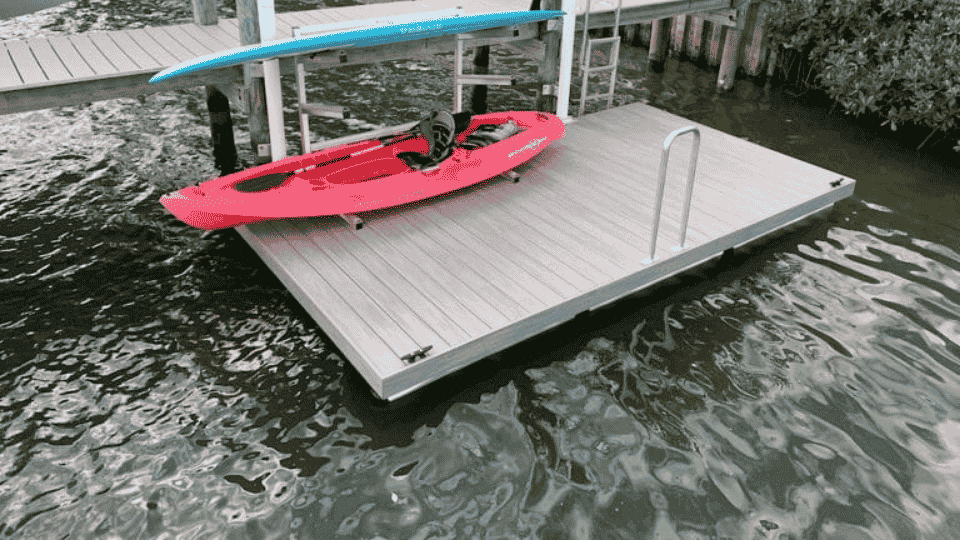
AccuDock’s Safe Launch is an add-on ramp that attaches to a kayak slip dock, using an adjustable mount to set the right slope for entry and exit. It works within a single slip rather than across multiple ones.
- Best for: People or facilities that already have an AccuDock slip setup and want an easier ramp angle
- Pros: Adjustable slope for different kayak types, can be raised out of the water when not in use, works with existing slip dock packages
- Cons: Only compatible with AccuDock slip dock configurations, not a standalone unit
- Why I recommend it: The adjustable ramp angle solves the one complaint I hear most about fixed ramps, that they never sit at quite the right slope
- Price range: Typically $800 to $1,800 as an add-on to an existing slip dock
7. American Muscle Docks Mr. Launcher
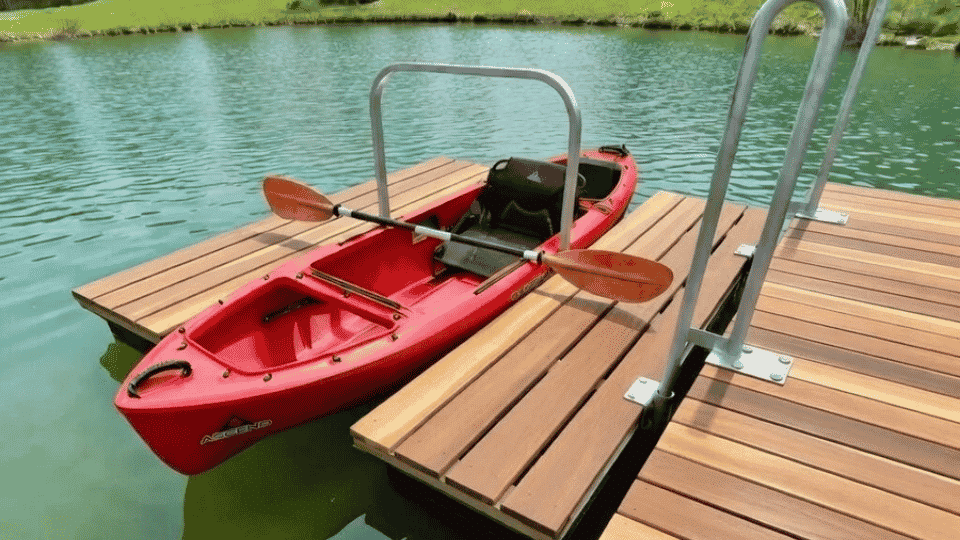
Mr. Launcher is built heavier than most competitors, aimed at residential docks that see daily paddling traffic rather than occasional weekend use.
- Best for: Households with multiple paddlers using the same launch weekly
- Pros: Handles repeated loading without flex, durable frame construction
- Cons: Higher upfront cost than lighter aluminum systems
- Why I recommend it: The extra durability pays off over a few seasons instead of showing wear in year one
- Price range: Roughly $1,800 to $3,200
8. Gulf Stream Docks Roller Bar Kayak Launch
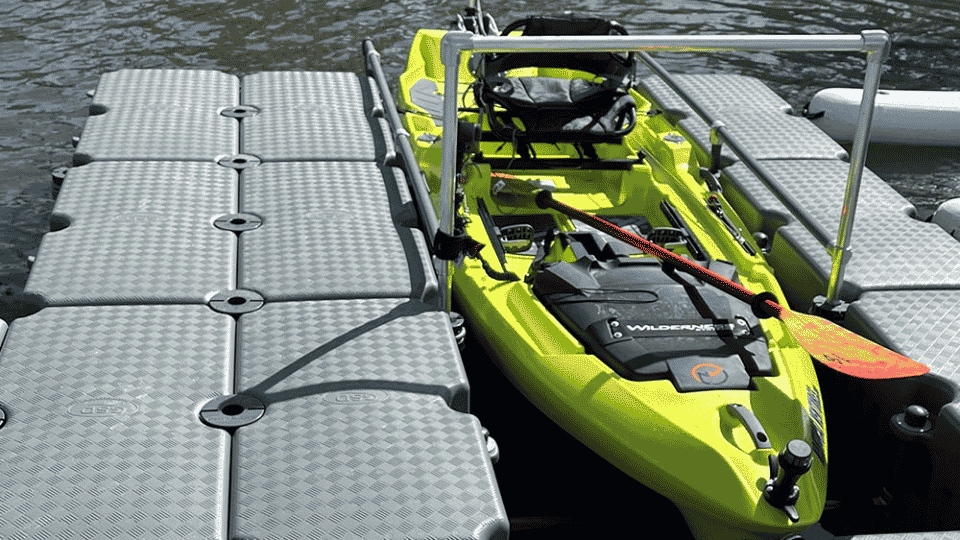
The Roller Bar design reduces the friction of sliding a kayak on and off, built specifically for paddlers who launch without help.
- Best for: Solo paddlers
- Pros: Less upper body strength needed to pull back onto the dock, simple mechanical design
- Cons: Rollers need occasional cleaning to keep gliding smoothly
- Why I recommend it: It solves the exact problem solo paddling creates better than a flat platform does
- Price range: Roughly $900 to $1,600
9. Golden Boat Lifts Kayak Launch Elevator Style
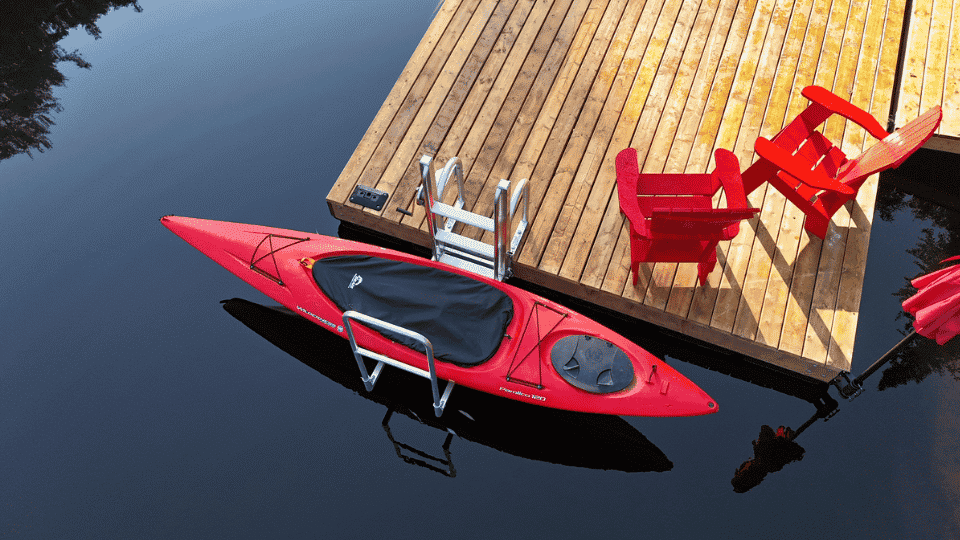
This mechanical lift raises the kayak fully clear of the water using a brake winch, built with welded aluminum construction and stainless steel cables for docks with real tidal swing.
- Best for: Tidal docks needing the kayak dry and level between trips
- Pros: Keeps hull out of sun and marine growth, available in 3, 5, or 7-step configurations covering 2 to 6 feet of travel, standard models hold up to 250 lbs and heavy-duty models up to 350 lbs
- Cons: Costs more upfront and needs a solid dock structure to mount securely
- Why I recommend it: For real tidal swing, nothing else on this list keeps the kayak this consistently dry
- Price range: Roughly $2,300 to $4,500
Quick note: Manufacturers do not publish set pricing for most of these systems, so ranges above reflect typical retailer and dealer quotes at the time of writing. Contact a dealer directly for a current quote, since price often depends on configuration, dock type, and installation.
How to Choose the Right Kayak Launch System for Your Dock
Match the system to your water conditions first, since the wrong choice in rough or tidal water can cause more problems than it solves.
- Fixed dock, big tidal swings: Lean toward Golden Boat Lifts or a system with tide compensation built in
- Floating dock, family use: EZ Launch or Wave Armor cover mixed skill levels well
- Small dock, tight budget: Paddle Port or YAKport upgrade you without a full rebuild
- Solo paddler: The Gulf Stream roller bar earns its keep here
- Municipal or accessibility focused install: Candock’s modular bar system fits that brief best
None of these are wrong choices. Each is built for a different dock, a different budget, and a different kind of paddler.
How to Launch a Kayak From a Dock Safely
Sit down on the dock edge before you move the kayak into position, keeping your weight low the entire time.
Slide into the seat rather than stepping down into the hull, since standing puts your center of gravity too high for a floating boat.
Keep both hands on the dock or launch platform until you feel the kayak settle under you. Push off only once you feel steady, not before.
A launch system helps with balance, but it will not replace the basics. The U.S. Coast Guard (USCG) recommends wearing a properly fitted life jacket every time you paddle, and paddling alone in water beyond your skill level carries risk no launch system can offset.
How Much Does a Kayak Launch for Dock Cost?
Prices for kayak launch-for-dock installations range from roughly $400 for a basic bolt-on cradle to $4,500 for a full mechanical lift system with multiple configurations.
Simple modular units like the Paddle Port or YAKport sit at the low end because they use less material and have no moving mechanical parts.
Mid-range floating platforms like the EZ Launch or Wave Armor typically land between 1,500 and 3,000 dollars, largely because of the polyethylene flotation and core dock components involved.
Mechanical lift systems cost the most, often between $2,300 and $4,500, since they use marine-grade aluminum, winch hardware, and precision manufacturing.
Installation adds to the total if you hire a dock contractor, though most systems on this list are designed for a person to install with basic hand tools in a single afternoon.
How to Install a Kayak Launch System on a Dock
Installing most kayak launch systems does not require an electrician or a contractor, just some planning around your dock structure and water conditions.
- Check your dock’s condition first, since point load stress at the mounting location needs solid decking with no rot or soft spots
- Confirm your kayak’s width and weight against the launch system’s rated entry width and capacity before ordering. You’ll also need these whenchoosing a kayak cart to get the boat from the garage to the dock.
- Gather basic hand tools, since most bolt-on systems need only wrenches and a drill, not specialized equipment
- Mount fixed systems above the waterline at a height that matches your typical water level, adjusting for any known tidal range
- Test the launch empty first, sliding the kayak on and off without paddling to confirm stability before actual use
- Recheck all bolts after the first few uses, since new installations settle slightly under initial load
Most people finish a straightforward install in half a day, though tidal lift systems with more hardware can take longer.
Wrapping Up
After seeing paddlers use every type of launch, one pattern always stands out. The easiest systems to live with are the ones that disappear into your routine.
You stop thinking about balancing on the dock, scraping the hull against the edge, or asking someone to steady the kayak.
You simply launch, paddle, and come back without the extra effort. A kayak launch for a dock should do exactly that.
Match it to your dock, your water conditions, and the kayak you actually use, and it will keep paying off every time you head out on the water.
Frequently Asked Questions
Do Kayak Launch Systems Need to Be Removed in Winter or During Ice Season?
Yes, most floating kayak launch systems should be removed before ice forms to prevent damage. Fixed systems above the waterline can often stay in place year-round.
Is a Permit Needed to Install a Kayak Launch on a Private Dock?
It depends on local regulations and where the dock is located. Check with your local zoning or water authority before installing a kayak launch.
What Is the Average Lifespan of a Floating Kayak Launch System?
A quality floating kayak launch system can last 15 to 20 years with proper maintenance. Regular inspections help keep it in good condition.
Can Two People Use the Same Kayak Launch, or Is It One at a Time?
Most kayak launch systems are designed for one kayak at a time. For multiple users, separate launch stations are usually the safer option.